Key takeaways
- Social listening tracks human conversation across social platforms, reviews, and forums. AI brand monitoring tracks how AI assistants like ChatGPT, Gemini, Perplexity, and AI Overviews describe and recommend your brand.
- These are different channels with different failure modes. Losing a Reddit thread is not the same problem as disappearing from ChatGPT's answer to "best project management tool for small teams."
- Social conversation is one of the raw inputs AI models draw on, but the relationship is unstable. Promptwatch's data shows ChatGPT's Reddit citation share collapsed from roughly 3.8% to 0.5% in a single day in August 2026 after a retrieval change, something no social listening dashboard would flag.
- Most brands already run social listening. Very few run AI brand monitoring, even though AI-referred visitors reportedly convert better than organic search traffic in some studies. That's the actual gap worth closing in 2026.
- You don't need to pick one. You need clear ownership: listening for the humans, monitoring for the machines, and someone connecting the two.
Two tools, two very different questions
Here's a scenario that plays out in a lot of marketing teams right now. Someone in leadership asks, "are we tracking our brand online?" and everyone nods, because yes, they have Brand24 or Sprout Social or Brandwatch running, catching every mention, tag, and comment across social media. Then someone asks ChatGPT to recommend a tool in their category, the brand doesn't show up, and nobody in the room has any idea why, because nothing they run was built to answer that question.
That's the split this guide is about. Social listening answers "what are people saying about us, and why?" AI brand monitoring answers "what is AI telling people who ask about our category?" They sound similar. They are not the same tool, they don't use the same data, and increasingly, they don't even report to the same team.
Social listening, quickly defined
Social listening is the analysis layer on top of social monitoring. Monitoring catches individual mentions, tags, and DMs in real time so support teams can respond. Listening goes further: it clusters those mentions into sentiment trends, share-of-voice numbers, and topic patterns over weeks or months, and feeds that into strategy, not just customer service queues.
Sprinklr's breakdown of the two disciplines is a good reference point: monitoring is operational (respond, resolve, escalate), listening is strategic (shape campaigns, roadmaps, positioning). Tools like Brand24, Meltwater, and Sprinklr Social live in this space.
AI brand monitoring, quickly defined
AI brand monitoring runs a set of prompts against ChatGPT, Gemini, Claude, Perplexity, Grok, and Google's AI Overviews and AI Mode, on a schedule, and records what those models say about your brand and your competitors. Are you mentioned at all? How are you described? Who gets recommended instead of you? Which sources did the AI cite to reach that answer?
This is a genuinely different data set. It's not scraping social feeds, it's querying models directly (or reading their real user-facing output) and tracking the citations behind the answers. Promptwatch is one of the platforms built for this, and it goes a step further than most competitors by also logging AI crawler activity on your own site, tracking Reddit and YouTube citations specifically, and generating content aimed at closing the gaps it finds.

Why the difference actually matters
A friend recommending a product on X gets filtered through the reader's own skepticism. An AI assistant recommending a product gets treated differently. Research from UNSW's Business Think has found users apply disproportionate trust to AI product recommendations compared to other sources. That asymmetry is the whole reason this category exists. If AI is shaping decisions with more authority than a random tweet, then losing visibility in AI answers is a bigger problem than losing visibility in one social thread, even if both tools report a "mention count."
There's also a volatility problem that's specific to AI monitoring and worth sitting with for a second. Promptwatch's own data on Reddit citation trends found that ChatGPT's share of citations pointing to Reddit dropped from about 3.8% to 0.5% almost overnight on August 14, 2026, coinciding with a change in how ChatGPT handles search queries. Google's AI Overviews and AI Mode declined too, but gradually, over weeks. If your entire GEO strategy leaned on Reddit presence because "that's what AI cites," you lost a chunk of that value in a day, and no social listening tool would have told you. Only something watching the AI outputs directly would catch it.
What social listening catches that AI monitoring can't
AI monitoring isn't a replacement. It runs on a schedule, checking a defined set of prompts every so often. It will not tell you that a product issue is going viral on X right now, because it isn't watching live conversation, it's watching AI answers, and AI answers lag behind breaking news by design.
Social listening still wins on:
- Real-time crisis detection. A support ticket spike or a viral complaint thread shows up in social monitoring within minutes.
- Volume. Social platforms produce millions of posts a day; that's simply more signal than any panel of AI prompts will surface.
- Visual and creator content. Tools like YouScan and Talkwalker can spot your logo in an untagged TikTok video, something no AI monitoring tool is built to do.
- Influencer and advocate mapping. Knowing which specific accounts are talking about you and how much reach they carry is a social listening job, full stop.
What AI monitoring catches that social listening can't
Flip it around, and the gap is just as real. Sprinklr itself, a social listening vendor, has started tracking AI answers with a beta product because their own customers kept asking "how do we know what ChatGPT says about us," and their existing listening stack had no answer. That's a tell: even social-first vendors have admitted the two disciplines don't overlap enough to skip one of them.
AI monitoring catches:
- What AI actually says when someone asks for a recommendation in your category, word for word, not inferred from social sentiment.
- Which sources the AI cited to reach that answer, so you know where to focus content and outreach.
- Competitive framing: who gets named alongside you, or instead of you, in the same answer.
- Crawler behavior on your own site: which AI bots are visiting, what they're reading, and where they're hitting errors, something Promptwatch's Agent Analytics tracks and most social tools don't touch at all.
The content-type gap is real and specific
One detail that trips people up: the content that gets cited by AI isn't necessarily the content that performs well on social. Promptwatch's LinkedIn citation research found that Pulse articles and ordinary feed posts account for roughly 70% of LinkedIn citations across AI models, while product pages and LinkedIn Learning content are barely cited at all. YouTube tells a similarly counterintuitive story: cited videos skew toward under 100,000 views, and channel size or like count barely predicts whether a video gets cited. A viral video isn't automatically an AI-cited video, and a social listening dashboard measuring engagement won't tell you which of your videos AI actually pulls from.
How the two feed each other
The honest version of this relationship: social content is one of the raw inputs that shapes what AI eventually says, but it's an unreliable, shifting input, not a guarantee. Reddit threads, reviews, and forum posts get scraped and synthesized into AI answers, sometimes. Then a platform changes its retrieval logic and that input channel's weight can shift by 80%+ overnight, as the Reddit example above shows.
That means running social listening alone leaves you blind to the compressed, authoritative version of your reputation that AI is handing to buyers. Running AI monitoring alone leaves you blind to the raw material feeding that compression, and to the crisis that hasn't reached AI's training or retrieval data yet but is already spreading on X.
| Dimension | Social listening | AI brand monitoring |
|---|---|---|
| What it tracks | Human conversation on social, reviews, forums, news | What AI models say/recommend when asked about your category |
| Update cadence | Real time to near real time | Scheduled (daily/weekly prompt runs), some real-time crawler logs |
| Primary output | Sentiment trends, share of voice, brand health reports | Visibility scores, citation sources, competitor share, crawler logs |
| Typical owner | Community, PR/comms, brand strategy | SEO/content, growth, sometimes CMO office |
| Example tools | Brand24, Meltwater, Sprinklr, Brandwatch | Promptwatch, Profound, Peec AI, Otterly.AI |
| Catches crises in | Minutes | Doesn't catch breaking crises well |
| Catches AI-driven buying decisions in | No | Yes |
| Typical entry price (2026) | ~$49-$199/mo for SMB tools | ~$29-$245/mo for entry to mid tiers |
Choosing tools for each layer
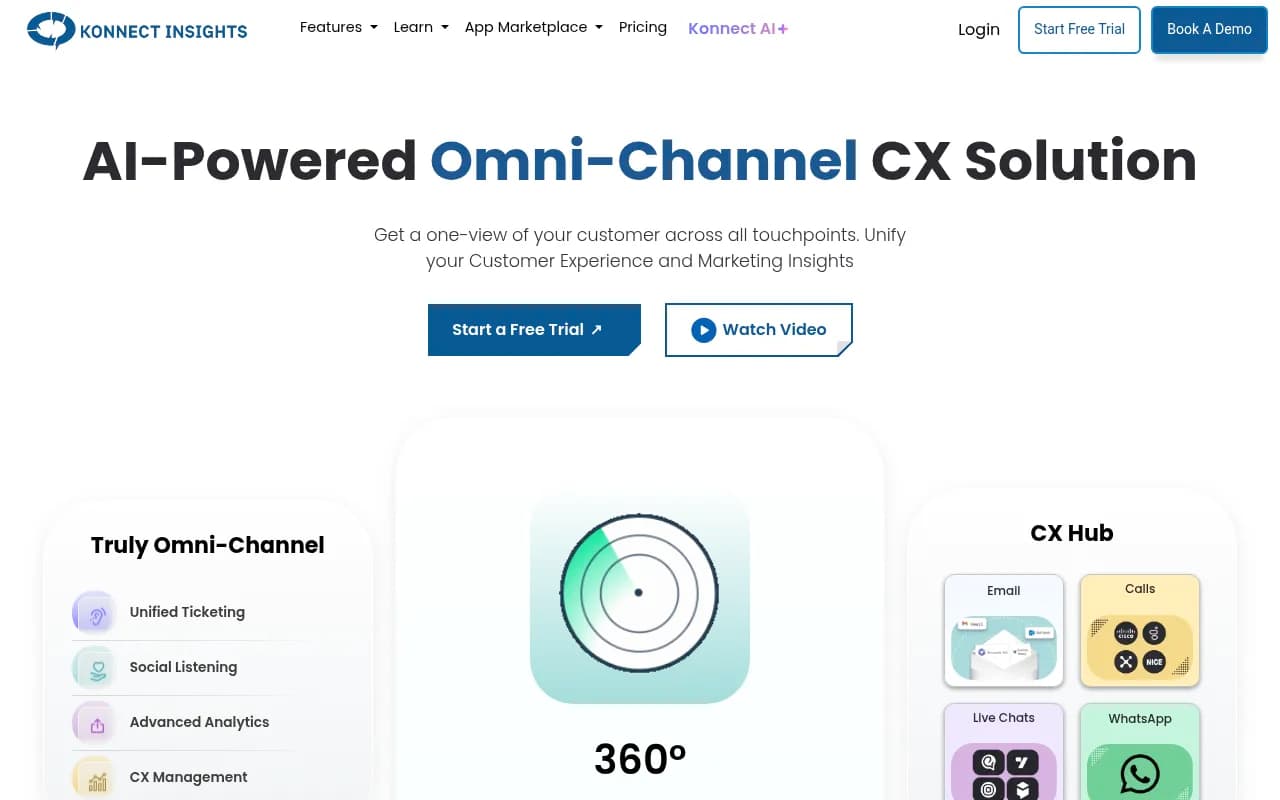
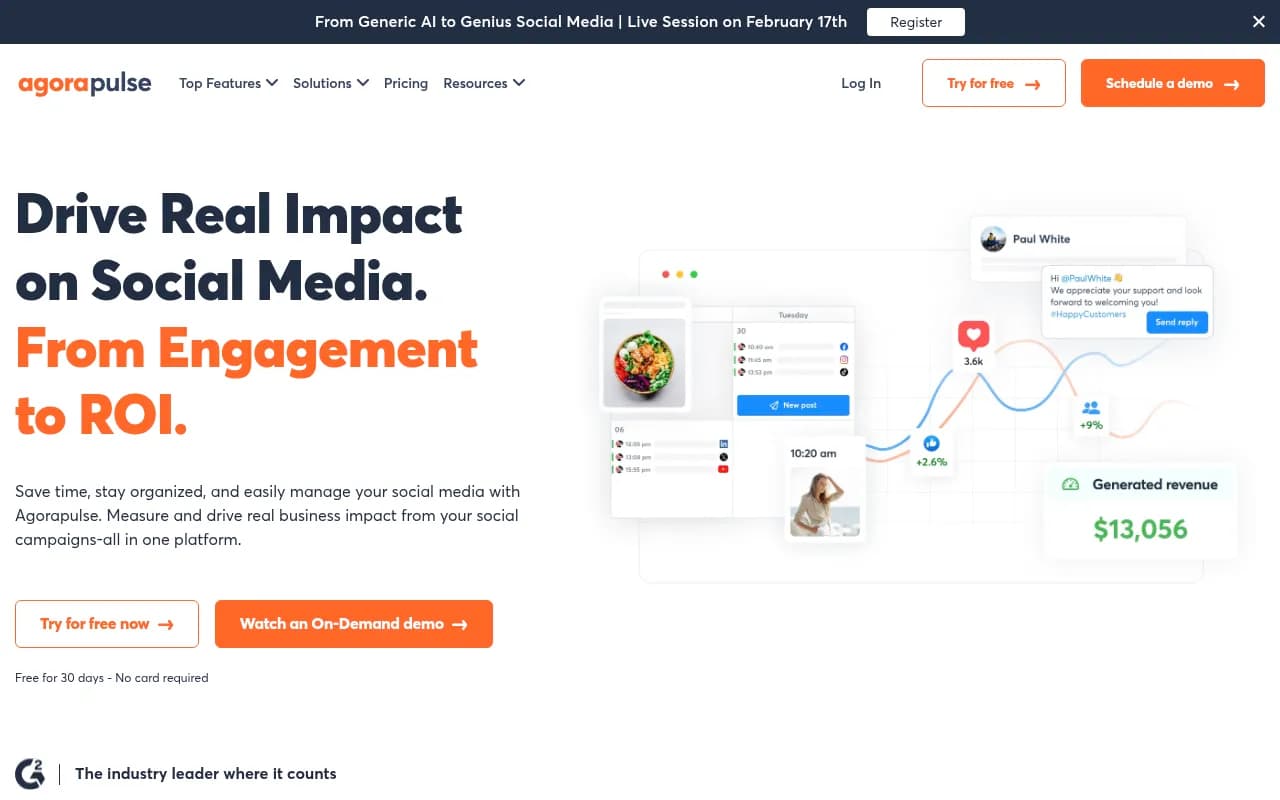
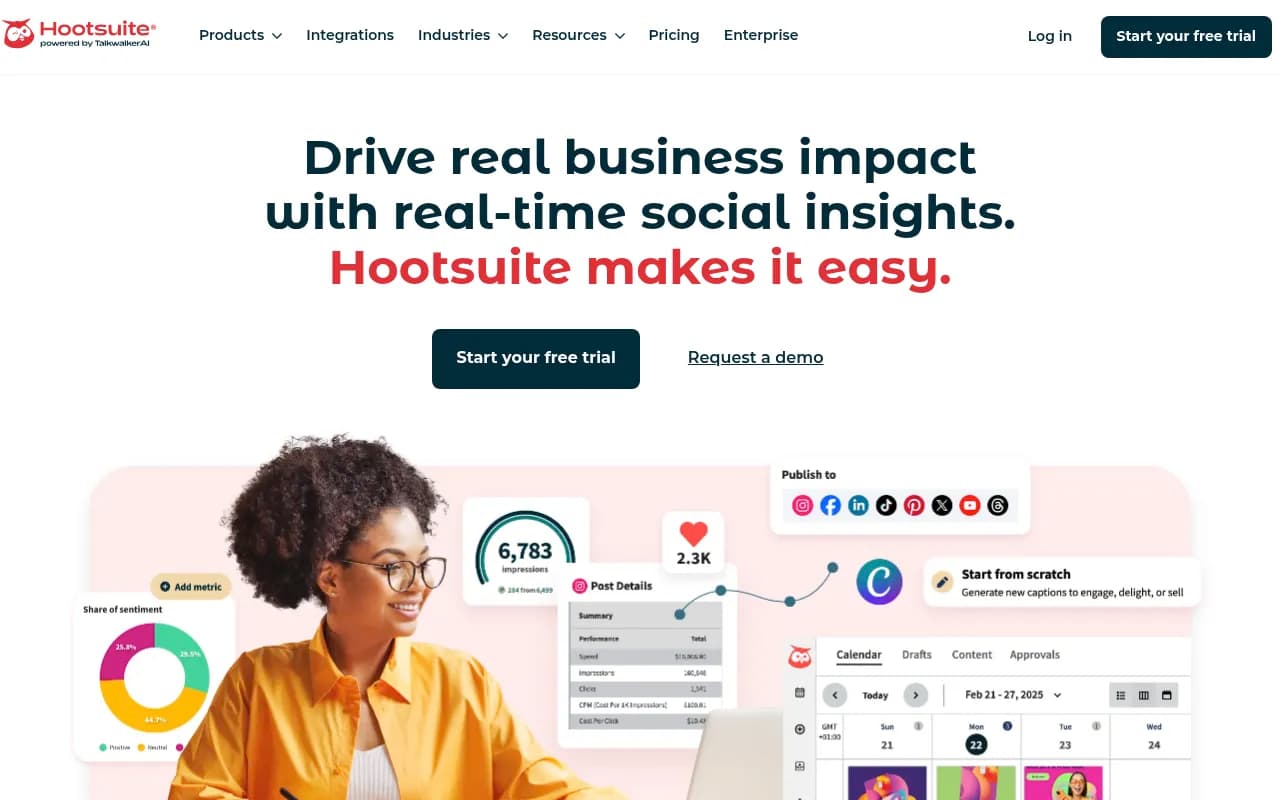
For social listening, the field is mature and crowded. If you're bootstrapped, Brand24 or Mentionlytics cover the basics. If you need deep historical data and enterprise research capability, Brandwatch or Meltwater are the standard picks, though contracts on the higher end can run into five figures a year. If you want monitoring and listening in one workspace so teams aren't toggling between tools, Sprinklr and Hootsuite package both.
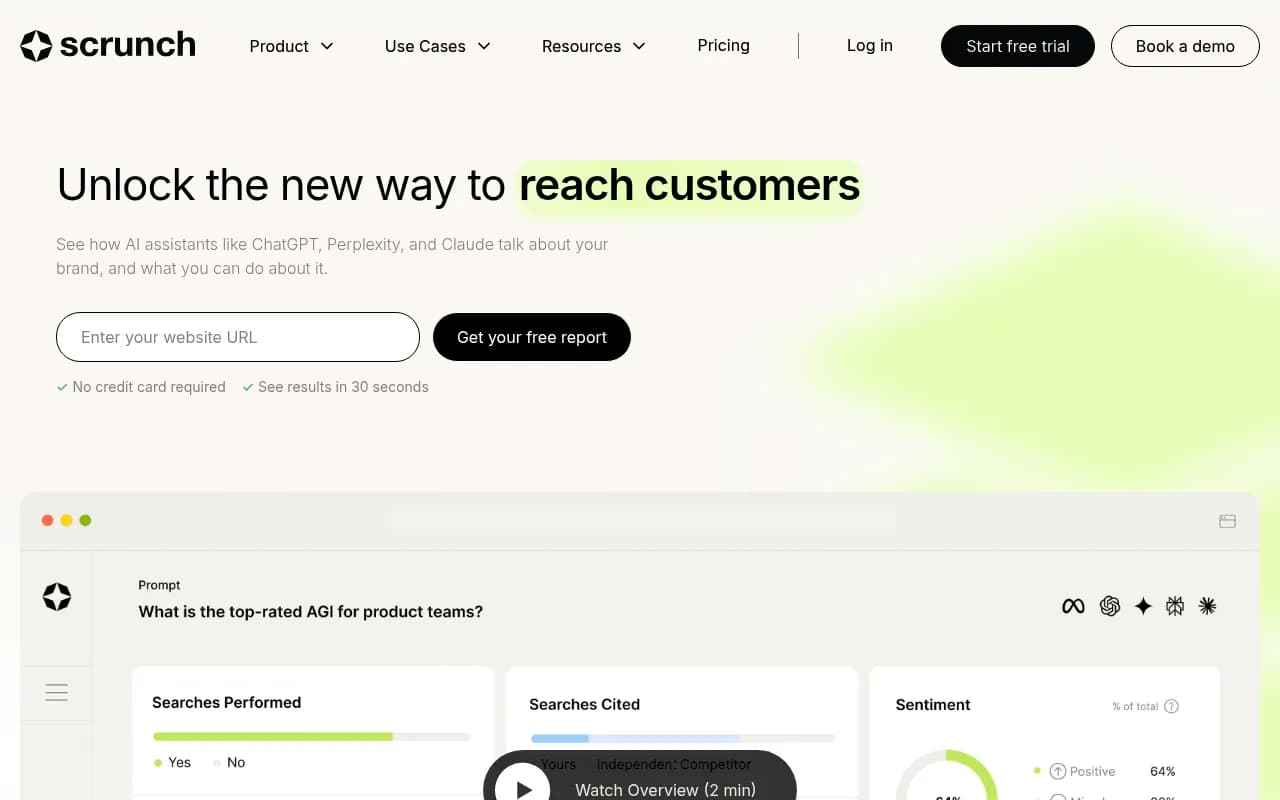
For AI brand monitoring, the market split into tiers in 2026. Layer 1 tools just track mentions across models (Otterly.AI, LLM Pulse). Layer 2 tools add analysis and competitive comparison (Peec AI, Scrunch). Layer 3 and above add content generation and CMS publishing so the tool doesn't just tell you you're invisible, it helps you fix it.


Promptwatch sits in that upper tier. Beyond tracking prompts across ChatGPT, Gemini, Claude, Perplexity, Grok, and Google's AI surfaces, it logs AI crawler visits to your own site (which most monitoring-only tools skip entirely), tracks Reddit and YouTube citations specifically, and runs Content Agents that draft and publish GEO-optimized articles to your CMS based on the gaps it finds. That closes the loop between "here's where you're invisible" and "here's the content that fixes it," which is the piece a pure tracker like Otterly.AI or a social listening platform simply doesn't do.
If you want to see the fuller field of AI visibility tools side by side, the directory at bestgeosoftware.com is a reasonable starting point, and agenticseotools.com covers the newer wave of tools that act on findings rather than just reporting them.
Who owns what
The split in most organizations that actually run both well looks like this. Community managers and support own social monitoring, because they need speed and a clear response loop. Marketing leadership and brand strategy own social listening, because the value shows up months later in campaign direction and product decisions, not in a same-day ticket close. AI brand monitoring tends to land with SEO or content teams, because fixing what AI says about you usually means fixing content, structure, and citations, the same muscles those teams already have.
The mistake to avoid is treating AI monitoring as a subset of the social team's job just because both involve "brand mentions." The failure modes, the fixes, and the timelines are different enough that bolting AI monitoring onto an existing social listening contract, without dedicated ownership, tends to produce a dashboard nobody checks.
A practical starting point
If you're running neither tool today, start with whichever channel is doing more of your customer acquisition. For most consumer brands and anything with active PR exposure, social listening still comes first, if only because a mishandled crisis is an expensive lesson. For B2B SaaS and research-heavy purchase categories, AI monitoring is arguably the higher-return investment right now, because that's where a growing share of research-intent queries actually start.
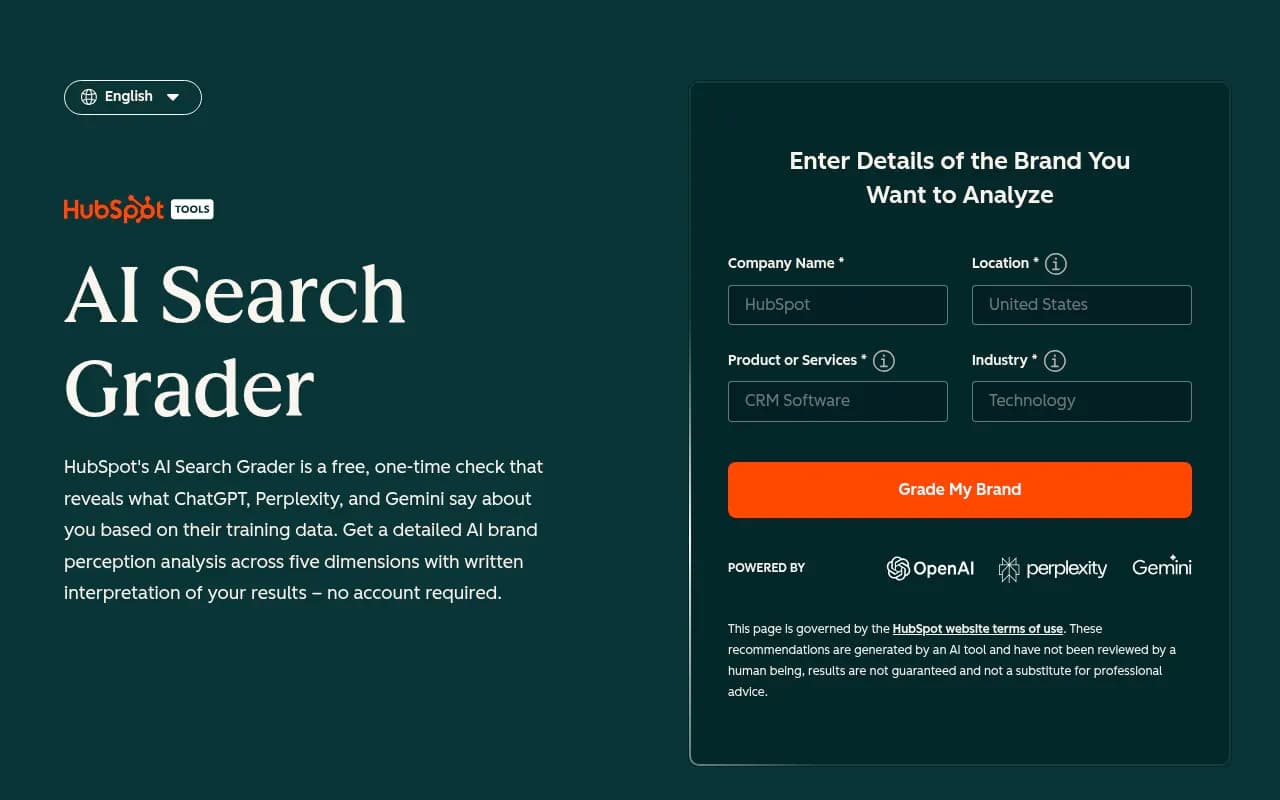
If you're already running social listening and nothing else, the fastest way to close the gap is a basic AI visibility check, running your core buyer prompts through ChatGPT, Perplexity, and Google's AI Overviews manually, then deciding whether the gap you find justifies a dedicated tool. Free options like the Amplitude AI Visibility check or HubSpot's AI Search Grader are fine for that first pass.

Once the gap is confirmed, and for most B2B and mid-market brands it will be, a proper monitoring setup with citation tracking and content follow-through, something like Promptwatch, tends to justify itself faster than another round of social listening tooling would.
Run both. Give each one an owner. And check the connection between them every quarter, because the AI side of this moves fast enough that a strategy built in January can be outdated by August.