Key takeaways
- Meteoria.ai is a brand monitoring tool for AI search, but most B2B teams quickly outgrow monitoring-only platforms when they realize visibility data alone doesn't move the needle.
- The best alternatives in 2026 combine tracking with content gap analysis, AI content generation, and traffic attribution -- closing the loop between "we're invisible" and "here's how to fix it."
- Promptwatch is the only platform in this comparison rated as a leader across all GEO categories, largely because it doesn't stop at monitoring.
- Other strong options exist depending on your specific need: competitive intelligence, ABM, intent data, or pure social listening.
- B2B buyers now use ChatGPT, Perplexity, and Google AI Overviews for early-stage research -- brands not appearing in those answers are effectively invisible at the top of the funnel.
Brand tracking in AI search is table stakes now. The harder problem is what you do after you see the data.
Meteoria.ai does a decent job of showing you where your brand appears (or doesn't) in AI-generated responses. But for B2B marketing teams running real pipeline programs, that's usually where the tool runs out of road. You get a dashboard, maybe some sentiment scores, and then you're on your own to figure out why competitors are getting cited and you're not -- and what to actually do about it.
That gap is exactly what this guide is about. The 8 alternatives below were chosen because they each solve a real problem beyond basic monitoring. Some go deep on content optimization. Some add intent data and ABM capabilities. Some are built specifically for the way B2B buyers now research vendors before ever talking to sales.
Here's what the comparison looks like at a glance before we get into each one.
Quick comparison
| Tool | Best for | Monitoring | Content generation | B2B-specific features | Free trial |
|---|---|---|---|---|---|
| Promptwatch | End-to-end GEO optimization | Yes (10 models) | Yes (AI writing agent) | Crawler logs, prompt intelligence, ChatGPT Shopping | Yes |
| HockeyStack | Revenue attribution + AI visibility | Yes | No | Multi-touch attribution, pipeline analytics | Yes |
| Profound | Enterprise AI visibility | Yes | No | Org-level reporting, deep LLM analytics | Yes |
| 6Sense | ABM + intent data | Partial | No | Buyer intent signals, account scoring | Yes |
| Demandbase | ABM + competitive intelligence | Partial | No | Account intelligence, ad targeting | Yes |
| Brand24 | Social + AI mention monitoring | Yes | No | Sentiment analysis, influencer tracking | Yes |
| Crayon | Competitive intelligence | No | No | Battlecards, sales enablement | Yes |
| ZoomInfo | Sales intelligence + prospecting | No | No | Contact data, intent signals, outreach | Yes |
1. Promptwatch -- best for B2B teams that need to fix visibility, not just measure it
Most GEO platforms show you a score. Promptwatch shows you a score and then tells you exactly what's dragging it down and what to write to improve it.
The core difference is the action loop. Answer Gap Analysis surfaces the specific prompts where competitors are getting cited but you're not. You see the exact questions AI models are answering without referencing your content. Then the built-in AI writing agent generates articles, listicles, and comparison pages grounded in real citation data -- not generic SEO filler, but content engineered to get picked up by ChatGPT, Claude, Perplexity, and the rest.
For B2B teams specifically, a few things stand out. The AI Crawler Logs show you which pages ChatGPT and Perplexity are actually reading on your site, how often they return, and where they hit errors. That's the kind of technical visibility most monitoring tools don't touch. Prompt Intelligence adds volume estimates and difficulty scores for each prompt, so you can prioritize the high-value, winnable queries instead of guessing. And page-level tracking closes the loop -- you can see which specific pages are getting cited, by which models, and tie that back to actual traffic through GSC integration or server log analysis.
It monitors 10 AI models: ChatGPT, Claude, Gemini, Perplexity, Grok, DeepSeek, Copilot, Mistral, Meta AI, and Google AI Overviews. Multi-language and multi-region support is included, which matters for B2B companies selling across geographies.
Pricing starts at $99/month for the Essential plan (1 site, 50 prompts, 5 articles). The Professional plan at $249/month adds crawler logs, state/city tracking, and 15 articles per month. Business is $579/month for 5 sites and 30 articles. Free trial available.

2. HockeyStack -- best for connecting AI visibility to revenue
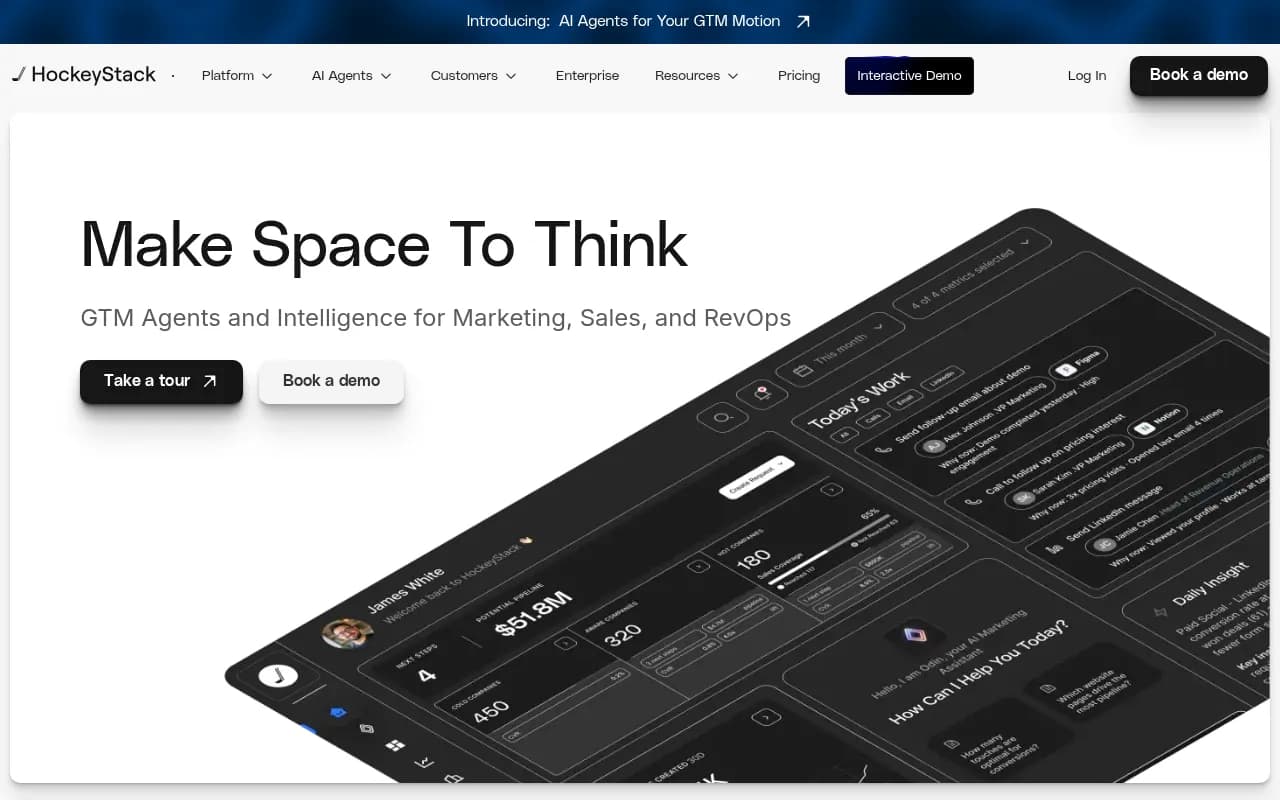
HockeyStack sits in a different category than most tools on this list -- it's primarily a marketing intelligence and attribution platform. But for B2B teams that have already invested in AI visibility and need to prove it's driving pipeline, it's genuinely useful.
The platform does multi-touch attribution across the full buyer journey, including dark social and self-reported attribution. Where it becomes relevant to AI search is in traffic attribution: if your content starts getting cited by Perplexity and you see a spike in branded search or direct traffic, HockeyStack can help you connect those dots to actual pipeline and revenue.
It's not a GEO tool in the traditional sense. It won't tell you which prompts you're missing or help you write content. But if your CFO is asking whether your AI visibility investment is paying off, HockeyStack gives you the data to answer that question.
3. Profound -- best for enterprise-scale AI visibility reporting
Profound is one of the more mature enterprise options in the AI visibility space. It covers a solid range of LLMs, provides org-level dashboards, and has the kind of reporting depth that enterprise marketing teams need when they're presenting to leadership.
Where Profound is strong: the analytics are detailed, the data is reliable, and it handles complex multi-brand or multi-product setups reasonably well. Where it falls short compared to Promptwatch is on the action side -- Profound is largely a monitoring and reporting platform. There's no content generation, no gap analysis that tells you what to write, and no crawler logs. You get good data; you just have to figure out what to do with it yourself.
For large B2B organizations that already have strong content teams and just need better visibility data to direct their work, Profound is a solid choice.
4. 6Sense -- best for B2B teams running account-based programs
6Sense is primarily an ABM and revenue intelligence platform, but it's worth including here because the way B2B buyers now research vendors has changed how ABM works. Buyers are using AI tools to shortlist vendors before they ever visit your website. If you're running account-based programs and your brand isn't appearing in AI-generated responses when your target accounts are doing research, you're losing deals you don't even know you're losing.
6Sense's core strength is intent data -- it surfaces accounts that are actively researching your category and lets you prioritize outreach accordingly. It also has ad targeting capabilities that let you reach buying committees at specific accounts. The AI visibility angle is more indirect: 6Sense helps you identify and engage accounts before they go dark, which is increasingly important as more of the research phase happens inside AI tools rather than on your website.
It's expensive and complex to implement, but for B2B teams with mature ABM programs and real account lists, it's one of the more powerful platforms available.
5. Demandbase -- best for combining competitive intelligence with account targeting
Demandbase occupies similar territory to 6Sense but with a stronger emphasis on competitive intelligence and advertising. The platform lets you see which accounts are researching your competitors, run targeted ads to those accounts, and track engagement across the buying committee.
For B2B companies in competitive markets, the competitive intelligence layer is genuinely useful. You can see when accounts that were previously researching you start showing intent signals for a competitor, which gives your sales team a reason to reach out. The advertising capabilities let you stay visible to target accounts even when they're not on your website.
Like 6Sense, Demandbase doesn't directly address AI search visibility -- it won't tell you whether your brand is appearing in ChatGPT responses. But it addresses the upstream problem of making sure the right accounts are aware of you during their research phase, which increasingly happens in AI tools.
6. Brand24 -- best for monitoring brand mentions across AI and social
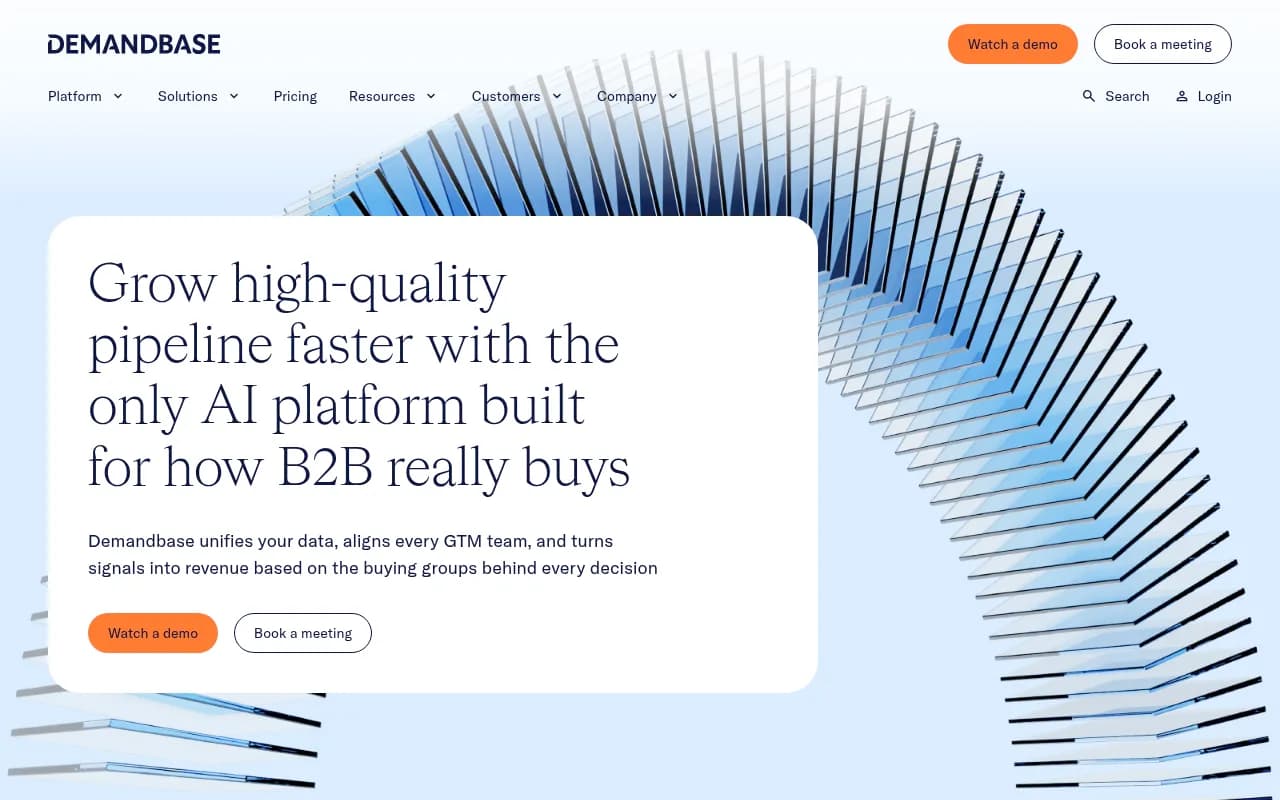
Brand24 is a social listening and brand monitoring platform that has expanded its coverage to include AI-generated mentions. It tracks mentions across 25 million+ sources in real time, including social media, news, forums, and increasingly, AI search responses.
For B2B teams that need a single place to monitor brand sentiment across traditional and AI channels, Brand24 is one of the more affordable options. The sentiment analysis is solid, and the influencer tracking features are useful for identifying who's talking about your brand or your competitors.
The limitation is that Brand24 is fundamentally a monitoring tool. It tells you what's being said and where, but it doesn't help you influence what AI models say about you. There's no content gap analysis, no writing tools, and no crawler data. If you're looking for a lightweight monitoring solution to complement a more action-oriented platform, Brand24 makes sense. As a standalone GEO solution for B2B, it's not enough.
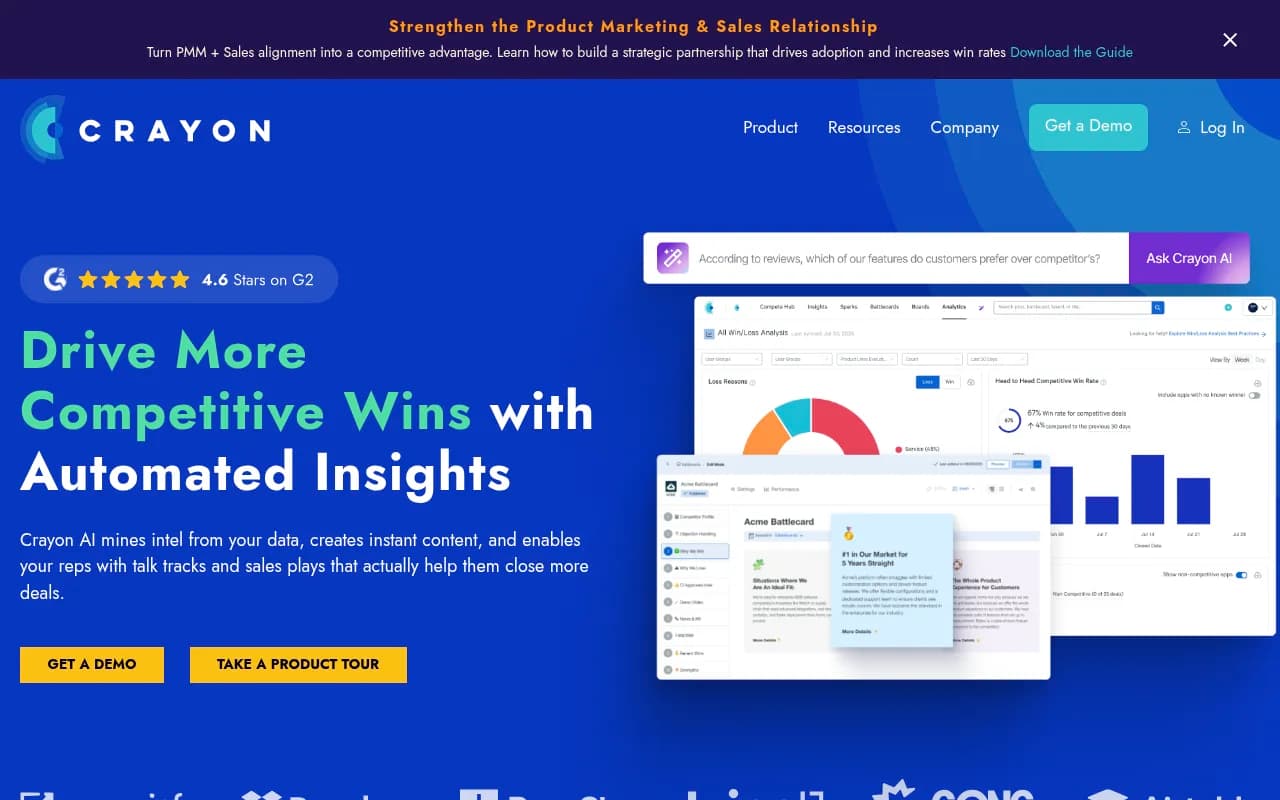
7. Crayon -- best for competitive intelligence that feeds into sales
Crayon is a competitive intelligence platform focused on helping sales and marketing teams understand what competitors are doing and use that information to win deals. It tracks competitor website changes, messaging updates, pricing changes, and content -- then surfaces that information as battlecards and alerts that sales reps can actually use.
The connection to AI visibility is indirect but real. If a competitor is consistently getting cited in AI responses for a particular category of queries, that's a signal that they've published content on those topics that AI models trust. Crayon can help you track what content competitors are producing, which gives you a starting point for understanding where your content gaps might be.
For B2B teams with dedicated sales enablement functions, Crayon is a strong tool. It's not a GEO platform, but it feeds the competitive intelligence that should inform your GEO strategy.
8. ZoomInfo -- best for B2B prospecting and intent-driven outreach
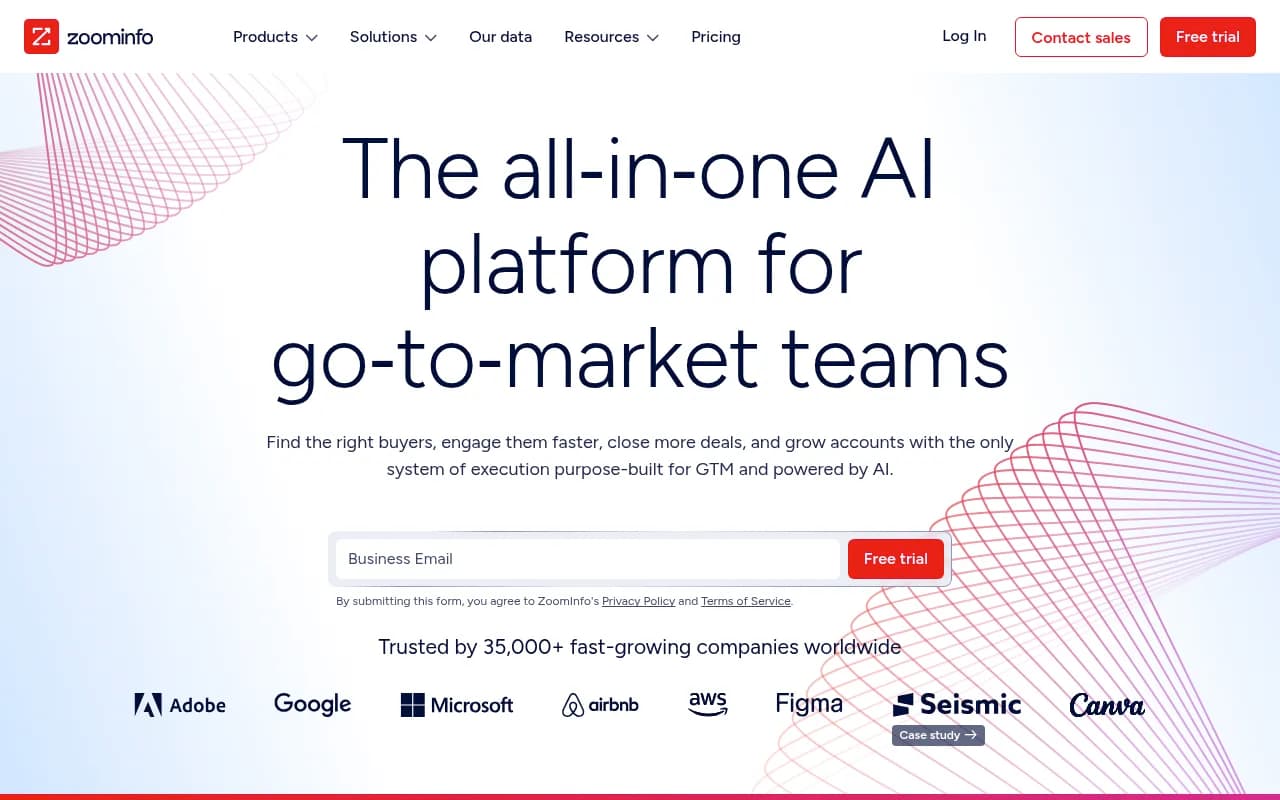
ZoomInfo is primarily a sales intelligence and prospecting platform, but its intent data capabilities make it relevant to the AI visibility conversation. The platform tracks buying signals across the web -- including content consumption patterns -- and surfaces accounts that are actively in-market for solutions like yours.
For B2B marketing teams, ZoomInfo's intent data can help you prioritize which accounts to target with content and outreach. If an account is consuming content about your category, they're probably also asking AI tools questions about your category. Getting your brand into those AI responses is one way to show up during that research phase.
ZoomInfo also has solid contact data and outreach automation capabilities, making it useful across the full top-of-funnel workflow. It's not a GEO tool, but for B2B teams building a complete AI-era go-to-market stack, it's a piece worth considering.
What to look for when evaluating Meteoria.ai alternatives
The monitoring vs. optimization distinction is the most important one to get right. A lot of platforms in this space will show you a visibility score and call it a day. That's useful context, but it doesn't tell you what to do next.
For B2B teams specifically, here's what actually matters:
Prompt intelligence. Not just "are you mentioned?" but "which prompts are driving citations, what volume do they have, and how hard are they to win?" Without this, you're optimizing blind.
Content gap analysis. You need to know which questions AI models are answering without referencing your content. That's where the opportunity is. Tools that show you your own visibility without showing you what you're missing are only telling half the story.
Content generation. Writing content that gets cited by AI models is different from writing content that ranks in Google. The best platforms help you create the right content, not just identify that you need it.
Traffic attribution. AI visibility that doesn't connect to pipeline is hard to justify. Look for platforms that can tie AI citations to actual website visits and conversions, whether through GSC integration, server log analysis, or a tracking snippet.
Crawler logs. Knowing which pages AI crawlers are reading (and which they're ignoring) is the technical foundation of any real GEO program. Most monitoring-only tools don't surface this data at all.
The B2B buying journey has fundamentally shifted. Buyers are doing more research independently, using AI tools to shortlist vendors, and arriving at sales conversations already partially decided. Brands that aren't visible in those AI responses are getting filtered out before the conversation even starts.
That's why brand tracking alone isn't enough. You need to understand where the gaps are, create content that fills them, and track whether it's working. The tools above each address part of that problem -- but Promptwatch is the only one that addresses all of it in a single platform.