Key takeaways
- Donors and members now ask ChatGPT and Perplexity "is this charity legitimate" or "best association for X" before they ever visit your website, and a wrong or outdated answer quietly costs you gifts and memberships.
- Most dedicated AI visibility platforms (Profound, Peec AI, Brandlight) are priced for enterprise marketing teams, not a two-person comms department. Otterly.AI, at $29/month, is the most realistic entry point for most nonprofits.
- Before paying for any tracker, fix the free stuff: your Candid/GuideStar profile, your Charity Navigator rating, your LinkedIn company page, and getting your dues/program facts out of PDFs and onto crawlable pages.
- Reddit citations in ChatGPT collapsed from roughly 4% to 0.5% in mid-August 2026 — don't lean on community forum chatter as your visibility strategy.
- Associations in particular should watch for "named without a link," "absorbed without credit," and the worst case, being replaced by a competitor or stale info in an AI answer about dues or exam rules.
Why this suddenly matters for mission-driven organizations
For years, nonprofit marketing meant SEO, email, and maybe some paid search if the budget allowed. That's not where the donor journey starts anymore. Someone curious about disaster relief, animal welfare, or whether your certification body is legitimate is increasingly typing the question straight into ChatGPT or Perplexity instead of Google. And unlike a Google results page with ten blue links, an AI answer usually names one organization, maybe two, and moves on.
If that answer names a competitor, or worse, gets your dues structure or your program's effectiveness wrong, you don't find out from a bounce-rate dashboard. You find out when a board member forwards you a screenshot asking why ChatGPT thinks your association disbanded in 2023.
This guide is about the tools that help you see and fix that, written specifically for organizations that don't have a six-figure martech budget.
What makes nonprofit/association AI visibility different
A few things set this sector apart from typical brand GEO work, and they should shape which tool (if any) you buy.
Trust layers matter more than domain authority. A study on nonprofit AI citations found that AI engines tend to name a charity for four reasons: evaluator ratings (Charity Navigator, GiveWell, Candid's transparency seal, BBB Wise Giving Alliance), documented effectiveness in machine-readable form, earned media, and consistency across your own site, Wikipedia, Wikidata, and GuideStar. Against Malaria Foundation and GiveDirectly get cited well above their budget size because their impact is written down in a way models can retrieve, not because they have a high-authority domain.
Charity Navigator and GiveWell are effectively fighting over the same AI real estate. Charity Navigator wins on breadth, rating around 200,000 U.S. nonprofits with structurally consistent pages and IRS Form 990 data baked in. GiveWell wins on depth, with long evidence documents and explicit "top charity" lists that models retrieve directly. If your organization isn't rated by either, you're invisible to a huge chunk of donor-intent queries before a visibility tool ever enters the picture.
Associations face a different, sneakier problem. One analysis of association AI answers laid out five ways a professional body shows up: cited with a link, named with no link, recommended to prospective members, absorbed into a paraphrased answer with zero credit, or misrepresented, meaning stale dues figures or a competitor named in your place. That last one is the scary one. It can quietly stop membership renewals and exam registrations before anyone even visits your site.
Content often lives in the wrong format. A recurring finding across association audits is that dues, CE requirements, and chapter locations are usually trapped in PDFs or calendar widgets models can't parse cleanly. The fix is cheap: pricing tables labeled by audience (member vs. nonmember vs. student), one page per credential, and Organization/Course/Event schema. This is a content problem a small comms team can usually solve in a quarter, no new software required.
What the citation data says about where to focus
Promptwatch tracks hundreds of billions of AI citations across ChatGPT, Gemini, Perplexity, Claude, and Google's AI surfaces, and a few of its findings from 2026 are directly useful here, even though the dataset isn't nonprofit-specific.
First, the slots are scarcer than people assume. ChatGPT typically cites around five sources per web-search response, while Google AI Overviews and Perplexity cite roughly ten, according to Promptwatch's average sources per response data. That means ChatGPT is the hardest engine to break into and Perplexity and AI Overviews are the more forgiving targets for a smaller organization trying to get a first citation.
Second, you don't need Wikipedia-level authority. Promptwatch's citation share by domain rank data shows mid-authority domains (roughly DR 46-75) earned nearly half of all ChatGPT citations in August 2026, while the very top tier actually shrank across the month. A well-structured, focused nonprofit site has a real shot.
Third, don't bet your strategy on Reddit. Promptwatch's Reddit citation data shows reddit.com's share of ChatGPT citations fell from about 4% to 0.5% practically overnight in mid-August 2026. If part of your plan was getting your cause discussed on r/Charity or r/EffectiveAltruism, that channel just got a lot weaker for ChatGPT specifically, though Google's AI surfaces declined far more gradually.
Fourth, LinkedIn behaves differently by engine, which matters for associations with professional audiences. Promptwatch's LinkedIn citation page types data found that on ChatGPT, company pages and ordinary feed posts now drive the majority of LinkedIn citations, while Pulse articles collapsed. On Google's AI Mode and AI Overviews, it's the reverse, Pulse articles still lead. Practically: keep your LinkedIn company page complete and current, and don't abandon regular posting even if long-form articles feel like the more "serious" format.
The tools, and what they actually cost in 2026
Here's where it gets practical. Most of the well-known AI visibility platforms are built and priced for enterprise marketing departments, and 2026 made that gap wider, not narrower.
Profound is the clearest example. Its self-serve $99/$399 plans were withdrawn by late September 2026, right around its $180M Series D. Today, brands get a 7-day trial or a custom-quoted enterprise plan that one competing vendor estimates at $2,000-$5,000+ per month. That puts it out of reach for almost every nonprofit and association budget.
Peec AI sits in the mid-market, with tiers reported around €89 (Starter), €199 (Pro), and €499 (Enterprise) per month. Workable for a well-funded national association, tight for a local chapter.

Otterly.AI is the realistic entry point. Its Lite tier runs $29/month for 15 tracked prompts across ChatGPT, Google AI Overviews, Perplexity, and Microsoft Copilot, with unlimited team seats. Standard jumps to $189/month with Agent Analytics and API access, and Premium is $489/month. There's a 14-day free trial and a 15% discount for annual billing. Engine add-ons (Google AI Mode, Gemini, Claude) cost extra on top of the base tiers.

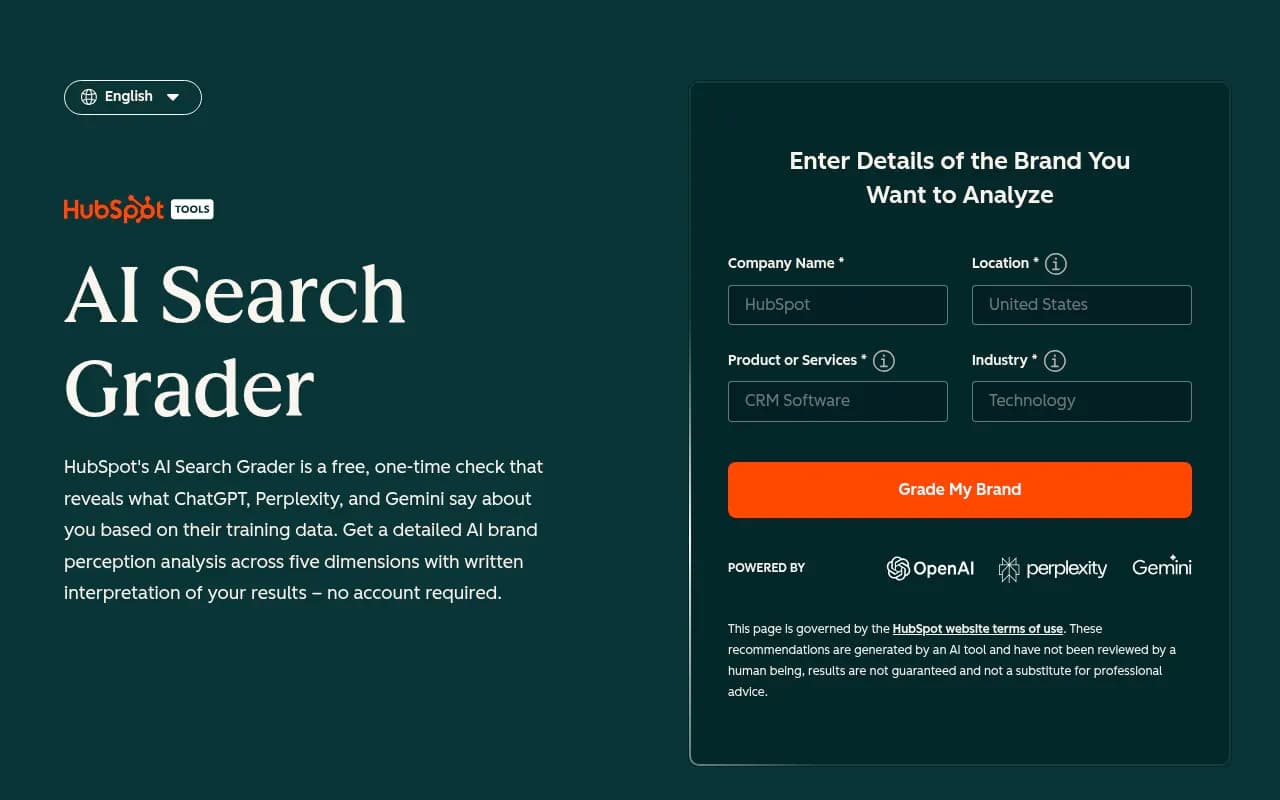
For organizations already on HubSpot, its AEO add-on includes 25 prompts and may make sense simply because you're not adding a new vendor relationship. And if you just want a one-time baseline before committing any budget, free single-prompt checkers exist specifically for this, worth running before your next board meeting so you can show, in plain terms, how AI currently describes your organization.
If your organization eventually outgrows the basics and wants a platform that does more than monitor, it's worth knowing that tools like Promptwatch exist at a different point on the spectrum: tracking citations, surfacing content gaps, and generating and publishing GEO-optimized content, not just telling you a score. That's overkill for most small nonprofits today, but it's the direction the category is heading, and larger associations with content teams may find the jump worthwhile sooner than they expect.

Comparison table
| Tool | Starting price | Engines covered | Best fit for nonprofits/associations |
|---|---|---|---|
| Otterly.AI | $29/mo (Lite) | ChatGPT, AI Overviews, Perplexity, Copilot (add-ons for Gemini, AI Mode, Claude) | Budget-constrained orgs, solo comms staff, first-time trackers |
| Peec AI | ~€89/mo (Starter) | ChatGPT, Gemini, Perplexity, and more | National associations with some marketing budget |
| HubSpot AEO | Included/add-on to existing HubSpot plan | ChatGPT, Perplexity, Gemini | Orgs already running HubSpot CRM |
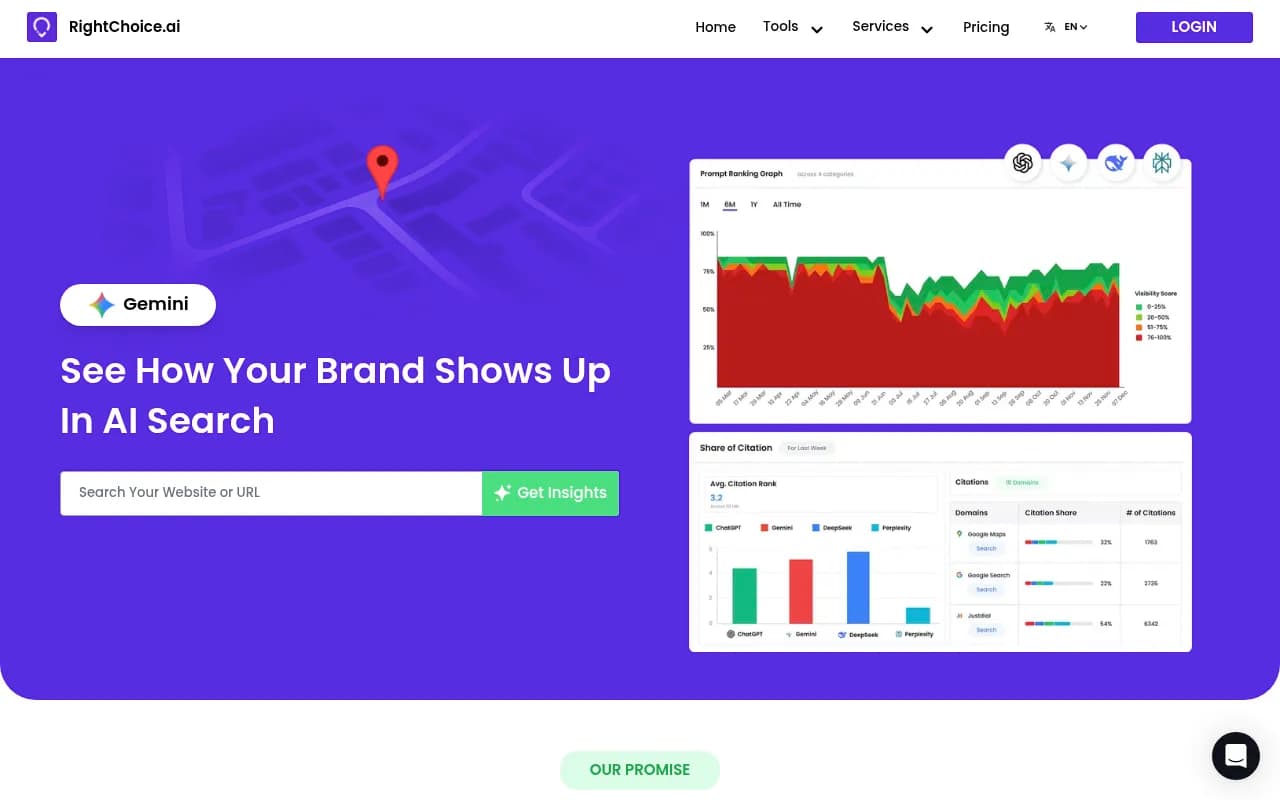
| Free checkers (RightChoice.Ai, HubSpot AI Search Grader) | $0 | Varies, usually 1-2 prompts per run | One-time board-level baseline before buying anything |
| Profound | Enterprise custom quote (self-serve withdrawn Sept 2026) | ChatGPT, Gemini, AI Overviews | Large, well-funded national bodies only |
| Promptwatch | $95/mo (Essential) | ChatGPT, Gemini, Claude, Perplexity, Grok, AI Overviews, AI Mode, and more | Associations/nonprofits ready to move from tracking to active content fixes |
A practical rollout order, cheapest fixes first
If your budget is genuinely tight, don't start by shopping for software. Start here, in order:
- Claim and complete your evaluator profiles. Candid/GuideStar, Charity Navigator, and BBB Wise Giving Alliance if relevant. This costs staff time, not money, and it's the single biggest lever on whether AI engines consider you a legitimate, citable organization at all.
- Get your facts out of PDFs. Dues by membership tier, CE requirements, chapter locations, program outcomes. One clean, crawlable page per credential or program, each one answering a specific, narrow question.
- Write numbers, not slogans. "We served 12,400 meals across three counties in 2025" gets cited. "We make a difference" does not. This is the cheapest content change you can make and arguably the highest-leverage one.
- Fix cross-references. Wikipedia, Wikidata, LinkedIn company page, sector directories, accreditation bodies linking to you accurately. Inconsistency between these and your own site is exactly what causes the "misrepresented" outcome associations dread.
- Add structured data. Organization schema to defend against name/acronym confusion, Course schema per certification, Event schema for chapters and conferences.
- Only then, consider a tracker. Once the free fixes are done, a tool like Otterly.AI gives you an ongoing read on whether it's working, rather than a one-time snapshot.
Don't expect a nonprofit discount
One gap worth stating plainly: TechSoup, the main clearinghouse for nonprofit tech discounts, now has a GenAI section covering tools like Otter.ai, Notion AI, ChatGPT Team, and Microsoft 365 Copilot. None of the major AI visibility platforms, Profound, Peec AI, Otterly, Semrush's AI toolkit, Brandlight, currently appear in that catalog. Budget for full retail price, or lean harder on the free checkers and the content fixes above.
Watching for the worst outcome: being replaced
The failure mode that should worry associations most isn't being ignored by AI, it's being replaced. If a competing certification body, a vendor, or simply outdated information about your own org gets named instead of you in an answer about dues or exam eligibility, that stops a membership signup before anyone reaches your website. A monthly check, even a manual one using free single-prompt checkers, on your three or four highest-intent queries ("best certification for X," "is [acronym] legitimate," "how much does [org] membership cost") is worth doing regardless of whether you ever buy a dedicated platform.
If your organization does grow into needing ongoing, structured content production to defend and grow that visibility, that's the point where a fuller GEO platform like Promptwatch earns its keep, since it pairs the monitoring with actual content generation and CMS publishing rather than leaving you to interpret a dashboard on your own. For most nonprofits and associations in 2026, though, the honest answer is: fix your evaluator profiles and your PDFs first, track with something cheap like Otterly.AI, and only scale up the tooling once the content underneath it is actually worth tracking.