Key takeaways
- Generic AI visibility tools (Profound, Otterly.AI, Scrunch) track citation share and sentiment, but none of them map content against FINRA, SEC, or NAIC rules — that gap is why a separate category of compliance-first vendors (Blee, Sedric, Norm AI, Adclear) exists.
- FINRA's Regulatory Notice 26-14 (July 2026) collapses the old "static vs. interactive" social media distinction into one risk-based standard that explicitly covers AI-generated and influencer content.
- More than 20 US states have now adopted the NAIC AI Model Bulletin, which requires insurers to keep a written AI Systems Program with board-level accountability and ongoing third-party AI oversight.
- Reddit's share of ChatGPT citations collapsed from roughly 3.8% to under 1% in mid-August 2026 — a platform-wide shift worth knowing before you interpret a sudden swing in your brand monitoring dashboard as a real sentiment event.
- The honest setup for most regulated marketing teams in 2026 is two tools working together: a compliance engine that reviews and archives content before it goes out, and a brand/citation monitor that tracks what AI engines are already saying about you after it's out.
Why banking and insurance can't use off-the-shelf brand monitoring
Most AI brand monitoring tools were built for SaaS and consumer brands trying to figure out if ChatGPT recommends them over a competitor. That's a real problem worth solving, but it's a much smaller problem than the one a bank or insurance carrier has.
A retail SaaS company that gets a sentiment hit in an AI answer loses some pipeline. A bank or insurer that lets an AI-reviewed marketing email slip through without the right disclosures is looking at FINRA Rule 2210 exposure, a state insurance department inquiry, or a UDAAP complaint. The stakes attach to almost every piece of outbound content: an email, a landing page, a social post, even an AI chatbot's response to a policyholder question. That's why this category splits into two distinct jobs that get confused constantly: compliance review of content before it ships, and visibility monitoring of how AI engines talk about your brand after it's out in the wild. Both matter. They are not the same tool, and buying one doesn't cover the other.
The regulatory backdrop you're actually building against
It's worth being specific about what's changed in 2026, because "AI compliance" means different things depending on which regulator you answer to.
FINRA. Regulatory Notice 26-14, released July 9, 2026, proposes modernizing Rule 2210 (Communications with the Public) specifically for social media and generative AI. The current split between "static" content (pre-approved, filed) and "interactive" content (exempt from pre-approval) goes away, replaced by a single risk-based standard that weighs platform, audience, content type, product, and who prepared it. The practical effect: AI-generated posts and influencer content are now squarely the firm's responsibility under the same fair-and-balanced, non-misleading standard as a printed brochure.
SEC. The Marketing Rule (206(4)-1 under the Investment Advisers Act) doesn't carve out an exception for AI. If a model writes your ad copy, it still has to be factually accurate, free of unsubstantiated performance claims, and archived under Rule 204-2. The SEC has already brought enforcement actions against advisers over AI-assisted advertisements that made unsupported claims — this isn't theoretical.
NAIC (insurance). The NAIC AI Model Bulletin isn't self-executing; it only bites once a state insurance department adopts it, and by mid-2026 more than 20 jurisdictions had. The core ask is a written AI Systems Program with senior-management and board accountability, bias testing for any AI-influenced underwriting or claims decision, and ongoing oversight of vendor AI tools — meaning you're still on the hook even if a third party built the model.
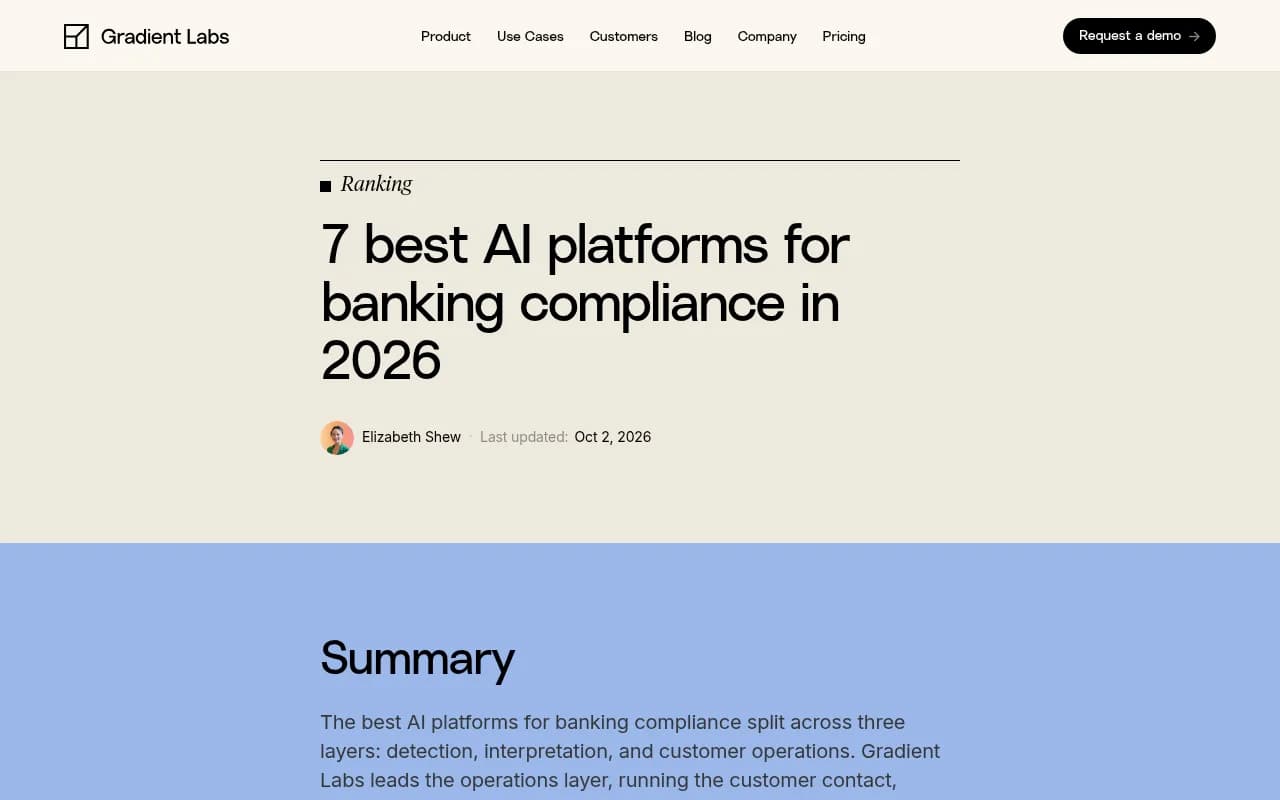
One useful mental model, borrowed from Gradient Labs' breakdown of banking compliance platforms, splits the whole space into three layers: detection (finding the risk — transaction monitoring, sanctions screening), interpretation (turning regulatory text into enforceable policy and automated review), and operations (running the case to resolution with a customer, inside a deadline). Marketing and brand compliance tools live almost entirely in the interpretation layer. Brand/citation monitoring tools, by contrast, sit outside this framework entirely — they're watching the outside world's AI systems, not your internal content pipeline.
Compliance-first content review tools compared
These are the vendors built specifically to review marketing content against financial services and insurance regulation before it publishes, and in some cases to keep monitoring it afterward.
| Tool | Primary layer | Coverage | Notable detail |
|---|---|---|---|
| Blee | Interpretation | SEC, FINRA, FTC, all 50 state insurance departments, ADA, ad-platform policies | Raised $27M; cites Accenture research that 93% of compliance pros say AI cuts human error |
| Sedric | Interpretation + post-publication monitoring | US + UK (FCA Consumer Duty templates) | Scans affiliate/partner content after it's live, not just before publish |
| Norm AI | Interpretation | Enterprise-wide compliance, marketing is one module | $120M Series C, backed by Vanguard, Citi, Bain Capital; New York Life partner, no dedicated media UI |
| Adclear | Interpretation | UK/FCA-heavy, plus US rules (FINRA 3290) | Allica Bank case study on centralizing financial promotions approval |
| Gradient Labs | Operations | FCA, FDCPA, TCPA, Reg F, UDAAP, GDPR, EU AI Act | Not a marketing tool — runs compliant customer-facing conversations, not content review |
A few honest caveats worth flagging before you shortlist any of these. Norm AI is broad and well-capitalized, but it's an enterprise compliance platform where marketing review is a smaller slice of a much bigger product — expect a longer implementation and less of a built-for-marketers interface than Sedric or Blee. Adclear leans UK/FCA-first, which matters if your organization is US-only. None of these five published transparent self-serve pricing at the time of writing; expect a sales-led process and custom quotes scaled to org size.
Where AI visibility monitoring fits in
Here's the part compliance-first vendors don't cover: what ChatGPT, Gemini, Perplexity, and Google AI Overviews are already saying about your bank or insurer, right now, to the millions of people asking them questions like "is [bank] safe" or "best car insurance for high-risk drivers."
This is a visibility problem, not a review problem, and it needs a different kind of tool. Promptwatch is the platform I'd point a regulated brand toward here, mostly because it goes past simple mention-tracking into something closer to an early-warning system. Its crawler logs show exactly when AI bots from OpenAI, Anthropic, Google, and Meta hit your site and what they read, which matters a lot for a bank trying to understand why its own disclosures page either does or doesn't show up as a citation. It also tracks Reddit and YouTube citations specifically, which is relevant for financial brands because forum threads about banks and insurers carry real weight in what these engines surface.

That Reddit point deserves its own callout because it's easy to misread in a dashboard. Promptwatch's data shows Reddit held a steady 3.8% share of ChatGPT Search citations through early August 2026, then collapsed to under 1% starting August 14, an 86% relative drop, while Google AI Overviews and AI Mode only declined gradually over the same window (Reddit citations are dropping in ChatGPT). If your monitoring tool showed a sudden drop in Reddit-sourced mentions of your bank around that date, that's almost certainly a platform-wide ChatGPT behavior change, not a real shift in how people talk about you. A compliance or marketing team that doesn't know this context might chase a phantom problem.
It's also worth knowing how thin the citation real estate actually is. Promptwatch's data puts ChatGPT at roughly 5 sources per web-search response, compared to around 10 for Google AI Overviews and Perplexity (Average sources per response). With only about five slots in ChatGPT, one outdated or misleading third-party page about your interest rates or claims process can occupy real estate that should be yours — a strong argument for proactive monitoring rather than occasional manual checks.
For content format, Promptwatch's August 2026 data on ChatGPT citation types shows documentation-style pages rose from 3.3% to 8.2% of citations over the month, while social posts collapsed from 4.4% to under 1% (ChatGPT Citation Types Over Time - August 2026). For an insurer, that's a reasonably direct argument to invest in clear, well-structured policy FAQs and claims-filing guides rather than trying to get AI visibility through social amplification.
AI visibility tools compared for regulated brands
None of the general AI visibility platforms market themselves as compliance tools, and that's fine — that's not their job. But some are a better fit for a regulated brand's monitoring needs than others, mostly based on how deep their citation and crawler data goes.
| Tool | Crawler logs | Reddit/YouTube tracking | Content generation | Starting price |
|---|---|---|---|---|
| Promptwatch | Yes | Yes, both | Yes, with CMS publishing | $95/mo (Essential) |
| Profound | No | No | No | ~$99-499/mo |
| Otterly.AI | No | No | No | $29/mo |
| Scrunch AI | No | Limited | No | Custom |
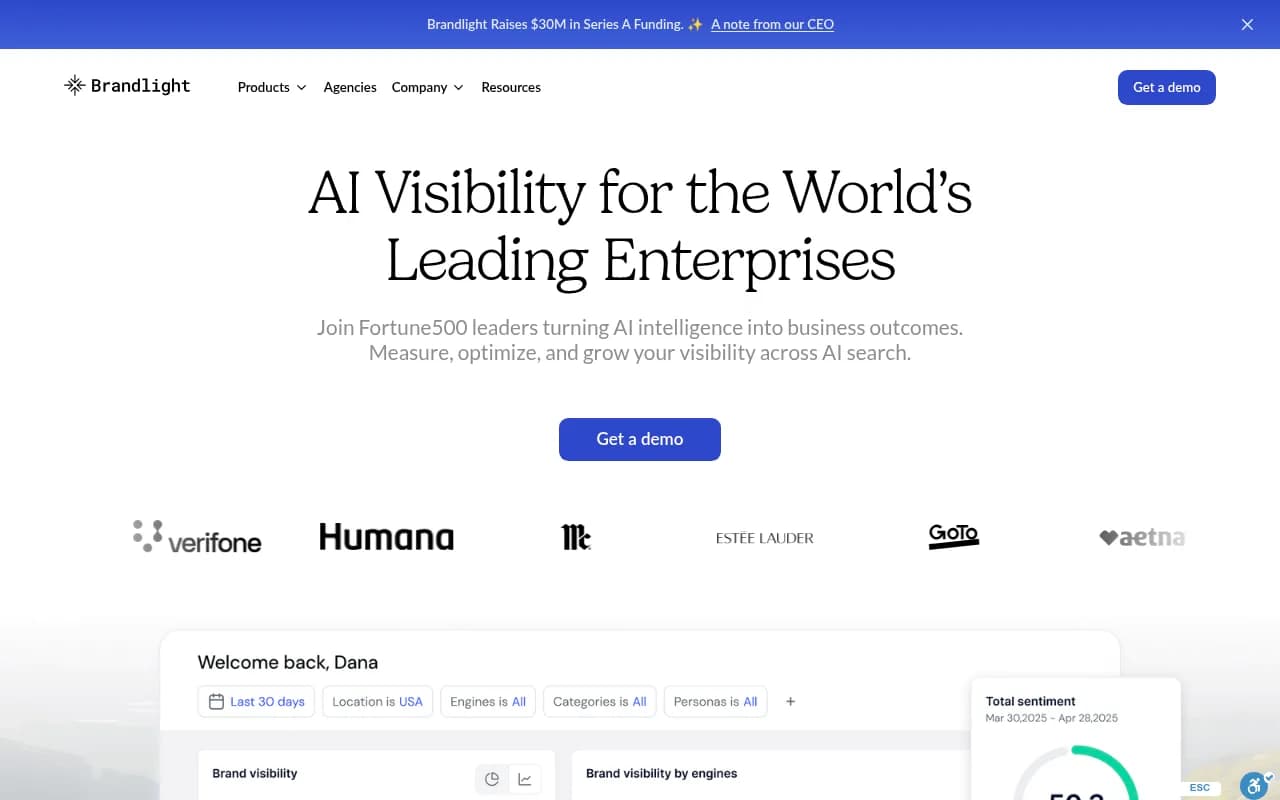
| Brandlight.ai | No | No | No | Custom |

The generic monitoring tools are fine for a first pass at understanding how often a bank or insurer gets mentioned by name. What they don't give you is the why behind visibility, which is the part a compliance-conscious marketing team actually needs — did AI cite your official rates page or a third-party comparison site with stale numbers? That's a crawler-log and citation-source question, not a mention-count question.
A practical setup for 2026
If you're building this out at a bank, insurer, or wealth management firm, the stack that actually holds up to an examiner's questions looks something like this:
- A compliance review layer (Sedric, Blee, or similar) that checks every outbound piece of marketing content against FINRA, SEC, or NAIC-relevant rules before it publishes, with a logged, auditable approval trail.
- An AI visibility layer that tracks what's being cited and said about your brand across ChatGPT, Gemini, Perplexity, and Google's AI surfaces, so you catch misinformation or outdated third-party claims before a regulator or a customer does.
- A documented policy for how your organization treats AI-generated content internally — who reviews it, what gets logged, and how long records are kept. FINRA's 2026 guidance is explicit that existing supervision and recordkeeping obligations don't disappear just because an AI model wrote the first draft.
The mistake I'd flag most often: treating brand/AI visibility monitoring as a nice-to-have marketing metric when, for a regulated financial brand, it's closer to a risk function. If you want to look further at the broader AI visibility space before picking a platform, the directory at bestgeosoftware.com covers a wider range of GEO tools worth comparing side by side. For banks and insurers specifically, though, the answer isn't choosing between compliance review and AI visibility monitoring — it's accepting you probably need both, running separately, and talking to each other.