Key takeaways
- Nearly 9 out of 10 B2B buyers now consult AI tools before speaking to a sales rep, meaning your cold email arrives after an AI has already shaped their perception of your brand.
- 37% of buyers start their research with AI tools instead of Google, and that number is climbing fast.
- Cold outreach still works -- over 50% of B2B leads still come from direct outreach -- but the context in which it lands has fundamentally changed.
- Brands invisible in AI search are at a serious disadvantage: a prospect who's never heard of you from ChatGPT or Perplexity is a colder lead than you think.
- Fixing your AI search visibility is now a prerequisite for effective cold outreach, not a separate marketing project.
There's a version of cold outreach that still works in 2026. And there's a version that's quietly failing, not because the email is bad, but because the brand behind it doesn't exist anywhere the buyer has already looked.
That's the shift most sales teams haven't fully processed yet.
The conventional debate -- "is cold email dead?" -- misses the real question. Cold email isn't dead. But the conditions under which it operates have changed in a way that makes your AI search presence a direct input into your outreach conversion rate. The two things are now connected, whether you've planned for that or not.
The pre-email research moment nobody talks about
Here's what a typical B2B buying journey looks like in 2026. A VP of Marketing at a mid-size SaaS company gets your cold email. Before they reply -- or more likely, before they decide not to reply -- they do one of two things. They Google you, or they ask ChatGPT.
According to a 2026 AI + Search Behavior study by Eight Oh Two, 37% of consumers now start their search with AI tools rather than Google or Bing. In B2B contexts, that number is almost certainly higher. Gartner has projected that by 2027, 95% of seller research workflows will begin with AI, up from less than 20% in 2024. That's not a gradual shift -- that's a near-total replacement of how buyers orient themselves before a conversation.
What does your prospect find when they ask ChatGPT about your category? Do you come up? Are you described accurately? Are your competitors mentioned instead of you?
If you're not visible in AI search, you're not just missing a marketing channel. You're missing the moment that determines whether your cold email gets a reply.
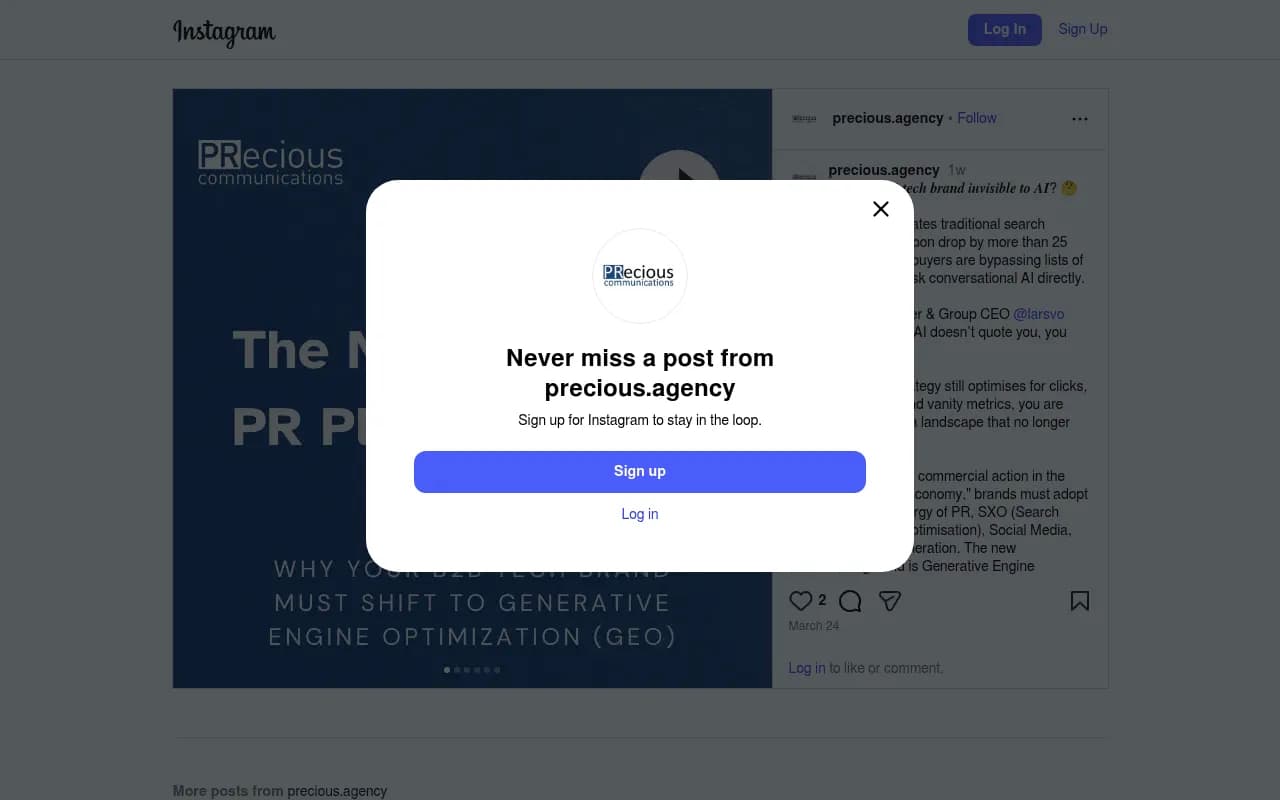
Cold outreach is still alive -- but it's working differently
To be clear: the data doesn't support the "cold outreach is dead" narrative. A LinkedIn post from sales strategist Erica Grigg that got significant traction in early 2026 made the point directly -- more than 50% of B2B leads still come from direct outreach, not ads or content alone.
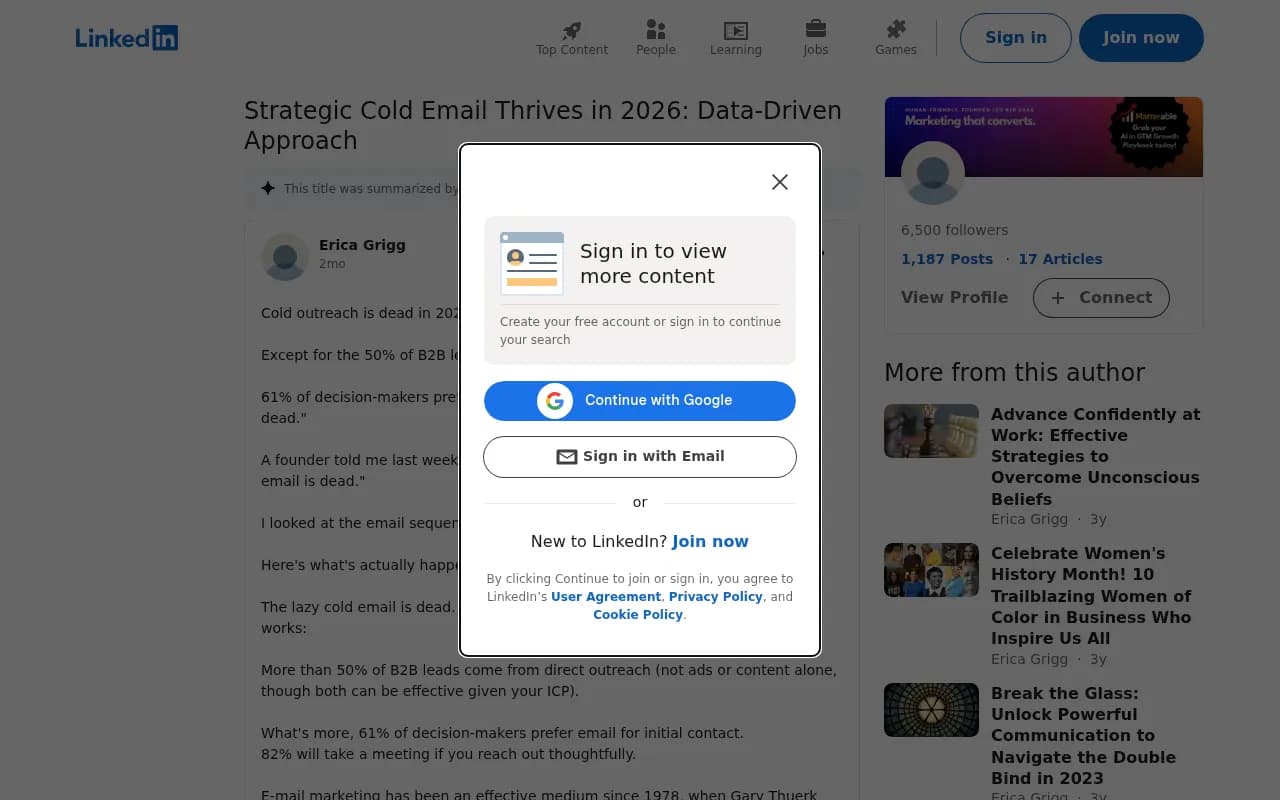
What's changed is the conversion environment. Cold email used to land in a vacuum. You were the first touchpoint. Now you're often the third or fourth, after the prospect has already asked an AI assistant about your category, read a Reddit thread that an AI surfaced, and maybe seen a competitor mentioned in a Perplexity answer.
That's not necessarily bad news. It means warm intent exists before your email arrives. But it only works in your favor if your brand shows up positively in those pre-email research moments. If it doesn't, your cold email lands with a credibility deficit you don't even know about.
GTM engineer Hlib Storchak, in a recent conversation on the Salesforge channel, identified three core reasons cold outreach fails: infrastructure problems, weak offers, and slow follow-up processes. All three are real. But there's a fourth that's increasingly relevant: the prospect already looked you up and found nothing -- or found a competitor instead.
What buyers are actually doing before they reply
The Facebook post from Titan Network put it plainly: "A customer discovers a product through TikTok, AI search, and Amazon. This isn't an advanced strategy -- it's just how a purchase happens in 2026." The same logic applies in B2B. The buying journey now runs through AI search engines before it runs through your sales funnel.
A few things happen in that pre-email window:
- The prospect asks an AI tool something like "what's the best [your category] software for [their use case]"
- The AI either mentions you, mentions a competitor, or gives a generic answer that doesn't include you
- If you're mentioned, the prospect arrives at your email with some context and mild familiarity
- If you're not mentioned, your email is the first time they've heard of you -- and they're comparing you to brands the AI already validated
That last scenario is where cold outreach quietly bleeds conversion rate. You're not failing because your email is bad. You're failing because the AI-mediated research moment that preceded your email didn't go your way.
The three layers of AI visibility that affect outreach
Not all AI visibility is equal. For cold outreach specifically, three layers matter most.
Category-level visibility
When a prospect asks "what tools help with [your category]," does your brand appear? This is the broadest and most important layer. If ChatGPT or Perplexity consistently recommends your competitors when asked about your category, you're starting every cold conversation at a disadvantage.
Comparison visibility
Prospects who are further along in their research ask comparison questions: "X vs Y," "alternatives to Z," "best [category] for [specific use case]." These are high-intent queries. If your brand appears in AI answers to comparison questions, your cold email arrives with the prospect already considering you. If it doesn't, you're asking them to evaluate you from scratch.
Brand-level accuracy
When someone types your company name into an AI tool, what comes back? Is the description accurate? Is the positioning right? Are there errors or outdated information? A prospect who asks ChatGPT about your company and gets a vague or wrong answer is less likely to engage than one who gets a crisp, accurate summary.
Why most sales teams aren't fixing this
The honest answer is that AI search visibility has historically been treated as a marketing problem, not a sales problem. Sales teams optimize their sequences, their subject lines, their call-to-action. They don't think about what ChatGPT says about their company.
But the boundary between "marketing" and "sales" is increasingly artificial when the buyer's research journey runs through AI tools before it reaches a salesperson. The SDR who's sending 200 emails a day is operating in an environment shaped by whatever AI models are saying about their brand. They just can't see it.
This is where the conversation between marketing and sales needs to change. AI search visibility isn't a vanity metric. It's infrastructure for outbound. A brand that's well-cited in AI responses is easier to sell for, because the prospect already has a positive frame when your email arrives.
What good AI search visibility looks like in practice
Getting cited by AI models isn't magic, but it does require deliberate effort. The core inputs are:
- Content that directly answers the questions buyers ask AI tools in your category
- Authoritative coverage on platforms AI models trust (your own site, but also Reddit, YouTube, industry publications)
- Accurate and consistent brand information across sources AI models pull from
- Structured content that makes it easy for AI crawlers to understand what you do and who you serve
The gap most brands have is that they've optimized for Google but haven't thought about what questions buyers ask AI tools, or whether their content answers those questions. Those are different questions, and the overlap isn't as large as you'd expect.
Tools like Promptwatch are built specifically for this problem -- they show you which prompts your competitors are visible for that you're not, and help you create content to close those gaps.

For outbound teams, the most actionable starting point is running a few of the prompts your prospects are most likely to ask before replying to your emails. Ask ChatGPT, Perplexity, and Gemini about your category, your competitors, and your brand. What you find will tell you a lot about the pre-email environment your outreach is landing in.
The multi-channel outreach picture
AI visibility doesn't replace multi-channel outreach -- it makes it more effective. The best outbound sequences in 2026 combine email, LinkedIn, and sometimes phone. That's not new. What's new is that each of those touchpoints now lands in a context shaped by AI search.
A prospect who's seen your brand mentioned positively in a Perplexity answer is more likely to accept your LinkedIn connection request. A prospect who's read an AI-generated comparison that includes you is more likely to open your follow-up email. The channels reinforce each other, but only if the AI search layer is working in your favor.
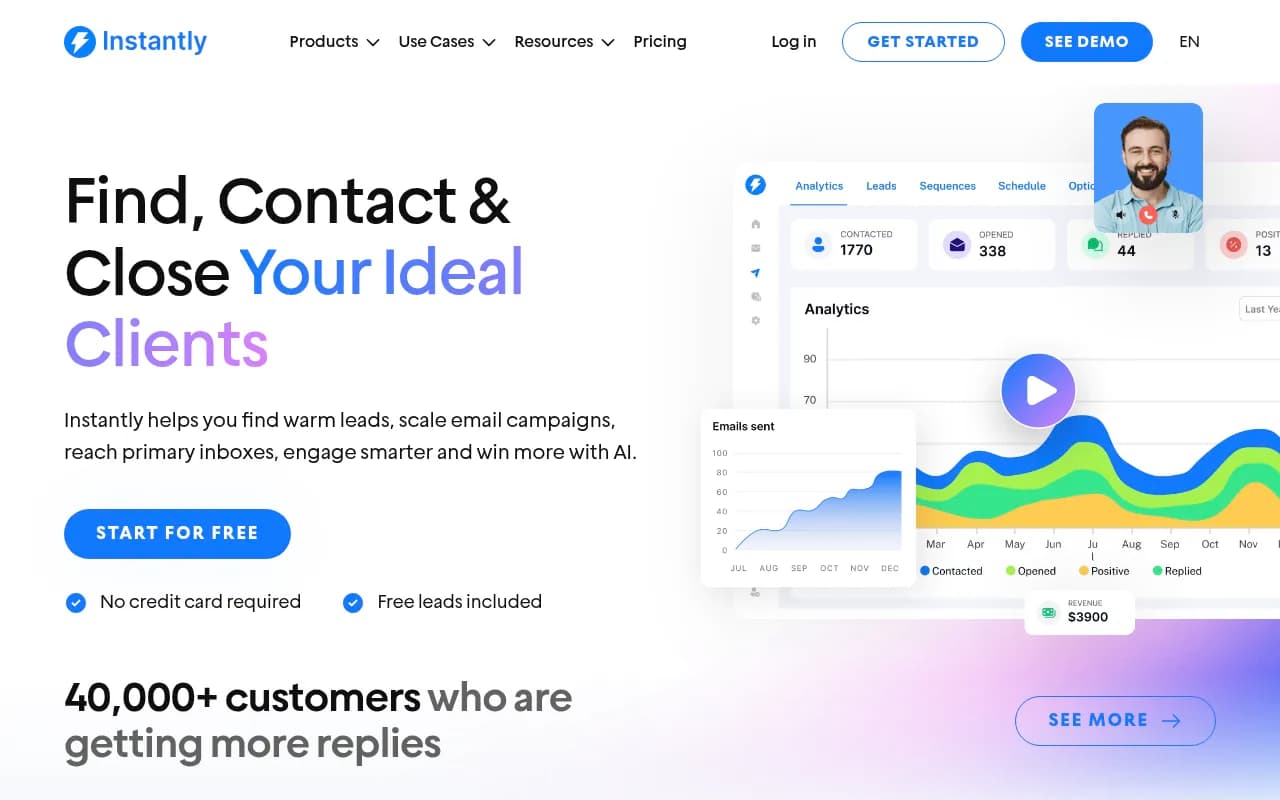
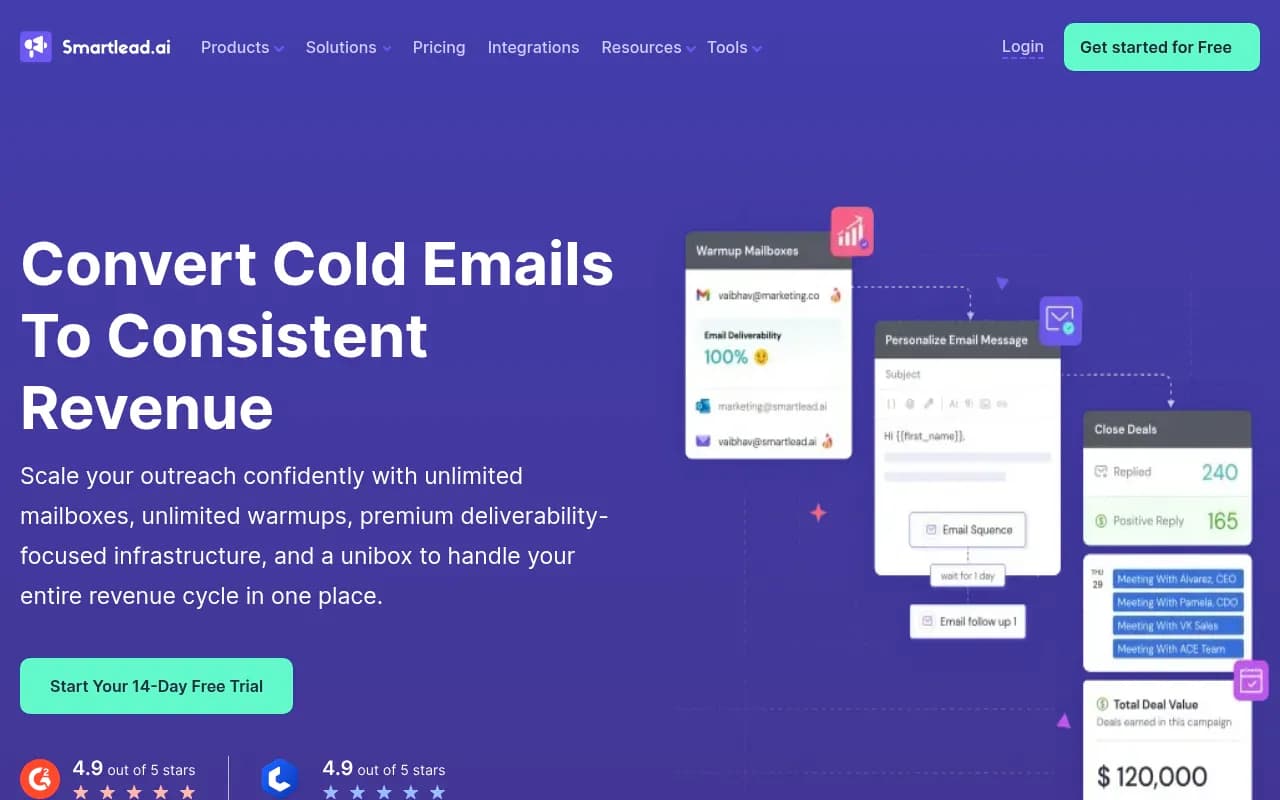
For the outreach execution side, tools like Instantly.ai and Smartlead handle the cold email infrastructure and sequencing.
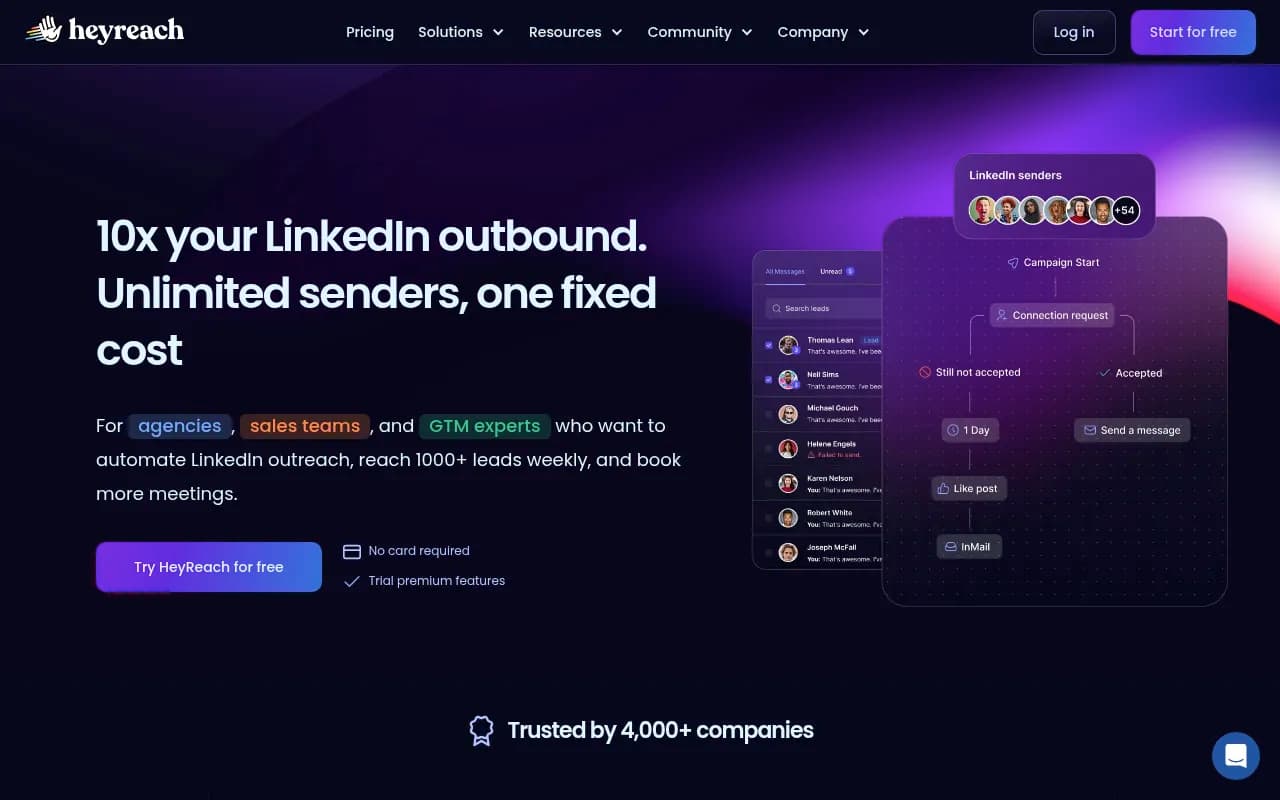
For LinkedIn outreach specifically, HeyReach is worth looking at for automating connection and message sequences at scale.
And for building prospect lists and enriching contact data, Apollo.io and Clay are the tools most outbound teams are using in 2026.
Connecting AI visibility to outreach performance
One thing that's genuinely hard right now is attributing AI search visibility to outreach outcomes. You can track open rates and reply rates, but you can't easily see "this prospect asked Perplexity about us before replying." That attribution gap makes it tempting to deprioritize AI visibility work in favor of things that show up more directly in the CRM.
The workaround most teams use is tracking visibility scores over time and correlating them with outreach performance. If your AI visibility improves in a category and your reply rates in that segment go up, that's a reasonable signal. It's not perfect attribution, but it's better than ignoring the channel entirely.
Platforms like Promptwatch give you page-level tracking that shows which of your pages are being cited by which AI models, and how often. That data, combined with your outreach metrics, starts to build a picture of which content investments are actually moving the needle on sales conversations.
A practical checklist for outbound teams
If you want to start connecting your AI search presence to your outreach results, here's where to begin:
- Run your top 10 category prompts through ChatGPT, Perplexity, and Gemini. Note who appears and who doesn't.
- Search your brand name in each of those tools. Check for accuracy, completeness, and positioning.
- Identify the comparison queries your prospects are most likely to use ("X vs Y," "best [category] for [use case]"). Are you in those answers?
- Work with your content team to create pages that directly answer the questions where you're missing.
- Set up monitoring so you know when your visibility changes -- either improving or declining.
- Brief your SDRs on what AI tools are saying about your brand, so they can reference it in outreach when relevant.
That last point is underused. If ChatGPT mentions you positively in a category answer, that's social proof you can reference in a cold email: "You may have already seen us come up when researching [category] -- happy to give you the full picture." It's a natural, non-pushy way to use AI visibility as a credibility signal.
The competitive angle
Here's the part that makes this urgent rather than just interesting. Your competitors are either already working on their AI search visibility, or they're about to be. The brands that get cited consistently by AI models in your category will have a structural advantage in cold outreach -- not because their emails are better, but because the research moment that precedes every reply decision is going their way.
Gartner's projection that 95% of seller research workflows will begin with AI by 2027 isn't a distant future scenario. It's 12 months away. The window to build AI search visibility before it becomes table stakes is closing.
The brands that treat AI visibility as a prerequisite for effective outbound -- not a separate marketing initiative -- will have a compounding advantage. Every piece of content that gets cited by an AI model is doing pre-sales work at scale, 24 hours a day, before your SDR ever hits send.
That's not a reason to stop sending cold emails. It's a reason to make sure the environment those emails land in is working for you.
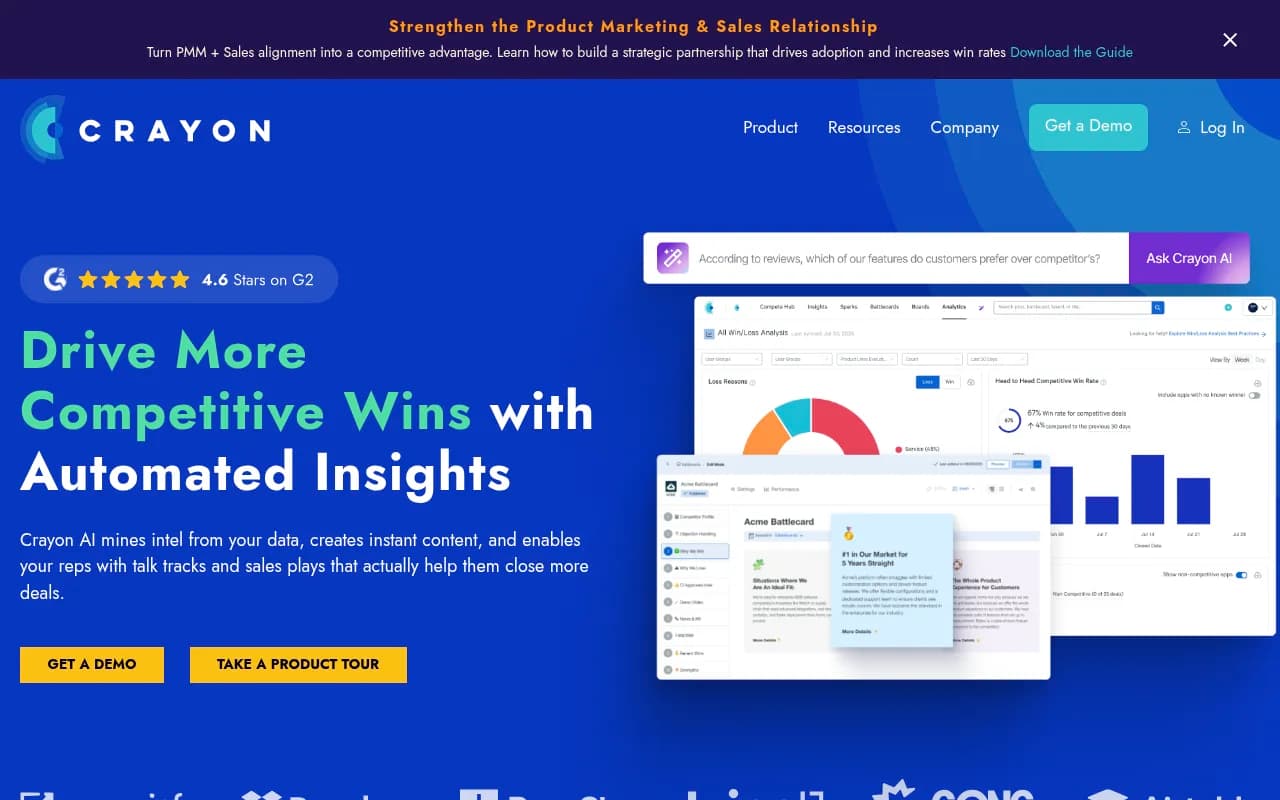
For competitive intelligence on what AI models are saying about your category and your competitors, tools like Crayon and Klue track competitive positioning across channels, while Promptwatch specifically tracks AI search visibility and helps you understand where you're winning and losing in AI-generated responses.
Putting it together
Cold outreach in 2026 is a two-layer problem. The first layer is execution: your sequences, your offers, your infrastructure, your follow-up speed. That layer hasn't changed much. The second layer is the pre-email research environment: what AI tools say about your brand before your prospect decides whether to reply.
Most outbound teams are optimizing layer one and ignoring layer two. That's a mistake, because layer two is increasingly where the decision gets made.
The good news is that improving your AI search visibility isn't a years-long project. It starts with understanding where you're missing, creating content that fills those gaps, and tracking whether AI models start citing you. That cycle -- find gaps, create content, track results -- is the same loop that drives organic search, just applied to a new set of channels.
Your cold email is still worth sending. Just make sure the brand behind it exists somewhere your prospect has already been looking.