Key Takeaways
- A free AI visibility audit works as a pitch because it shows the prospect something they have never seen: whether ChatGPT, Gemini, Perplexity and AI Overviews name them when buyers ask.
- Keep the audit small and specific. Thirty to fifty prompts, three to five competitors, one clear gap. A 40-page dump kills deals.
- One prompt tells you almost nothing. Promptwatch Data found that 47.6% of ChatGPT responses cite 10 or more domains (Sep 28 to Oct 4, 2026), so measure across many prompts.
- Sell the fix, not the score. Prospects pay for a plan that closes the gaps, plus proof it worked.
- Use manual checks for a quick start, or a tool with agency pitch features once you run more than a handful of audits a month.
Why a free audit is the best opening in 2026
Most business owners have not checked what AI says about them. They know their Google rankings, roughly. They have no idea whether ChatGPT recommends them or their biggest competitor. That ignorance is your opening.
A cold pitch that says "AI search is the future" gets deleted. A message that says "I asked ChatGPT for the best [their category] in [their city] and you were not in the answer, but two competitors were" gets a reply. It is specific, it is about them, and they can verify it in thirty seconds.
That is the whole logic of the free audit. You are not giving away work. You are creating a moment of recognition that a sales deck cannot.
What an AI visibility audit actually covers
An AI visibility audit is a structured check of how often, how accurately and how favorably AI answer engines mention a brand, and which sources they cite when they do. OutreachBloom's free 7-step checklist puts a manual baseline at 6 to 10 hours with a spreadsheet and the free chat interfaces, and suggests a 20% mention rate on category-defining prompts as a benchmark. That figure comes from a vendor-authored page, so treat it as a rough yardstick, not a standard.
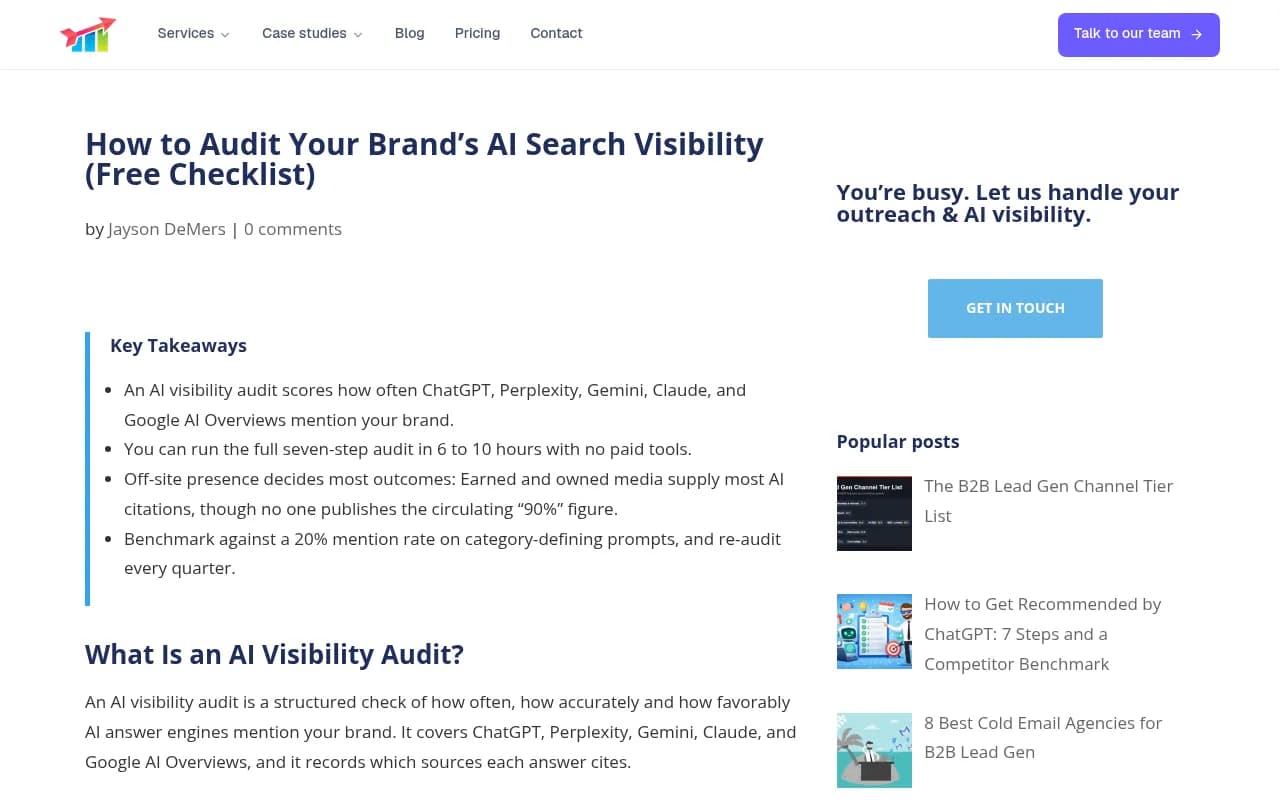
For a pitch, the audit needs five parts:
- Mention rate: in what share of relevant prompts does the brand appear at all?
- Position: first recommendation, or buried fifth?
- Description accuracy: does the AI get pricing, features, locations and positioning right?
- Competitor comparison: who shows up instead, and how often?
- Cited sources: which pages and third-party sites does the AI pull from?
The last one is where the money is. If the AI cites a competitor's comparison page, a review site and a Reddit thread, you now have a content and outreach plan, not just a score.
Step 1: Pick prospects who will care
Not every business is a good target. The best prospects share a few traits:
- Buyers research before purchasing, so the category generates "best X for Y" questions.
- They already spend on SEO or content, so they understand organic channels.
- They have at least one visible competitor, which makes the gap easy to show.
- Someone with budget authority is reachable on LinkedIn or email.
B2B software, professional services, e-commerce, travel, finance and healthcare tend to fit. Local service businesses can work too, but the audit should focus on city-level prompts.
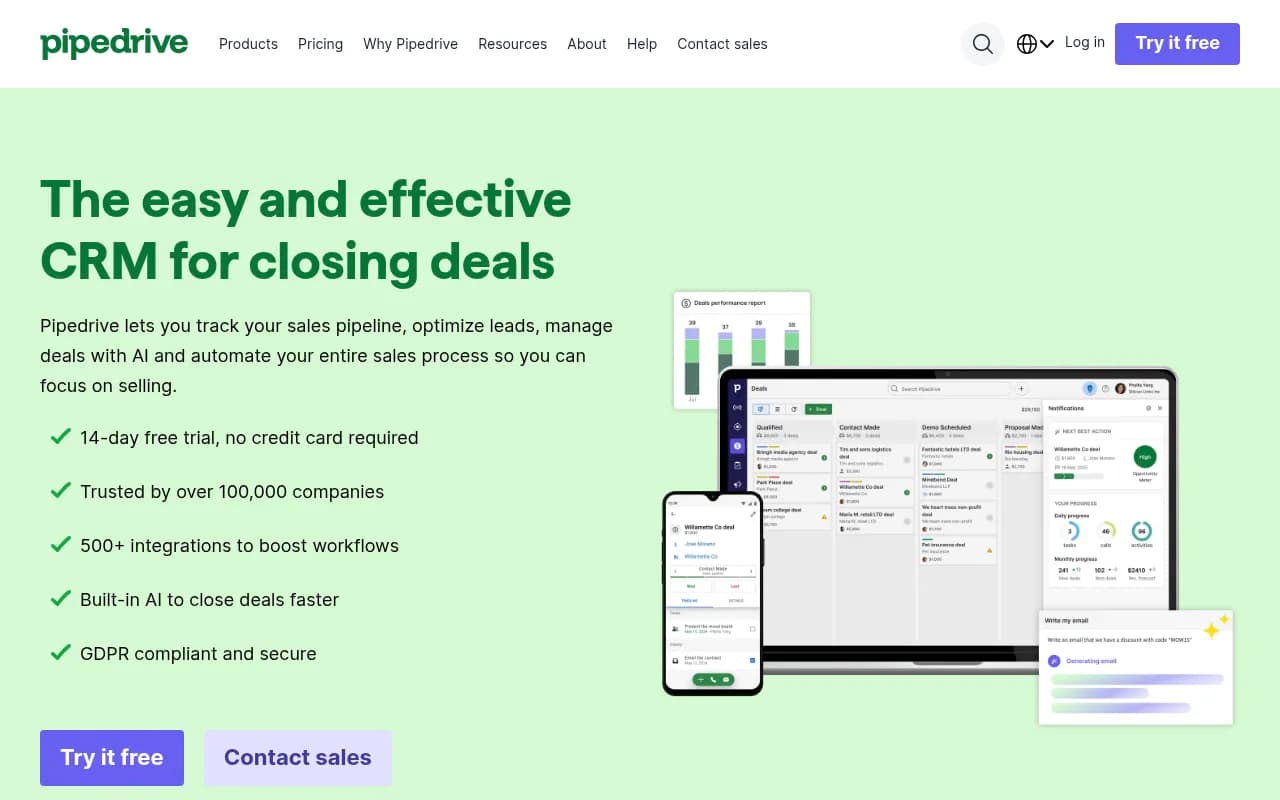
If you are building prospect lists at volume, a CRM like Pipedrive keeps the pipeline honest.
Step 2: Build a prompt set that mirrors real buyers
This is where most free audits go wrong. Agencies test five prompts, find the brand missing, and call it a day. Five prompts is an anecdote.
Promptwatch Data looked at how many unique domains ChatGPT cites per response (Sep 28 to Oct 4, 2026). Almost half of responses cite 10 or more domains, and for organic prompts with no brand named, 52.5% do. Answers draw on a wide pool of sources, so one prompt is a lottery ticket. Brand-specific prompts behave differently: the most common count is 5 domains, and only 21.3% cite 10 or more.
So build three buckets:
| Prompt type | Example | What it tells the prospect |
|---|---|---|
| Organic category | "best project management software for small teams" | Whether they get discovered by people who do not know them |
| Competitor comparison | "Asana vs Monday.com" style prompts | Whether they are in the shortlist |
| Brand-specific | "is [Brand] good for small teams" | What AI says when someone already knows them |
Aim for 30 to 50 prompts total, weighted toward organic category and comparison prompts. Run each across at least ChatGPT, Gemini, Perplexity and Google AI Overviews. Run the important ones more than once, since answers vary between runs.
Step 3: Run the audit, manually or with a tool
The manual route
A spreadsheet, a few browser tabs and patience will do. Log the prompt, the engine, whether the brand appeared, its position, the competitors named and the cited URLs. It is slow, but it is the right way to start, because you learn what good output looks like before you pay for automation.
The tool route
Once you run more than a few audits a month, the manual process eats your week. Several platforms now include prospecting or pitch features built for exactly this.
| Tool | Agency angle | Notes |
|---|---|---|
| Rank Prompt | White-label reports, client portal, free first report | Vendor lists $149/mo for 500 brands and $299/mo for 1,000 brands; confirm on their site |
| Profound | Agency mode with client workspaces and pitch environments | Enterprise-leaning, per Profound's own comparison |
| Promptwatch | Agency plans with unlimited projects and pitch projects, white-label reports | Also covers fixing and tracking, not just monitoring |
| AnswerGist | Free audit with prioritized fixes | Good for quick one-offs |
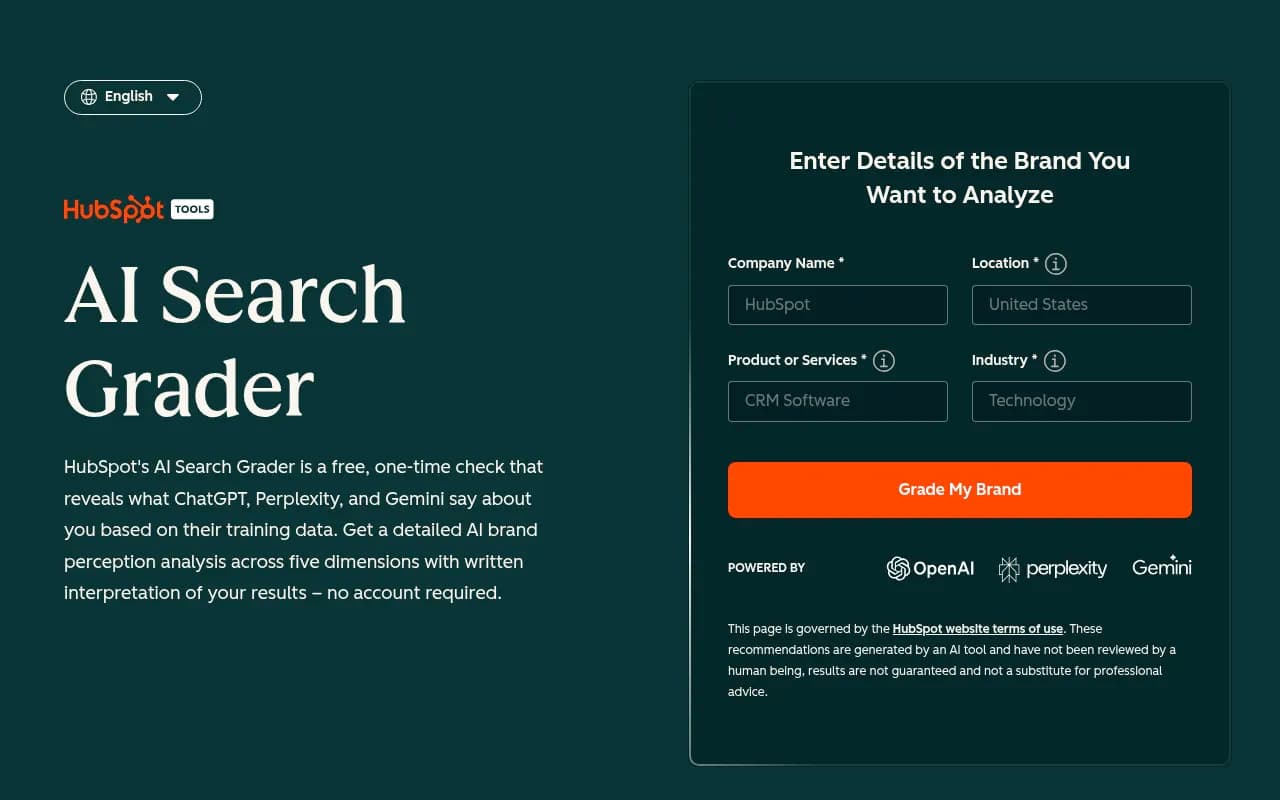
| HubSpot AI Search Grader | Free one-time brand diagnostic | Shallow, but familiar to clients |
For agencies, Promptwatch is worth a look because its agency plans include pitch projects, so you can load a prospect without burning a client slot, and the same data later feeds the retainer work: crawler logs, citation analysis, content gaps and a Content Agent that drafts and publishes fixes. Pricing starts at $199/mo for Kick-off, so check promptwatch.com/pricing for current numbers.

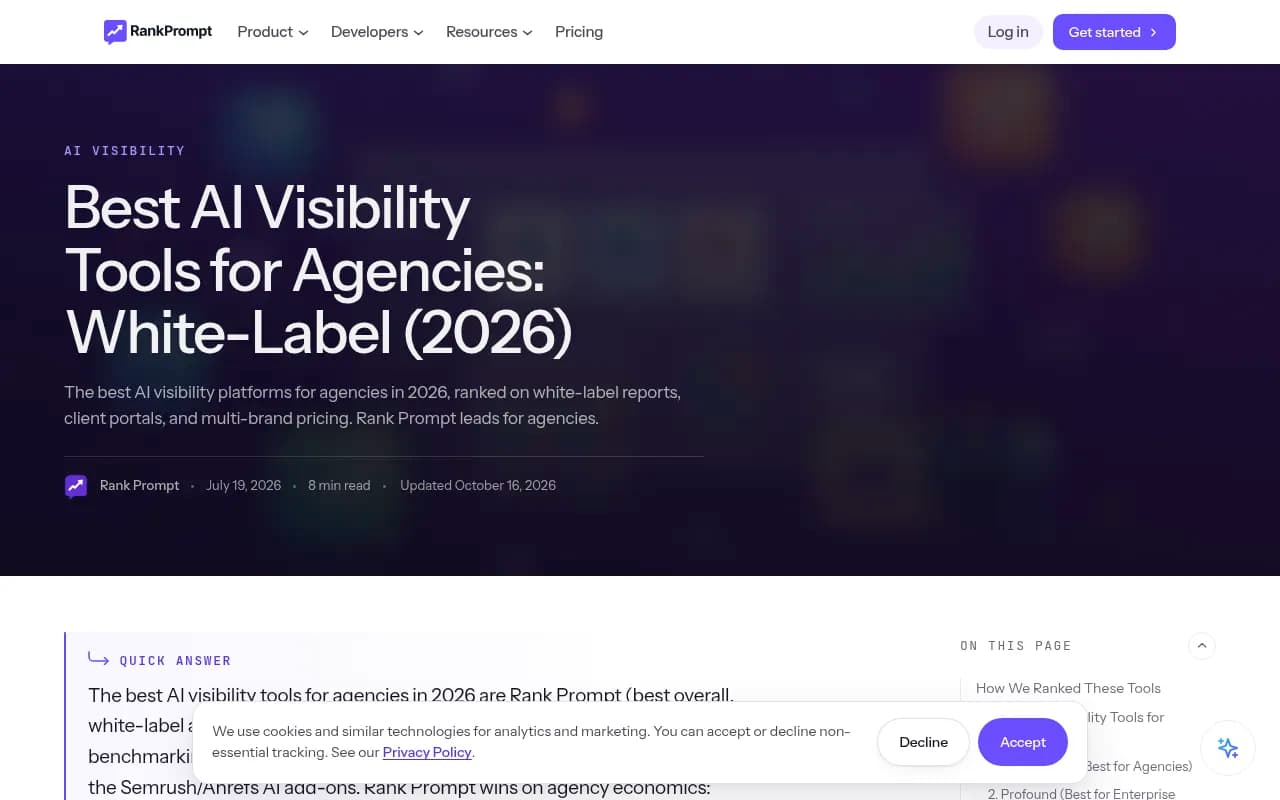
Rank Prompt is built around the multi-client agency workflow and lets you run a first report free.


You can browse more options in the GEO software directory at bestgeosoftware.com, and the broader category of trackers at ai-rank-tools.com.
A caution on vendor claims. Pricing and feature lists in those comparison posts come from the vendors themselves, and several of them rank their own product first. Run a trial on a real prospect before committing.
Step 4: Turn the data into a one-page story
The audit is not the deliverable. The story is. A prospect will not read a spreadsheet, and they should not have to.
Build a short report, ideally one to three pages, with this structure:
- The headline finding. One sentence: "You appeared in 6 of 40 buyer prompts. [Competitor] appeared in 29."
- Two or three screenshots of real answers where they are missing or misdescribed. Screenshots persuade more than percentages.
- Why it is happening. Point to the cited sources: the competitor's landing page, a listicle on a third-party site, a documentation page, an outdated profile.
- Three quick wins. Concrete, inexpensive, and clearly fixable.
- A suggested next step, not a hard sell.
Use content-type data to explain what AI cites
Prospects often assume AI cites blog posts. It does not, mostly. In Promptwatch Data's ChatGPT citation share by content type (Sep 28 to Oct 4, 2026), product pages made up 22.4% of citations, landing pages 16.8% and listicles 13.6%. Product and landing pages together are 39%. For commercial prompts, product pages, landing pages, listicles and comparisons add up to almost 70%.
That gives you a useful line in the pitch: "Your product pages are thin, and that is the format ChatGPT cites most for buying questions." It turns an abstract problem into a page-level task.
Freshness matters too. Promptwatch's content half-life report found that landing pages and docs stay cited longest, while news loses half its pages within 36 days. If the prospect's strategy is a stream of news posts, that is a gentle way to argue for a reset.
Check crawler access before you promise anything
Sometimes the answer is not content at all. If the prospect's robots.txt or CDN blocks GPTBot or PerplexityBot, no amount of writing will help. Check it before the call. It is the cheapest finding you will ever make, and it makes you look sharp. Promptwatch's AI crawler traffic data shows how much verified AI crawler activity exists, which helps you explain why access matters.
Step 5: Deliver it so it gets read
Delivery matters as much as content. Three formats work:
- A cold email with one screenshot and an offer of the full report. Short wins here.
- A 15-minute screen-share where you run two or three prompts live. This is the strongest format, because the prospect watches their competitor get recommended.
- A Loom-style video walkthrough for prospects who will not take calls.
A sample opener:
Subject: ChatGPT recommends [Competitor], not you

Hi [Name],

I ran 40 buyer-style questions about [category] through ChatGPT, Gemini and Perplexity.
[Brand] came up in 6. [Competitor] came up in 29.

I put the three biggest reasons and the quick fixes into a short report.
Want me to send it over, or walk you through it in 15 minutes?
No adjectives, no jargon, no "revolutionary". Just the finding.
If you are scaling outreach, sequencing tools like Instantly or Apollo.io can handle the sending, but personalise the first line with the real result. A templated audit teaser with no finding is spam.
Step 6: Handle the objections you will hear
"Is this not just SEO?"
Partly. Good SEO helps, but ranking in Google does not guarantee a mention in an AI answer. Show a page that ranks well and is never cited. If the prospect uses Google Search Console, you can compare which pages earn clicks against which get cited.
"AI search traffic is tiny."
Often true today for many sites. Be honest about it. The argument is not volume, it is influence: buyers use AI to build shortlists before they ever visit a site, and AI-referred visitors often convert well. Do not invent numbers. If you have a client case, use it. Promptwatch's published case studies cite Crisp seeing 2x higher conversion from AI traffic than traditional channels, which is the kind of specific claim worth repeating with attribution.
"Can you guarantee we will be mentioned?"
No, and saying yes is the fastest way to lose trust. Nobody controls model outputs. What you can promise is a process: fix crawler access, strengthen the pages AI cites, earn third-party mentions, and measure the movement monthly.
"Why not do it ourselves?"
They can. The audit proves it is real, and the retainer buys execution and consistency. Say so plainly.
Step 7: Move from audit to scoped offer
Within two to three days of delivering the audit, send a proposal. Keep it to three tiers:
| Package | What is included | Who it suits |
|---|---|---|
| One-time deep audit | Full prompt set, source analysis, prioritised fix list | Prospects who want to test with low commitment |
| Monthly optimisation | Content fixes, page updates, third-party mention work, monthly report | Most mid-size clients |
| Full program | Everything above plus ongoing content production, crawler monitoring and quarterly strategy | Larger or competitive categories |
Keep the monthly report simple: mention rate, position, share of voice against named competitors, new citations earned, and any AI-driven visits. Tools that track visitor analytics and crawler logs make that last metric possible. Without it, you are reporting on mentions only, which is a harder retainer to defend.
If you would rather hand the whole thing to specialists, agencies like 1001 SEO Media run technical SEO, content and GEO work together for clients who do not want to build the practice in-house.
Step 8: Re-audit to prove the work
Schedule a re-audit at 90 days and put it in the proposal. Use the same prompt set so the comparison is fair. Share the before and after side by side. AI answers shift week to week, so look at trends, not single days.
Promptwatch also hosts a live session on auditing and scaling AI search for clients on October 22, which is a useful way to see how other agencies structure this workflow: promptwatch.com/live-sessions.
Common mistakes to avoid
- Testing too few prompts and presenting the result as fact.
- Using only your own brand-name prompts. Those flatter the prospect. Organic prompts reveal the gap.
- Burying the lead in a 40-page report.
- Promising rankings. Promise process and measurement.
- Ignoring technical blockers like robots.txt and CDN rules.
- Giving away the whole fix plan for free. Show the problem and the first three wins. Keep the full roadmap for the engagement.
- Treating the audit as a one-off. The retainer is the point.
A simple checklist before you hit send
- 30 to 50 prompts across organic, comparison and brand-specific types
- At least four engines checked
- Three to five named competitors
- Two or three real answer screenshots
- Crawler access checked
- Cited sources listed
- Three quick wins, each tied to a specific page
- One clear next step
For more on how AI answers are built and which sources they pull from, the research hub at promptwatch.com/data is a good place to find numbers you can cite in your own pitches.
Start with one prospect this week. Run the audit by hand, write the one-page story, and book the 15-minute call. You will learn more from that single pitch than from reading another guide.