Key takeaways
- GrackerAI's biggest limitation isn't features, it's scope. The Starter and Scale plans only cover 3-4 AI engines (ChatGPT, Perplexity, Google AI Mode), and the vertical tuning for cybersecurity/DevTools is a bonus only if that's actually your market.
- If you want the broadest action loop, not just monitoring, Promptwatch and Writesonic both go from "here's your gap" to "here's the published, CMS-ready content" without a hand-off to another tool.
- Budget-conscious teams should look at Otterly.AI ($29/mo entry) or Peec AI ($95/mo) before paying GrackerAI's $399-499/mo Scale tier for daily tracking.
- Enterprises that need analyst-grade data exports and don't mind a sales call should look at Profound or AthenaHQ instead of GrackerAI's Enterprise tier.
- GrackerAI's AppSumo reviews flag real support and monitor-slot issues on lower tiers; weigh that against its perfect (if small) 5.0/5 Capterra score before committing.
GrackerAI carved out a real niche: AEO and GEO tracking with prompt libraries and models tuned specifically for cybersecurity, DevOps, and technical B2B SaaS. If you sell into that world, the vertical tuning is genuinely useful. But most teams shopping for AI visibility tools aren't exclusively selling security software, and GrackerAI's flat-rate pricing trades away engine coverage to get there. Starter tracks only 3 engines. Even Scale, at $399-499/mo, only adds a fourth. Compare that to Writesonic or Semrush covering 8-10 models at similar or lower price points, and the gap becomes obvious. There's also the support question: a verified AppSumo reviewer who bought the lifetime Tier 3 deal reported login problems, missing monitor slots, and no response from support for 2-3 days. That's one data point, not a pattern, but it's worth knowing before you buy in bulk.
Here's how the main alternatives stack up.
Promptwatch

Promptwatch is the platform I'd point most teams toward first, and not because it's the flashiest dashboard. It's because it doesn't stop at telling you where you're invisible. Its Content Agents plan, write, and publish GEO-optimized content directly to Webflow, Framer, or WordPress, and Unified Actions turns your visibility data into a prioritized to-do list instead of a wall of charts you have to interpret yourself. That closes a loop that GrackerAI, AthenaHQ, and most of the pure trackers leave open.
On coverage, Promptwatch tracks ChatGPT, Claude, Gemini, Perplexity, Grok, DeepSeek, Copilot, Mistral, Meta Llama, Google AI Overviews, and AI Mode, plus AI coding assistants like Claude Code, all included depending on plan rather than gated behind an enterprise sales call. It also does things almost nobody else does: real AI crawler logs (which bots hit your site, what they read, whether they error out), dedicated Reddit and YouTube citation reporting, and a ChatGPT Shopping and Ads Radar. GrackerAI has none of that. Its own average-sources-per-response data shows why this matters: ChatGPT typically cites around 5 sources per response, AI Overviews and Perplexity closer to 10, so getting cited even once is a real fight, and understanding why you're not showing up (via crawler logs) beats just seeing that you aren't.
Pricing runs $95/mo Essential, $245/mo Professional, $579/mo Business, all with a 7-day trial, which lands squarely between GrackerAI's Starter and Scale tiers while covering far more ground. It's used by 1,840+ brands including Duolingo, Yelp, and Typeform, and rated 4.7/5 on G2.
Best for: teams that want the visibility data to turn into finished, published content automatically, not another spreadsheet to manage.
Profound
Profound is the analyst's tool. Its interface covers prompt research, citations, sentiment, competitors, and traffic, and it recently added Projects and Aim, which convert findings into ranked tasks and try to measure what actually moved after you act. Profound raised a reported $180M Series D and was named a Representative Vendor in Gartner's inaugural Market Guide for Answer Engine Visibility Tools, so it's not going anywhere.
The catch: there's effectively no self-serve mid-tier. You get a free trial capped at 10 prompts on ChatGPT only, then it's Enterprise, sales call required, no published price. That's a very different buying process than GrackerAI's transparent $79-499/mo tiers. If your team needs a demo and a procurement cycle anyway, fine. If you want to swipe a card and start tracking today, Profound will frustrate you.
Best for: larger organizations that want deep, exportable data and don't mind a sales-led buying process.
AthenaHQ
AthenaHQ's self-serve tier gives you 8+ AI platforms from day one, which already beats GrackerAI's engine count at a comparable price ($245-295/mo). It runs on a credit model though, so tracking broadly across all those engines burns through your allotment fast, and the two features AthenaHQ markets hardest, the ACE Citation Engine and its AI Content Optimization Agent, are Enterprise-only. That's a meaningful bait-and-switch feeling if you sign up expecting the demo experience on a self-serve plan.
Customers include SoFi, Coinbase, and PagerDuty, and G2 reviews sit around 4.6, which is solid. If you're comparing directly against GrackerAI, note that GrackerAI's own comparison page positions itself as the flat-rate alternative to AthenaHQ's credit-based pricing, so this is a rivalry GrackerAI is actively fighting on price, not features.
Best for: teams that want broad engine coverage out of the gate and are willing to manage a credit budget for it.
Otterly.AI

Otterly.AI is the budget option, and it's a legitimate one. Lite starts at $29/mo for 15 prompts across ChatGPT, AI Overviews, Perplexity, and Copilot, which is less than a third of GrackerAI's cheapest tier. The trade-off is that Claude, Gemini, and Google AI Mode are paid add-ons rather than included, so the real cost climbs if you need full coverage. Standard ($189/mo) adds API and MCP access plus a Looker Studio connector, which is more than GrackerAI offers at a similar price point.
There's no content generation engine here, no vertical tuning, no automated fixes. It's pure monitoring, done affordably. 40,000+ marketing pros use it, which suggests it's a fine starting point before you know exactly what you need.
Best for: solo marketers, freelancers, or small teams who want cheap, reliable tracking and plan to do content work themselves.
Peec AI

Peec AI's standout feature that neither GrackerAI nor most competitors match is its Ads library, which tracks sponsored placements showing up inside AI answers, plus SKU-level AI Shopping tracking and a genuinely useful "objections" report that surfaces recurring arguments AI makes against your brand. Starter runs $95/mo for 50 prompts and 3 models, Pro $245/mo for 150 prompts and 2 projects. That's comparable to GrackerAI's Scale tier but with better multi-language support and a crawlability audit across 40+ bots.
3,000+ brands and agencies use it, and the interface is genuinely clean, probably the easiest onboarding of anything on this list. It doesn't do content generation at GrackerAI's level though, so you're still handing insights to a writer or a separate tool.
Best for: agencies and marketing teams that want clean prompt/citation analytics and don't need a built-in content engine.
Searchable
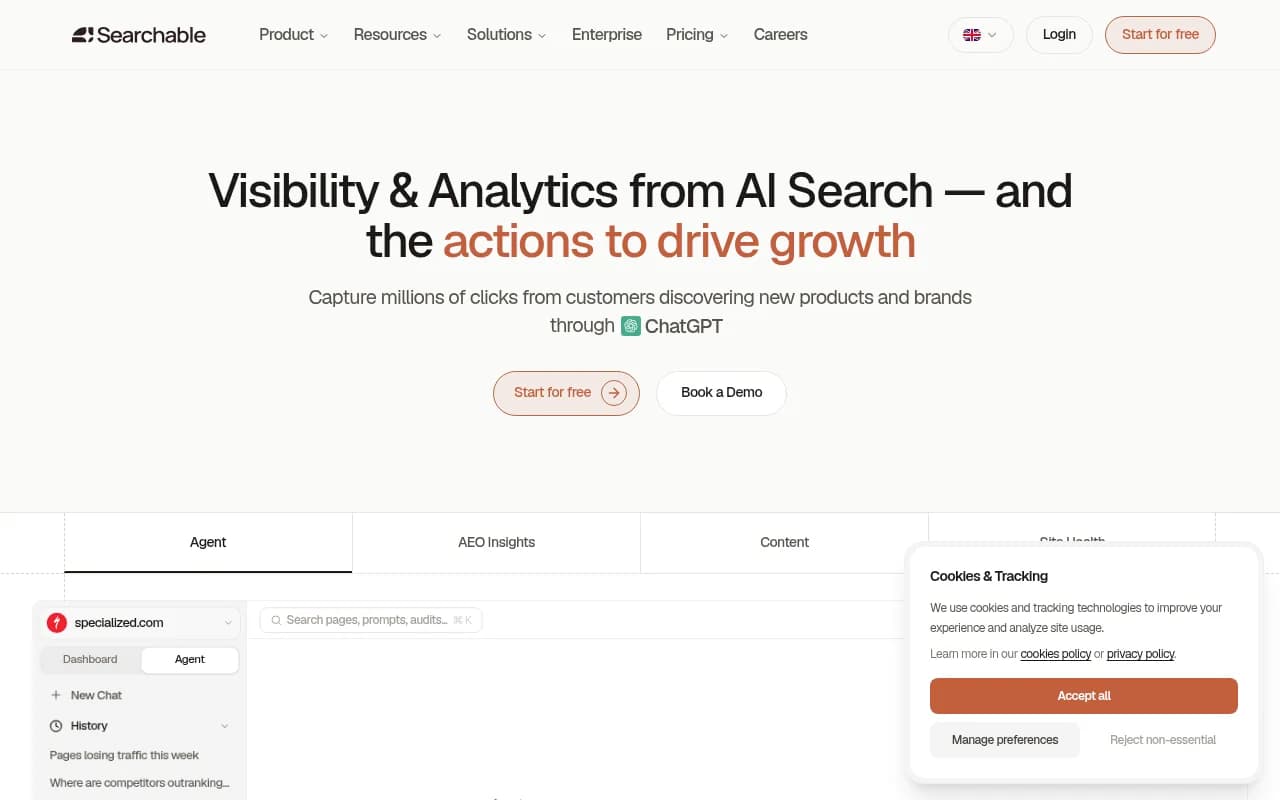
Searchable positions itself for e-commerce, B2B software, and agencies wanting white-label AEO reporting, which overlaps with GrackerAI's B2B SaaS focus but without the cybersecurity-specific tuning. Pro is $125/mo for 100 prompts across 3 engines (ChatGPT, AI Overviews, Perplexity) plus 20 AI articles a month, which undercuts GrackerAI's content output at a similar price. Scale at $400/mo adds white-label reports and a dedicated account specialist, useful if you're reselling this to clients.
12,000+ marketers and agencies use it. It's a reasonable middle ground: more content generation than Otterly or Peec, less vertical specialization than GrackerAI, broader than GrackerAI on price-to-prompt ratio.
Best for: agencies that need white-label AEO reporting for multiple clients without GrackerAI's niche focus.
Writesonic
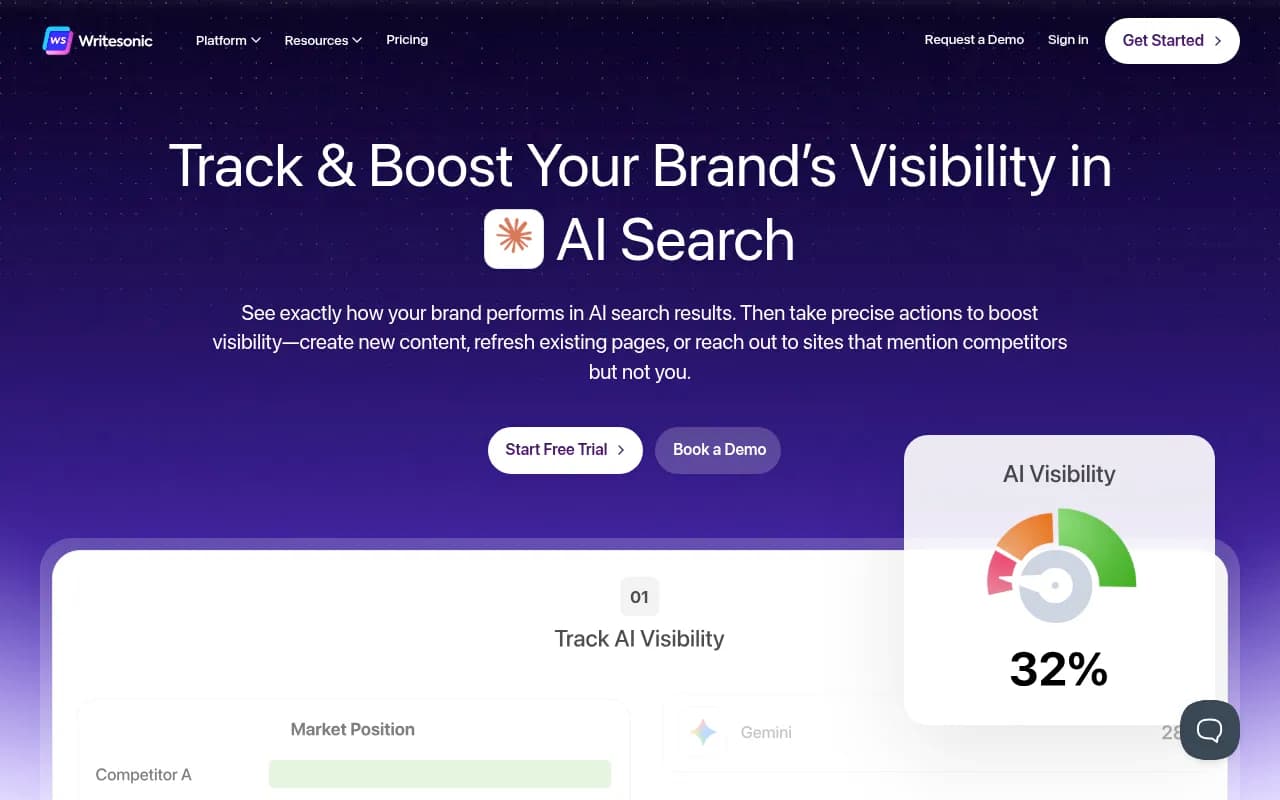
Writesonic's pitch is execution depth: autonomous agents that carry a visibility gap all the way through content creation, outreach, and technical fixes, then measure whether anything actually moved. That's a genuinely different model from GrackerAI's approach of generating articles on a fixed monthly quota. Starter is $79/mo annual for 50 prompts and 3 engines, Growth ($399/mo) adds sentiment analysis and a trial Action Center with both on-page and off-page automated actions.
Writesonic's founder, Samanyou Garg, is upfront that this isn't the tool for everyone. In his own comparison research he says he'd choose Profound instead when executive reporting matters more than execution, and Otterly.AI for small teams that just want affordable monitoring. That kind of honesty is refreshing, and it's a useful frame for deciding if Writesonic fits you specifically.
Best for: content-heavy teams that want visibility gaps to trigger actual published work, outreach, and fixes automatically.
Semrush AI Visibility Toolkit
If your team already runs on Semrush for traditional SEO, the AI Visibility Toolkit is a $99/mo per domain add-on rather than a whole new platform to learn. It gives you access to one of the largest prompt databases in the category, 289M+ LLM prompts, plus AI sentiment tracking and prompt research tools layered onto tools you likely already use daily. That's a real advantage over GrackerAI if consolidating vendors matters to your budget approval process.
The trade-off is depth. Reviewers consistently note it's shallower on pure AI-specific data than dedicated GEO tools, and full engine coverage (Claude, DeepSeek, Grok) is Enterprise-only. It's also worth noting Adobe closed a reported $1.9B acquisition of Semrush in 2026, so expect pricing and packaging to keep shifting.
Best for: teams already paying for Semrush's core SEO suite who want AI visibility bolted on rather than a separate subscription.
HubSpot AEO
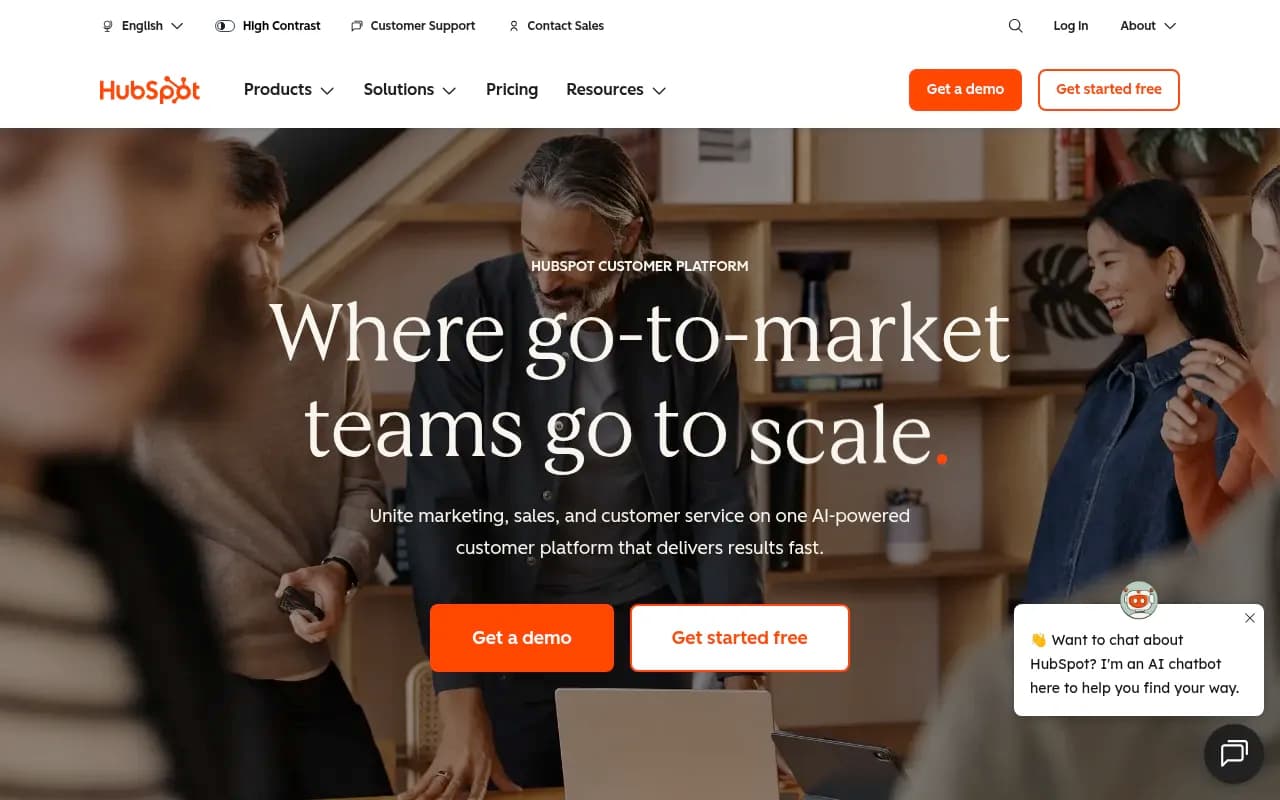
HubSpot AEO is the cheapest way into this category if you're already inside the HubSpot ecosystem: $50/mo (or $45/mo annual) for 25 prompts across ChatGPT, Perplexity, and Gemini. There's also a free one-time AI Search Grader tool HubSpot uses as a lead magnet, worth running before you commit to anything on this page, GrackerAI included.
The real limitation is engine coverage capped at exactly those 3 models, no Claude, Copilot, or Grok even on the paid tier, and running multiple brands means paying for separate $50/mo instances with no bundled discount. That's narrower than GrackerAI's already-limited coverage. It only makes sense as a low-cost add-on for teams already deep in HubSpot's CRM and marketing hub.
Best for: HubSpot customers who want the cheapest possible entry point and don't need broad model coverage.
Scrunch AI
Scrunch has quietly repositioned itself around what it calls an "Agent Experience Platform," shifting focus from pure GEO monitoring toward how AI agents access and transact with your site, not just how chatbots describe your brand. Core is $250/mo for 125 prompts, 1 persona, and 5 competitors, comparable to GrackerAI's Scale tier but with a genuinely different technical angle.
G2 reviews (73 of them) are largely positive on ease of use and API access, but flag a slow four-week baseline before insights are pitch-ready and, in at least one case, a frustrating sales process where verbally agreed pricing got retracted. It also doesn't share prompt volume data the way most competitors do, according to a (competitor-published, so take with a grain of salt) Profound review.
Best for: teams specifically worried about AI agents and bots being able to parse and transact with their site, not just brand mentions in chat.
Which one should you actually pick
If you're not exclusively selling into cybersecurity or DevTools, GrackerAI's vertical tuning stops being an advantage and its narrow engine coverage becomes a real cost. For most B2B SaaS teams weighing a switch, Promptwatch is the strongest all-around replacement because it pairs the broadest engine and crawler-log coverage in this list with actual content publishing, not just another dashboard. If budget is the constraint, start with Otterly.AI or Peec AI and add a content tool separately. If you need enterprise-grade reporting and don't mind a sales call, Profound or AthenaHQ are the obvious next stops. And if cybersecurity really is your niche, it's still worth trialing GrackerAI directly against Promptwatch's 7-day trial before you decide, since the flat-rate pricing and vertical prompt library are real, just narrower than most buyers actually need. For a broader look at the category, the GEO software directory at bestgeosoftware.com tracks more of these platforms side by side.