Key takeaways
- Most teams left Scrunch because it showed them data but gave them no clear path to act on it -- the classic "monitoring trap"
- The biggest complaints centered on limited prompt coverage, weak reporting for stakeholders, and no built-in content optimization
- Teams that switched generally moved toward platforms that close the loop between visibility tracking and content creation
- The GEO tool market matured significantly in 2025, and the gap between monitoring-only tools and full optimization platforms widened
- If you're evaluating alternatives today, the question to ask is: "Does this tool help me fix my visibility, or just show me the problem?"
Something shifted in the AI search visibility space in 2025. The early wave of GEO tools -- many of which launched in 2023 and 2024 -- started showing their cracks. Teams that had signed up for monitoring dashboards realized they were paying for graphs without getting answers to the question that actually matters: "What do I do about this?"
Scrunch was one of the tools caught in that transition. It's not a bad product -- it does track brand mentions across AI models, and it has a reasonably clean interface. But as teams got more sophisticated about what they actually needed from AI visibility software, a pattern emerged: Scrunch showed you where you stood, but left you to figure out the rest yourself.
This guide is about what happened when those teams started looking around.
What teams were hoping Scrunch would do
To understand why people left, you have to understand what they were hoping for when they signed up.
In 2024, most marketing teams were still in the "awareness" phase of AI search. They knew ChatGPT and Perplexity were sending traffic somewhere -- they just didn't know if it was to them or to their competitors. Scrunch, like several tools that launched around that time, offered a clear value proposition: we'll show you how often your brand appears in AI responses.
That was genuinely useful. For a few months, teams were happy just knowing the number. Is our brand mentioned? How often? Which models mention us?
But then the follow-up questions started:
- Why are competitors appearing for prompts we're not?
- Which specific pages on our site are being cited?
- What content should we create to close the gap?
- How do we show this data to our CMO in a way that makes sense?
And that's where the friction started.
The specific complaints that kept coming up
User reviews and community discussions from 2025 paint a consistent picture. A Profound blog review of Scrunch noted that "user reviews suggest that Scrunch's data isn't easy to share with stakeholders or act on to improve brand performance." That's a diplomatic way of saying: the data is there, but it doesn't tell you what to do next, and it's hard to present to anyone who isn't already deep in the weeds.
A few themes came up repeatedly:
Reporting felt like a dead end
Teams doing monthly reporting found Scrunch's export and sharing options limited. You could see your visibility score inside the platform, but turning that into a slide for a leadership meeting required a lot of manual work. For agencies managing multiple clients, this was especially painful.
Prompt coverage was narrower than expected
Several teams found that the prompts Scrunch tracked didn't fully reflect how their customers were actually searching in AI tools. There was limited ability to customize prompt sets, and no volume or difficulty data to help prioritize which prompts were actually worth winning.
No path from insight to action
This is the big one. Scrunch could tell you that a competitor was appearing in responses you weren't. It couldn't tell you why, and it definitely couldn't help you create content to fix it. That gap -- between knowing you have a problem and knowing how to solve it -- is where most teams got stuck.
Crawler and indexing visibility was missing
Teams that wanted to understand how AI engines were actually crawling their site found nothing in Scrunch to help with that. If ChatGPT's crawler was hitting your site and hitting errors, you wouldn't know from Scrunch. That's a meaningful blind spot.
Where teams went instead
The migration patterns from Scrunch in 2025 weren't random. Teams moved based on what they were missing, and the market had matured enough that there were real alternatives for each use case.
Teams that needed the full optimization loop
The teams most frustrated with Scrunch's monitoring-only approach tended to move toward platforms that could take them from gap identification to content creation to results tracking -- all in one place.
Promptwatch became a common destination for this group. The core appeal is that it doesn't stop at showing you where you're invisible -- it has a built-in answer gap analysis that identifies which prompts competitors rank for that you don't, an AI writing agent that generates content specifically designed to get cited by AI models, and page-level tracking that shows whether your new content is actually working. For teams that had been stuck in the "we know we have a problem" phase, that full loop was a meaningful upgrade.

Promptwatch also covers crawler logs -- real-time data on which AI crawlers are hitting your site, which pages they're reading, and what errors they're encountering. That's the kind of technical visibility that helps you understand not just your scores but the underlying reasons for them.
Teams that wanted enterprise-grade depth
Some larger teams moved toward platforms with stronger enterprise positioning.
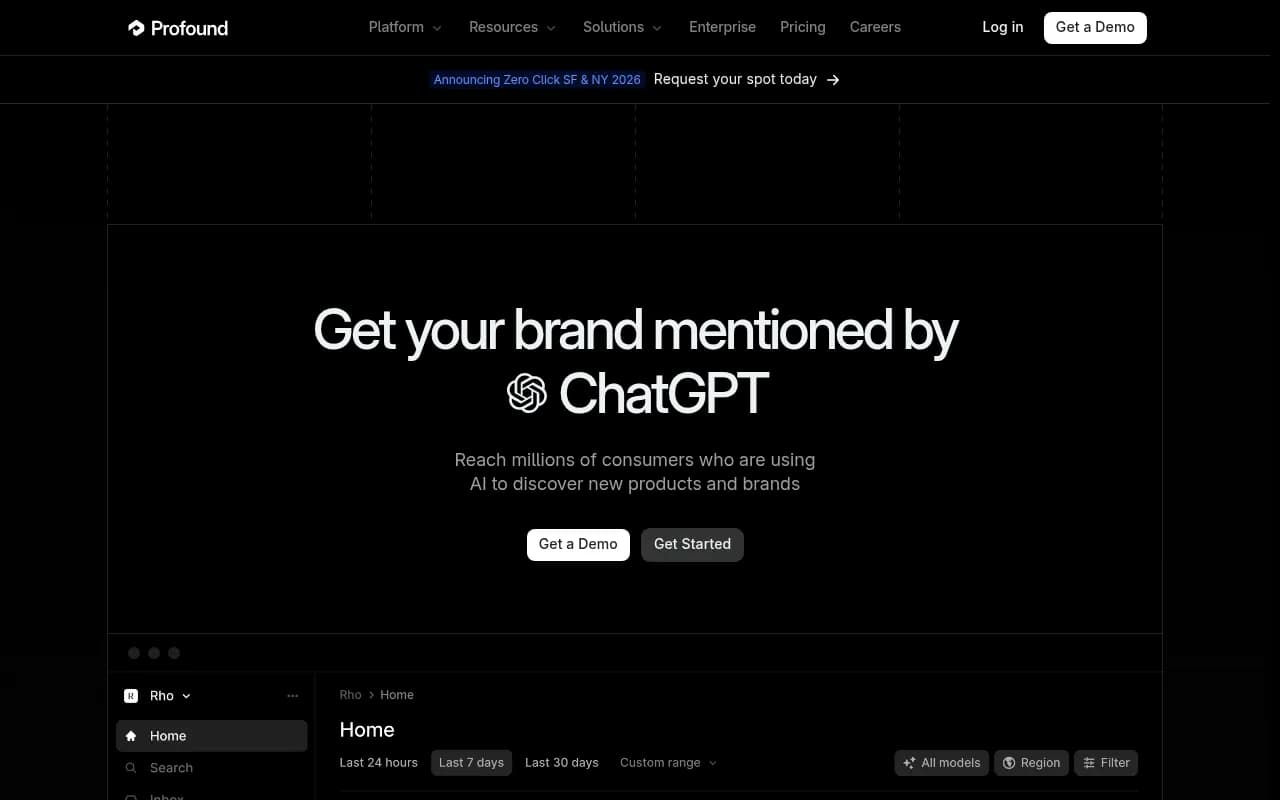
Profound has a strong feature set and is well-regarded for enterprise use cases. It's on the pricier end, and it doesn't have Reddit tracking or ChatGPT Shopping monitoring, but for large brands primarily focused on tracking visibility at scale, it's a serious option.
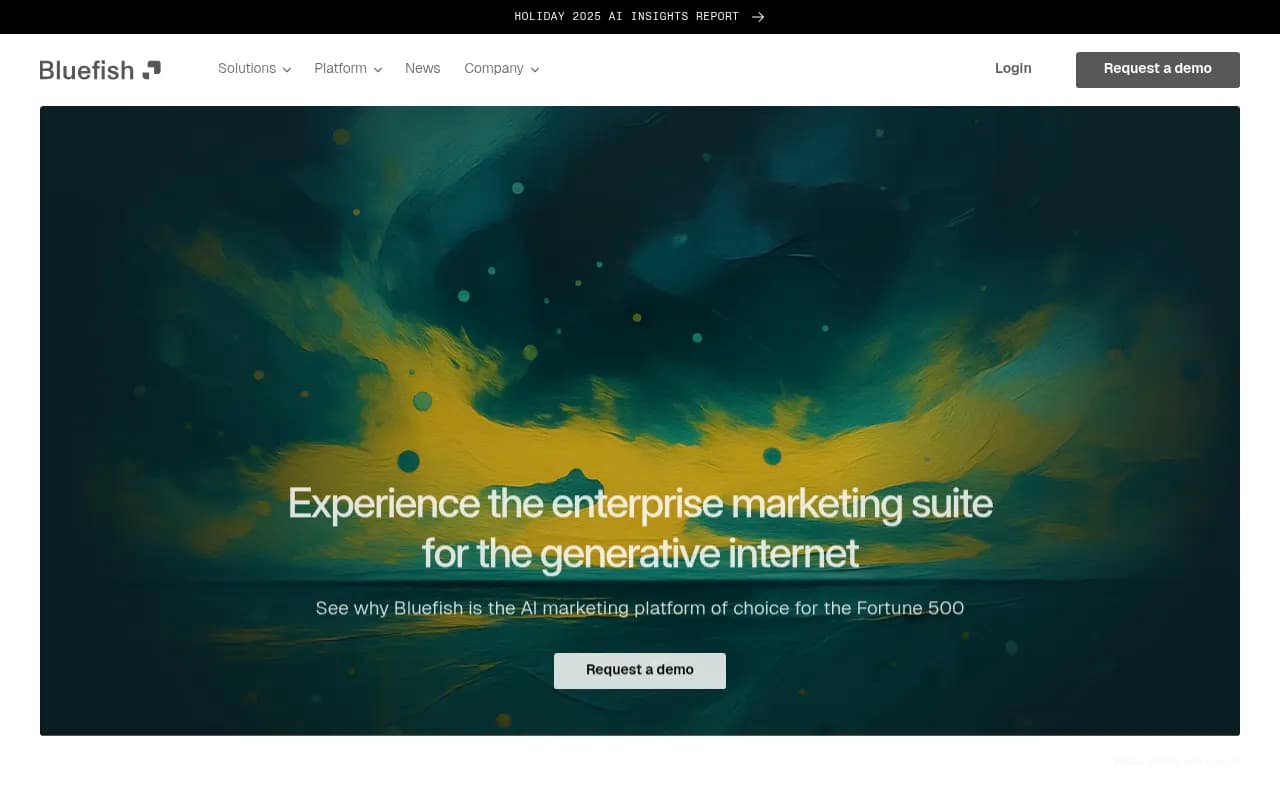
Bluefish AI also picked up some Scrunch defectors in the enterprise segment, particularly teams that needed white-label reporting for agency workflows.
Teams that prioritized affordability
Not every team that left Scrunch was looking for more features -- some were looking for the same features at a lower price point.

Otterly.AI is worth considering for smaller teams that primarily need monitoring without the full optimization stack. It's more limited than Promptwatch in terms of what you can do with the data, but the price point is lower and the interface is clean.
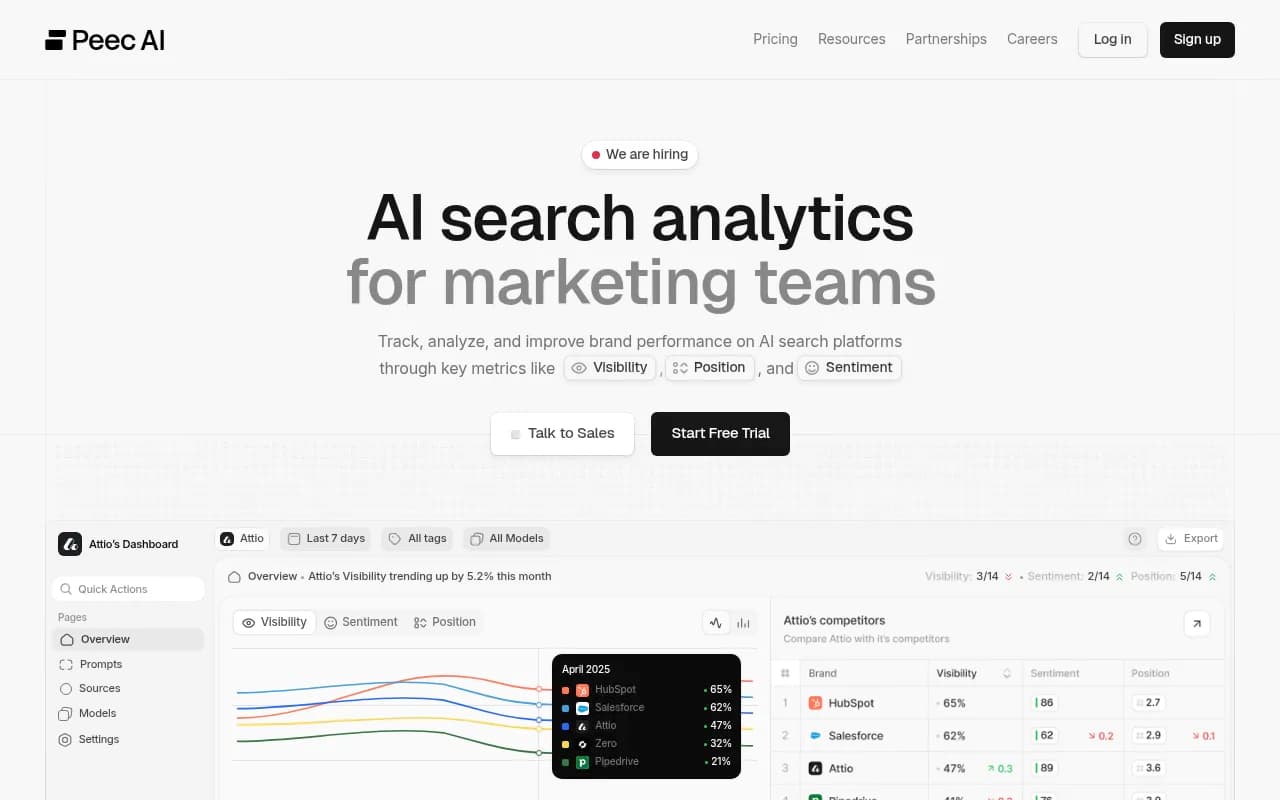
Peec AI is another monitoring-focused option that some teams moved to, though it shares the same limitation as Scrunch: it shows you data but doesn't help you act on it.
Teams that wanted AI-native content generation alongside tracking
A smaller but notable group of teams moved to platforms that combined visibility tracking with serious content creation capabilities.
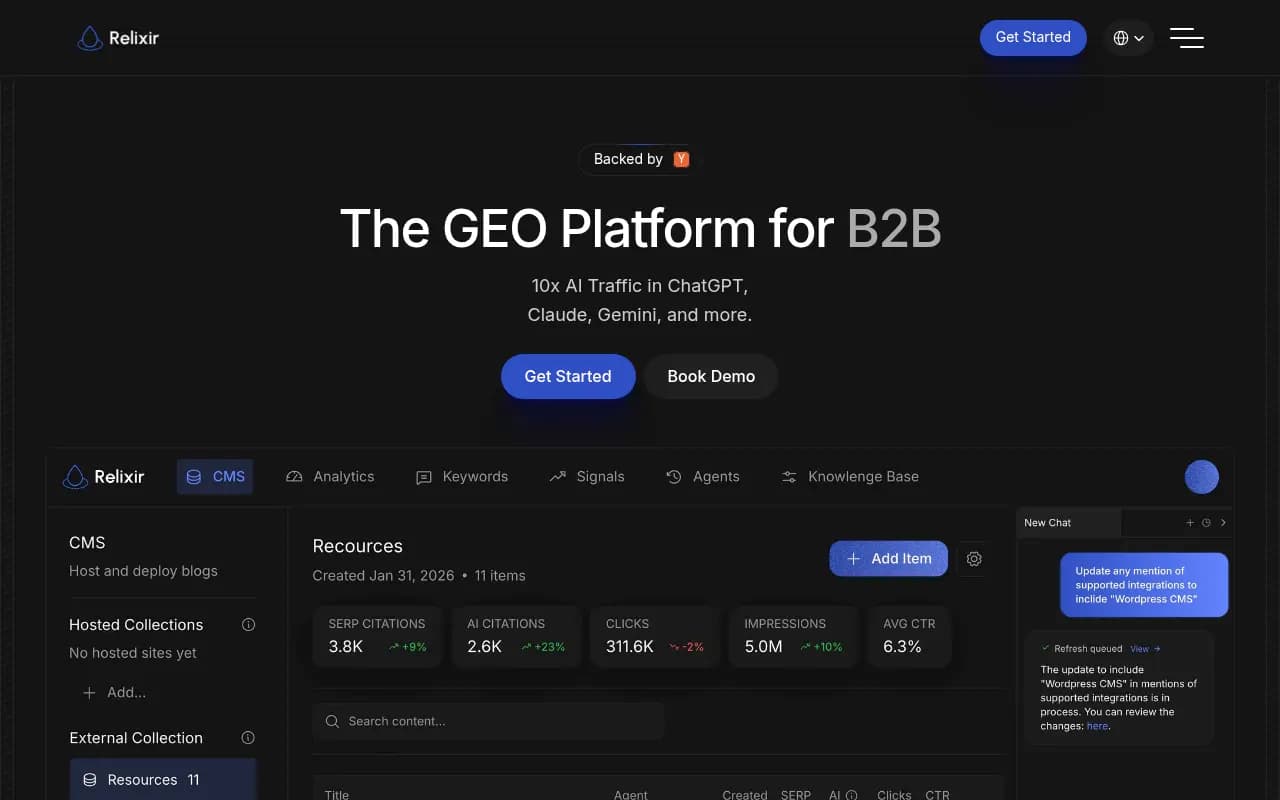
Relixir positions itself as an all-in-one GEO platform with both analytics and content generation. Teams that wanted to produce AI-optimized content at scale found it a useful option.

Orchly.ai is another platform in this space, focused on content operations that are specifically tuned for AI search visibility.
A comparison of where teams landed
| Platform | Monitoring | Content generation | Crawler logs | Prompt volume data | Reddit/YouTube tracking | Best for |
|---|---|---|---|---|---|---|
| Promptwatch | Yes | Yes (AI writing agent) | Yes | Yes | Yes | Full optimization loop |
| Profound AI | Yes | No | No | Limited | No | Enterprise monitoring |
| Otterly.AI | Yes | No | No | No | No | Budget monitoring |
| Peec AI | Yes | No | No | No | No | Basic tracking |
| Relixir | Yes | Yes | No | Limited | No | Content + tracking |
| Bluefish AI | Yes | No | No | No | No | Enterprise/agency |
| Scrunch | Yes | No | No | No | No | Basic monitoring |
The pattern is hard to miss. If you're evaluating tools today, the question isn't really "which monitoring tool is best?" It's "do I want a monitoring tool, or do I want an optimization platform?"
What the switchers actually learned
Talking to teams that went through this migration, a few lessons came up consistently.
The first is that visibility scores alone are vanity metrics without context. Knowing you appear in 23% of AI responses for your target prompts is interesting. Knowing which specific prompts you're losing, why you're losing them, and what content would help you win them -- that's actionable.
The second is that the content side of GEO is harder than it looks. It's not enough to write more blog posts. AI models cite content for specific reasons: it answers a specific question clearly, it comes from a credible source, it's structured in a way that's easy to parse. Tools that understand citation patterns -- what gets cited, how often, by which models -- produce meaningfully better content than generic AI writers.
The third is that crawler data matters more than most teams initially realize. If Perplexity's crawler is visiting your site but not indexing your most important pages, your visibility scores will suffer for reasons that have nothing to do with content quality. Fixing those technical issues can move the needle faster than any content campaign.
What to look for if you're evaluating alternatives now
If you're currently on Scrunch and wondering whether to stay or switch, here's a practical framework.
Stay if: you're in early-stage AI visibility work, you mainly need to know whether your brand is being mentioned at all, and you don't yet have a content team ready to act on optimization insights. Scrunch does the basic monitoring job adequately.
Switch if: you've moved past the "are we visible?" question and are now asking "how do we become more visible?" That's when the monitoring-only model breaks down. You need a platform that can identify content gaps, help you fill them, and track whether the content you're creating is actually getting cited.
The tools that do that well -- Promptwatch being the most complete example in the current market -- are more expensive than pure monitoring tools. But the ROI math changes when you're actually moving your visibility scores rather than just watching them.
The broader shift this reflects
What happened with Scrunch in 2025 is really a story about a market growing up. The first generation of GEO tools were dashboards. They answered the question "what's happening?" The second generation -- the one teams are moving toward now -- answers "what should I do about it?"
That's a harder problem. It requires understanding not just which AI models mention your brand, but why they mention some brands and not others, what content patterns drive citations, how AI crawlers discover and process content, and how to connect all of that to actual traffic and revenue.
The teams that figured this out in 2025 didn't just switch tools. They changed how they thought about AI search -- from a channel to monitor to a channel to actively optimize. The tool switch was just the mechanism for making that shift real.
If you're still in the monitoring phase, that's fine -- it's where everyone starts. But the sooner you start asking "what do I do with this data?", the sooner you'll outgrow a monitoring-only tool and need something built for the full optimization loop.