Key takeaways
- Omnia is a capable AI search visibility tracker, but teams consistently hit the same wall: it shows you data without helping you act on it
- The most common complaints center on limited prompt coverage, no content generation, and weak support for multi-model monitoring
- Teams switching away tend to land on platforms that close the loop between finding gaps and fixing them
- The right alternative depends on your team size, budget, and whether you need monitoring only or full optimization
- Several strong options exist across price points, from lightweight trackers to enterprise-grade GEO platforms
Why people are leaving in the first place
Let's be honest about what Omnia does well. It tracks brand mentions across AI search engines, gives you a visibility score, and lets you see how you're appearing in responses from models like ChatGPT and Perplexity. For teams just getting started with AI search visibility, that's a reasonable starting point.
But "reasonable starting point" is exactly the problem. The teams leaving Omnia in 2026 aren't doing so because the tool is broken. They're leaving because they've outgrown it, or because they realized they needed something that actually helps them move the needle, not just measure it.
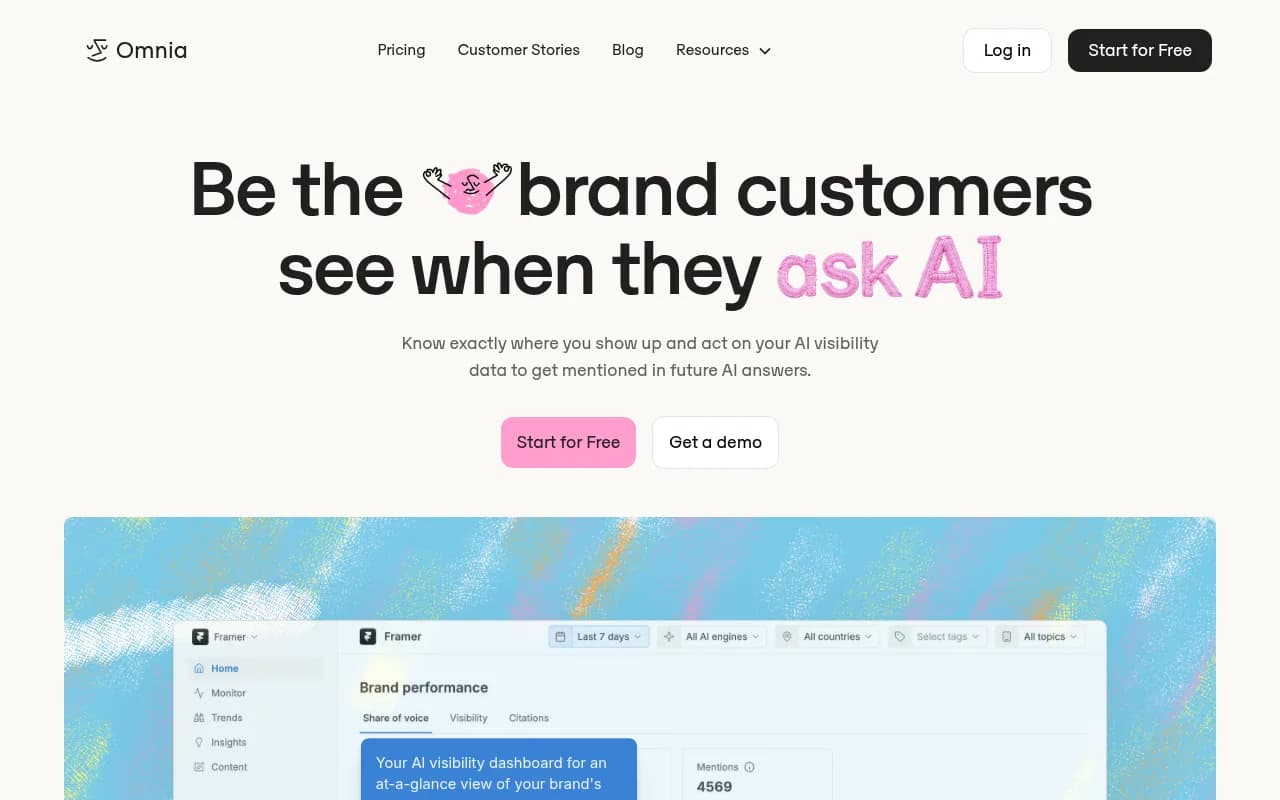
The feedback pattern is pretty consistent across teams that have made the switch:
- You can see that competitors are getting cited more than you. You can't easily figure out why, or what to do about it.
- Prompt coverage is limited. If you're in a niche category or targeting specific buyer personas, the out-of-the-box prompt sets often miss the questions your actual customers are asking.
- There's no content generation or gap analysis built in. You're on your own to interpret the data and translate it into action.
- Multi-region and multi-language support is patchy, which matters if you're running campaigns across markets.
- Reporting is functional but not flexible enough for agencies managing multiple clients.
None of these are fatal flaws in isolation. Together, they add up to a tool that tells you where you stand without helping you get anywhere better.
What teams actually needed (and didn't realize until they switched)
The shift from "monitoring" to "optimization" is the defining tension in the GEO space right now. Most platforms, Omnia included, were built around the first half of that equation. They answered the question: "Are we visible in AI search?" What they didn't answer was: "What do we do about it?"
When teams started asking that second question seriously, they ran into a wall.
The smarter teams started looking for platforms that could:
- Show them which specific prompts competitors were winning that they weren't
- Explain what content was missing from their site that AI models wanted to cite
- Help them create that content, not just identify the gap
- Track whether the new content actually improved their visibility over time
That's a fundamentally different product than a dashboard with a visibility score. And it's why the migration away from monitoring-only tools has accelerated through 2026.
Where teams went: the main alternatives
For teams that want the full optimization loop
Promptwatch is where a lot of teams end up when they've decided they want more than a tracker. The core difference is the action loop: it finds gaps (which prompts competitors rank for that you don't), generates content designed to get cited (using data from 880M+ analyzed citations), and then tracks whether that content actually improved your visibility.

That cycle, find gaps, create content, measure results, is what separates it from most of the field. Crawler logs show you exactly which pages AI models are reading on your site and which ones they're ignoring. Prompt intelligence gives you volume estimates and difficulty scores so you can prioritize. And page-level tracking closes the loop by connecting specific pieces of content to citation frequency across ChatGPT, Claude, Perplexity, Gemini, and others.
Pricing starts at $99/month for the Essential tier (1 site, 50 prompts, 5 articles), with Professional at $249/month adding crawler logs and multi-location tracking.
For enterprise teams with serious budgets
Profound is the other name that comes up frequently at the enterprise end of the market. It has a strong feature set and handles complex organizational needs well.
Evertune is another option that's gained traction with Fortune 500 brands specifically, with a focus on dominating AI search at scale.
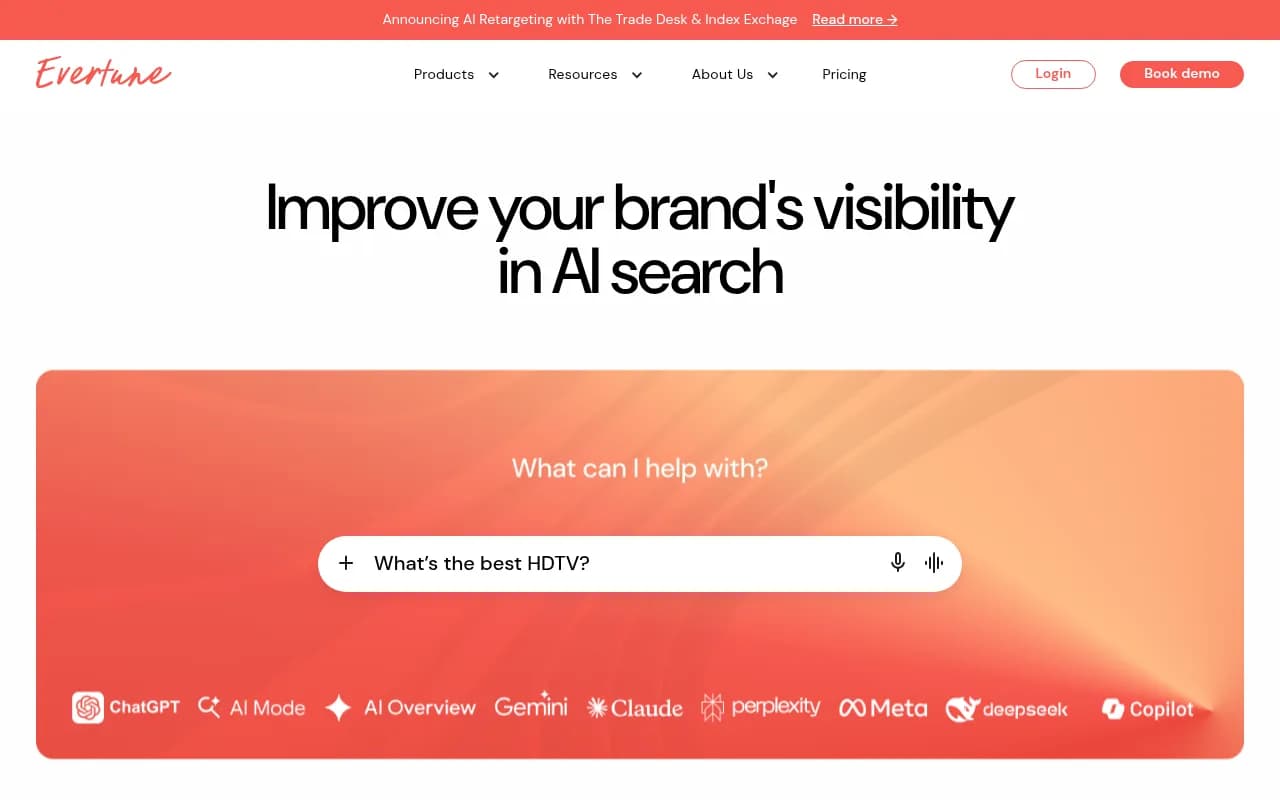
Both are solid, but they come with price points that rule them out for most SMBs and mid-market teams.
For agencies managing multiple clients
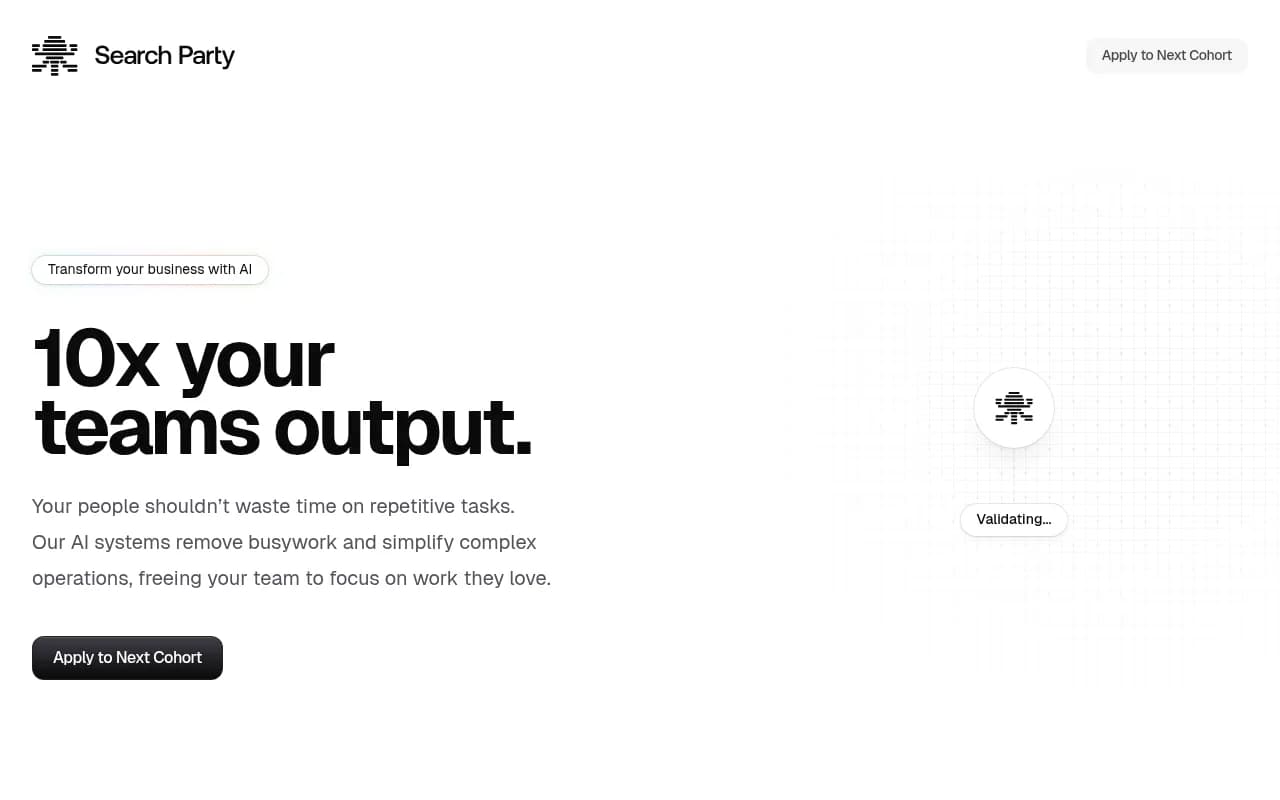
Search Party has carved out a niche in the agency space, though it's worth noting its prompt metrics are limited and it lacks content gap analysis.
Search Party
Scrunch AI is worth a look for agencies that need clean client reporting and multi-brand monitoring.
For teams on tighter budgets
Otterly.AI is the most common landing spot for teams that want basic AI visibility monitoring without the price tag. It's genuinely useful for tracking, though it stops there: no content generation, no crawler logs, no gap analysis.

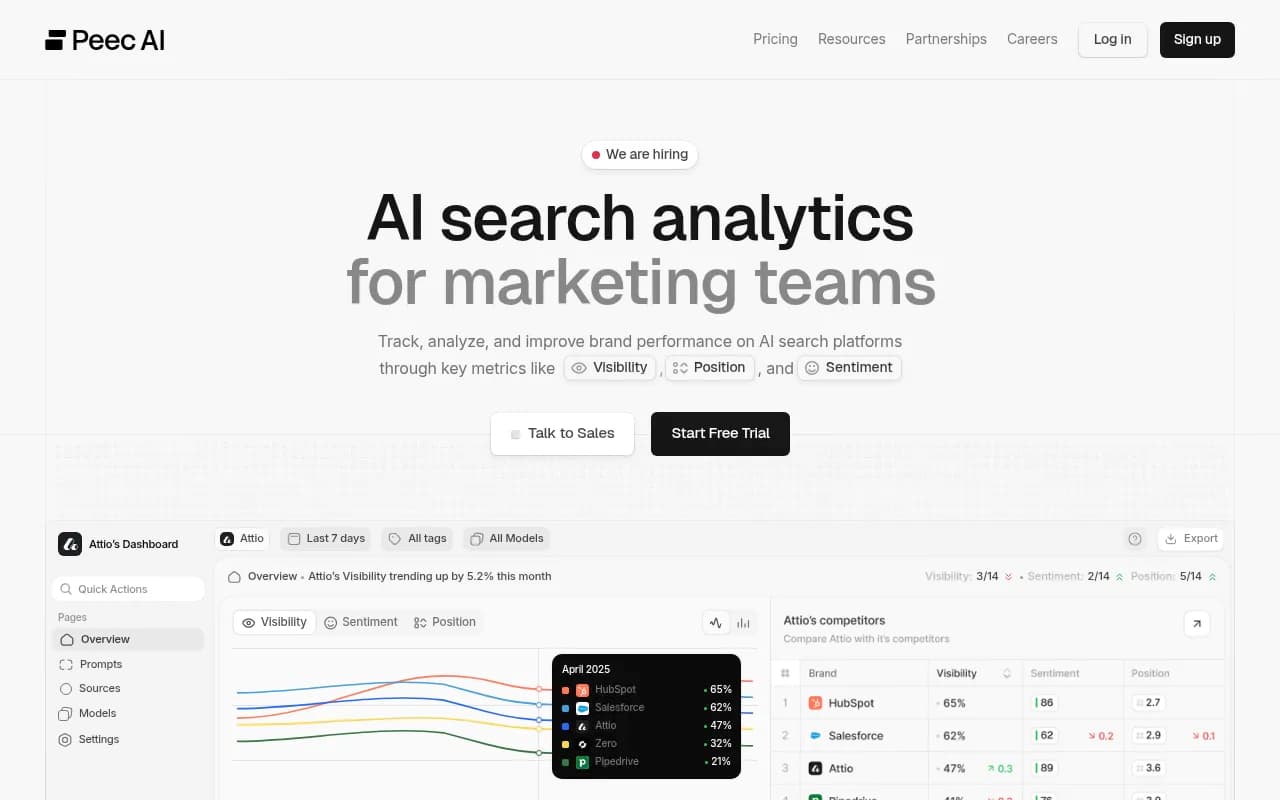
Peec AI sits in a similar position. Good for monitoring, not built for optimization.
Airefs is worth mentioning for teams that just need affordable AI search monitoring across the main models.
For teams coming from traditional SEO tools
Some teams switching away from Omnia aren't moving to a pure GEO platform at all. They're consolidating into tools they already use. Semrush has added AI visibility features, and Ahrefs Brand Radar covers some of the same ground.
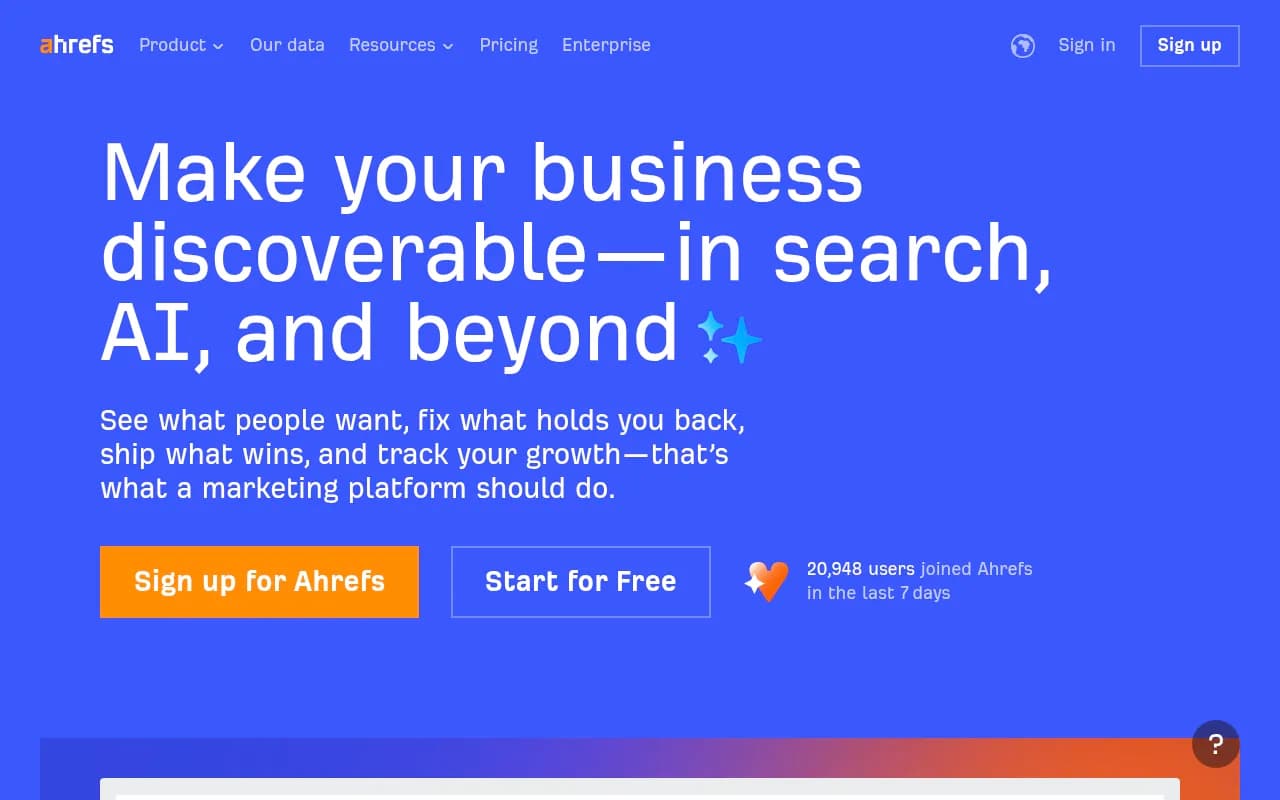
The honest take: neither goes as deep as a dedicated GEO platform. Semrush uses fixed prompts, Ahrefs Brand Radar has no AI traffic attribution. But if your team is already paying for one of these, they're better than nothing while you evaluate dedicated options.
A direct comparison
Here's how the main alternatives stack up against Omnia across the features that matter most to teams making the switch:
| Platform | Prompt gap analysis | Content generation | Crawler logs | Multi-model tracking | Reddit/YouTube insights | Starting price |
|---|---|---|---|---|---|---|
| Omnia | No | No | No | Partial | No | Varies |
| Promptwatch | Yes | Yes | Yes | Yes (10 models) | Yes | $99/mo |
| Profound | Partial | No | No | Yes | No | Enterprise |
| Otterly.AI | No | No | No | Yes | No | Low |
| Peec AI | No | No | No | Yes | No | Low |
| Scrunch AI | Partial | No | No | Yes | No | Mid |
| Semrush | No | No | No | Partial | No | $139/mo+ |
| Ahrefs Brand Radar | No | No | No | Partial | No | Included in Ahrefs |
| Evertune | Partial | No | No | Yes | No | Enterprise |
The pattern is hard to miss. Most alternatives are monitoring tools with different price tags. The meaningful differentiation comes from whether a platform helps you create content that gets cited, not just measure whether you're being cited.
The question worth asking before you switch
Before you migrate, it's worth being honest about what you actually need right now.
If you're in the early stages of AI search visibility, just trying to understand where you stand relative to competitors, a monitoring-only tool might be exactly right. Otterly.AI or Peec AI will do the job without overcomplicating things.
If you're past that stage and you're asking "what do we do about this?", you need a platform with optimization capabilities. The monitoring data is only useful if you can act on it.
The teams that get the most out of switching are the ones that come in with a clear brief: here are the prompts we care about, here are the competitors we're losing to, here's the content we need to create. Platforms like Promptwatch are built to support that workflow end to end.
The teams that struggle are the ones that switch tools hoping the new dashboard will solve the problem by itself. It won't. The tool is only as useful as the process around it.
What the broader data says
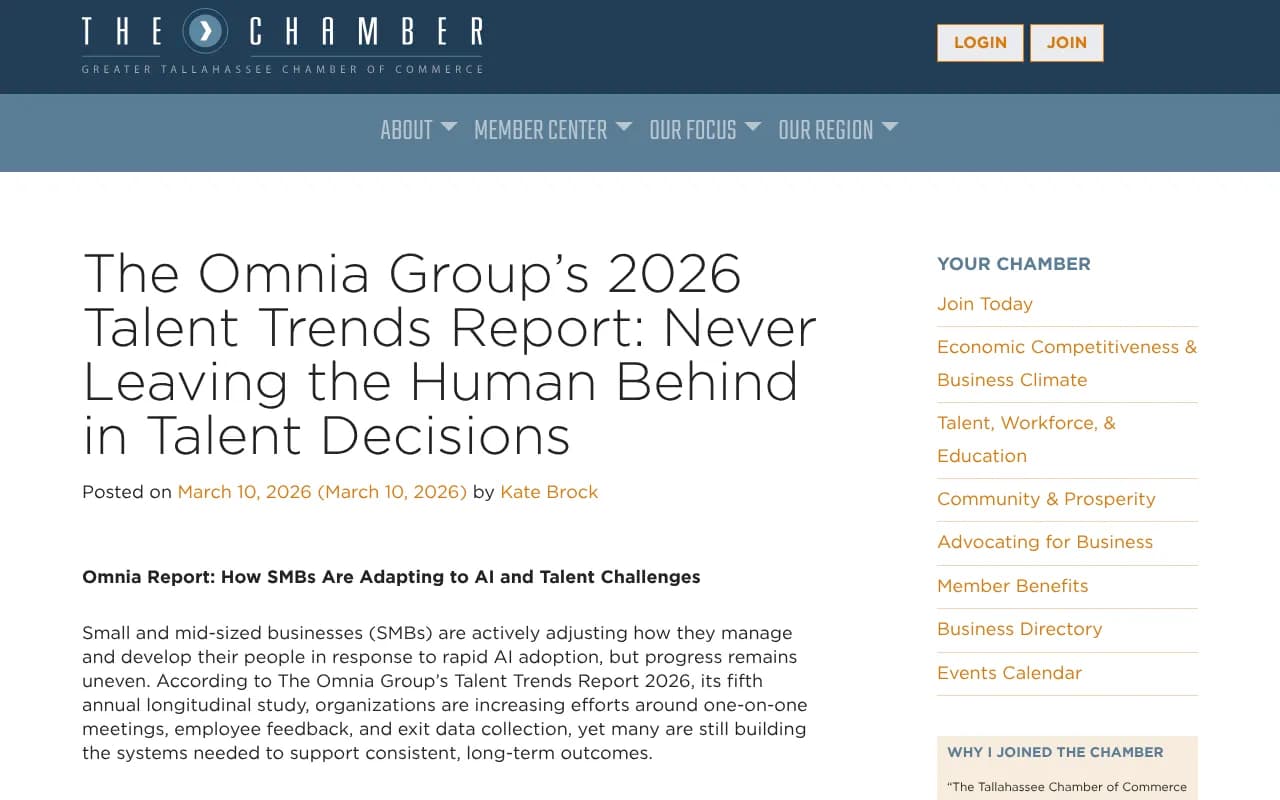
The Omnia Group's 2026 Talent Trends Report (a different Omnia, focused on HR and people analytics) published an interesting data point that applies here: AI adoption has risen sharply to 42.3% in 2026, but leadership capability and formal development structures have evolved more slowly. Technology is outpacing people readiness.
That gap shows up in the GEO space too. Teams are adopting AI search visibility tools faster than they're building the internal processes to use them well. The result is a lot of dashboards that get checked occasionally and don't drive much action.
The switch away from Omnia, or any monitoring-only tool, is often less about the tool itself and more about a team reaching the point where they need a system, not just a score.
The short version
Omnia works for what it is. The teams leaving it aren't angry, they're just ready for the next step. They want to know not just where they're invisible, but what to do about it.
The platforms that answer that question, the ones that help you find gaps, create content, and track results, are where the market is heading. If you're evaluating alternatives, start by figuring out which half of that equation you're missing, and pick accordingly.