Key takeaways
- Profound's core strength is its dataset: 400M+ real user prompts powering its Conversation Explorer, which gives genuine AI search volume data no competitor truly replicates
- The platform is monitoring-only -- it shows you where you're invisible in AI search but doesn't help you create content to fix it
- Pricing starts at $499/month and is largely sales-gated, making it a poor fit for most mid-market teams and agencies
- The 5 best alternatives in 2026 range from $29/month entry-level trackers to full-stack platforms that combine monitoring with content generation
- If your team's bottleneck is execution (not data), switching monitoring tools alone won't solve the problem
Profound raised $96M in February 2026 at a $1 billion valuation, bringing its total funding to $155M. Its customer list includes Target, Walmart, Figma, Ramp, and MongoDB. Over 10% of the Fortune 500 reportedly uses the platform.
So why are so many marketing teams looking for alternatives?
That's the question this review tries to answer honestly. Profound is genuinely good at some things. But there's a specific type of team it works well for, and a much larger group of teams it doesn't serve well at all. Understanding that distinction is more useful than a feature checklist.
What Profound actually does
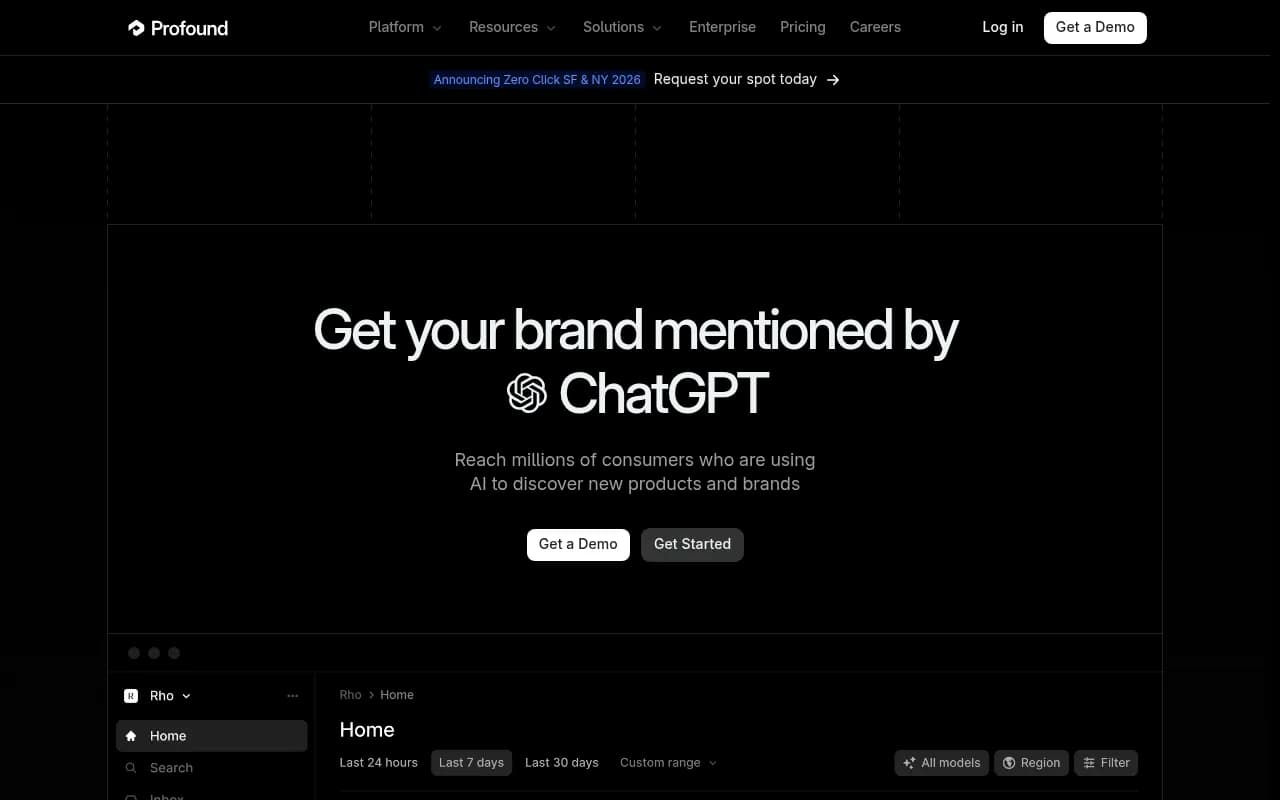
Profound is an AI visibility and brand intelligence platform. At its core, it tracks how your brand appears in AI-generated answers across ChatGPT, Perplexity, Google AI Overviews, and other models. You set up prompts relevant to your category, and Profound monitors whether your brand gets mentioned, how often, and in what context.
The standout feature is the Conversation Explorer. Unlike most competitors that build their prompt datasets from SEO keyword tools or manual research, Profound's dataset is built from 400M+ real user prompts. That means when you look at prompt volume data in Profound, you're seeing what people are actually typing into AI search engines -- not a proxy metric derived from Google search volume. That's a meaningful difference.
Other things Profound does:
- Citation drift tracking across AI models (how your brand representation changes over time)
- Competitive share-of-voice in AI responses
- Brand sentiment analysis within AI-generated content
- Executive and product mention tracking
- Multi-model comparison across ChatGPT, Perplexity, and Google AI Overviews
For enterprise brand teams focused on pure monitoring -- tracking how AI models represent their brand, products, and executives over time -- Profound is genuinely category-defining.
Where Profound falls short
It's monitoring-only
This is the core limitation, and it's not a minor one. Profound shows you where you're invisible. It does not help you become visible.
There's no content gap analysis that tells you what to write. No content generation tools. No briefs. No optimization recommendations tied to specific pages. The platform hands you data and leaves the rest to your team.
For an enterprise analytics team with dedicated content resources, that's fine. For a marketing team of four trying to actually move the needle, it creates a frustrating loop: you see the problem clearly, then you're on your own to fix it.
The price is high for what you get
Profound starts at $499/month, and most meaningful features require enterprise contracts that are sales-gated. That's not unusual for enterprise software, but it puts Profound out of reach for mid-market companies and agencies that would otherwise benefit from AI visibility data.
One analysis found Profound priced 48% above market rate for comparable monitoring features. Whether that premium is justified depends entirely on how much you value the real-user prompt dataset. If you're buying Profound primarily for the Conversation Explorer data, that's defensible. If you're buying it for general AI visibility monitoring, there are cheaper options that cover the same ground.
Limited execution support
The gap between "we have data" and "we shipped content that improved our AI visibility" is where most teams get stuck. Profound doesn't bridge that gap. It doesn't generate content, suggest specific page-level fixes, or show you which existing pages are being crawled and cited by AI engines.
For teams that need to move from insight to action, that's a real problem.
Coverage gaps
Profound's primary coverage is ChatGPT, Perplexity, and Google AI Overviews. Teams that need to track Claude, Gemini, Grok, DeepSeek, Mistral, or Meta AI will find the coverage incomplete. As AI search fragments across more models, this matters more.
Who Profound is actually right for
Be honest with yourself here. Profound makes sense if:
- You're an enterprise brand team with a dedicated analytics function
- Your primary need is AI brand monitoring and competitive intelligence, not content optimization
- You have separate content resources that can act on the data Profound surfaces
- The real-user prompt dataset is a specific requirement for your use case (e.g., you're building AI search strategy based on actual query volume)
- Budget is not a constraint
If you're a growth marketer, SEO lead, or agency trying to improve AI visibility and actually publish content that gets cited, Profound probably isn't the right fit.
The 5 best Profound alternatives in 2026
1. Promptwatch -- best for teams that need to act, not just monitor
Promptwatch is the alternative that most directly addresses Profound's core limitation. Where Profound stops at showing you the gap, Promptwatch is built around closing it.

The platform covers 10 AI models (ChatGPT, Perplexity, Google AI Overviews, Google AI Mode, Claude, Gemini, Meta/Llama, DeepSeek, Grok, Mistral, Copilot) and tracks real user-facing behavior rather than just API outputs -- which matters because AI answers in the actual interface often differ from what the API returns.
What sets it apart from Profound specifically:
- Answer Gap Analysis shows which prompts competitors rank for that you don't, with specific content recommendations
- Content Agents generate articles, listicles, and briefs grounded in actual prompt data and citation analysis
- AI Crawler Logs show which pages ChatGPT, Claude, and Perplexity are actually reading on your site, how often, and when crawls convert to citations
- Page-level tracking connects specific URLs to AI citations, so you know what's working
- Traffic attribution links AI visibility to actual revenue
Pricing starts at $99/month (Essential: 1 site, 50 prompts, 5 articles), $249/month (Professional: 2 sites, 150 prompts, crawler logs), and $579/month (Business: 5 sites, 350 prompts). That's substantially below Profound's $499/month starting price, with more execution-oriented features included.
Used by 1,480+ brands and agencies including Booking.com and Center Parcs. The platform has processed 4.5 billion citations, clicks, and prompts.
2. Otterly.AI -- best entry-level option
Otterly is the cheapest credible option in the category at $29/month. It covers 6 AI engines and gives you basic brand monitoring without the complexity or cost of enterprise platforms.
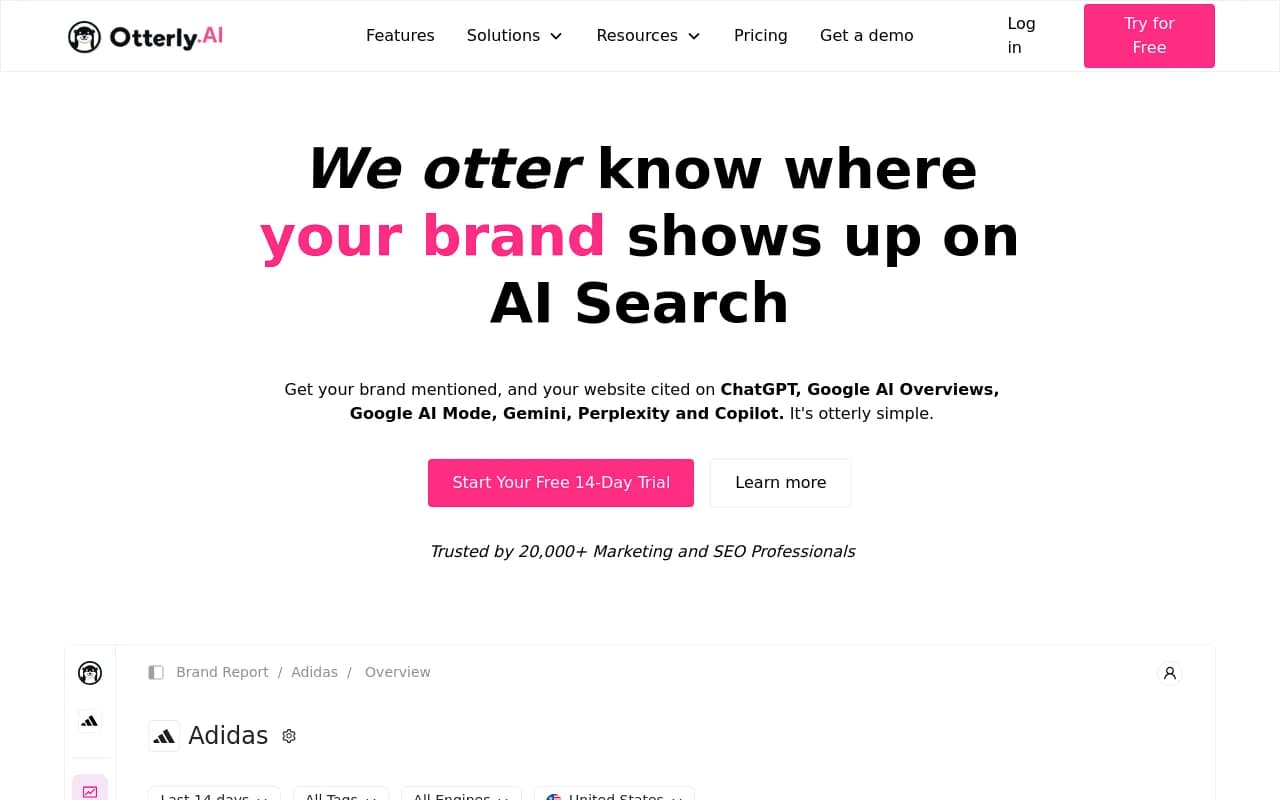
It's a good fit if you're just getting started with AI visibility tracking, want to validate whether this category matters for your business before committing budget, or need something simple that a small team can run without a dedicated analyst.
The limitations are real: no content generation, no crawler logs, no traffic attribution, limited prompt volume data. But for baseline monitoring, it does the job.
3. AthenaHQ -- closest enterprise peer to Profound
If you've evaluated Profound and want something at a similar capability tier, AthenaHQ is the closest comparison. It's enterprise-priced and enterprise-oriented, with strong multi-region and multi-language support.
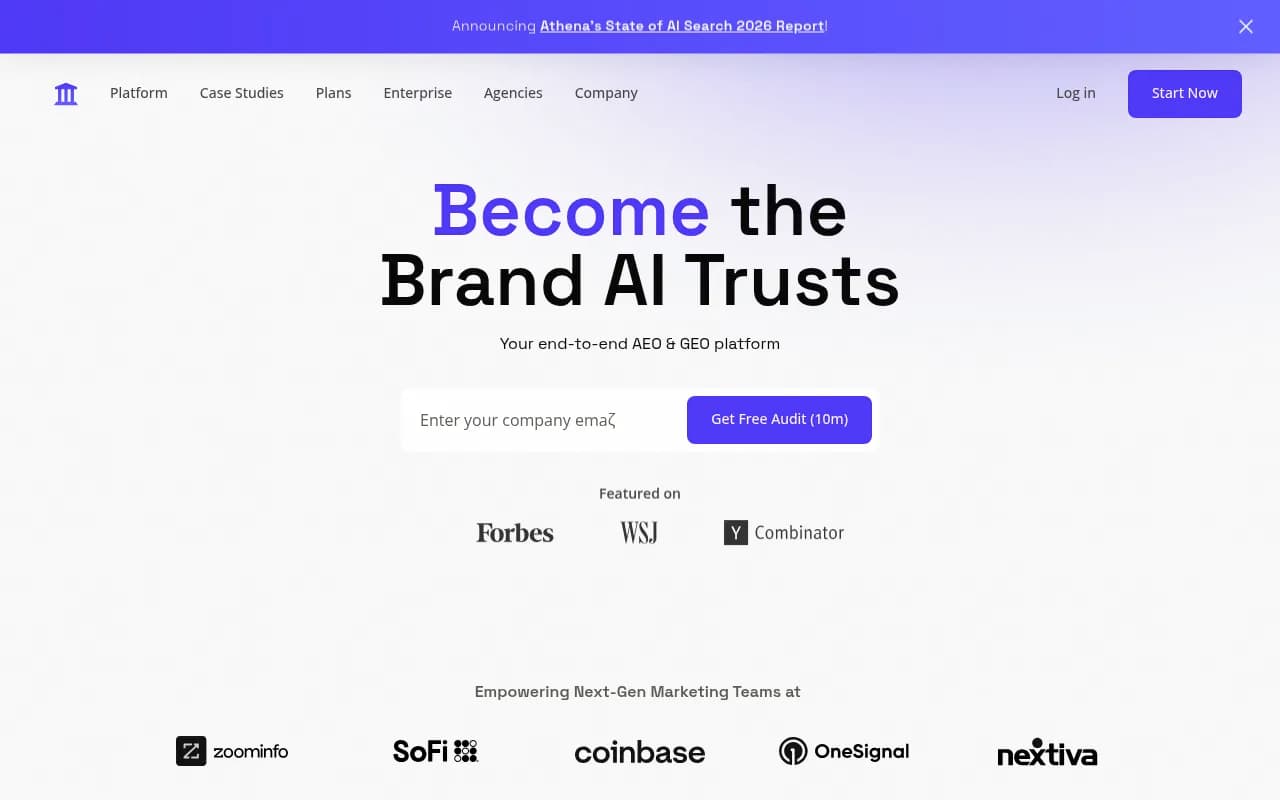
AthenaHQ covers 8+ AI search engines and has solid AEO/GEO positioning. The main difference from Profound is that it doesn't have Profound's real-user prompt dataset -- its query data is more SEO-derived. If that dataset is why you were considering Profound, AthenaHQ doesn't fully replace it. If you were attracted to Profound's enterprise positioning but not specifically the Conversation Explorer, AthenaHQ is worth a serious look.
4. Scrunch AI -- best for brand sentiment and content optimization
Scrunch AI sits between pure monitoring and full content generation. It tracks how AI models represent your brand and provides optimization recommendations, though it doesn't generate content itself.
It's a reasonable middle ground for teams that have content resources but need better direction on what to optimize. The platform covers major AI engines and gives cleaner brand sentiment analysis than most competitors. Pricing is more accessible than Profound, though still in the mid-market range.
5. SE Ranking (AI Overviews tracking) -- best for teams already using traditional SEO tools
SE Ranking has built AI visibility tracking into its existing SEO platform, which makes it a practical choice for teams that don't want to manage a separate tool.
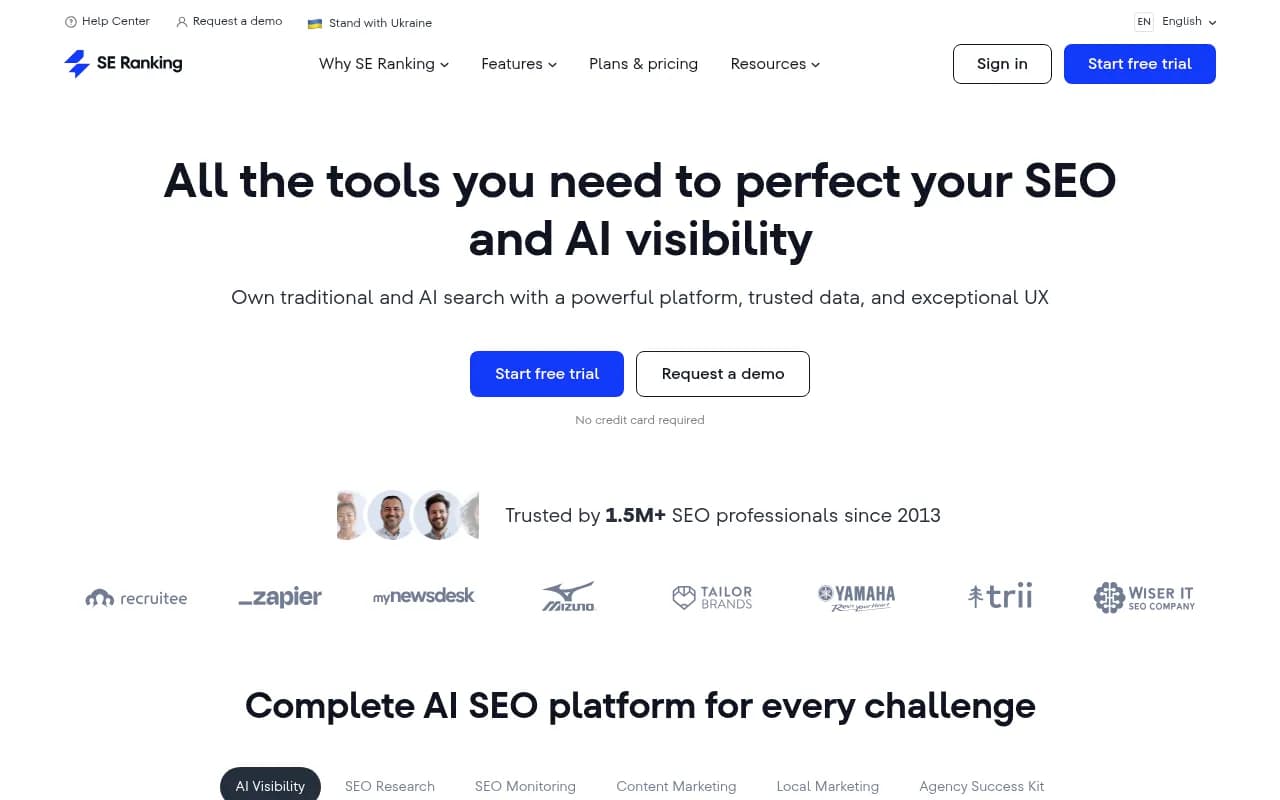
The AI visibility features aren't as deep as dedicated platforms -- you won't get the same level of prompt intelligence or citation analysis. But if you're already paying for SE Ranking for traditional SEO and want to add AI search monitoring without adding another vendor, it's a sensible option.
Comparison table
| Platform | Starting price | AI models covered | Content generation | Crawler logs | Real user prompt data | Best for |
|---|---|---|---|---|---|---|
| Profound | $499/mo | 3 (ChatGPT, Perplexity, GAO) | No | No | Yes (400M+ prompts) | Enterprise brand monitoring |
| Promptwatch | $99/mo | 10 | Yes | Yes | Yes (4.5B citations) | Teams that need to act on data |
| Otterly.AI | $29/mo | 6 | No | No | No | Entry-level monitoring |
| AthenaHQ | Enterprise | 8+ | No | No | No | Enterprise, Profound peer |
| Scrunch AI | Mid-market | Major engines | No | No | No | Brand sentiment + optimization |
| SE Ranking | Bundled | Limited | No | No | No | Existing SE Ranking users |
The real question: data problem or execution problem?
One honest observation from teams that have switched away from Profound: most of them didn't have a data problem. They had an execution problem.
They knew where they were invisible in AI search. The dashboard made that clear. What they couldn't do was ship content fast enough to close the gaps. Switching from Profound to a cheaper monitoring tool doesn't fix that. You still have the same gap between insight and published content.
The tools that actually move the needle are the ones that help you go from "we're not appearing for this prompt" to "we published something that addresses it." That's a different product category than what Profound (or most of its alternatives) offer.
If your team is stuck in the data-but-no-action loop, the question isn't which monitoring tool to use. It's whether you need a platform that handles both sides of the problem.
Final verdict on Profound
Profound built something genuinely valuable: a real-user prompt dataset that gives AI search volume data no competitor truly replicates. For enterprise teams that need that specific data asset and have the budget and internal resources to act on it, Profound is defensible at its price.
For everyone else -- mid-market teams, agencies, growth marketers who need to both understand and improve their AI visibility -- the combination of high price, sales-gated access, and monitoring-only functionality makes it a poor fit.
The alternatives above cover most of what Profound does at lower price points. And if your goal is to actually improve your AI search visibility rather than just track it, platforms like Promptwatch that close the loop from insight to published content will likely serve you better than any pure monitoring tool, Profound included.