Key takeaways
- I could not find independent user reviews of InSpace.io (the SEO and GEO vendor) on G2, Trustpilot or Reddit. Anything claiming to quote "users" is guesswork.
- InSpace sells NOVA, an autonomous SEO and GEO engine that researches, writes, publishes and refreshes pages, with a human success manager on top.
- Pricing is not public. The only visible route is booking a free demo, which is a common reason buyers hesitate.
- This guide treats the question as an evaluation framework: what the vendor says, where autonomous content tools tend to cause friction, and what would justify switching.
- Do not confuse inspace.io with the "Inspace" workplace and space-booking tool on Capterra and Software Advice. Those reviews are about a different product.
A note on sourcing before we start
The title promises what users say. I will be straight with you: I could not find a body of independent feedback for InSpace.io. No G2 page with meaningful volume, no Trustpilot profile, no Reddit threads from customers. The Capterra and Software Advice listings that show up for "inspace" belong to a digital-workplace product listed next to Skedda, with pricing from about $7.99. Wrong company.
So I am not going to invent quotes or pretend there is a consensus. What I can do is lay out what InSpace publicly claims, what that implies about the likely strengths and friction points, and give you a checklist for deciding whether to buy, stay or leave. If you are an InSpace customer, your own data will tell you more than any roundup.
What InSpace.io actually is
InSpace is a Dutch company, based around Eindhoven and the High Tech Campus. In September 2026 it announced a San Francisco office to push into the U.S. market, according to a GlobeNewswire release.
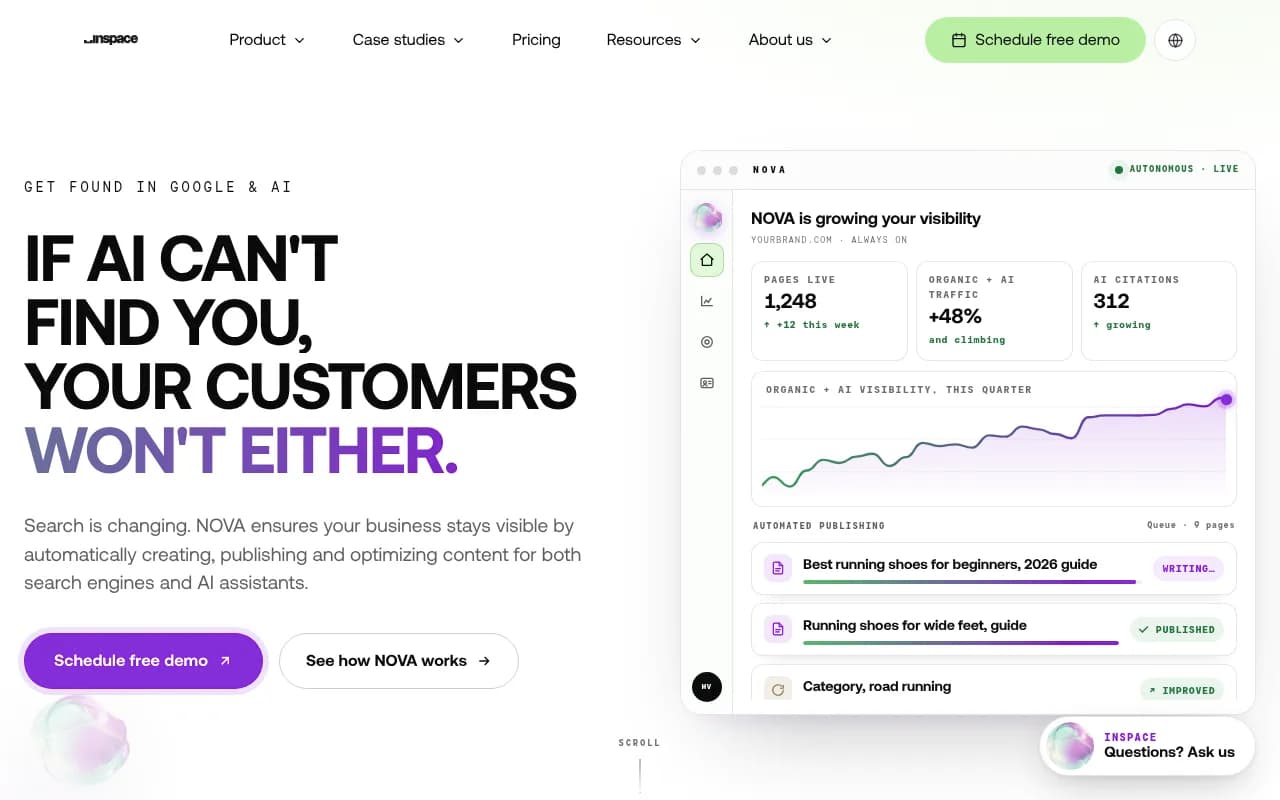
Its product is NOVA, described as an autonomous SEO plus GEO engine. According to the product page, it:
- researches which of your pages need to win
- writes the content
- publishes into your CMS
- keeps improving pages after launch
It says it plugs into whatever platform your site runs on. The homepage also shows multilingual targeting (English, Dutch, German, French) and positions a human success manager next to the automation. The pitch is roughly "no agency to manage, but a real person if you need one."
The company also sells AI SEO as a service, described as proprietary-platform automation of strategy, topic clustering, content creation, technical optimization and publishing, with expert oversight.
Likely strengths, based on what is verifiable
I am labelling these as likely, not reported. They come from the vendor's own materials.
Hands-off execution
Most GEO products stop at a dashboard. NOVA claims to do the work. For a small team with no content capacity, that is the whole appeal. The homepage demo shows a publishing queue (7 pages, statuses like Writing, Published, Improved), which is at least a concrete picture of the workflow.
Dual focus on Google and AI answers
The company frames the goal as being found in Google and in AI answers, and its blog argues that ranking is no longer the finish line. That matches what the data shows about how fragmented AI citations are. For example, Promptwatch's data found that almost half of ChatGPT responses cite 10 or more unique domains (Sep 28 to Oct 4, 2026), see the unique domains per response report. Being one of many cited sources matters more than holding a single top slot.
Self-awareness about AI content risk
InSpace's own blog warns against publishing raw AI output and against optimizing for volume over usefulness. That is a good sign, if the product behaves the way the blog talks. It is also the single most important thing to test, which I come back to below.
Case study numbers
The site lists results such as +44% for PrimeEstate (real estate), and much larger percentages for smaller brands like DevTalent (+1,582%) and SolidBuild (+1,497%). These are vendor-selected, the metric is not clearly defined on the page, and percentage gains from a low base look dramatic. Treat them as marketing, not benchmarks.
Likely complaints and friction points
Again, no sourced user complaints exist that I could find. These are the issues that tend to come up with any autonomous content product, and that you should probe on a demo.
Opaque pricing
There is no public price for NOVA. You book a demo. Some buyers are fine with that for a managed service. Others treat it as a reason to move on, particularly when comparable tools list prices openly.
Quality control at scale
Automated publishing across hundreds or over a thousand pages (the homepage mockup shows 1,248 pages live) raises the obvious question: who reviews them? InSpace's own blog says tone, context and brand alignment get worse at scale without strong rules. Ask how brand rules are enforced and whether you can approve pages before they go live.
Attribution you cannot verify yourself
Vendor dashboards that report "+48% organic and AI traffic" and "312 AI citations" are hard to audit. You want your own analytics, Google Search Console and an independent AI visibility tracker agreeing with those numbers.
Lock-in and content ownership
If NOVA publishes into your CMS, what happens to those pages when you leave? Confirm that you own everything, that nothing is hosted on the vendor's infrastructure, and what the contract terms are.
Brand and bias in the vendor's comparisons
InSpace publishes a "7 Best Surfer SEO Alternatives" article that ranks InSpace first. Fine as marketing, useless as an independent comparison. This guide is not drawing on it for any ranking.
Common reasons people switch from tools like this
Without verified InSpace-specific data, here are the general reasons teams leave autonomous SEO platforms. Use them as a test of whether you are at risk.
| Reason | What it looks like | What to check first |
|---|---|---|
| Content feels generic | Pages read like every other AI article | Sample 20 published pages against your brand voice |
| No measurable lift | Traffic flat after 4 to 6 months | Compare Search Console clicks, not vendor dashboards |
| Cost without visibility | Retainer or license with unclear deliverables | Ask for a per-page and per-month breakdown |
| Missing AI-specific data | No view of which prompts and citations you win | Add an independent AI visibility tracker |
| Need for more control | Want approval flows, custom briefs, editorial review | Ask about review inbox and approval settings |
| Limited reporting | Cannot export crawler logs or citation data | Request raw data access |
How to evaluate InSpace.io before you commit
- Book the demo and ask for pricing in writing, including what happens at renewal.
- Ask for two reference customers in your industry and language, and actually call them.
- Request a sample of ten published pages and read them as a skeptical customer would.
- Ask how factual accuracy is checked, especially for regulated or technical topics.
- Check whether pages can be held for human approval before publishing.
- Confirm data ownership, CMS access scope and the cancellation process.
- Agree on success metrics up front: Search Console clicks, conversions, and AI citations measured outside the vendor's dashboard.
Measuring results independently
Whichever platform you use, you want a second set of eyes. Google Search Console is free and shows what Google actually served.
For AI answers, an independent tracker shows which prompts you appear in, which sources are cited and whether the traffic converts. Promptwatch tracks the real interfaces of ChatGPT, Google AI Overviews, Gemini, Perplexity and others, and includes crawler logs and AI traffic attribution, which makes it a reasonable referee for any vendor's claims.

One caution on interpreting AI citation data: patterns shift quickly. Promptwatch's data showed Reddit's share of ChatGPT citations falling from about 4% to 0.5% on August 14, 2026 (report), and ChatGPT getting just 0.46% of its citations from social platforms versus 12.2% for Google AI Overviews from Sep 28 to Oct 4, 2026 (report). A strategy tuned to last quarter's behavior can go stale, so ask any vendor how often their approach is updated.
Content types matter too. Product pages were the most cited content type in ChatGPT at 22.4% of citations in the same week (report), which is worth knowing when a tool pushes you toward mass blog publishing.
Alternatives to compare against
If you are shopping, these fall into different camps. All are in our catalog.
| Tool | Approach | Best for |
|---|---|---|
| Promptwatch | AI visibility tracking plus content agent and CMS publishing | Teams that want measurement and action in one place |
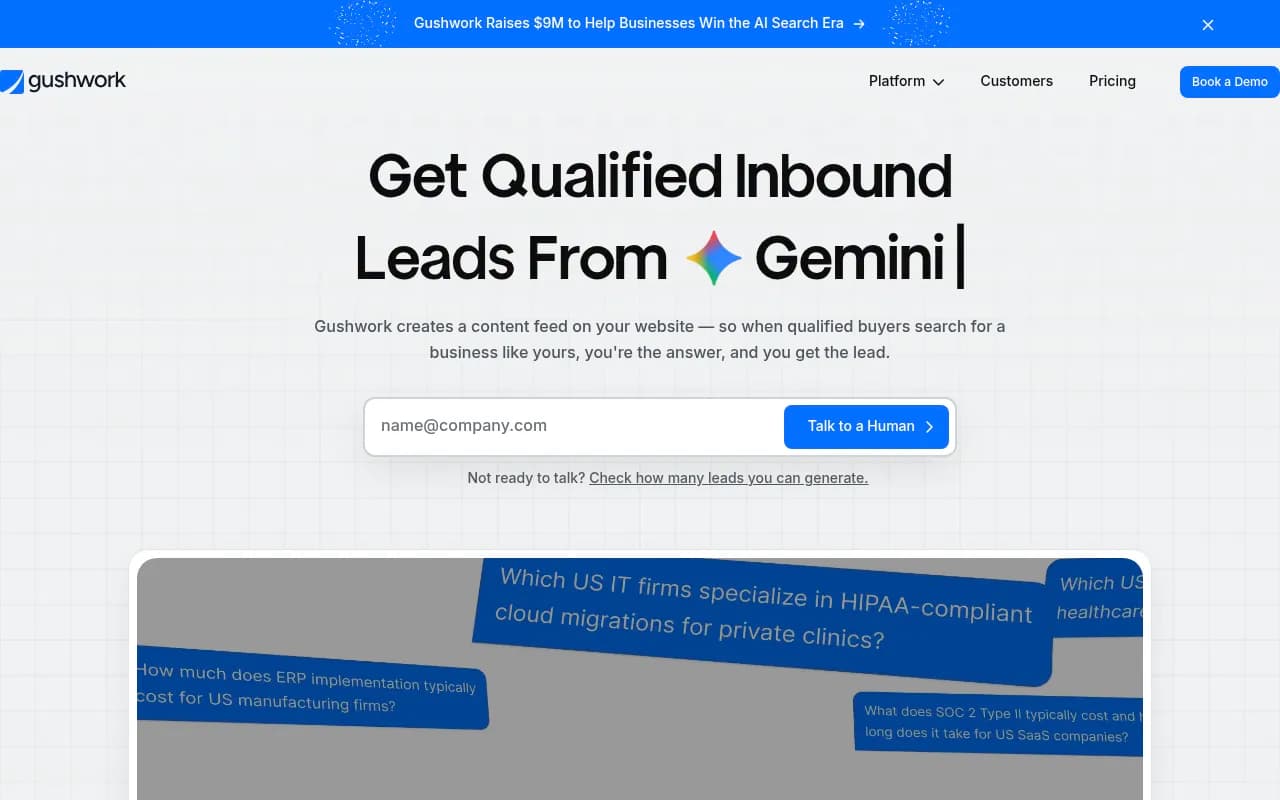
| Gushwork | AI content engine that builds 100+ pages for B2B leads | B2B lead generation |
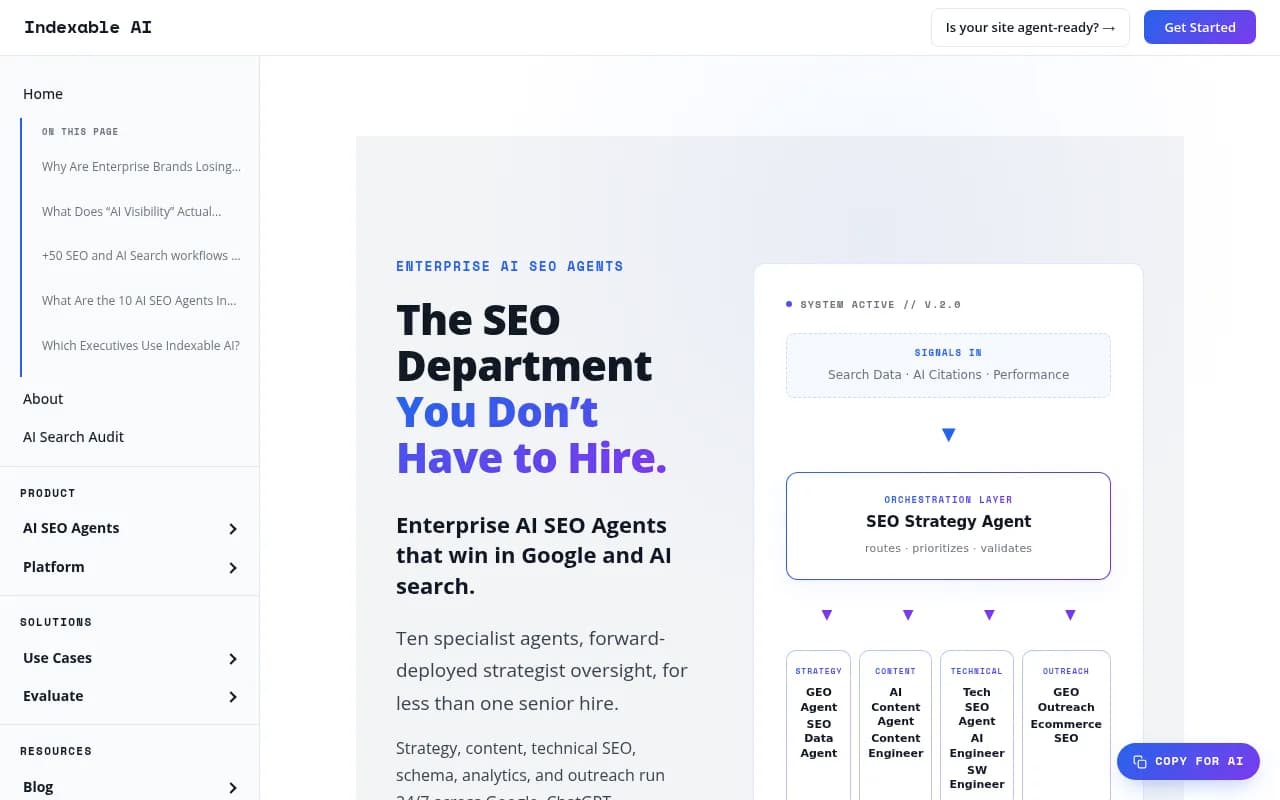
| Indexable | AI SEO and GEO team with a human strategist | Teams wanting human-led strategy |
| Skribra | SEO agent that researches, writes and keeps articles ranking | Small sites wanting automation |
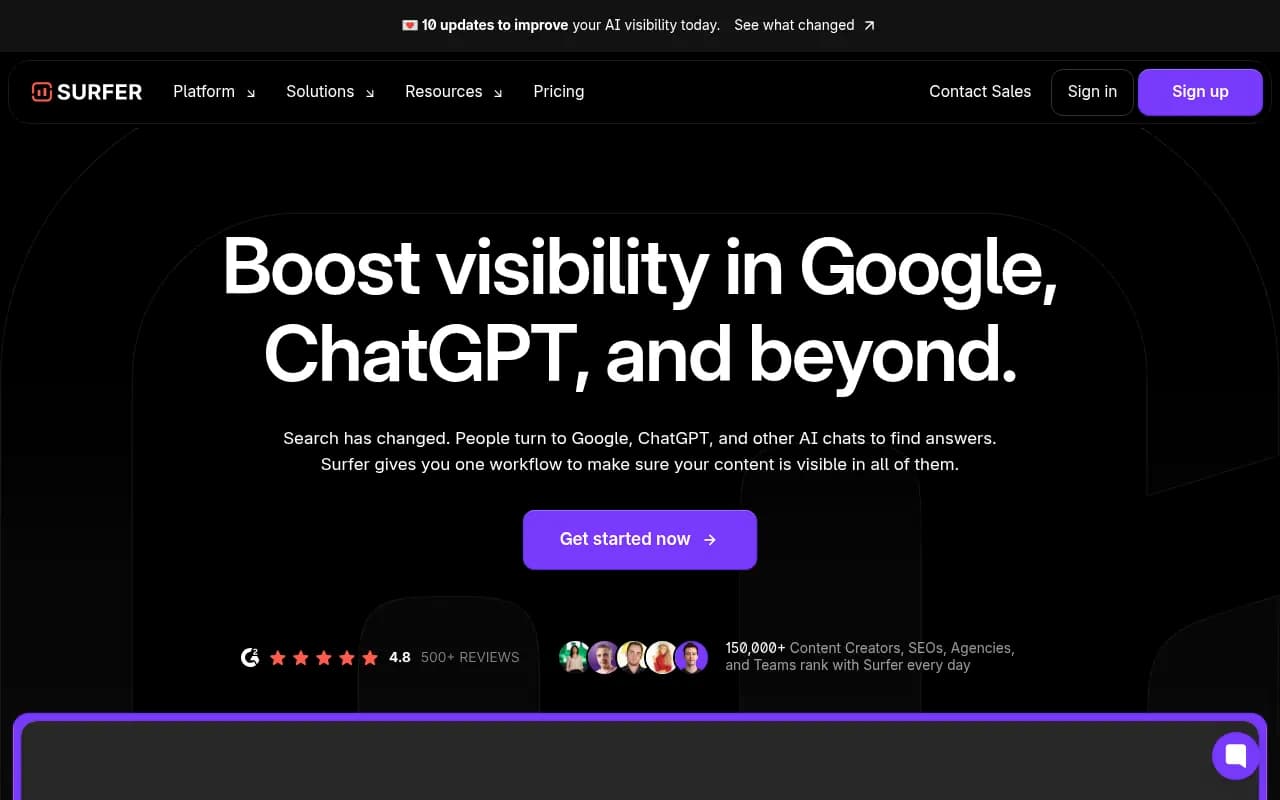
| Surfer SEO | Content optimization with AI writing | Teams that keep writers in the loop |
| Passionfruit Labs | AI-native marketing agency for SEO and GEO | Fully outsourced programs |
Gushwork

For wider browsing, the GEO software directory at bestgeosoftware.com lists more options by category.
Autonomous tool or human-led service?
This is the real fork. Autonomous engines are cheaper per page and faster. Human-led services are slower and cost more, but someone is accountable for editorial judgment. InSpace tries to sit between the two with NOVA plus a success manager. Whether that works depends on how much that manager actually does, which is a demo question, not something I can answer from outside.
Signs you should stay
- Search Console clicks and conversions are rising on pages NOVA published or improved
- Independent AI tracking confirms new citations, not just vendor-reported ones
- Published pages pass your own editorial read
- Your success manager responds with specifics, not templates
Signs you should switch
- Traffic is flat or down after a fair test window, and the vendor blames seasonality
- You cannot get raw data or reports you can verify
- Page quality drifts toward generic output
- Pricing or terms changed without a clear reason
- You need review and approval workflows the platform does not offer
Bottom line
There is not enough public, independent feedback on InSpace.io to call its strengths and weaknesses "what users say." What exists is a vendor with a credible-sounding product, a few flattering case studies, no public pricing and its own blog warning against exactly the failure mode autonomous tools risk. That is not a red flag, but it is a reason to run a structured trial with outside measurement. If you do, share what you find. The shortage of real reviews is the most useful thing this guide can tell you.