Key takeaways
- GetMint.ai and Meteoria.ai attracted teams with low price points and simple dashboards, but both delivered inconsistent tracking data and no path to actually improving AI visibility.
- The cost of a broken tool isn't just the subscription fee — it's the strategy time wasted, the content not created, and the competitor citations you missed while your dashboard showed green.
- Digiday reported in May 2026 that marketers are increasingly skeptical of AI visibility tools precisely because inconsistent results make it impossible to act on the data.
- The core problem: most tools in this category are monitoring dashboards, not optimization platforms. Seeing that you're invisible doesn't help if the tool can't tell you why or what to do about it.
- Teams that switched to platforms with built-in content gap analysis and AI writing capabilities recovered faster and saw measurable citation improvements within weeks.
There's a particular kind of frustration that comes from paying for a tool that technically works but doesn't actually help. The dashboard loads. The numbers update. The weekly report lands in your inbox. And yet, somehow, your brand is still not showing up in ChatGPT or Perplexity, and you have no idea what to do about it.
That's the story a lot of marketing teams are telling in 2026 about GetMint.ai and Meteoria.ai. Both tools promised AI visibility monitoring at accessible price points. Both attracted real customers. And both, according to teams who used them through early 2026, left those customers with data they couldn't act on and gaps they couldn't close.
This guide is about what those teams actually lost — not just in subscription dollars, but in strategy time, competitive ground, and missed opportunities to show up where buyers are increasingly looking.
Why 2026 made AI visibility a real budget line
Before getting into what went wrong, it's worth understanding why teams were rushing to buy these tools in the first place.
The zero-click reality hit harder than most predicted. Pew Research Center found that Google users who encounter an AI summary click through to traditional search results only 8% of the time, compared to nearly 16% for users who don't see an AI summary. That's a roughly 50% drop in click-through potential, and it's not a future problem — it's happening now.
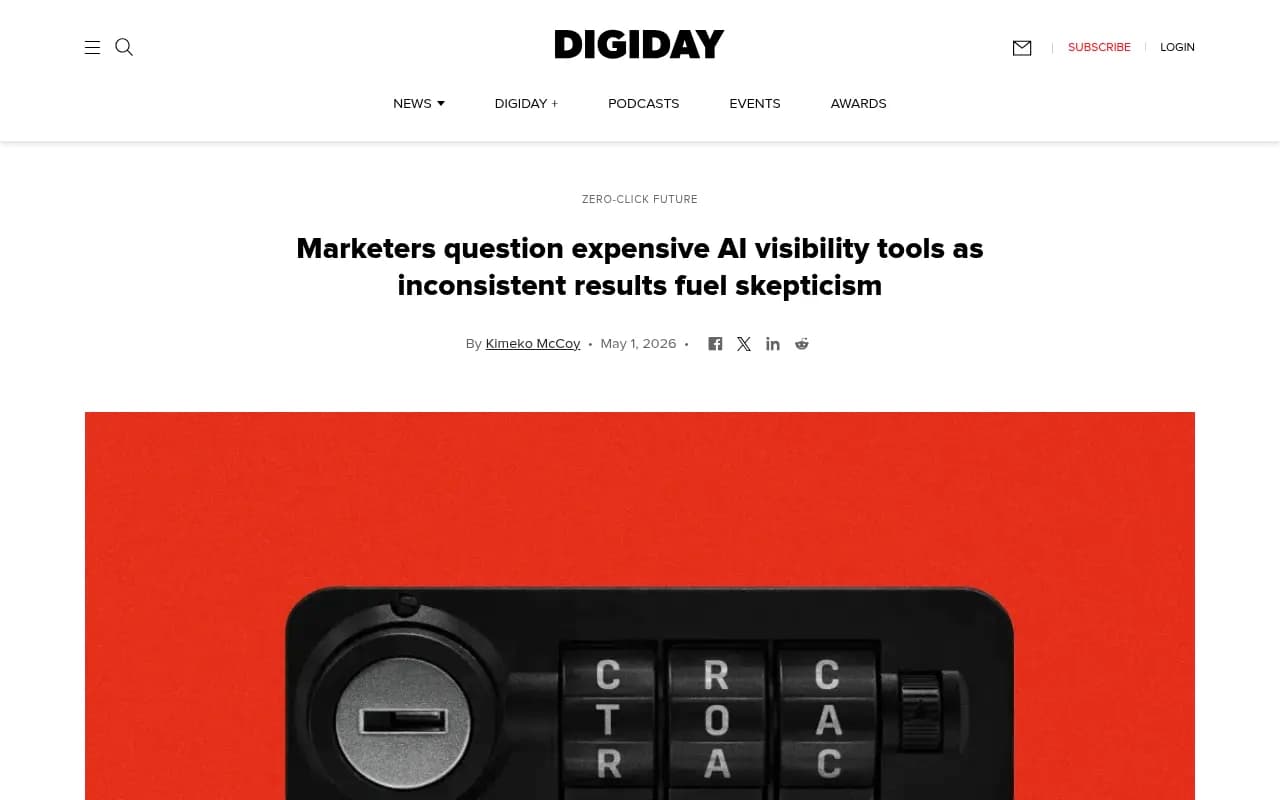
Digiday's May 2026 report captured the growing tension: marketers know AI visibility matters, but they're struggling to trust the tools built to measure it.
Meanwhile, Profound closed a $96 million Series C at a $1 billion valuation in February 2026, with Lightspeed, Sequoia, and Kleiner Perkins all participating. When three of Silicon Valley's most selective firms bet on a single idea — that brands need to control how AI talks about them — the market notices. Marketing teams that had been watching from the sidelines suddenly needed to show their CMOs they had a plan.
That urgency created the perfect conditions for tools like GetMint.ai and Meteoria.ai to sign up customers quickly. The pitch was simple: affordable monitoring, fast setup, and a dashboard that showed whether AI models were mentioning your brand. What the pitch left out was everything that happens after you see the data.
What GetMint.ai promised vs. what teams got
GetMint.ai positioned itself as an accessible entry point into AI visibility monitoring. The interface was clean, the onboarding was fast, and the price was low enough that teams could justify it without a lengthy procurement process.
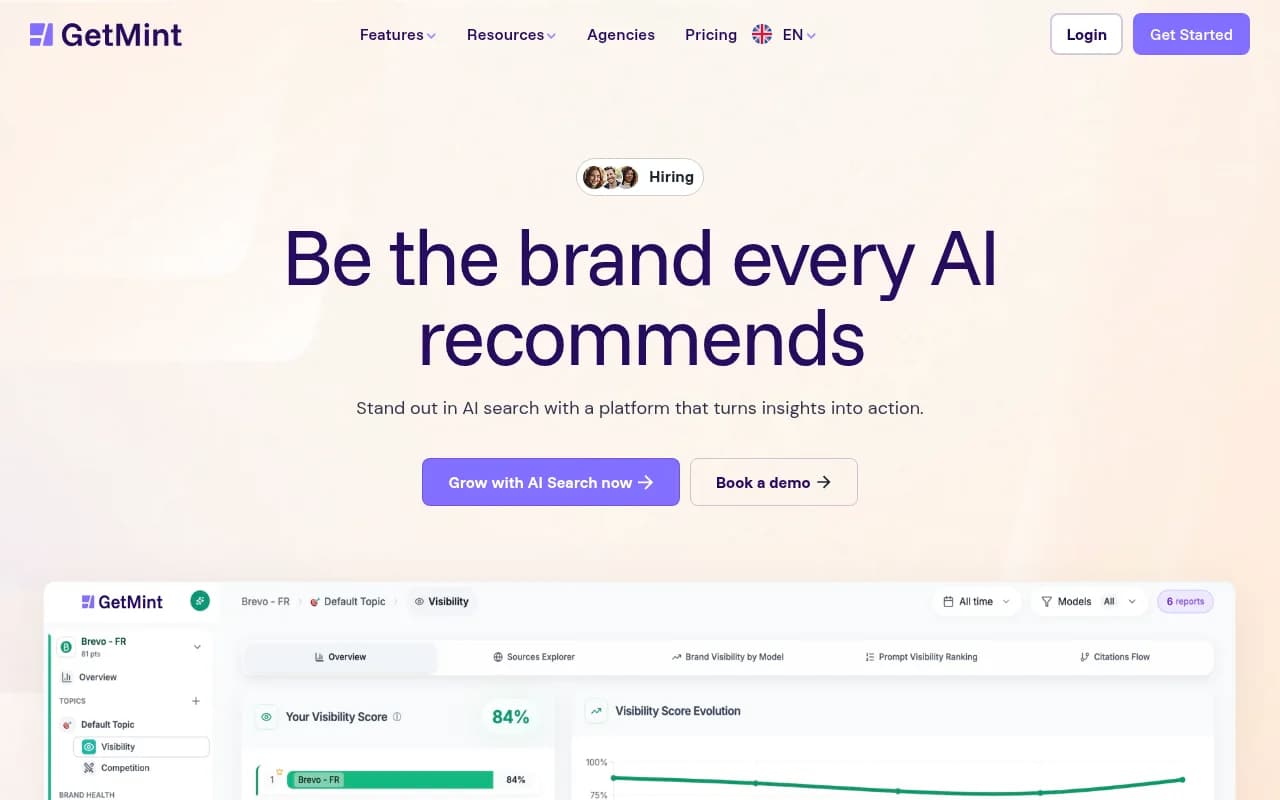
The problems surfaced within the first few weeks of serious use. Teams running the same prompts on multiple days got different visibility scores with no explanation for the variance. When they asked support whether the discrepancy reflected actual changes in AI model behavior or a data collection issue, the answers were vague. That's not a minor inconvenience — it's a fundamental reliability problem. If you can't trust that a drop in your visibility score reflects reality, you can't make decisions based on it.
The second issue was more structural. GetMint.ai showed you where you were visible and where you weren't. It did not show you why. There was no content gap analysis, no prompt-level breakdown of what competitors were being cited for that you weren't, and no built-in tools to actually create content that might close those gaps. The tool was a rearview mirror with no steering wheel.
For teams that were already stretched thin, this created a painful loop: pay for the tool, get the data, spend hours manually trying to interpret what it meant, fail to act on it in any systematic way, and watch the subscription renew.
What Meteoria.ai promised vs. what teams got
Meteoria.ai came at the problem from a slightly different angle, leaning into multi-model tracking and a cleaner UI. The promise was comprehensive coverage across the major LLMs, with sentiment analysis layered on top.
In practice, the coverage was inconsistent. Teams reported that certain AI models were tracked reliably while others produced sparse or clearly incomplete data. Sentiment analysis, which sounds useful in theory, turned out to be too coarse to act on — knowing that ChatGPT mentioned your brand "positively" doesn't tell you which page it cited, what prompt triggered the mention, or whether a competitor was cited alongside you.
The deeper issue with Meteoria.ai was the same one plaguing most tools in this category: it was built to report, not to optimize. There was no crawler log functionality to show which pages AI bots were actually visiting on your site. There was no traffic attribution to connect AI citations to actual revenue. And there was no content generation capability to help teams create the pages that might actually get cited.
For agencies managing multiple clients, this was especially painful. You could show a client their visibility score, but you couldn't show them a clear path to improving it. That's a hard conversation to have when the client is paying you to drive results.
The hidden costs that don't show up in the subscription price
When teams calculate the cost of a bad tool, they usually focus on the monthly fee. That's the wrong number to look at.
The real cost breaks down into a few categories:
Strategy time burned on bad data. When your visibility scores are inconsistent, your team spends hours trying to figure out whether a change is real or an artifact of the tool's methodology. That's senior marketing time — often the most expensive resource a team has — spent on a problem that a reliable tool would eliminate.
Content not created. The whole point of knowing where you're invisible is to do something about it. If your tool can't tell you which prompts competitors are winning that you're losing, you can't prioritize what to write. Teams using GetMint.ai and Meteoria.ai often defaulted to guessing, which meant creating content that didn't move the needle on AI citations.
Competitor ground lost. AI visibility compounds. When a competitor gets cited consistently for a category of prompts, AI models learn to associate that brand with that topic. Every month you spend with a broken tool is a month your competitors are building that association while you're not.
The cost of switching. When teams finally moved off these platforms, they had to rebuild their baseline data, re-run their prompt sets, and often start their content strategy from scratch. The switching cost isn't just the new tool's onboarding time — it's the lost continuity.

The pattern of over-trusting automated tools without validation isn't unique to AI visibility. QA Financial documented a case where a financial firm lost $6M after replacing its QA team with an AI pipeline that hallucinated a discount code. The lesson applies here: automation without oversight and actionability creates real risk.
What the Digiday report actually said
In May 2026, Digiday published a piece that captured the mood in the market precisely. The headline: "Marketers question expensive AI visibility tools as inconsistent results fuel skepticism."
The core tension the piece identified was real: there's genuine demand to understand brand visibility in AI environments, and tech vendors know it. But the tools being sold range from genuinely useful to what one source in the piece essentially called a profitable guessing game.
The inconsistency problem is structural. AI models don't return deterministic results. The same prompt can produce different responses on different days, from different regions, with different conversation histories. A tool that doesn't account for this — that doesn't run prompts at sufficient volume and frequency to smooth out that variance — will produce data that looks meaningful but isn't.
That's what teams using GetMint.ai and Meteoria.ai ran into. The tools weren't necessarily lying. They were just measuring something too noisy to be useful without the methodology to make it reliable.
What a functional AI visibility tool actually needs to do
The market has matured enough in 2026 that we can be specific about what separates a useful tool from a dashboard that wastes your time.
| Capability | Why it matters | GetMint.ai | Meteoria.ai |
|---|---|---|---|
| Consistent prompt methodology | Without it, score changes are noise | Inconsistent | Inconsistent |
| Content gap analysis | Shows you what to create, not just where you're missing | No | No |
| AI crawler logs | Shows which pages AI bots actually visit | No | No |
| Built-in content generation | Closes the gap between insight and action | No | No |
| Traffic attribution | Connects citations to revenue | No | No |
| Prompt volume & difficulty scoring | Helps prioritize which gaps to close first | No | No |
| Multi-model coverage | Tracks across ChatGPT, Claude, Perplexity, Gemini, etc. | Partial | Partial |
| Reddit & YouTube tracking | Surfaces content that influences AI recommendations | No | No |
The tools that are actually moving the needle for teams in 2026 cover most of that list. The monitoring-only tools cover the last two columns and leave everything else to you.
Tools worth considering instead
If you're evaluating alternatives after a disappointing experience with GetMint.ai or Meteoria.ai, here's a realistic look at what's available.
For teams that need the full loop: find gaps, create content, track results
Promptwatch is the platform that comes up most often when teams describe what they wish their previous tool had done. It covers monitoring across 10 AI models, but the differentiator is what happens after the monitoring: Answer Gap Analysis shows exactly which prompts competitors are winning that you're not, a built-in AI writing agent generates content grounded in real citation data, and page-level tracking shows whether that content is actually getting cited. Crawler logs show which pages AI bots are visiting on your site, and traffic attribution connects the whole thing to revenue.

For teams that burned time with tools that showed them problems but couldn't help them fix anything, that full loop is the meaningful difference.
For enterprise teams with complex needs
Profound is the enterprise option with the most institutional backing (that $96M Series C). It's priced accordingly, but for Fortune 500 teams with large prompt sets and multiple stakeholders, it's a serious platform.
Goodie AI is another enterprise-grade option worth evaluating, particularly for brands with complex competitive landscapes.
For agencies managing multiple clients
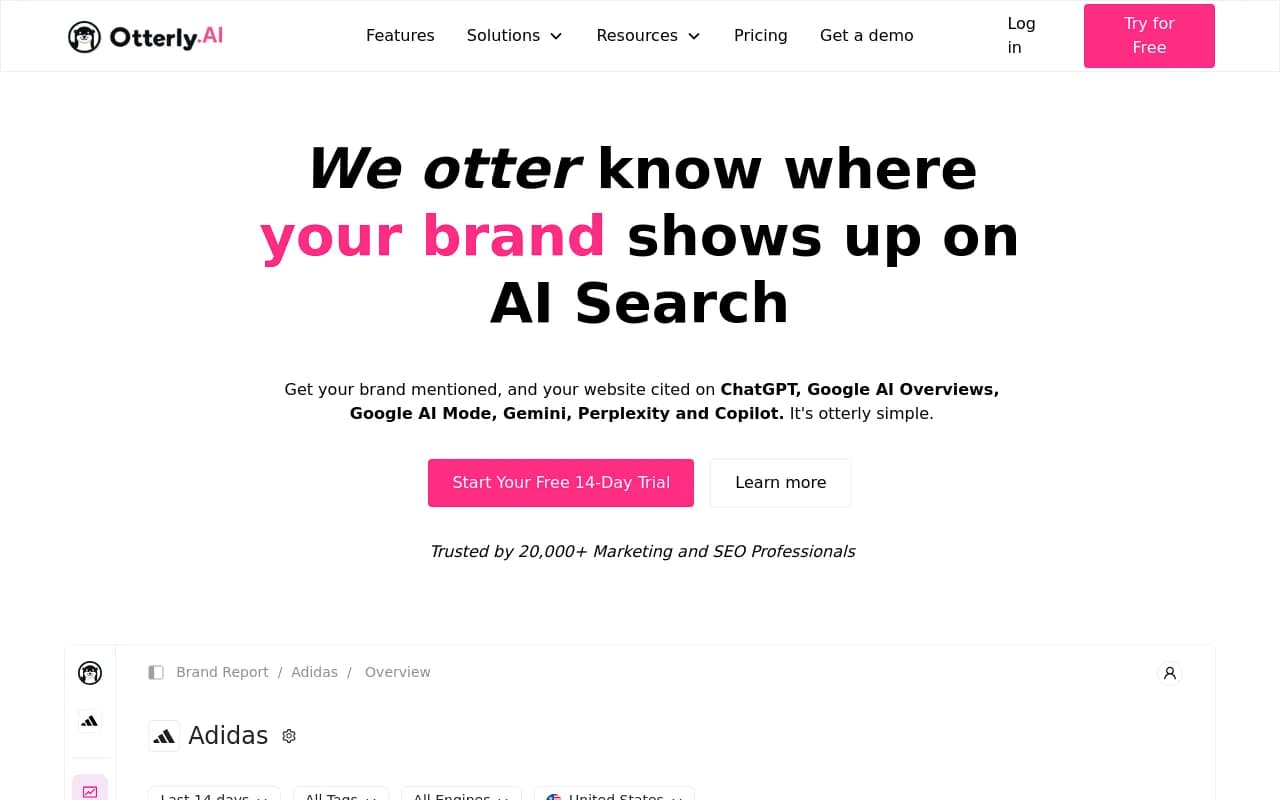
Otterly.AI is a more affordable monitoring option that works reasonably well for agencies that have their own content production capabilities and just need reliable tracking data. It won't close the gap between insight and action, but it's more consistent than what teams reported from GetMint.ai.
Scrunch AI covers monitoring and some optimization features, and has a reasonable multi-client workflow.
For teams that want monitoring plus some content tools
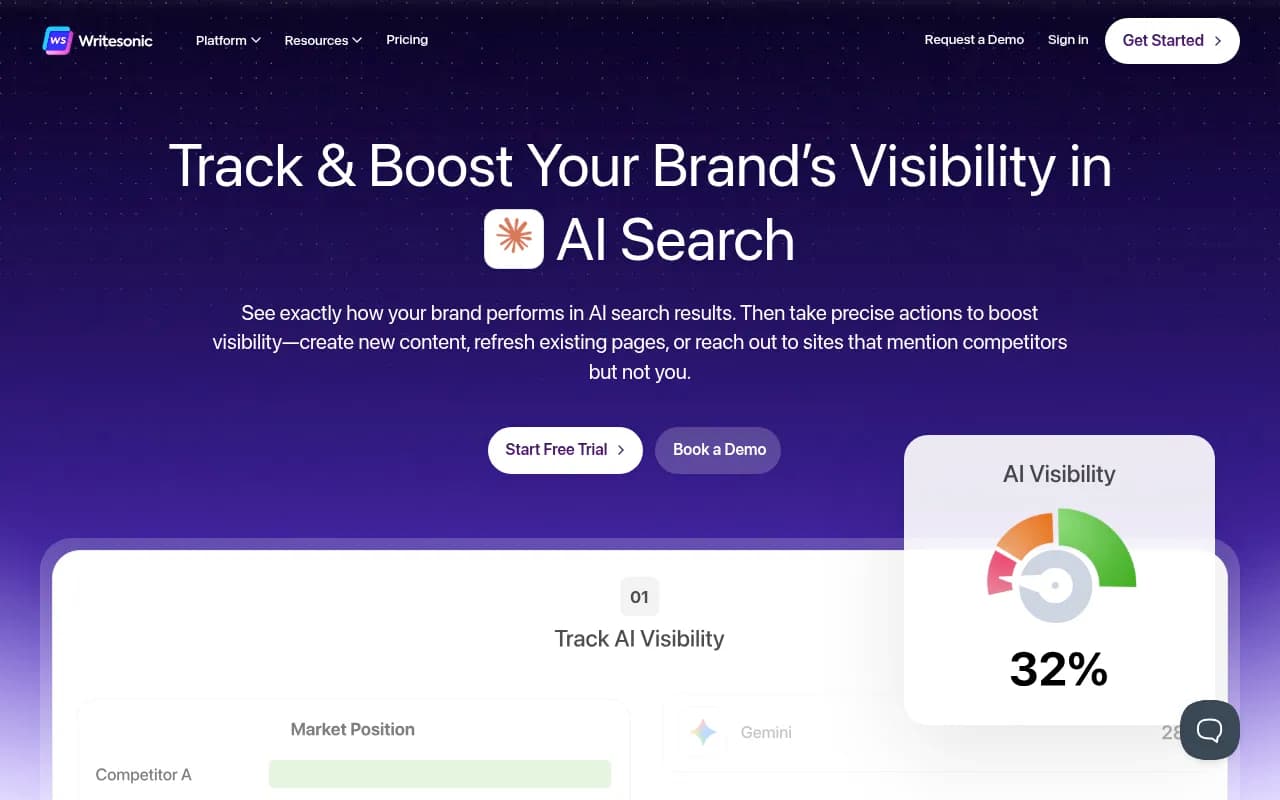
Writesonic has expanded into AI search visibility tracking alongside its content generation roots, which makes it an interesting option for teams that want both in one place.
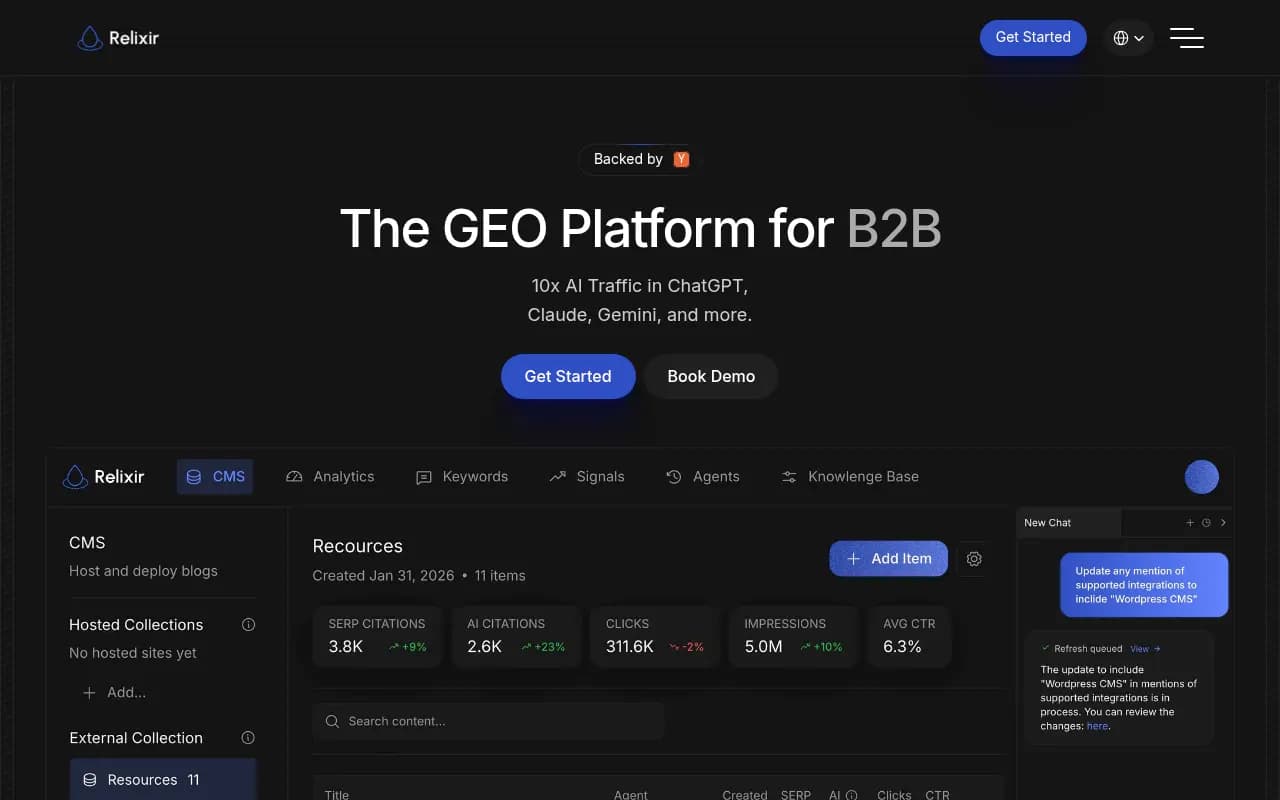
Relixir is an all-in-one GEO platform with content generation and analytics built together, worth evaluating if you want a tighter integration between tracking and creation.
The question to ask before buying any AI visibility tool
Before signing up for any platform in this category, ask one question: "What do I do after I see the data?"
If the answer from the vendor is "you'll see where you're visible and where you're not," that's a monitoring tool. It might be a good one. But if your team doesn't have a dedicated content operation that can take that data and run with it, you'll end up in the same place teams using GetMint.ai and Meteoria.ai ended up: paying for a dashboard that shows you a problem you can't solve.
The tools worth paying for in 2026 are the ones that answer that question with something concrete: here's the specific content your site is missing, here's a draft of what that content should look like, here's which AI models are citing it after you publish, and here's the traffic it's driving.
That's not a high bar to set. It's just the bar that separates a tool from a strategy.
What teams that switched actually recovered
Teams that moved from monitoring-only tools to platforms with content gap analysis and generation capabilities reported a few consistent patterns.
First, they stopped guessing about what to write. Having a tool that shows you the specific prompts your competitors are winning — and the specific topics your site doesn't cover — turns content planning from a creative exercise into a data problem. That's faster and more reliable.
Second, they started seeing citation improvements within weeks, not months. When you're creating content specifically engineered to answer the questions AI models are trying to answer, the feedback loop is faster than traditional SEO. AI models update their knowledge more frequently than search indexes, and they're actively looking for authoritative sources on specific topics.
Third, they could finally show their stakeholders something real. A visibility score that goes up is nice. A page-level report showing that a specific article you published three weeks ago is now being cited by Claude and Perplexity for a high-volume prompt — that's a result you can put in a board deck.
The teams that lost the most in 2026 weren't the ones that bet on AI visibility as a category. They were the ones that bet on tools that couldn't help them do anything about what they found. That's the distinction worth making before you sign the next contract.