Key takeaways
- Hall AI, Bear AI, and Lorelight all shut down or pivoted away from their original AI visibility products in 2025-2026, leaving customers without data or migration paths.
- The core failure pattern: dashboards that show you data but don't help you act on it. Users churned because the insights didn't change what they did.
- AI search is structurally different from Google -- only 3-5 sources get cited per response, and traditional rankings predict AI visibility only about 45% of the time.
- Platforms that survive tend to combine monitoring with content gap analysis, content generation, and crawler-level data. Monitoring alone isn't a business.
- If you're evaluating GEO tools right now, the question to ask isn't "what does it track?" but "what does it help me fix?"
The graveyard is filling up faster than most people expected.
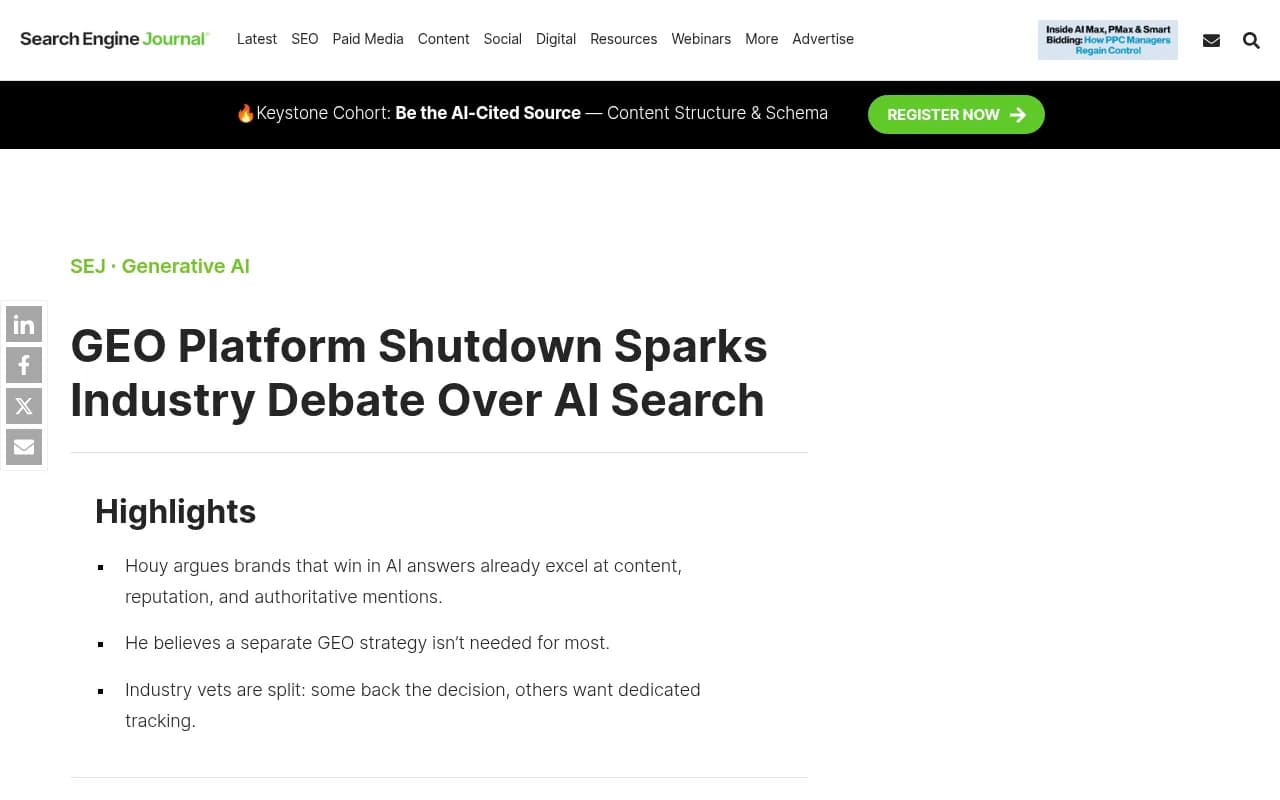
Hall AI went dark in 2026. Bear AI, which had Y Combinator backing, quietly pivoted away from its original AI visibility product. Benjamin Houy shut down Lorelight -- a GEO platform he'd built to track brand mentions in ChatGPT, Claude, and Perplexity -- and wrote a candid post explaining why. Each shutdown had its own story, but the underlying pattern is the same: tools built around monitoring dashboards, thin infrastructure, and the assumption that data alone is valuable enough to pay for.
It isn't. And the market is proving it.
This isn't a story about a few unlucky startups. It's a structural problem with how a lot of GEO tools were built, what they promised, and what they actually delivered.
What these tools were actually selling
To understand why they failed, you need to understand what AI search visibility tools do -- or claim to do.
Traditional SEO tools were built for a world of blue links. You track keyword rankings, you see where you appear in Google, you optimize accordingly. AI search visibility tools exist for a different reality: one where ChatGPT, Perplexity, Claude, and Google's AI Overviews are generating answers and citing sources, and your brand either gets mentioned or it doesn't.
The pitch was simple: "We'll show you how often your brand appears in AI-generated answers, which prompts trigger your citations, and how you compare to competitors." That's genuinely useful information. The problem is what came next -- or rather, what didn't come next.
Most of these tools stopped at the dashboard. You'd see a visibility score, maybe a chart of mentions over time, maybe a breakdown by AI model. Then what? The data sat there. Users would look at it, nod, and go back to doing the same things they were already doing.
Houy described this exact dynamic when explaining why he shut down Lorelight. Customers liked the insights. They churned anyway. Because the data didn't change their tactics. He wrote:
"There's no such thing as 'GEO strategy' or 'AI optimization' separate from brand building... The AI models are trained on the same content that builds your brand everywhere else."
That's a reasonable conclusion to draw if your tool only shows you data. But it misses something important: knowing which specific content gaps are costing you citations, and having a system to fill those gaps, is genuinely different from generic brand building advice.
The structural problem with AI search that most tools ignored
Here's what makes AI search hard to optimize for, and why thin monitoring tools were always going to struggle.
AI engines like ChatGPT and Perplexity don't show ten blue links. They cite 3-5 sources per response, on average. That means the competition for any given prompt is much more concentrated than in traditional search. You're either in or you're out.
Traditional Google rankings predict AI visibility only about 45% of the time, according to data from Ziptie's research on AI citation patterns. That means your existing SEO performance is a weak signal for how you'll appear in AI answers. A site that ranks well on Google can be completely invisible in ChatGPT responses about the same topic, and vice versa.
And 73% of marketing teams, by some estimates, lack any systematic way to track this. They're flying blind.
The tools that shut down mostly tried to solve the visibility problem without solving the action problem. They'd tell you that Competitor X was getting cited for "best project management software for remote teams" and you weren't. But they wouldn't tell you what content you'd need to create to change that, or help you create it, or track whether it worked after you published it.
That's a data product. Data products are hard to retain customers on, because the value is front-loaded. You get the insight once, and then you need to act on it yourself. If the tool doesn't help you act, you cancel.
Hall AI: the most visible shutdown
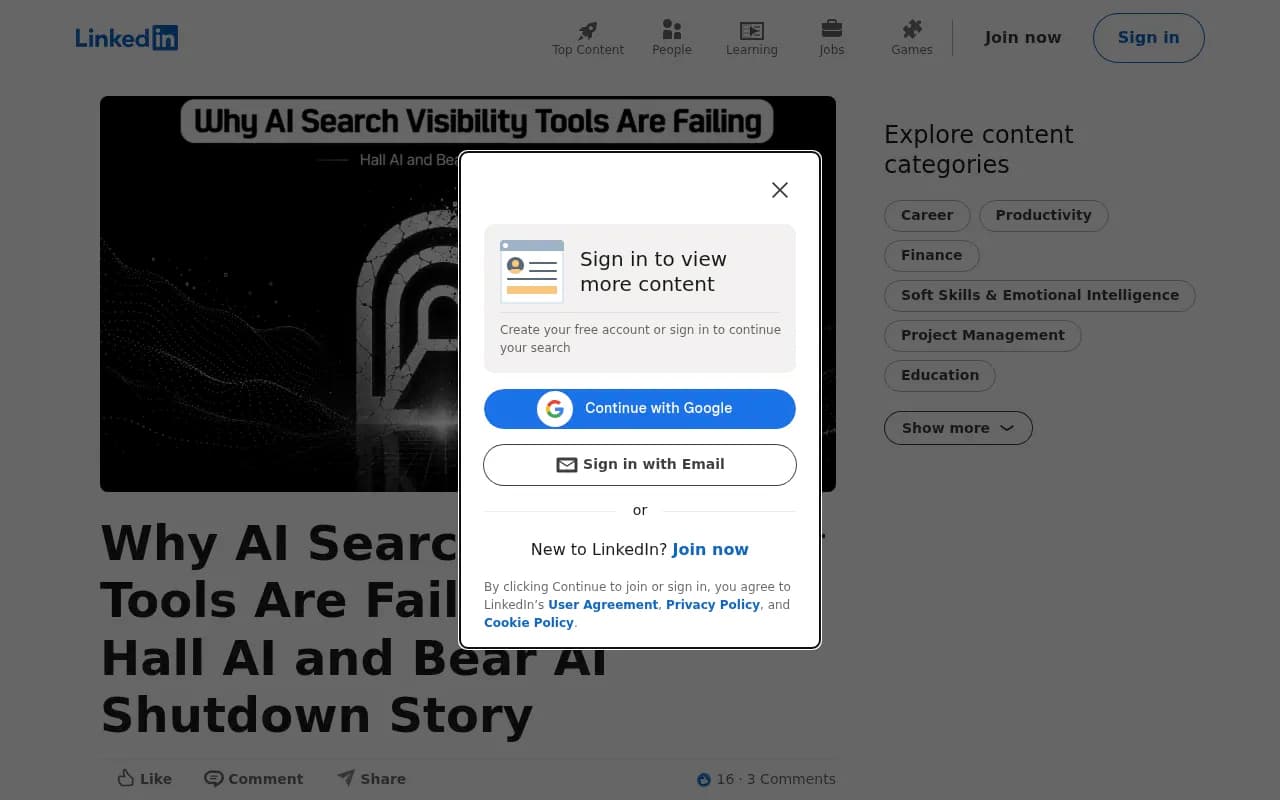
Hall AI's shutdown hit hardest because it had real customers and real traction. It promised to show brands how often they appeared in ChatGPT, Perplexity, and Google's AI features. When it went offline in 2026, users lost their dashboards, their historical data, and any migration path to something else.
What Hall AI lacked, from what's publicly known, was the infrastructure layer that makes AI visibility tracking sustainable. Monitoring AI search at scale is expensive. You're sending thousands of prompts to multiple AI models, parsing responses, extracting citations, and storing historical data. That costs real money in API fees and compute. Without either a strong pricing model or a product that justifies premium pricing through action-oriented features, the unit economics don't work.
Hall AI appears to have been caught in the middle: too expensive to run cheaply, not differentiated enough to charge what it actually cost.
Bear AI: the pivot story
Bear AI's trajectory was different. With Y Combinator backing, it had resources. But it moved away from its original AI visibility product, which tells you something about what the team concluded: the market wasn't ready, or the product wasn't right, or both.
Y Combinator-backed startups pivot all the time. That's not the story here. The story is that even a well-funded team with strong support concluded that a monitoring-only AI visibility product wasn't the right bet. That's a meaningful signal about where the category is going.
Lorelight: the most honest shutdown
Benjamin Houy's decision to shut down Lorelight was notable because he explained it publicly and in detail. He'd reviewed hundreds of AI-generated answers. He concluded that the brands getting cited most often shared familiar traits: quality content, mentions in authoritative publications, genuine expertise, strong reputation.
His conclusion was that GEO isn't a separate discipline from brand building. You don't need a specialized tool to tell you to write better content and get more press mentions.
He's partially right. But the conclusion he drew -- that GEO tracking should just be a signal inside broader SEO suites rather than a standalone product -- misses the specific value that a well-built GEO platform provides: not just tracking, but identifying the exact prompts and content gaps where you're losing to competitors, then helping you create the content to close those gaps.
The brands that appear in AI answers aren't just brands with good content generally. They're brands with content that specifically answers the questions AI models are being asked. That's a targetable, measurable gap. Lorelight showed the gap but didn't help close it.
Why this keeps happening: the monitoring trap
The pattern across all three shutdowns is the same: monitoring without action.
Build a dashboard. Show users their visibility score. Show them competitor comparisons. Maybe add some prompt tracking. Then wait for users to figure out what to do with that information.
The problem is that "figure out what to do" is the hard part. And if your tool doesn't help with that, you're selling a report, not a platform.
The GEO tools that are surviving and growing tend to share a different architecture. They combine:
- Prompt tracking and visibility monitoring (the baseline)
- Answer gap analysis that shows exactly which prompts competitors rank for and you don't
- Content generation tools that create articles and briefs grounded in real prompt data
- Crawler-level data that shows how AI engines are discovering and indexing your content
- Page-level tracking that connects specific published content to citation outcomes
That's a loop, not a dashboard. You find the gap, you create the content, you track whether it worked. Each step creates value that the previous step alone couldn't deliver.
Promptwatch is built around this loop explicitly -- it's one of the few platforms in the space that combines gap analysis, AI content generation, and crawler logs in a single product. Most competitors stop at step one.

The tools that are still standing
Not every GEO platform is in the graveyard. Some have built real infrastructure and real differentiation. Here's a quick look at the landscape as it stands in 2026:
| Tool | Monitoring | Content gap analysis | Content generation | Crawler logs | Best for |
|---|---|---|---|---|---|
| Promptwatch | Yes | Yes | Yes | Yes | Full-cycle AI visibility optimization |
| Profound | Yes | Partial | No | No | Enterprise monitoring |
| Otterly.AI | Yes | No | No | No | Basic tracking, small teams |
| Peec AI | Yes | No | No | No | Simple monitoring |
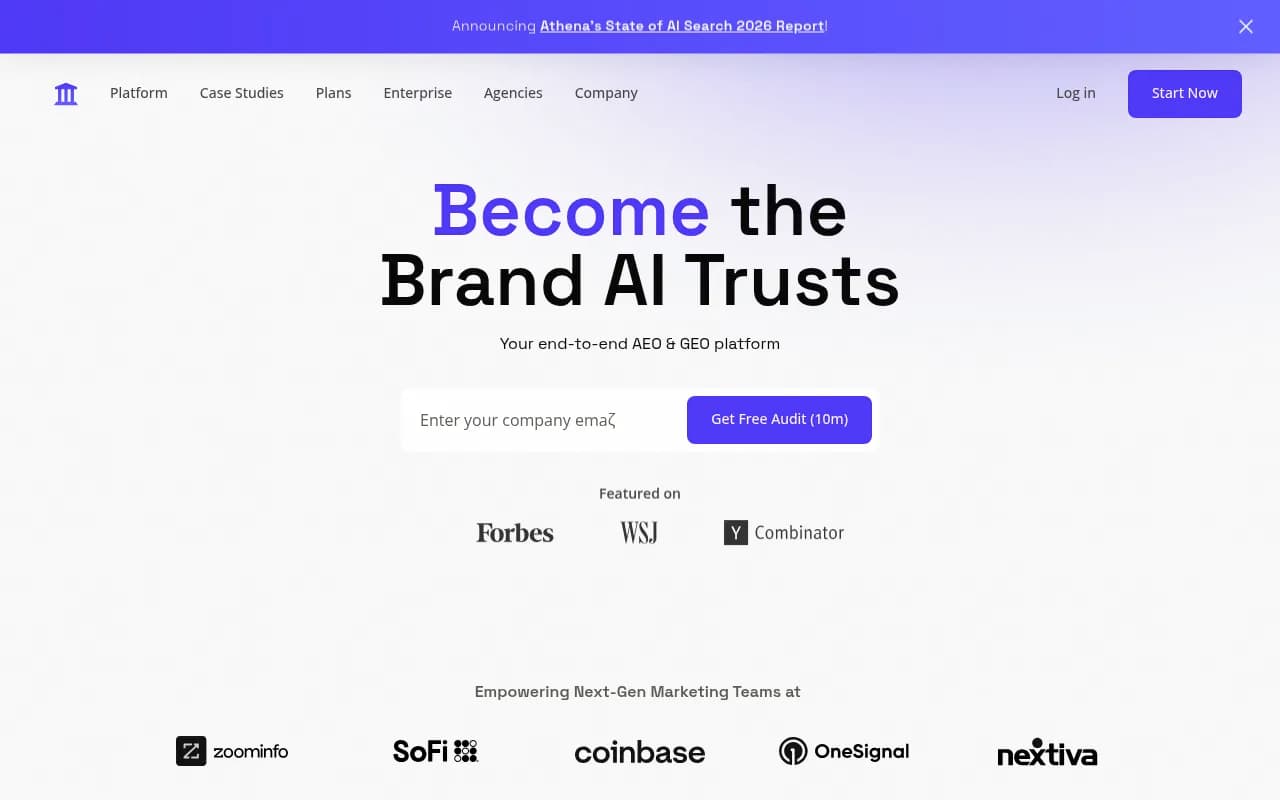
| AthenaHQ | Yes | Partial | No | No | Monitoring-focused teams |
| Search Party | Yes | No | No | No | Agency monitoring |
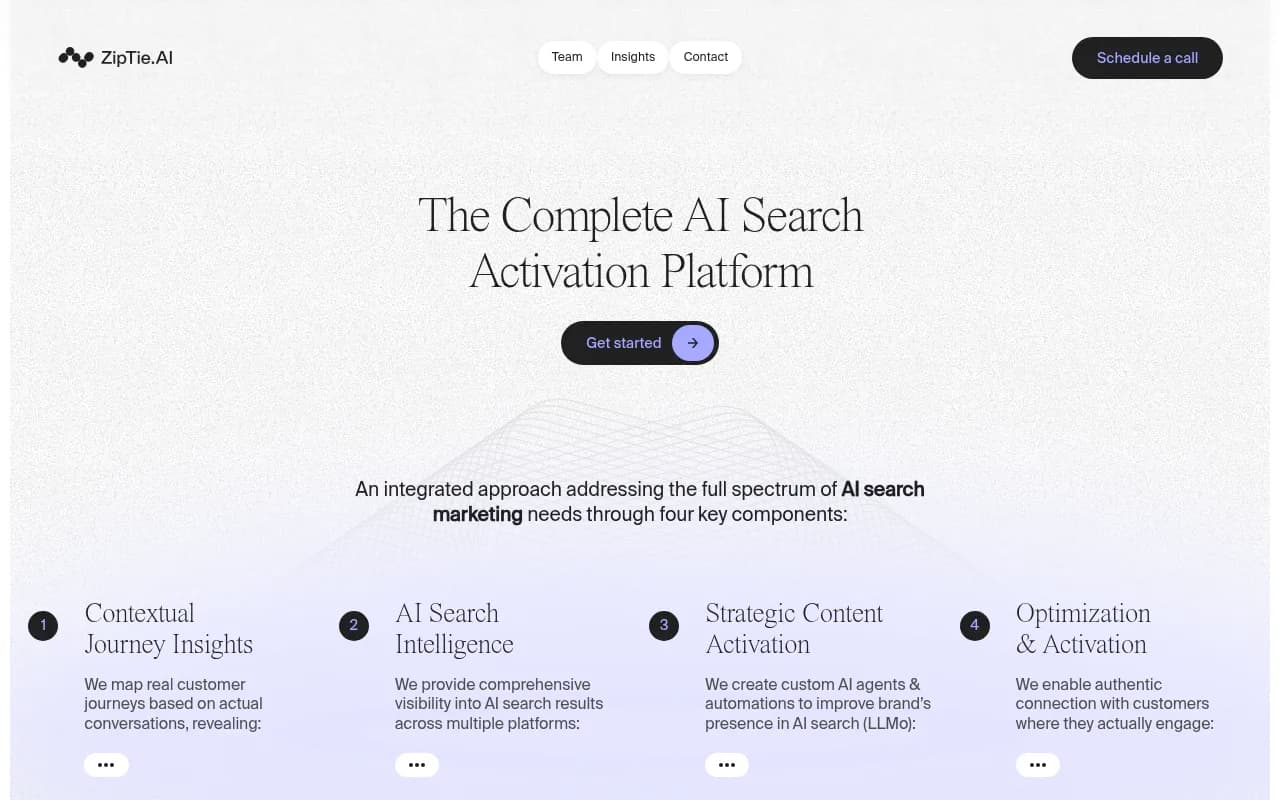
| ZipTie | Yes | Yes | No | No | Deep citation analysis |
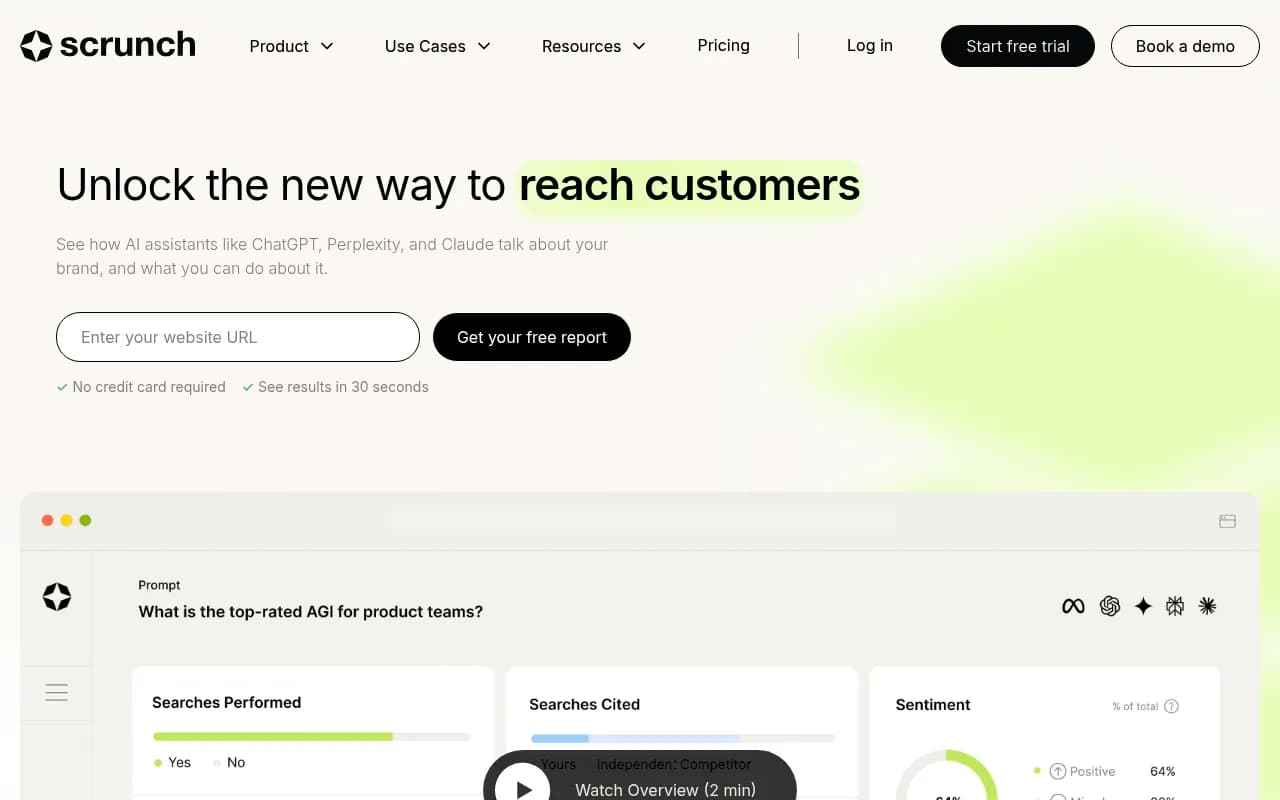
| Scrunch | Yes | Partial | No | No | Mid-market monitoring |


The tools in the "monitoring only" column aren't necessarily doomed. But they're in the same structural position that Hall AI, Bear AI, and Lorelight were in: they show you data without helping you act on it. Whether they survive depends on whether they build the action layer before their customers run out of patience.
What the Lorelight debate actually revealed
When Search Engine Journal covered Lorelight's shutdown, it sparked a real debate. Some SEO professionals agreed with Houy: GEO is just SEO with a new name, the fundamentals are the same, you don't need another dashboard.
Others pushed back with cases where AI referral traffic was appearing in analytics, where brands were getting cited in ChatGPT responses despite weak Google rankings, and where the specific content gap between "what AI models are asked" and "what your site answers" was measurable and closeable.
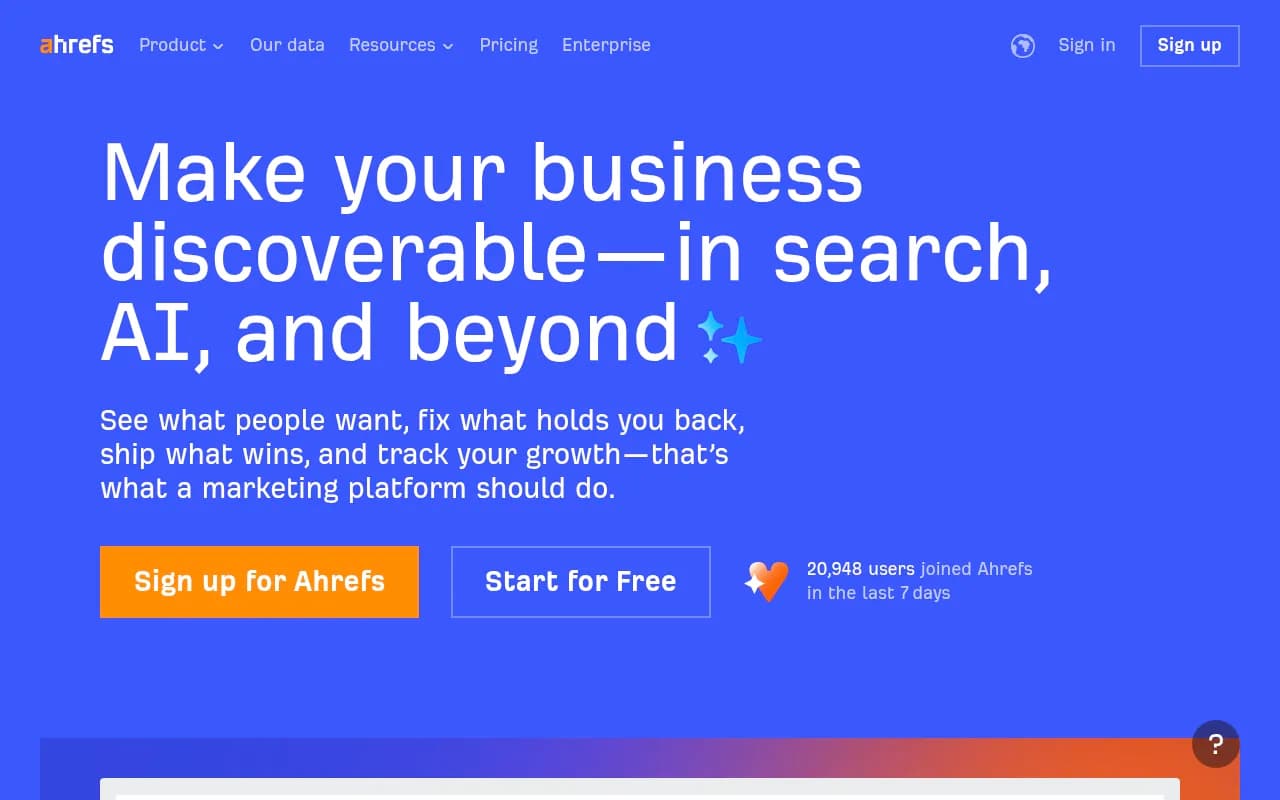
Both sides have a point. The fundamentals of quality content and authoritative reputation do matter for AI visibility. But the specific mechanics of how AI models select sources, which prompts they're responding to, and which pages they're actually crawling and citing -- that's not visible through traditional SEO tools. Google Search Console doesn't show you ChatGPT crawler logs. Ahrefs doesn't tell you which prompts your competitors are winning.
The debate will probably continue. But the market is voting with subscriptions, and the tools that are growing are the ones that help users do something, not just see something.
What to look for if you're evaluating GEO tools now
If you're in the market for an AI visibility platform, the graveyard should make you ask harder questions before you commit.
Start with the action question: "If this tool shows me a gap, what does it help me do about it?" A tool that can only answer "it shows you the gap" is a monitoring dashboard. That might be fine if you have a content team that can act on raw data. But if you want a platform that drives outcomes, you need the full loop.
Ask about infrastructure: "How do you track AI model responses -- API or real user interface?" This matters because API outputs and user-facing answers can differ significantly. Some tools track API responses only, which means they're missing what users actually see in ChatGPT or Perplexity.
Ask about crawler data: "Can I see when AI crawlers visit my site and which pages they're reading?" Most tools can't answer this. The ones that can are giving you something genuinely different: visibility into how AI engines discover your content before they cite it.
Ask about history: "What happens to my data if you shut down?" Given the number of shutdowns in this space, this isn't a paranoid question. It's a practical one.
The broader context: is GEO even a real category?
The Lorelight debate touched on a deeper question: is GEO a real discipline, or is it just SEO with AI branding?
The honest answer is: it's both, and the distinction matters more for some businesses than others.
For brands where AI search is already driving meaningful referral traffic -- and that number is growing fast -- GEO is a real and measurable channel. Perplexity, ChatGPT, and Google AI Overviews are sending traffic. That traffic has different characteristics than Google organic traffic. The content that earns citations in AI answers is often different from the content that ranks in traditional search.
For brands where AI search is still a small fraction of their traffic, GEO monitoring might genuinely be premature. The fundamentals -- quality content, authoritative sources, genuine expertise -- are the right investment. A GEO dashboard won't change that.
But the window where "AI search is too small to matter" is closing. AI search is growing faster than traditional search. The brands building AI visibility infrastructure now are the ones that will have historical data, established citation patterns, and content libraries optimized for AI answers when the channel becomes undeniably significant.
The tools that shut down weren't wrong about the opportunity. They were wrong about what it takes to capture it.
The lesson from the graveyard
Hall AI, Bear AI, and Lorelight all identified a real problem. AI search is changing how brands get discovered. Traditional SEO tools don't capture it. Brands need visibility into how they appear in AI-generated answers.
Where they fell short was in solving the full problem. Visibility without action is just anxiety. You can see that you're losing citations to a competitor, but if the tool stops there, you're left to figure out the fix yourself. Most users don't. They churn.
The GEO platforms that will still be around in two years are the ones building the complete loop: find the gaps, create the content, track the results. That's harder to build. It requires real infrastructure, real prompt data, real content generation capabilities, and real crawler-level insights. It also costs more to run and more to buy.
But it's what the market actually needs. The graveyard will keep growing until the rest of the monitoring-only tools figure that out -- or until their customers do.