Key takeaways
- Answer gap analysis is the feature that separates optimization platforms from monitoring dashboards — most tools don't have it
- Promptwatch is the only platform that combines answer gap analysis, AI content generation, crawler logs, and traffic attribution in one place
- Profound has strong enterprise-grade prompt research but sits at a higher price point with no content generation
- AirOps focuses on content workflows and launched its Quill agent in May 2026, but its AI visibility monitoring is limited
- Peec AI is a solid, affordable monitoring tool — just don't expect it to help you act on what it finds
- If you're choosing a platform in 2026, the right question isn't "what does it track?" but "what does it help me do about it?"
Why answer gap analysis actually matters
Most AI visibility tools will tell you your brand appears in 12% of relevant AI responses. Fine. But what do you do with that number?
That's the problem. The category is full of dashboards that show you where you're invisible without giving you any path to fix it. Answer gap analysis changes that. It maps the specific prompts and topics where competitors are getting cited and you're not — then surfaces the content your site is missing that would close those gaps.
It's the difference between a smoke alarm and a fire extinguisher. Both are useful. Only one actually solves the problem.
In 2026, as AI search accounts for a growing share of buyer research (ChatGPT alone now handles roughly 20% of global search traffic), the platforms that include genuine gap analysis and content optimization are pulling away from the ones that are purely monitoring tools.
This guide ranks five of the most-discussed platforms on exactly that dimension.
The platforms compared
Before getting into individual reviews, here's a side-by-side look at the features that matter most for answer gap analysis and optimization:
| Platform | Answer gap analysis | Content generation | AI crawler logs | Traffic attribution | AI models tracked | Starting price |
|---|---|---|---|---|---|---|
| Promptwatch | Yes (full) | Yes (Content Agents) | Yes | Yes | 10+ | $99/mo |
| Profound | Partial (prompt research) | No | No | Limited | Up to 10 | $99/mo |
| AirOps | Limited (via Quill agent) | Yes (strong) | No | No | Up to 4 | Free tier |
| Peec AI | No | No | No | No | Up to 10 | €85/mo |
| Atomic AGI | Limited | Partial | No | No | Limited | Custom |
Now let's go deeper on each one.
1. Promptwatch — the full optimization loop
Promptwatch is the platform most directly built around the concept of answer gap analysis as an action trigger, not just a report.

The core workflow works like this: you track prompts across 10+ AI models (ChatGPT, Perplexity, Claude, Gemini, Google AI Overviews, Grok, DeepSeek, Copilot, Meta AI, Mistral), and the Answer Gap Analysis feature shows you exactly which prompts competitors are visible for where you're not. It doesn't just flag the gap — it shows you the specific topics, angles, and questions that AI models are already answering using competitor content.
From there, Content Agents generate articles, listicles, comparisons, and briefs grounded in that real prompt data. This isn't a generic AI writer — the content is built around citation data, prompt volumes, persona targeting, competitor analysis, and brand guidance. The goal is pages that AI models will actually cite.
Then you track whether it worked. Page-level visibility tracking shows which pages are being cited, how often, and by which models. Agent Analytics logs show the timeline from publish to crawl to citation. And traffic attribution connects AI visibility back to actual revenue.
That full loop — find gaps, create content, track results — is what makes Promptwatch genuinely different from the other tools in this comparison. Most competitors stop at step one.
A few other things worth noting: Promptwatch tracks Reddit and YouTube as citation sources (most tools ignore these entirely), monitors ChatGPT Shopping and entity mentions, and provides AI crawler logs showing exactly which pages AI crawlers are hitting, how often, and what errors they encounter. It's used by 1,480+ brands including Booking.com and Center Parcs.
Pricing runs from $99/month (Essential: 1 site, 50 prompts, 5 articles) to $579/month (Business: 5 sites, 350 prompts, 30 articles). A free trial is available.

2. Profound — strong on research, light on execution
Profound is a well-regarded enterprise platform with solid prompt research capabilities. It tracks up to 10 AI models at the enterprise tier and has shipped autonomous Agents and MCP integration in 2026, which puts it ahead of most pure monitoring tools.
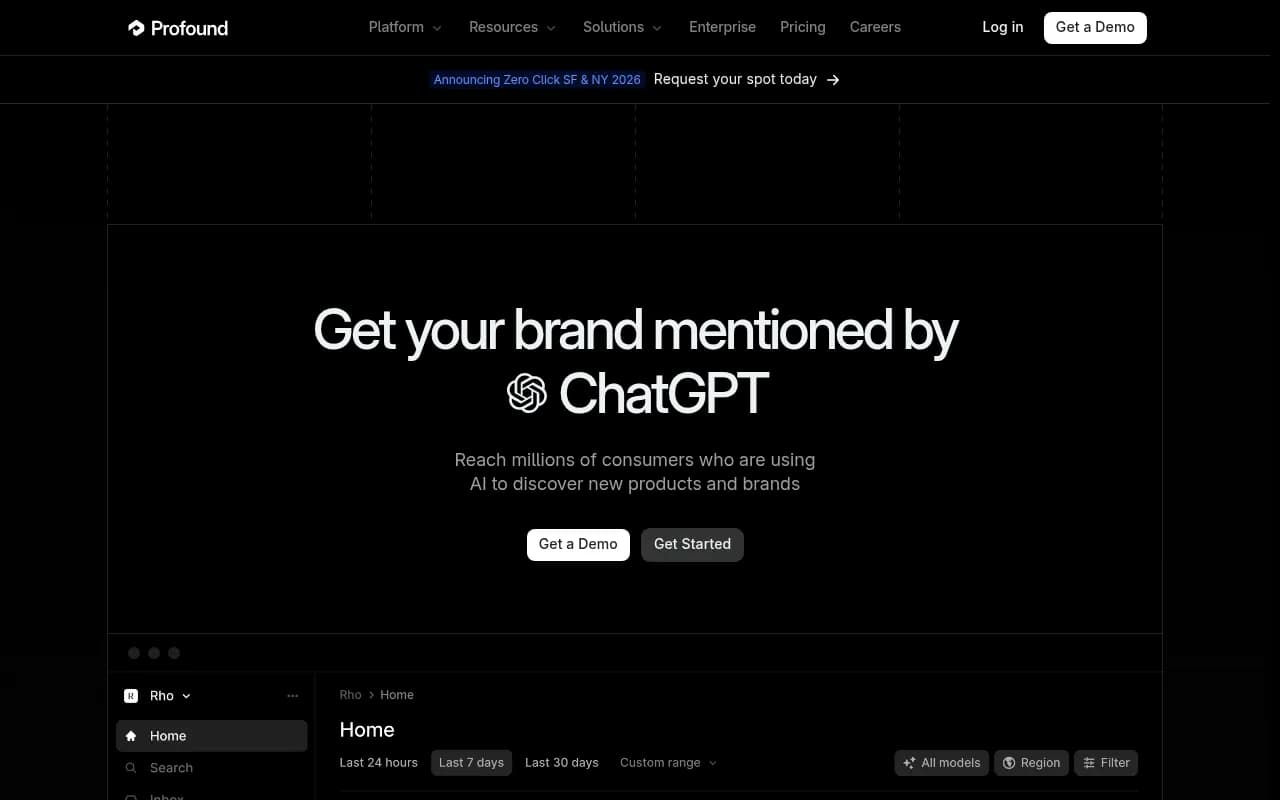
Where Profound does well: the depth of its prompt intelligence. It's good at helping large teams understand which prompts matter, how their brand is appearing, and what competitors are doing. The sentiment analysis and demand estimation features are genuinely useful for enterprise research workflows.
Where it falls short for answer gap analysis specifically: Profound doesn't generate content. It can show you what's missing, but the path from "here's the gap" to "here's the page that closes it" requires you to take that data somewhere else. For enterprise teams with dedicated content resources, that's manageable. For smaller teams or agencies that need to move fast, it's a real friction point.
Pricing starts at $99/month, but meaningful enterprise features push the cost higher. No Reddit tracking, no ChatGPT Shopping monitoring, no AI crawler logs.
3. AirOps — content-first, visibility second
AirOps comes at this from the opposite direction. It's primarily a content operations platform that added AI visibility features, rather than a visibility platform that added content.
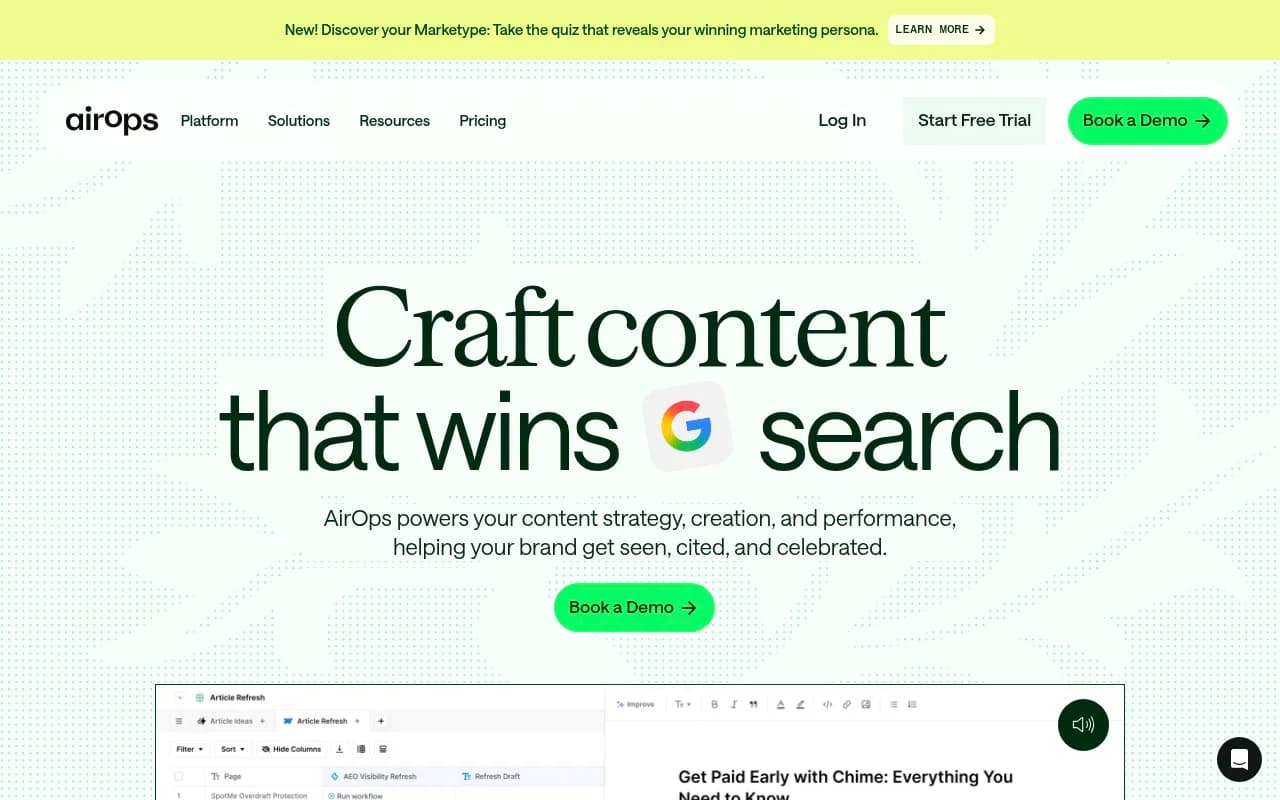
The Quill agent, launched in May 2026, is the most interesting recent development. It's designed to automate content workflows at scale — generating and publishing content based on defined templates and data inputs. For teams that already have a clear content strategy and just need execution at volume, it's genuinely useful.
The visibility monitoring side is thinner. AirOps tracks up to 4 AI models, which is on the lower end of the category. There's no dedicated answer gap analysis feature in the way Promptwatch or even Profound approach it. You can use AirOps to create content that might improve AI visibility, but you'd need a separate tool to know what to create and whether it worked.
It has a free tier, which makes it accessible for experimentation. But if answer gap analysis is your primary need, AirOps isn't really designed for that job.
4. Peec AI — clean monitoring, nothing more
Peec AI is a monitoring tool. It does that job reasonably well — tracking brand mentions and share of voice across up to 10 AI models, with flexible model selection and a clean interface. Starting at €85/month, it's priced competitively for what it offers.
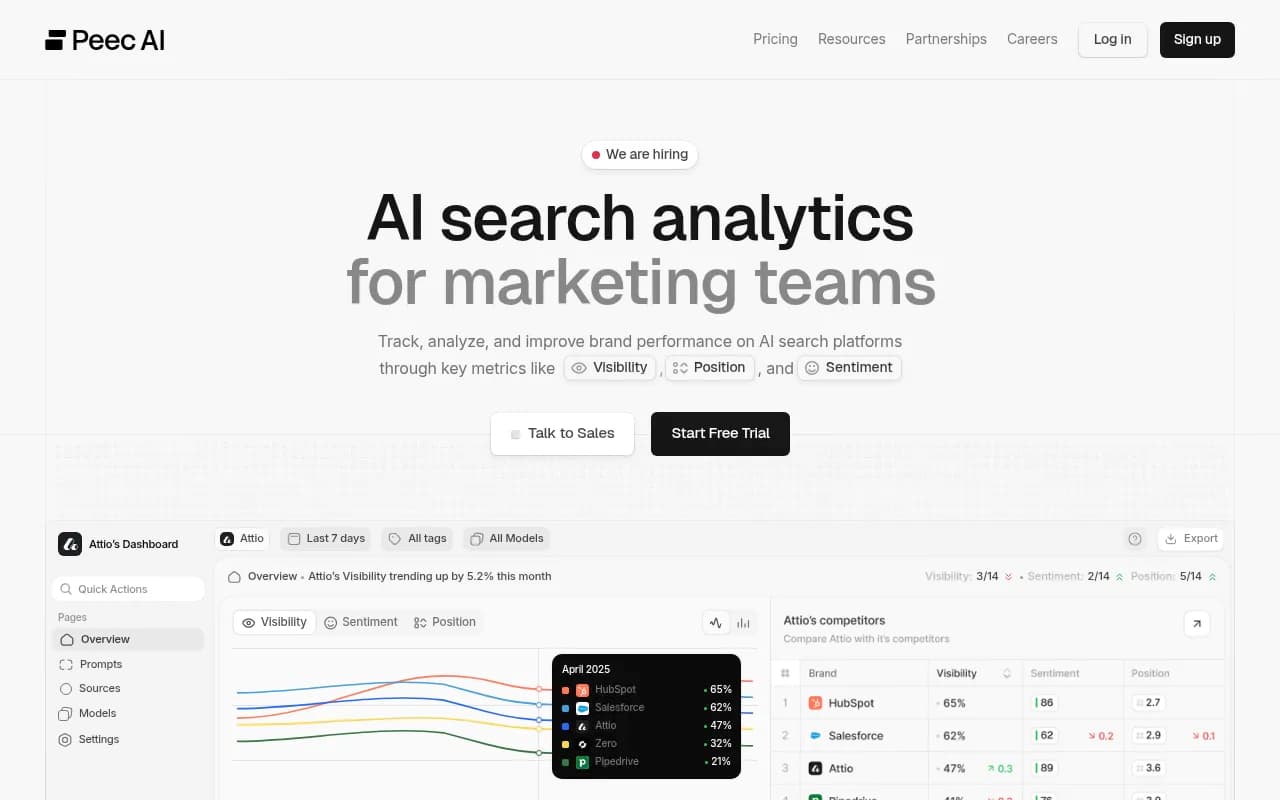
But "what it offers" is the key phrase. There's no answer gap analysis, no content generation, no crawler logs, no traffic attribution. Peec AI will tell you that you're not appearing in certain AI responses. It won't tell you why, and it won't help you fix it.
For teams that just want a lightweight visibility dashboard and handle content strategy elsewhere, Peec AI is a reasonable choice. For anyone who wants the full optimization loop in one platform, it's a starting point at best.
5. Atomic AGI — early stage, limited data
Atomic AGI is a newer entrant that doesn't yet have the same depth of public documentation or user data as the other platforms in this comparison. It offers some content generation capabilities alongside limited AI visibility monitoring, but the answer gap analysis functionality is partial at best.
It's worth watching as the platform matures, but for teams making a platform decision in mid-2026, the lack of established track record and feature depth puts it behind the other options here.
How to choose the right platform
The right choice depends on what you actually need to do, not just what you want to track.
If you need the full loop: find gaps, create content, prove results
Promptwatch is the clear choice. It's the only platform in this comparison that handles all three stages without requiring you to stitch together multiple tools. The answer gap analysis is genuinely actionable — it surfaces specific prompts and topics, not just aggregate scores — and the Content Agents turn those gaps into publishable pages. The crawler logs and traffic attribution close the loop by showing you whether the content is working.
If you're a large enterprise with a dedicated content team
Profound is worth evaluating. The prompt research depth is strong, and if you have writers and strategists who can take research and run with it, the lack of built-in content generation is less of a problem. Just budget for a separate content workflow.
If content production is your bottleneck, not visibility insight
AirOps solves a real problem for content operations teams. If you already know what topics to target and just need to produce content at scale, the Quill agent is worth exploring. Pair it with a dedicated visibility tool if you want to close the loop.
If you want affordable monitoring and handle strategy elsewhere
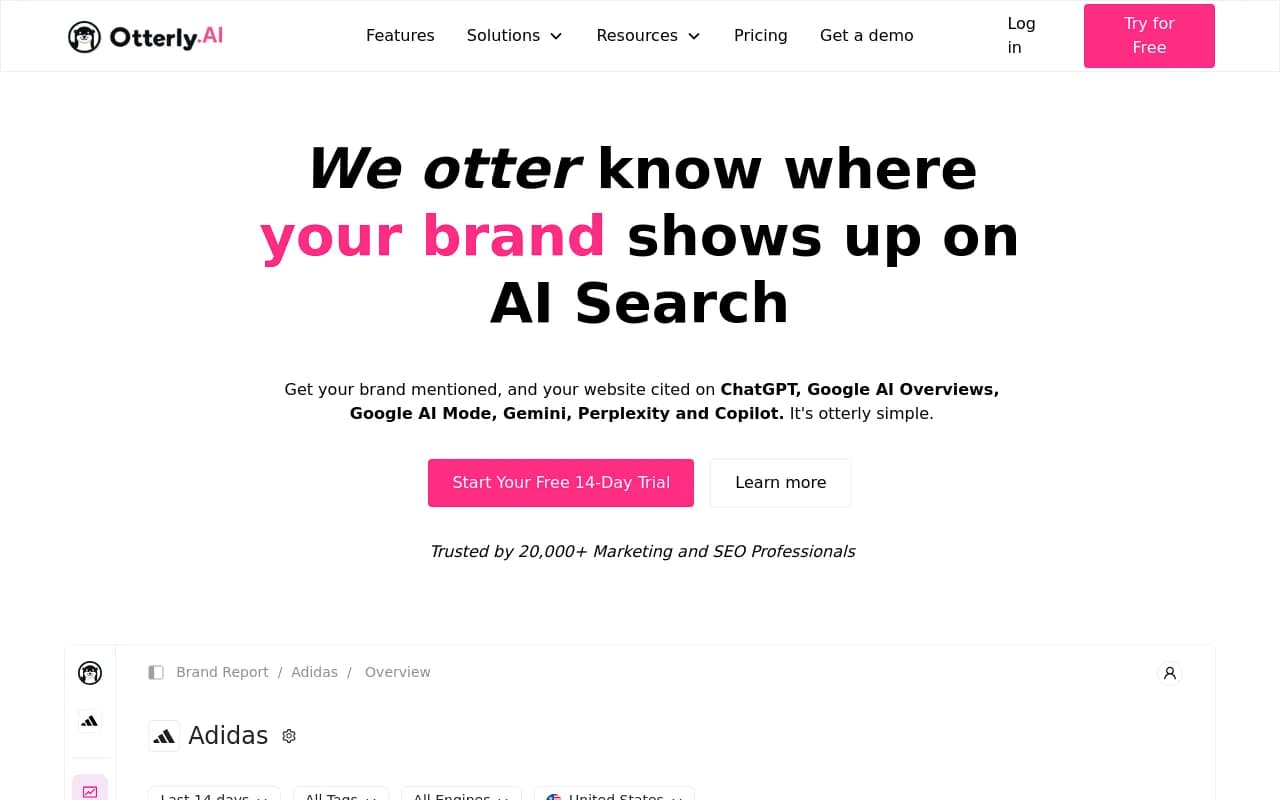
Peec AI or Otterly.AI are reasonable starting points. They're not optimization platforms, but they're honest about that.
The broader category in 2026
The AI visibility tool market has consolidated around a clear divide: monitoring-only platforms versus optimization platforms. The monitoring-only tools (Peec AI, Otterly.AI, and most of the 40+ tools that launched in 2024-2025) give you data. The optimization platforms (Promptwatch, and to a lesser extent Profound) give you a path to act on it.
That divide matters more now than it did a year ago. AI-referred traffic converts at 3x to 9x the rate of traditional organic traffic, according to multiple third-party studies. That means the stakes for appearing in AI responses are real, and the cost of being invisible is measurable. A dashboard that shows you're invisible is less useful than a platform that helps you become visible.
A few other tools worth knowing about in the broader category:
The table below gives a quick sense of where the major players sit on the monitoring-vs-optimization spectrum:
| Platform | Category | Best for |
|---|---|---|
| Promptwatch | Full optimization platform | Teams that need to find gaps, create content, and prove ROI |
| Profound | Enterprise monitoring + research | Large brands with dedicated content teams |
| AirOps | Content operations + limited monitoring | Content teams scaling production |
| Peec AI | Monitoring only | Budget-conscious teams that handle strategy elsewhere |
| Otterly.AI | Monitoring only | Lowest entry price, basic tracking |
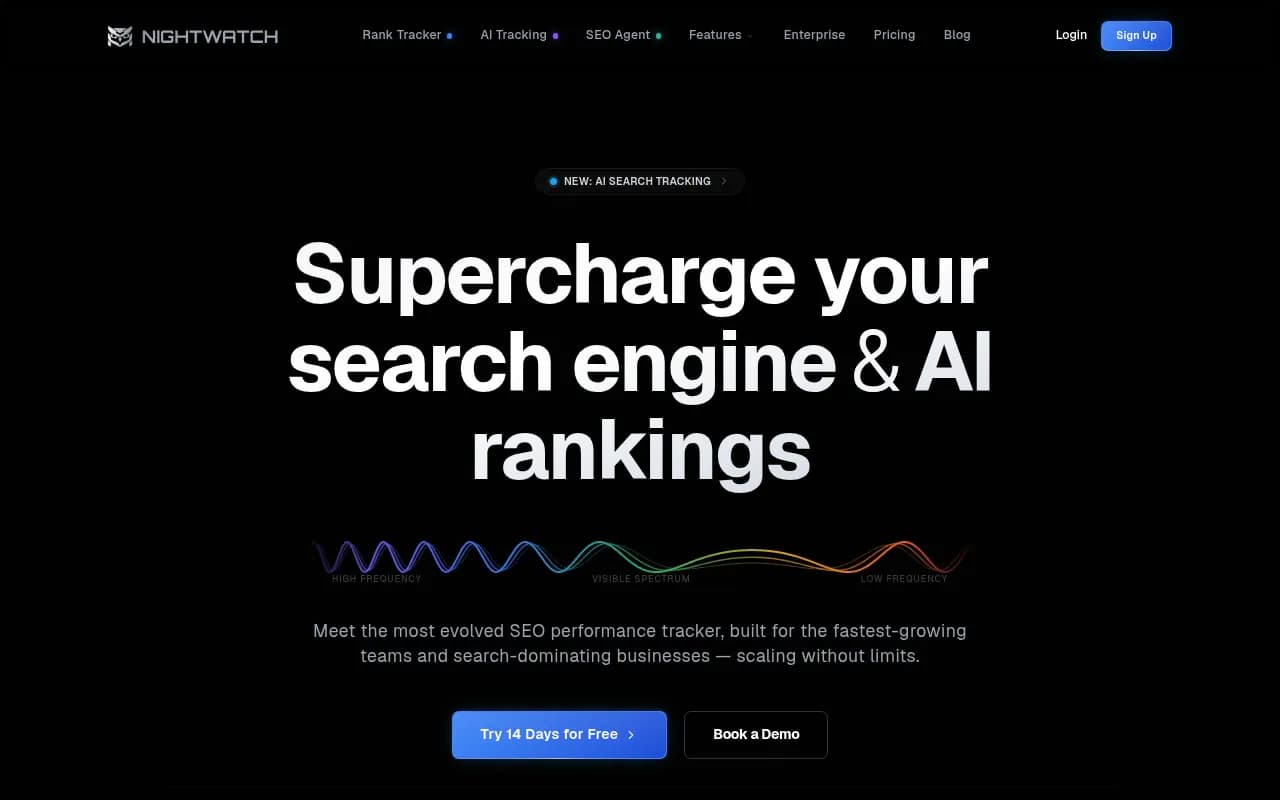
| Nightwatch | SEO + AI monitoring combined | Teams that want traditional SEO and AI visibility in one tool |
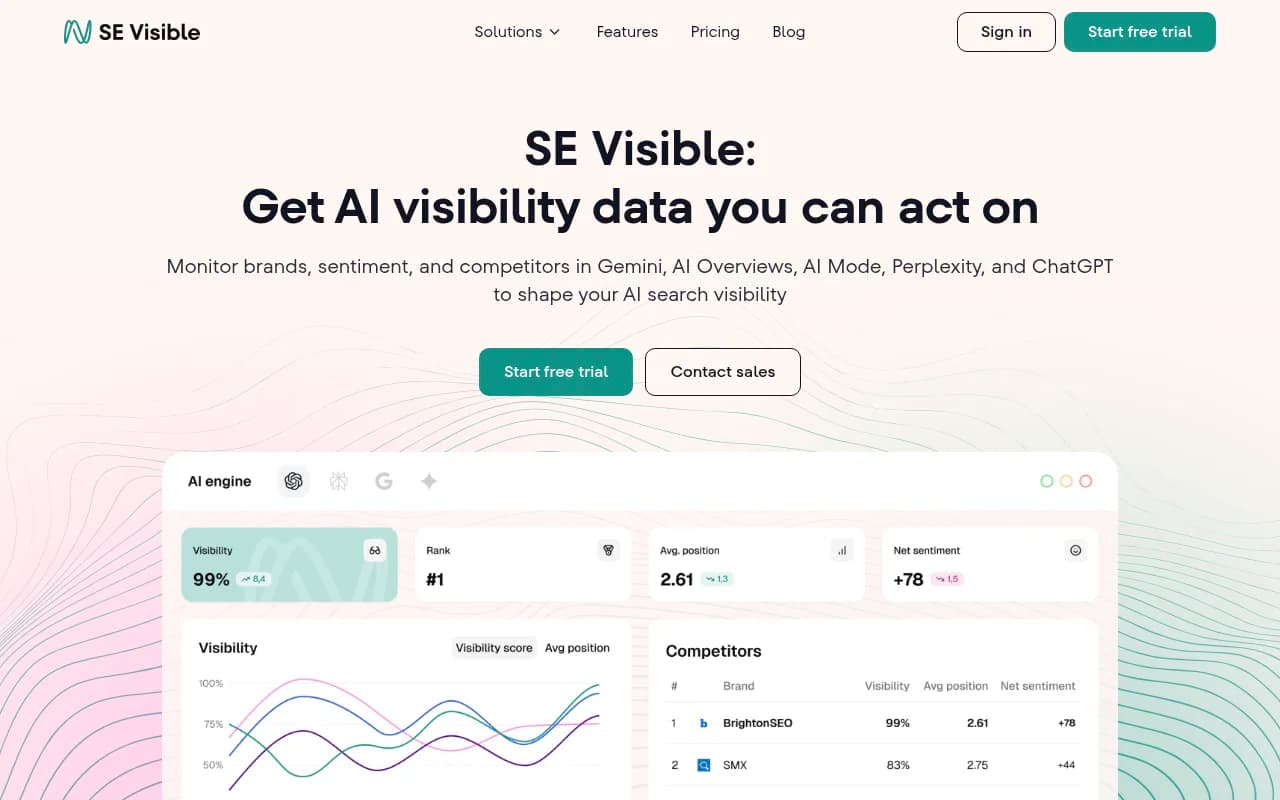
| SE Visible | Multi-brand monitoring | Agencies tracking multiple clients |
| Scrunch AI | CDN-edge optimization | Technical teams focused on content delivery |
Final take
Answer gap analysis sounds like a feature. It's actually a philosophy. Tools that include it are built around the idea that visibility data is only useful if it tells you what to do next. Tools that don't include it are built around the idea that data is the product.
In 2026, with AI search eating a meaningful share of buyer research, the platforms that help you act are the ones worth paying for. Promptwatch is the most complete version of that. Profound is a strong second for enterprise teams with the resources to execute independently. AirOps is useful if content production is your specific bottleneck.
The monitoring-only tools have their place — but if you're serious about AI search visibility, you'll outgrow them quickly.