Key takeaways
- Otterly.AI is a monitoring-first platform -- it tracks brand mentions and citations across AI engines like ChatGPT, Perplexity, Claude, and Google AI Overviews, but stops short of helping you act on what you find.
- It's a good fit for small teams, solo marketers, and agencies that want a fast, affordable way to see where they stand in AI search without a steep learning curve.
- The platform lacks crawler logs, AI traffic attribution, content generation, and prompt volume data -- features that matter once you move from "what's happening?" to "what do I do about it?"
- If you need to close visibility gaps, not just spot them, you'll eventually outgrow Otterly.AI and need a platform built around optimization, not just observation.
- Several alternatives exist at different price points and capability levels -- the right choice depends on whether you're monitoring, optimizing, or both.
What Otterly.AI actually is
Otterly.AI describes itself as the "#1 rated AI search monitoring platform." That's a bold claim in a market that's added dozens of new tools in the past 18 months, but the core product is straightforward: you set up a brand, add prompts you want to track, and Otterly runs those prompts across AI engines to show you how often your brand appears, what the AI says about you, and which competitors are showing up instead.

The platform covers the major AI engines -- ChatGPT, Perplexity, Google AI Overviews, Claude, and Gemini -- which is a reasonable spread for most teams. Claude support was added recently, which matters because it's one of the faster-growing AI assistants people actually use for research and recommendations.
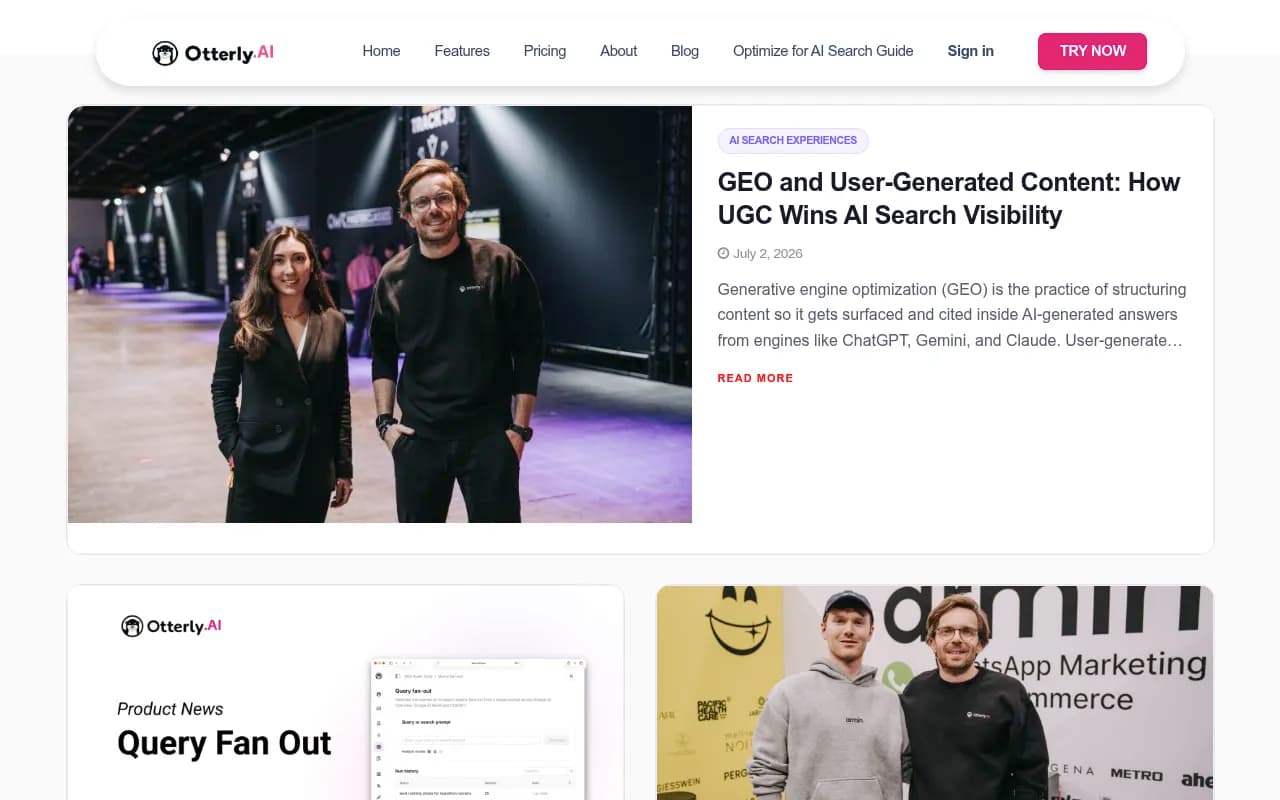
The blog is active and genuinely useful. Recent posts cover query fan-out (the mechanism where one user prompt branches into 8-12 sub-queries behind the scenes), GEO strategies for user-generated content, and real case studies like how a WhatsApp marketing platform turned AI search into a demo acquisition channel. That content signals a team that understands the space, not just a dashboard company.
Who Otterly.AI is built for
Otterly.AI fits a specific profile well. If you match most of these, it's worth a serious look:
- You're a small to mid-sized marketing team that's new to AI search monitoring and wants to get started without a six-figure budget or a lengthy onboarding process.
- You need to answer the question "Is our brand showing up in AI search?" before you can justify deeper investment in GEO.
- You're an agency that wants a clean, client-facing dashboard showing AI visibility across a handful of brands.
- You're an SEO professional who already has content creation and optimization workflows in place and just needs the monitoring layer.
- You want fast setup. Otterly is known for getting you from signup to first data quickly, which matters when you're trying to build an internal business case.
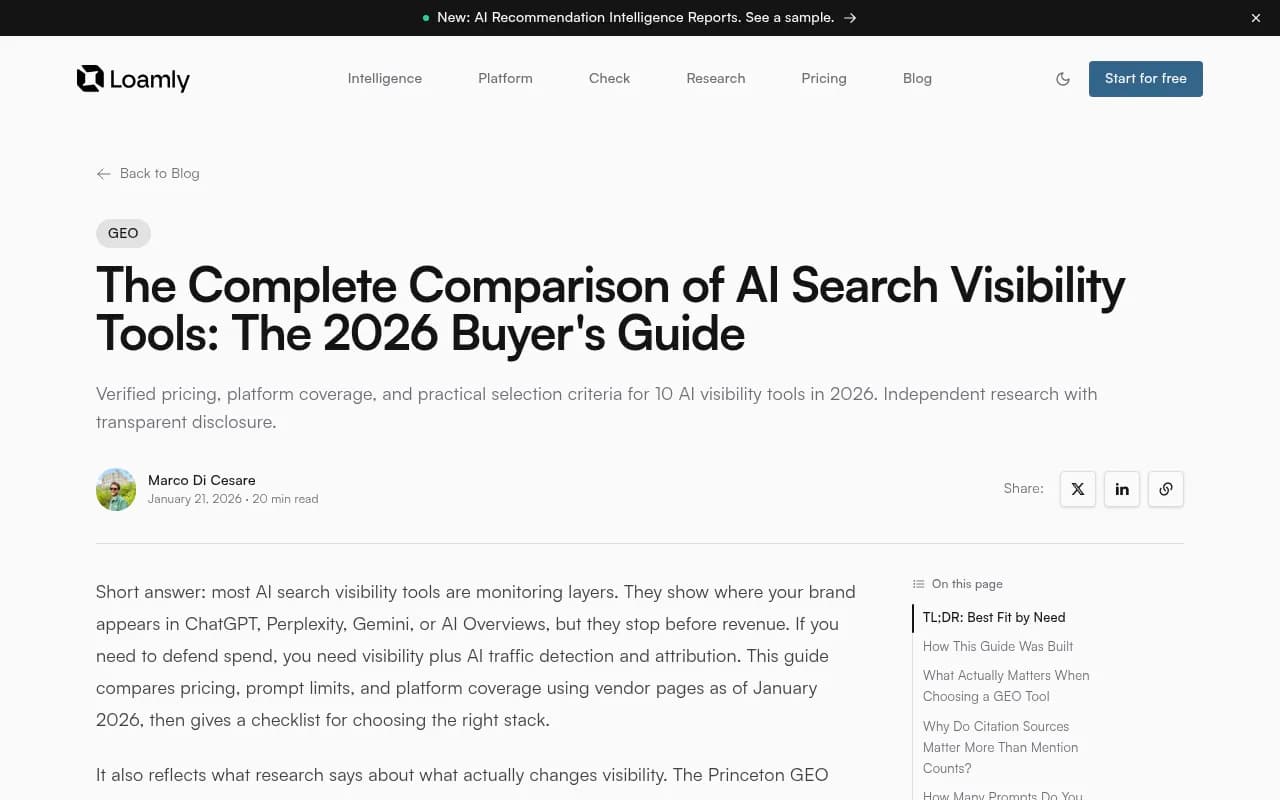
The Loamly comparison guide (an independent 2026 buyer's guide covering 10 tools) specifically categorizes Otterly as a good fit for "GEO audits + monitoring" -- which is an honest framing. It's a tool for understanding your current state, not necessarily for changing it.
What Otterly.AI does well
Clean, accessible monitoring interface
The dashboard is built for clarity. You can see your brand's visibility score, which prompts you're appearing in, and where competitors are outperforming you without needing to dig through layers of settings. For teams that need to report AI visibility to stakeholders who aren't deep in the weeds, this matters.
Multi-engine coverage
Tracking ChatGPT, Perplexity, Claude, Gemini, and Google AI Overviews in one place is genuinely useful. These engines behave differently -- a brand that ranks well in Perplexity might be nearly invisible in Claude -- and having a unified view saves time.
GEO-focused content and education
Otterly's blog is one of the better free resources in the GEO space. The query fan-out explainer, for instance, is a practical piece that helps marketers understand why ranking #1 on Google doesn't guarantee AI visibility. If you're building internal knowledge about AI search, the content library is worth bookmarking regardless of whether you use the tool.
Accessible pricing for smaller teams
Compared to enterprise platforms like Profound or AthenaHQ, Otterly sits at a price point that smaller teams can actually approve without a procurement process. This makes it a realistic starting point for companies that are just beginning to take AI search seriously.
Prompt-level visibility data
You can see which specific prompts your brand is appearing in and which ones competitors are winning. This is the core value of any monitoring tool, and Otterly delivers it clearly.
Where Otterly.AI falls short
This is where the honest assessment gets important. Otterly.AI is a monitoring platform. That's not a criticism -- monitoring is a legitimate and necessary function. But there are real gaps that matter depending on what you're trying to accomplish.
No crawler logs or AI traffic attribution
You can see that AI engines are mentioning your brand, but you can't see which AI crawlers are actually visiting your website, which pages they're reading, or whether that visibility is translating into traffic and revenue. For teams that need to connect AI search to business outcomes, this is a significant missing piece.
No content generation or gap-closing tools
Otterly shows you where you're invisible. It doesn't help you fix it. There's no content brief generation, no AI writing tools grounded in prompt data, and no workflow that takes you from "we're missing this topic" to "here's the article that closes the gap." You'll need separate tools for that.
Limited prompt intelligence
Prompt volume estimates, difficulty scores, and query fan-out analysis (understanding how one prompt branches into sub-queries) are either absent or limited. This makes it harder to prioritize which gaps to close first -- you're working with visibility data but not the strategic layer that tells you which visibility gaps actually matter.
No Reddit or YouTube tracking
A meaningful portion of AI citations come from Reddit threads, YouTube videos, and third-party review sites. If Otterly isn't surfacing which external sources are driving AI recommendations in your category, you're missing a channel that competitors who track it can exploit.
No offsite citation analysis
Related to the above -- knowing which external pages, listicles, or brand mentions are being cited by AI engines (not just your own site) is increasingly important for GEO strategy. Otterly's focus is primarily on your own brand's appearance, not the broader citation ecosystem.
How Otterly.AI compares to the alternatives
The AI search visibility market has fragmented quickly. Here's an honest comparison of where Otterly sits relative to the main alternatives:
| Tool | Monitoring | Content generation | Crawler logs | AI traffic attribution | Prompt volume data | Reddit/YouTube tracking | Best for |
|---|---|---|---|---|---|---|---|
| Otterly.AI | Yes | No | No | No | Limited | No | Fast monitoring setup, smaller teams |
| Promptwatch | Yes | Yes | Yes | Yes | Yes | Yes | End-to-end GEO optimization |
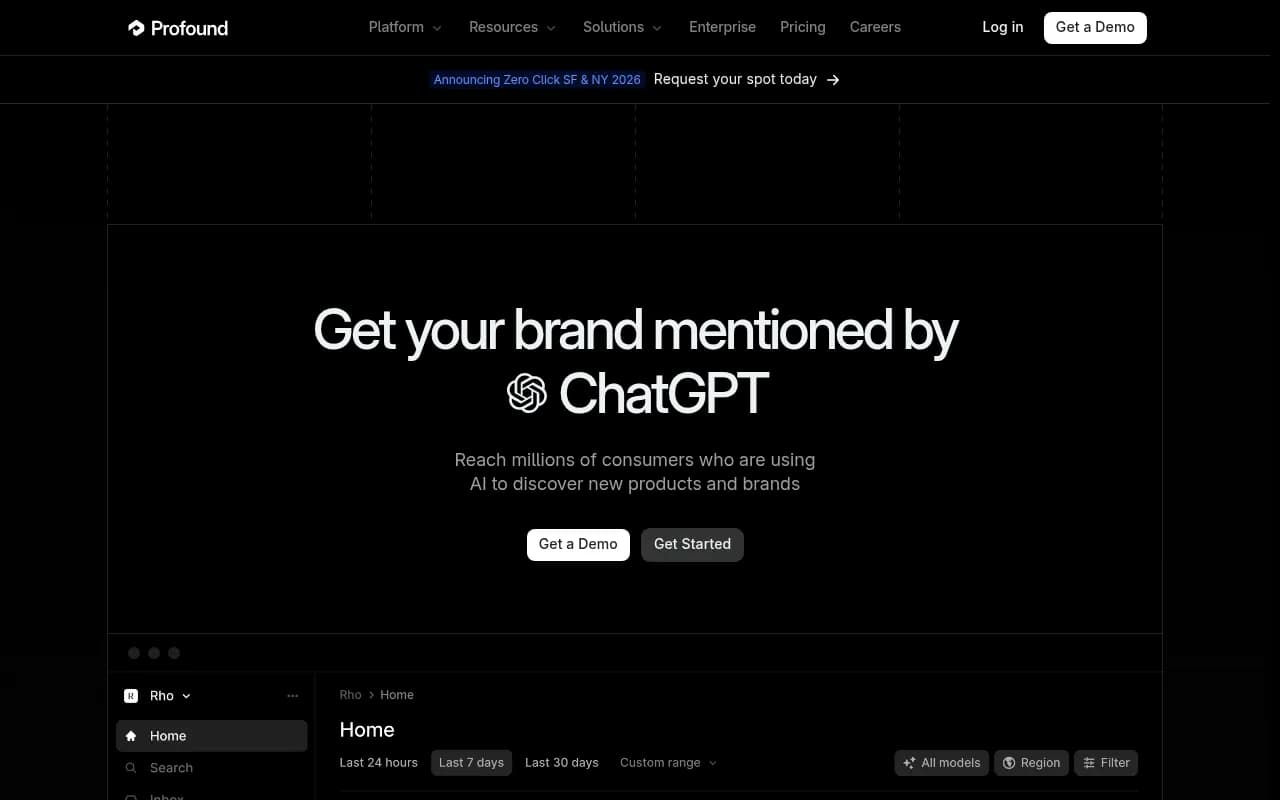
| Profound | Yes | No | No | No | Yes | No | Enterprise visibility coverage |
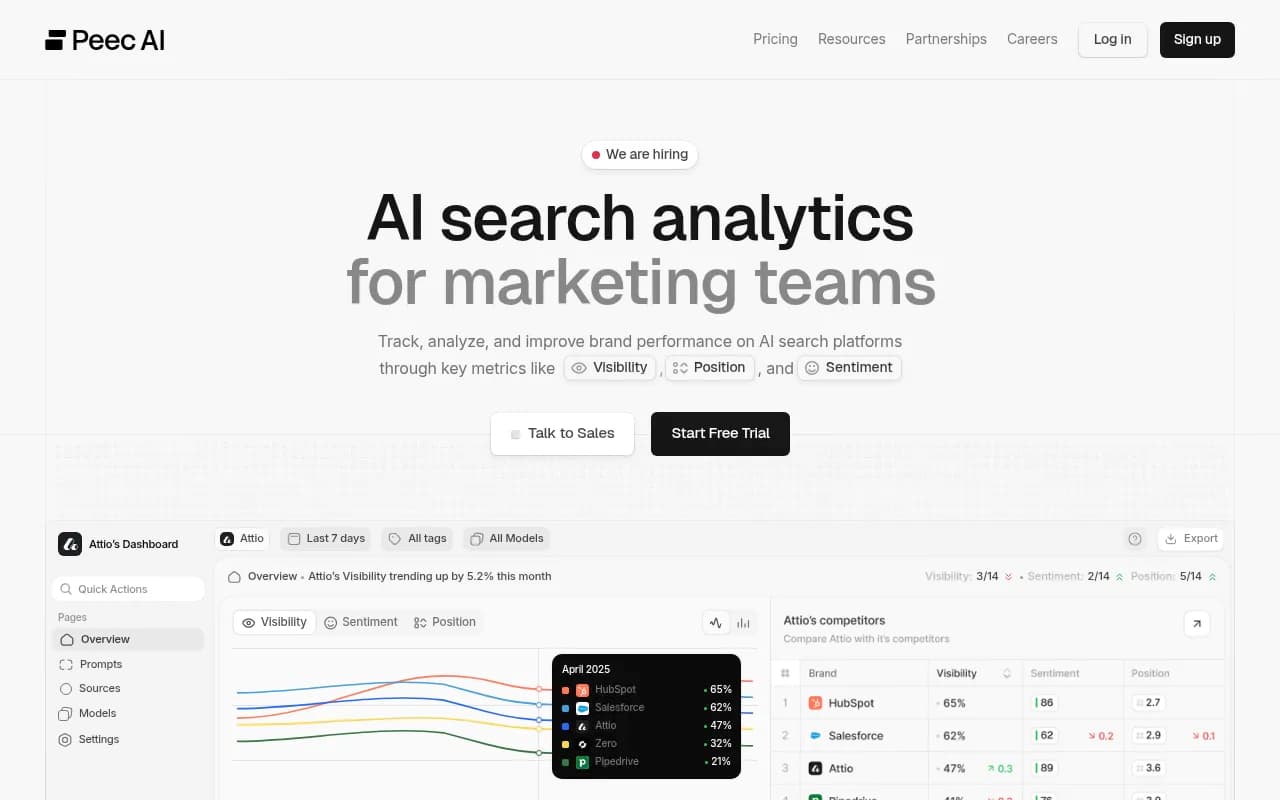
| Peec AI | Yes | No | No | No | No | No | Budget multi-engine monitoring |
| AthenaHQ | Yes | No | No | No | Limited | No | Monitoring-focused enterprise teams |
| Scrunch | Yes | Limited | No | No | No | No | GEO audits |
| SE Visible | Yes | No | No | No | No | No | Team-friendly, unlimited users |

The core split in this market is between monitoring-only tools and platforms that help you act on what you find. Otterly sits firmly in the monitoring camp. Promptwatch is the clearest example of a platform built around the full loop: find the gaps, generate content to close them, then track the results. Most of the other tools in the table above are also monitoring-only, which means the choice between them often comes down to price, UI preference, and which AI engines they cover.
The monitoring-only problem
Here's the tension that every buyer in this space eventually hits: monitoring tells you what's wrong, but it doesn't fix anything.
If you run Otterly for a month and discover that three competitors are consistently appearing in AI responses to prompts in your category while you're invisible, you now have a problem clearly defined. But Otterly can't tell you which specific content is missing from your site, can't generate the articles that would close those gaps, and can't show you whether the content you do publish eventually gets crawled and cited by AI engines.
That's not a knock on Otterly specifically -- it's a structural limitation of monitoring-only tools as a category. The question is whether that limitation matters for your situation right now.
For teams in early stages of AI search awareness, monitoring-only is often the right starting point. You need to understand the problem before you can solve it, and Otterly does that job cleanly. For teams that have already done the awareness phase and need to improve their numbers, a monitoring-only tool becomes a bottleneck.
When to look elsewhere
Consider alternatives to Otterly.AI if any of these apply:
You need to close gaps, not just find them. If your team has already established that you have an AI visibility problem and needs to fix it, you need a platform with content generation, content briefs, or at minimum detailed guidance on what to create. Otterly won't get you there.
You need to connect AI visibility to revenue. If your CMO or CFO is asking whether AI search investment is driving traffic and conversions, you need attribution data. Otterly doesn't provide it.
You're running multiple sites at scale. Agencies and enterprise teams managing many brands will find Otterly's prompt limits and site capacity constraining. Platforms built for scale (like Promptwatch's agency tiers or Profound's enterprise offering) handle this better.
You need crawler log data. Understanding which AI agents are visiting your site, which pages they're reading, and how often they return is increasingly important for technical GEO. If you want to know why a page isn't being cited despite being well-written, crawler logs are often the answer.
You need Reddit and YouTube intelligence. If your category has active Reddit communities or YouTube review channels that AI engines frequently cite, you need a tool that surfaces those. Otterly's focus is narrower.
You're in a highly competitive category. In categories where multiple well-funded competitors are actively doing GEO, monitoring alone puts you in a reactive position. You need to be generating and publishing content faster than competitors, which requires more than a dashboard.
Otterly.AI pricing: what you get at each tier
Otterly offers tiered pricing that scales with prompt volume and the number of AI engines you monitor. The entry-level tier is accessible enough for solo marketers and small teams to test without a significant budget commitment.
The practical constraint is prompt limits. AI search monitoring is only as useful as the prompts you're tracking, and if your category has dozens of relevant queries, you'll hit limits quickly on lower tiers. Before committing, map out how many prompts you actually need to track and verify that the tier you're considering covers them.
Annual billing typically offers a discount, which is worth considering if you're confident the tool fits your workflow after a trial period.
Alternatives worth evaluating
If you've read this far and decided Otterly isn't quite the right fit, here are the tools most worth evaluating depending on your specific need:
For budget-conscious teams that want multi-engine monitoring without the optimization layer, Peec AI and SE Visible are worth a look.
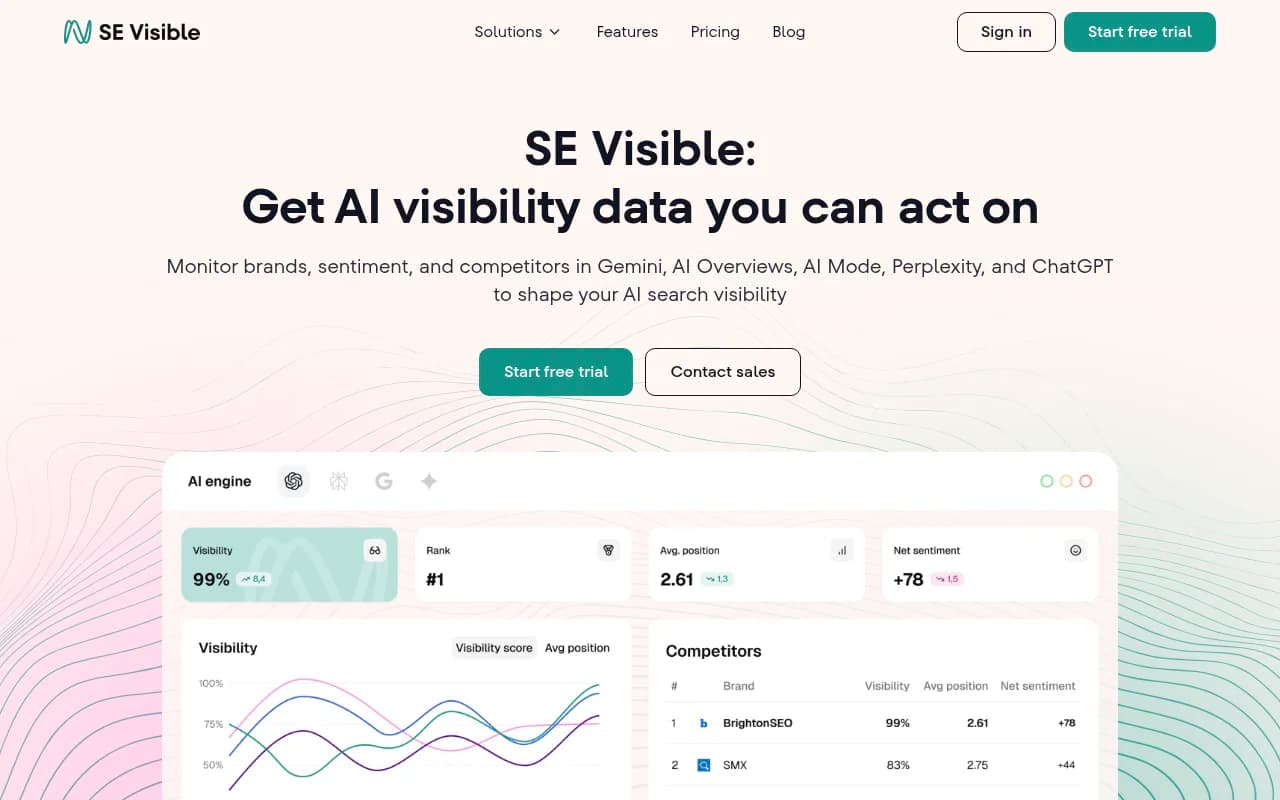
For teams that want GEO audits alongside monitoring, Scrunch covers similar ground to Otterly with a slightly different approach.
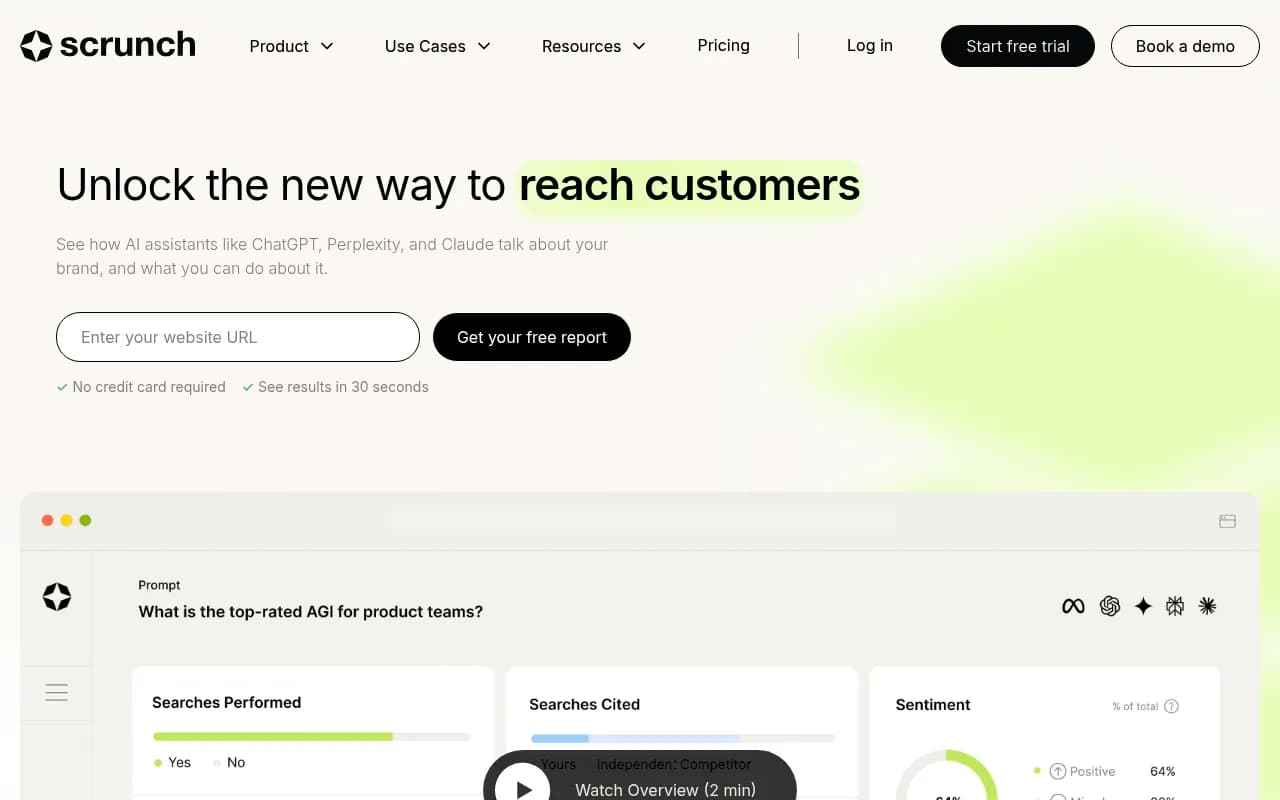
For teams that need the full optimization loop -- monitoring, content generation, crawler logs, and attribution -- Promptwatch is the most complete option in the market right now.
For enterprise teams with large prompt volumes and complex reporting needs, Profound is worth evaluating despite its higher price point.
The honest verdict
Otterly.AI is a well-built monitoring tool that does what it says. The interface is clean, the engine coverage is solid, the blog is genuinely educational, and the pricing is accessible. For teams that are just starting to take AI search seriously, it's a reasonable first step.
The limitation is that it stops at step one. You'll know where you're invisible. You won't have a clear path to becoming visible.
Whether that's a dealbreaker depends on where your team is in the GEO maturity curve. If you're in discovery mode, Otterly works. If you're in execution mode, you'll need something that goes further.
The AI search visibility market is moving fast -- new engines, new citation patterns, new content formats that AI models prefer. The teams that win in this environment won't just be the ones that track their visibility most accurately. They'll be the ones that can act on what they find, faster than everyone else.