Key takeaways
- Profound is the stronger pick for enterprise teams that need broad AI engine coverage (10 models), deep analytics, and governance-friendly reporting -- but it comes at a price.
- Searchable is more focused and lighter-weight, with specific strengths around sentiment analysis and automated alerts, but lacks the depth enterprise teams often need.
- Neither platform helps you act on what you find -- both are primarily monitoring tools, which is a real limitation if your goal is improving AI visibility, not just measuring it.
- Pricing matters: Profound's entry tier starts at $99/month for ChatGPT-only tracking, jumping to $399/month for three engines. That adds up fast.
- If you need to move from tracking to actually fixing your AI visibility, platforms like Promptwatch close the loop with content gap analysis and AI content generation built in.
The AI search visibility space has gotten crowded fast. Two years ago, most marketing teams weren't even thinking about whether ChatGPT cited their brand. Now it's a line item in quarterly reviews. And with that urgency came a wave of tools, each claiming to be the definitive solution.
Profound and Searchable are two of the more frequently compared options -- both positioned as serious platforms for brands that care about how they appear in AI-generated answers. But they're quite different in practice, and the "right" choice depends heavily on what your team actually needs to do with the data.
This guide breaks down both platforms honestly: what they do well, where they fall short, what they cost, and whether either one is genuinely worth the investment for an enterprise team in 2026.
What each platform actually does
Profound
Profound positions itself squarely at the enterprise end of the market. Its core value proposition is breadth -- tracking your brand's visibility across 10 AI answer engines, including ChatGPT, Perplexity, Google AI Overviews, Claude, Gemini, and others. The platform gives you a structured view of how often you appear, how you're framed, and how that compares to competitors.
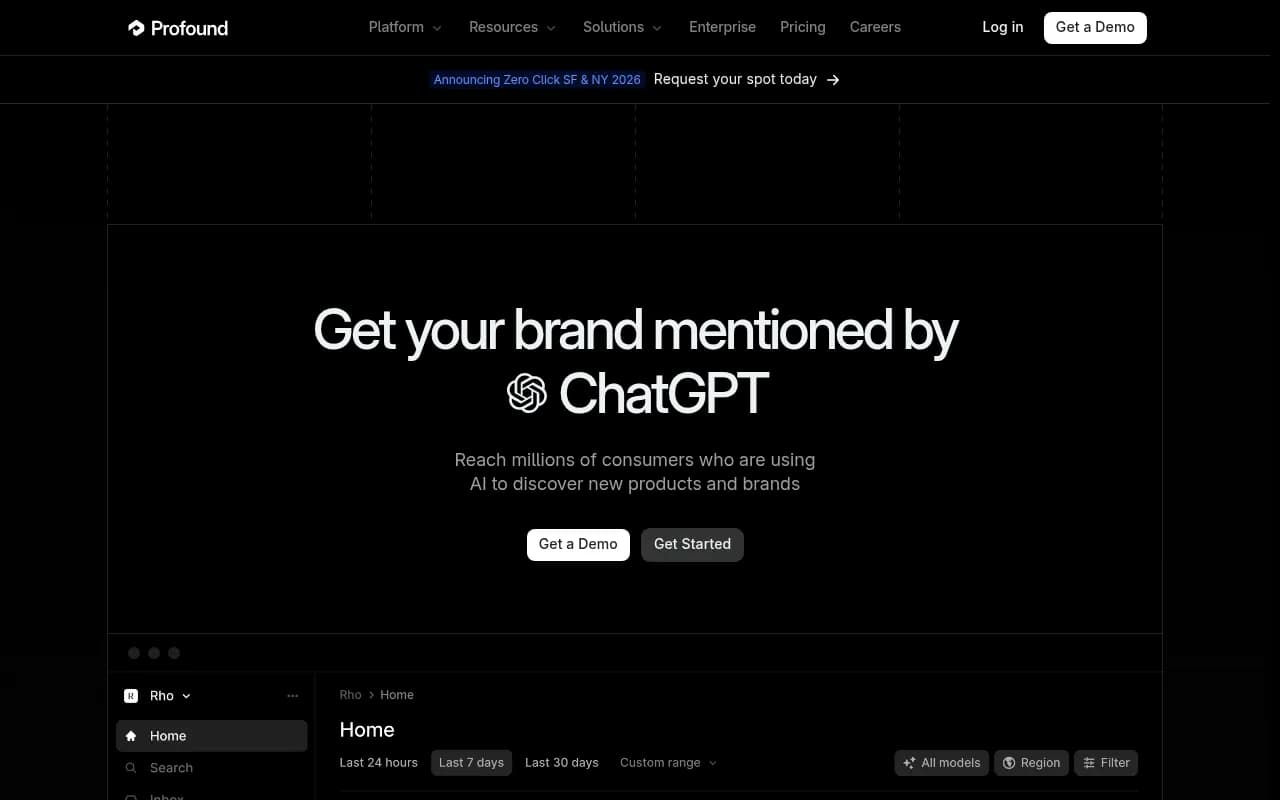
The analytics layer is Profound's real strength. You get prompt analysis, AI search volume insights, and reporting that's detailed enough to satisfy teams with strict governance or data requirements. According to one independent ranking that evaluated platforms by AEO score, Profound topped the list at 92/100 -- specifically cited for being "built for enterprise teams."
For marketing teams that need to present AI visibility data to leadership, Profound's reporting structure is genuinely useful. It's the kind of tool that looks credible in a board deck.
Searchable
Searchable takes a narrower approach. Rather than trying to cover every AI engine, it focuses on specific data points -- particularly sentiment analysis around how AI models describe your brand, and automated alerting when something changes. The pitch is more about staying informed quickly than building comprehensive dashboards.
It's a lighter-weight tool, which can be a feature or a bug depending on your situation. Smaller teams or those just starting to track AI visibility might find it less overwhelming. Enterprise teams with complex reporting needs will likely hit its ceiling pretty fast.
Feature comparison
Here's how the two platforms stack up across the dimensions that matter most for enterprise teams:
| Feature | Profound | Searchable |
|---|---|---|
| AI engines covered | 10 (ChatGPT, Perplexity, Gemini, Claude, AI Overviews, and more) | Limited (fewer engines) |
| Prompt analytics | Yes -- volume insights, difficulty scoring | Basic |
| Sentiment analysis | Yes | Yes (a relative strength) |
| Automated alerts | Yes | Yes (a relative strength) |
| Competitor benchmarking | Yes | Limited |
| Content gap analysis | No | No |
| Content generation | No | No |
| AI crawler logs | No | No |
| Reddit/YouTube tracking | No | No |
| Governance/data controls | Strong | Limited |
| Reporting depth | High | Moderate |
| Entry-level pricing | $99/mo (ChatGPT only) | Lower |
| Multi-engine pricing | $399/mo (3 engines) | N/A |
The table tells a clear story: Profound wins on depth and coverage. Searchable wins on simplicity and, to some extent, cost. But both share the same fundamental limitation -- they're monitoring tools. They show you what's happening; they don't help you change it.
Pricing: what you're actually paying for
Profound's pricing structure is worth examining carefully because it can escalate quickly. The entry tier at $99/month only covers ChatGPT. If you want three engines (ChatGPT, Perplexity, and AI Overviews), you're at $399/month. Full 10-engine coverage requires a custom enterprise contract.
For a large brand that's already spending on SEO tools, analytics platforms, and content teams, $399/month for three AI engines is defensible. But you need to be honest about what you're getting: data and dashboards, not action.
Searchable's pricing is generally lower, which makes it more accessible for teams testing the waters. But lower cost also reflects lower capability -- you're getting a subset of what Profound offers.
Neither platform publishes fully transparent pricing for enterprise tiers, which is increasingly common in this space but still frustrating when you're trying to build a business case internally.
Where both platforms fall short
This is the part that doesn't get said enough in tool comparisons: both Profound and Searchable are fundamentally passive. They watch. They report. They alert you when something changes.
What they don't do is tell you why you're not being cited, what content you're missing, or how to fix it. That gap between "we're not appearing in Perplexity for this query" and "here's the article you need to publish to change that" is enormous -- and it's where most enterprise teams get stuck.
A monitoring dashboard that shows you're losing to a competitor in AI search is useful. But if your next step is manually trying to figure out what content to create, you've just shifted the work, not reduced it.
This is a structural limitation of the monitoring-only model, and it affects Profound and Searchable equally.
Who should use Profound
Profound makes the most sense for:
- Enterprise teams with strict data governance requirements who need audit-ready reporting
- Brands that need to monitor visibility across many AI engines simultaneously
- Marketing organizations where AI visibility reporting goes to senior leadership and needs to look polished
- Teams that already have strong content and SEO functions that can act on the data independently
If you're a large brand with a dedicated content team that just needs the monitoring layer, Profound is probably the best pure-monitoring option in the market right now. The 10-engine coverage is genuinely comprehensive, and the analytics depth is hard to match.
Who should use Searchable
Searchable fits better for:
- Smaller enterprise teams or mid-market brands that don't need the full Profound feature set
- Teams where sentiment tracking and quick alerts are the primary use case
- Organizations early in their AI visibility journey that want to start simply
It's a reasonable starting point. But if you're a serious enterprise team with real competitive pressure in AI search, you'll probably outgrow it.
The broader market context
It's worth zooming out for a moment. The AI visibility tool market in 2026 has roughly two tiers: monitoring-only platforms (where both Profound and Searchable sit) and action-oriented platforms that combine monitoring with content optimization and generation.
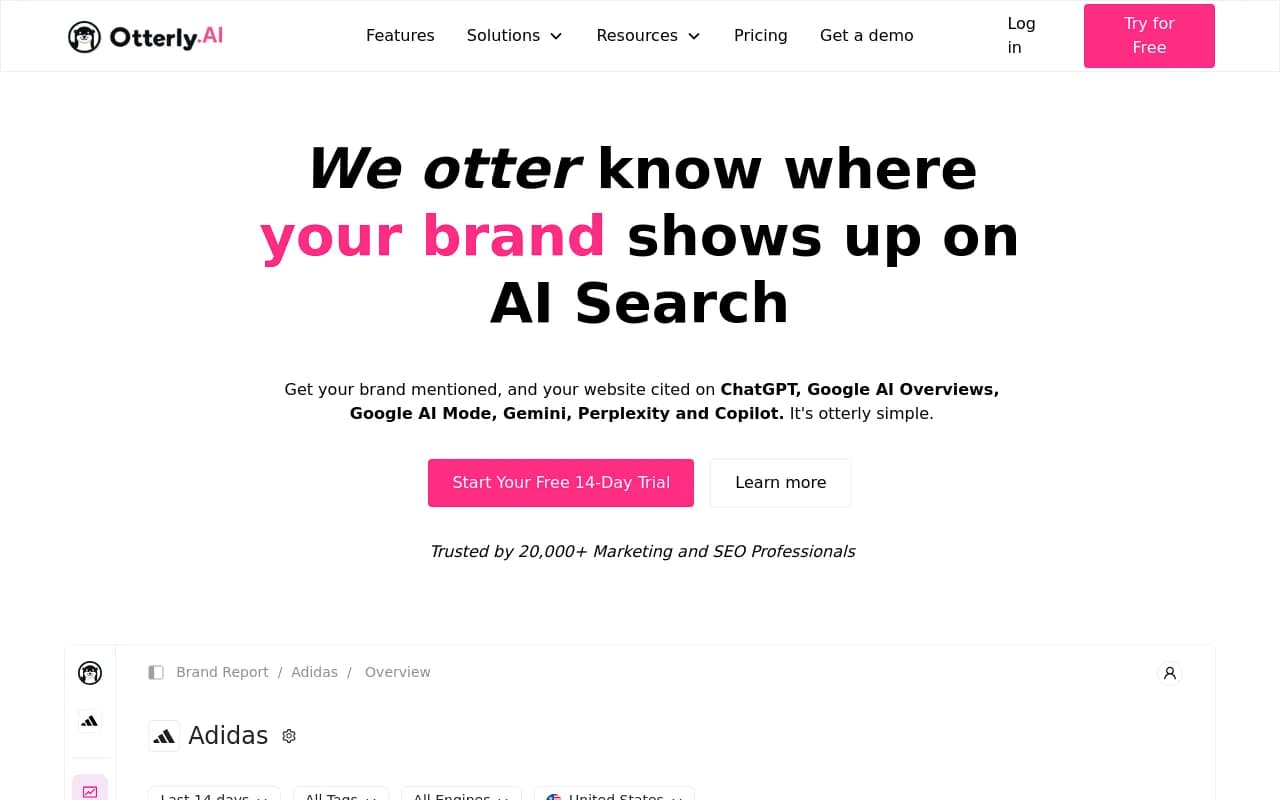
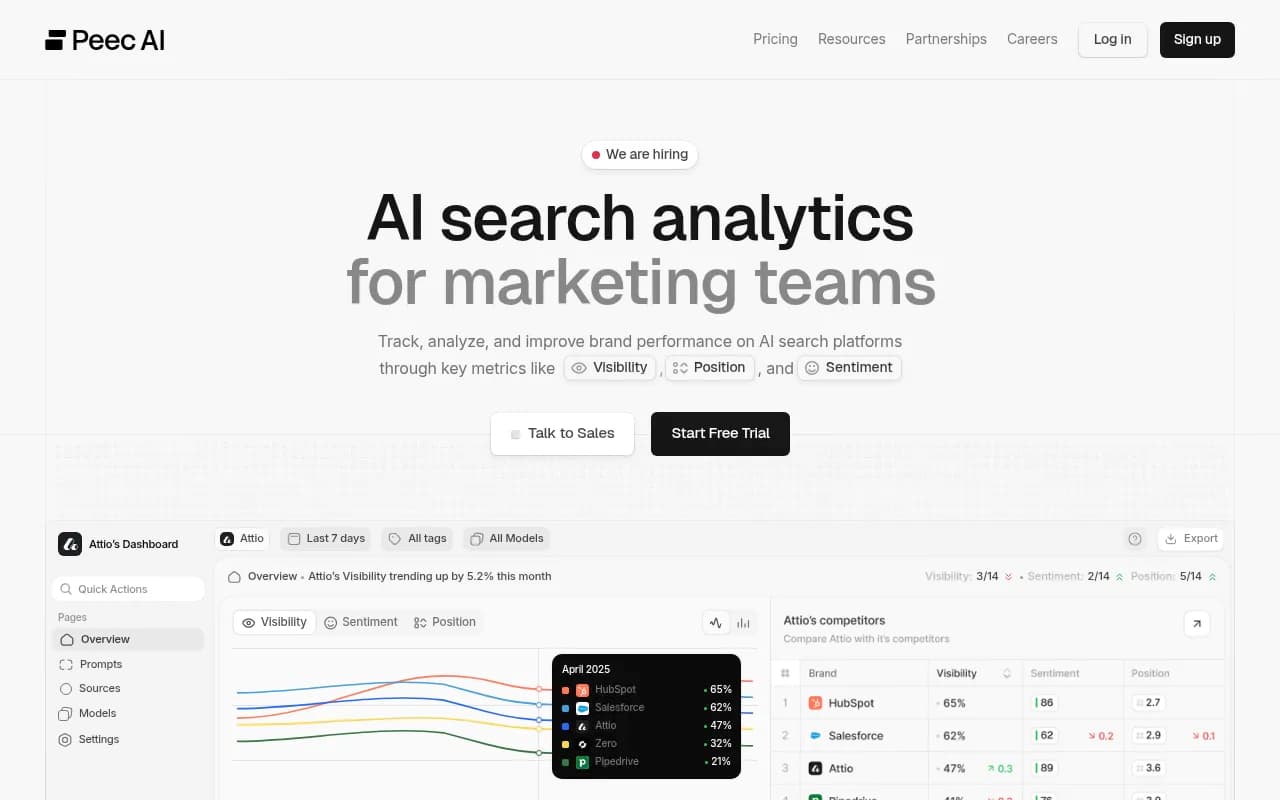
The monitoring-only tier is getting crowded. Otterly.AI, Peec.ai, and several others compete in the same space. What separates the better options is coverage depth, analytics quality, and reporting polish -- which is where Profound earns its position.
The action-oriented tier is smaller but growing. These platforms don't just show you where you're invisible -- they help you fix it. Promptwatch is the clearest example: it combines AI visibility tracking across 10 models with answer gap analysis (showing exactly which prompts competitors rank for that you don't), AI content generation grounded in real prompt data, and page-level tracking that connects new content to citation outcomes.
Promptwatch is particularly useful for enterprise teams that want to close the loop between "we're missing here" and "we published something that fixed it" -- with the analytics to prove the ROI.

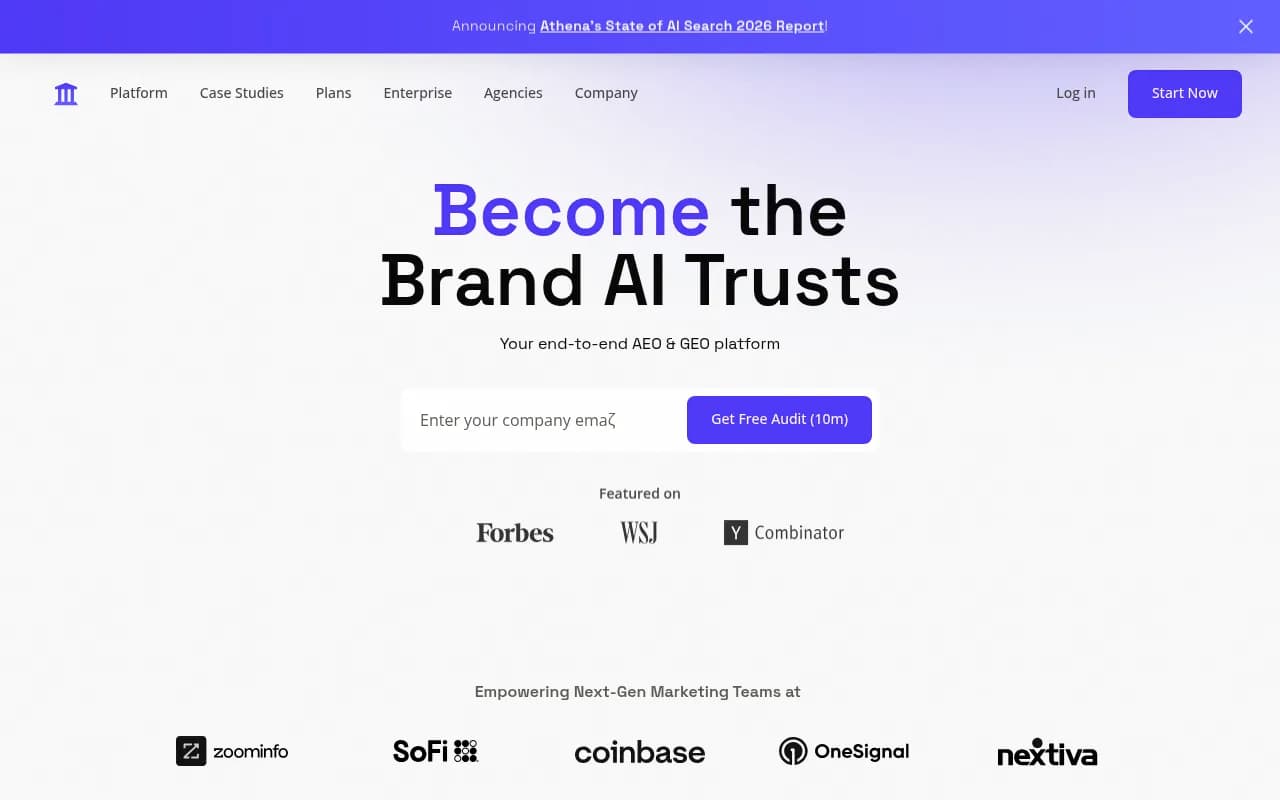
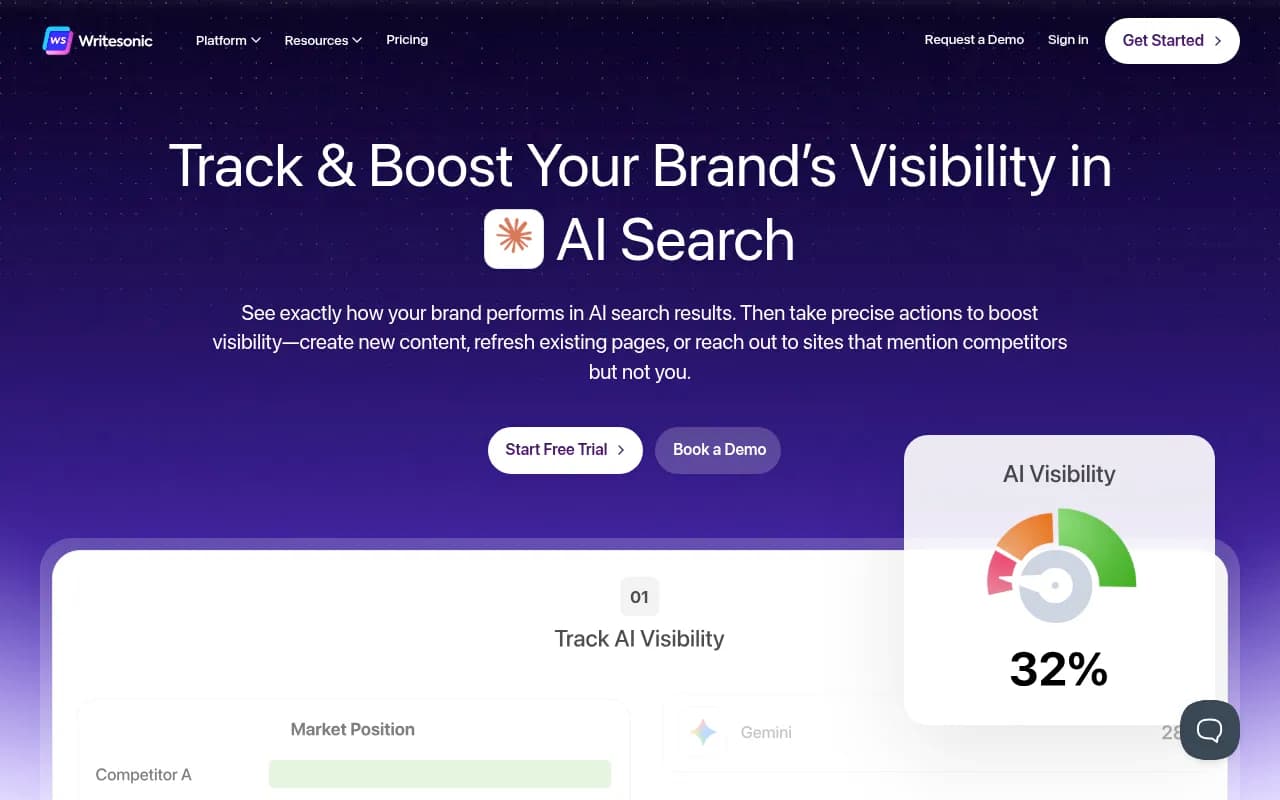
Other platforms worth knowing about in this space include Athena HQ, which focuses on monitoring, and Writesonic, which has added AI visibility tracking to its content platform.
Head-to-head verdict
If you're choosing strictly between Profound and Searchable for an enterprise team, Profound wins. The coverage is broader, the analytics are deeper, and the reporting is more enterprise-ready. The price jump from $99 to $399/month for three engines is steep, but for a brand that's serious about AI search visibility, the data quality justifies it.
Searchable isn't a bad tool -- it's just a smaller one. It works for teams with simpler needs or tighter budgets, but it's not built for the complexity that enterprise AI visibility programs typically require.
That said, the more important question isn't "Profound or Searchable?" -- it's "do we need a monitoring-only tool, or do we need something that helps us act on what we find?" If your team has the capacity to take monitoring data and independently develop a content strategy around it, Profound is a solid choice. If you want the monitoring and the optimization in one workflow, you should look at platforms that offer both.
Alternatives worth evaluating
Beyond these two, a few other platforms are worth putting on your shortlist:
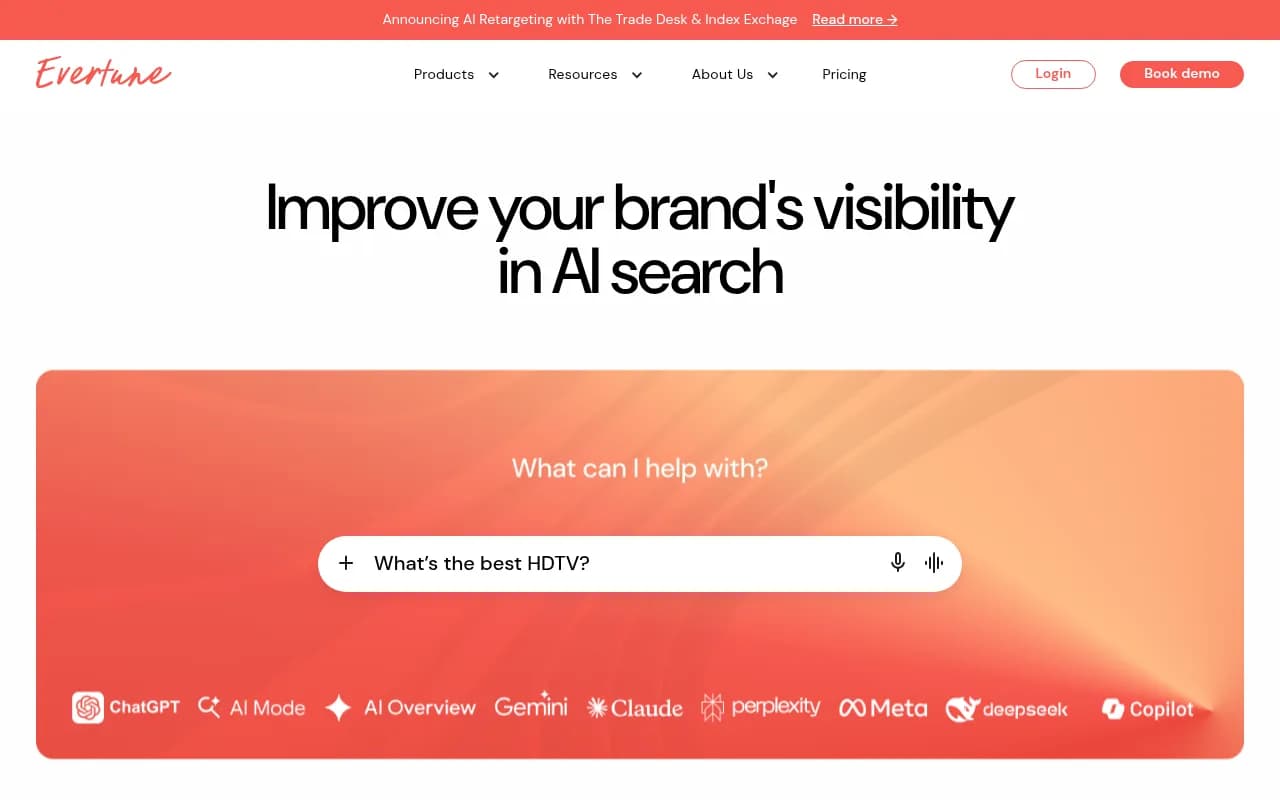
For enterprise monitoring depth: Profound remains the strongest dedicated option. Evertune and BrightEdge also serve enterprise teams with AI visibility tracking built into broader SEO platforms.
For action-oriented optimization: Promptwatch covers monitoring across 10 AI models and adds content gap analysis, AI content generation, crawler logs, and traffic attribution. It's the platform to evaluate if you want to move beyond dashboards.
For teams already in the SEO tool ecosystem: Semrush has added AI visibility features, and SE Ranking has an AI visibility module. Neither is as deep as Profound for pure AI monitoring, but they reduce tool sprawl if you're already paying for those platforms.
For agencies managing multiple clients: Search Party and Slate are worth a look, as both are built with multi-client workflows in mind.
Search Party
Making the decision
A few questions to work through before committing:
-
How many AI engines do you actually need to monitor? If the answer is "just ChatGPT and Perplexity," you don't need Profound's full suite -- and you shouldn't pay for it.
-
What happens after you see the data? If your team has no clear process for acting on AI visibility gaps, a more expensive monitoring tool won't solve that problem. It'll just give you better-looking dashboards of a problem you're not fixing.
-
Do you need to prove ROI? Monitoring tools show you visibility scores. Action-oriented platforms can connect content changes to citation improvements to traffic. If you need to justify the spend to leadership, that attribution chain matters.
-
How important is multi-engine coverage? Profound's 10-engine coverage is genuinely useful if you're tracking a brand that appears (or should appear) across multiple AI systems. If you're primarily focused on Google AI Overviews and ChatGPT, the breadth is less critical.
The AI visibility market is still maturing. The tools that will matter most in 12 months are the ones that help teams do something with the data -- not just collect it.