Key takeaways
- Surfer SEO has the most polished real-time editor and the strongest team collaboration features, making it the default choice for larger content teams.
- Rankability is built with agencies in mind -- better content briefs, cleaner client reporting, and a workflow that scales across multiple projects.
- NeuronWriter is the budget-friendly option, especially attractive on AppSumo's lifetime deal, but it's more suited to solo operators than agency teams.
- All three tools do content scoring and NLP-based optimization well. The differences show up in brief quality, AI writing depth, team features, and price per seat.
- None of these tools track how your content performs in AI search engines like ChatGPT or Perplexity -- that's a separate problem requiring a different category of tool.
Picking a content optimization tool for an agency sounds simple until you're three tools deep into free trials and still not sure which one fits. Surfer SEO has been the default recommendation for years. Rankability has been quietly eating into that market share. NeuronWriter keeps coming up because of its pricing model.
This guide cuts through the noise. I'll walk through what each tool actually does well, where each one falls short for agency use, and how to decide which one belongs in your workflow.
What these tools actually do
Before comparing them, it's worth being clear about the category. Rankability, Surfer SEO, and NeuronWriter are all content optimization tools. They analyze the top-ranking pages for a target keyword, extract NLP terms and semantic signals, and give you a score or checklist to guide your writing.
They are not keyword research tools in the traditional sense. They're not backlink analyzers. They don't replace Ahrefs or Semrush for site audits. Their job is to help you write content that's more likely to rank -- by making sure you're covering the right topics, using the right terms, and structuring your content in a way that matches what Google's top results look like.
That's a narrow but genuinely useful job. The question is which tool does it best for an agency context.
Surfer SEO
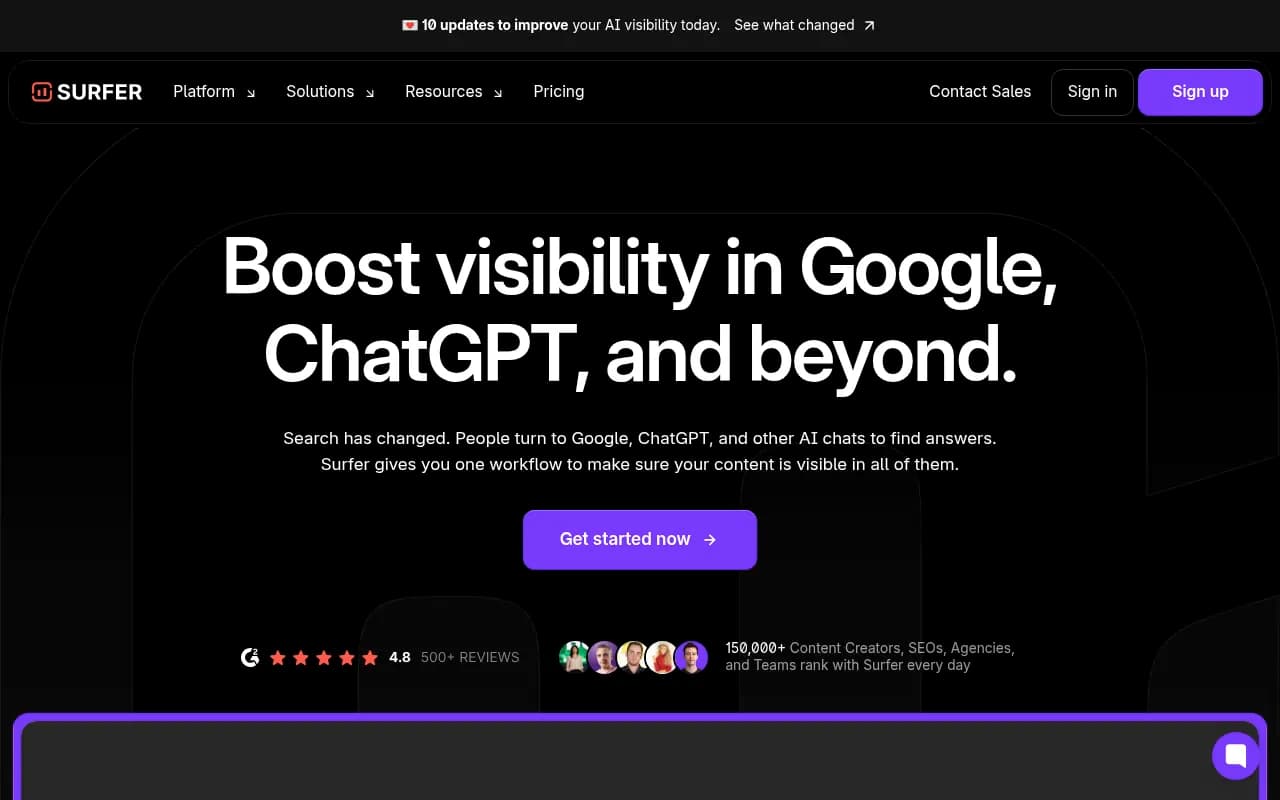
Surfer has been around since 2017 and has earned its reputation. The content editor is genuinely good -- you get a real-time content score as you write, with recommendations for word count, NLP terms, headings, and paragraph structure. It's the kind of feedback loop that helps writers stay on track without constantly switching tabs.
What Surfer does well
The editor experience is the strongest in this category. Writers can see their score update live, which keeps them focused on the right things. The SERP Analyzer gives you a detailed breakdown of what the top-ranking pages share in common -- word counts, keyword densities, backlink profiles, page speed data.
Surfer also has the best team features of the three. You can share workspaces, assign roles, and manage multiple clients without things getting messy. For agencies running content teams with multiple writers, this matters.
The Topical Map feature (added in 2024) helps you plan content clusters around a topic, which is useful for agencies building out authority sites or content strategies for clients.
Where Surfer falls short
Pricing is the most common complaint. Surfer's plans start at $99/month for the Essential tier, but agencies managing multiple clients will quickly hit limits on the number of articles and audits. The Business plan at $219/month gives you more room, but it adds up fast when you're paying per seat.
The AI writing features (Surfer AI) are decent but not exceptional. You can generate a full draft, but the output often needs heavy editing. It's more of a starting point than a finished product.
Content briefs are functional but thin compared to what Rankability produces. If brief quality is important to your workflow -- especially if you're handing briefs to freelance writers -- Surfer's briefs can feel underdeveloped.
Rankability
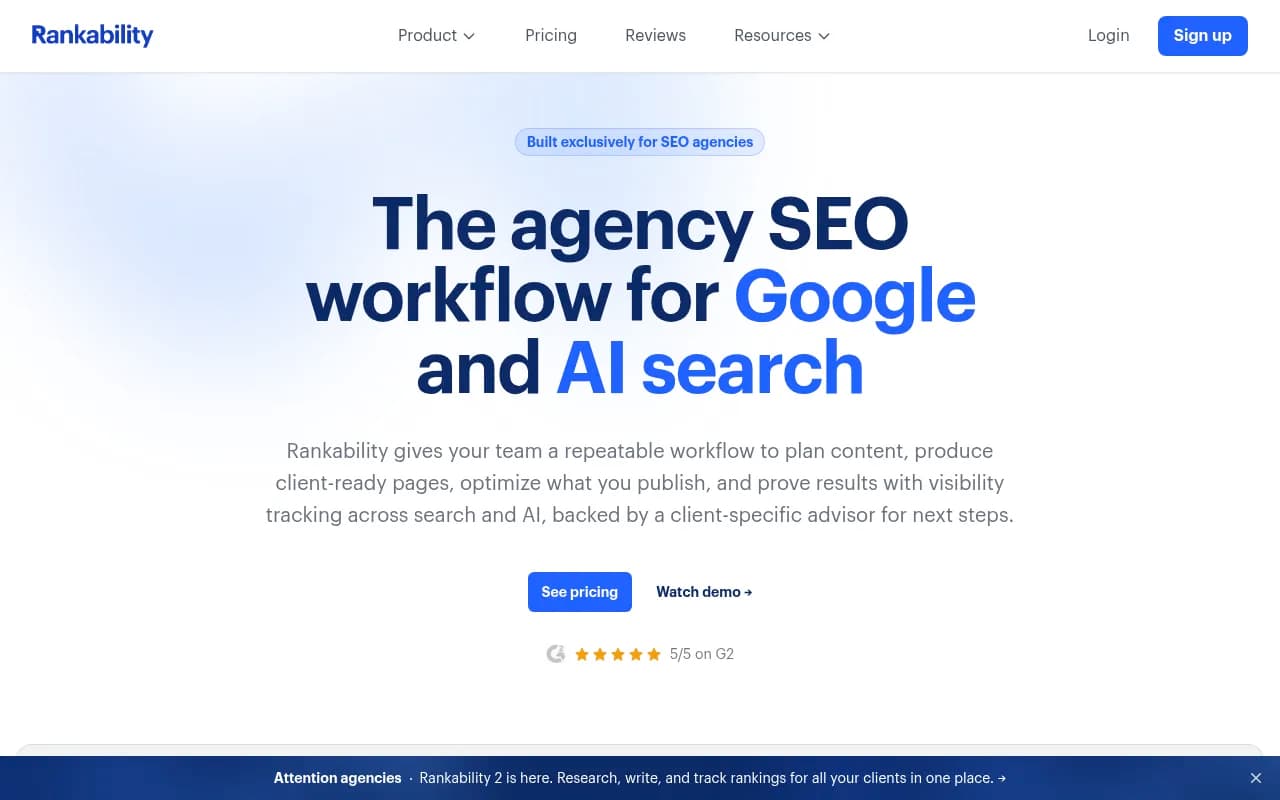
Rankability has positioned itself explicitly as the agency-first alternative to Surfer. It's newer, but the team clearly built it with content operations in mind rather than individual writers.
What Rankability does well
The content briefs are the standout feature. Rankability generates briefs that go deeper than Surfer's -- they include more structured outlines, better question coverage (pulling from People Also Ask and related queries), and cleaner formatting that freelance writers can actually follow without a lot of hand-holding.
The optimizer itself is solid. You get NLP term recommendations, content scoring, and competitive analysis similar to Surfer, but the interface feels more organized for managing multiple projects simultaneously.
Rankability also handles client reporting better. Agencies can generate reports that show content performance over time, which is something Surfer doesn't prioritize.
One thing worth noting: Rankability's pricing is more transparent about what agencies actually need. Their plans are structured around article volume and team seats in a way that scales more predictably than Surfer's.
Where Rankability falls short
It doesn't have Surfer's brand recognition, which matters when you're onboarding clients who've heard of Surfer and expect to see it. That's a soft limitation, but it's real.
The real-time editor experience isn't quite as polished as Surfer's. The scoring and recommendations are there, but the writing experience feels slightly less fluid. Writers who are used to Surfer's editor may need an adjustment period.
The AI writing features are improving but still catching up to Surfer in terms of output quality.
NeuronWriter
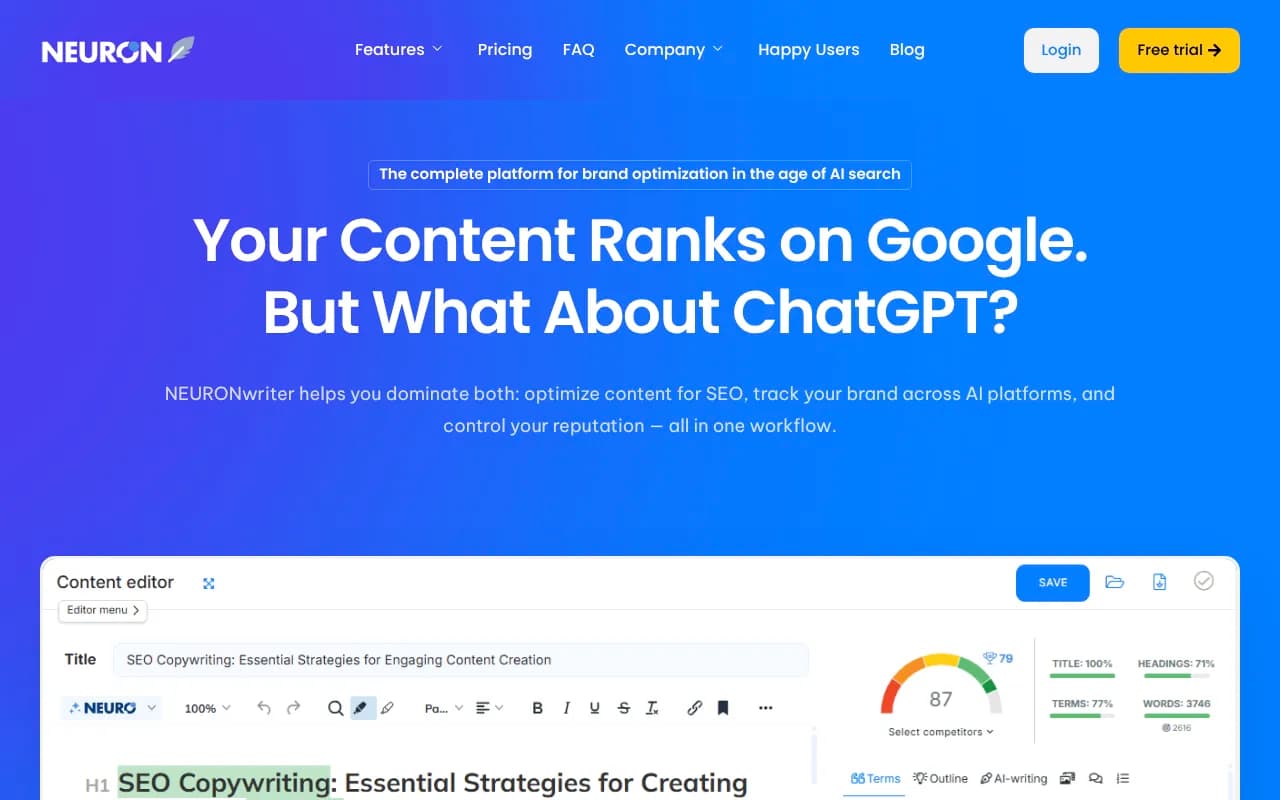
NeuronWriter is the underdog in this comparison. It's a capable tool that punches above its price point, especially if you catch it on a lifetime deal through AppSumo. But it's built differently from Rankability and Surfer, and that shows in how it fits (or doesn't fit) agency workflows.
What NeuronWriter does well
The SEO editor is genuinely good. You get NLP term recommendations, competitor analysis, and content scoring in a clean interface. The outline builder is particularly useful -- it gives you a structural view of your article before you start writing, which helps with planning.
The AI writing assistance is integrated throughout the tool, not bolted on as an afterthought. Suggestions feel contextually relevant rather than generic.
The pricing is the real differentiator. The AppSumo lifetime deal has made NeuronWriter extremely popular with freelancers and small agencies who want a capable tool without ongoing subscription costs. Even on monthly plans, NeuronWriter is significantly cheaper than Surfer or Rankability.
Where NeuronWriter falls short
Team features are limited. You can share content with collaborators, but the workspace management and role assignment that agencies need isn't really there. Surfer is clearly better for teams; NeuronWriter is designed for solo use or very small operations.
The interface, while functional, feels less polished than the other two. Small things -- like how you navigate between projects or how the scoring updates -- add friction when you're moving fast across multiple client accounts.
Brief generation is weaker than both Rankability and Surfer. NeuronWriter is better at optimizing content you've already written than at helping you plan what to write in the first place.
Head-to-head comparison
| Feature | Surfer SEO | Rankability | NeuronWriter |
|---|---|---|---|
| Real-time content editor | Excellent | Good | Good |
| NLP term recommendations | Yes | Yes | Yes |
| Content briefs | Basic | Strong | Weak |
| AI writing assistance | Decent | Decent | Good |
| Team collaboration | Strong | Good | Limited |
| Client reporting | Limited | Good | Limited |
| Topical planning | Yes (Topical Map) | Yes | Limited |
| Pricing (entry) | ~$99/mo | ~$99/mo | ~$19/mo |
| Lifetime deal | No | No | Yes (AppSumo) |
| Best for | Content teams | Agencies | Solo / freelance |
Which tool fits which agency type
The right answer depends on how your agency actually operates.
If you run a content team with multiple writers working simultaneously on client projects, Surfer SEO is still the most mature option. The editor experience is the best, the team features work well, and writers adapt to it quickly. The price is high but justified if you're producing volume.
If you're an agency that relies heavily on freelance writers and needs to hand off detailed briefs, Rankability is the better fit. The brief quality alone can save hours per project, and the reporting features make client communication easier. It's also worth considering if you're frustrated with Surfer's pricing structure.
If you're a solo SEO consultant or a very small agency with a tight budget, NeuronWriter gets you 80% of the functionality at a fraction of the cost. The lifetime deal is genuinely good value. Just don't expect it to scale into a multi-writer operation without friction.
What none of these tools cover
Here's something worth being aware of: all three tools are built around traditional Google search optimization. They analyze SERP data, extract NLP signals from top-ranking pages, and help you write content that matches what Google currently rewards.
That's still important. But in 2026, a growing share of search traffic is going through AI engines -- ChatGPT, Perplexity, Google AI Overviews, Gemini. The content signals that get you cited in an AI answer aren't identical to the signals that get you ranked in a traditional SERP.
None of these three tools track AI visibility, monitor which prompts your brand appears in, or help you close the gaps between your content and what AI models are actually citing. That's a different category of tool -- platforms like Promptwatch are built specifically for that problem, tracking how brands appear across AI search engines and helping identify the content gaps that are costing you AI citations.

If your clients are asking about AI search visibility (and they will be, if they aren't already), you'll need something beyond a traditional content optimizer to answer that question.
Other tools worth knowing
The content optimization space is broader than these three. A few others that come up regularly in agency workflows:
Clearscope is the premium option -- excellent NLP analysis and a clean editor, but expensive for agencies managing many clients.

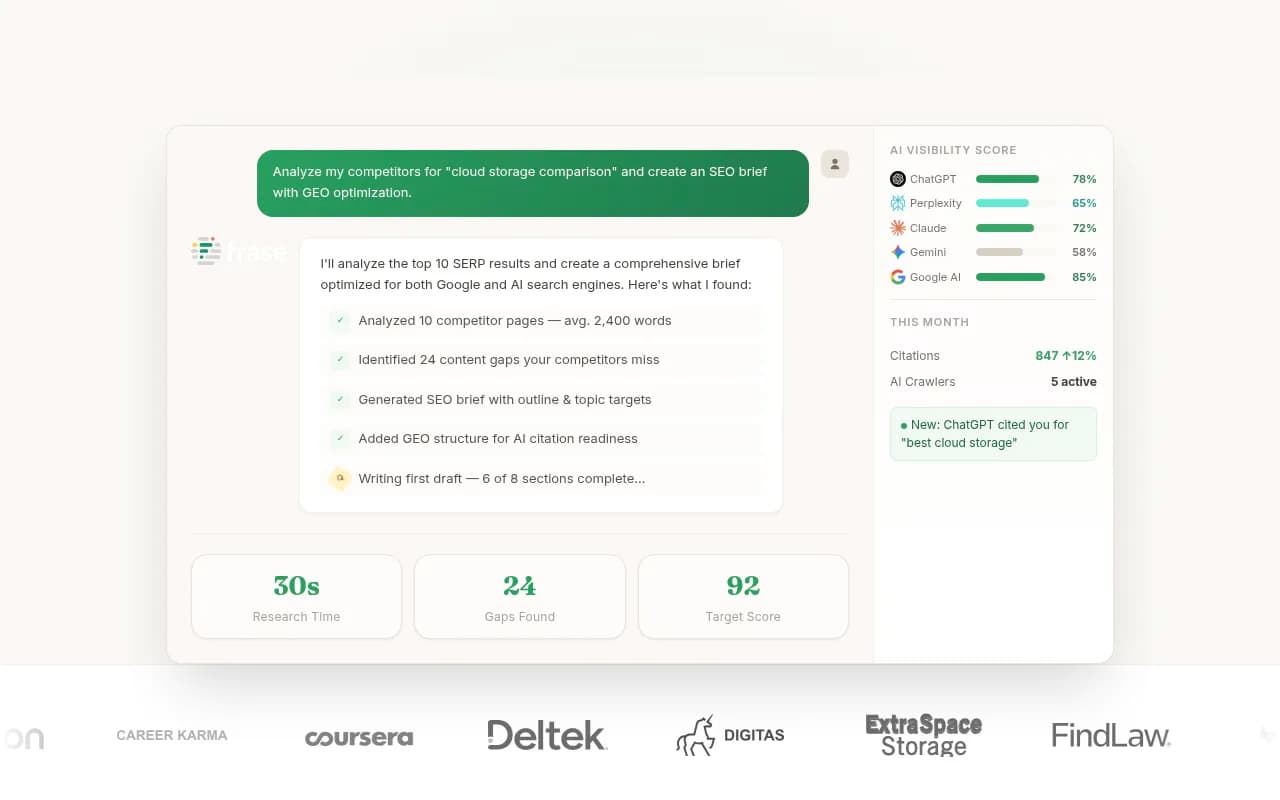
Frase combines content optimization with AI research and brief generation. It's a strong alternative if you want more research capability built into the same tool.
MarketMuse is built for content strategy at scale -- it's overkill for small agencies but genuinely powerful for teams managing large content programs.
SEOBoost is a lighter-weight option that gives real-time SEO feedback without the complexity of a full platform.

Scalenut covers the full content lifecycle from keyword research to optimization, which can reduce the number of tools you're juggling.

Page Optimizer Pro takes a more data-driven, granular approach to on-page SEO -- popular with technical SEOs who want precise recommendations rather than broad scoring.
The bottom line
Surfer SEO is still a strong tool, and its reputation is deserved. But "best known" and "best for your agency" aren't the same thing.
Rankability is the more practical choice for most agencies in 2026 -- better briefs, better reporting, and a pricing structure that makes more sense at scale. Surfer wins on editor experience and brand recognition. NeuronWriter wins on price, full stop.
The real question is what your agency's biggest bottleneck actually is. If it's brief quality and client reporting, go with Rankability. If it's writer experience and team coordination, Surfer is still hard to beat. If it's budget, NeuronWriter is a legitimate option.
And if your clients are starting to ask why they're not showing up in ChatGPT or Perplexity, none of these three tools will help you answer that -- you'll need a dedicated AI visibility platform for that conversation.