Key takeaways
- Profound ($99/mo starting) is a full-stack platform covering tracking, content generation, and prompt volume data -- built for enterprise marketing teams that want to act on insights, not just collect them.
- Peec AI (~$85/mo starting) is a monitoring-first tool with strong multilingual support (115+ languages) and real browser session tracking, but no content creation and add-on fees per AI model.
- Neither platform closes the full loop on its own -- both show you where you're invisible but leave content creation, schema work, and authority-building largely to your team.
- If you need a platform that goes from gap analysis to content generation to traffic attribution in one place, there are stronger options worth considering alongside both.
- The right choice depends on your team size, budget, and whether you need execution tools or just monitoring.
Two platforms. Two very different bets on what AI visibility actually requires.
Peec AI and Profound are the two best-funded independent tools in the GEO (Generative Engine Optimization) space -- Profound at $58.5M raised from Khosla, Kleiner Perkins, NVIDIA, and Sequoia; Peec AI at $30M+ from 20VC and Singular. Both track how your brand appears in AI search engines like ChatGPT, Perplexity, and Google AI Overviews. Both have real customers and real traction.
But they've made fundamentally different product bets. Profound is building a full-stack platform: track, analyze, generate content, surface specific actions. Peec AI is building the most accurate monitoring tool in the market: simulate real user interactions, benchmark regionally, report across 115+ languages.
This guide breaks down exactly what each platform does, where each one stops, and which type of team each one actually fits.
What is Profound?
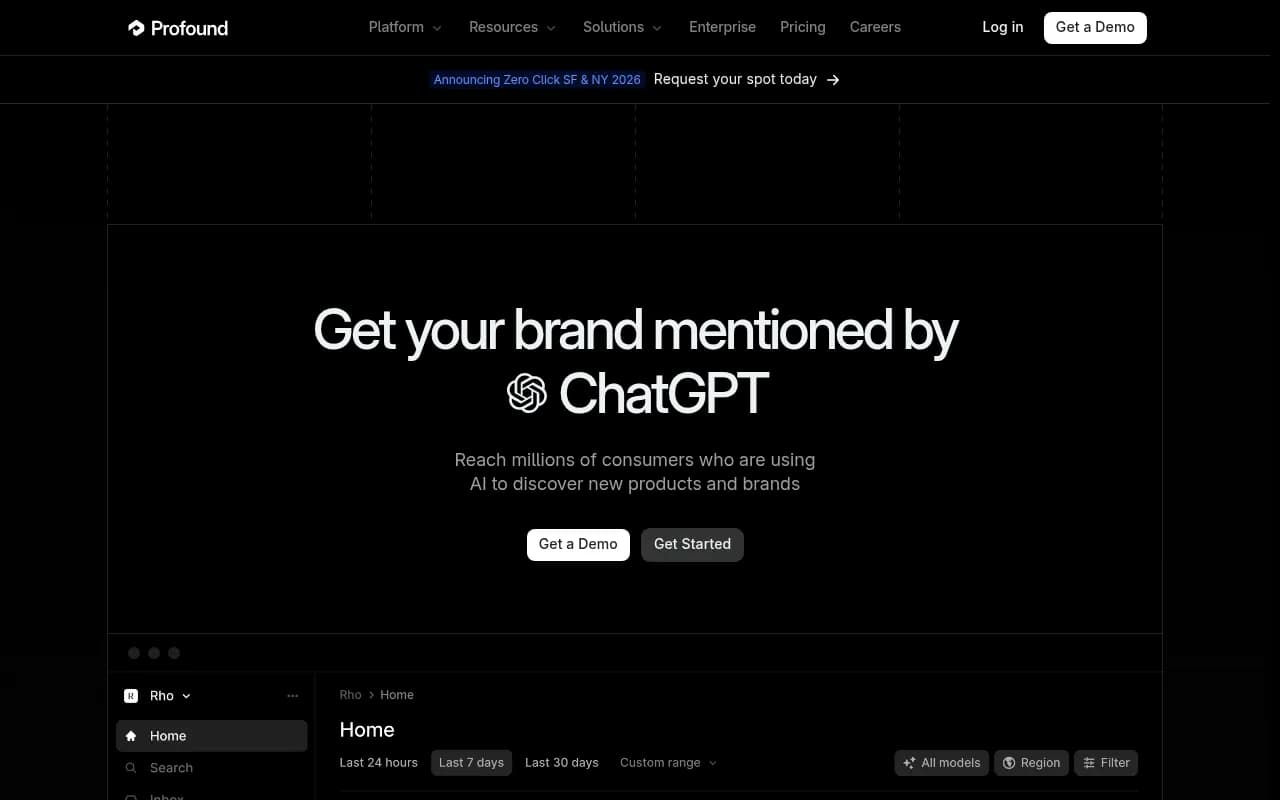
Profound is an AI search visibility and content optimization platform aimed at enterprise marketing teams. It tracks your brand across 10+ AI platforms and generates AEO-optimized content to improve that visibility -- so it covers both measurement and execution in a single product.
The capability that stands out most is prompt volume data. Profound is the only platform in this category that shows estimated search volume for specific prompts, so you can prioritize which queries are actually worth targeting. That's genuinely useful when you're trying to decide where to spend content budget.
Customers include MongoDB, Indeed, Mercury, Docusign, Zapier, Ramp, Figma, and Zocdoc. It's SOC 2 Type II certified and supports SSO (SAML/OIDC), which matters for enterprise procurement.
What Profound does well
- Prompt volume data (unique in the category -- nobody else has this)
- Content generation via "Agents" that create briefs, articles, and optimization opportunities
- Tracks 10+ AI models on Growth/Enterprise plans
- Strong compliance posture (SOC 2 Type II, SSO)
- G2 Winter 2026 Leader badge with a solid review base
Where Profound falls short
- Starting price of $99/mo is reasonable, but meaningful features (more AI models, content agents) live on higher tiers
- The platform is complex -- there's a learning curve, and smaller teams may find it overkill
- No disclosed multilingual support depth (Peec AI wins here clearly)
What is Peec AI?
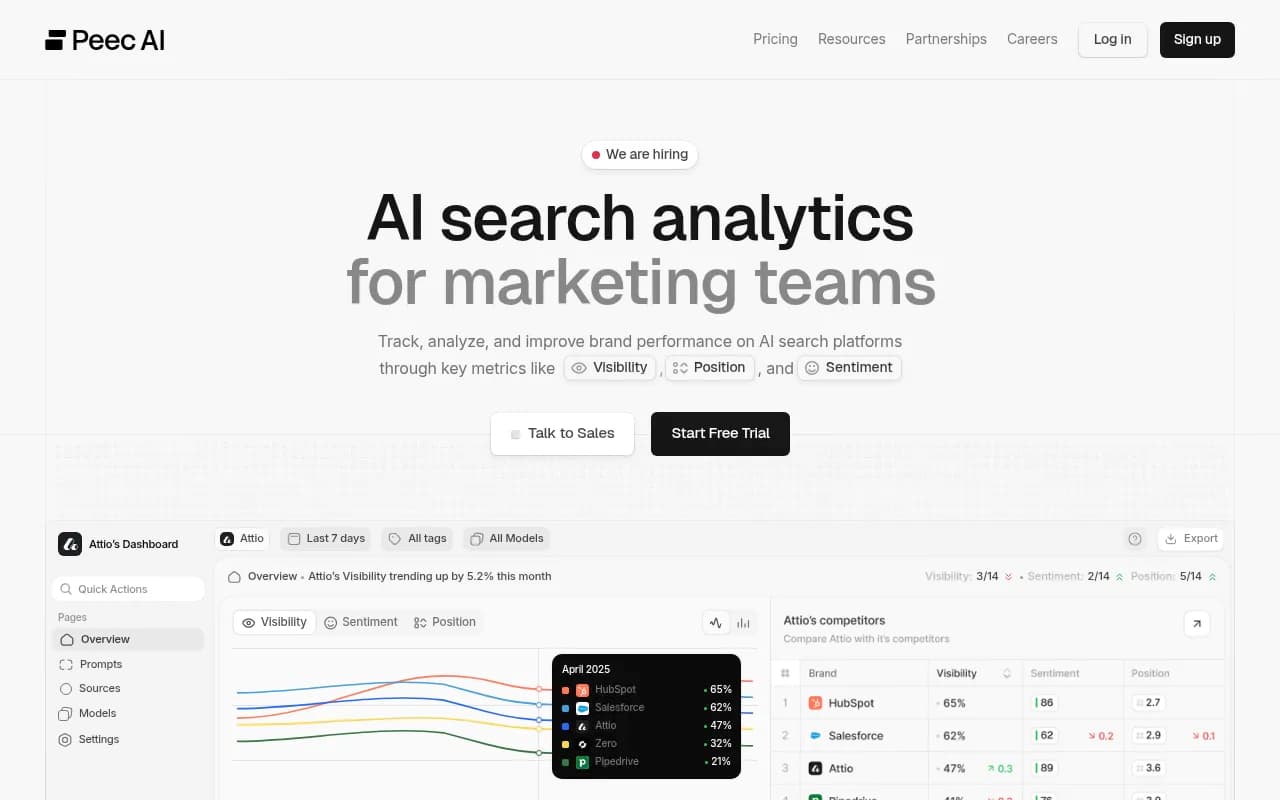
Peec AI is a Berlin-based monitoring platform that tracks brand visibility across AI search engines using real browser sessions rather than API calls. That distinction matters: by simulating actual user interactions, Peec captures what users genuinely see, including UI elements and formatting that API-based tools miss.
The multilingual angle is real. Peec supports 115+ languages, which makes it one of the few tools that can handle global brand monitoring without requiring separate regional setups. For international brands or agencies with clients across multiple markets, that's a meaningful advantage.
Customers include Wix, Glide, Merge, and Graphite.
What Peec AI does well
- Real browser session tracking (captures actual user experience, not just API responses)
- 115+ language support -- genuinely strong for international monitoring
- Clean, fast UI with accessible analytics
- 14-day free trial with no credit card required
- Competitive starting price (~$85/mo)
Where Peec AI falls short
- No content creation tools -- monitoring only
- Add-on fees per AI model ($30-$140/mo per extra model beyond the base three) can make pricing less predictable than it looks
- No prompt volume data
- No crawler logs or traffic attribution
- Compliance posture not publicly disclosed
Feature-by-feature comparison
| Feature | Profound | Peec AI |
|---|---|---|
| Starting price | $99/mo | ~$85/mo |
| Free tier | Free AEO report | 14-day free trial |
| AI models tracked | 10+ (Growth/Enterprise) | 3 base + add-ons ($30-$140/mo each) |
| Tracking method | Proprietary crawler + prompt-based | Real browser sessions (UI scraping) |
| Content generation | Yes (Agents: briefs, articles, opportunities) | No |
| Prompt volume data | Yes (unique in category) | No |
| Multilingual support | Not disclosed | 115+ languages |
| Crawler logs | Not disclosed | No |
| Traffic attribution | Not disclosed | No |
| Compliance | SOC 2 Type II, SSO (SAML/OIDC) | Not disclosed |
| Funding | $58.5M | $30M+ |
| HQ | San Francisco | Berlin, Germany |
| Notable customers | MongoDB, Docusign, Zapier, Figma | Wix, Glide, Merge |
| G2 rating | Winter 2026 Leader | 5.0/5 (early review base) |
Pricing breakdown
Profound's pricing starts at $99/mo for a basic plan, with meaningful capabilities (more AI models, content agents, deeper analytics) unlocking on Growth and Enterprise tiers. The $499/mo figure cited in some comparisons reflects the Growth tier, which is where the platform really opens up.
Peec AI starts around $85/mo but the headline number can be misleading. The base plan covers three AI models. Each additional model costs $30-$140/mo depending on the model, so a team tracking five or six AI engines could quickly find themselves paying more than the starting price suggests.
Neither platform publishes a fully transparent pricing page that shows exactly what you get at each tier without a sales call -- which is frustrating but increasingly common in this category.
Who should use Profound?
Profound makes sense if:
- You're an enterprise marketing or SEO team that needs to act on visibility data, not just collect it
- Prompt volume data matters to you (it should -- it's the only way to prioritize content investment rationally)
- You want content generation built into the same platform as your monitoring
- Compliance requirements (SOC 2, SSO) are non-negotiable for procurement
- You're tracking a primarily English-language or US-focused market
The platform is complex enough that smaller teams or solo marketers may find it overwhelming. It's built for teams with bandwidth to use the insights it generates.
Who should use Peec AI?
Peec AI makes sense if:
- You're a mid-market team that needs fast, accurate monitoring without a long setup process
- International markets are core to your business (115+ languages is a real differentiator)
- You want to see what users actually see in AI search results, not just API-level data
- Your content team is separate from your monitoring workflow -- you'll take the data and act on it elsewhere
- You're comfortable managing add-on costs per AI model
It's a monitoring tool, full stop. If you need content generation, gap analysis, or traffic attribution built in, Peec AI will leave you doing that work manually or in a separate tool.
The gap both platforms share
Here's the honest assessment: both Profound and Peec AI are primarily diagnostic tools. They tell you where you're invisible. They don't fully solve the problem of getting visible.
Profound gets closer -- the content Agents are a genuine attempt to close the loop. But the execution still relies on your team to take the briefs, publish the content, build the authority, and implement the schema. For teams with that bandwidth, Profound is a strong choice. For teams without it, you'll pay for insights you can't fully act on.
This is the core tension in the GEO platform category right now. Most tools are built around dashboards and reports. The harder problem -- actually generating content that AI models cite, tracking which pages get cited and why, and connecting that back to revenue -- is where most platforms still fall short.
Promptwatch is one platform that takes a different approach here: it combines answer gap analysis (showing exactly which prompts competitors rank for that you don't), an AI writing agent that generates content grounded in real citation data, and page-level tracking that shows which content is actually being cited by which models. It's worth looking at alongside both Profound and Peec AI if the "monitoring without execution" problem resonates.

Alternatives worth considering
If neither Profound nor Peec AI fits your situation, the category has expanded significantly in 2026. A few worth evaluating:
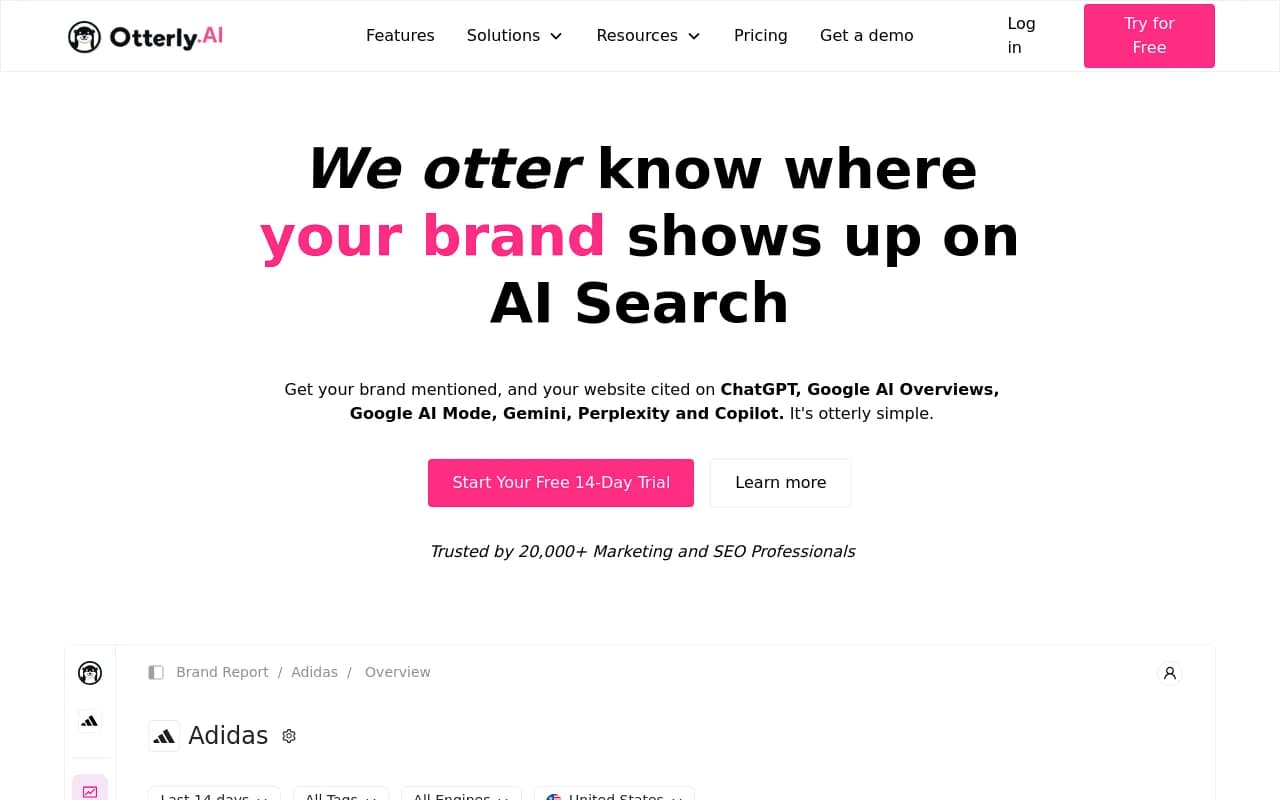
For budget-conscious teams: Otterly.AI starts at $29/mo and covers the basics of brand monitoring across ChatGPT and Perplexity. It won't give you content generation or prompt volumes, but it's a low-risk way to start tracking AI visibility.
For agencies managing multiple clients: Search Party and Airefs both offer agency-oriented features at lower price points than Profound's enterprise tiers.
For teams that want SEO + AI visibility in one place: Peec AI is pure AI monitoring -- no rank tracking, no traditional SEO features. If you want both in one dashboard, tools like SE Ranking or Semrush's AI visibility features are worth a look, though neither goes as deep on AI-specific metrics.
For enterprise teams with strict compliance needs: Profound's SOC 2 Type II certification and SSO support put it ahead of most competitors on this dimension. Evertune is another enterprise-grade option worth evaluating.
The verdict
The Profound vs. Peec AI decision comes down to one question: do you need to act on the data inside the platform, or will you take the data and act on it elsewhere?
If you need execution tools -- content generation, prompt prioritization, optimization workflows -- Profound is the stronger choice. The prompt volume data alone is worth a lot for teams trying to allocate content budget rationally, and the content Agents are a genuine attempt to close the monitoring-to-action gap.
If you need accurate, fast monitoring across multiple languages and markets, and your content team operates independently, Peec AI is a cleaner fit. The real browser session tracking is a legitimate technical advantage, and 115+ language support is hard to match.
Neither platform is a complete solution on its own. The GEO category is still maturing, and the platforms that will win long-term are the ones that can show a direct line from "we tracked this prompt" to "we created this content" to "we got cited here" to "this drove X revenue." That loop is still being built across the industry.
For now, pick the tool that matches where your team's bottleneck actually is -- monitoring or execution -- and build from there.