Key takeaways
- Peec AI and Brandlight.ai are both AI brand monitoring tools, but neither offers the full optimization loop that modern GEO requires
- Peec AI is stronger on multi-language support and prompt-centric tracking; Brandlight.ai raised $30M and is investing heavily in platform breadth
- Both tools are primarily monitoring dashboards -- they show you where you stand but offer limited help actually improving your visibility
- For teams that need to go beyond tracking and actually fix gaps, platforms like Promptwatch combine monitoring with content gap analysis and AI-native content generation
- If budget is tight and you just need basic monitoring, Peec AI is a reasonable starting point -- but know its ceiling
The AI search visibility space has gotten crowded fast. In early 2025, there were maybe a dozen tools worth considering. By early 2026, that number has ballooned past 70 new platforms, with varying levels of depth, pricing clarity, and actual usefulness.
Peec AI and Brandlight.ai are two names that come up regularly in this space. Both promise to show you how your brand appears in ChatGPT, Perplexity, Gemini, and other AI engines. Both have real users. But they're built differently, priced differently, and suited to different teams.
This guide breaks down what each tool actually does, where each falls short, and how they compare to the broader market.
What Peec AI does
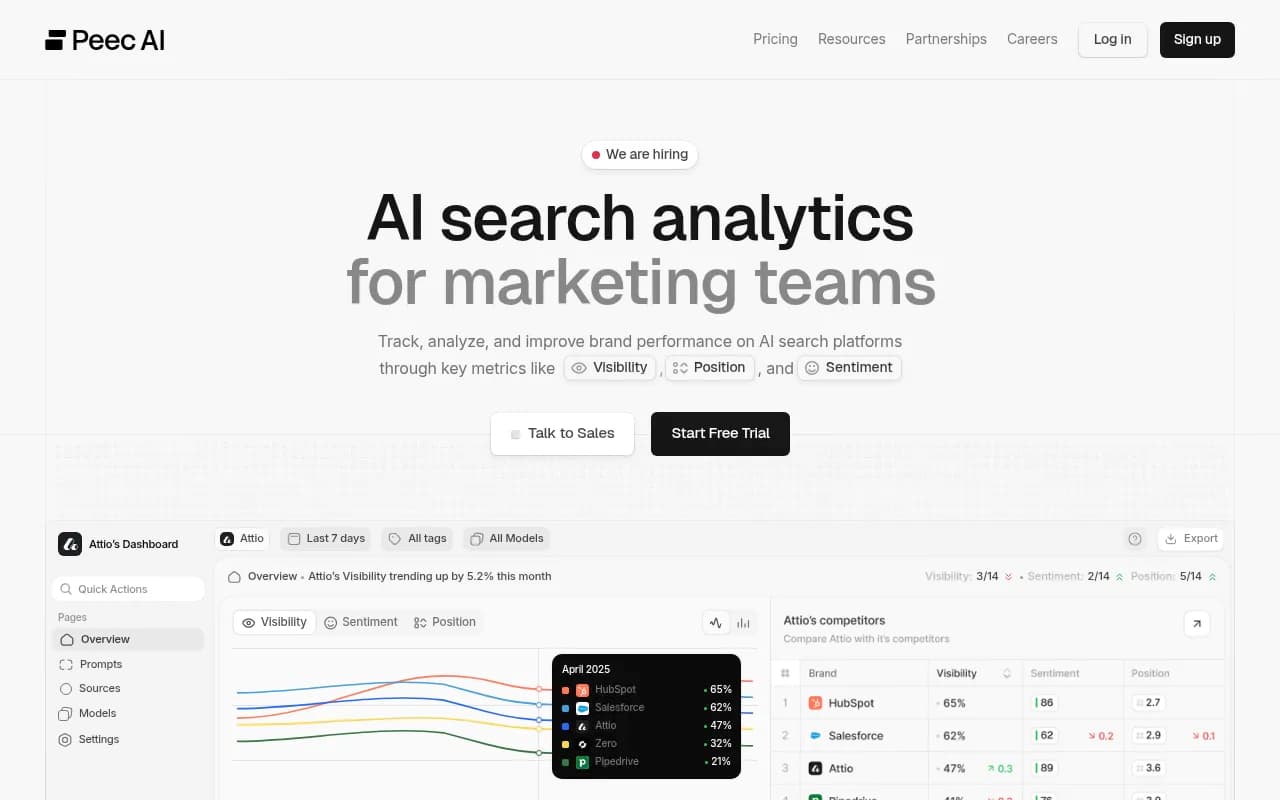
Peec AI is built specifically around prompt-based monitoring. The core idea: you define a set of prompts that represent how your customers might ask AI engines about your category, and Peec tracks whether your brand shows up in the responses.
It covers a solid range of AI models -- ChatGPT, Perplexity, Gemini, and a few others -- and gives you visibility scores, citation tracking, and competitor comparisons. One area where Peec genuinely stands out is multi-language support. If you're tracking brand visibility in French, German, Spanish, or other languages, Peec handles that better than most tools in this price range.
The interface is clean and relatively easy to get started with. For a solo marketer or small team that wants to understand their AI footprint without a lot of setup overhead, it works.
Where Peec runs into limits: it's primarily a monitoring tool. You can see that you're not showing up for a prompt, but the platform doesn't tell you why, and it doesn't help you create content to fix it. That gap between "here's your score" and "here's what to do about it" is where a lot of teams get stuck.
What Brandlight.ai does
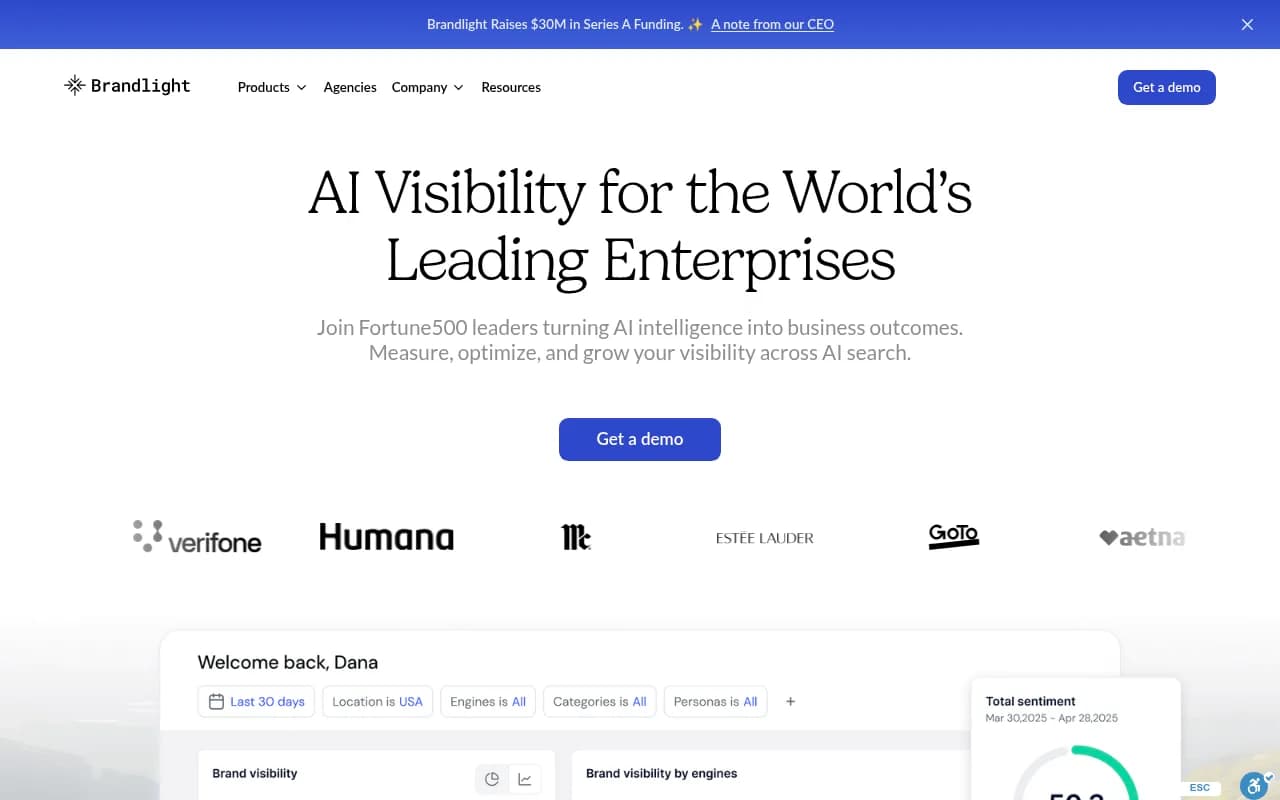
Brandlight.ai has been positioning itself as a broader AI brand intelligence platform. The company raised $30M in early 2026, which is a meaningful signal -- investors are betting on this space, and Brandlight is one of the better-funded players outside of Profound.
The platform tracks brand mentions and sentiment across AI responses, with a focus on how AI engines describe and recommend your brand versus competitors. It covers multiple LLMs and provides sentiment analysis alongside raw citation data, which is useful for brand teams that care about not just whether they're mentioned but how they're described.
Brandlight also has some reporting features aimed at enterprise and agency users -- shareable dashboards, client-facing views, that kind of thing.
The honest critique: despite the funding and the polished interface, Brandlight.ai is still largely a monitoring and reporting tool. The optimization side of the product is thin. You get good data about your current state; you don't get a clear path to improving it. For teams that need to act on what they find, that's a real limitation.
Head-to-head comparison
Here's how the two platforms stack up across the dimensions that matter most for most teams:
| Feature | Peec AI | Brandlight.ai |
|---|---|---|
| AI models covered | ChatGPT, Perplexity, Gemini, others | Multiple LLMs including newer models |
| Multi-language support | Strong | Moderate |
| Sentiment analysis | Basic | More developed |
| Competitor tracking | Yes | Yes |
| Citation tracking | Yes | Yes |
| Content gap analysis | No | Limited |
| AI content generation | No | No |
| Crawler log access | No | No |
| Reddit/YouTube tracking | No | No |
| Agency/client reporting | Limited | Better |
| Pricing transparency | Moderate | Less clear |
| Best for | Small teams, multi-language needs | Brand teams, agencies wanting reporting |
The table tells a consistent story: both tools are solid at the monitoring layer, but neither has built out the optimization layer. You can track your visibility score going up or down, but the tools don't actively help you move it.
Where both tools fall short
This is worth saying directly, because a lot of comparison guides skip it.
Monitoring your AI visibility is step one. It's useful. But if you spend three months watching your visibility score sit at 23% without knowing what to do about it, you've wasted your subscription fee.
The tools that are pulling ahead in 2026 are the ones that close the loop: they show you which prompts you're missing, explain why competitors are winning those prompts, and help you create content that actually gets cited. That's a fundamentally different product than a dashboard with charts.
Neither Peec AI nor Brandlight.ai has built that loop yet. Peec is honest about being a monitoring tool. Brandlight is investing in more capabilities, but the optimization features aren't there in a meaningful way.
If you're evaluating these tools, that's the question to ask: "After I see my visibility score, what does this platform help me do next?"
Pricing overview
Peec AI has historically been one of the more accessible tools in this space, with entry-level pricing that makes it viable for smaller teams and agencies that want to track multiple clients without a massive budget commitment. Exact pricing changes, so check their site directly, but it's generally positioned as a mid-market option.
Brandlight.ai's pricing is less transparent publicly. Given the enterprise positioning and the funding round, expect it to be priced accordingly -- this is more of a "contact sales" situation for serious deployments.
For context, the broader market in 2026 looks roughly like this:
| Platform | Entry pricing | Best for |
|---|---|---|
| Peec AI | ~$49-99/mo | Small teams, multi-language |
| Brandlight.ai | Custom/contact | Brand teams, enterprise |
| Otterly.AI | ~$49/mo | Budget monitoring |
| Profound | $99/mo+ | Mid-market to enterprise |
| Promptwatch | $99/mo | Teams that need to act, not just track |
| Scrunch | $250-500/mo | Optimization-focused teams |
Who should use Peec AI
Peec AI makes sense if:
- You need multi-language monitoring and most tools in this space don't cover your markets well
- You're early in your GEO journey and want to understand your baseline before committing to a more expensive platform
- Your team is small and you don't need advanced content optimization -- you just need visibility data to report upward
- You're an agency that wants an affordable way to show clients their AI footprint
It's a reasonable starting point. Just go in knowing you'll likely need to layer other tools on top when you're ready to actually improve your scores.
Who should use Brandlight.ai
Brandlight.ai makes more sense if:
- You're a larger brand team that cares about sentiment and how AI describes your brand, not just whether you appear
- You need polished reporting for stakeholders or clients
- You're in a category where brand perception in AI responses matters as much as citation frequency
- You have budget for an enterprise-tier tool and want something with institutional backing
The $30M raise means Brandlight is investing in the product. It's worth watching -- but right now, the optimization capabilities haven't caught up to the monitoring capabilities.
The broader market context
It's worth zooming out for a second. The AI visibility monitoring market is splitting into two camps.
One camp is monitoring-only: tools that give you dashboards, scores, and charts. Peec AI, Otterly.AI, and early-stage Brandlight.ai all live here. These tools are useful for understanding your current state.
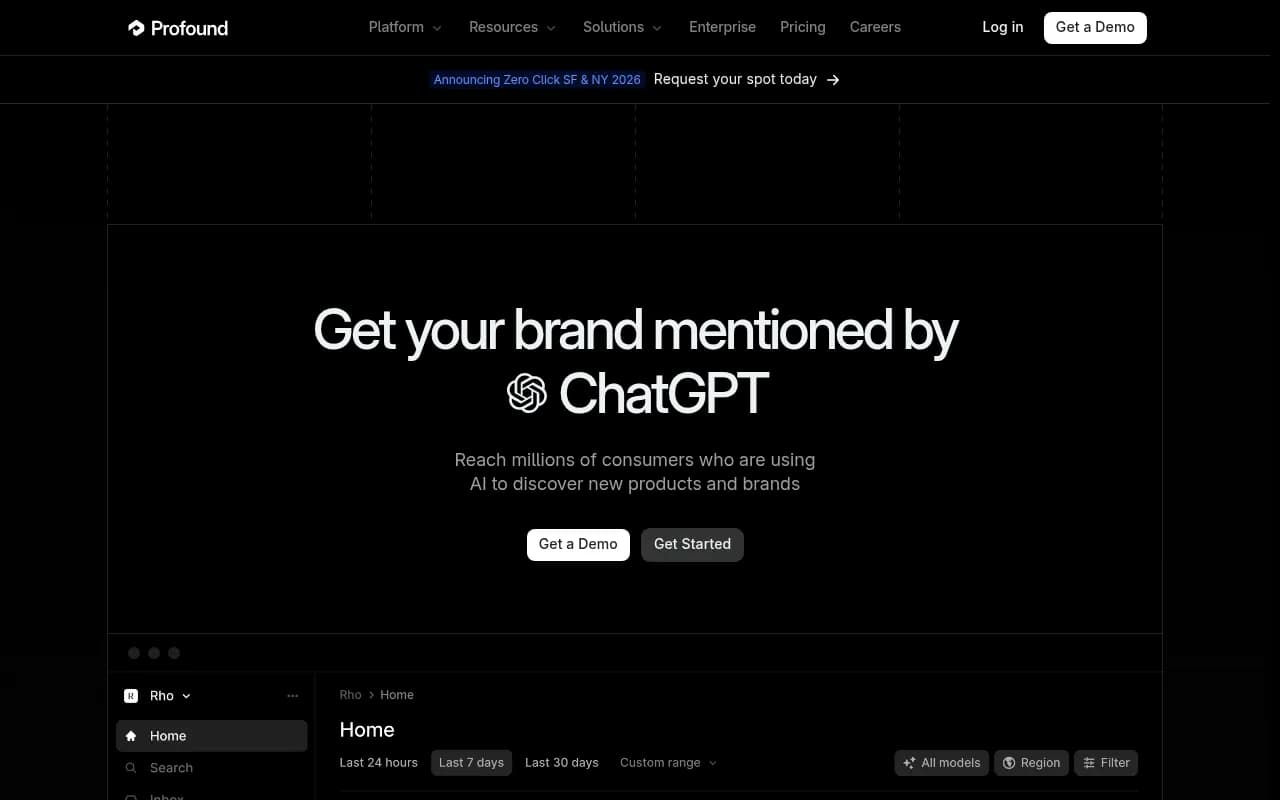
The other camp is building optimization loops: find the gaps, create content to fill them, track whether it worked. Profound, Scrunch, and Promptwatch are all moving in this direction. Profound raised $96M at a $1B valuation in February 2026 partly on this thesis. Scrunch raised $15M and launched its Agent Experience Platform. The market is clearly betting on action, not just observation.
If you're a marketing or SEO team that needs to show results -- not just data -- the monitoring-only tools will eventually frustrate you. You'll know you're losing to competitors in AI search, but you won't have the tools to fix it.
Promptwatch is worth a look here specifically because it's built around that full cycle: Answer Gap Analysis shows you which prompts competitors are winning that you're not, a built-in AI writing agent creates content engineered to get cited by ChatGPT and Perplexity, and page-level tracking closes the loop on whether the content is working. It also includes AI crawler logs (which show you exactly which pages ChatGPT and Claude are reading on your site) and Reddit/YouTube tracking -- two channels that most monitoring tools ignore entirely.

Other tools worth considering
If you're evaluating Peec AI and Brandlight.ai, you're probably also looking at a few others. Here are the ones most worth comparing:
Otterly.AI is the budget option -- simple monitoring, low price, good for getting started. Doesn't go deep on any dimension.

Athena HQ has a strong monitoring product with competitor analysis and sentiment tracking. Still primarily a data platform rather than an optimization one.

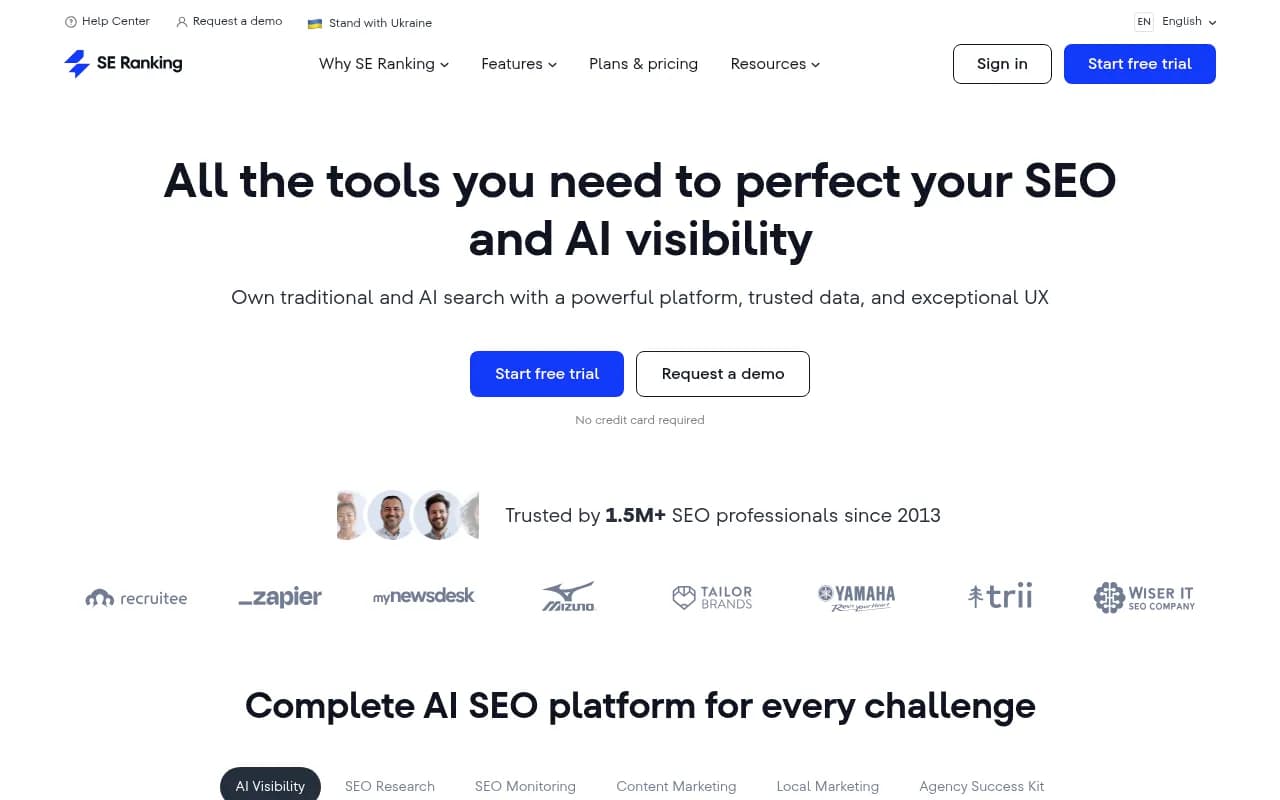
SE Ranking's AI visibility module is worth a look if you're already in the SE Ranking ecosystem. It's not a standalone GEO platform, but it's a solid add-on.
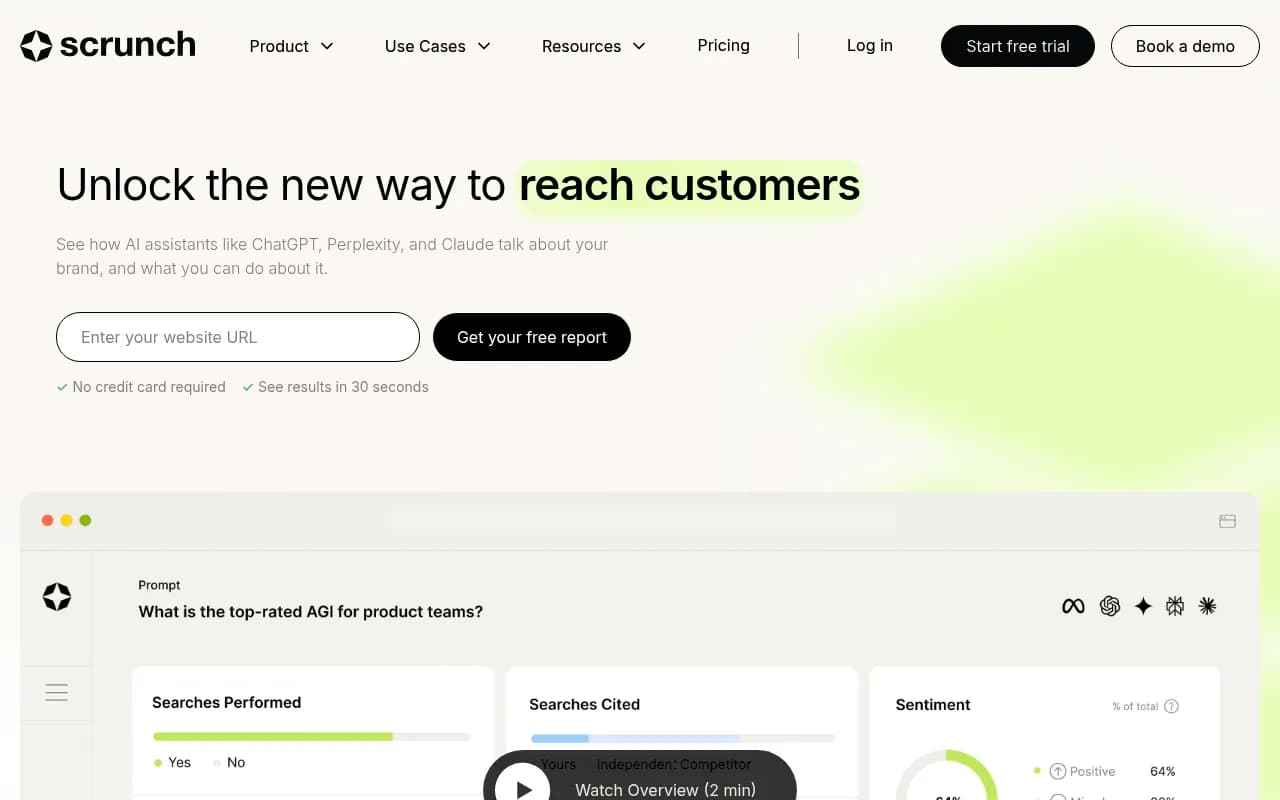
Scrunch has made the most aggressive pivot toward optimization of any mid-market tool. If you want something between "just monitoring" and "full enterprise platform," Scrunch is a legitimate option.
The bottom line
Peec AI and Brandlight.ai are both legitimate tools for tracking your brand's presence in AI search engines. Peec is the better choice for multi-language needs and budget-conscious teams. Brandlight is the better choice for enterprise brand teams that care about sentiment and need polished reporting.
But if your goal is to actually improve your AI visibility -- not just measure it -- neither tool gives you the full picture. The platforms that are winning in 2026 are the ones that help you find gaps, create content to fill them, and verify that the content is getting cited. That's a higher bar, and it's worth holding your tools to it.
Start with monitoring if you need to establish a baseline. But don't stay there.