Key takeaways
- Peec AI is a dedicated AEO monitoring tool covering 115+ languages and multiple LLMs, starting at around €89/month -- built for brands that want focused AI visibility tracking without the enterprise overhead
- Conductor is a full enterprise SEO platform that added dedicated AI visibility modules, serving major brands like Microsoft -- pricing is custom and significantly higher
- Peec AI wins on breadth of language coverage and accessibility; Conductor wins on integration with broader SEO workflows and enterprise support
- Neither platform offers the full optimization loop (find gaps, generate content, track results) that more specialized GEO platforms provide
- If your primary need is acting on AI visibility data -- not just monitoring it -- you'll likely need to supplement either tool or look at platforms built around optimization
The AEO tool market has split into two pretty distinct camps. On one side, you have purpose-built AI visibility trackers: lightweight, fast to set up, focused entirely on monitoring how brands appear in ChatGPT, Perplexity, Gemini, and similar engines. On the other, you have legacy enterprise SEO platforms that have been retrofitting AI search features into their existing infrastructure.
Peec AI and Conductor represent these two camps almost perfectly. Choosing between them isn't really about which one is "better" -- it's about what problem you're actually trying to solve.
What Peec AI actually does
Peec AI is a monitoring-first platform built specifically for AI search visibility. Its standout feature is language coverage: 115+ languages, which puts it ahead of most competitors when it comes to tracking AI responses across international markets.
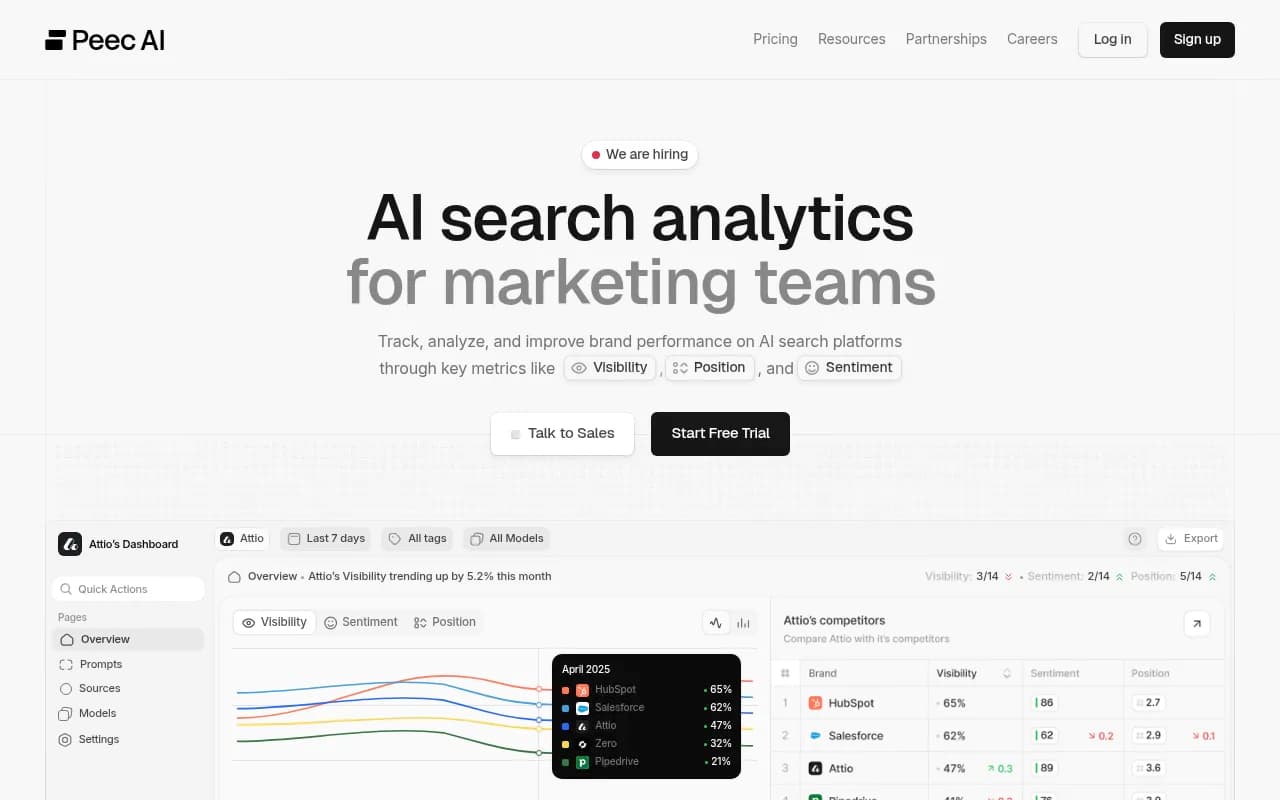
The Starter plan (around €89/month) covers three LLMs, which is enough for most teams getting started. Higher tiers expand coverage to more models and more tracked prompts. According to research from Contently, Peec AI targets global brands that need multilingual AEO tracking -- and that positioning is accurate. If you're running campaigns across European or Asian markets and need to know how AI engines respond to your brand in French, German, Japanese, or Portuguese, Peec AI has genuine depth here.
What Peec AI does well:
- Broad AI engine coverage (ChatGPT, Gemini, Perplexity, and others)
- Multilingual tracking across 115+ languages
- Accessible entry-level pricing (lower-tier plans introduced in late 2025)
- Clean, focused interface without enterprise bloat
What Peec AI doesn't do:
- Content generation or optimization recommendations
- Agentic commerce features or product feed optimization
- Deep multi-market segmentation beyond language
- AI crawler log analysis
- Traffic attribution from AI referrals
The honest summary: Peec AI tells you where you stand. It doesn't tell you what to do about it, and it won't help you create content to close the gap.
What Conductor actually does
Conductor has been an enterprise SEO platform for years. Its core business is helping large organizations manage organic search at scale -- content intelligence, technical SEO, workflow management, reporting. The AI visibility modules were added more recently, as the platform repositioned around Answer Engine Optimization.
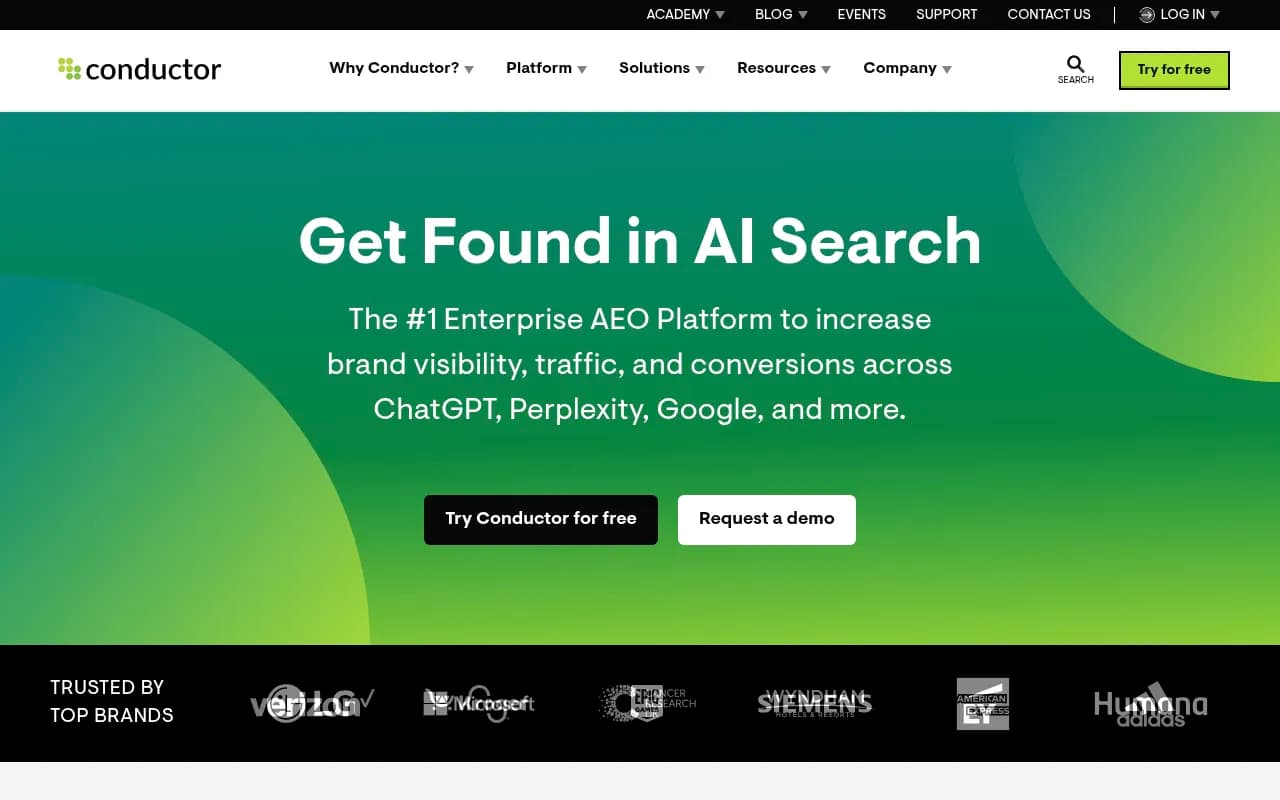
Conductor serves major brands including Microsoft. That client list tells you something about the platform's orientation: it's built for organizations with dedicated SEO teams, complex approval workflows, and the budget to match. Pricing is custom, which in practice means it's expensive.
The AEO features Conductor has added sit inside a broader SEO platform. That's both an advantage and a limitation. If your team already uses Conductor for traditional SEO and you want to layer in AI visibility tracking without switching tools, the integration makes sense. But if you're coming to Conductor purely for AEO, you're paying for a lot of infrastructure you might not need.
What Conductor does well:
- Deep integration with traditional SEO workflows
- Enterprise-grade reporting and team collaboration
- Strong content intelligence features
- Established support and account management for large organizations
- Data on AI referral traffic (their 2026 benchmarks report covered 13,770 domains and 3.3 billion sessions)
What Conductor doesn't do as well:
- Multilingual AEO tracking at Peec AI's scale
- Lightweight, fast deployment for smaller teams
- Dedicated AI visibility focus (it's one module among many)
- Accessible pricing for mid-market or agency use
Head-to-head comparison
| Feature | Peec AI | Conductor |
|---|---|---|
| Primary focus | Dedicated AI visibility tracker | Enterprise SEO + AEO modules |
| AI engines tracked | ChatGPT, Gemini, Perplexity, others | ChatGPT, Perplexity, Google AI Overviews, others |
| Language coverage | 115+ languages | Limited multilingual support |
| Pricing | From ~€89/month | Custom (enterprise) |
| Content generation | No | Limited (content intelligence, not AI-specific generation) |
| Traffic attribution | No | Yes (AI referral data) |
| AI crawler logs | No | No |
| Best for | Global brands, multilingual markets, mid-market teams | Enterprise SEO teams adding AEO to existing workflows |
| Setup complexity | Low | High |
| Traditional SEO features | No | Yes (full platform) |
The monitoring-only problem
Here's something worth being direct about: both Peec AI and Conductor are primarily monitoring tools when it comes to AI visibility. They show you data. They tell you whether your brand appears in AI responses. What they don't do -- or do only partially -- is help you act on that data.
This matters more than it might seem. Knowing you're invisible in ChatGPT responses for a key industry prompt is useful. But the next question is always: what do I do about it? Which pages need to be updated? What content is missing? What are competitors doing that I'm not?
Neither Peec AI nor Conductor gives you a clear answer to those questions. Peec AI doesn't have content optimization features at all. Conductor has content intelligence tools, but they're oriented toward traditional SEO rather than AI citation optimization specifically.
For teams that need to go beyond tracking, platforms like Promptwatch are built around a different model: identify the prompts where competitors are visible but you're not, generate content specifically engineered to get cited by AI models, and track whether that content actually improves your visibility scores.

That's a meaningfully different value proposition from what either Peec AI or Conductor offers in the AEO space.
Who should use Peec AI
Peec AI makes the most sense for:
- Mid-market brands with international presence who need multilingual AI visibility tracking
- Marketing teams that want a dedicated AEO tool without enterprise complexity
- Agencies managing multiple clients who need clean, accessible dashboards
- Teams that already have content creation workflows and just need the monitoring layer
- Anyone who found the previous generation of AEO tools too expensive -- the lower-tier plans introduced in late 2025 make Peec AI genuinely accessible
It's worth noting that Peec AI's scope has real limits. According to research from NoGood, Peec doesn't offer agentic commerce features, product feed optimization, or deep multi-market segmentation. If those are requirements, Peec AI isn't the right fit.
Who should use Conductor
Conductor makes the most sense for:
- Enterprise organizations already using Conductor for traditional SEO
- Large brands with dedicated SEO teams who want AEO folded into existing workflows
- Companies that need enterprise-grade reporting, collaboration, and support
- Organizations where AI visibility is one piece of a larger organic search program
If you're not already a Conductor customer, the case for adopting it purely for AEO is harder to make. The pricing, complexity, and onboarding overhead are calibrated for enterprise SEO programs, not standalone AI visibility tracking.
Alternatives worth considering
If neither Peec AI nor Conductor fits your situation, the AEO tool market has expanded significantly. A few worth knowing:
For monitoring with more LLM breadth, Otterly.AI sits in a similar price range to Peec AI and has been expanding its coverage.

For enterprise-level AI visibility with more depth than Conductor's AEO modules, Profound is worth evaluating -- though it's also in the custom pricing tier.
For teams that want the full optimization loop rather than just monitoring, Promptwatch covers tracking, content gap analysis, and AI-optimized content generation in one platform.
For B2B and cybersecurity verticals specifically, Gracker.ai has emerged as a specialized option -- though it's narrower in scope than either Peec AI or Conductor.
The bigger picture
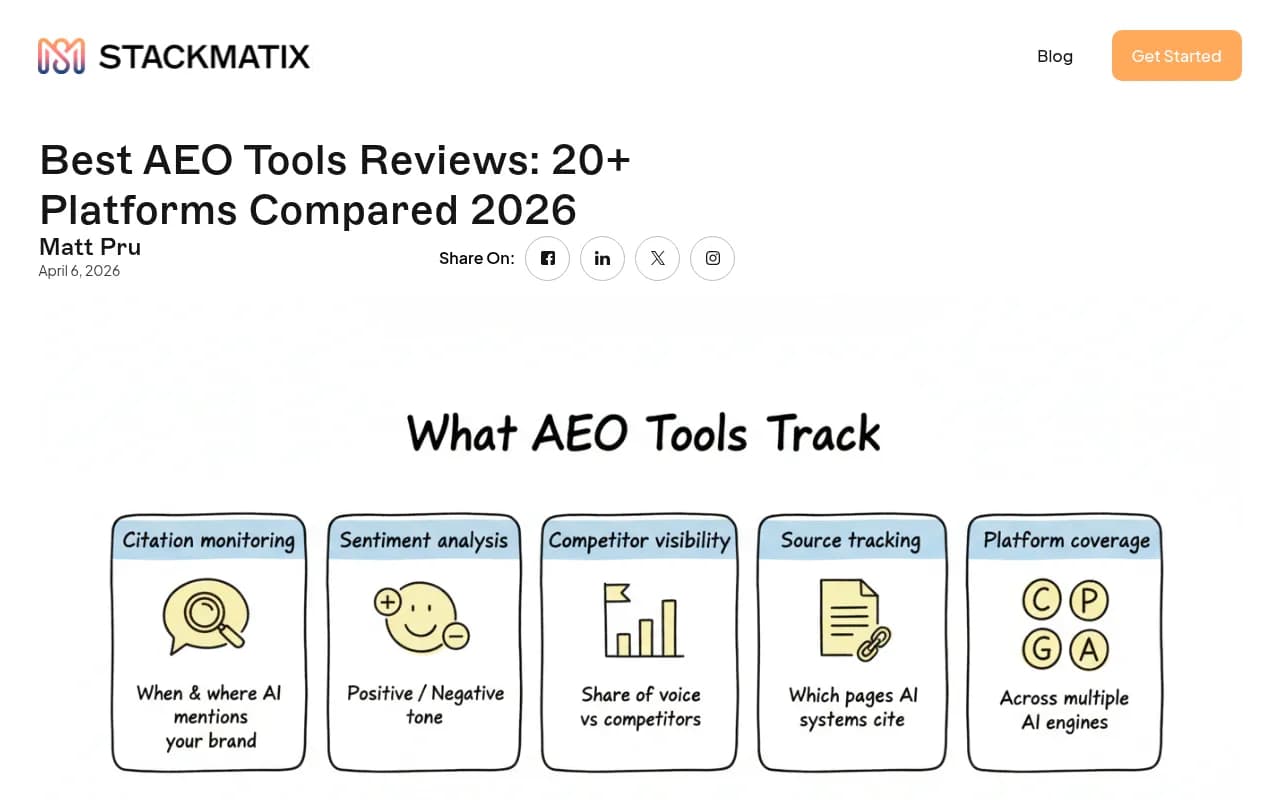
The AEO tool category is still maturing fast. According to Stackmatix's 2026 review of 20+ platforms, entry-level pricing has dropped across the board, most major tools now track Google AI Mode alongside traditional AI Overviews, and coverage of Meta AI and Grok has improved significantly.
What hasn't changed is the fundamental gap between monitoring and optimization. The tools that just show you a dashboard of citations are useful, but they're the beginning of the workflow, not the end. The platforms that help you close the loop -- identify gaps, create content, measure results -- are still a smaller subset of the market.
Peec AI and Conductor are both good at what they do. Peec AI is genuinely strong for multilingual monitoring at accessible price points. Conductor is a serious enterprise platform with real AEO capabilities layered onto a mature SEO infrastructure. Neither is the wrong choice for the right use case.
The question is whether monitoring alone is enough for your team, or whether you need a platform that helps you turn visibility data into actual content and measurable results. That answer should drive your decision more than any feature comparison table.