Key takeaways
- Peec AI is a dedicated AI visibility platform built for tracking brand mentions across LLMs like ChatGPT, Perplexity, and Claude -- it does one thing and focuses on doing it well.
- SE Ranking is a broad SEO suite (keyword tracking, site audits, backlinks, content tools) that has added AI visibility features through its SE Visible product.
- If you already rely on SE Ranking for traditional SEO and want basic AI monitoring layered on top, staying in that ecosystem makes sense.
- If AI search visibility is your primary concern -- especially for B2B SaaS, ecommerce, or agency GEO work -- Peec AI's focused feature set is more purpose-built.
- Neither tool closes the full loop from monitoring to content creation to traffic attribution. For that, platforms like Promptwatch go further.
The SEO tooling market in 2026 is splitting into two camps. On one side, you have broad platforms that have been around for years -- SE Ranking, Semrush, Ahrefs -- scrambling to bolt AI visibility features onto their existing infrastructure. On the other, a wave of focused tools built from scratch specifically to track how brands appear in AI-generated answers.
Peec AI and SE Ranking represent these two camps pretty cleanly. Comparing them isn't really apples to apples, which is part of what makes the decision interesting.
What each tool actually is
Peec AI
Peec AI is a purpose-built AI visibility platform. It monitors how your brand appears across conversational AI engines -- ChatGPT, Perplexity, Claude, Gemini, and others -- and gives you a dashboard showing mention rates, sentiment, competitor benchmarks, and prompt-level breakdowns.
It's designed for teams where AI search visibility is the main job to be done. The interface is clean, the setup is relatively fast, and the focus is narrow by design.

SE Ranking
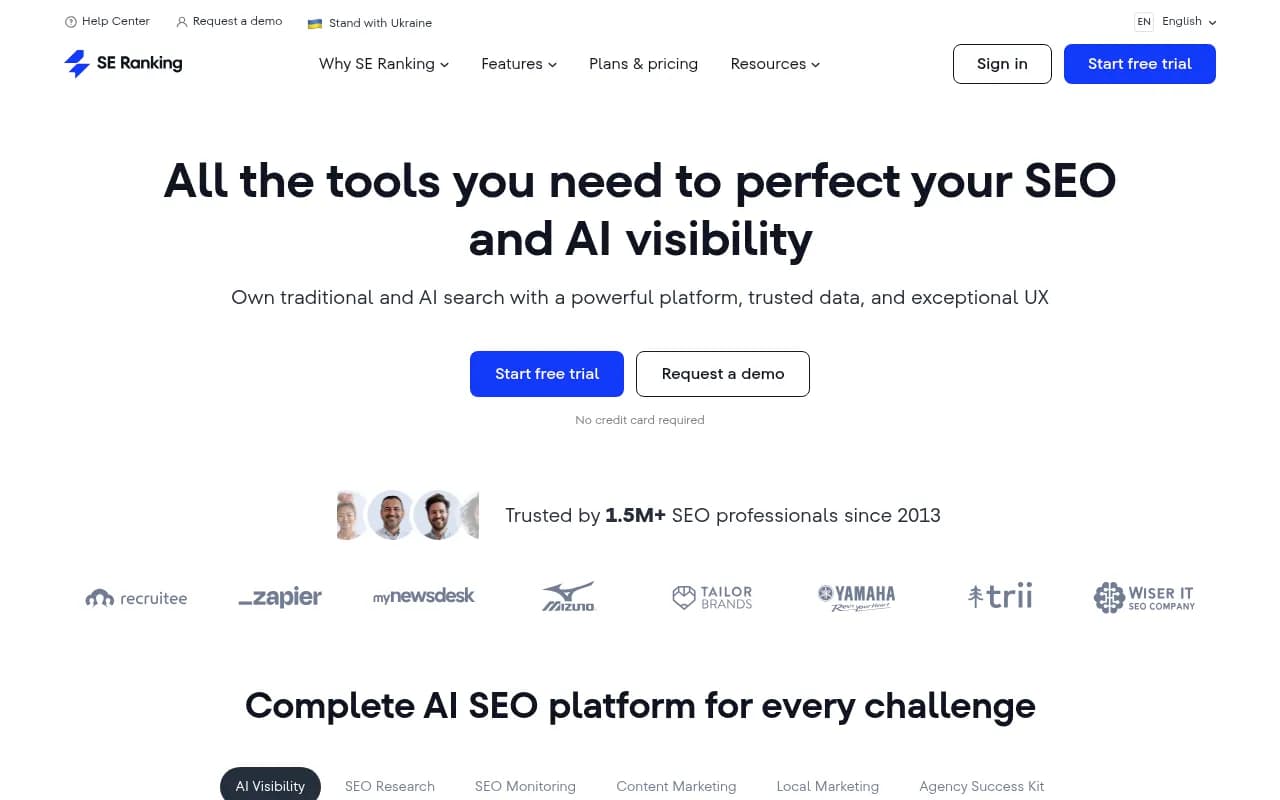
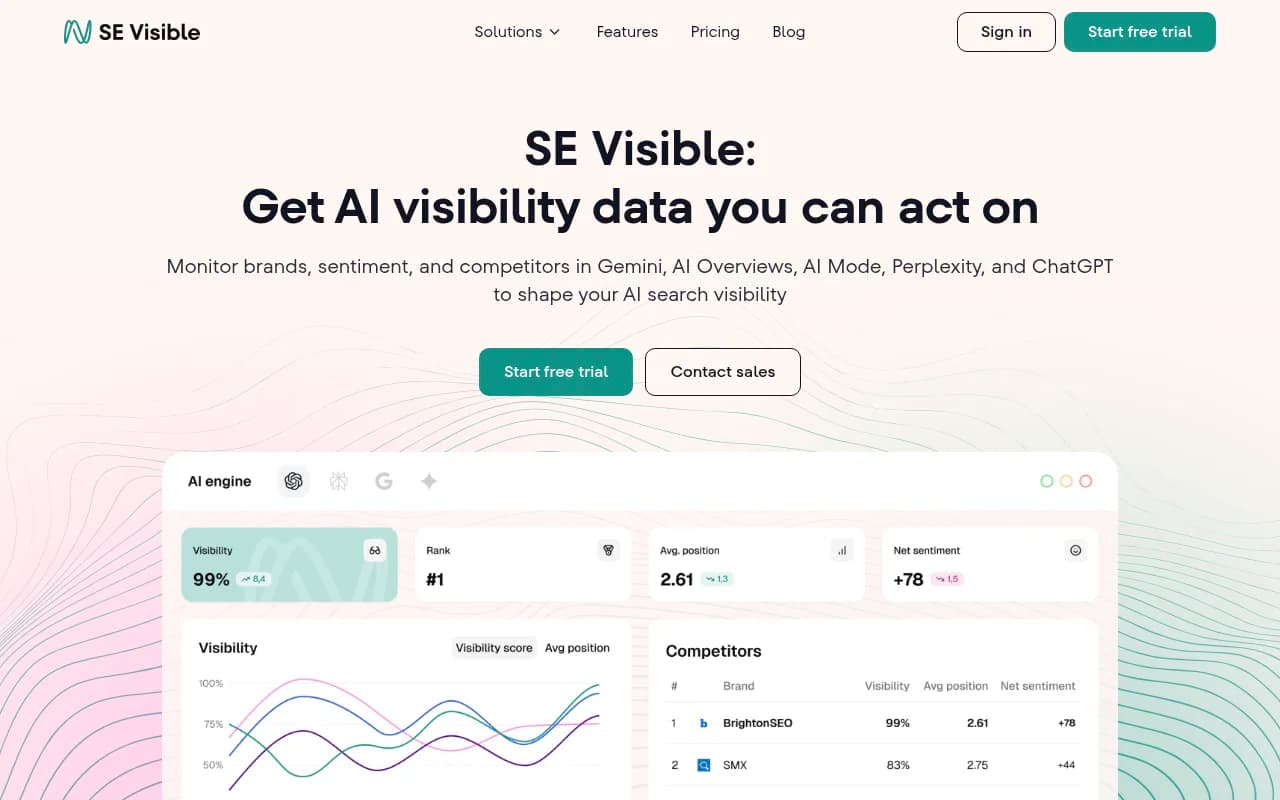
SE Ranking started as a rank tracker and grew into a full-stack SEO platform. Today it covers keyword research, site audits, backlink analysis, on-page optimization, content tools, and competitor research. Its AI visibility offering lives inside a separate product called SE Visible, which tracks brand mentions and sentiment across AI search engines.
SE Visible is genuinely capable -- it's one of the more polished AI tracking interfaces in the market -- but it's one module inside a much larger platform.
Feature comparison
Here's how the two tools stack up across the dimensions that matter most:
| Feature | Peec AI | SE Ranking / SE Visible |
|---|---|---|
| AI model monitoring | ChatGPT, Perplexity, Claude, Gemini, others | ChatGPT, Perplexity, Google AI Mode, others |
| Google AI Mode tracking | Limited | Yes (SE Visible focus) |
| Traditional SEO tools | None | Full suite (keywords, audits, backlinks) |
| Competitor benchmarking | Yes | Yes |
| Sentiment analysis | Yes | Yes |
| Prompt-level tracking | Yes | Yes |
| Content optimization tools | No | Basic (via SE Ranking content editor) |
| AI crawler logs | No | No |
| Citation analysis | Limited | Limited |
| Multi-language support | Yes | Yes |
| Agency/white-label features | Limited | Yes |
| Starting price | €89/mo | $189/mo (SE Visible) |
The table tells most of the story. SE Ranking wins on breadth -- if you need traditional SEO alongside AI monitoring, it's a more complete package. Peec AI wins on focus -- if AI visibility is your primary concern and you don't need rank tracking or site audits, it's a cleaner, cheaper entry point.
Pricing
Peec AI starts at €89/month, which makes it accessible for smaller teams or agencies running GEO experiments without a big budget commitment. SE Visible (SE Ranking's AI product) starts at $189/month -- roughly double the entry price.
That said, if you're already paying for SE Ranking's core SEO platform, the incremental cost of adding SE Visible may feel different than paying for a standalone tool. The bundling question matters here.
Neither tool offers a free tier with meaningful functionality, though both have trial options.
Where Peec AI has the edge
Peec AI's strength is simplicity and focus. The dashboard is built around one question: "How visible is my brand in AI search?" You get a clear answer, with breakdowns by model, by prompt category, and by competitor.
For SaaS companies, B2B brands, and ecommerce teams that are just getting started with GEO (Generative Engine Optimization), Peec AI removes the noise. You're not navigating a platform built for a dozen use cases -- you're looking at AI visibility data and nothing else.
The competitor benchmarking is particularly useful. Seeing your mention rate against two or three direct competitors, broken down by AI model, gives you a concrete sense of where you're winning and where you're not. That's actionable in a way that abstract "AI visibility scores" often aren't.
Multi-language support is another genuine differentiator. For European brands or any company operating across multiple markets, being able to monitor AI responses in different languages matters.
Where SE Ranking has the edge
SE Ranking's advantage is consolidation. If your team is already using it for keyword tracking, technical audits, and backlink monitoring, adding SE Visible means you're not managing another vendor relationship, another login, another data silo.
The Google AI Mode tracking is also more developed in SE Visible than in Peec AI. Given that Google AI Mode is rapidly becoming one of the most important surfaces for brand visibility -- brands appear in 90% of AI Mode responses according to a Search Engine Land study -- having solid coverage there matters.
SE Ranking's content tools, while not specifically built for GEO, give you a path from "I'm invisible in AI search" to "here's what I should write." That's a rough version of the optimization loop, but it's something Peec AI doesn't offer at all.
For agencies managing multiple clients, SE Ranking's white-label and reporting infrastructure is more mature.
The gap both tools share
Here's the honest part of this comparison: both Peec AI and SE Ranking are primarily monitoring tools. They show you data. They tell you where you're visible and where you're not. What they don't do particularly well is help you act on that data.
Finding out that a competitor appears in 60% of ChatGPT responses for your target prompts while you appear in 12% is useful information. But the next question -- "what do I actually do about this?" -- is where both tools leave you largely on your own.
This is the gap that separates monitoring platforms from optimization platforms. Tools like Promptwatch are built around closing that loop: identifying which prompts you're missing, generating content specifically engineered to get cited by AI models, and then tracking whether that content actually improves your visibility scores.

If you're at the stage where you just need to understand your AI visibility baseline, Peec AI or SE Ranking will get you there. If you're ready to actually move the number, you'll likely outgrow monitoring-only tools fairly quickly.
Who should use Peec AI
Peec AI makes the most sense for:
- SaaS and B2B companies that want a clean, focused view of their AI search presence without managing a full SEO platform
- Teams where GEO is a dedicated workstream, not just an add-on to traditional SEO
- Brands operating in multiple languages or European markets
- Smaller teams or agencies that want AI visibility data at a lower price point than enterprise tools
Who should use SE Ranking
SE Ranking (with SE Visible) makes more sense for:
- Teams already using SE Ranking for traditional SEO who want AI monitoring without adding another tool
- Agencies that need white-label reporting and multi-client management
- Brands where Google AI Mode is a priority surface (SE Visible's coverage here is stronger)
- Teams that want a single platform covering both traditional and AI search, even if neither is best-in-class
Other tools worth knowing
The AI visibility space has expanded significantly. If neither Peec AI nor SE Ranking fits your needs, a few other options are worth considering:
Otterly.AI is a budget-friendly option for teams that want prompt-based tracking without a big investment.

Nightwatch combines traditional rank tracking with AI visibility monitoring, similar to SE Ranking's approach but at a lower price point.
Profound is built for enterprise teams that need deeper AI visibility infrastructure and automation.
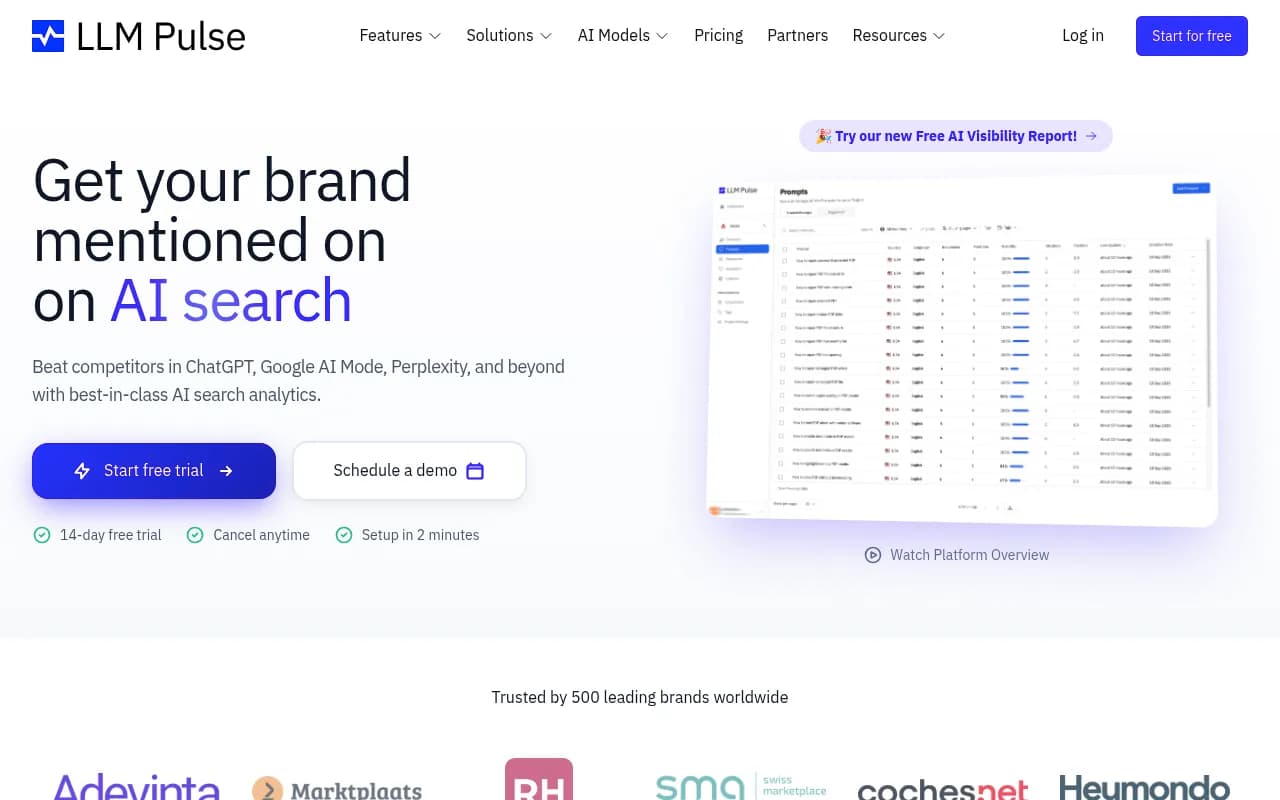
LLM Pulse focuses specifically on brand recommendations and sentiment across LLMs, which is useful for PR and brand teams.
The bottom line
Peec AI and SE Ranking are solving related but different problems. Peec AI asks: "How visible is my brand in AI search?" SE Ranking asks: "How is my entire digital presence performing, including in AI search?"
If you need the second question answered, SE Ranking is the more complete tool. If you only care about the first question and want a purpose-built answer, Peec AI is cleaner and cheaper.
What neither tool does is take you from "I see the gap" to "I've closed the gap." That's the harder problem, and it's where the next generation of AI visibility platforms is competing. Monitoring is table stakes in 2026 -- the real question is what you do with the data once you have it.