Key takeaways
- Ahrefs Brand Radar uses a static dataset of 250M+ prompts sourced from Google's People Also Ask questions, updated monthly -- great for breadth, but the data may not reflect how people actually prompt AI tools
- Peec AI tracks custom prompts you define, updated daily -- better for teams that know what queries matter to their business
- Neither tool closes the loop from monitoring to content creation; they're both primarily tracking dashboards
- For teams already deep in Ahrefs, Brand Radar is a natural add-on -- but it costs extra on top of an existing subscription
- If AI visibility is your primary concern (not just a side metric), a dedicated GEO platform will give you more actionable data
The AI search tracking space has gotten crowded fast. Dozens of tools now claim to tell you how visible your brand is in ChatGPT, Perplexity, Claude, and the rest. But most of them work roughly the same way: they run a set of prompts, check whether your brand appears in the responses, and show you a number.
Peec AI and Ahrefs Brand Radar are two of the more prominent names in this space, and they're genuinely different from each other -- not just in pricing or UI, but in the fundamental philosophy of what "tracking AI mentions" means.
This guide breaks down both tools honestly, including where each one falls short.
How each tool approaches AI search tracking
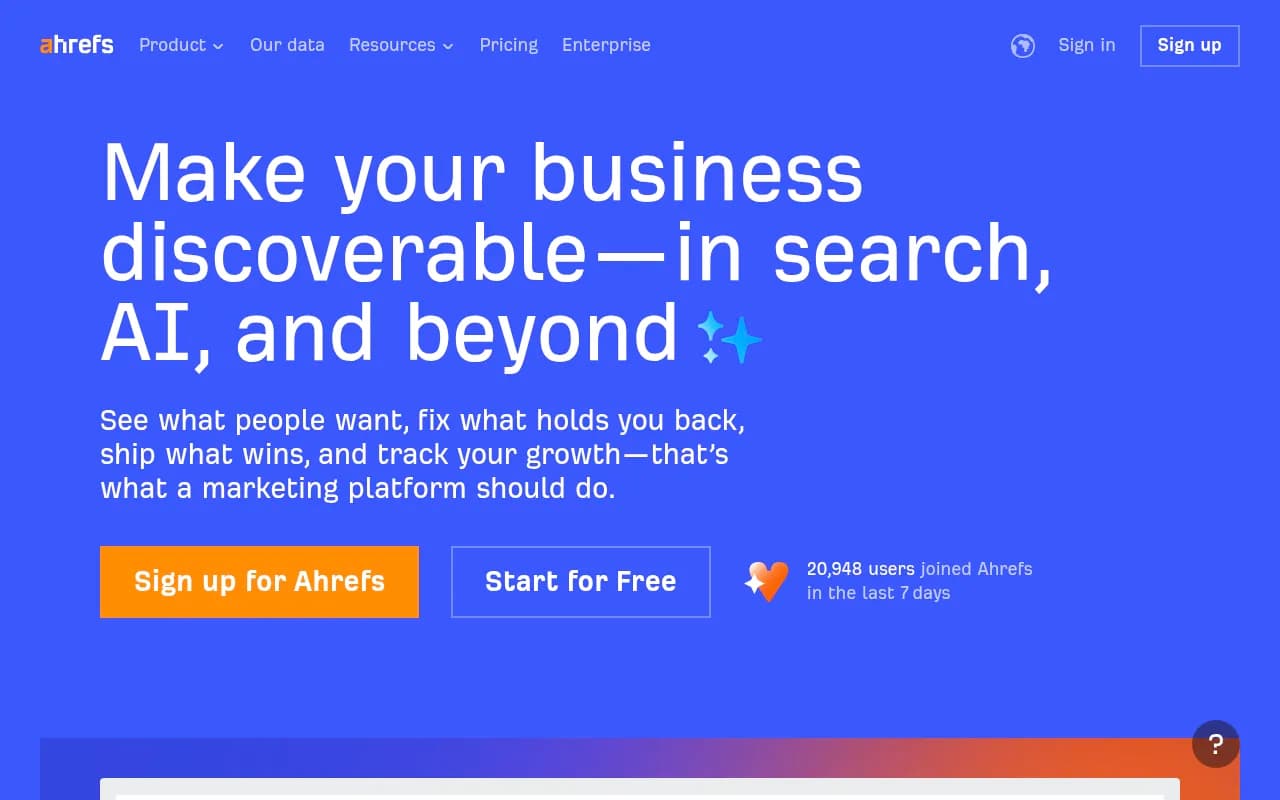
Ahrefs Brand Radar: the big dataset approach
Brand Radar is built around scale. Ahrefs sourced 250+ million prompts from Google's People Also Ask (PAA) questions, ran them through supported LLMs, and captured the responses. That dataset is updated once a month.
The appeal is obvious: you get coverage across an enormous number of queries without having to think about which ones to track. If your brand appears anywhere in AI responses at scale, Brand Radar will likely catch it.
But there's a real question worth sitting with: are PAA questions actually a good proxy for how people prompt AI assistants?
PAA questions are generated by Google's algorithm to serve traditional search behavior. "What is the best CRM for small businesses?" might appear in PAA, but someone using ChatGPT might ask "I run a 10-person sales team and we're switching from spreadsheets -- what CRM should I use?" Those are different prompts that might surface different answers. Ahrefs' own help documentation confirms the dataset comes directly from PAA with no further edits.
So Brand Radar gives you breadth, but the prompts may not match real AI search behavior particularly well.
Peec AI: the custom prompt approach
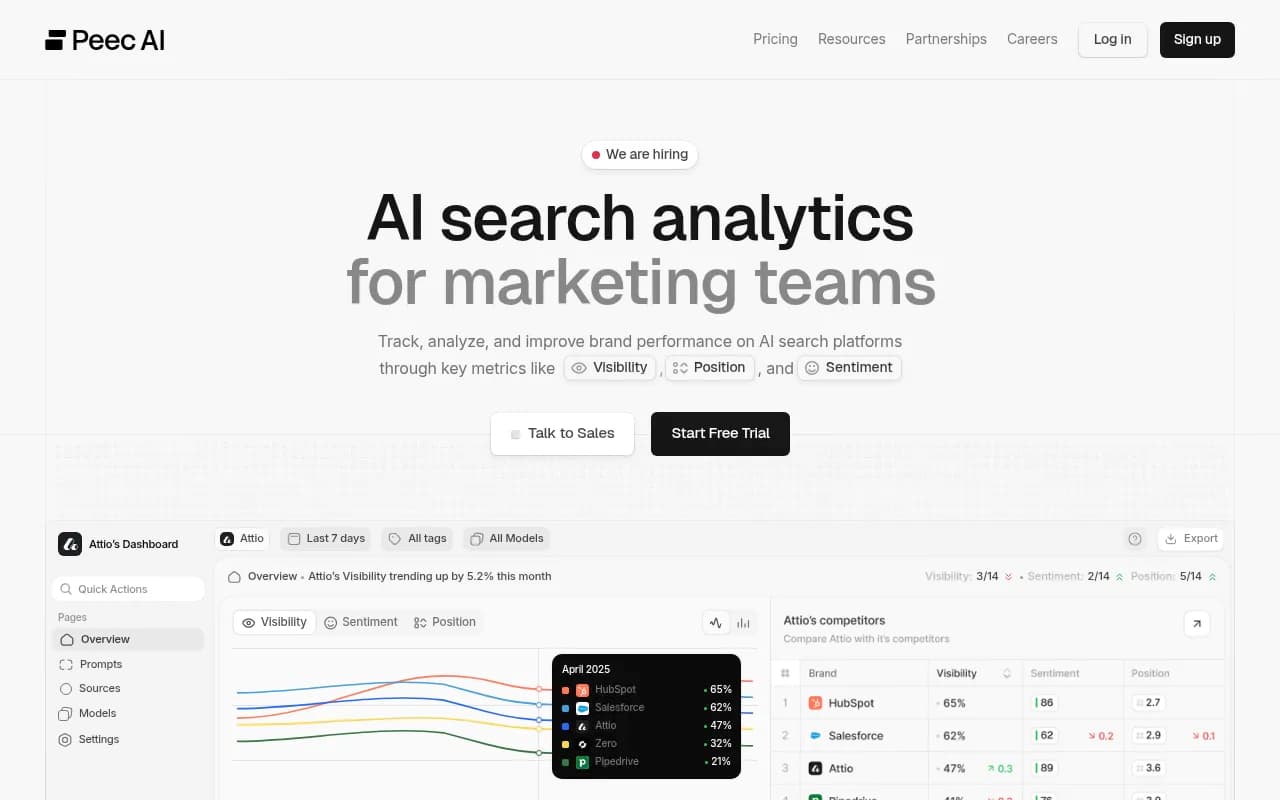
Peec AI takes the opposite approach. You define the prompts you want to track, and the tool monitors those specific queries daily across supported AI platforms.
This is more work upfront -- you have to think carefully about which prompts actually matter to your business -- but the payoff is that you're tracking queries that reflect how your actual customers use AI tools. You're not relying on a Google algorithm to decide what's relevant.
The daily refresh cadence is also a meaningful difference. AI models update frequently, and a brand that was cited in ChatGPT's response last week might not be cited this week. Monthly updates from Brand Radar could mean you're looking at stale data when you're trying to make content decisions.
Peec AI also uses two metrics -- "brand visibility" and "brand source usage" -- rather than a single share-of-voice number, which gives a slightly more nuanced picture of how your brand appears versus how often it's cited as a source.
Feature comparison
| Feature | Peec AI | Ahrefs Brand Radar |
|---|---|---|
| Prompt dataset | Custom prompts you define | 250M+ static PAA-sourced prompts |
| Update frequency | Daily | Monthly |
| AI platforms tracked | Multiple LLMs | Multiple LLMs |
| Custom prompt tracking | Yes | No (fixed dataset) |
| Share of voice metric | Brand visibility + source usage | Share of voice |
| Team collaboration | Yes | Via Ahrefs workspace |
| Standalone tool | Yes | Add-on to Ahrefs subscription |
| Content gap analysis | Limited | No |
| Content generation | No | No |
| Crawler logs | No | No |
| Traffic attribution | No | No |
| Pricing model | Standalone subscription | Add-on to Ahrefs base plan ($129+/mo) |
Pricing: what you actually pay
This is where things get interesting for Ahrefs users.
Brand Radar isn't a standalone product -- it's an add-on to an existing Ahrefs subscription. The base Ahrefs plan starts at $129/month, and Brand Radar is priced on top of that. If you're already paying for Ahrefs and using it heavily for traditional SEO, adding Brand Radar is a relatively low-friction decision. You're extending a tool you already use.
But if you're primarily interested in AI search visibility and don't have a strong need for Ahrefs' core SEO features, you're paying for a lot of functionality you won't use just to access Brand Radar.
Peec AI is a standalone tool, which means you're paying only for what you actually need. That's a cleaner proposition for teams whose primary focus is AI visibility rather than traditional SEO.
Where both tools fall short
Here's the honest part of this comparison: both Peec AI and Ahrefs Brand Radar are monitoring tools. They tell you what's happening. Neither helps you do much about it.
If you find out that a competitor is appearing in ChatGPT responses for "best project management software for remote teams" and you're not, both tools will surface that gap. But then what? You're on your own to figure out what content to create, how to structure it, and whether your changes are actually moving the needle.
This is the core limitation of monitoring-only platforms. The data is useful, but the workflow stops at the dashboard.
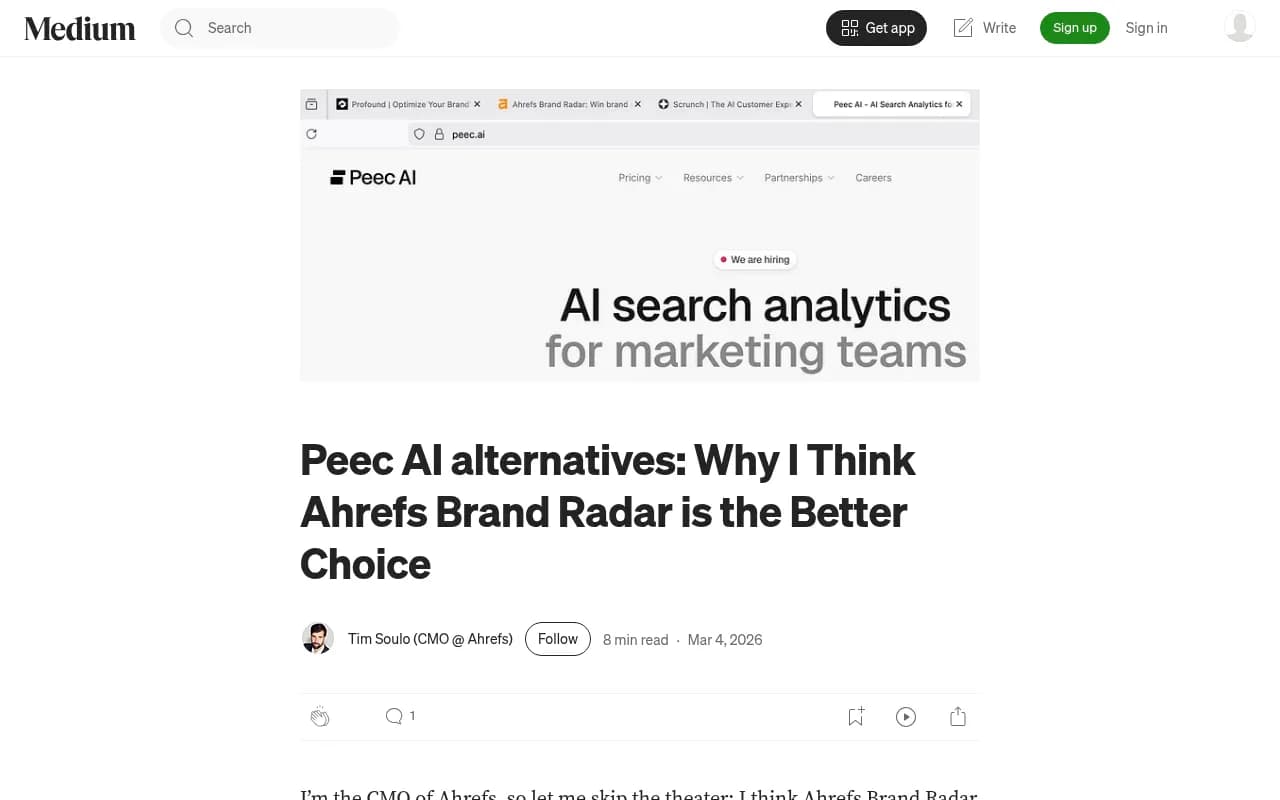
Ahrefs CMO Tim Soulo wrote a piece on Medium arguing that Brand Radar is the better choice because of the depth of data behind it -- specifically the 250M+ prompt dataset. His argument is essentially that data scale matters more than customization. It's a reasonable position if you're a large brand trying to understand your visibility across a huge surface area. It's less compelling if you're a mid-size company trying to optimize for a specific set of high-value queries.
The broader point he makes -- that the question isn't whether a tool can track prompts, but what you can actually do with what you find -- is fair. And it applies equally to both tools.
Who should use each tool
Ahrefs Brand Radar makes sense if:
- You're already an Ahrefs subscriber and want to add AI visibility monitoring without switching platforms
- You want broad coverage across a massive prompt dataset without having to curate your own list
- You're doing competitive research at scale and want to see where your brand appears across a wide range of queries
- Monthly data refresh is acceptable for your reporting cadence
Peec AI makes sense if:
- You want to track specific, high-priority prompts that reflect your actual customers' behavior
- Daily updates matter to you -- you're monitoring a fast-moving competitive landscape
- You don't need or want to pay for a full Ahrefs subscription
- You want team collaboration features built into a dedicated AI visibility tool
The bigger picture: monitoring vs. optimization
Both tools are worth considering, but it's worth being clear about what you're buying. Neither Peec AI nor Ahrefs Brand Radar will help you create content that gets cited by AI models, analyze which pages on your site are being read by AI crawlers, or connect your AI visibility to actual traffic and revenue.
That gap matters more as AI search becomes a larger share of how people find products and services. Knowing you're invisible is useful. Knowing exactly what to do about it -- and being able to execute on it -- is what actually moves the needle.
Tools like Promptwatch are built around that full loop: find the prompts where competitors are visible and you're not, generate content designed to get cited, and track whether it's working. It's a different category of tool from either Peec AI or Brand Radar.

For teams that are serious about AI search as a growth channel rather than just a metric to report on, the monitoring-only approach will eventually hit a ceiling.
Other tools worth knowing about
The AI visibility space has expanded significantly. A few other options worth evaluating depending on your needs:
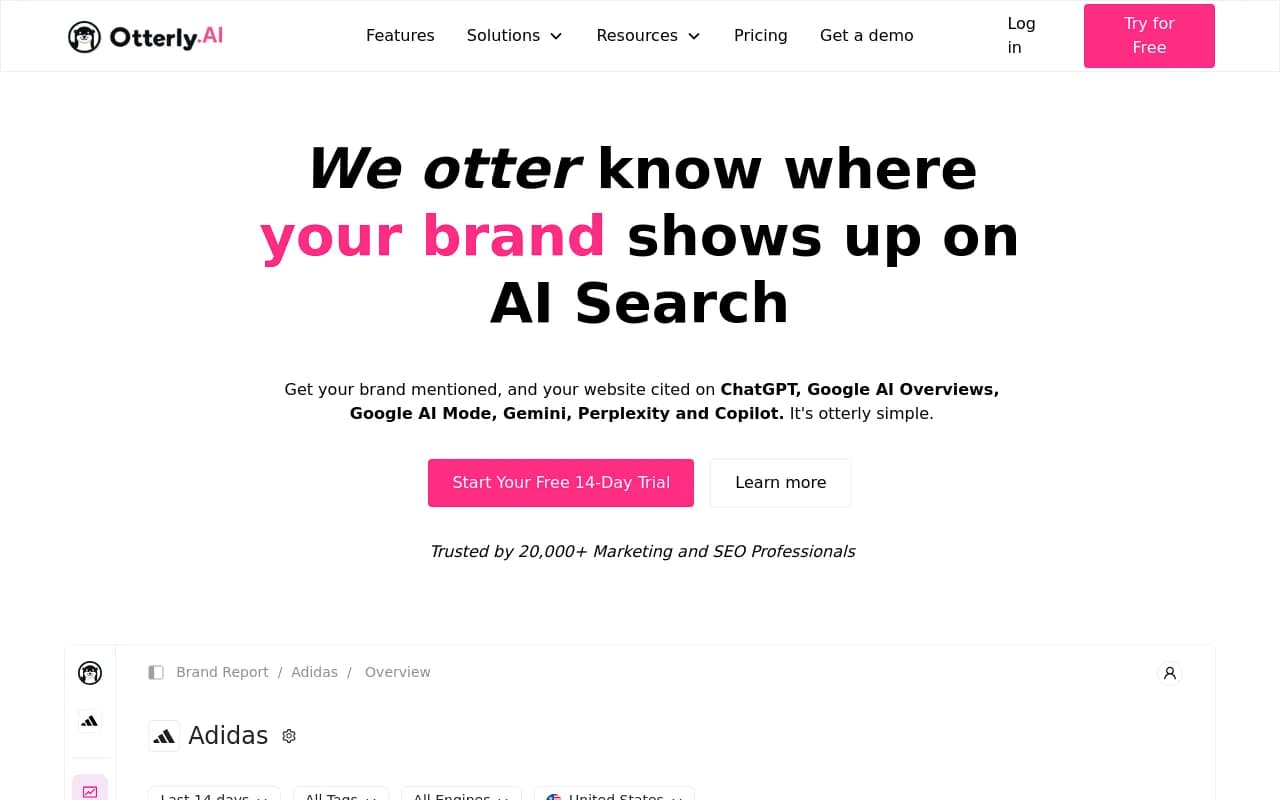
Otterly.AI is a lightweight, affordable option for teams that want basic monitoring without committing to a full platform.
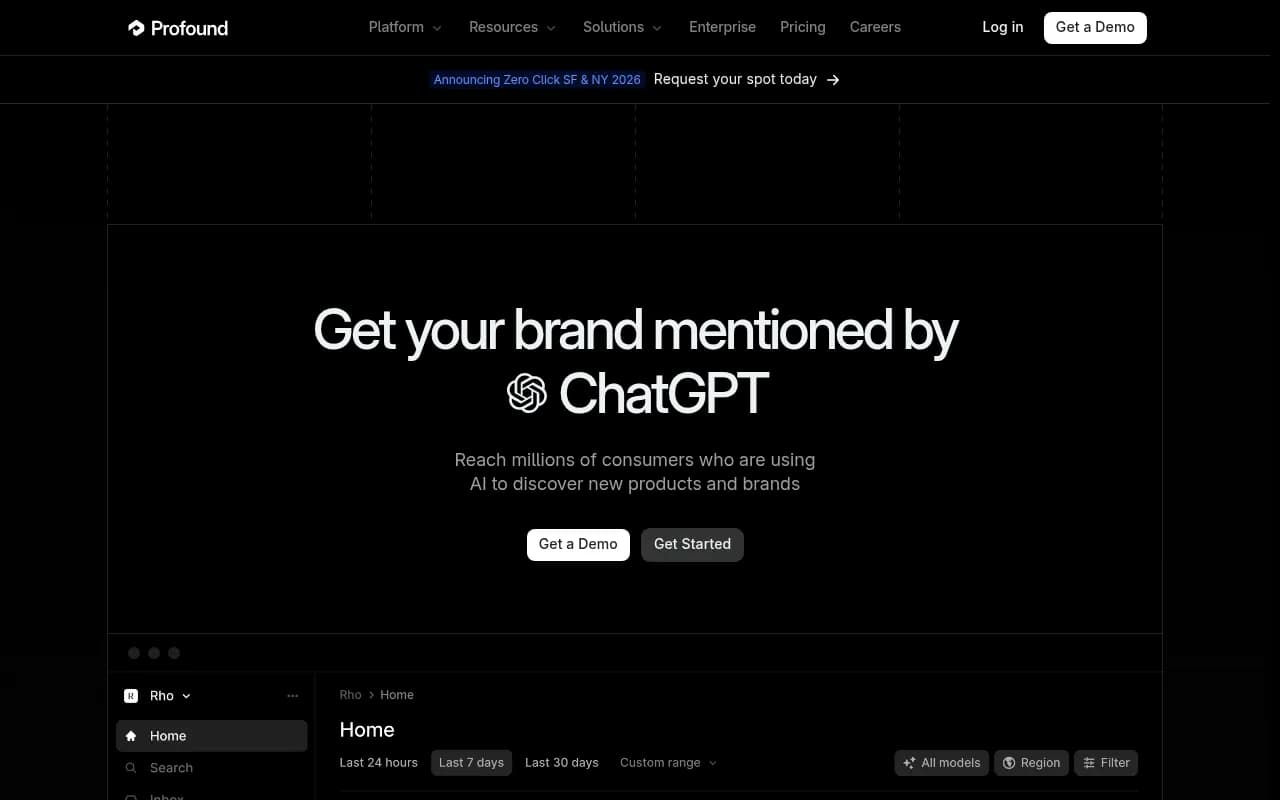
Profound AI targets enterprise teams with deeper analytics and more robust reporting.
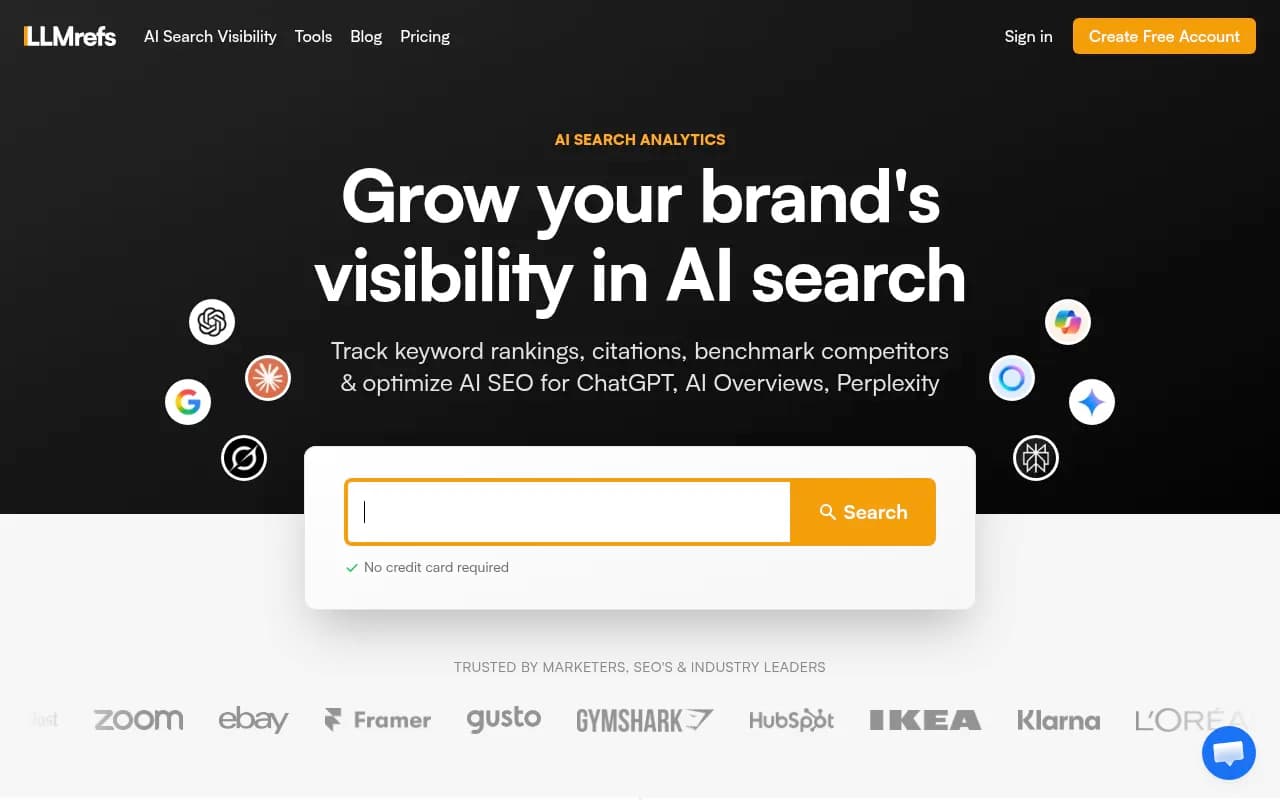
LLMrefs tracks brand visibility and rankings across ChatGPT, Perplexity, and other models -- worth a look if you want another angle on the data.
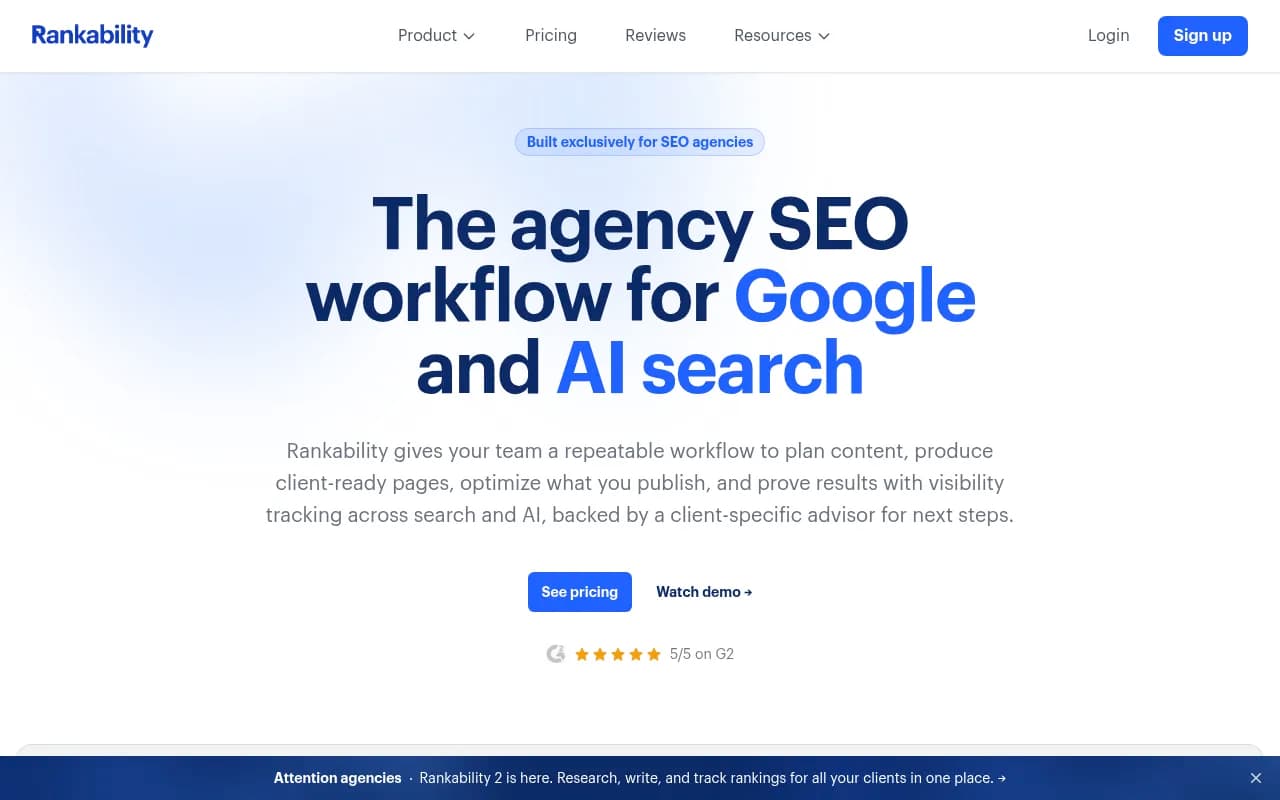
Rankability's AI Analyzer has come up repeatedly in practitioner discussions (including a Reddit thread comparing AI visibility tools) as a strong price-to-value option.
Bottom line
Peec AI and Ahrefs Brand Radar are solving the same problem in genuinely different ways. Brand Radar wins on data scale and is a natural fit for existing Ahrefs users. Peec AI wins on prompt relevance and update frequency, and makes more sense as a standalone tool.
Neither is wrong. The choice mostly comes down to your existing toolstack, your budget, and whether you need daily tracking or are comfortable with monthly snapshots.
What both tools share is the same limitation: they stop at the data. If you want to actually improve your AI search visibility rather than just measure it, you'll need to pair either tool with a content strategy -- or use a platform that handles both sides of the equation.