Key takeaways
- Peec AI starts at €89/month with a free trial; Bluefish AI uses custom enterprise pricing with no public tiers
- Bluefish is built around brand safety and crisis monitoring for large organizations; Peec is built for marketing teams who want clean, accessible AI search analytics
- Neither platform offers content generation or optimization -- they're both monitoring-only tools
- If you need to go beyond tracking and actually fix your AI visibility gaps, you'll need a platform that closes the loop between data and action
The GEO tool market has split into two pretty distinct camps. On one side you have entry-level trackers -- affordable, clean, easy to get started with, but light on depth. On the other you have enterprise platforms that promise comprehensive monitoring and brand governance, usually behind a sales call and a contract.
Peec AI and Bluefish AI sit at opposite ends of that spectrum. They're both trying to solve the same fundamental problem -- "how does my brand appear in AI-generated answers?" -- but they approach it very differently, serve different buyers, and have genuinely different limitations.
This guide breaks down what each tool actually does, where each one makes sense, and what you should know before committing to either.
What Peec AI is
Peec AI is a GEO tracking platform aimed at marketing teams and agencies. It monitors how your brand appears across AI search engines like ChatGPT, Gemini, and Perplexity, and gives you visibility metrics through a clean, relatively simple interface.
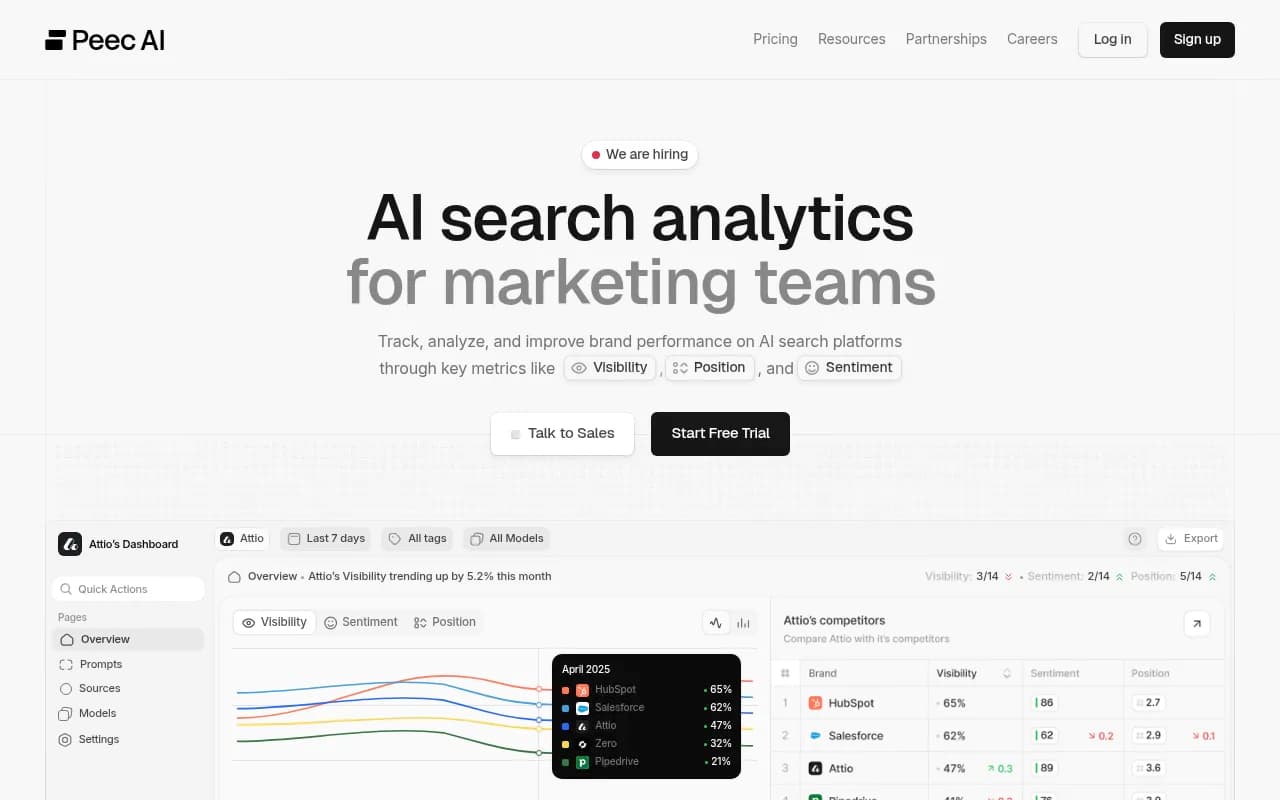
It gained traction early in 2025 as one of the first accessible tools to address AI visibility tracking -- a space that previously felt like it required either enterprise budgets or DIY spreadsheets. The appeal was straightforward: transparent pricing, a free trial, and a UI that doesn't require a week of onboarding.
Pricing starts at EUR 89/month, which puts it within reach for small teams and agencies. It supports multiple languages, which is useful for brands operating across markets.
What it doesn't do: Peec doesn't help you fix what it finds. It shows you where you're visible (or not), but there's no content gap analysis, no writing tools, no optimization workflow. You get the data and then you're on your own.
What Bluefish AI is
Bluefish AI positions itself as an enterprise GEO platform, with a particular emphasis on brand safety. The core pitch is that large organizations need to know not just whether they're being mentioned in AI responses, but whether those mentions are accurate, and whether AI systems are spreading misinformation about them.
The platform monitors across ChatGPT, Gemini, Perplexity, Google AI Mode, and Google AI Overviews. It includes real-time alerting for false claims -- if an LLM starts describing your product incorrectly or attributing a statement to your brand that you didn't make, Bluefish flags it. That's genuinely useful for healthcare companies, financial services, and any regulated industry where brand accuracy isn't just a marketing concern.
The catch: Bluefish uses custom enterprise pricing. There's no public pricing page, no self-serve trial -- you go through a sales process. That immediately filters out smaller teams, and it means you can't easily compare costs against alternatives without a conversation.
Bluefish's own blog (which, to be fair, is written by Bluefish) ranked itself first in a comparison of 10 GEO platforms, calling itself the "Enterprise GEO Powerhouse." Take that with appropriate skepticism, but the brand safety angle is real and relatively differentiated.
Head-to-head comparison
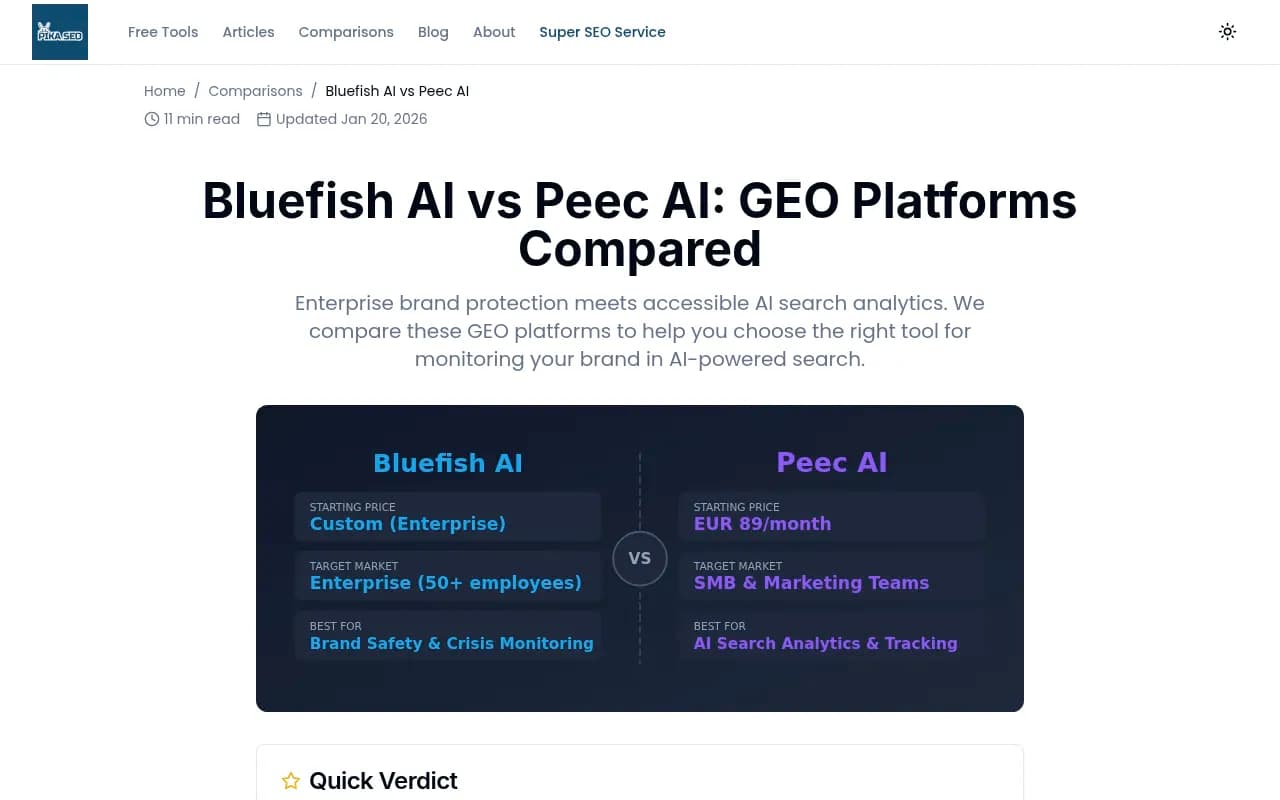
| Feature | Peec AI | Bluefish AI |
|---|---|---|
| Starting price | EUR 89/month | Custom (enterprise) |
| Free trial | Yes | Closed pilot program |
| Target market | SMBs, marketing teams, agencies | Enterprise (50+ employees) |
| AI models monitored | ChatGPT, Gemini, Perplexity | ChatGPT, Gemini, Perplexity, Google AI Mode, AI Overviews |
| Brand safety / crisis alerts | No | Yes |
| Multi-language support | Yes | Not clearly documented |
| Content optimization tools | No | No |
| Content generation | No | No |
| Transparent pricing | Yes | No |
| G2 rating | 5.0/5 (limited reviews) | Early stage reviews |
| Best for | Affordable AI search tracking | Enterprise brand protection |
The table makes the positioning clear. These tools aren't really competing for the same customer. A 10-person SaaS startup isn't going to go through an enterprise sales process for Bluefish. A Fortune 500 brand with a PR team managing AI misinformation risk isn't going to run on a €89/month tool.
Where Peec AI works well
Peec is a reasonable starting point if you're a marketing team or agency that wants to understand AI visibility without committing to a large budget. The transparent pricing and free trial mean you can actually test it before spending anything, which is more than most enterprise GEO tools offer.
It's also genuinely accessible -- the interface is clean, setup is straightforward, and you don't need a dedicated analyst to interpret the outputs.
The multi-language support is worth noting. A lot of GEO tools are English-first and treat international tracking as an afterthought. If you're running campaigns across European markets, Peec handles that better than many alternatives.
Where it falls short is depth. Prompt volume data, difficulty scoring, competitor heatmaps, page-level citation tracking -- these aren't part of the picture. And there's no path from "I see I'm not visible for this prompt" to "here's what I do about it." You get the diagnosis, not the treatment.
Where Bluefish AI works well
Bluefish makes the most sense for organizations where brand accuracy in AI responses is a legal or reputational risk, not just a marketing metric. Healthcare, financial services, enterprise software -- anywhere that a hallucinated claim about your product could cause real harm.
The real-time alerting for false claims is the standout feature. Most GEO tools tell you whether you're mentioned; Bluefish tells you whether what's being said is accurate. That's a meaningfully different capability.
The enterprise-grade security and data segmentation also matter for large organizations that need to pass infosec reviews before deploying any third-party tool. That's a real friction point for smaller platforms.
What Bluefish doesn't solve: like Peec, it's a monitoring platform. It shows you what's happening in AI responses, but it doesn't help you change it. There's no content generation, no gap analysis, no optimization workflow built in.
The shared limitation: monitoring without action
Here's the honest assessment of both tools: they tell you what's happening, but they don't help you fix it.
That's fine if you have a content team that can take data and run with it. But for most marketing teams, knowing that a competitor is more visible than you for a set of prompts is only useful if you can do something about it. Identifying the gap is step one. Creating content that actually gets cited by ChatGPT or Perplexity is step two. Tracking whether that content improved your visibility is step three.
Neither Peec nor Bluefish covers steps two and three.
If that full loop matters to you, platforms like Promptwatch are built around exactly that workflow -- find the gaps, generate content engineered to get cited, track the results. It's a different category of tool, not just a monitoring dashboard.

Alternatives worth considering
If you're evaluating Peec and Bluefish, you're probably also looking at a broader set of options. A few worth knowing about:
Otterly.AI is another entry-level tracker in a similar price range to Peec. Clean interface, basic monitoring, no optimization tools.

Scrunch AI sits in the mid-market and includes some source analysis features that go deeper than basic mention tracking.
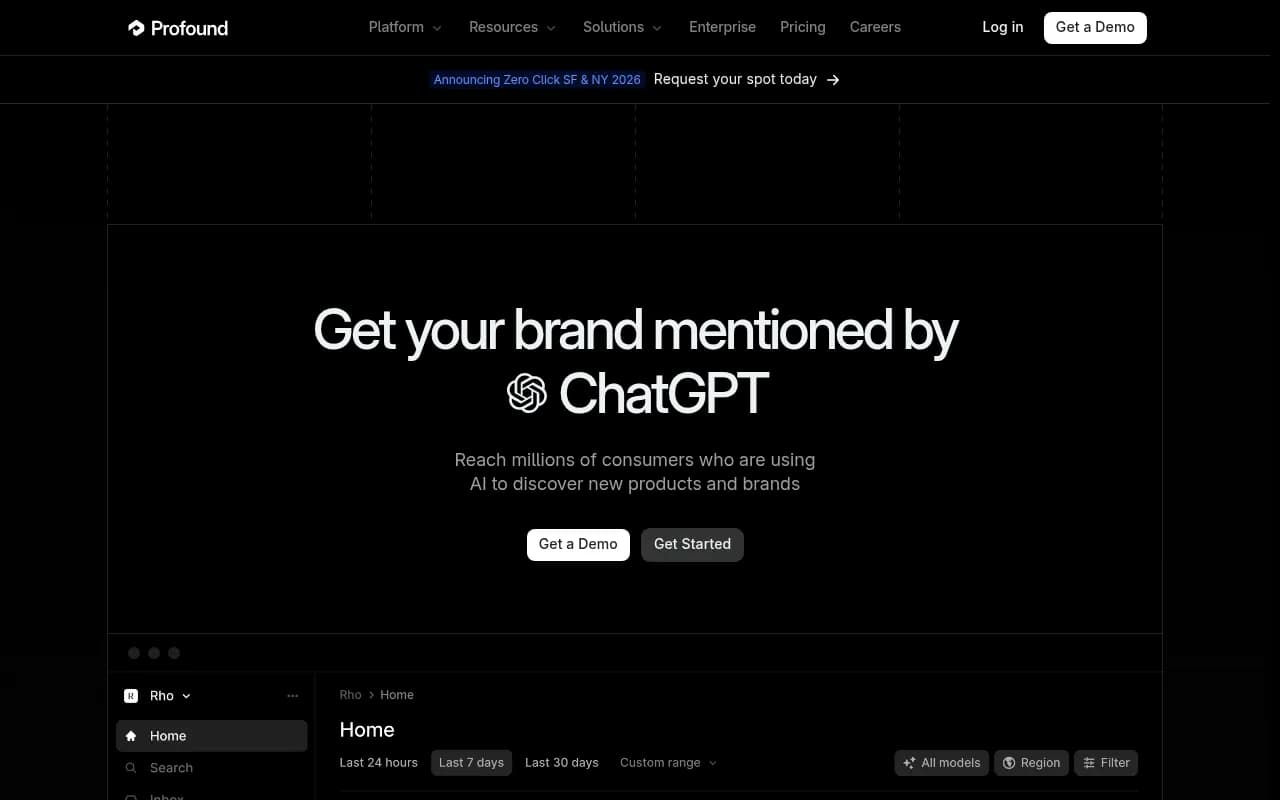
Profound AI targets enterprise buyers similar to Bluefish, with a focus on brand visibility at scale.
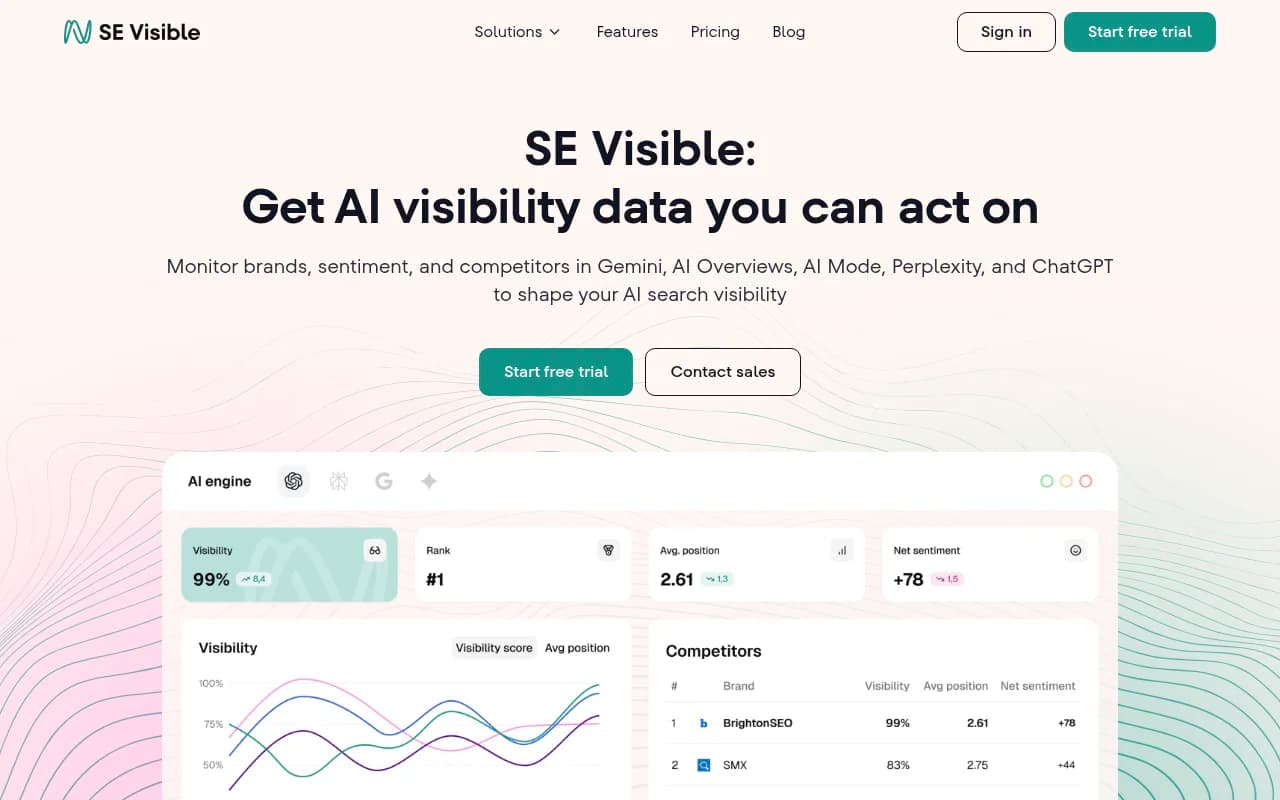
SE Visible (from SE Ranking) combines traditional SEO tracking with AI visibility monitoring, which is useful if you want both in one platform.
Which one should you choose?
The answer is mostly determined by your company size and what problem you're actually trying to solve.
Choose Peec AI if:
- You're a small to mid-size marketing team or agency
- You want to start tracking AI visibility without a large budget commitment
- You need multi-language support
- You're comfortable doing your own analysis and content work after getting the data
Choose Bluefish AI if:
- You're at an enterprise organization (50+ employees, dedicated marketing/PR team)
- Brand safety and misinformation detection are genuine priorities, not just nice-to-haves
- You need a platform that can pass enterprise infosec reviews
- Budget isn't the primary constraint
Consider neither if:
- You need to actually improve your AI visibility, not just measure it
- You want content gap analysis, prompt intelligence, or built-in content generation
- You want to connect AI visibility data to actual traffic and revenue
The GEO tool market is still young, and the gap between "monitoring" and "optimization" is where most of the interesting development is happening right now. Both Peec and Bluefish are useful within their lanes -- but knowing which lane you're in before you buy is the whole game.