Key takeaways
- Omnia is a solid AI visibility monitoring platform with clean dashboards and good multi-LLM coverage, but it stops at showing you data.
- Promptwatch covers monitoring AND optimization -- it finds content gaps, generates AI-optimized content, and tracks the results, making it a full GEO workflow rather than just a tracker.
- If your team's only goal is brand monitoring, Omnia is worth evaluating. If you want to actually improve your AI visibility, Promptwatch is the stronger choice.
- Promptwatch monitors 10 AI models (including ChatGPT, Claude, Perplexity, Gemini, Grok, DeepSeek, and Google AI Overviews) and has processed over 1.1 billion citations, clicks, and prompts.
- Pricing starts at $99/mo for Promptwatch vs Omnia's free tier with paid plans -- but price alone doesn't tell the full story.
The AI search landscape has shifted fast. Two years ago, tracking your brand in ChatGPT felt like a novelty. Now it's a real business concern -- procurement managers, developers, and consumers are asking AI engines for recommendations, and those answers shape purchasing decisions without a single ad impression or organic click.
That's created a rush of AI visibility tools, and two names come up often in 2026: Omnia and Promptwatch. They're both credible platforms. But they're built around different philosophies, and that difference matters a lot depending on what your team actually needs.
This guide breaks down how they compare across features, pricing, and use cases -- so you can make a decision that fits your actual workflow, not just a feature checklist.
What each platform is trying to do
Before comparing features, it helps to understand the core intent behind each tool.
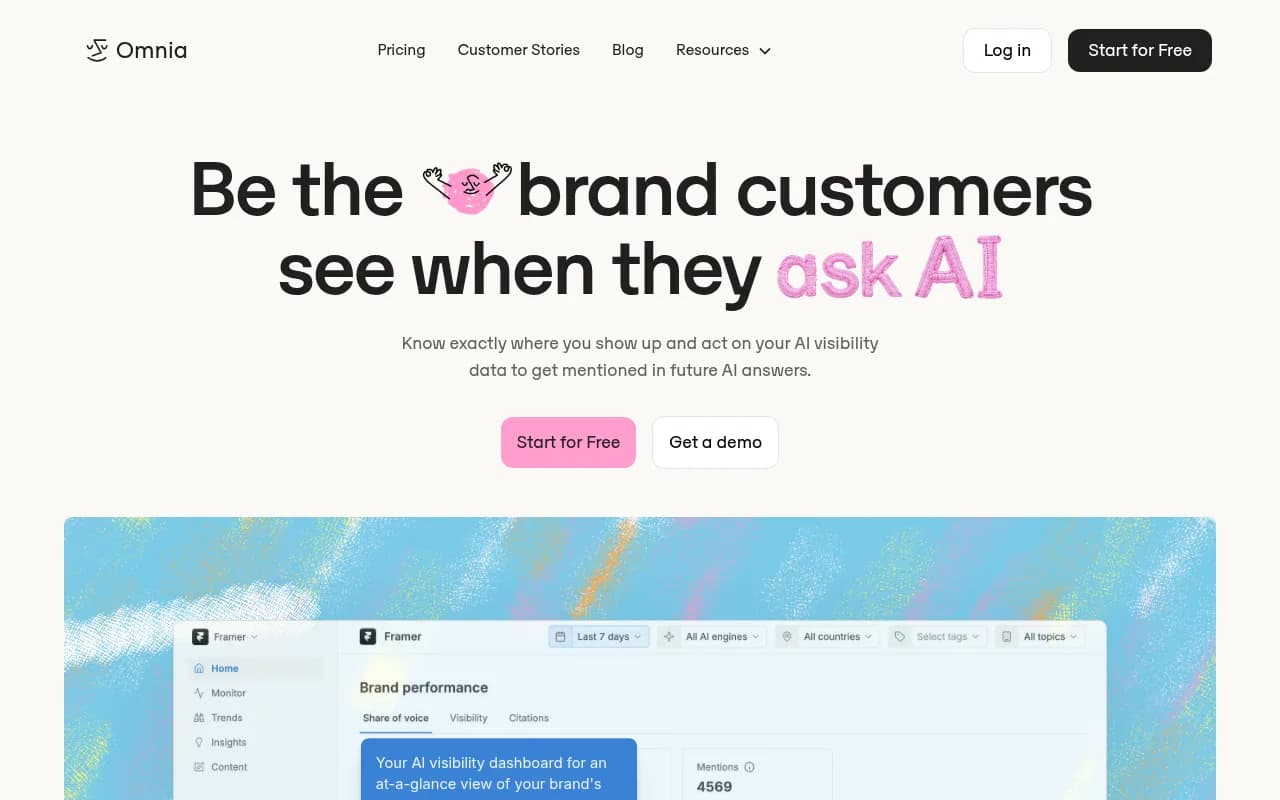
Omnia positions itself as a comprehensive AI visibility platform with a clean interface for tracking brand mentions, share of voice, and citation sources across multiple LLMs. It's well-regarded for its breadth -- their own blog reviews 28 platforms in the space, which tells you they're thinking seriously about the competitive landscape. The focus is on monitoring: seeing where you appear, where competitors appear, and how that changes over time.
Promptwatch is built around a different premise. Monitoring is table stakes -- the real value is what you do with the data. The platform is structured around what it calls an "action loop": find the prompts where competitors are visible but you're not, generate content engineered to get cited by AI models, then track whether that content actually improves your visibility. It's less of a dashboard and more of an optimization workflow.
That distinction -- monitoring vs. optimization -- is the most important thing to understand before you spend money on either.

Feature comparison
Here's a direct look at how the two platforms stack up across the capabilities that matter most:
| Feature | Omnia | Promptwatch |
|---|---|---|
| AI model coverage | Multiple LLMs | 10 models (ChatGPT, Claude, Perplexity, Gemini, Grok, DeepSeek, Copilot, Mistral, Meta AI, Google AI Overviews) |
| Brand mention tracking | Yes | Yes |
| Share of voice | Yes | Yes |
| Citation/source analysis | Yes | Yes (880M+ citations analyzed) |
| Competitor analysis | Yes | Yes, with heatmaps |
| Content gap analysis | No | Yes -- Answer Gap Analysis |
| AI content generation | No | Yes -- built-in writing agent |
| AI crawler logs | No | Yes (Professional plan+) |
| Prompt volume/difficulty scores | No | Yes |
| Query fan-outs | No | Yes |
| Reddit & YouTube tracking | No | Yes |
| ChatGPT Shopping tracking | No | Yes |
| Traffic attribution | No | Yes (GSC, snippet, or server logs) |
| Multi-language/region | Limited | Yes, with persona targeting |
| Looker Studio / API | No | Yes |
| Free trial | Yes (free tier) | Yes |
| Starting price | Free / paid plans | $99/mo |
The monitoring side is fairly comparable. Both platforms track brand mentions, share of voice, and citation sources. Where the gap opens up is everything after the data: Omnia shows you what's happening, while Promptwatch shows you what's happening AND gives you tools to change it.
Going deeper on Promptwatch's differentiators
A few of these features deserve more explanation because they're not just checkboxes -- they change how your team actually works.
Answer gap analysis
This is probably the most practically useful feature in Promptwatch's toolkit. It identifies specific prompts where your competitors appear in AI responses but you don't. Not vague topic areas -- actual prompts, with visibility data attached. You can see exactly what content your site is missing and prioritize based on prompt volume and difficulty scores.
Most monitoring tools stop at "here's your share of voice." Answer Gap Analysis tells you what to do about it.
AI content generation grounded in citation data
Promptwatch's built-in writing agent generates articles, listicles, and comparisons based on real citation patterns -- what sources AI models actually cite, what angles they respond to, what questions they're trying to answer. This isn't generic AI content. It's content engineered to get cited by ChatGPT, Claude, Perplexity, and others.
The Essential plan includes 5 articles/month, Professional includes 15, and Business includes 30. For teams that are actively trying to improve their AI visibility, this is a meaningful capability.
AI crawler logs
Promptwatch logs when AI crawlers (ChatGPT, Claude, Perplexity, etc.) visit your website -- which pages they read, how often they return, and any errors they encounter. This is genuinely rare. Most platforms have no visibility into the crawling side of the equation. If AI models aren't crawling your content, they can't cite it, and this feature helps you diagnose and fix that.
Reddit and YouTube tracking
AI models don't just cite brand websites. They cite Reddit threads, YouTube videos, and third-party reviews. Promptwatch surfaces which discussions in those channels are influencing AI recommendations -- so you can understand the full picture of why you're appearing (or not appearing) in AI responses.
Where Omnia holds its own
Omnia isn't a weak platform. It's a well-designed monitoring tool with a clean interface that's easier to get started with, especially for smaller teams that just want to understand their AI visibility baseline without a complex setup.
The free tier is a genuine advantage for teams that are early in their AI visibility journey and want to explore before committing budget. If you're a solo marketer or a small brand that just wants to check whether you're appearing in ChatGPT and Perplexity responses, Omnia's free access is a reasonable starting point.
Omnia also has a thoughtful approach to prompt categorization and brand mention tracking that works well for straightforward monitoring use cases.
Pricing comparison
| Plan | Omnia | Promptwatch |
|---|---|---|
| Entry level | Free tier available | Essential: $99/mo (1 site, 50 prompts, 5 articles) |
| Mid-tier | Paid plans (pricing not publicly listed) | Professional: $249/mo (2 sites, 150 prompts, 15 articles, crawler logs) |
| Higher tier | -- | Business: $579/mo (5 sites, 350 prompts, 30 articles) |
| Agency/Enterprise | Custom | Custom |
| Annual discount | -- | Yes |
| Free trial | Yes | Yes |
Omnia doesn't publish its paid pricing publicly, which makes a direct dollar comparison difficult. Promptwatch's pricing is transparent and tiered clearly by the number of sites, prompts, and articles -- which makes it easier to estimate cost as you scale.
The $99/mo entry point for Promptwatch is reasonable for what you get, especially if you're actively using the content generation features. If you're paying for monitoring-only and not taking action on the data, the value calculation changes.
Which platform fits which team
The honest answer is that these tools serve different stages of AI visibility maturity.
If your team is just starting to think about AI search and wants to understand your current visibility baseline without a big budget commitment, Omnia's free tier is a sensible first step. It'll show you where you stand.
If your team has moved past "we should probably track this" and into "we need to actually improve our AI visibility," Promptwatch is the stronger choice. The content gap analysis and AI writing agent turn monitoring data into something actionable. The crawler logs help you fix indexing issues. The traffic attribution connects AI visibility to actual revenue -- which is ultimately what justifies the budget.
For agencies managing multiple clients, Promptwatch's multi-site plans and Looker Studio integration make it easier to build reporting workflows. The API also opens up custom integrations that a monitoring-only tool can't support.
What the broader market says
The AI visibility tool space has gotten crowded fast. In a 2026 comparison of 12 GEO platforms, Promptwatch was the only platform rated as a "Leader" across all categories -- specifically because of its optimization capabilities, not just its monitoring. Most competitors, including well-known names, are still monitoring-only dashboards.
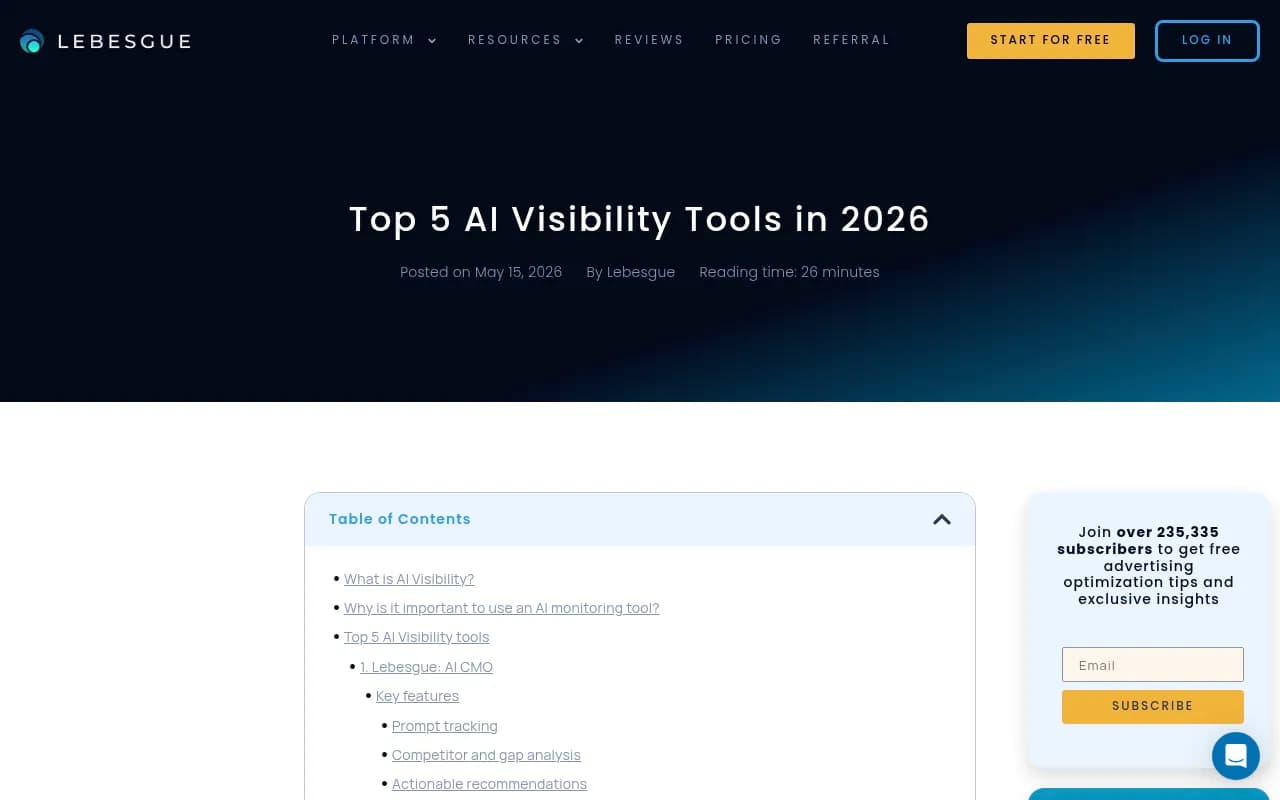
That doesn't mean monitoring tools have no value -- they do, especially as a starting point. But if you're allocating real budget to AI visibility, the question isn't just "can I see my data?" It's "can I do something with it?"
Other tools worth knowing about
If neither Omnia nor Promptwatch feels like the right fit, here are a few other platforms in the space worth evaluating:

Otterly.AI is a lightweight, affordable monitoring tool. Good for teams that want simple tracking without complexity, but it doesn't offer content optimization or gap analysis.
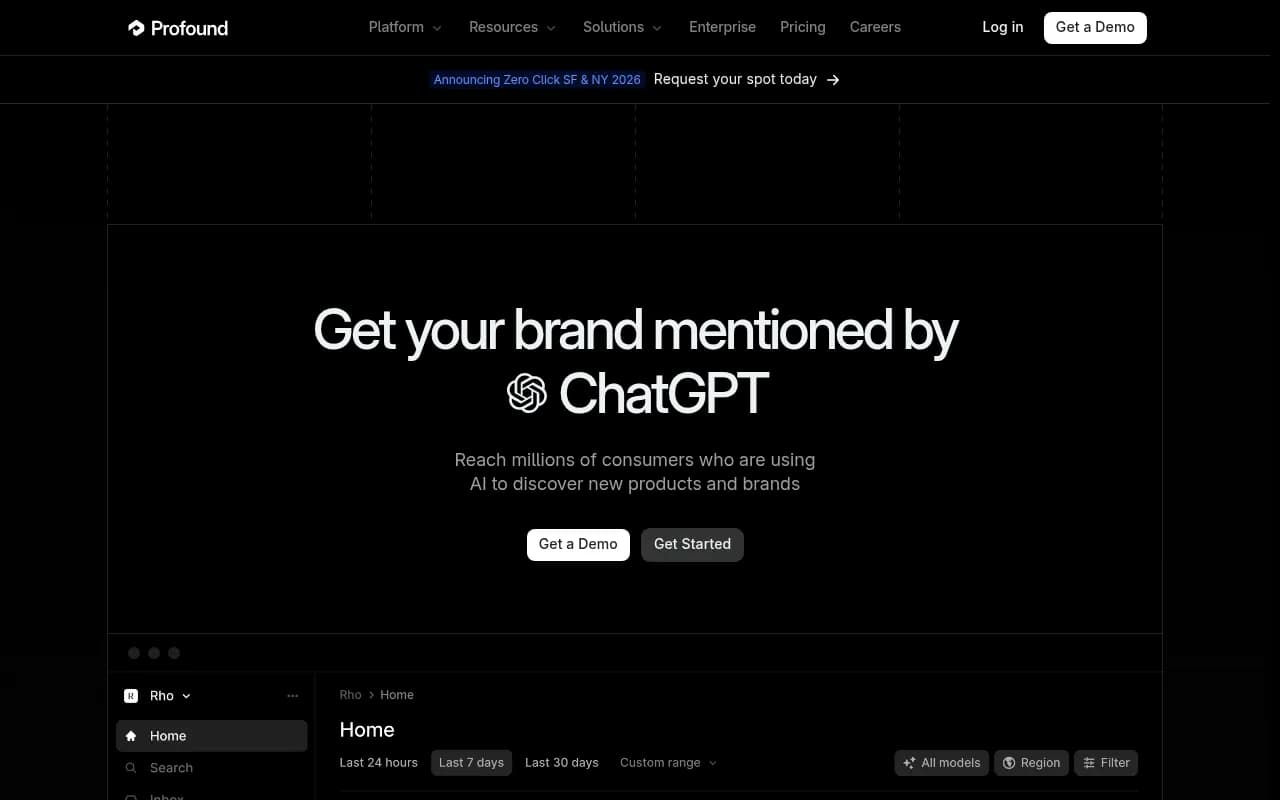
Profound is a strong enterprise option with deep analytics capabilities. Higher price point, and like most competitors, it's primarily monitoring-focused.

Peec AI has solid multilingual monitoring capabilities, which makes it worth considering for brands operating in multiple markets. Limited on the optimization side.
Scrunch AI covers monitoring across major AI assistants and has a clean interface. No content generation or crawler log features.

AthenaHQ is a monitoring-focused platform with good LLM coverage. Lacks content optimization and generation capabilities.
The bottom line
Omnia and Promptwatch are both legitimate platforms, but they're not really competing for the same buyer.
Omnia is for teams that want to monitor. Promptwatch is for teams that want to monitor and improve. If you're treating AI visibility as a passive reporting exercise, Omnia's free tier might be all you need. If you're treating it as a growth channel -- which, increasingly, it is -- then you need a platform that helps you take action, not just take notes.
The content gap analysis, AI writing agent, crawler logs, and traffic attribution in Promptwatch add up to something qualitatively different from a monitoring dashboard. They turn AI visibility from a metric you watch into a channel you can actually work.
For most marketing and SEO teams in 2026, that's the more valuable thing to have.