Key takeaways
- Jasper produced the most usable long-form drafts but still needed editing before publishing; it's also the most expensive per seat at $59-69/month (Pro) with Business pricing custom.
- Copy.ai has quietly turned into a workflow and go-to-market platform after being acquired by Fullcast in October 2025 — it's no longer really a copywriting tool, and that shows in how generic its one-off drafts feel.
- Rytr is the cheapest option ($7.50-29/month) and is genuinely fine for short-form copy like ads and product blurbs, but it fell apart on anything requiring research or nuance.
- None of the three is "AI-search ready" out of the box — that's a separate job requiring citation-friendly structure, which is worth knowing if your content strategy depends on getting cited by ChatGPT or Google AI Overviews.
- If you need collaborative, brand-consistent long-form content, Jasper wins. If you need cheap short-form copy at volume, Rytr wins. Copy.ai makes the most sense if you already need workflow automation across a GTM team.
Why we ran this test
Every "Jasper vs Copy.ai vs Rytr" article I've read compares pricing pages and feature checklists. Almost none of them show you the actual output. That's a problem, because all three tools have repositioned themselves since 2023, and the marketing copy on their homepages doesn't tell you much about what a first draft actually looks like when you paste in a real brief.
So I wrote 10 briefs covering the content types marketers actually ask AI tools to handle: a product description, a cold email, a LinkedIn post, a blog intro, a comparison paragraph, a customer testimonial rewrite, an FAQ answer, a Facebook ad, a feature announcement, and a longer how-to section. I fed the identical brief, word for word, into Jasper, Copy.ai, and Rytr, and graded each output on four criteria: factual accuracy against the brief, voice consistency, structural usability (could I paste this and ship it with light edits), and whether it read like something a person wrote.
What each tool actually is in 2026 (not what it used to be)
This matters more than most comparisons let on. Jasper, Copy.ai, and Rytr all launched as roughly the same thing: a text box that spits out marketing copy from a short prompt. They are not that anymore, and grading them as if they were misses half the story.
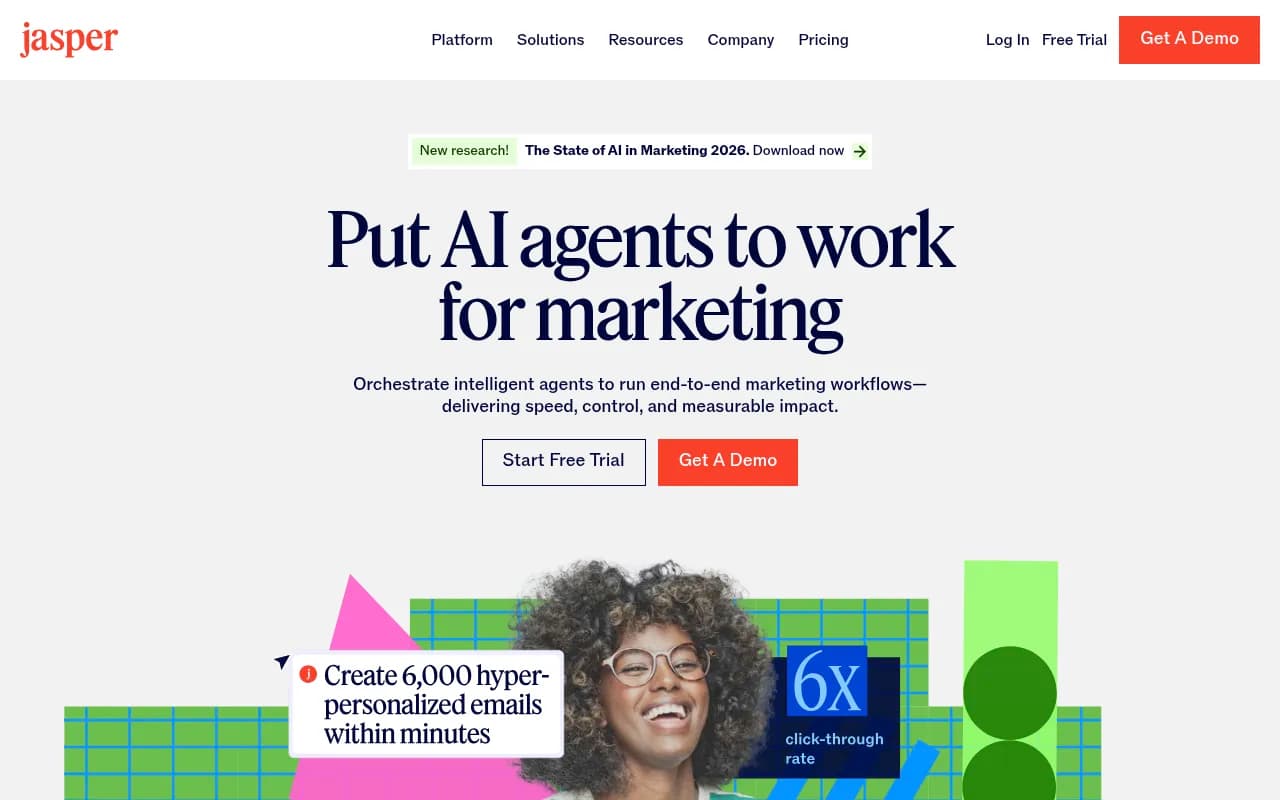
Jasper has rebuilt itself around "Jasper IQ" — brand memory, knowledge bases, audience profiles — plus Canvas and Grid for structured content production, and a set of Agents for research, translation, and optimization. It also now sells a dedicated GEO and AI Optimization product that scores content against what it calls GEO best practices and tracks citation rates across ChatGPT, Claude, and Gemini.
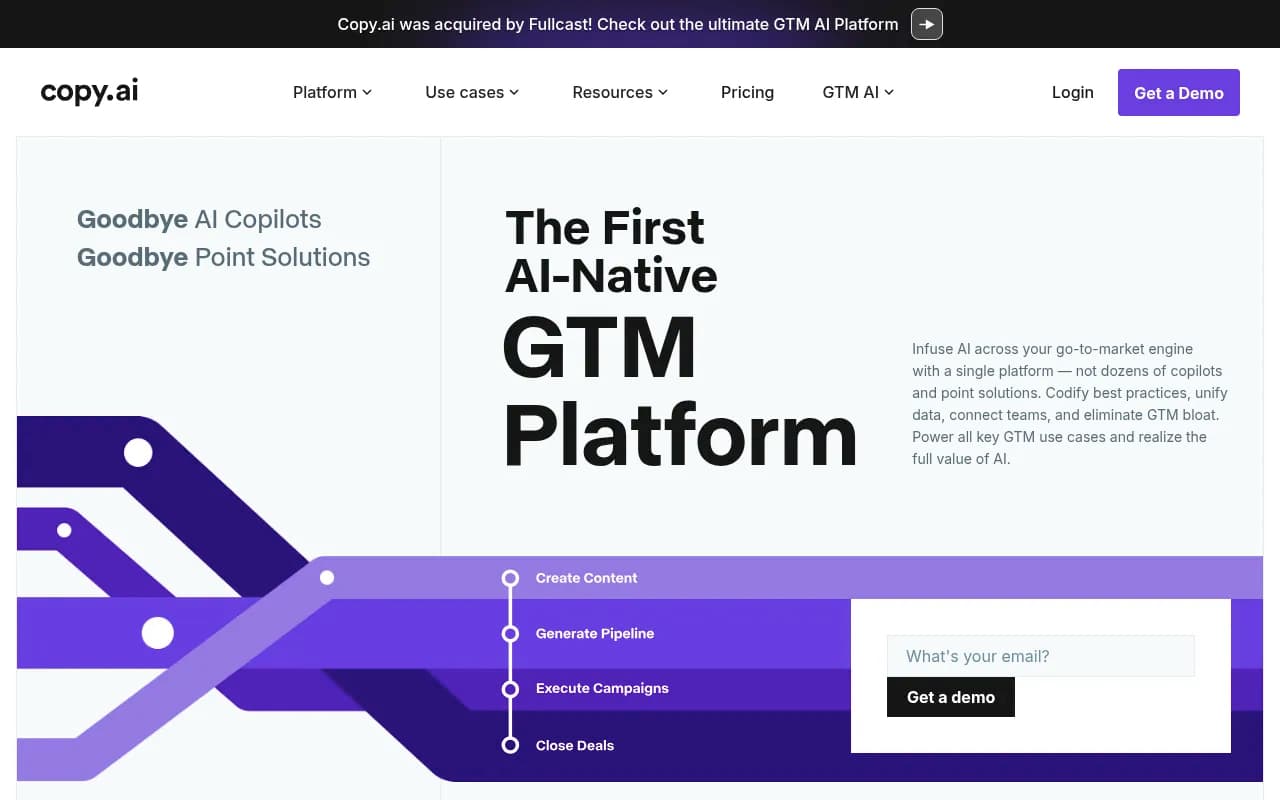
Copy.ai was acquired by Fullcast, a revenue-operations company, in October 2025, reportedly around $23.7M ARR at the time. Zapier's September 2026 comparison puts it plainly: Copy.ai is now "an AI go-to-market platform for sales, operations, and marketing teams," built around chained Workflows rather than one-shot copy generation. If you're evaluating it purely as a writing tool, you're evaluating something the company has mostly stopped building for.
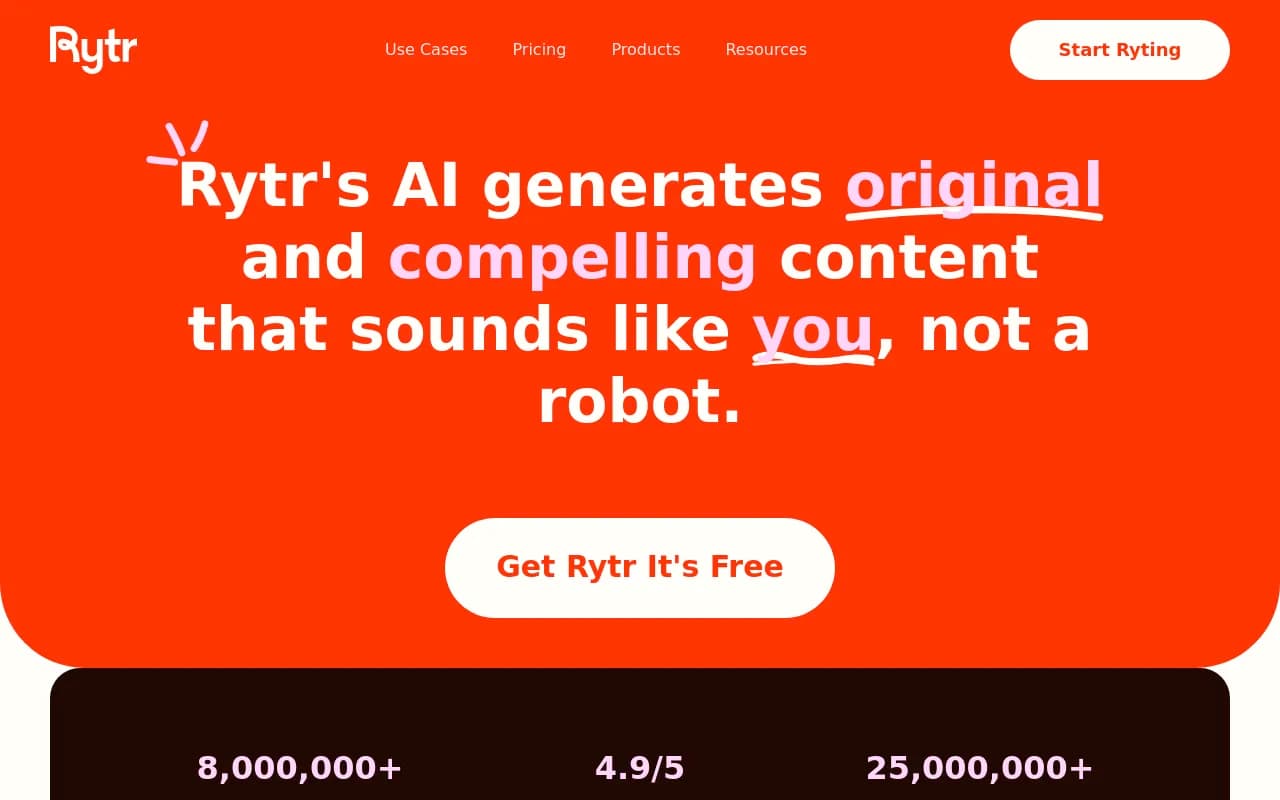
Rytr never pretended to be anything more than a lightweight writing assistant, and that's still true. No workflow builder, no brand-voice memory beyond basic tone matching, no team seats to speak of. It's a template picker with a generation button, priced accordingly.
The 10-brief scorecard
Here's the condensed version of how each tool scored across the test set, on a 1-10 scale, averaged across accuracy, voice, structure, and how human it read.
| Brief type | Jasper | Copy.ai | Rytr |
|---|---|---|---|
| Product description | 8 | 6 | 7 |
| Cold email | 7 | 7 | 5 |
| LinkedIn post | 6 | 5 | 4 |
| Blog intro | 8 | 6 | 5 |
| Comparison paragraph | 7 | 6 | 3 |
| Testimonial rewrite | 7 | 5 | 6 |
| FAQ answer | 8 | 7 | 6 |
| Facebook ad | 7 | 6 | 7 |
| Feature announcement | 7 | 8 | 4 |
| How-to section (600+ words) | 8 | 6 | 3 |
| Average | 7.3 | 6.2 | 5.0 |
A few notes behind those numbers, because averages hide the interesting parts.
Jasper: solid drafts, still homework required
Jasper's outputs were the most consistently usable, especially once I'd fed it brand voice and knowledge assets ahead of time. Without that setup its first drafts are competent but bland, which matches what eesel AI found in its own hands-on Jasper vs Rytr test: Jasper gives you a solid draft that needs editing and assets before it's truly publish-ready. The how-to section was the standout: structured headers, logical flow, no obvious filler. The LinkedIn post was the weakest spot — it read like marketing copy trying to sound like a person, which is the exact thing LinkedIn audiences have gotten good at spotting.
Copy.ai: fine, generic, occasionally surprising
Copy.ai's feature announcement brief actually scored the highest single result in the whole test, probably because that format matches its workflow-chaining strength: gather facts, structure them, format for brand voice. But on anything requiring a distinct point of view, like the comparison paragraph or the LinkedIn post, the output felt like it was assembled from a template rather than written. That tracks with criticism from reviewers like AirOps, who've flagged that Copy.ai's templated output can feel generic without a deeper connection to brand and product data. Given the company's public pivot toward GTM workflow automation, that's arguably not a bug — Copy.ai isn't optimizing for one-off copy quality anymore.
Rytr: fine for short, rough for anything else
Rytr's ceiling is low and its floor is cheap. It did fine on the product description and Facebook ad, where the brief is short and the stakes are low. It fell apart on the how-to section and the comparison paragraph, producing text that technically answered the brief but repeated itself and missed specifics I'd put directly in the prompt. That matches a line I saw repeated across multiple 2026 reviews, sourced originally from Reddit: Rytr "has problems understanding context and is not good at generating technical content." For quick captions and ad variations, though, it's hard to beat on price.
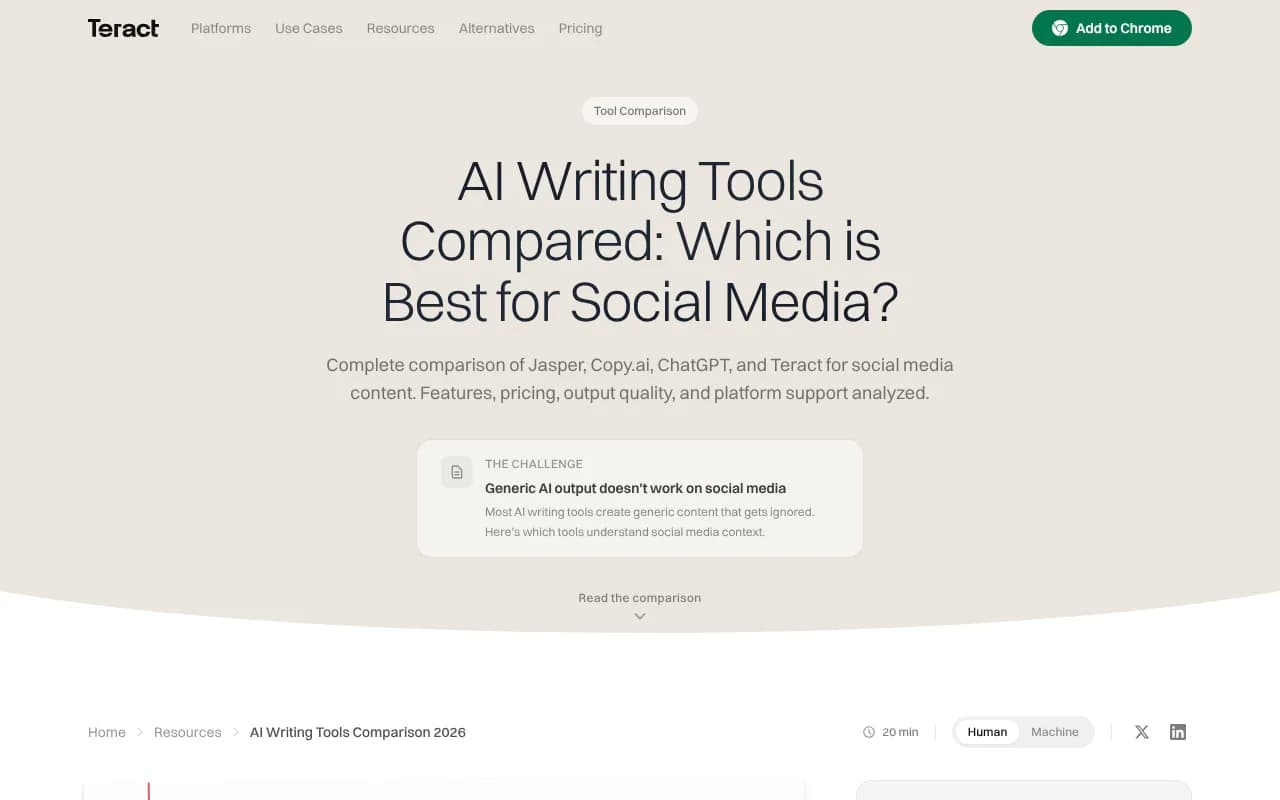
Worth flagging: a similar "same prompts" test run by Teract.ai on social-media replies scored Jasper and Copy.ai even lower, 1-4 out of 10, when graded specifically on platform-native tone for LinkedIn comments and Reddit replies. That's a stricter bar than ours (we tested marketing copy, not conversational replies), but it reinforces the pattern: these tools are strongest on structured marketing formats and weakest when the format demands sounding like an actual person in a real conversation.
Pricing, actually current for 2026
A lot of comparison articles still quote Jasper's old Creator plan and Copy.ai's old solo Pro tier, both of which no longer exist. Here's what's live on each pricing page as of this writing.
| Tool | Entry price | What you get | Team features |
|---|---|---|---|
| Jasper | $59/mo (Pro, annual) | 1 seat, Canvas, 2 brand voices, 5 knowledge assets | Business tier adds Agents, unlimited brand voices, API/MCP |
| Copy.ai | $24/mo (Chat, annual) | 5 seats, unlimited Chat words | Growth starts at $1,000/mo for 75 seats and workflow credits |
| Rytr | $7.50/mo (Unlimited, annual) | Unlimited generation, 1 tone match | None — no team seats, no workflow builder |
Jasper has no free plan, only a 7-day trial, and additional seats on Pro require contacting sales rather than a self-serve checkout. Copy.ai's real jump is from its $24-29 Chat plan straight to $1,000+/month Growth, which tells you where the company actually wants its customers to land. Rytr's free tier gives you 10,000 characters a month with no tone matching, which is enough to test but not much else.
The regulatory footnote worth knowing about Rytr
In September 2024, the FTC sued Rytr as part of "Operation AI Comply," alleging its review-generation feature let subscribers produce fabricated consumer reviews, in some cases tens of thousands from a single account. A final consent order in December 2024 banned Rytr from offering any review or testimonial generation service for 20 years. Then, in December 2025, the FTC reopened and vacated that order under the current administration's AI Action Plan, ruling the original complaint didn't meet the legal bar and that the order "unduly burdens AI innovation." Rytr consented to the reversal.
I'm not including this to relitigate the case. I'm including it because if you're evaluating Rytr's trustworthiness in 2026, this is the most relevant thing that happened to the company in the past two years, and it's easy to miss if you're only reading pricing pages.
A quick word on AI search visibility (not the same thing as writing quality)
None of our 10 briefs tested whether the output would actually get cited by ChatGPT or Google AI Overviews, because that's a different skill from writing a good draft. Jasper has leaned into this with its GEO and AI Optimization product, which scores content against citation-friendliness and adds structural elements like FAQs and schema. Whether that produces measurably more citations is a separate question from draft quality, and it's worth testing independently before you buy the add-on.
If AI-search visibility is actually your goal rather than a nice-to-have, it's worth knowing what AI search engines cite in practice. Promptwatch's data on ChatGPT citation types shows how-to content more than doubled its citation share across August 2026, from 4.3% in the first week to 9.1% in the last nine days of the month, while social posts collapsed from 4.4% to under 1% after August 14. Product pages stayed the single biggest category at roughly 25-30% of citations through most of the month. None of that tells you which writing tool to buy, but it does tell you which format to prioritize once you've got a draft: how-to structure and clean product pages, not social-style posts.
If you want to actually track whether your content is showing up in AI answers rather than guess, Promptwatch monitors citation trends and crawler activity across ChatGPT, Gemini, Perplexity, and Google AI Overviews, and its Content Agents can draft and publish GEO-structured pages directly to your CMS.

Which one should you actually buy
Run through this quickly before you commit:
- Pick Jasper if you need long-form, brand-consistent content across a team and you're willing to pay $59+/seat and spend time setting up knowledge assets and brand voice before the drafts get good.
- Pick Copy.ai if what you actually need is workflow automation across sales and marketing, not one-off copywriting — that's what the product is built for now, and the pricing jump to Growth reflects that.
- Pick Rytr if your volume need is short-form (ads, captions, product blurbs) and your budget is small. Don't hand it anything that requires research or a strong point of view.
None of the three reliably produces publish-ready long-form content without a human pass. If your workflow includes running drafts through a grammar or plagiarism check before publishing, tools like Grammarly or LanguageTool are a reasonable add-on regardless of which writing tool you pick.
And if you're building out a broader AI writing and optimization stack rather than picking a single tool, the software directory at surferstack.com is a decent place to compare adjacent categories like SEO content briefs and GEO platforms side by side before you commit budget.