Key takeaways
- Google AI Overviews now appear on 50-60% of U.S. searches, up from just 6.49% in January 2025 -- this is no longer a niche feature
- Being cited in an AI Overview drives 35% more clicks than a standard organic result, and AI Overview traffic converts at 14.2% vs. 2.8% for traditional organic
- Only 274,455 domains have ever appeared in AI Overviews out of 18.4 million in Google's index -- the bar is real, but beatable
- Content structure, entity authority, and third-party mentions matter more than keyword density
- Tracking your AI visibility requires different tools than traditional rank tracking
If you've been watching your organic traffic plateau while doing everything "right" by traditional SEO standards, this is probably why. Google has been building a parallel discovery system on top of its search results, and most brands are completely invisible in it.
AI Overviews now appear on more than half of all U.S. searches. Google's AI Mode -- a separate, more conversational interface -- crossed 100 million monthly active users. When these features show up, the top organic result loses roughly 58-61% of its clicks. But the brands cited inside the AI summary? They get 35% more clicks than they would from a standard ranking.
This isn't about chasing a new trend. It's about understanding where your customers are actually getting answers.
How Google AI Overviews and AI Mode actually work
Before optimizing for something, it helps to understand what it's doing.
AI Overviews (formerly Search Generative Experience) appear at the top of standard Google results for queries where Google thinks a synthesized answer adds value. They pull from multiple sources, cite them inline, and give users a complete answer without requiring them to click anywhere.
AI Mode is different. It's a dedicated conversational interface -- think of it as Google's answer to Perplexity. Users can ask multi-part questions, follow up, and get detailed responses. It's more like a research assistant than a search engine. The citation logic is similar to AI Overviews, but the queries tend to be longer and more exploratory.
Both systems share a core behavior: they don't just rank pages, they synthesize from pages they trust. Getting cited means Google's AI has decided your content is authoritative enough to include in its answer. That's a higher bar than ranking on page one, but the reward is proportionally higher too.
Why traditional SEO isn't enough
Here's the uncomfortable truth: 76% of AI Overview citations come from pages already ranking in the top 10. So traditional SEO still matters. But 46.5% of cited URLs rank outside the top 50 -- meaning Google's AI is pulling from sources it trusts even when they don't rank well conventionally.
That gap is where the opportunity lives. Google is evaluating something beyond keyword relevance and backlink count. It's looking at:
- Whether your content directly answers specific questions
- Whether your brand is mentioned and cited across authoritative third-party sources
- Whether your entity (your brand as a concept) is well-defined and consistent across the web
- Whether your content is structured in a way that's easy to extract and synthesize
The brands winning in AI Overviews aren't necessarily the ones with the most backlinks. They're the ones that have built genuine topical authority and made their content easy for AI systems to parse and trust.
Step 1: Audit your current AI visibility
You can't improve what you can't measure. Before changing anything, find out where you actually stand.
Run searches for the questions your customers ask most often. Do AI Overviews appear? If so, who's being cited? Is your brand in there? This manual process is useful for spot-checking, but it doesn't scale.
For systematic tracking, tools like Promptwatch monitor your brand's presence across Google AI Overviews, AI Mode, and other AI search engines simultaneously -- showing you which prompts trigger citations, which competitors are getting cited instead of you, and where the specific gaps are.

Other tools worth knowing about for this step:
Google Search Console now shows some AI Overview impression data, which is a useful free starting point. Semrush has added AI Overview tracking to its suite as well. But neither gives you the full picture of why you're being cited or not -- that requires a dedicated GEO platform.
Step 2: Build topical authority, not just keyword coverage
Google's AI systems are good at identifying whether a site genuinely knows a subject or is just optimizing around it. The difference shows up in citation patterns.
Topical authority means covering a subject comprehensively -- not just writing one good article, but building a cluster of content that addresses every meaningful angle of a topic. If you sell project management software, you shouldn't just have a page about "project management software." You should have content covering team collaboration, sprint planning, resource allocation, Gantt charts, remote work coordination, and the specific pain points of every persona who might buy from you.
This is sometimes called a "topical map" approach. The idea is that when Google's AI encounters a question about project management, your site should have a credible answer for almost any sub-question that might come up.
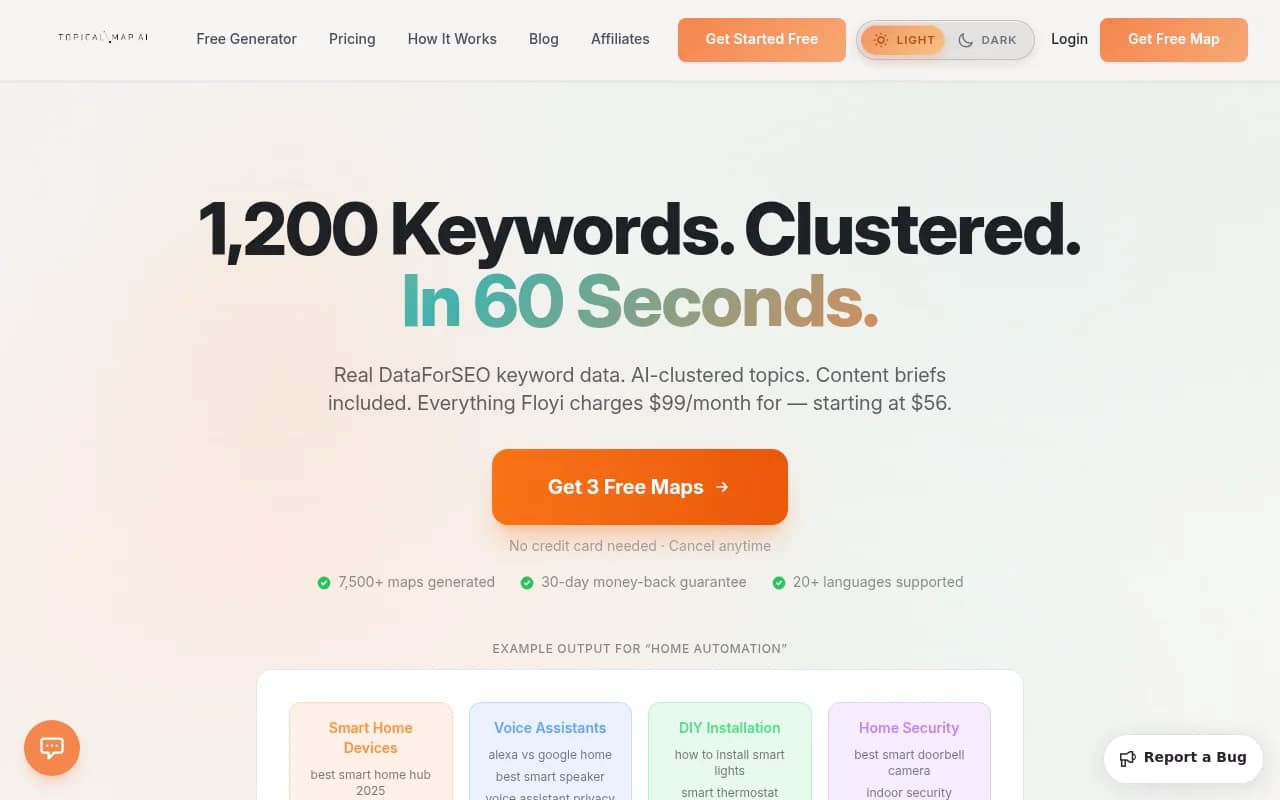
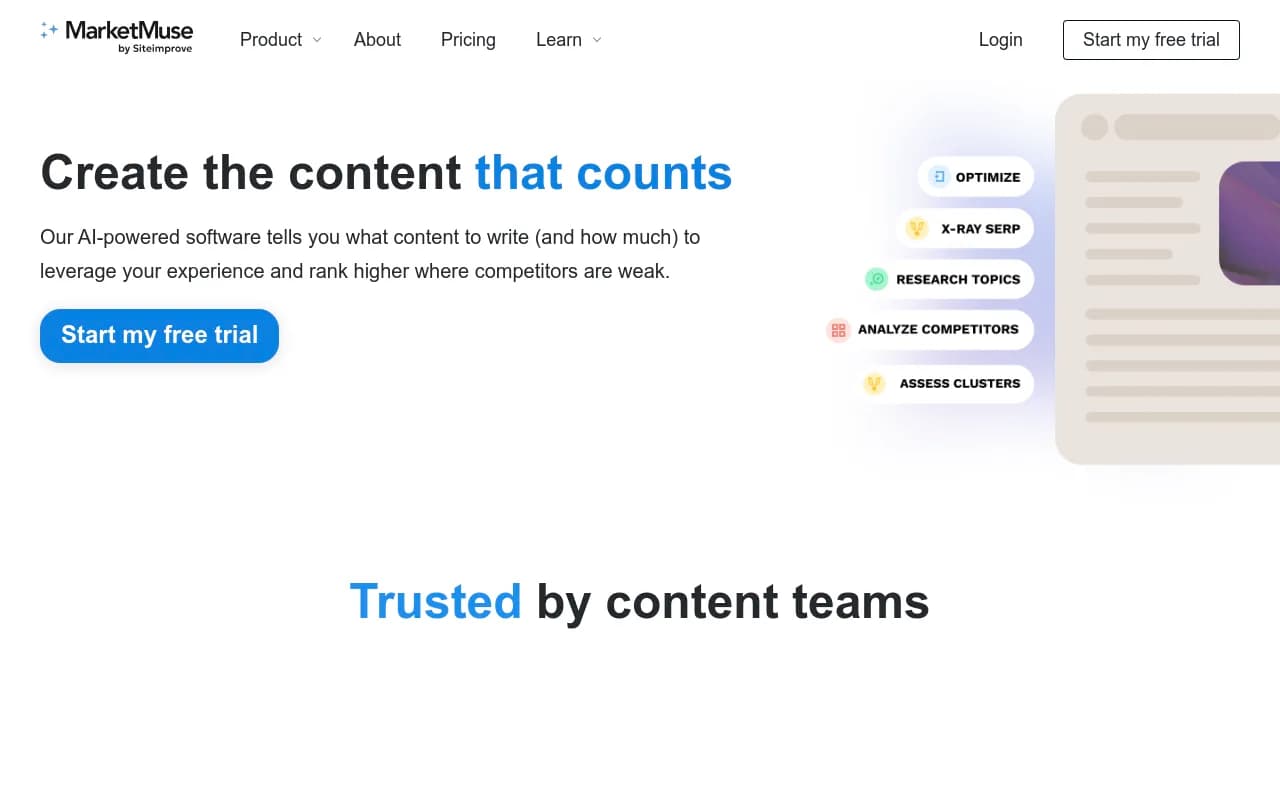
Tools like Topical Map AI and MarketMuse can help you identify the gaps in your content coverage. The goal isn't to produce more content -- it's to produce the right content that fills the specific holes AI models are looking for.
Step 3: Restructure content for AI citation
There's a meaningful difference between content written to rank and content written to be cited. AI systems extract specific passages, not entire pages. Your content needs to be structured so those passages are easy to find and pull.
Some practical changes that make a real difference:
Use clear question-and-answer formatting. If someone asks "What is [X]?", your page should have a section that directly answers that question in the first sentence or two. Don't bury the answer in paragraph three after two sentences of context-setting.
Write in complete, self-contained statements. AI systems often pull a single sentence or short paragraph. That passage needs to make sense on its own, without the surrounding context. "This approach reduces churn by 23%" is citable. "This can help with the problem mentioned above" is not.
Use headers that mirror actual search queries. H2s and H3s that match how people phrase questions give AI systems a clear signal about what each section answers.
Keep paragraphs short. Dense walls of text are harder to parse and extract from. Aim for 2-4 sentences per paragraph for key informational sections.
Add structured data. FAQ schema, HowTo schema, and Article schema all help Google understand the structure of your content. They're not magic, but they reduce friction.
If you're on WordPress, Yoast SEO and AIOSEO both make schema implementation straightforward without requiring developer involvement.
Step 4: Establish consistent entity presence
Google's Knowledge Graph is the backbone of how it understands entities -- brands, people, places, concepts. If your brand is well-defined as an entity, Google's AI is more confident citing you.
This means:
- Consistent NAP (Name, Address, Phone) across every directory, listing, and mention
- A well-maintained Google Business Profile with accurate categories, descriptions, and regular updates
- Wikipedia or Wikidata presence if your brand is large enough to qualify
- Consistent brand descriptions across your own site, LinkedIn, Crunchbase, and industry directories
The goal is that when Google's AI encounters your brand name anywhere on the web, it has a clear, consistent picture of what you are, what you do, and who you serve. Inconsistency creates doubt; consistency builds the kind of entity authority that gets you cited.
Step 5: Earn third-party mentions and citations
This is the hardest part, but also the most important. AI systems weight third-party mentions heavily because they're harder to manufacture than on-page optimization.
When authoritative sites -- industry publications, review platforms, news outlets, analyst reports -- mention your brand in the context of solving specific problems, that signal compounds. Google's AI sees your brand consistently associated with certain topics and outcomes, and that association becomes part of how it answers questions.
Practical ways to build this:
- Contribute original research or data that other sites want to cite
- Pursue digital PR placements that include your brand in "best of" or "top tools" roundups
- Get reviewed on platforms like G2, Capterra, and Trustpilot -- these are frequently cited by AI systems
- Seek podcast appearances, webinar slots, and guest articles in your industry's key publications
- Build relationships with journalists and analysts who cover your space
The Reddit angle is worth calling out specifically. AI systems, including Google's, frequently cite Reddit discussions in their responses. Being present and helpful in relevant subreddits -- not spammy, genuinely useful -- can drive citations in ways that surprise people.
Step 6: Optimize for specific query types
Not all queries trigger AI Overviews equally. Understanding which types of queries are most likely to generate AI responses helps you prioritize.
Queries that frequently trigger AI Overviews:
- "What is [X]?" and "How does [X] work?" -- definitional and explanatory
- "Best [X] for [use case]" -- comparative and recommendation-based
- "How to [accomplish task]" -- procedural
- "[X] vs [Y]" -- comparison queries
Queries that rarely trigger AI Overviews:
- Navigational queries (people looking for a specific site)
- Very short, ambiguous queries
- Breaking news queries (Google tends to show fresh results instead)
- Highly local queries (though this is changing)
For AI Mode specifically, the queries tend to be longer and more conversational. Think "I'm trying to set up a content calendar for a 5-person marketing team, what tools should I use and how should I structure it?" rather than "content calendar tools." Your content needs to address the underlying intent, not just the surface keywords.
Step 7: Track, measure, and iterate
Getting cited once isn't the goal. Building consistent, growing visibility across the queries that matter to your business is.
This requires tracking that goes beyond traditional rank monitoring. You need to know:
- Which prompts and queries are triggering AI Overviews in your space
- Which of those prompts your brand is being cited for
- Which competitors are being cited instead of you, and for what
- How your visibility is trending over time
Platforms purpose-built for this include Promptwatch (which covers Google AI Overviews, AI Mode, and 9 other AI search engines), as well as more specialized tools:

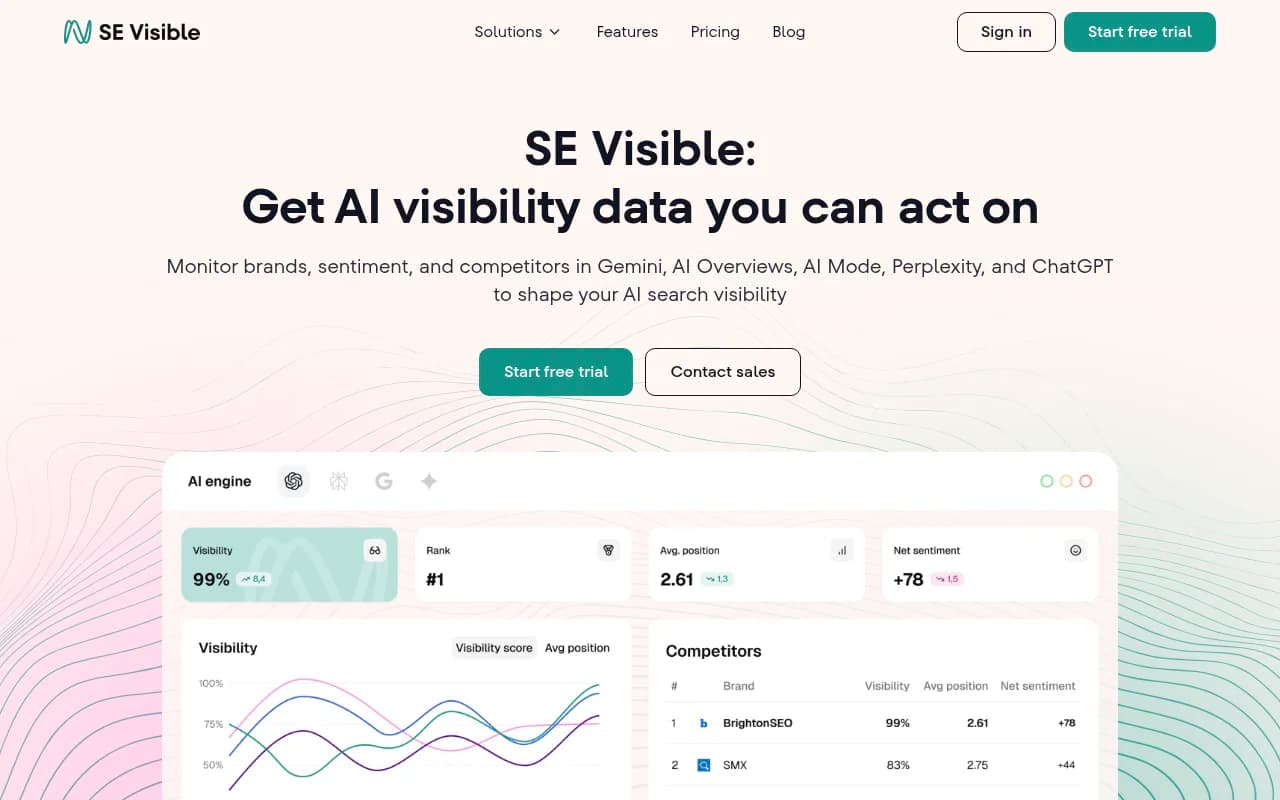
The comparison below covers the main options at different price points and capability levels:
| Tool | AI Overviews tracking | AI Mode tracking | Content gap analysis | Content generation | Free tier |
|---|---|---|---|---|---|
| Promptwatch | Yes | Yes | Yes | Yes | No (free trial) |
| Semrush | Yes | Limited | No | No | Limited |
| Otterly.AI | Yes | No | No | No | Yes |
| Profound | Yes | Yes | Limited | No | No |
| SE Visible | Yes | Yes | No | No | No |
| Google Search Console | Partial | No | No | No | Yes |
The key distinction is between tools that show you data and tools that help you act on it. Monitoring your visibility score going down is useful. Knowing exactly which content to create to fix it is better.
Putting it together: a practical 90-day plan
Days 1-30: Baseline and audit
- Set up tracking for your top 30-50 priority queries in an AI visibility tool
- Identify which queries trigger AI Overviews and AI Mode responses
- Note which competitors are being cited and for what
- Audit your existing content against the question-and-answer formatting principles above
Days 31-60: Content and structure
- Restructure your 10 highest-traffic pages for AI citation (clear answers, short paragraphs, FAQ schema)
- Identify 5-10 topic gaps where competitors are being cited but you have no content
- Create or commission content to fill those gaps
- Update your Google Business Profile and audit NAP consistency across directories
Days 61-90: Authority building
- Launch a digital PR push targeting 3-5 industry publications for brand mentions
- Identify relevant Reddit communities and begin contributing genuinely useful answers
- Submit to or update profiles on G2, Capterra, or relevant review platforms
- Review your tracking data and identify what's moved
The brands that win in AI search aren't doing anything exotic. They're being genuinely useful, making their content easy to parse, and building the kind of consistent presence across the web that AI systems learn to trust. That's achievable for almost any brand willing to put in the work systematically.