Key takeaways
- GetMint.ai and Meteoria.ai are monitoring tools -- they show you data but don't help you fix anything
- The platforms teams switched to in 2026 share one trait: they close the loop between visibility data and actual content improvement
- The biggest gap isn't tracking -- it's knowing what content to create and then creating it
- Several strong alternatives exist at different price points and use cases, from enterprise-grade platforms to lean agency tools
- If you want to track, optimize, and create content for AI search in one place, the shortlist is shorter than you'd think
There's a pattern that keeps showing up in 2026. A marketing team signs up for an AI visibility tool, gets excited about the dashboard, watches their brand mentions across ChatGPT and Perplexity for a few weeks -- and then realizes nothing has actually changed. They still don't know what to write. They still don't know why competitors keep showing up and they don't. The tool told them they had a problem. It just didn't help them solve it.
GetMint.ai and Meteoria.ai both fall into this category. They're not bad tools exactly -- they track brand mentions across LLMs, surface some prompt data, and give you a rough sense of where you stand. But teams that wanted to actually move the needle found themselves hitting a wall. The data was there. The path forward wasn't.
This guide covers the 7 platforms teams moved to instead, what each one does well, and how to think about which one fits your situation.
Why monitoring-only tools aren't enough anymore
The GEO (Generative Engine Optimization) space has split into two camps. On one side: dashboards that show you visibility scores, mention counts, and competitor comparisons. On the other: platforms that use that data to tell you what to do next -- and in some cases, do it for you.
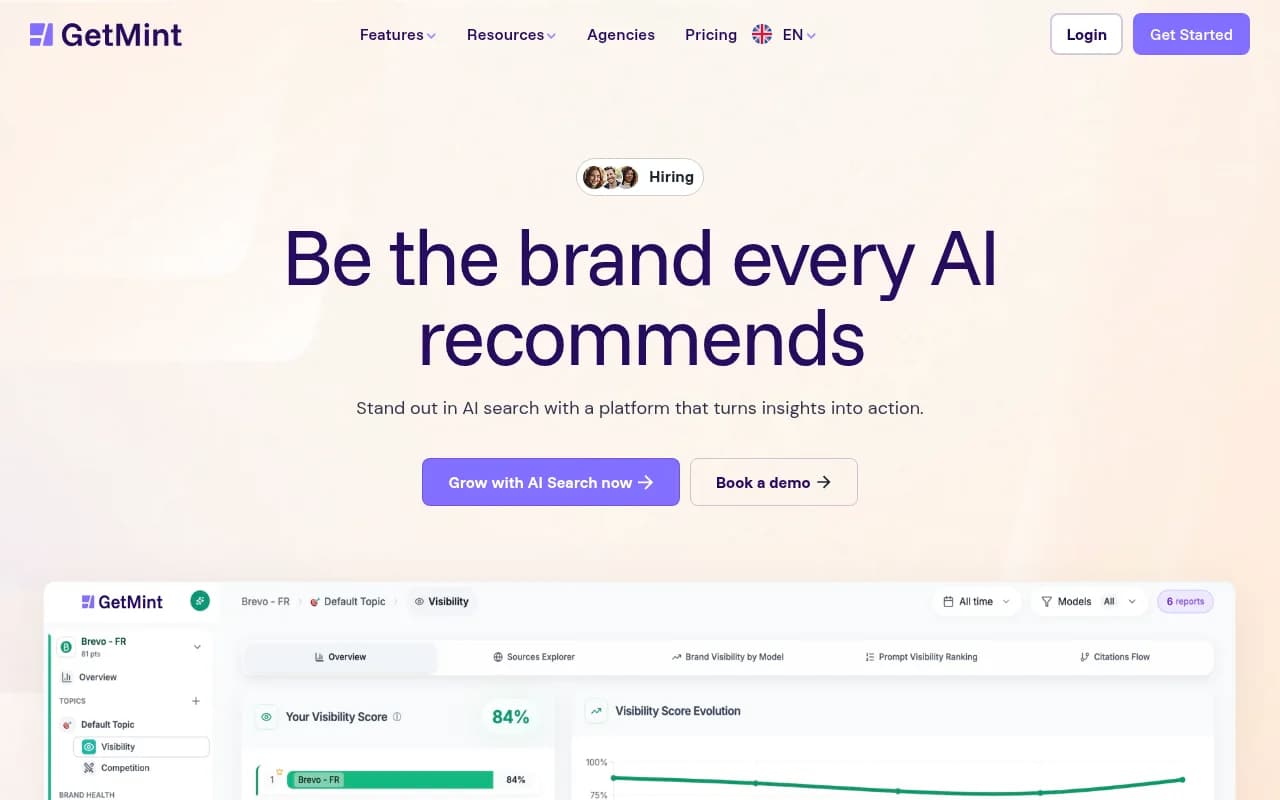
GetMint.ai sits firmly in the first camp. It monitors how your brand appears across AI search engines and gives you a snapshot of your visibility. Useful? Sure. But if your score is low, you're left figuring out the fix yourself.
Meteoria.ai has a similar story. It tracks brand mentions in LLM responses and offers some competitive benchmarking, but the workflow stops at the report. There's no content gap analysis, no writing tools, no way to connect what you're seeing to what you should publish.
Teams that switched didn't necessarily hate these tools. They just outgrew them -- or realized they needed something that actually moved metrics, not just measured them.
The 7 platforms teams moved to
1. Promptwatch -- the full-loop platform
If there's one platform that comes up most consistently when teams talk about switching away from monitoring-only tools, it's Promptwatch. The core difference is what happens after you see your visibility data.
Promptwatch's Answer Gap Analysis shows you the specific prompts where competitors are showing up and you're not. Not vague topic areas -- the actual questions AI models are answering with your competitors' content. From there, a built-in AI writing agent generates articles, listicles, and comparisons grounded in citation data from over 880 million analyzed citations. The content isn't generic; it's engineered to get cited by ChatGPT, Claude, Perplexity, and others.
It also has AI crawler logs -- real-time records of when ChatGPT, Claude, and Perplexity bots visit your site, which pages they read, and what errors they hit. Most competitors don't have this at all. Add in prompt volume scoring, query fan-outs, Reddit and YouTube citation tracking, and ChatGPT Shopping monitoring, and you have a platform that covers the full picture.
Pricing starts at $99/month for the Essential tier (1 site, 50 prompts, 5 articles). The Professional plan at $249/month adds crawler logs, city/state tracking, and 15 articles per month.

2. Relixir -- GEO with content generation built in
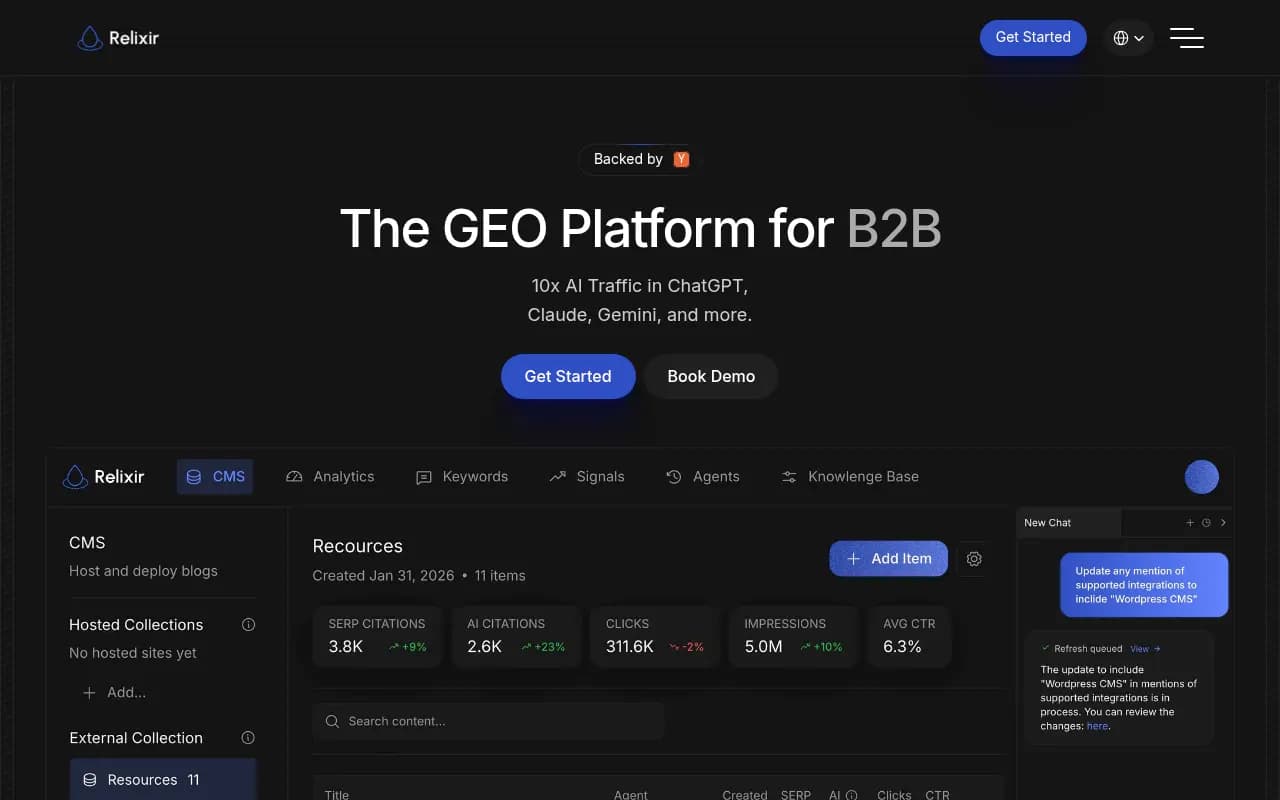
Relixir takes a similar "find gaps, fix them" approach. It combines AI search visibility monitoring with content generation, making it a reasonable alternative for teams that want an all-in-one workflow without the enterprise price tag.
The platform tracks brand mentions across major LLMs, surfaces competitive gaps, and helps you generate content to close them. It's a good fit for mid-market teams that want more than a dashboard but aren't ready for a full enterprise contract.
3. Profound -- enterprise-grade visibility with depth
Profound has built a strong reputation among larger brands that need serious depth in their AI visibility data. It covers a wide range of LLMs, offers detailed source analysis, and gives enterprise teams the reporting infrastructure they need.
Where it differs from GetMint.ai is in the quality and depth of the underlying data -- Profound goes deeper on which sources AI models are pulling from and why. The tradeoff is price: it's positioned for enterprise budgets, and smaller teams may find it overkill.
4. Scrunch AI -- monitor and optimize across AI assistants
Scrunch AI focuses on helping brands understand and improve how AI assistants like ChatGPT and Claude represent them. It's more optimization-oriented than pure monitoring, which puts it a step ahead of tools like GetMint.ai.
The platform is particularly useful for brands that have already done some GEO work and want to refine their positioning -- rather than teams starting from scratch who need content generation capabilities too.
5. Otterly.AI -- affordable entry point with honest limitations
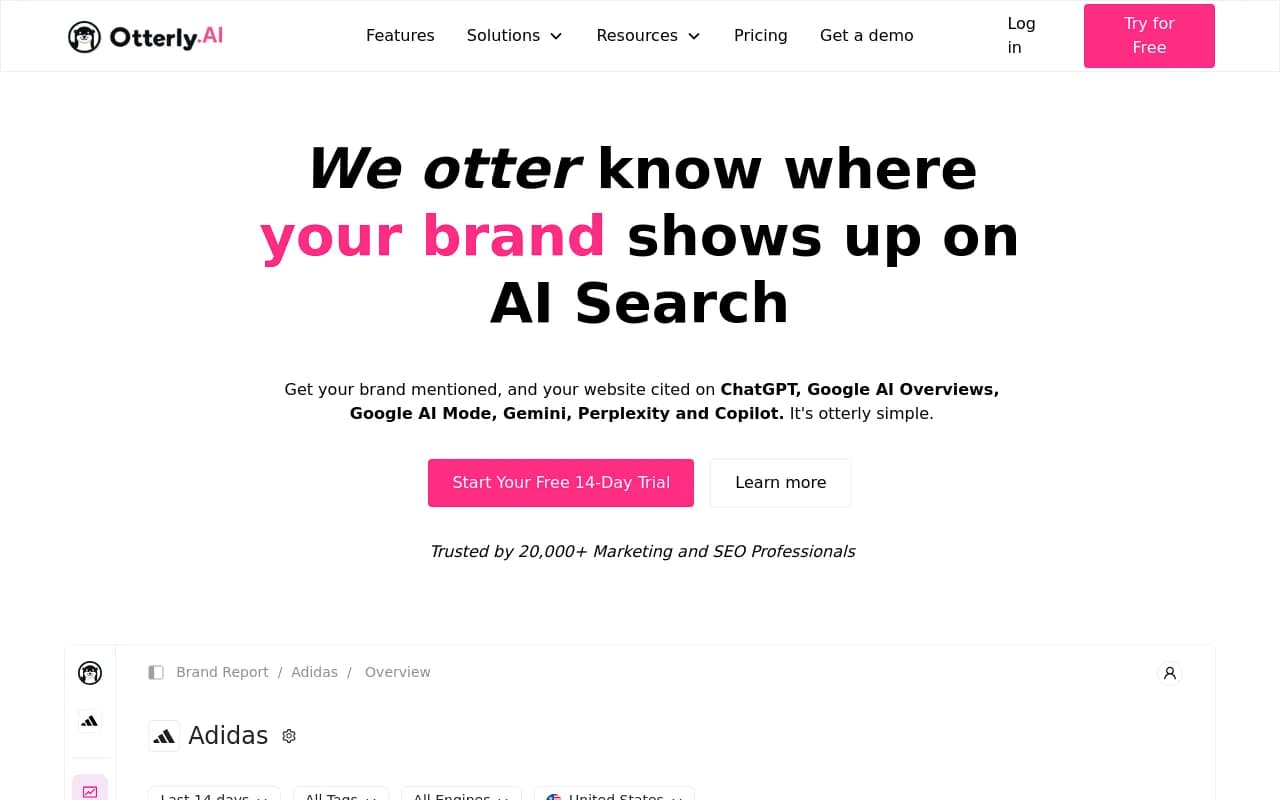
Otterly.AI is worth mentioning because it's where a lot of teams land when they're first moving away from GetMint.ai and want something cheap and quick to set up. It tracks brand visibility across AI search engines and gives you a clean, simple interface.
The honest caveat: Otterly.AI is still primarily a monitoring tool. It doesn't have content generation, crawler logs, or deep prompt intelligence. But if your team just needs reliable tracking data and you're doing the content work elsewhere, it's a solid, affordable option.
6. Athena HQ -- strong monitoring for teams that want clean data
Athena HQ has carved out a niche with clean, reliable AI visibility data across 8+ AI search engines. Teams that switched from GetMint.ai often cite Athena HQ's data quality and interface as the main draw.
Like Otterly.AI, it's monitoring-focused -- there's no content generation or gap-closing workflow. But for teams that have a separate content process and just need trustworthy visibility data to feed into it, Athena HQ delivers.
7. Vismore -- turning insights into execution
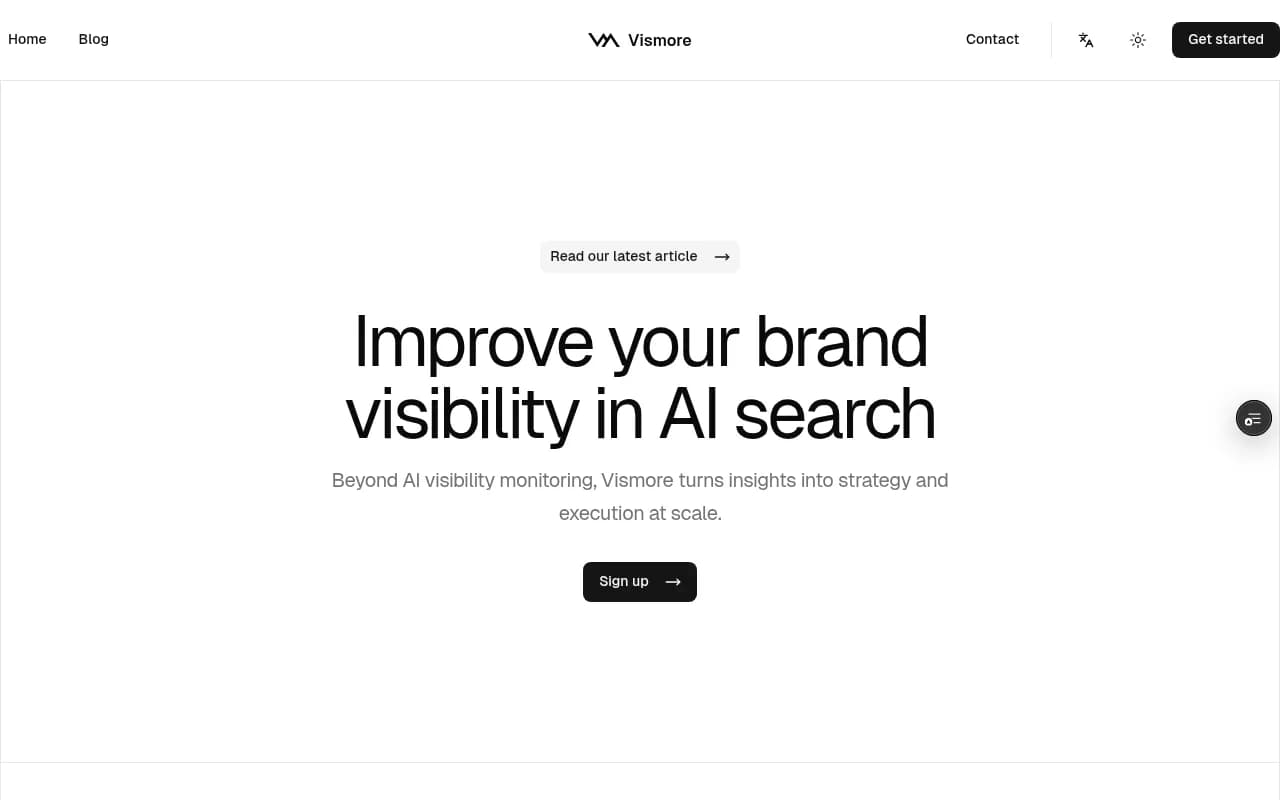
Vismore is one of the newer platforms making noise in 2026, specifically because it tries to bridge the gap between insight and execution. The positioning is explicitly about turning AI search data into strategy and content -- not just reporting on where you stand.
It's still maturing as a platform, but teams that felt stuck with monitoring-only tools have found Vismore's action-oriented approach a better fit for how they actually want to work.
How these platforms compare
| Platform | Monitors AI search | Content gap analysis | AI content generation | Crawler logs | Pricing starts at |
|---|---|---|---|---|---|
| Promptwatch | Yes (10 LLMs) | Yes | Yes | Yes | $99/mo |
| Relixir | Yes | Yes | Yes | No | Custom |
| Profound | Yes | Partial | No | No | Enterprise |
| Scrunch AI | Yes | Partial | No | No | Custom |
| Otterly.AI | Yes | No | No | No | ~$49/mo |
| Athena HQ | Yes | No | No | No | Custom |
| Vismore | Yes | Yes | Partial | No | Custom |
| GetMint.ai | Yes | No | No | No | Custom |
The table makes the pattern obvious. GetMint.ai and Meteoria.ai sit in the monitoring-only column. The platforms teams are moving to either have content gap analysis, content generation, or both.
What to actually look for when switching
A few things worth checking before you commit to a new platform:
Prompt intelligence, not just mention counts. Knowing your brand was mentioned 47 times last week is less useful than knowing which specific prompts triggered those mentions and which ones your competitors are winning that you're not. Look for platforms that give you prompt-level data with volume estimates.
Content gap analysis that's specific. Vague topic suggestions aren't useful. The best platforms show you the exact questions AI models are answering with competitor content -- so you know precisely what to write.
Crawler log access. This is underrated. Knowing when ChatGPT or Perplexity's bot visited your site, which pages it read, and whether it hit errors tells you a lot about why your content is or isn't getting cited. Most monitoring tools don't have this.
Traffic attribution. Visibility scores are nice, but connecting AI search mentions to actual website traffic and revenue is what makes the investment defensible. Look for platforms that offer GSC integration, a tracking snippet, or server log analysis.
Reddit and YouTube tracking. AI models cite Reddit threads and YouTube videos constantly. If your platform isn't surfacing which discussions are influencing AI recommendations, you're missing a significant channel.
Who should go where
If you're a marketing team or SEO team that wants to track, optimize, and create content for AI search in one place, Promptwatch is the most complete option. The combination of gap analysis, AI writing, crawler logs, and traffic attribution covers the full workflow.
If you're an enterprise brand with a large content team and mainly need deep, reliable visibility data, Profound is worth evaluating -- just know you'll need to handle the content side separately.
If budget is the primary constraint and you just need reliable tracking, Otterly.AI or Athena HQ are honest, affordable choices. They won't help you fix the problem, but they'll tell you clearly what the problem is.
If you're an agency managing multiple clients, Promptwatch's agency pricing and multi-site support make more sense than stitching together monitoring tools per client.
The bottom line
GetMint.ai and Meteoria.ai aren't broken -- they just stop at the wrong point. Showing a brand a visibility score without a path to improving it is like giving someone a blood test result with no doctor to interpret it. The data exists. The next step doesn't.
The platforms that teams are actually sticking with in 2026 are the ones that treat visibility data as the starting point, not the end product. Find the gaps, create the content, track the results. That loop is what separates a useful tool from a dashboard you check once a week and slowly stop caring about.