Key takeaways
- Otterly.AI offers a 7-day free trial and prices from $29/month. It has no permanent free tier, so "free" alternatives mean open-source trackers, free plans, or one-off checkers.
- Open-source options like Elmo, geo-aeo-tracker, OneGlanse and limelit-co/open are real and self-hostable, but you pay for the LLM and SERP API keys behind them.
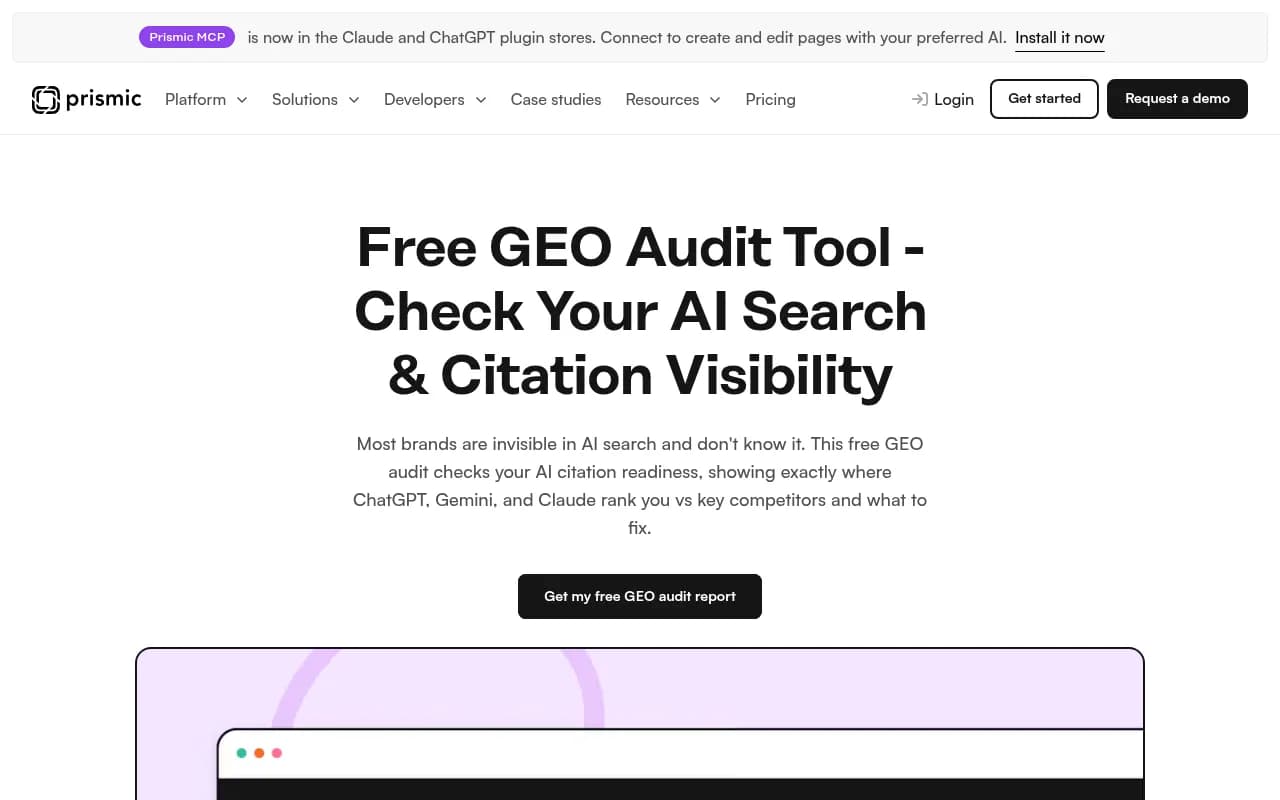
- Free checkers (HubSpot AI Search Grader, AnswerGist, Prismic's GEO audit) give you a snapshot, not ongoing tracking.
- Monitoring alone leaves you with a dashboard and no fixes. If you need crawler logs, content generation and attribution, a paid platform like Promptwatch is the next step up.
Why look beyond Otterly.AI at all?
Otterly is cheap. That's its pitch, and honestly it holds up. HubSpot's roundup of Peec alternatives calls it the most affordable credible entry point in the category, rates it 4.9/5 on G2, and points to the $29/month starting price. The same roundup notes the jump to the $489/month Premium tier is steep, and that there are no CRM integrations at entry price points.
So why would anyone want something free? Three reasons come up repeatedly:
- You want to test whether AI visibility tracking is worth paying for before you commit any budget.
- You have engineers and would rather own the data and the code.
- Reviews, including ZeroRank's write-up, say the monitoring tools lack an "actionability layer." You see a number, then you're on your own.
One warning about the research out there. Some third-party pages claim Otterly has a free tier and a "$295 Starter" plan. That conflicts with Otterly's own site, which shows a 7-day trial and pricing from $29/month. Check Otterly.AI directly before you trust a roundup.

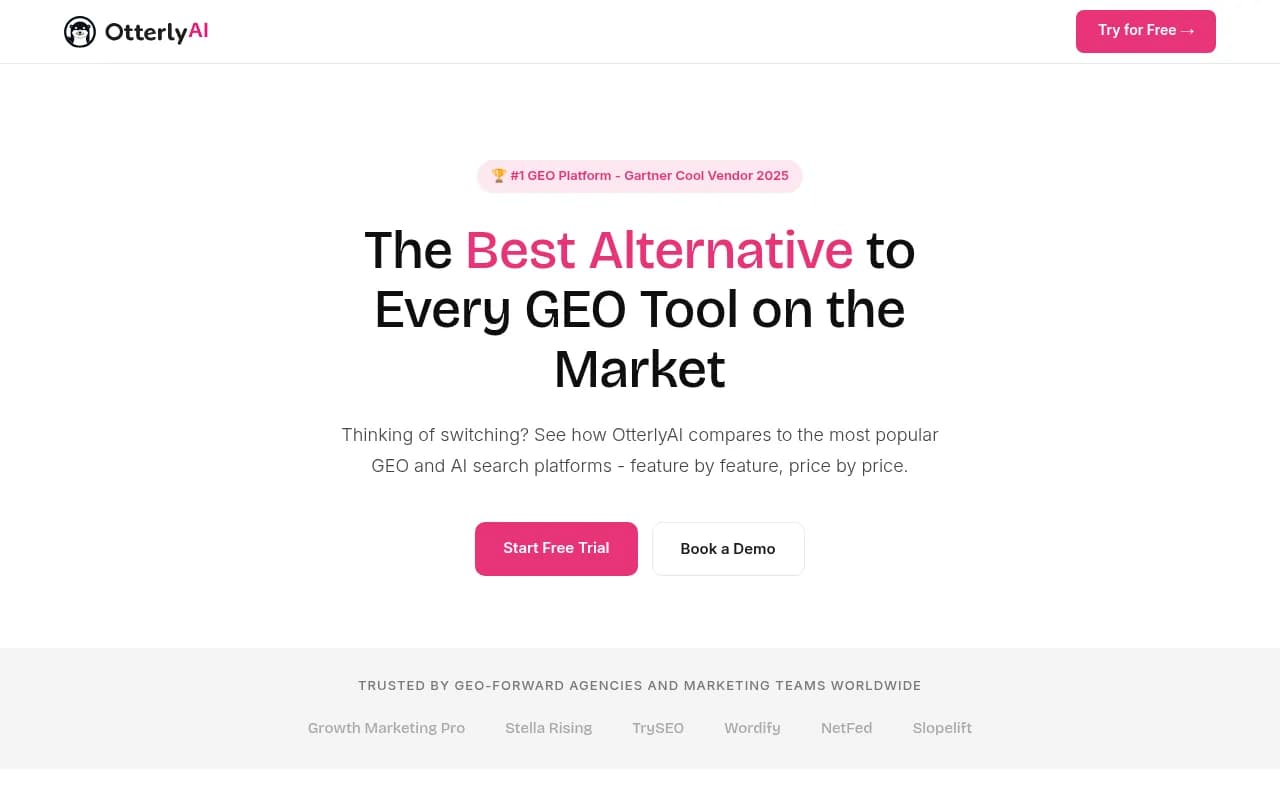
That page is vendor-written, so treat its claims about competitors' pricing as marketing until you've checked them yourself.
What "free" actually means in this category
There are four different things people call free here, and they are not interchangeable.
| Type | Example | What you get | Real cost |
|---|---|---|---|
| Open-source, self-hosted | Elmo, geo-aeo-tracker, OneGlanse | Full tracker you control | API keys, hosting, your time |
| Free plan | Dageno AI, OpenLens, Surfaced | Limited ongoing tracking | Caps on prompts or engines |
| Bring-your-own-key | Llumo | Platform UI, you pay the models | LLM usage fees |
| One-off checker | HubSpot AI Search Grader, AnswerGist | A single snapshot | No history or trends |
| Free trial | Otterly, Peec, Scrunch, Promptwatch | Full product for a while | Ends, then you pay |
Ongoing daily tracking is paid almost everywhere. Geoptie makes that point in its roundup of AI visibility tools, though Geoptie sells a competing tool, so take it with some salt. The free options are mostly snapshots.
Open-source trackers you can self-host
GitHub's ai-visibility-tracker topic lists 18 repos. The broader ai-visibility topic shows 610. Most are young and small. I haven't verified how recently each was updated, so check the licence, last commit and star count before you build anything on them.
Here are the ones worth a look.
Elmo
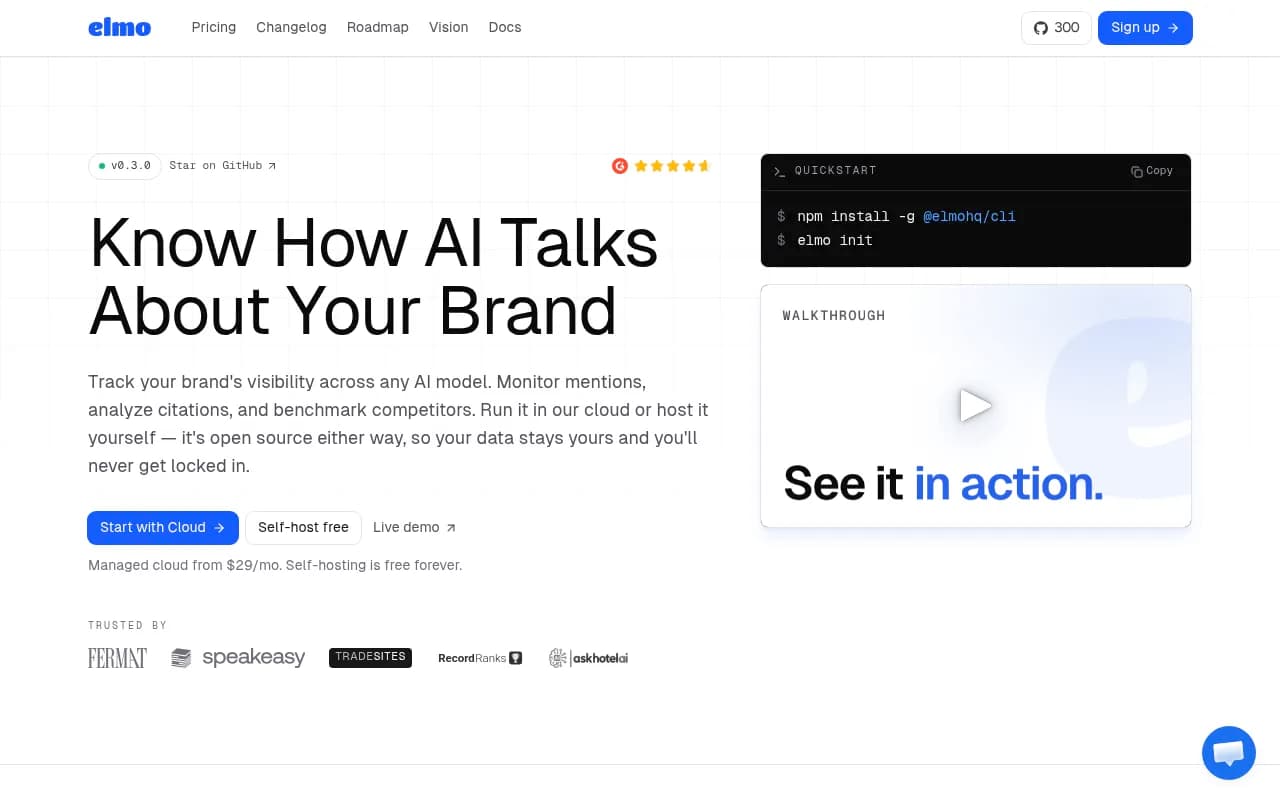
Elmo is an MIT-licensed AEO and GEO platform you can self-host. It tracks ChatGPT, Claude, Perplexity, Gemini, Copilot, Grok and Google AI Overviews, and it says every metric is auditable in the code. That last part matters if you've ever distrusted a vendor's visibility score. It's also listed in our catalog.
geo-aeo-tracker
danishashko/geo-aeo-tracker is MIT-licensed, with a Next.js dashboard, a CLI and an MCP server. It covers four engines: ChatGPT, Perplexity, Gemini and Google AI Mode. Each run gets a 0-100 score built from mentions, position, frequency, citations and sentiment. It also does citation analysis, competitor battlecards and country-scoped checks.
You bring your own API keys, and results sit in your browser or your own Supabase project. It has about 327 stars. The README links to Bright Data for a data key, so expect third-party data costs.
OneGlanse
oneglanse/oneglanse is MIT-licensed and self-hostable. What's different is that it monitors through real product UIs rather than APIs, across ChatGPT, Perplexity, Gemini, Claude and Google AI Overview. That's closer to what users actually see. My inference, not a sourced fact: scraping UIs probably breaks whenever an engine redesigns its interface, so budget maintenance time.
limelit-co/open
limelit-co/open is a self-hosted tracker written in Go with an MCP server. It covers ChatGPT, Claude, Perplexity, Gemini and AI Overviews and has about 444 stars, making it one of the more popular options in the topic.
Others worth knowing
- GetCito: open-source AIO/AEO/GEO tracking, about 427 stars. There is also a hosted GetCito product.
- CiteLadder: a self-hostable alternative to Peec and Profound that uses DataForSEO and has an MCP server.
- webappski/aeo-platform: a CLI that measures your brand across four engines and audits AI-bot crawlability and authority signals.
- Citatra: open-source AEO/GEO covering competitor monitoring and backlinks.
- vigie-ai-visibility-tracker: a free Node.js tool for brand mentions and share of voice.
- searchmirror: a self-hosted rank and AI-visibility monitor on the DataBlue SERP API. It's AGPL-licensed, which matters if you plan to modify and offer it as a service.
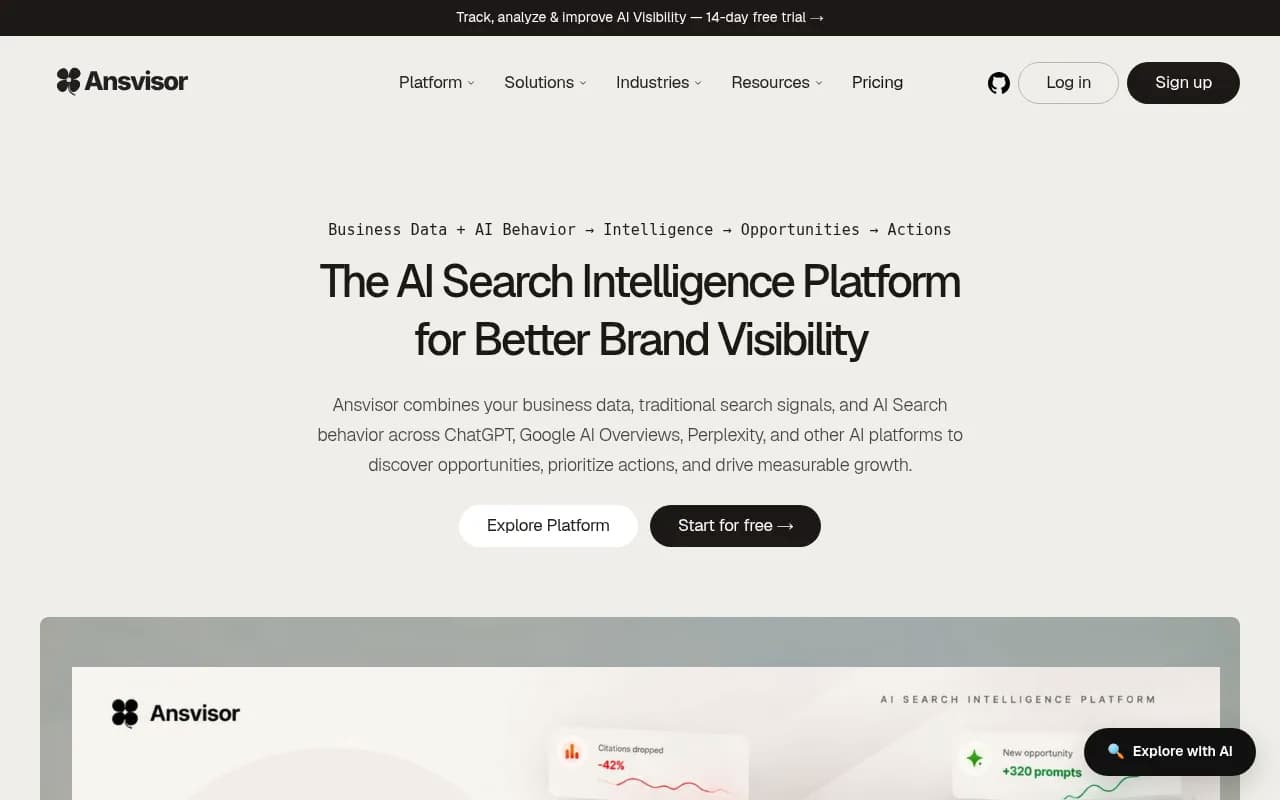
- Ansvisor: an open-source AI search intelligence platform that also has a catalog entry.
Logwick for crawler activity
Prompt tracking tells you what AI says. It doesn't tell you whether AI bots can read your site. stani-chirk/logwick is a self-hosted server-log analyzer that classifies GPTBot, ClaudeBot, ChatGPT-User, Perplexity and others from edge JSONL logs, with no JavaScript tag. For context on how much of the crawl traffic is AI, see Promptwatch Data's AI crawler traffic report, which covers weekly IP-verified requests from June 8 to September 6, 2026.
The hidden costs of self-hosting
Open-source doesn't mean free to run. Be honest with yourself about these.
- API keys. Every one of these trackers needs LLM or SERP API access. Bright Data, DataForSEO and DataBlue all charge. If you track 100 prompts daily across four engines, that adds up.
- Citation slots differ by engine. Promptwatch Data's average sources per response report shows ChatGPT citing about 5 sources per web-search answer, while Google AI Overviews and Perplexity cite about 10. Copilot swung from under 2 to nearly 17 within a few weeks. Whatever tool you pick, it should record citations per engine separately rather than blending them into one number.
- API output isn't UI output. An API call can return different answers and citations than what a user sees in the real interface. That's why OneGlanse's UI approach is interesting, and why some paid platforms collect from real interfaces.
- Maintenance. Young repos stall. If the maintainer disappears, you own the fix.
- No actionability. Most of these show you data. None writes the page that fixes the gap.
Free plans and bring-your-own-key options
If you'd rather not run infrastructure, a few hosted tools have free plans or lower-cost models. I haven't verified current limits on any of them, so check the pricing page before relying on the details.
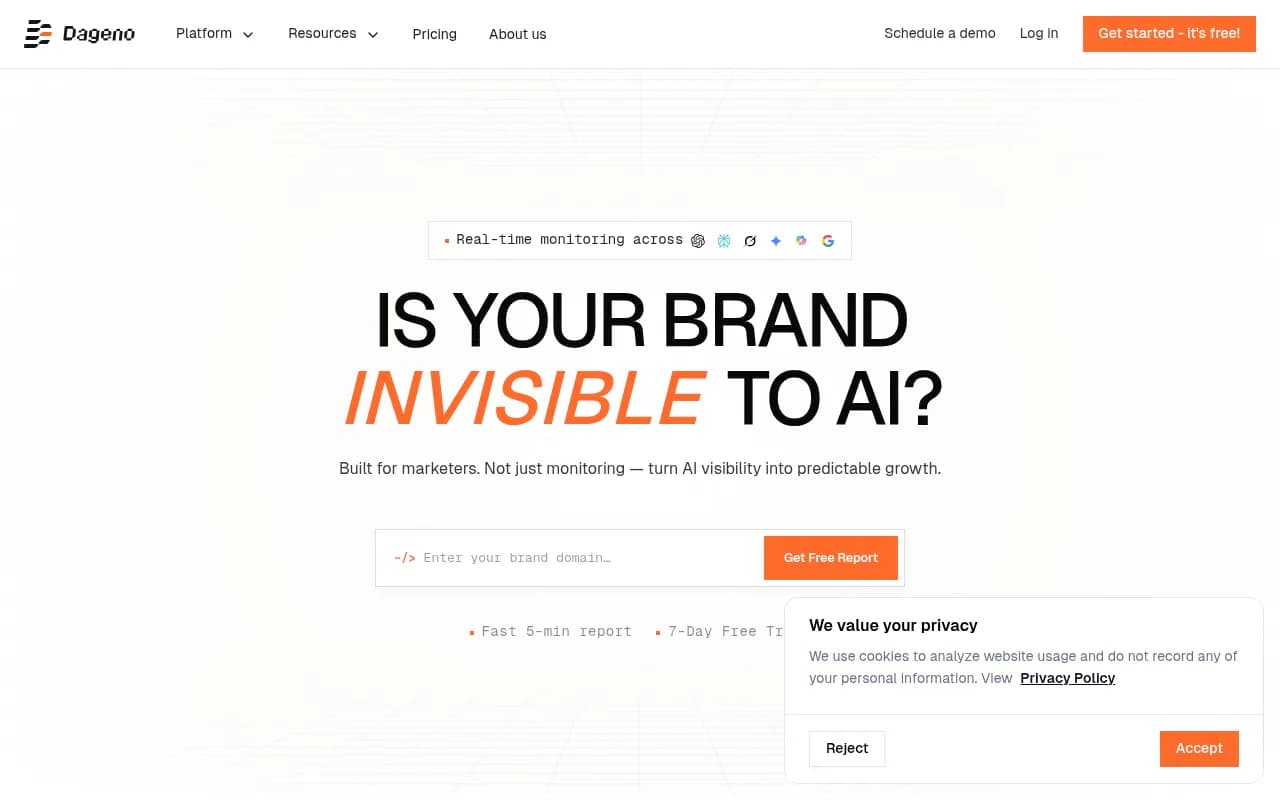
Dageno AI monitors 10+ platforms and has a free plan.
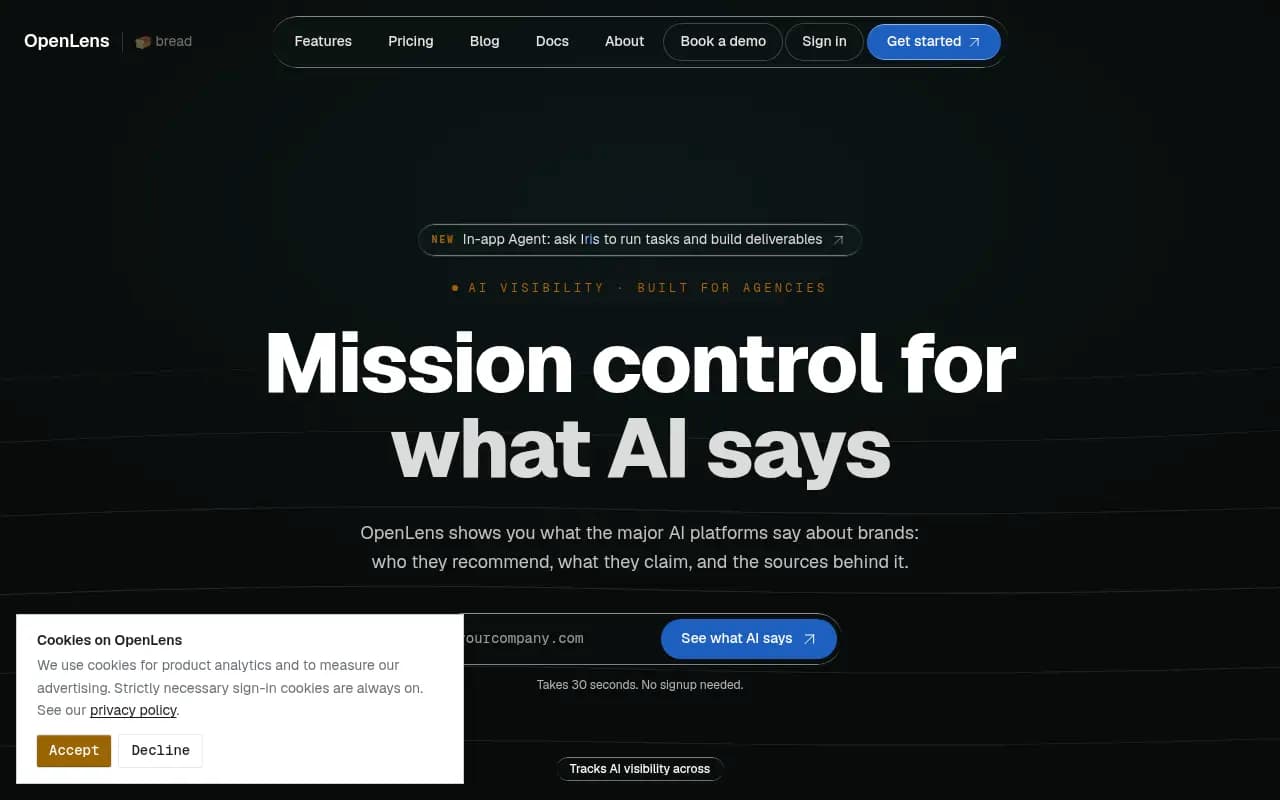
OpenLens advertises a generous free plan and an in-dashboard AI agent.
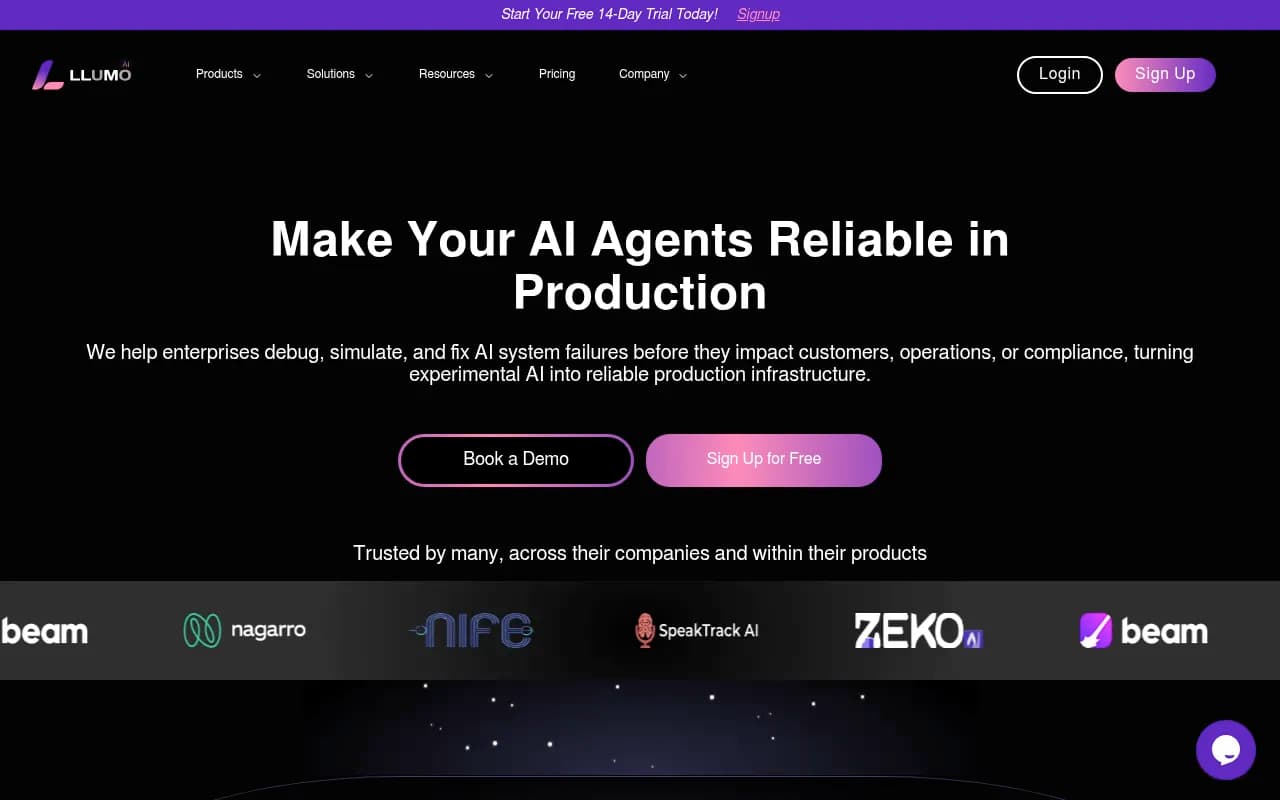
Llumo takes a bring-your-own-key approach: you pay the model providers directly rather than a marked-up subscription.
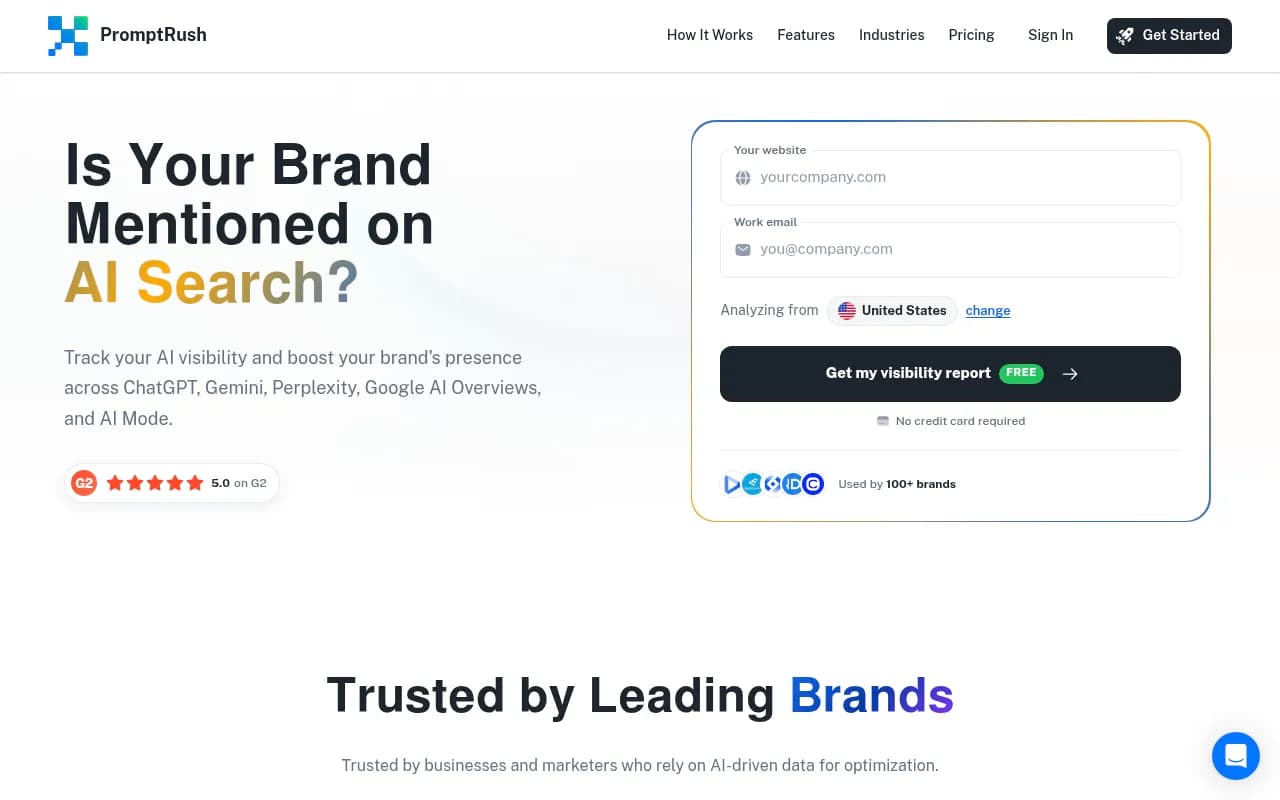
Surfaced reportedly has a free plan and then EUR 39/month across 12 engines, but that comes from a vendor-adjacent source and I haven't verified it. PromptRush starts at $19/month, which isn't free but undercuts Otterly.
Free one-off checkers
These are good for a first look, and for convincing a boss that a problem exists.
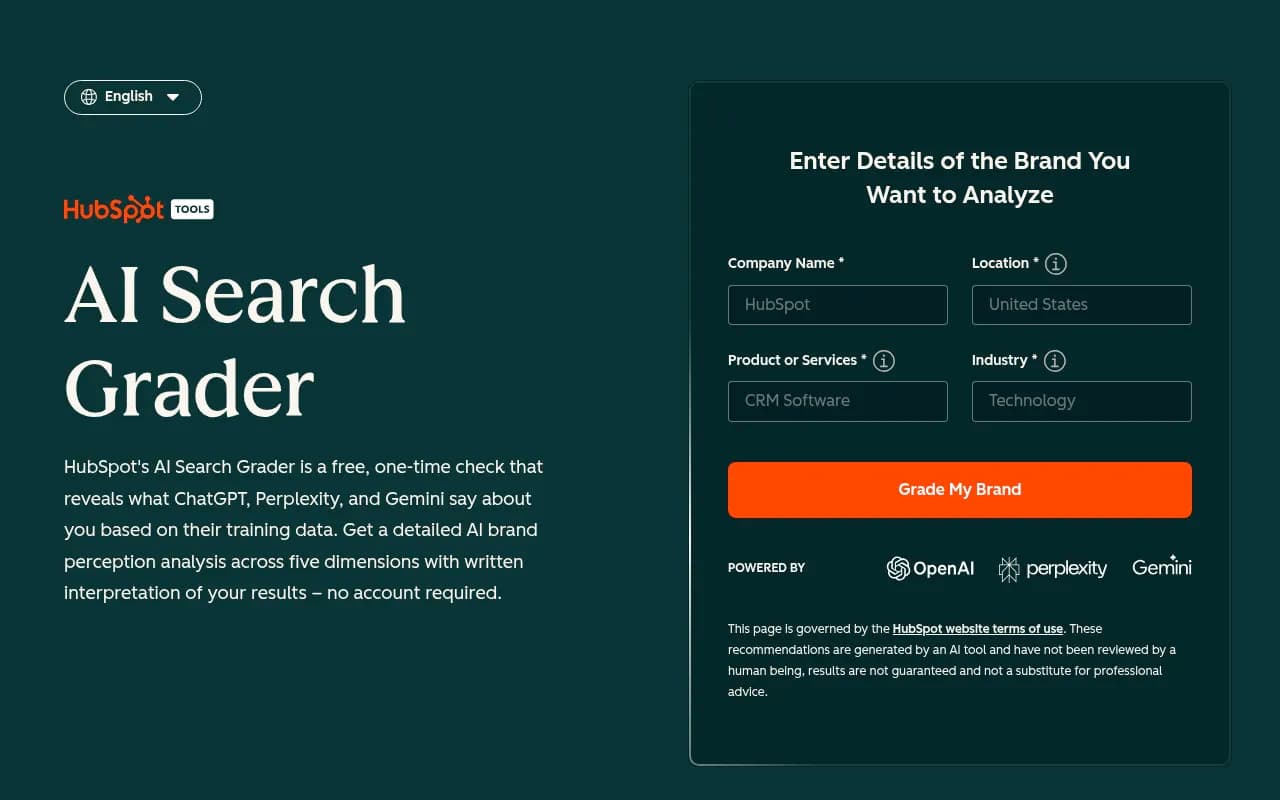
- HubSpot's free AI Search Grader scores a brand without an account.
- AnswerGist offers a free AI visibility audit with prioritized fixes.

- Prismic's free GEO audit is a one-off check of your AI answer presence.
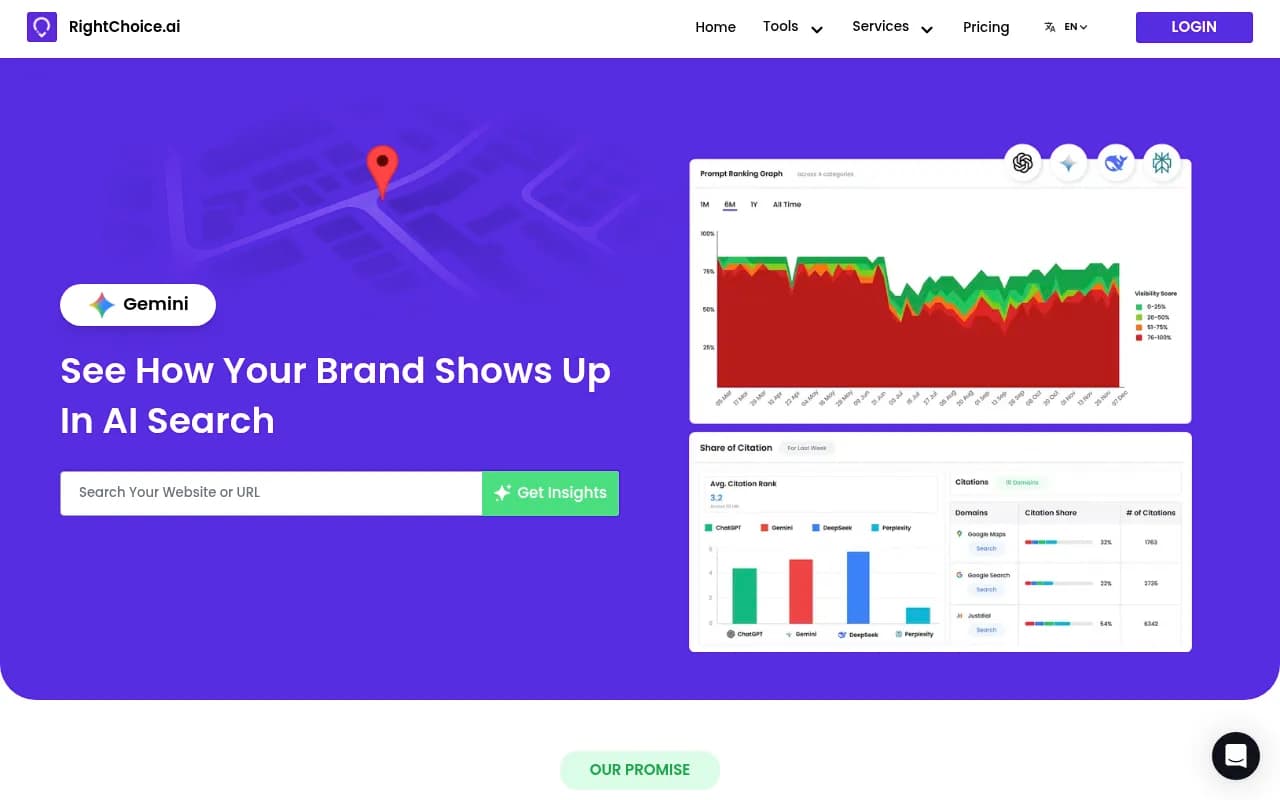
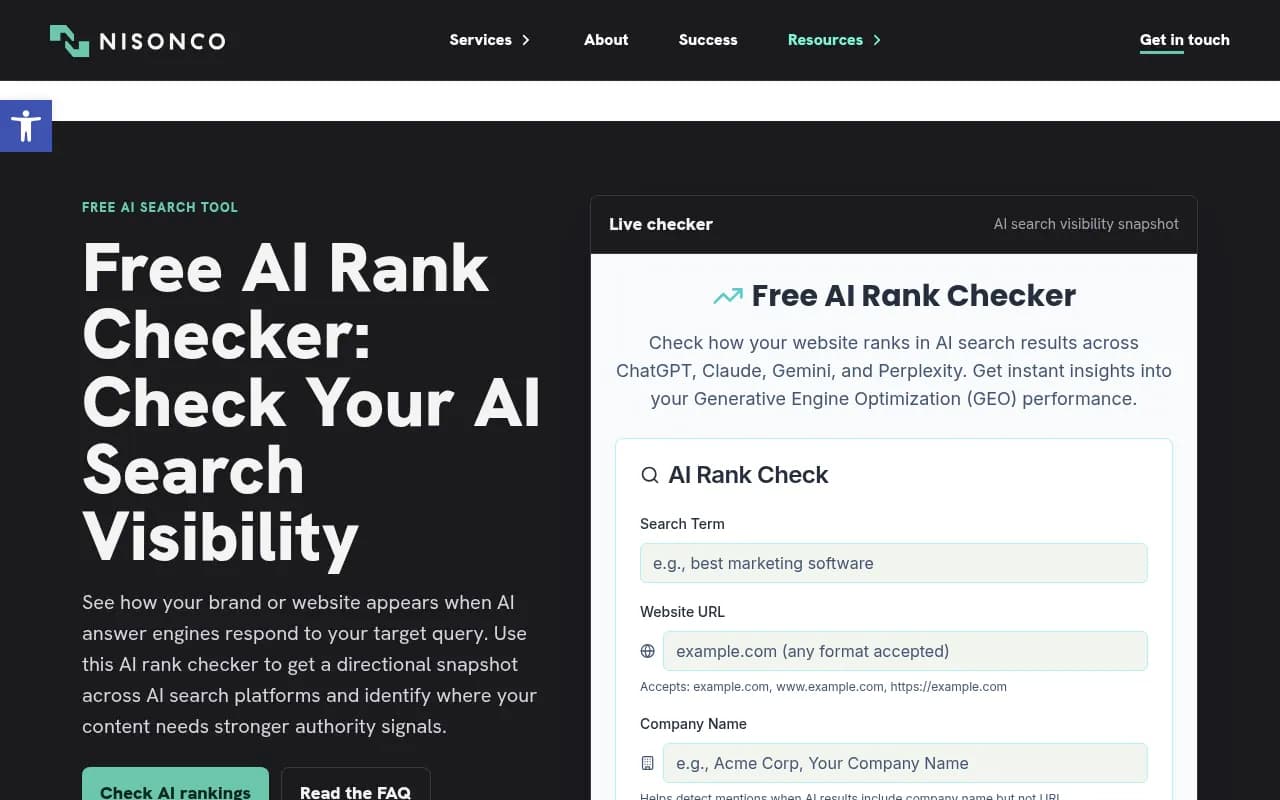
- RightChoice.Ai and NisonCo's AI Rank Checker are free brand and citation checkers.
Promptwatch also has a no-login free AI visibility report that scans how ChatGPT, Gemini and Perplexity talk about your brand, checks crawler access, and lists what to fix.
The limitation is the same for all of them: one snapshot, no trend. AI answers change from run to run, so a single check can mislead you. Run it a few times and treat it as a rough read.
A quick decision guide
| Your situation | Best path |
|---|---|
| Just curious, no budget | Free checkers, then a free plan |
| Developer, wants to own data | Elmo, geo-aeo-tracker or limelit-co/open |
| Need real-UI data, can maintain it | OneGlanse |
| Need crawler visibility on your own server | Logwick |
| Small team, wants hosted and cheap | Otterly ($29/month) or PromptRush ($19/month) |
| Need fixes, not just reports | A paid optimization platform |
Where paid tools still make sense
Switching trackers is quick if you export your prompts first and re-enter them, as LightSite's comparison points out. So starting free and upgrading later costs you very little. That's the sensible way to do this.
When you outgrow monitoring, the question shifts from "was I mentioned?" to "what do I publish, and did it work?" That's where Promptwatch sits. It's an end-to-end AI visibility platform rather than a tracker: it monitors real AI interfaces, shows which pages get cited, logs AI crawler visits with IP-verified crawler logs, and uses Content Agents to write and publish pages for the gaps it finds. Visitor analytics then show whether AI sends traffic. Plans start at $95/month on Essential, with a 7-day free trial on monthly billing; confirm current details at promptwatch.com/pricing.

Note that Otterly's own comparison page claims Promptwatch is capped at 2 websites at $249/month. That's Otterly's claim, and Promptwatch's own pricing page is the source to check. If you want a direct comparison, see the best GEO and AI visibility platforms compared.
If you want to browse more options, the GEO software directory lists a much wider set of tools than I can cover here.
Practical tips before you pick
- Write your prompt list first. Export it from wherever you have it. Real buyer questions beat keyword lists.
- Run two tools on the same 20 prompts for a week. Compare the answers. You'll quickly see which tool matches what you see in the actual interfaces.
- Check the licence. MIT is permissive. AGPL has obligations if you offer the software as a service.
- Check the last commit. A repo with 400 stars and no activity in six months is a risk.
- Budget for keys. Estimate prompts x engines x days x API price before you call it free.
- Track crawlers separately. If bots can't read your pages, no amount of prompt tracking will fix it.
Bottom line
If you're a developer, start with Elmo or limelit-co/open and see whether you like owning the pipeline. If you aren't, a free plan from Dageno or OpenLens plus a free checker covers the exploratory phase. And once you know AI visibility matters for your business, pick a platform that fixes problems rather than only reporting them. Free is a fine place to start, just not usually where you end up.