Key takeaways
- The best controlled test so far (Ahrefs, 1,885 pages) found that adding JSON-LD schema did not lift citations in ChatGPT or AI Mode, and AI Overviews dipped 4.6%.
- Visible Q&A content is what AI systems extract. FAQ pages are 3.3% of ChatGPT citations overall and 4.8% for branded prompts, so the format is useful but not dominant.
- Most of the big "schema gives you +36% / +300% / 3.2x" numbers are correlational and vendor-sourced. I'd treat them as marketing until someone reproduces them.
- Answer-first writing, concrete facts and freshness have the strongest logic behind them, but I found no primary-source A/B test for tables either.
- If you want to know what works on your site, run your own control-group test and track it with a citation monitoring tool.
The honest framing: I did not run these tests myself
The title promises six tweaks. I should be upfront: this guide pulls together the best available 2026 evidence on each one rather than reporting a lab experiment of mine. Only one of the six (schema) has a properly controlled public study. The others rest on correlations, vendor claims, or first-party descriptive data. I'll tell you which is which as we go.
The six tweaks:
- Adding FAQ sections
- Adding FAQPage schema (and JSON-LD generally)
- Adding tables
- Writing answers in the first line of each block
- Adding statistics and sourced facts
- Keeping content fresh
Here's the quick scorecard before the detail.
| Tweak | Evidence quality | What the data suggests | My verdict |
|---|---|---|---|
| Visible FAQ section | Descriptive (Promptwatch) plus vendor claims | FAQ pages are 3.3% of ChatGPT citations, 4.8% on branded prompts | Worth doing where buyers have real questions |
| FAQPage / JSON-LD schema | Controlled study (Ahrefs) plus a conflicting correlation (SE Ranking) | No lift in ChatGPT or AI Mode; AI Overviews down 4.6% | Do it for other reasons, not for citations |
| Tables | Vendor claim only (4.2x, unverified) | Plausible, untested | Use for comparisons, don't expect miracles |
| Answer-first writing | Correlational (44.2% of citations from first 30% of text) | Front-loading matches how citations cluster | Cheap and sensible |
| Statistics and sources | One vendor analysis (+22%) | Specifics are easier to quote | Do it |
| Freshness | Promptwatch half-life data | Product pages decay in about 74-77 days, news in 36 | Refresh the fast-decaying types |
Tweak 1: Adding an FAQ section
Start with what is actually measured. In Promptwatch Data's report on ChatGPT citation share by content type (Sep 28 to Oct 4, 2026), FAQ pages made up 3.3% of ChatGPT citations. Product pages led at 22.4%, landing pages followed at 16.8%, and listicles took 13.6%. For branded prompts, FAQ pages rose to 4.8%.
So FAQs are a real citation format, but a small one. Nobody should be restructuring a whole site around them. Where they shine is branded and practical questions: pricing, requirements, how something works, whether it fits a use case. That is also the advice Promptwatch gives in the report: add FAQ and documentation sections where buyers have practical questions, and add an FAQ covering brand questions in plain language.
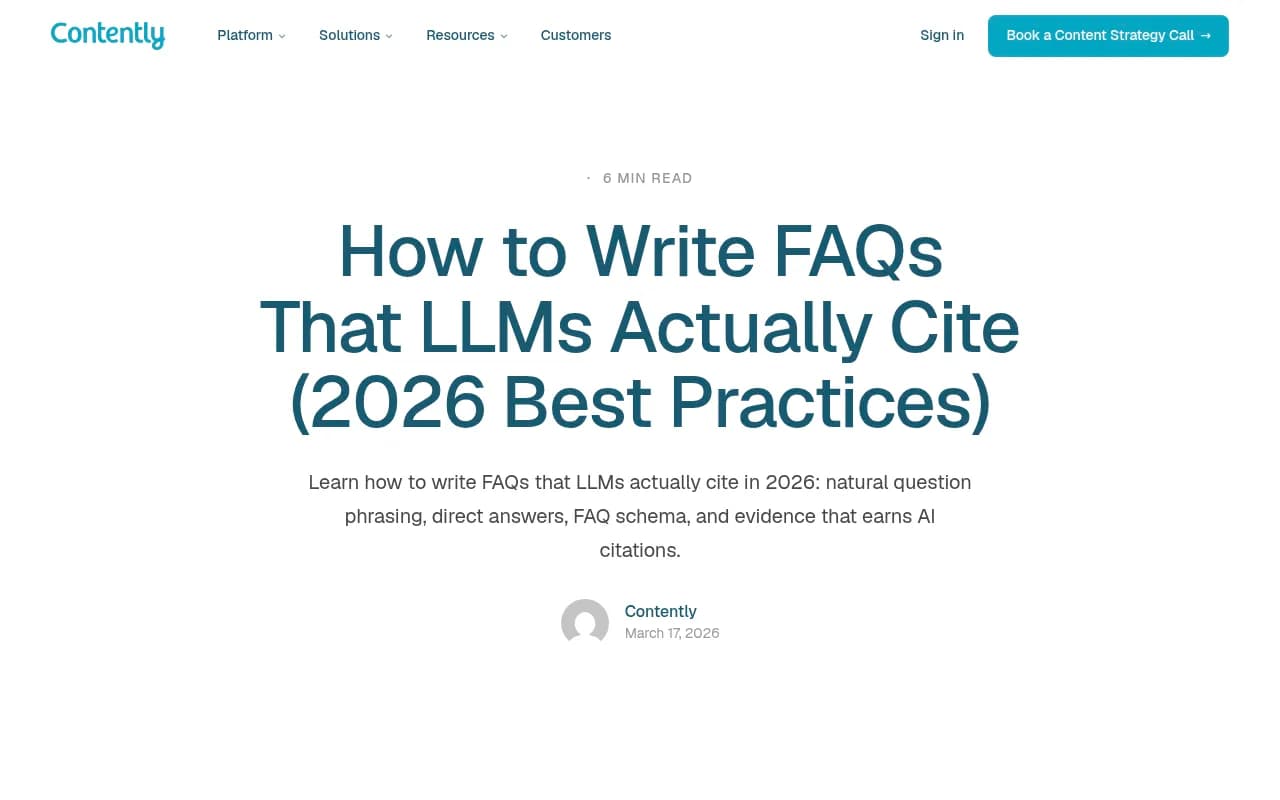
The vendor argument for FAQs is that the format already looks like a question and an answer, so a model can lift one entry cleanly. Contently's 2026 guide makes that case, and it is a reasonable one. A model does not need markup to see that a heading ending in a question mark is followed by an answer.
How to write FAQs worth citing
- Phrase the question the way a person would type it. "How much does content marketing cost?" beats "Content marketing pricing overview."
- One question, one answer. Don't bundle three questions into one heading.
- Make each answer self-contained, so it still makes sense if lifted out of the page.
- Skip filler questions. Karel Zeman's Quora answer says it plainly: if FAQs don't fit naturally, don't add them.
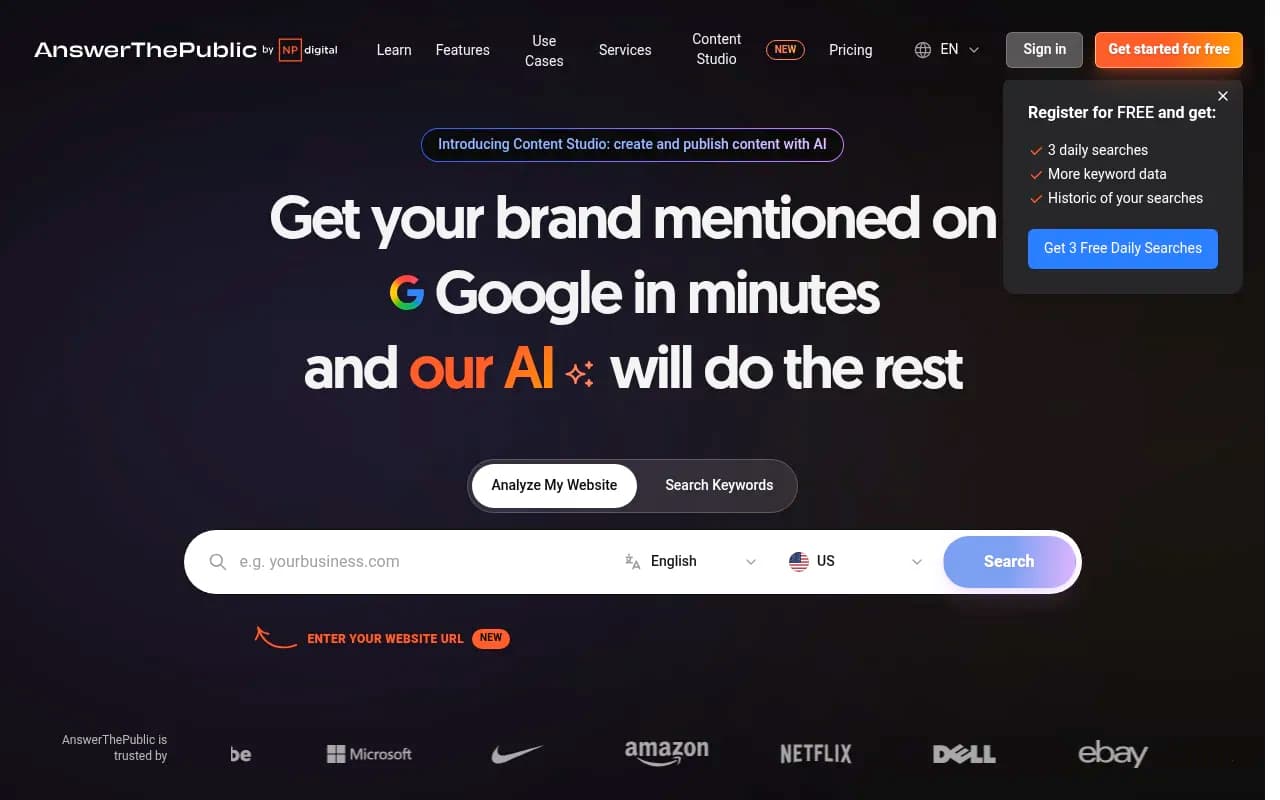
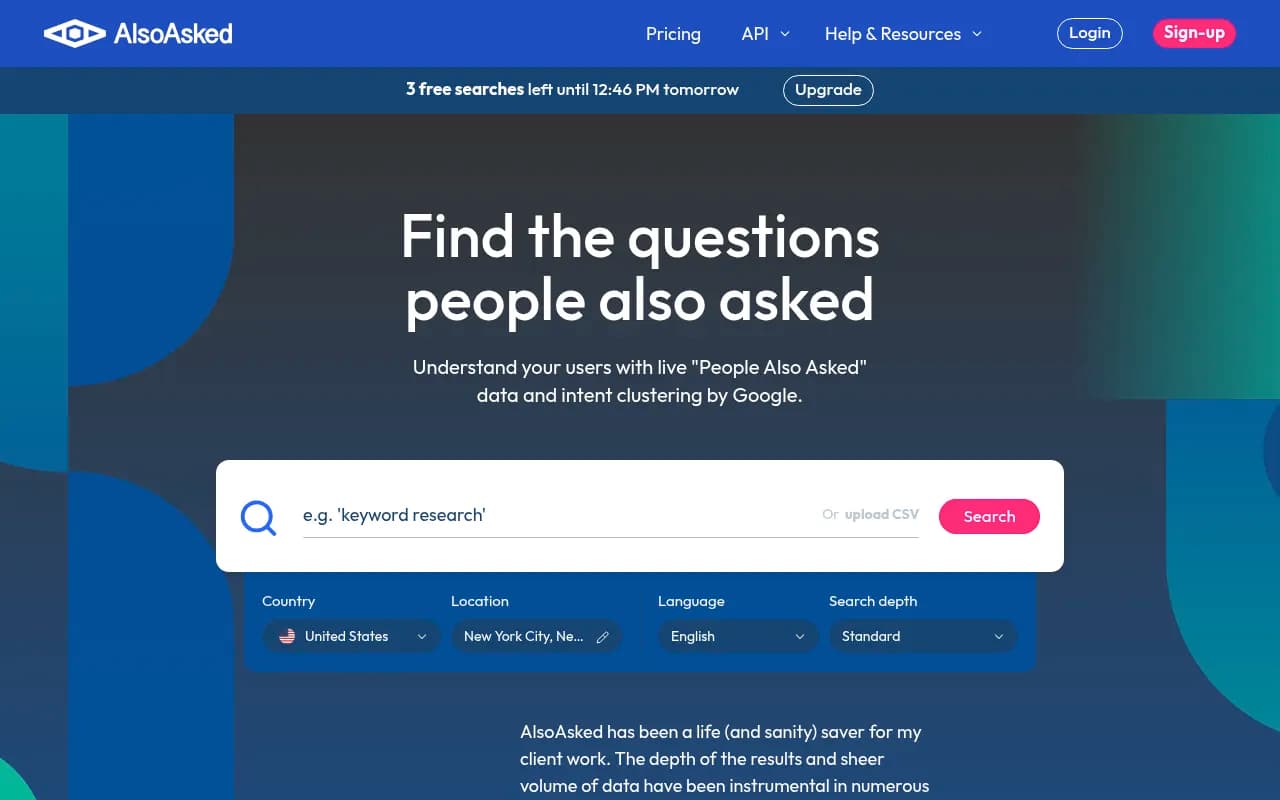
For finding real question wording, tools like AnswerThePublic and AlsoAsked pull autocomplete and People Also Ask phrasing.
Tweak 2: Adding FAQPage schema
This is the most argued-about tweak, and the only one with a serious controlled test.
The positive claims
The pro-schema pile is big. Pages with schema are "36% more likely" to be cited (WPRiders). There is an "89% correlation" with Perplexity citations (AISEO.com.mx). Structured content shows "300% higher accuracy" (a benchmark cited by Schema App). Pages with FAQ markup are "3.2x more likely" to appear in AI Overviews (SGA Index, repeated by Frase and others).
I did not verify any of these against the originals, and they have the same weakness: schema lives on well-maintained, technically sophisticated sites that also have better content, more links and more authority. You can't separate the schema from everything else.
The controlled test
Ahrefs tried to separate them. They tracked 1,885 pages that added JSON-LD between August 2025 and March 2026, matched them against 4,000 control pages, and measured citation changes across Google AI Overviews, AI Mode and ChatGPT using a matched difference-in-differences analysis.
Results:
- No major uplift on any platform.
- AI Mode and ChatGPT: treated pages did slightly better than controls, but within noise.
- AI Overviews: a 4.6% decline relative to control, statistically significant but small, and driven partly by a few outliers. Strip those out and the groups look about the same.
- Raw AI Mode growth looked like +43%, but control pages grew almost as much. The real schema effect was about +2.4%.
The first Ahrefs study of 6 million URLs did find that AI-cited pages were almost three times more likely to have JSON-LD, with 53% of cited pages running schema. That is the stat that goes around LinkedIn. The follow-up is the reason to doubt it.
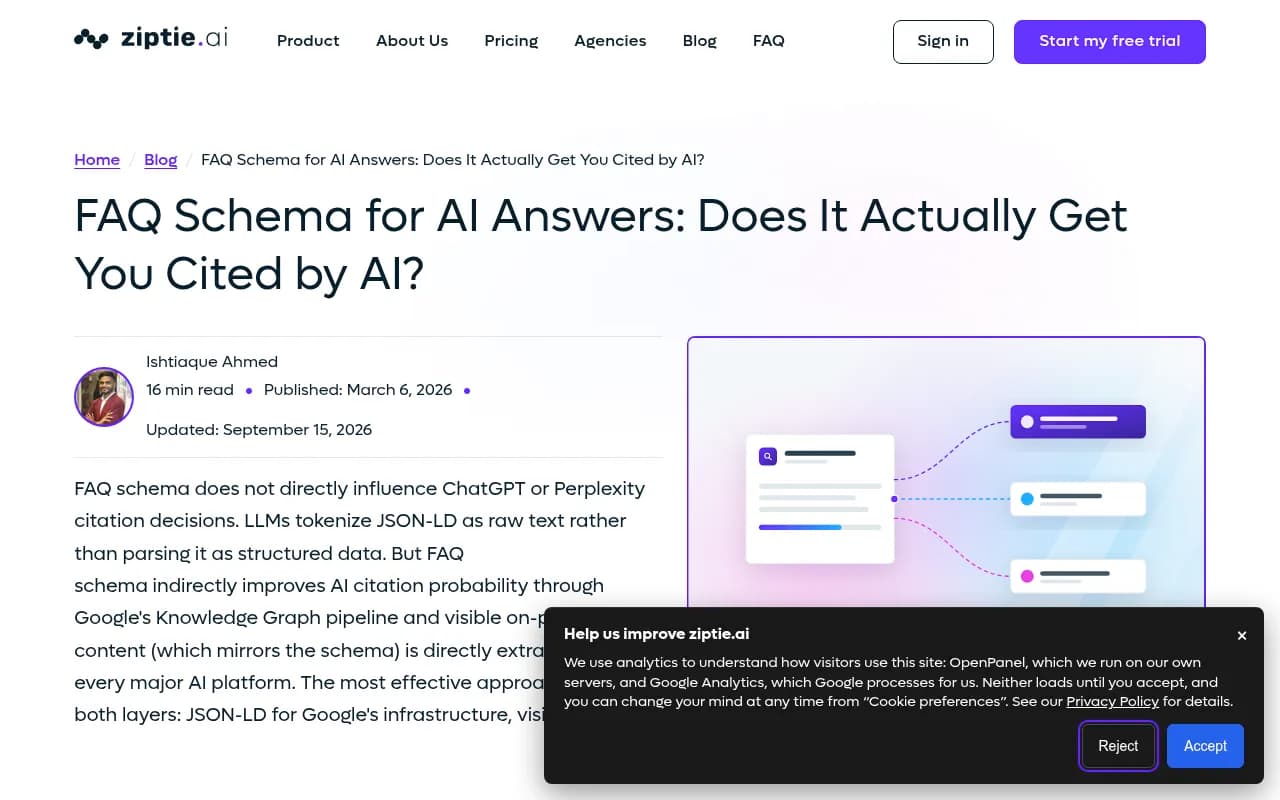
Two more data points push the same way. SE Ranking found pages with FAQ schema averaged 3.6 ChatGPT citations against 4.2 for pages without, a slight negative correlation that may just reflect content-type differences. And searchVIU tested ChatGPT, Claude, Perplexity, Gemini and Google AI Mode on live page fetches: none used JSON-LD, Microdata or RDFa. Every system extracted only visible HTML.
Caveats worth keeping
The Ahrefs pages were already heavily cited (100+ AI Overview citations in February 2025). That says nothing about pages AI never sees, where schema might help with crawling or indexing. Google's pipeline, including the Knowledge Graph, may still use structured data. And Google restricted FAQ rich results to well-known government and health sites in August 2023, so the old rich-result benefit is gone for most sites.
What I'd do
Add schema where it's cheap and valid: rich results where available, entity clarity, voice assistants. Never hide or mismatch markup against visible text. But don't budget it as a citation lever. If your CMS handles it, a plugin like Yoast SEO or a platform like Schema App makes this a one-time job.
Tweak 3: Adding tables
One source claims an analysis of 10,000 AI citations found pages with tables got cited 4.2 times more often than equivalent prose. I could not trace the primary study, and I found no controlled test of tables. Treat the number as a hint at best.
There is a plausible mechanism, though. Comparisons are a real citation category: in Promptwatch's content-type data, comparisons are 5.9% of ChatGPT citations overall and 7.9% for commercial prompts, and Promptwatch's advice is to make product pages easy to compare with clear pricing and specs. A clean HTML table is an easy way to do that. It also survives extraction better than a paragraph that buries three prices.
Table rules I'd follow:
- Real HTML tables, not images or heavy JavaScript widgets.
- A clear header row and one fact per cell.
- Put the table near the top, with a one-line takeaway above it.
- Use tables for comparison, pricing and specs. Not for prose that happens to have two columns.
Tweak 4: Answer-first writing
The claim: 44.2% of ChatGPT citations come from the first 30% of page text (Growth Memo's analysis), and cited text is nearly twice as likely to contain definitive language. That is correlation again, but it matches how people use answers. If the question is resolved in the first sentence, there is less for a model to misread.
Compare:
- Weak: "FAQ schema may sometimes help with AI search."
- Better: "FAQ schema doesn't directly raise AI citations; the visible Q&A text is what gets extracted."
The second one is quotable. The first one is mush. This tweak costs nothing and also makes the page better for humans, which is why I'd do it before touching schema.
Tweak 5: Statistics and sourced facts
One large analysis (The Digital Bloom) reported that adding statistics raised AI visibility by 22%. I'd take that as directional rather than exact. The logic is solid, though: a specific, dated, sourced number is easier to cite than "many companies," and it makes your page look defensible.
The flip side is accuracy. If you cite numbers, link where they came from, and date them. Stale stats are worse than none.
Tweak 6: Freshness
Here the first-party data is useful. Promptwatch's content half-life report tracked every page ChatGPT cited on July 6, 2026 through October 4. After 30 days ChatGPT still cited 78% of landing pages and 76% of docs; after 60 days, 69% and 67%. Product pages, reviews and how-tos had a half-life of 74 to 77 days. News was the fastest to decay at 36 days, with 41% still cited at day 60.
Practical read: keep prices, specs and availability current on product pages, because they fade about as fast as how-tos. Evergreen docs and landing pages hold up longest. A visible "last updated" date helps humans, and a real refresh is what matters for crawlers.
The tweak that doesn't work: markdown mirrors
While we're ruling things out, Promptwatch Data's markdown report found HTML accounted for 99.94% of AI search citations and .md files for 0.05%, about 2,000 to 1. Skip .md mirrors for AI search. Fix parseable HTML, a clear heading hierarchy and heavy client-side JavaScript rendering first.
How to run your own test
The weakest part of every claim above is that nobody tested your site. A simple version of the Ahrefs method works at small scale:
- Pick 5 to 10 pages that already get some AI citations, so you have a baseline.
- Apply one tweak to those pages only. Don't bundle three changes together.
- Leave 5 to 10 comparable pages untouched as a control group.
- Monitor both groups for 6 to 12 weeks, platform by platform.
- Compare the change in the treated group against the change in the control group, not against zero.
Manual spot-checking in ChatGPT won't do it. Answers vary by session, phrasing and region, so one query tells you almost nothing.
Tools for measuring it
Promptwatch is the one I'd reach for, because it tracks real-UI answers across ChatGPT, AI Overviews, AI Mode, Gemini and Perplexity, and its page-level tracking and crawler logs let you see whether a changed page actually gets crawled and cited afterward.

Other options in the same space:
| Tool | Good for | Limit |
|---|---|---|
| Promptwatch | Tracking plus page-level crawl and citation data, and fixing gaps | Heavier than a simple tracker if you only need a quick check |
| ZipTie | Citation presence and competitive share across AIO, ChatGPT and Perplexity | Monitoring-focused |
| Otterly.AI | Affordable prompt tracking | Basic, no crawler data |
| Peec AI | Straightforward monitoring | No optimization layer |
| Ahrefs Brand Radar | Brand monitoring inside an SEO suite | Fixed-style prompt sets |



For more options, the GEO software directory at bestgeosoftware.com lists tools by category.
What I'd actually do in 2026
In order of expected return:
- Answer-first rewrites on your key pages. Free and easy to reverse.
- Add FAQs only where buyers really ask questions, written in natural phrasing.
- Put comparison data in clean HTML tables.
- Add sourced, dated numbers.
- Set a refresh schedule for product pages and how-tos.
- Add schema for rich results and entity clarity, with no expectation of citation lift.
The pattern across all of it: AI systems cite what they can read and trust, in visible HTML. Markup is a label on content. It doesn't replace content, and the best test we have says it doesn't add citations on its own.
Frequently asked questions
Does FAQ schema improve AI citations?
The best controlled evidence says no, at least for pages already being cited. Ahrefs found no meaningful uplift in ChatGPT or AI Mode and a small AI Overview decline. Correlational studies claiming big gains don't isolate the schema effect.
Do FAQs themselves help?
They can. FAQ pages are about 3.3% of ChatGPT citations and 4.8% on branded prompts in Promptwatch Data for Sep 28 to Oct 4, 2026. That is a modest share, so use them where they fit naturally.
Do tables help AI citations?
Probably for comparison content, but I found no controlled test. The 4.2x figure floating around is unverified.
Should I remove schema I already have?
No. It is harmless when valid and matching visible text, and it still serves rich results, entity recognition and Google's systems. Just don't expect it to be the reason you get cited.