Key takeaways
- AI gets brands wrong for three reasons: stale training data, bad retrieval from a live source, and entity confusion. Each has a different fix.
- Save evidence first (exact prompt, date, assistant, full answer, cited sources), then trace the claim to a page you can change.
- No major vendor promises to correct a specific answer. Fixing sources is the part that is in your hands.
- Branded prompts lean on product pages, landing pages, reviews, and FAQs, so those are the pages to get right.
- Monitor monthly at minimum. Wrong answers sit unnoticed for months.
Why this problem is different from classic reputation management
A buyer types your company name into an assistant and gets 80 confident words back. One of them is a competitor's name. Another is a complaint from two years ago. You never see that conversation, and the buyer rarely clicks through to check.
The extreme version is already in court. Wolf River Electric, a Minnesota solar installer, sued Google in March 2025 after an AI Overview kept telling searchers the company faced an attorney general lawsuit it was never part of. Most wrong answers are much smaller than that: an old address, a discontinued product, a price from 2024. But the mechanics are the same, and so is the lesson. You can't edit the answer. You can only change what the answer is built from.
That makes this closer to information governance than to PR. You need a single source of brand truth, a way to compare AI output against it, and a process for tracing every mismatch to a cause.
Why AI says wrong things about your brand
Soar Agency's breakdown of this problem is the clearest I've seen, because it separates the failures by cause. Telling them apart is the whole game.
| Failure mode | What it looks like | Where the fix lives |
|---|---|---|
| Training data | Wrong founding date, old headquarters, outdated product line | Authoritative public sources: your site, Wikipedia or Wikidata, major directories. Slow to change |
| Retrieval | "Is X being sued?" or "did X shut down?" built from a thread or article the model overweighted | The page or thread being retrieved, plus your own pages that should outrank it |
| Entity confusion | Another company's reviews or product attributed to you | Structured data, consistent naming, clear about and contact pages |
SeoClarity adds a fourth angle worth taking seriously: sometimes the AI understands what you do but not who you are, and sometimes the rest of the internet is telling a different story. Their example is an AI answer sourced not from the company's site but from a 2024 Forbes article that called the product "overwhelming." The model wasn't hallucinating. It was quoting.
Step 1: Find the wrong claims
You can't fix what you haven't seen. Build a prompt set that mirrors how buyers actually ask about you.
Prompts worth running
- Brand-only: "What is [brand]?" and "Who owns [brand]?"
- Evaluation: "Is [brand] good for [use case]?" and "Is [brand] legit?"
- Comparison: "[brand] vs [competitor]" and "alternatives to [brand]"
- Facts that change: pricing, locations, hours, leadership, product lineup
- Risk topics: lawsuits, outages, recalls, layoffs, complaints
Run them across ChatGPT, Google AI Overviews and AI Mode, Gemini, Perplexity, Copilot, and Claude. Answers differ by engine and by country. Interface answers also differ from API answers, so checking a model through its API alone gives you a partial picture.
Do it by hand first to get a feel for the problem. Then automate, because manual spot checks don't scale past a dozen prompts.
Tools that automate the monitoring
A few tools in our catalog are built around this job. Promptwatch tracks the real interfaces of ChatGPT, AI Overviews, Gemini, Perplexity, and others in each country and language, scores sentiment per response, and shows which sources each answer drew on. That source view is what makes the next step possible.

Others worth a look depending on budget and focus:
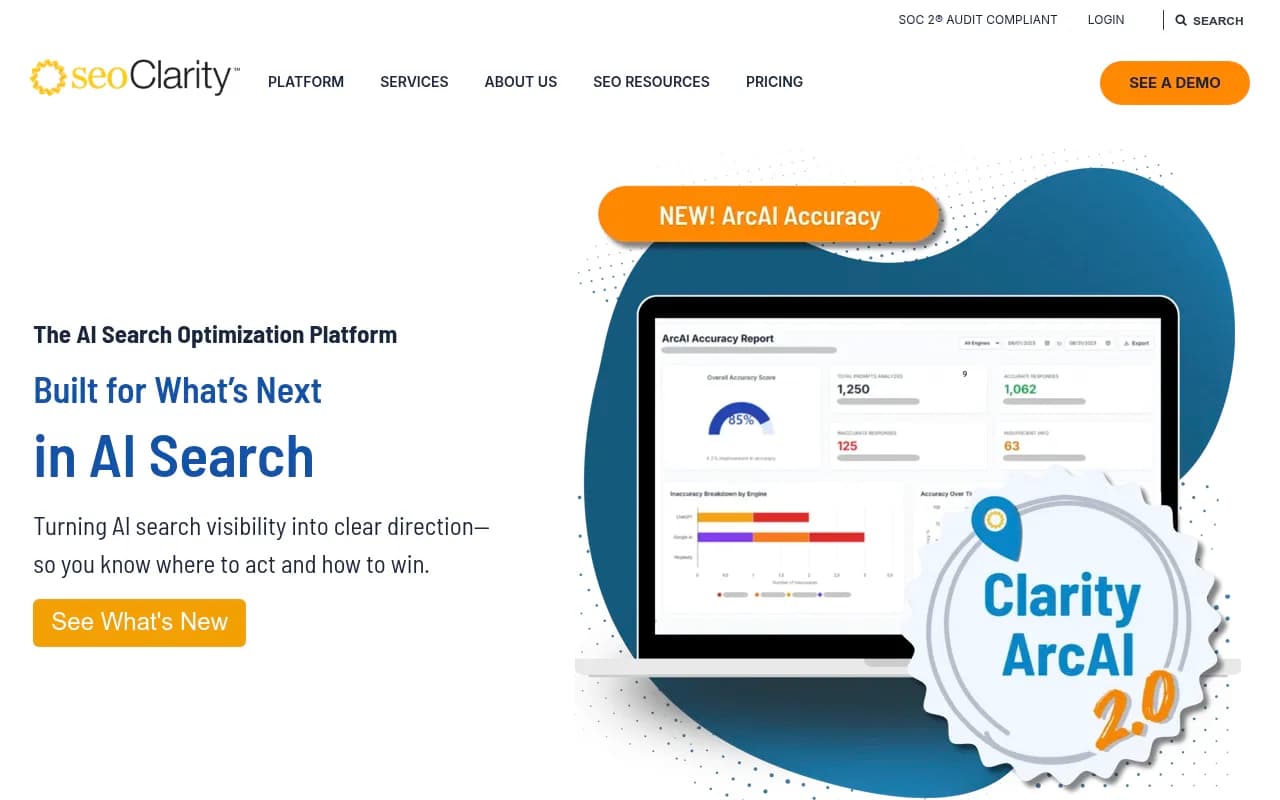


LLMClicks advertises hallucination detection, GetCito positions around brand reputation in AI answers, and seoClarity compares AI answers against a centralized source of brand truth. Pure prompt trackers like Otterly.AI will tell you something is wrong but not much about why. If you want to compare more options, the GEO software directory at bestgeosoftware.com lists them side by side.
Step 2: Document before you do anything else
Before touching a page, save evidence. The Nadernejad Media and eSEOspace guides agree on this, and it's cheap insurance if the claim later turns legal.
For every wrong answer record:
- The exact prompt, word for word
- The date and time
- The assistant and, if shown, the model
- The full answer, as a screenshot and as text
- Every source the answer cited, with URLs
- The correct fact and a page that proves it
A spreadsheet is fine. Add a severity column: mild (outdated price), moderate (wrong positioning), severe (fraud, safety, legal claims).
Step 3: Trace each claim to its source
This is where most of the work is. The eSEOspace guide lays out a useful order of suspects.
- Your own website. Search your site for the wrong fact. Old prices, a former address, a discontinued service, a PDF nobody updated since 2023.
- Your profiles and listings. Google Business Profile, Bing Places, social profiles, and industry directories.
- Third-party pages. Search the wrong claim in quotation marks. Check review sites, news, forums, and competitor comparison pages.
- A similarly named business. Rule it out, even though no vendor documents how often it happens.
- No source at all. If the assistant didn't search, the answer came from the model's training. OpenAI says such responses are based on what the model learned during training and can be incorrect.
The fifth case is the hardest. There is no page to fix and no documented way to edit what a model learned. The practical response is the same as everywhere else: make the correct fact easy to find, so any answer built from a live search picks it up.
Which sources matter depends on the engine
This is where current data changes your priorities. In Promptwatch Data for Sep 28 to Oct 4, 2026, social platforms were just 0.46% of ChatGPT's citations, compared with 12.2% for Google AI Overviews. Reddit alone fell from 5.19% to 0.09% of ChatGPT citations between reports. A related report found reddit.com's share of ChatGPT citations collapsing from roughly 4% to about 0.5% in mid-August 2026, though Promptwatch calls the size of that drop provisional.
Practically: a nasty Reddit thread is now a weaker driver of ChatGPT answers about you, but it can still feed AI Overviews, where YouTube, Facebook, and Reddit all show up. These numbers move week to week, so check the dates before you build a strategy on them.
What does ChatGPT lean on for branded prompts? In Promptwatch's content type data, product pages earned 23.3% and landing pages 22.8% of branded citations, nearly half. Reviews rose to 5.6%, more than three times their share across all prompts, and FAQ pages earned 4.8%. So for questions that name your brand, your own pages and your reviews do most of the talking. That is good news, because you control the first and can influence the second.
Step 4: Fix what you control
Every guide I read says the same thing in different words: correct the source, not the chatbot. Arguing with a chatbot in a chat window changes nothing for the next person who asks.
Your own site
- Make the homepage, product pages, and docs state pricing, features, audience, and location plainly.
- Add a plain-language FAQ page about the brand that answers the exact wrong claims you found.
- Delete or redirect outdated pages and PDFs. Conflicting facts push models toward third-party sources.
- Add an "about" page with founding date, leadership, headquarters, and what you are not (useful if you share a name with someone else).
Structured data and entity signals
Structured data removes guesswork. Use Organization markup with your legal name, URL, logo, and sameAs links to your official profiles. Keep name, address, and phone identical across every directory. This is the main defense against entity confusion.
{
  "@context": "https://schema.org",
  "@type": "Organization",
  "name": "Example Co",
  "url": "https://example.com",
  "sameAs": [
    "https://www.linkedin.com/company/example-co",
    "https://www.crunchbase.com/organization/example-co"
  ]
}
Platforms like Schema App exist for managing this at scale on larger sites.
Listings and reviews
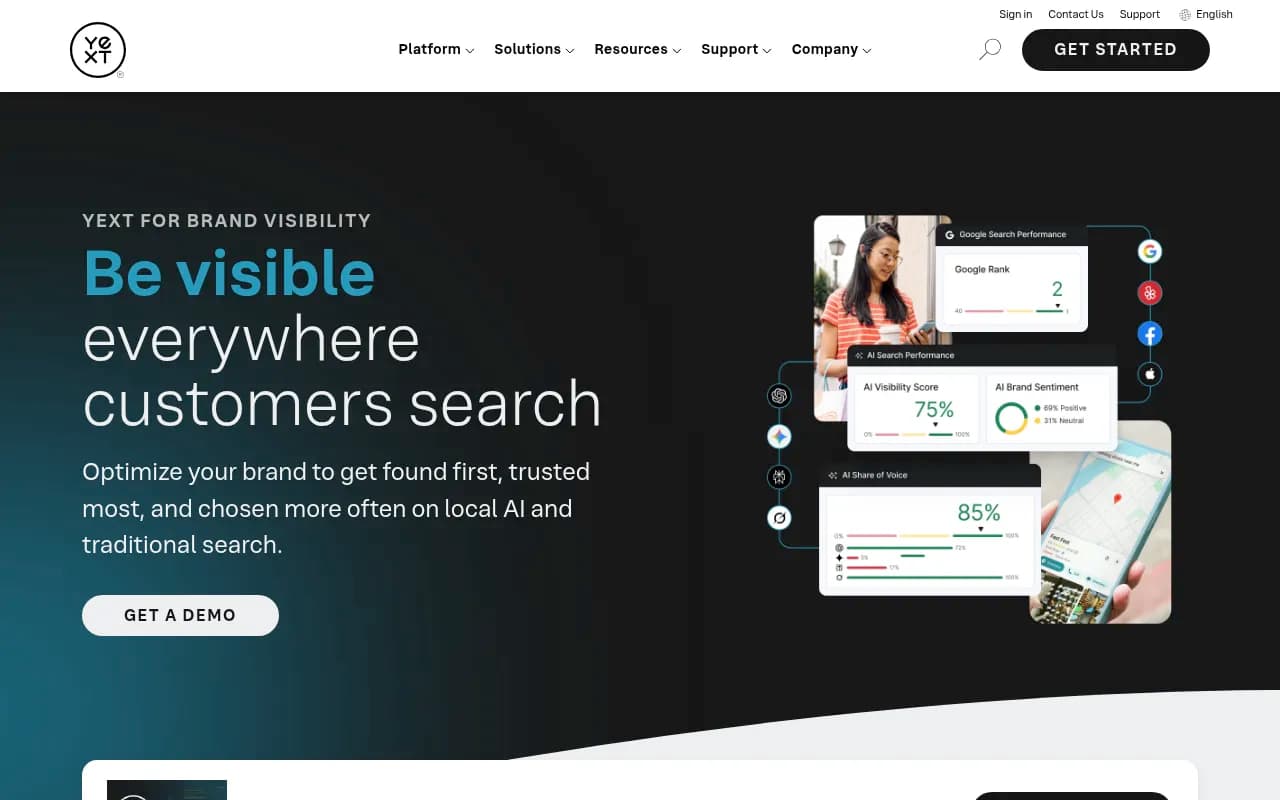
Stale listings are a quiet source of wrong facts. For multi-location brands, a listings manager keeps them consistent.
For reviews, respond publicly and professionally to the threads driving the problem, and collect fresh reviews on the trusted category sites AI engines already cite.
Third-party pages
If an outdated article or directory entry causes the error, contact the publisher and ask for an update. Be specific: the wrong sentence, the correct fact, a link that proves it. Editors say yes more often than you'd expect when you make the change easy.
Check that AI can actually read your fix
A corrected page does nothing if AI crawlers can't fetch it. Check your robots rules and server logs for AI bots hitting errors. Tools like Promptwatch's crawler logs show which pages AI systems actually read, and a free crawl check on your own site is a reasonable first step. A fixed page also has to be fetched again before a search-based answer reflects it, and no vendor gives a timeline for that.
Step 5: Use the platform feedback routes, with realistic expectations
Every assistant has some form of in-product feedback. Treat it as a supplement, not a fix.
| Platform | Documented route | What to expect |
|---|---|---|
| ChatGPT | Thumbs-down control and OpenAI's content reporting form | OpenAI says reported domains may be reviewed. It is a "may" |
| Google AI Overviews | Feedback link on the overview | Google says feedback helps improve the feature. No business dispute process is described |
| Gemini, Copilot, Perplexity, Claude | In-product thumbs-down or report options | Improves the product in general. No commitment on a specific answer |
As of the research I reviewed, none of the five major vendors commits to correcting a particular answer, and none documents a dispute route designed for businesses as opposed to private individuals. That is annoying, but it is the honest state of things.
When you do submit feedback, keep it short and specific: the question asked, the wrong statement, the correct fact, and one link that shows it.
When it's serious
A false claim about fraud, safety, or legal trouble needs a faster path. Document everything, report through the platform, and involve legal counsel early. Defamation and data-protection routes are a question for an attorney, not a feedback button, and they vary by country.
Step 6: Build a monthly loop
One-off cleanups decay. Models update, sources change, and an old complaint can resurface as a "current" risk. A simple monthly routine works:
- Rerun the prompt set across engines and countries.
- Compare against your source of truth and flag mismatches.
- Trace new errors to sources and log the fix.
- Check whether previous fixes show up in answers and citations.
- Review sentiment trends for branded prompts.
Read the metrics together. Mentions without citations to your own domain suggest a content or crawlability problem. Weak sentiment suggests a reputation problem. Late position in answers suggests a prominence problem. Promptwatch's Action Board turns these findings into a prioritized to-do list, which helps when several teams own different pages.
If you'd rather hand the whole thing to specialists, an SEO and GEO agency such as 1001 SEO Media can run the audit, source tracing, and fixes as an ongoing service. You can also run it in-house with the tools above.
A quick triage checklist
- Is the wrong fact on my own site? Fix it today.
- Is it in a listing or directory? Update and sync.
- Is it in a third-party article or review? Contact the publisher, respond publicly.
- Is it entity confusion? Strengthen structured data and about pages.
- Is there no source at all? Publish the correct fact clearly and wait for retrieval to pick it up.
- Is it defamatory? Document and call legal.
What to do this week
Pick your ten most important brand prompts, run them in ChatGPT, AI Overviews, and Perplexity, and save the results. Trace every wrong claim to a page. Fix the ones on your own site first, because those are free and fast. Then set up monitoring so the next wrong answer is something you catch, not something a buyer acts on.
The Nadernejad Media guide on monitoring AI answers is a good companion read for the prompt-running side.