Key takeaways
- Adobe Brand Visibility (formerly Adobe LLM Optimizer) makes the most sense if you already run Adobe Experience Cloud, Adobe Analytics or Customer Journey Analytics. Its edge deployment is the standout feature.
- Profound is the self-serve, monitoring-and-execution option. It has the broadest integration list of the three, but much of the public comparison content is written by Profound itself.
- Bluefish is pitched at brand protection and factual accuracy in AI answers. Pricing is custom and sales-led, and public feature detail is thin.
- Public pricing is murky. Adobe publishes none, and the figures floating around (roughly $115K/year, or about EUR 60K/year) come from competitors and are unverified.
- Run a paid or structured pilot on your own prompts before committing. Vendor comparison pages, including ones cited here, are biased.
Why this comparison is harder than it looks
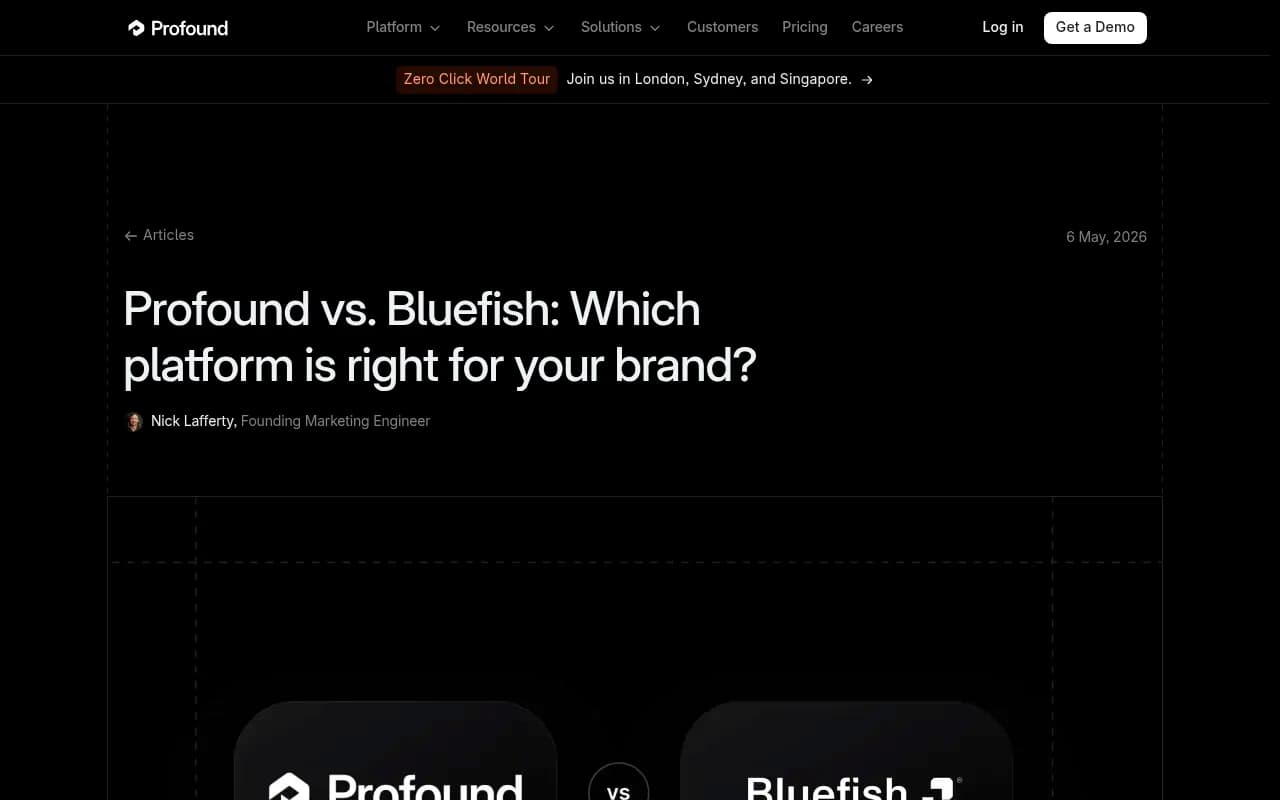
I went looking for a clean, neutral comparison of these three and did not find one. Almost every head-to-head article is written by one of the vendors or by a competitor selling something cheaper. Profound's own marketing engineer wrote the Profound vs Bluefish piece. SEORCE wrote the Adobe pricing breakdown. That does not make them wrong, but it means every claim needs a grain of salt.
So this guide does something different. It sorts the three suites by the question that usually decides enterprise purchases: what does it plug into, and who inside your company will own it?
One naming note first. Adobe's product page now reads "Adobe Brand Visibility (formerly Adobe LLM Optimizer)." You will see both names in reviews, so I use both.
The three suites at a glance
| Adobe Brand Visibility (formerly LLM Optimizer) | Profound | Bluefish | |
|---|---|---|---|
| Core pitch | AI visibility tied to Adobe stack, with edge deployment | Monitoring plus agentic content execution | Brand safety, accuracy and reputation in AI answers |
| Buying motion | Sales-led, annual contracts reported | Self-serve entry tiers reported, enterprise via sales | Custom, sales-led |
| Public pricing | None on Adobe's page; third-party estimates conflict | Entry tiers reported by third parties; enterprise not verified | Custom |
| Best stack fit | Adobe Experience Cloud shops | Mixed stacks (GA4, Adobe Analytics, Tableau, Slack reported) | Comms, PR and brand teams |
| Execution layer | Strong: CDN edge deployment, content generation | Yes: agents and content workflows | Limited, per third-party reports |
| Main caution | Best value inside Adobe ecosystem | Vendor-authored comparisons are biased | Engine coverage and features need current verification |
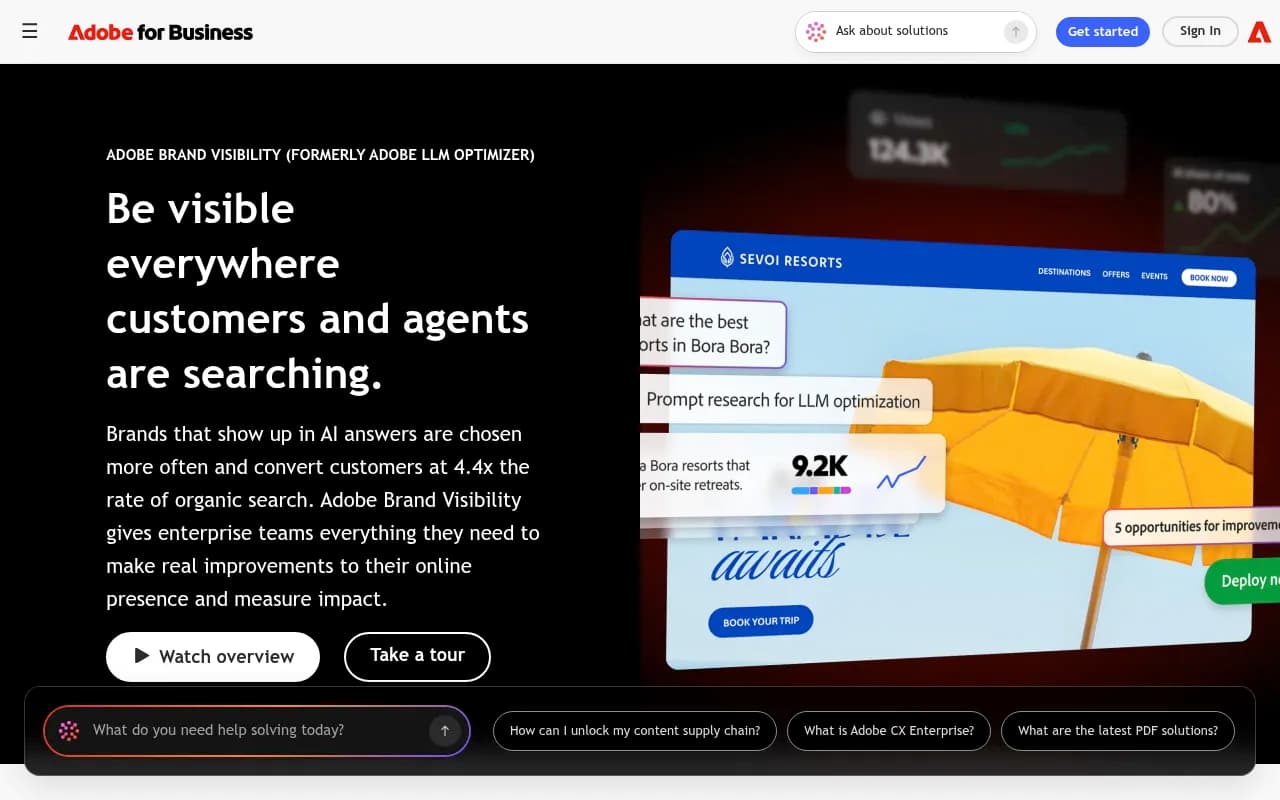
Adobe Brand Visibility (formerly LLM Optimizer)
Adobe launched LLM Optimizer in October 2025 and has since renamed it. The current product page makes a lot of claims, and several are genuinely different from what a monitoring tool does.
What Adobe says it does
- Gives access to nearly 300 million AI search prompts, enriched with cross-platform clickstream data.
- Tracks share of voice across ChatGPT, Claude, Perplexity, Google AI Mode, Microsoft Copilot and others.
- Shows how AI systems crawl your site.
- Deploys optimizations at the CDN edge and at the content source without developer support, with instant rollback.
- Fixes technical GEO issues such as blocked crawlers, missing structured data and 404s without engineering tickets.
- Generates content for Wikipedia, YouTube, Reddit and earned media.
- Ties GEO performance to revenue inside Adobe Analytics and Customer Journey Analytics.
- Validates changes with bot verification, controlled experimentation and baseline comparison.
The edge deployment is the interesting part. If your engineering backlog is the reason GEO fixes never ship, a layer that pushes changes at the CDN without a release cycle is a real answer to a real problem. A competitor comparison from SEORCE calls this "Optimize at Edge" and says it is the only platform with it. Treat that as one vendor's claim, not a fact.
The 4.4x conversion stat
Adobe says AI-referred traffic converts 4.4x higher than organic search, citing Semrush. Semrush is now an Adobe company, so this is a vendor-sourced number. It may well be directionally right, but do not put it in a business case without checking your own analytics.
Pricing: what is actually known
Nothing on Adobe's page. SEORCE reports roughly $115,000 per year with annual contracts only. LLM Pulse reports around EUR 60,000 per year as an entry point. Those two estimates conflict, and both come from competitors. Use them as a rough range for budgeting conversations, and get a written quote.
Who it fits
Teams already on Adobe Experience Cloud, particularly those who want GEO results reported inside Adobe Analytics. Named customers on Adobe's page include Lovesac, W.K. Kellogg and Lumen. If your stack is Salesforce, HubSpot or a headless CMS with different analytics, the integration advantage mostly disappears and you are paying enterprise prices for a monitoring and optimization layer you could get elsewhere.
Adobe Marketo Engage
Adobe Marketo Engage is a separate product, but it is a reminder of how much of this decision is about the surrounding Adobe footprint rather than the GEO module itself.
Profound
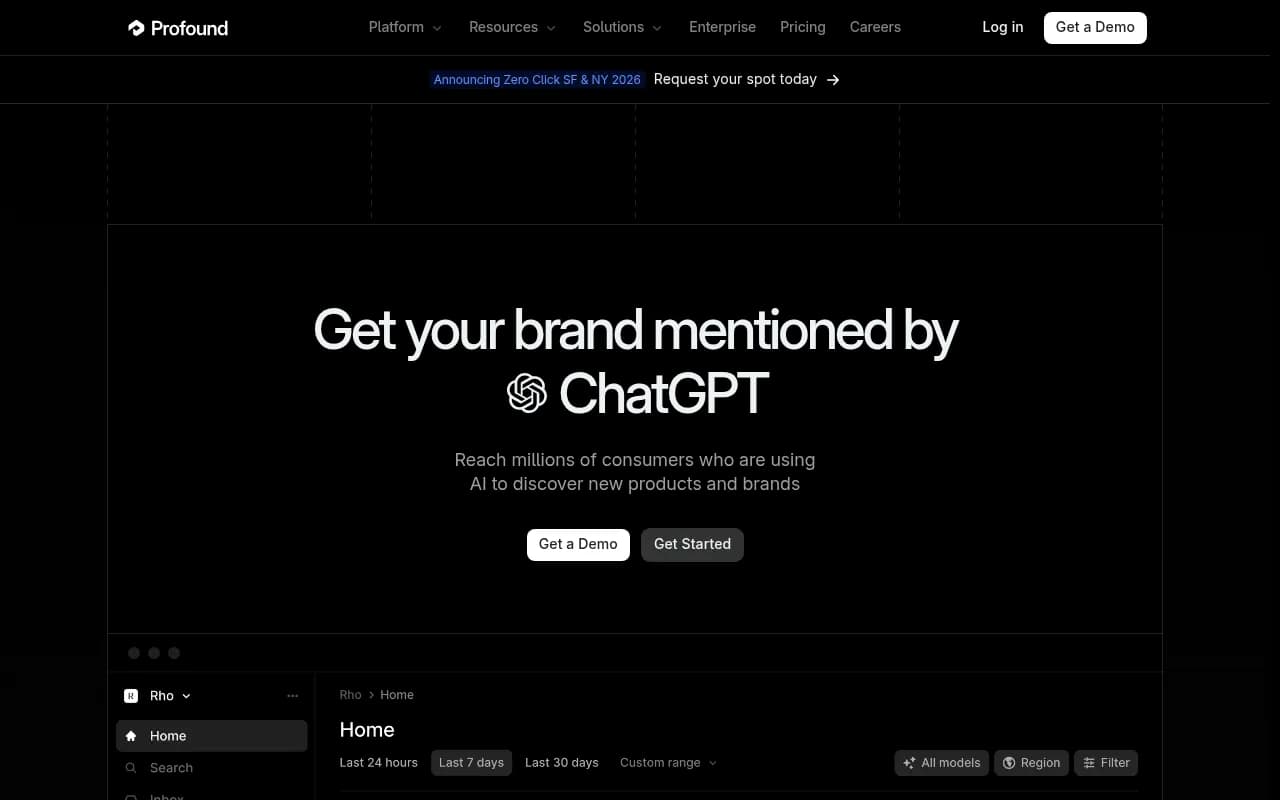
Profound is the most visible name in the category and the one most other vendors benchmark against. One third-party roundup reports $155M raised and a $1B valuation, with Fortune 500 customers. I could not verify those figures independently.
Strengths reported
- Full self-serve prompt control. You can configure topics, product lines, competitors, regions and funnel stages, and either use suggestions or upload your own.
- Prompts run daily through front-end browser queries rather than API calls, per Profound's own description.
- Query fan-out data that exposes the sub-queries answer engines run internally.
- URL-level citation tracking, and GA4 and Search Console data alongside AEO citation data.
- Exports and integrations: CSV, JSON and API exports, a Tableau connector, GA4 and Adobe Analytics extensions, and Slack, with Microsoft Teams listed as coming soon.
- CDN-level Agent Analytics via integrations such as Akamai and Cloudflare.
- Compliance: Profound states it is HIPAA compliant and independently assessed by Sensiba LLP. A separate roundup says HIPAA applies to Enterprise customers, so confirm which tier covers you.
Pricing signals
Third-party sources report a $99 Starter tier that is ChatGPT-only, and multi-engine monitoring from about $399 per month. LLM Pulse lists a Growth plan at $4,788 per year. Enterprise pricing is not public. Another roundup suggests a Fortune 500 AEO program could run around $30,000 per year, but that is one author's estimate.
Who it fits
Marketing teams that want daily prompt control and an execution layer in one contract, and that run a mixed stack. Regulated industries get a head start if the HIPAA claims hold up in your security review.
Bluefish
Bluefish AI positions itself around brand protection in AI answers.
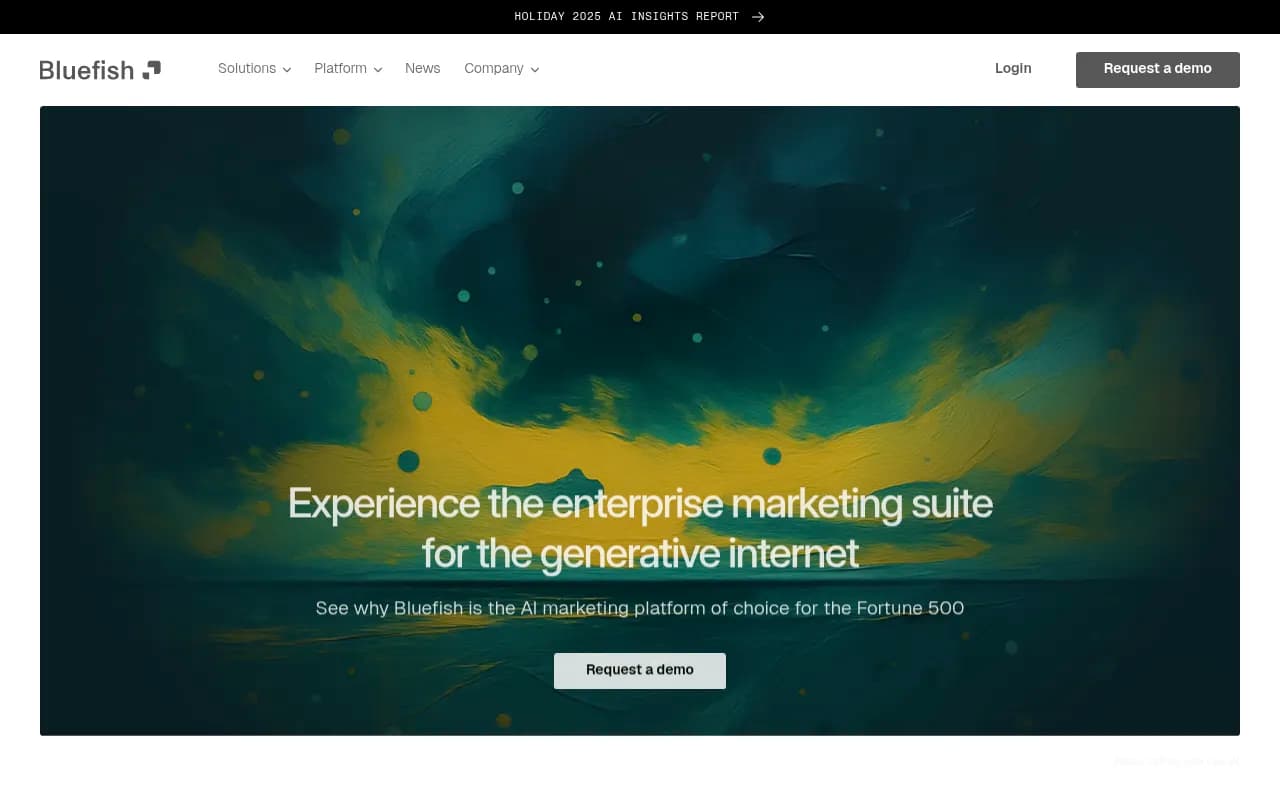
One roundup reports $68M raised, a Series A led by NEA, and named customers including Adidas and Tishman Speyer. It describes real-time crisis detection, sentiment monitoring and brand safety scoring. Pricing is custom and sales-led only.
How it differs from Profound
According to Profound's own comparison, Bluefish builds prompt sets on a static baseline approved with your team, with optional strategy services for custom configurations, and does not disclose its prompt execution methodology. Its Impact Score and Influence Rank measure citation quality, with analysis down to the URL. An independent-leaning piece on canlah.ai reaches a more balanced conclusion: Bluefish is better where the exposure is factual inaccuracy in AI answers, and Profound is better for teams wanting self-serve prompt control, demand data and content execution together.
A caution on engine coverage
One roundup said Bluefish did not support Claude, Copilot, AI Mode or DeepSeek, but that was as of late 2025 and may be stale. Ask for the current list in writing. The same goes for Profound's claim that Bluefish has no G2 reviews while Profound has 1,100+. That is useful as a social-proof signal, but it comes from Profound.
Who it fits
Corporate communications, PR and brand teams worried about misrepresentation, where "what does the AI say about us, and is it correct?" matters more than "how do we win more prompts?"
Decision framework by stack
You run Adobe Experience Cloud
Start with Adobe Brand Visibility. The Adobe Analytics and Customer Journey Analytics tie-in and the edge deployment are hard for outsiders to replicate. Still get a Profound demo as a benchmark, because Profound lists Adobe Analytics integration too.
You run a mixed stack with GA4, Tableau and Slack
Profound's integration list fits best on paper. Verify the connectors in a pilot rather than trusting the feature table.
Your core problem is brand safety or inaccurate AI answers
Shortlist Bluefish. Ask how it handles factual corrections and whether it can show you evidence from your own category before you sign.
Your core problem is that fixes never get shipped
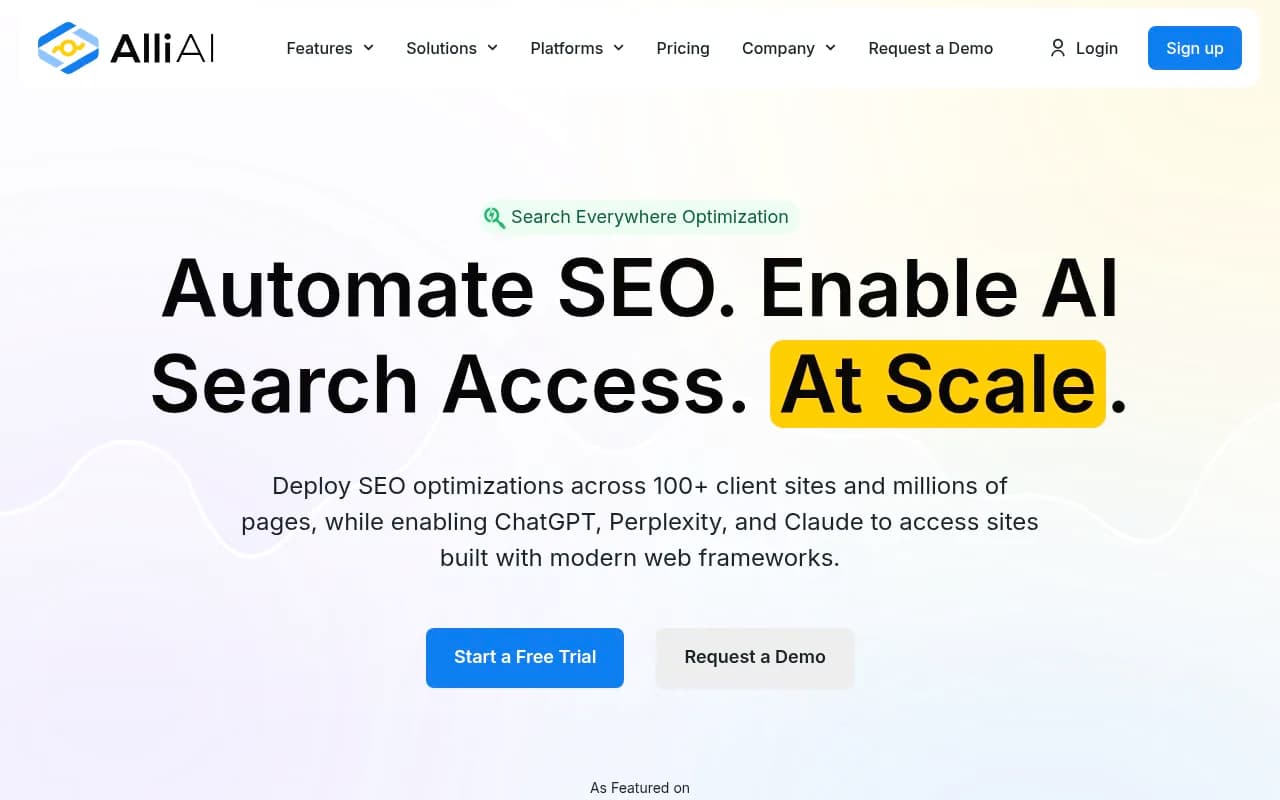
This is an execution problem, not a monitoring one. Adobe's edge deployment and Profound's agents both target it. Cheaper options that publish content or fixes directly also exist, for example Gradial GEO and Alli AI.

What to check in every demo
Most of the differences show up in a few questions.
- Does it track the real user interface of each engine, or API output? The two can differ.
- Which engines are covered today, in writing? Engine lists change quickly.
- Can you bring your own prompts, and can you see query fan-outs?
- Do you get crawler logs, and are the bots verified?
- Can it connect AI visits to conversions in your analytics?
- What does it take to ship a fix: a ticket, an approval flow or a click?
- What are the exit terms? Adobe is reported as annual-only.
On the engine question, citation behavior varies a lot by platform. Promptwatch's average sources per response data shows ChatGPT citing about 5 sources per answer, Google AI Overviews about 10, and Perplexity almost exactly 10 each day, while Copilot swung from under 2 to nearly 17 over a few weeks. Any suite you buy should report each engine separately, not blend them into one score.
Other enterprise options worth a demo
All three suites above are expensive and sales-led. If the procurement process is the bottleneck, or you want a counterpoint, look at a few more.
Promptwatch is the one I would put in front of teams that want monitoring plus execution without a six-figure contract. It tracks real UIs across ChatGPT, AI Overviews, AI Mode, Gemini, Perplexity and Copilot, includes IP-verified AI crawler logs and visitor analytics, and pairs them with a Content Agent that writes and publishes to Webflow, Framer or WordPress. Plans start at $95 per month (confirm at promptwatch.com/pricing). It is not a drop-in replacement for Adobe's edge deployment.

Other enterprise-leaning names in our catalog:
For a broader view of the field, the GEO software directory at bestgeosoftware.com lists many more.
| Option | Type | Notes |
|---|---|---|
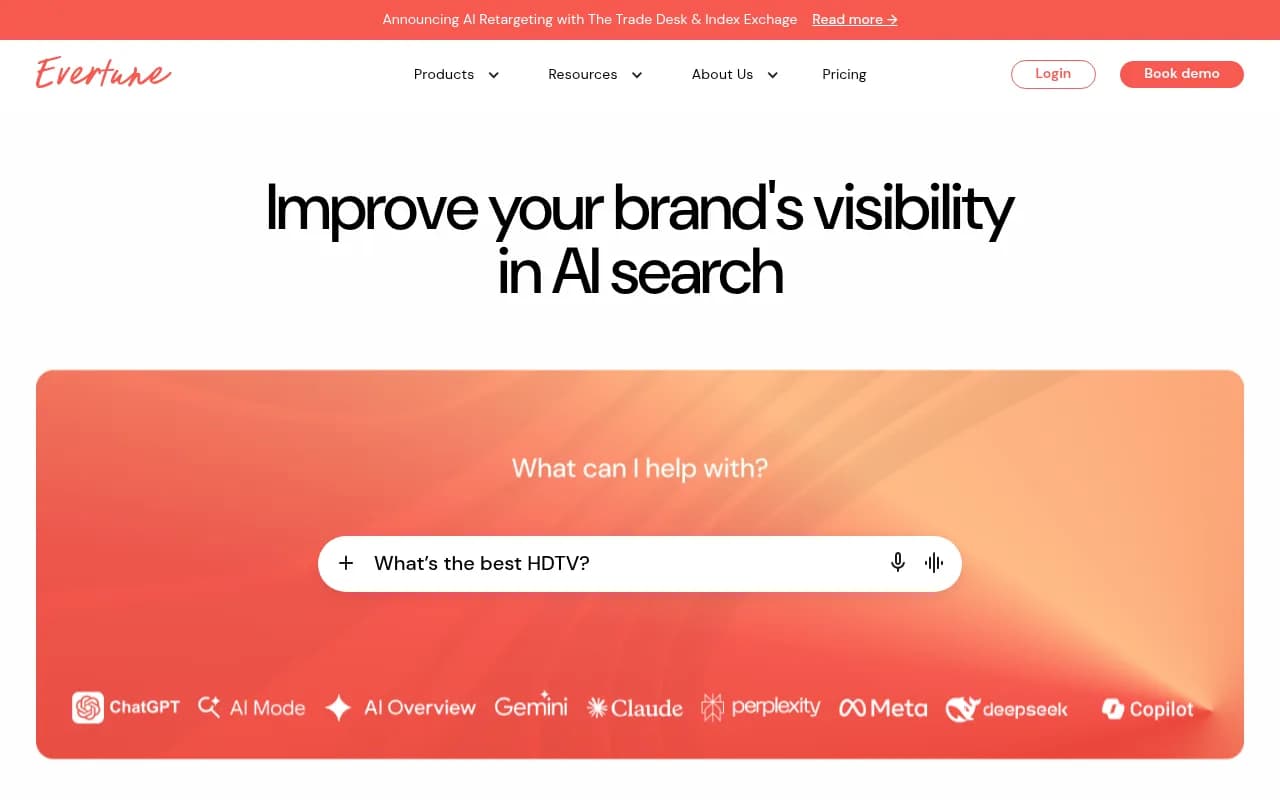
| Evertune | Enterprise GEO | Acquired by Impact Tech in December 2025 per one roundup; reported from $800/mo (Pro) |
| Scrunch | Monitoring and content delivery | Now part of Sitecore per one roundup |
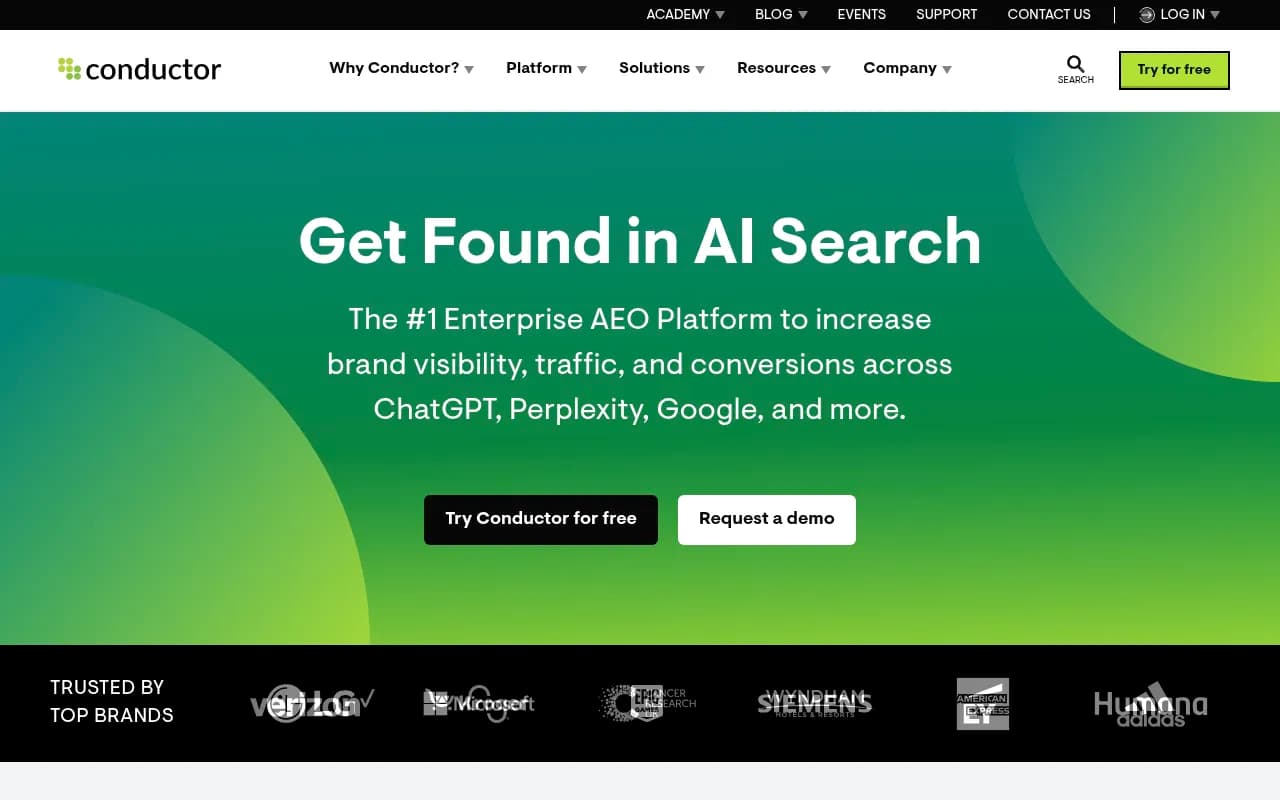
| Conductor | Enterprise SEO and AEO | Good if SEO and GEO sit under one team |
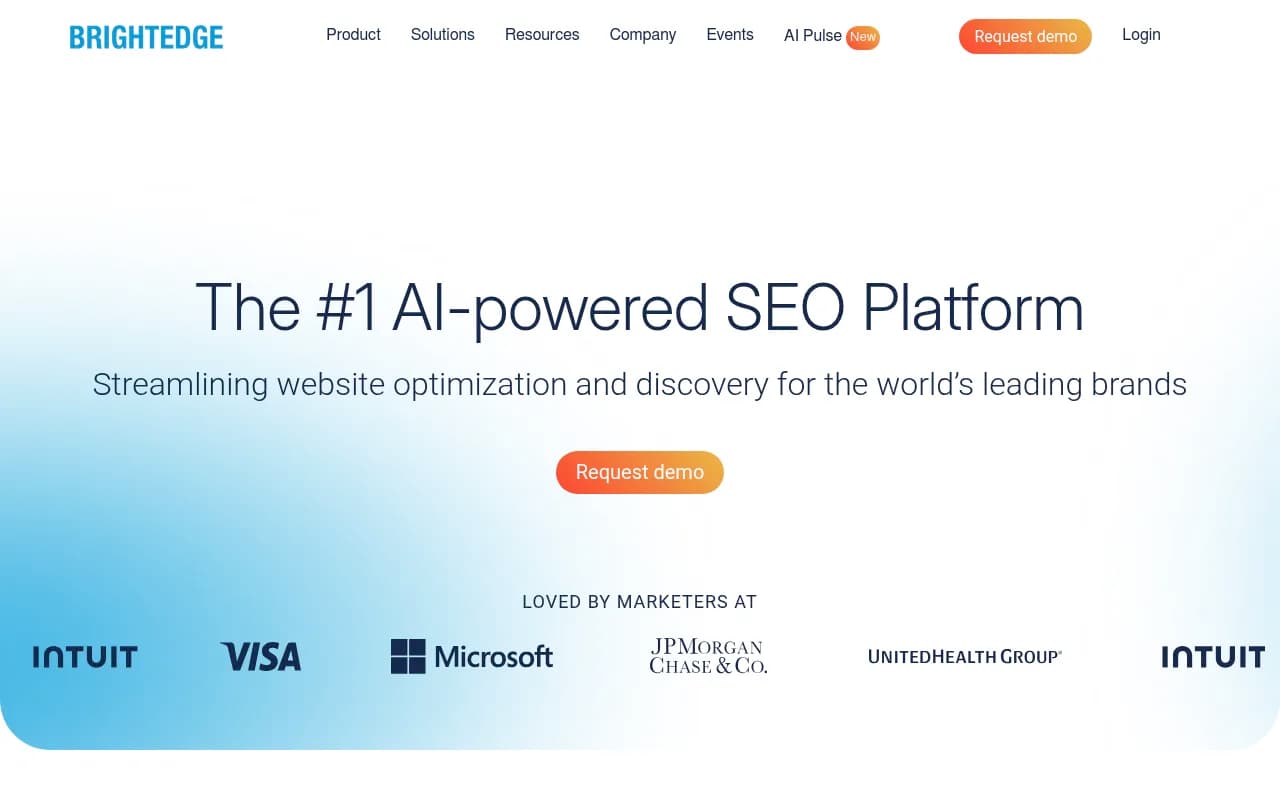
| BrightEdge | Enterprise SEO with AI visibility | Same logic, large SEO suite |
| Promptwatch | Monitoring plus execution | Lower entry cost, crawler logs and Content Agent |
A practical pilot plan
Skip the 90-minute demos where the vendor picks the prompts. Instead:
- Build a list of 50 to 100 prompts from your sales calls, support tickets and Search Console queries.
- Give the same list to each vendor and ask for results across all engines you care about.
- Compare overlap and discrepancies. If two tools disagree on your own brand, ask why.
- Pick two pages and one technical issue, and measure how long each tool takes to get a fix live.
- Ask the finance question early: contract length, usage caps, and what happens when you add prompts or markets.
If you would rather have an outside team run this evaluation, an agency such as 1001 SEO Media handles GEO selection and implementation work. That is a choice, not a requirement.
Bottom line
Adobe Brand Visibility wins when your stack is Adobe and engineering capacity is the bottleneck. Profound wins on breadth of integrations and self-serve prompt control, but read its comparison pages as marketing. Bluefish is a narrower, brand-protection play whose current feature set you need to verify directly. None of the three publishes full pricing, so the first concrete action is the same for all of them: request a written quote and engine list, then test with your own prompts.