Key takeaways
- Ranksmith tracks AI search visibility but lacks the content generation, crawler logs, and traffic attribution that more complete platforms offer.
- The best alternatives in 2026 fall into two camps: monitoring-only tools (useful for dashboards and reporting) and full-cycle optimization platforms (find gaps, fix them, track results).
- Promptwatch is the only platform in this space rated as a "Leader" across all evaluation categories in a 2026 comparison of 12 GEO tools -- it monitors, generates content, and closes the loop with traffic attribution.
- Budget matters: options range from free tiers (Otterly.AI, Peec AI) to enterprise contracts (Profound, BrightEdge, Evertune).
- If you're serious about AI search as a revenue channel, a monitoring-only tool will eventually feel like a speedometer with no steering wheel.
Ranksmith does one thing reasonably well: it shows you where your brand appears (or doesn't) in AI-generated responses. For teams just getting started with Generative Engine Optimization (GEO), that's a decent entry point.
But at some point you start asking the obvious follow-up question: okay, so what do I do about it? That's where Ranksmith runs out of road. There's no content generation, no crawler log analysis, no prompt volume data to help you prioritize, and no way to connect AI visibility to actual traffic or revenue.
If you've hit that ceiling, this guide covers the best alternatives -- from lightweight trackers to full-cycle optimization platforms -- so you can pick the right tool for where you actually are.
What to look for in a Ranksmith alternative
Before jumping into the list, it's worth being clear about what separates a good AI visibility tool from a great one. Most tools on the market do some version of monitoring: they run prompts, check if your brand appears, and show you a share-of-voice number. That's table stakes in 2026.
The more meaningful differentiators are:
- Prompt intelligence: Does the tool tell you which prompts are high-volume and winnable, or does it just track whatever you manually enter?
- Gap analysis: Can it show you prompts where competitors are cited but you're not -- and tell you why?
- Content generation: Can it help you create content that's actually engineered to get cited, not just generic blog posts?
- Crawler logs: Does it show you which AI crawlers are hitting your site, which pages they're reading, and what errors they're encountering?
- Traffic attribution: Can it connect AI visibility to actual visits and revenue?
- Coverage: How many AI models does it monitor? ChatGPT and Perplexity are obvious, but what about Claude, Gemini, Grok, DeepSeek, Mistral, and Google AI Overviews?
Keep these in mind as you read through the options below.
The best Ranksmith alternatives in 2026
Promptwatch -- best for the full optimization cycle
Promptwatch is the most complete option in this space. Where most tools (including Ranksmith) stop at monitoring, Promptwatch is built around a three-step loop: find the gaps, create content that fixes them, and track the results.

The Answer Gap Analysis is genuinely useful -- it surfaces the specific prompts where competitors are getting cited and you're not, which gives you a concrete content brief rather than a vague "you need more content" recommendation. The built-in AI writing agent then generates articles, listicles, and comparisons grounded in citation data from over 880 million analyzed citations. That's not just AI-assisted writing; it's content shaped by what AI models actually want to cite.
Beyond content, Promptwatch covers things most competitors skip entirely: real-time AI crawler logs (so you can see which pages ChatGPT or Claude are reading and fix indexing issues), Reddit and YouTube citation tracking, ChatGPT Shopping monitoring, and prompt volume estimates with difficulty scores. Traffic attribution works via a code snippet, Google Search Console integration, or server log analysis.
It monitors 10 AI models: ChatGPT, Perplexity, Google AI Overviews, Google AI Mode, Claude, Gemini, Meta/Llama, DeepSeek, Grok, Mistral, and Copilot. Pricing starts at $99/month for the Essential plan (1 site, 50 prompts, 5 articles), with Professional at $249/month and Business at $579/month. A free trial is available.
In a 2026 comparison of 12 GEO platforms, Promptwatch was the only tool rated as a "Leader" across all categories. That's not marketing copy -- it reflects a genuine gap between what Promptwatch does and what most competitors offer.
Otterly.AI -- best budget monitoring option
Otterly.AI is one of the more affordable ways to get AI visibility tracking up and running. It covers the major LLMs, gives you share-of-voice metrics, and has a clean enough interface that non-technical stakeholders can actually use it.

The honest limitation: it's a monitoring dashboard. There's no content generation, no crawler logs, no traffic attribution. If you're a small team that just needs to track brand mentions across ChatGPT and Perplexity and report them to a client or manager, Otterly.AI works fine. If you need to actually do something with the data, you'll quickly find yourself exporting CSVs and figuring out next steps on your own.
Peec AI -- best for multi-language monitoring
Peec AI has carved out a niche with solid multi-language and multi-region support, which matters more than people realize. AI models give different answers in different languages, and a brand that's well-cited in English responses might be invisible in French or German ones.
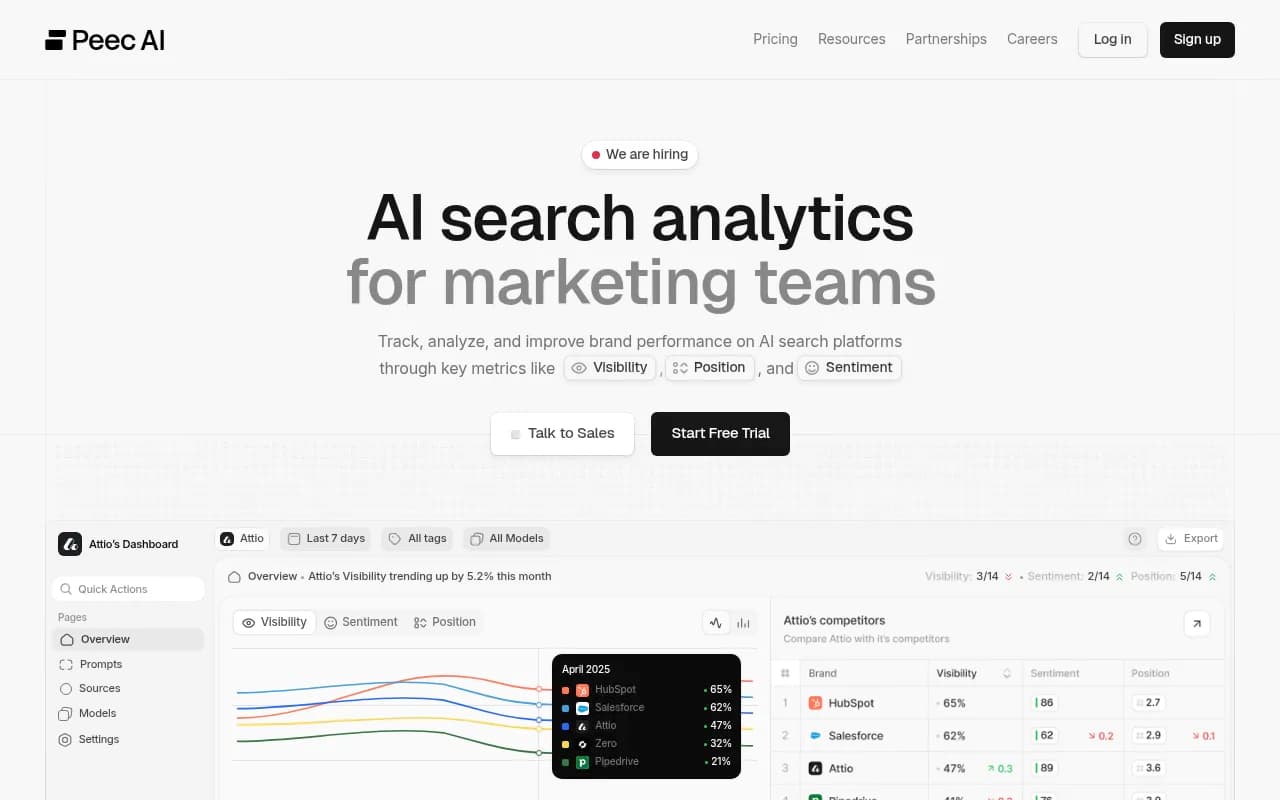
It's primarily a monitoring tool -- share of voice, citation tracking, competitor comparisons -- but the language coverage is genuinely strong. For international brands or agencies managing clients across multiple markets, Peec AI is worth a close look. It's also reasonably priced relative to enterprise alternatives.
Profound -- best for enterprise monitoring depth
Profound (also known as Profound AI) is positioned at the enterprise end of the market. It goes deeper on data than most tools -- more prompts, more models, more granular reporting -- and has the integrations and security posture that larger organizations need.
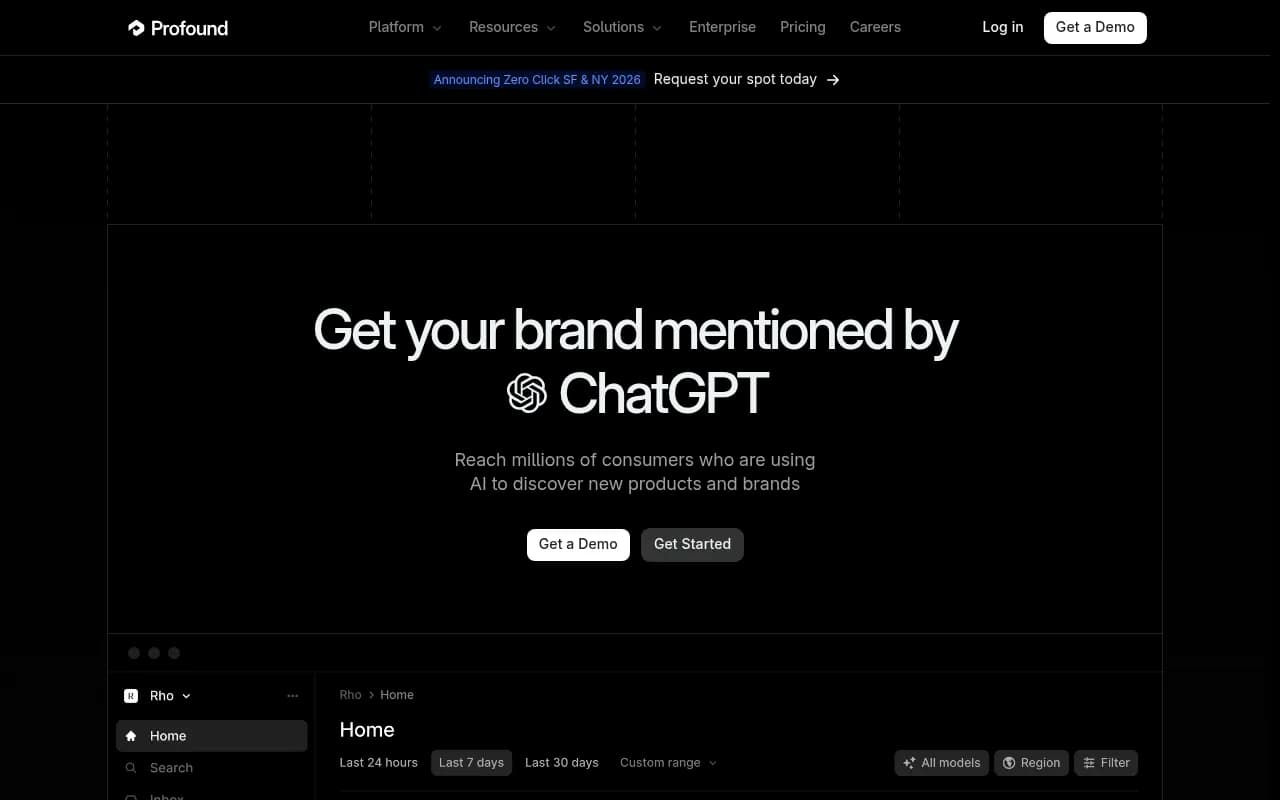
The trade-off is price and complexity. Profound is not a tool you spin up in an afternoon. It's also primarily a monitoring and analytics platform; content optimization and generation aren't core to what it does. For a large brand that needs comprehensive AI visibility data and has a separate content team to act on it, Profound makes sense. For a mid-market team that needs the full cycle in one place, it's probably more than you need.
Scrunch AI -- best for content optimization alongside monitoring
Scrunch AI takes a slightly different angle: it combines visibility monitoring with recommendations for making your existing content more AI-friendly. Rather than generating new content from scratch, it analyzes what you have and tells you what to fix.
That's a useful middle ground for teams with existing content libraries that aren't getting cited. The monitoring side covers the major LLMs, and the optimization recommendations are more actionable than the generic advice you'd get from a basic tracker. It's not as comprehensive as a full-cycle platform, but it's a step beyond pure monitoring.
SE Ranking / SE Visible -- best for teams already in the SE Ranking ecosystem
SE Ranking has added AI visibility tracking through its SE Visible product, which makes it a natural choice for teams already using SE Ranking for traditional SEO. You get AI Overview tracking, share-of-voice metrics, and some competitive analysis without needing to add another vendor.
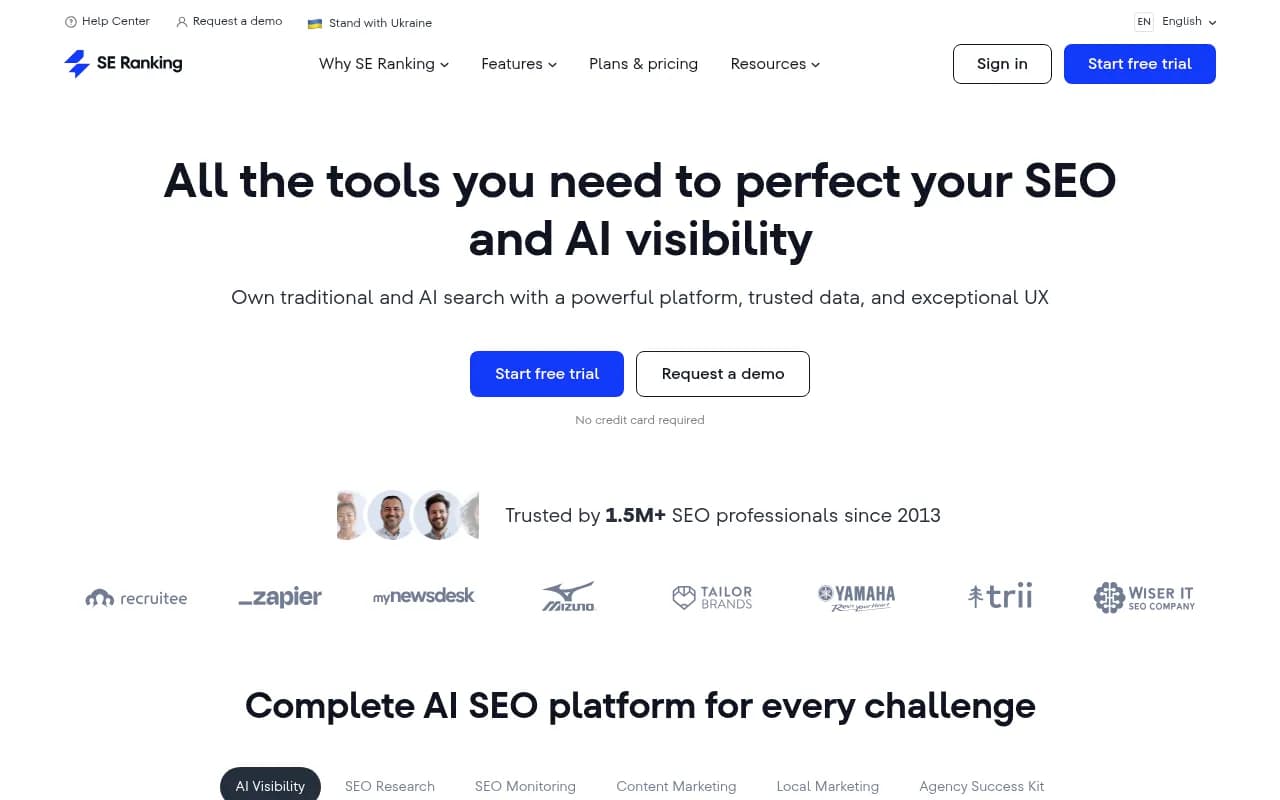
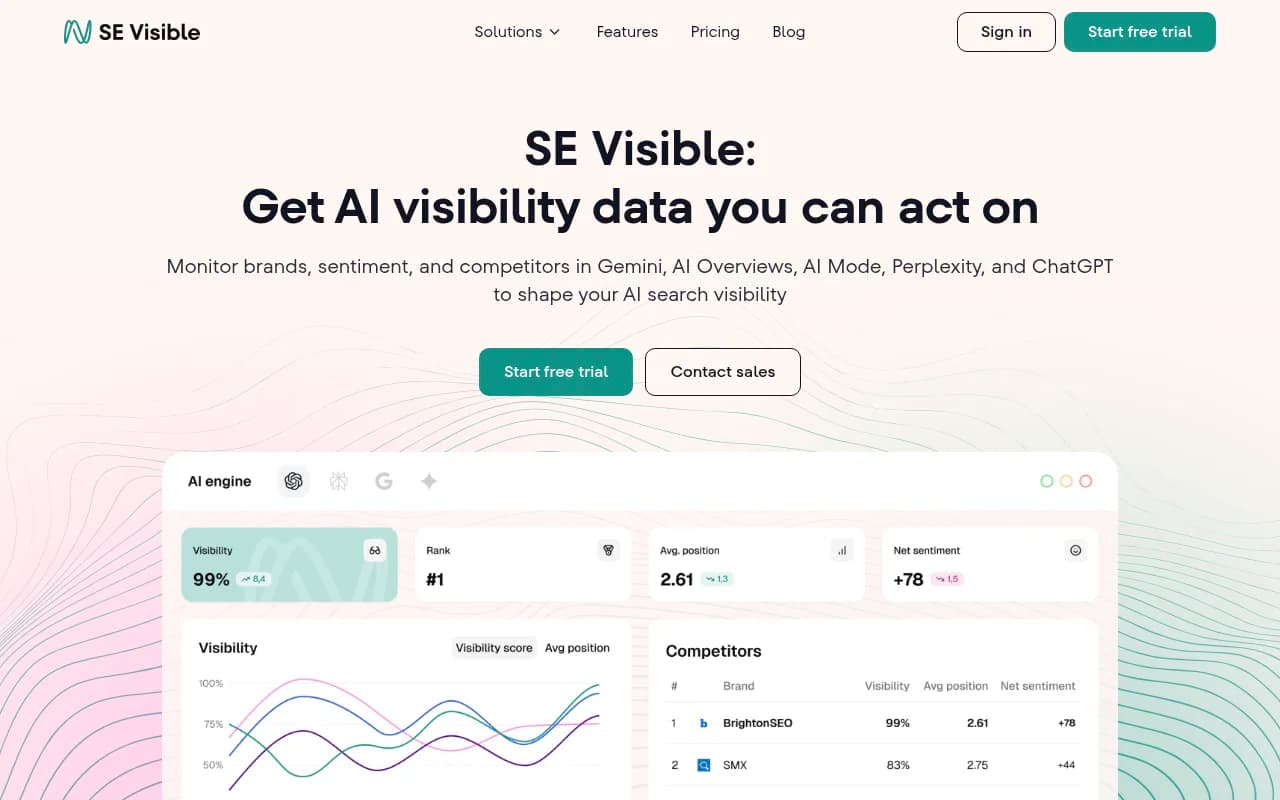
The AI visibility features are solid but not the deepest in the market. If you're already paying for SE Ranking and want to add AI monitoring without a separate budget line, this is the path of least resistance. If AI search is your primary focus rather than a secondary concern, a dedicated GEO platform will give you more.
LLMrefs -- best for keyword-centric teams transitioning from SEO
LLMrefs is interesting because it's designed to bridge the gap between traditional keyword tracking and AI visibility. It takes the keywords you already track, automatically generates realistic conversational prompts around them, and aggregates the results into share-of-voice and citation metrics.
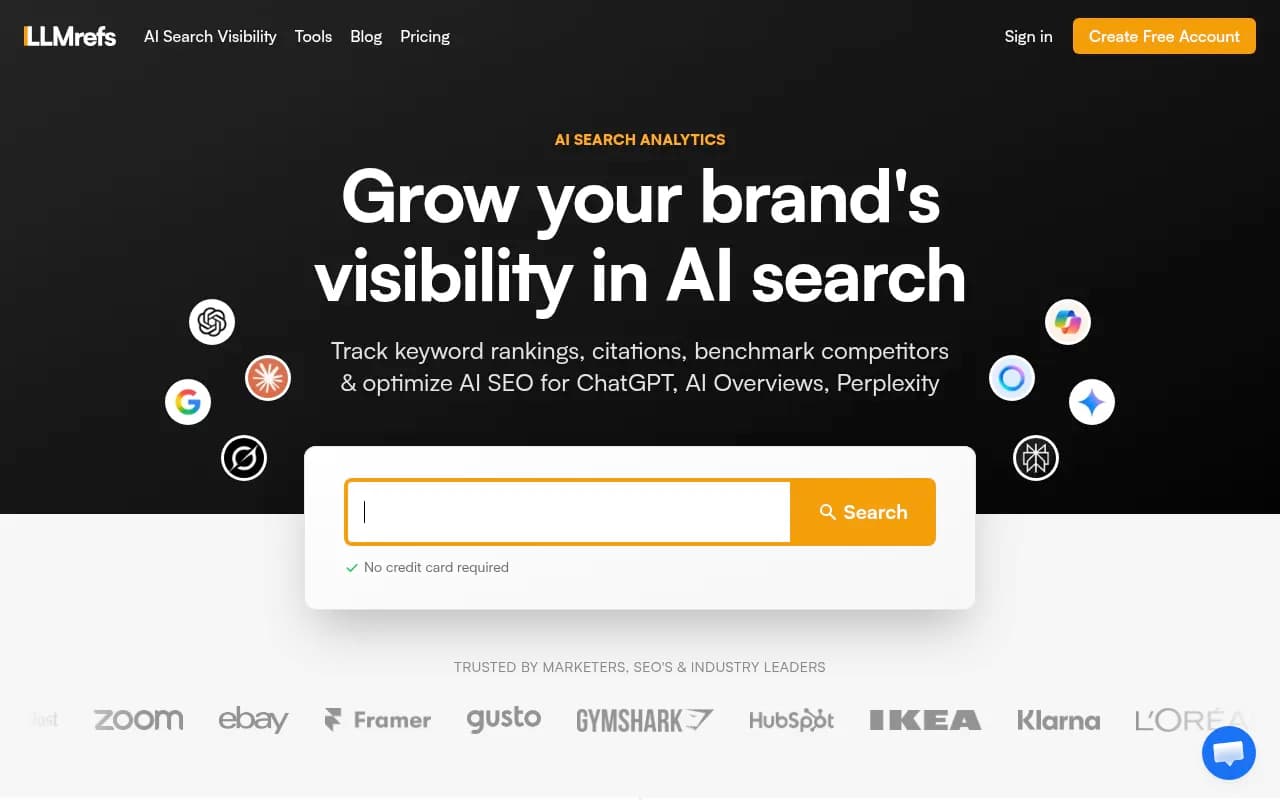
For SEO teams that are used to thinking in keywords and want to translate that into AI visibility without completely rethinking their workflow, LLMrefs is a smart entry point. It's not a full optimization platform, but the keyword-to-prompt translation is genuinely useful.
Writesonic -- best for content teams that want AI visibility baked in
Writesonic has evolved from a general AI writing tool into something that includes AI search visibility tracking alongside content generation. It's an interesting combination: you can monitor where your brand appears in AI responses and use the same platform to generate content intended to improve that visibility.
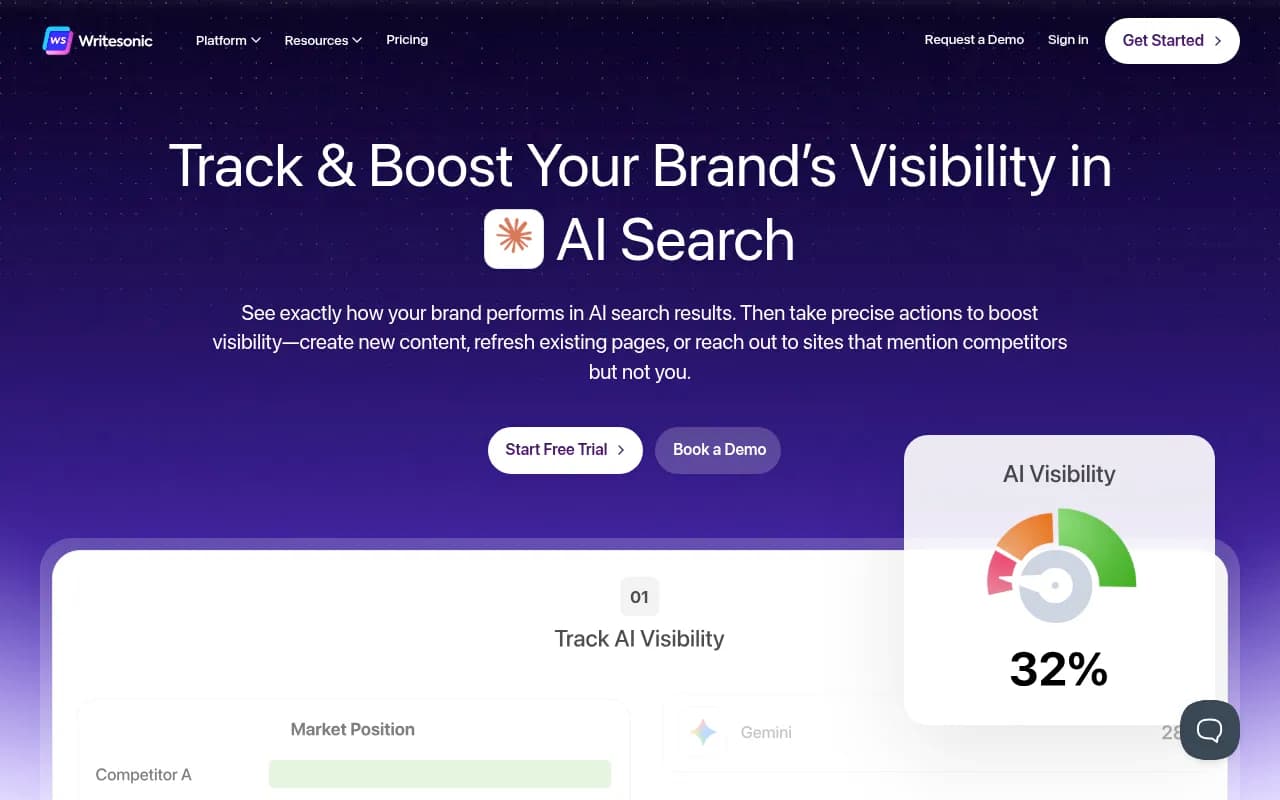
The monitoring side isn't as deep as dedicated GEO platforms, and the content generation is more general-purpose than citation-optimized. But for content teams that want a single tool for writing and basic AI visibility tracking, it's a reasonable option.
Evertune -- best for Fortune 500 enterprise GEO
Evertune is at the high end of the market, targeting large enterprises with complex multi-brand, multi-region needs. It covers a wide range of AI models and provides detailed competitive analysis.
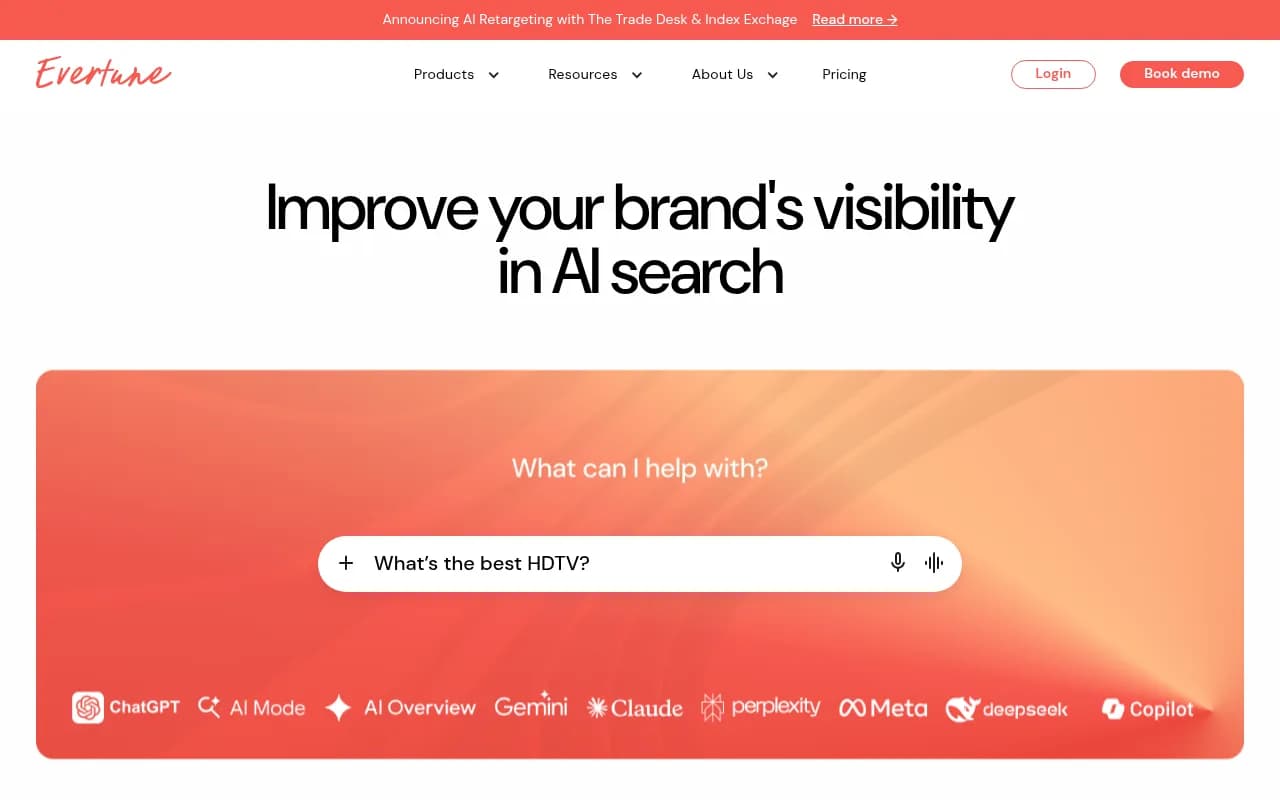
It's a serious platform for serious budgets. If you're a Fortune 500 brand with a dedicated GEO team and an enterprise contract to match, Evertune is worth evaluating. For everyone else, the price-to-value ratio probably doesn't work out.
AIclicks -- best for agencies tracking multiple clients
AIclicks is built with agency workflows in mind, with multi-client management, white-label reporting, and the kind of dashboard structure that makes it easier to manage visibility tracking across a portfolio of brands.
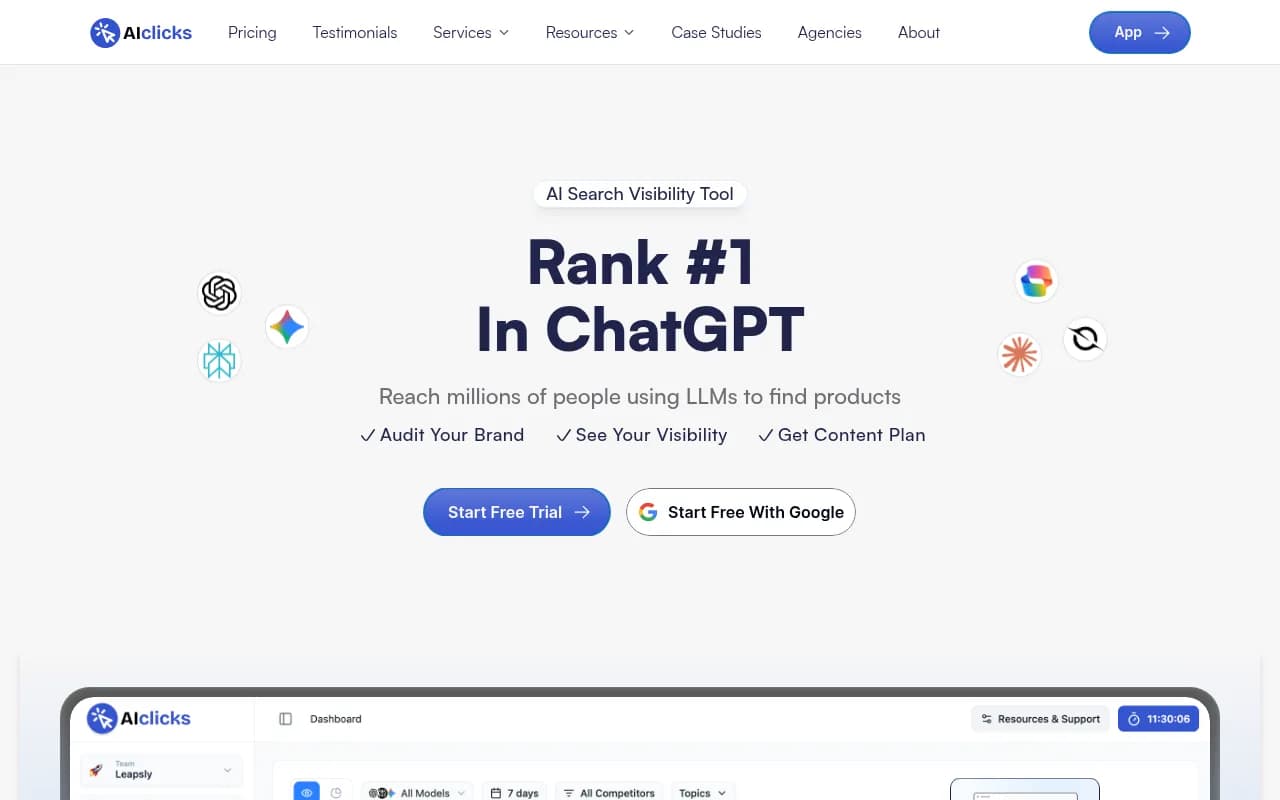
The feature depth is reasonable for the price, and the agency-focused UX is a genuine differentiator. It's not the most powerful tool in the market, but for agencies that need to report AI visibility to clients without spending enterprise money, it's a practical choice.
Omnia -- best for Google AI Overviews specifically
Omnia focuses specifically on Google AI Overviews tracking, which is a narrower scope than most tools on this list but done well. It includes an "action layer" that turns AIO tracking data into recommendations -- which pages to optimize, which content gaps to address.
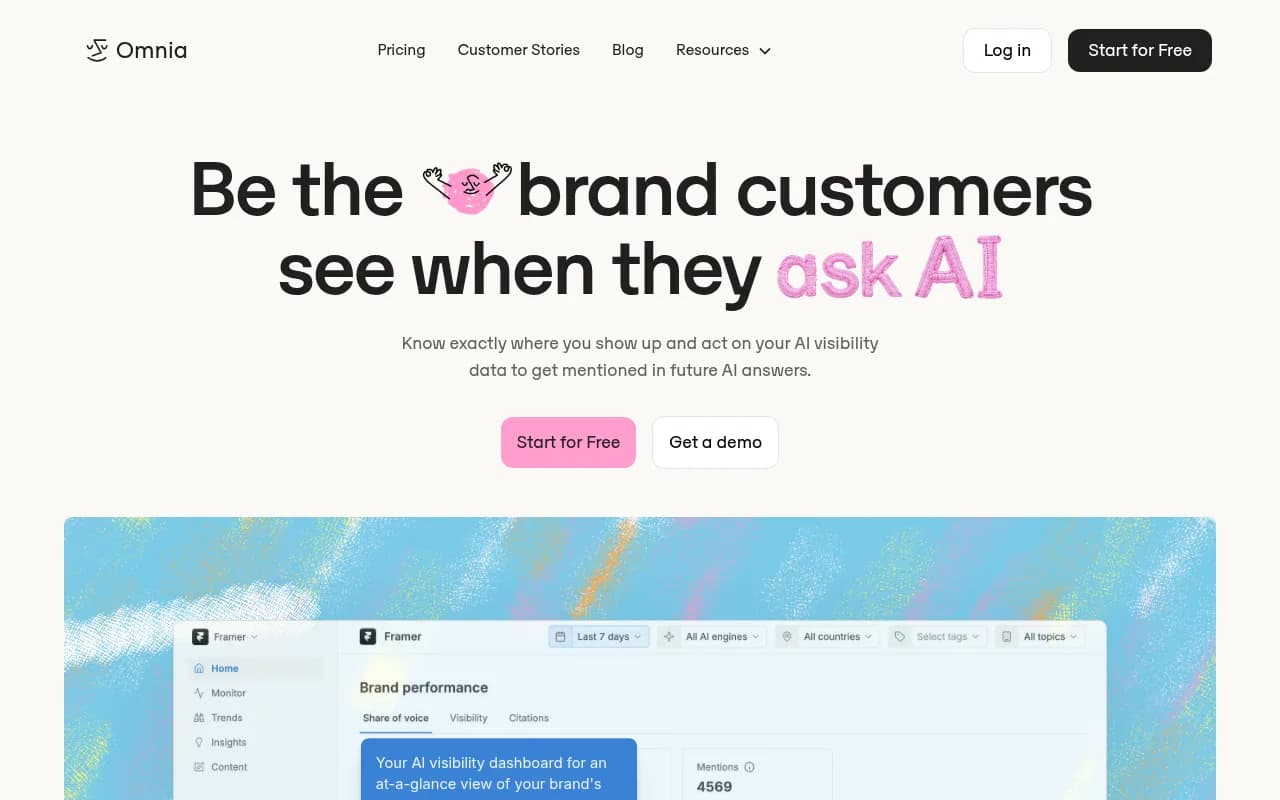
If Google AI Overviews is your primary concern (as opposed to ChatGPT, Perplexity, or other LLMs), Omnia is worth a look. For broader AI search coverage, you'll need something else.
Feature comparison table
| Tool | AI models covered | Content generation | Crawler logs | Traffic attribution | Prompt intelligence | Best for |
|---|---|---|---|---|---|---|
| Promptwatch | 10+ | Yes (citation-grounded) | Yes | Yes | Yes (volume + difficulty) | Full optimization cycle |
| Otterly.AI | 5+ | No | No | No | Basic | Budget monitoring |
| Peec AI | 5+ | No | No | No | Basic | Multi-language tracking |
| Profound AI | 8+ | No | No | Limited | Yes | Enterprise data depth |
| Scrunch AI | 6+ | Recommendations only | No | No | Basic | Content optimization |
| SE Ranking / SE Visible | 5+ | No | No | No | Basic | SE Ranking users |
| LLMrefs | 4+ | No | No | No | Yes (keyword-based) | SEO teams transitioning |
| Writesonic | 4+ | Yes (general) | No | No | Basic | Content teams |
| Evertune | 8+ | No | No | No | Yes | Fortune 500 enterprise |
| AIclicks | 5+ | No | No | No | Basic | Agencies |
| Omnia | 3+ (AIO focus) | Recommendations | No | No | Basic | Google AI Overviews |
How to choose the right alternative
The honest answer is that it depends on what's actually slowing you down.
If you're still in the "we need to understand what's happening" phase, a monitoring-only tool like Otterly.AI or Peec AI is fine. They're affordable, quick to set up, and will give you enough data to make the case internally for investing more.
If you've already got the monitoring data and you're frustrated that it's not translating into action, that's the signal to move to a platform that closes the loop. Promptwatch is the clearest option here -- it's the only tool that combines gap analysis, citation-grounded content generation, crawler logs, and traffic attribution in one place. Most alternatives do one or two of those things; Promptwatch does all of them.
If you're at an enterprise scale with a dedicated team and a large budget, Profound or Evertune give you the data depth and security posture that large organizations need, though you'll still need a separate content workflow.
One thing worth being clear about: AI search visibility is not a set-and-forget channel. The models update, competitors publish new content, and your citation share shifts constantly. Whatever tool you choose, you need one that helps you respond to those changes -- not just observe them.
A note on Ranksmith itself
Ranksmith isn't a bad tool. For teams that are just starting to think about AI search visibility, it provides a reasonable entry point: you can track brand mentions across a handful of AI models, see some basic share-of-voice data, and get a sense of where you stand relative to competitors.
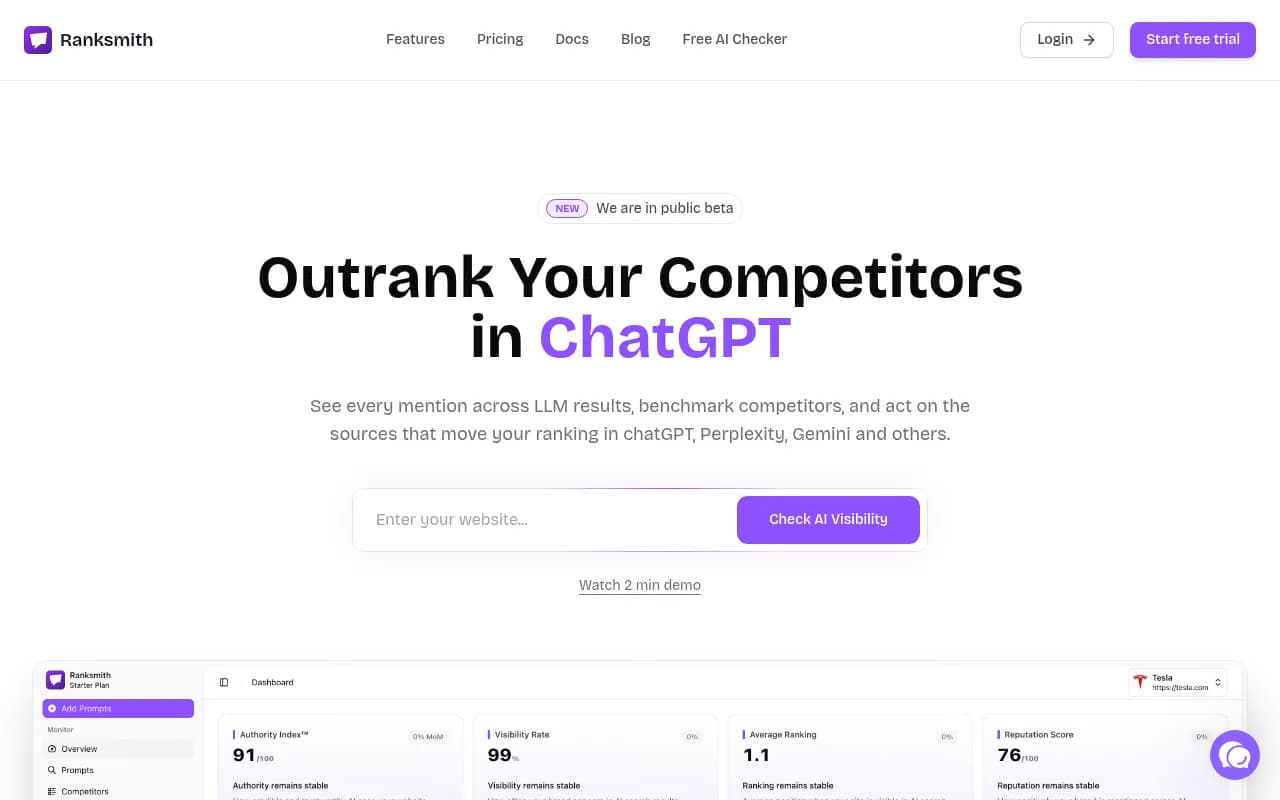
The gap becomes apparent when you try to act on that data. There's no built-in way to identify which content gaps are causing you to miss citations, no tool to generate content that addresses those gaps, and no way to verify whether the content you do publish is actually getting crawled by AI engines. You end up with a dashboard that tells you what's wrong but no mechanism to fix it.
That's not a knock on Ranksmith specifically -- it's a limitation shared by most monitoring-only tools. The question is whether you need more than monitoring, and if you're reading a guide about alternatives, you probably do.