Key takeaways
- Peec AI is a capable monitoring tool, but most teams outgrow it when they need content optimization, multi-engine depth, or a clearer path from data to action.
- The best alternatives in 2026 fall into two camps: monitoring-focused tools (good for tracking) and full-cycle platforms (good for actually improving your AI visibility).
- Promptwatch stands out as the only platform rated "Leader" across all GEO categories in a 2026 comparison of 12 platforms -- because it closes the loop from gap analysis to content creation to traffic attribution.
- Budget options like Otterly.AI and Rankscale work well for smaller teams that just need basic prompt tracking.
- Enterprise teams competing across multiple AI engines should look at platforms with crawler logs, citation analysis, and built-in content generation.
Peec AI had a good run as an early mover. When AI search was just starting to matter -- when Perplexity was gaining traction and ChatGPT Search launched -- Peec was one of the few tools that let you track brand mentions across LLMs with any reliability. For a lot of teams, it was the first thing they reached for.
But the market has moved fast. By 2026, the question isn't just "does my brand appear in AI answers?" It's "why doesn't it appear, what do I do about it, and how do I measure the impact?" Peec AI doesn't have great answers to the second and third parts of that question.
That's where the alternatives come in. Some go deeper on monitoring. Some add content optimization. Some are built specifically for agencies or enterprise teams. This guide covers the 10 that are actually worth your time.
Why teams switch away from Peec AI
Before getting into the alternatives, it's worth being clear about what actually drives people to look elsewhere.
The most common complaints from marketing communities on Reddit and Slack are:
- Cost scales poorly for large prompt sets. Once you're tracking hundreds of prompts across multiple competitors, pricing gets uncomfortable fast.
- Results accuracy varies by industry. Some verticals get inconsistent data, which makes it hard to trust the numbers.
- The platform is primarily a monitoring dashboard. It shows you where you stand but doesn't tell you what to write, what's missing, or how to fix gaps.
- Multi-engine coverage has gaps. Teams tracking Grok, DeepSeek, or Meta AI often find Peec's coverage thin.
None of this makes Peec a bad tool. It's a reasonable starting point. But if you're serious about AI search as a growth channel, you'll probably want more.
The 10 best Peec AI alternatives in 2026
1. Promptwatch
If you want one tool that covers the full cycle -- finding gaps, generating content, and tracking results -- Promptwatch is the most complete option available right now.
Most GEO platforms stop at monitoring. They show you a visibility score, maybe a list of prompts where competitors appear and you don't, and then leave you to figure out what to do. Promptwatch is built around what comes next.
The Answer Gap Analysis shows you exactly which prompts competitors rank for that you don't, down to the specific topics and angles your site is missing. The built-in AI writing agent then generates articles, listicles, and comparisons grounded in real citation data -- 880M+ citations analyzed -- so the content is engineered to get cited by ChatGPT, Claude, Perplexity, and others, not just optimized for traditional search.
It also has features most competitors don't bother with: real-time AI crawler logs (so you can see which pages ChatGPT and Perplexity are actually reading and which ones they're ignoring), Reddit and YouTube citation tracking, ChatGPT Shopping monitoring, and traffic attribution via GSC integration or server log analysis. Coverage spans 10 AI models including Google AI Mode, Grok, DeepSeek, Mistral, and Copilot.
In a 2026 comparison of 12 GEO platforms, it was the only one rated "Leader" across all categories. The gap between Promptwatch and most competitors isn't subtle.
Pricing starts at $99/month for the Essential plan (1 site, 50 prompts, 5 articles). Professional is $249/month. Business is $579/month. Free trial available.

2. Profound
Profound has built a reputation for precise AI Overview tracking and entity extraction. If your team is deep into entity-based SEO and you want to understand how AI models represent your brand's topical authority, it's one of the more rigorous options.
The attribution mapping is genuinely useful -- you can see which content assets are driving AI citations, not just which pages exist. It's more expensive than Peec AI (starting around $99/month for basic plans, with enterprise pricing significantly higher), and it doesn't have content generation built in, but the monitoring depth is solid.
3. Otterly.AI
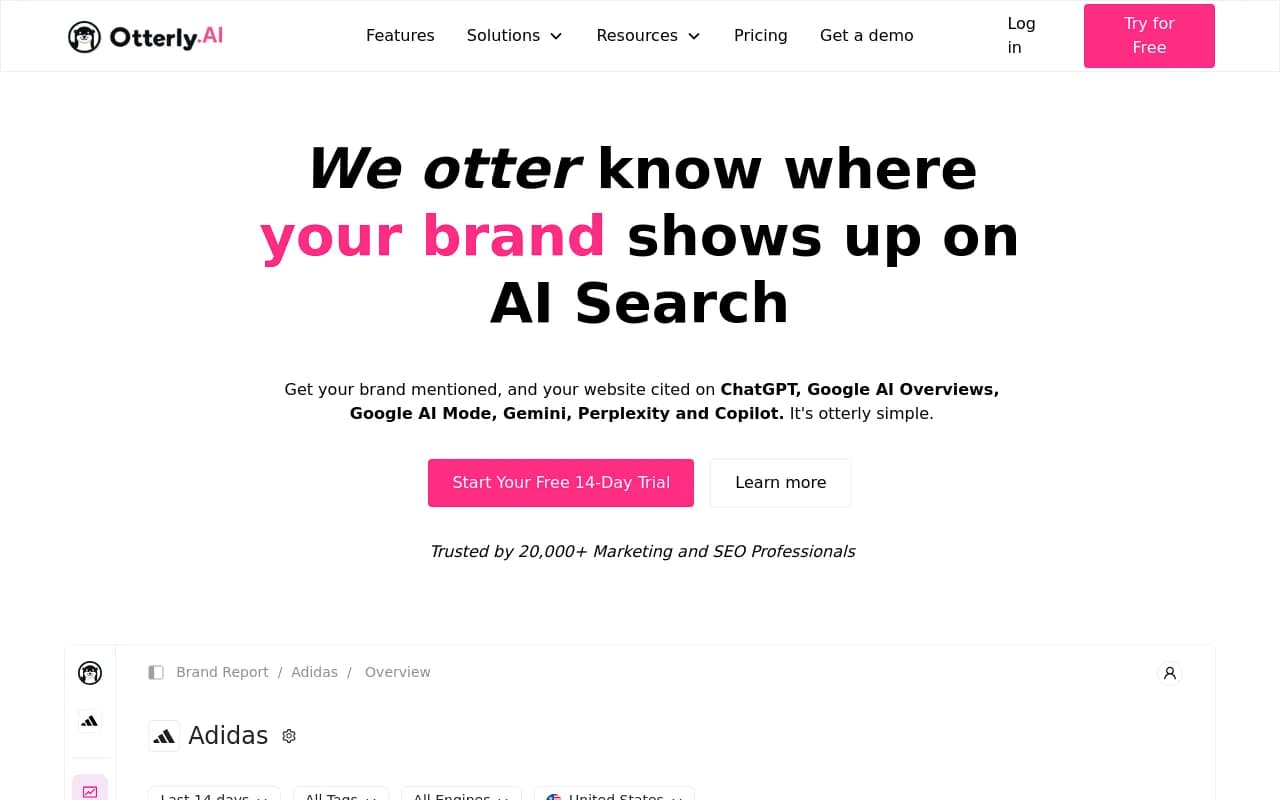
Otterly is the budget-friendly option that comes up constantly in discussions about Peec alternatives. It covers the core AI engines -- ChatGPT, Perplexity, Google AI Overviews, Claude -- and gives you prompt tracking and share-of-voice metrics without a lot of complexity.
The tradeoff is that it's monitoring-only. There's no content gap analysis, no crawler logs, no content generation. But if your team just needs to know whether visibility is trending up or down, and you don't want to spend a lot, Otterly gets the job done.
4. Scrunch AI
Scrunch takes a different angle from most GEO tools. Rather than focusing purely on citation counts, it analyzes brand narrative -- how AI models describe your brand, what descriptors they use, and how that framing compares to competitors.
For brand teams and PR-adjacent marketing functions, this is genuinely useful. Knowing that ChatGPT consistently describes your product as "mid-market" when you're positioning as enterprise is actionable information that pure citation tracking misses.
It's not cheap, and it's not the right tool if your primary goal is content optimization. But for brand narrative work, it's one of the more specialized options available.
5. AthenaHQ
AthenaHQ covers eight-plus AI search engines and is built for teams that need competitive intelligence across multiple models simultaneously. The interface is clean, the multi-engine comparison is one of the better implementations in the market, and it works well for brand monitoring at scale.
The limitation is similar to most tools in this space: it's a monitoring platform. You get good data about where you stand relative to competitors, but the path from insight to action is left to you. No content generation, no crawler logs, no traffic attribution.
Starting price is around $295/month, which puts it in the mid-to-upper range for GEO tools.

6. SE Visible
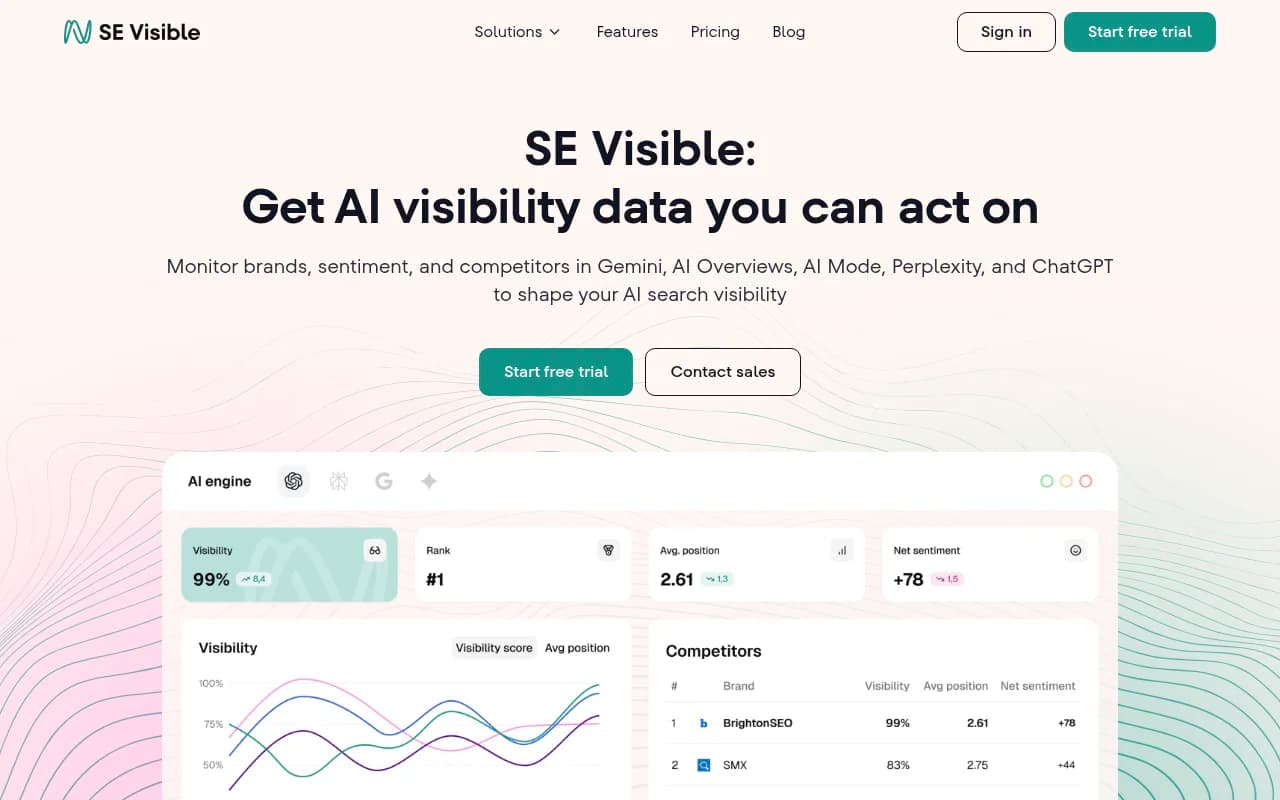
SE Visible is the AI visibility product from SE Ranking, which means it comes with the backing of a mature SEO platform and a team that understands search data at scale. It's particularly strong on competitor benchmarking and sentiment analysis -- understanding not just whether your brand appears, but how it's framed relative to competitors.
It's aimed at CMOs and agency owners who want strategic visibility data for reporting and decision-making, rather than technical SEO teams running content experiments. Starting price is around $189/month.
7. Writesonic
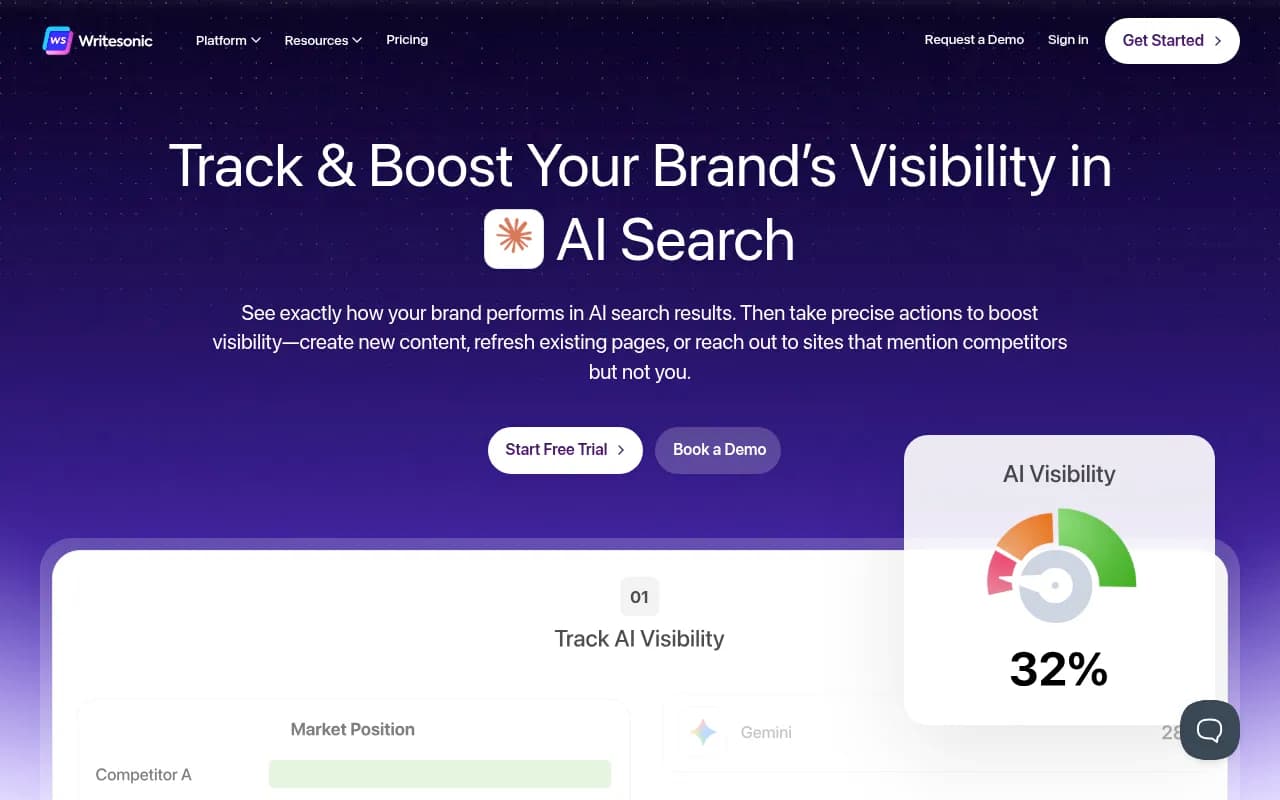
Writesonic has expanded well beyond its origins as an AI writing tool. Its GEO product tracks AI visibility across ChatGPT, Google AI Mode, Gemini, Perplexity, and Claude, and it connects that tracking to content optimization workflows.
The combination of visibility data and content generation in one platform is genuinely useful, though the execution isn't quite as deep as Promptwatch's citation-grounded approach. It's worth evaluating if your team is already using Writesonic for content and wants to add AI visibility tracking without switching tools.
8. Rankscale
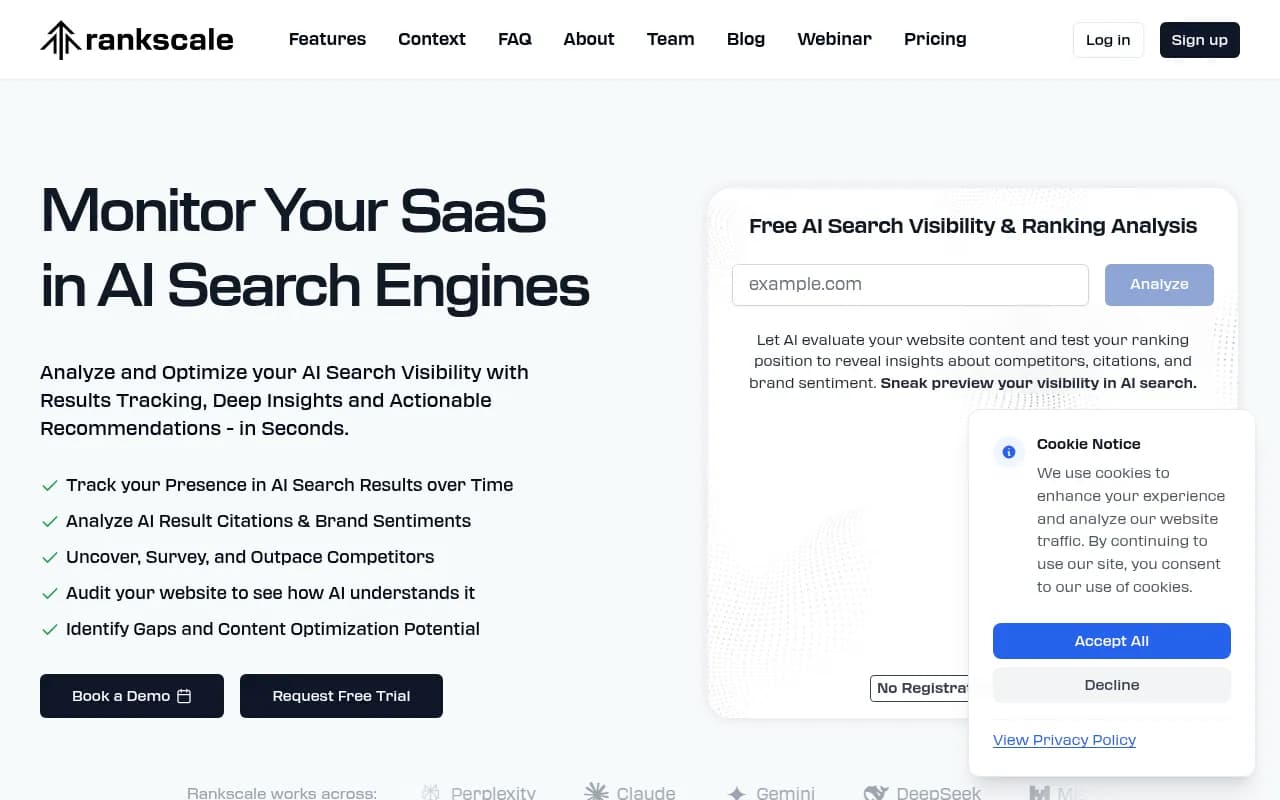
Rankscale is one of the more affordable options in the space, starting around $20/month. It's focused on competitive AI visibility benchmarking -- tracking how your brand's presence in AI answers compares to specific competitors over time.
It won't replace a full GEO platform for serious teams, but for smaller brands or agencies that need a low-cost way to monitor competitive positioning in AI search, it's a reasonable choice.
9. LLMrefs
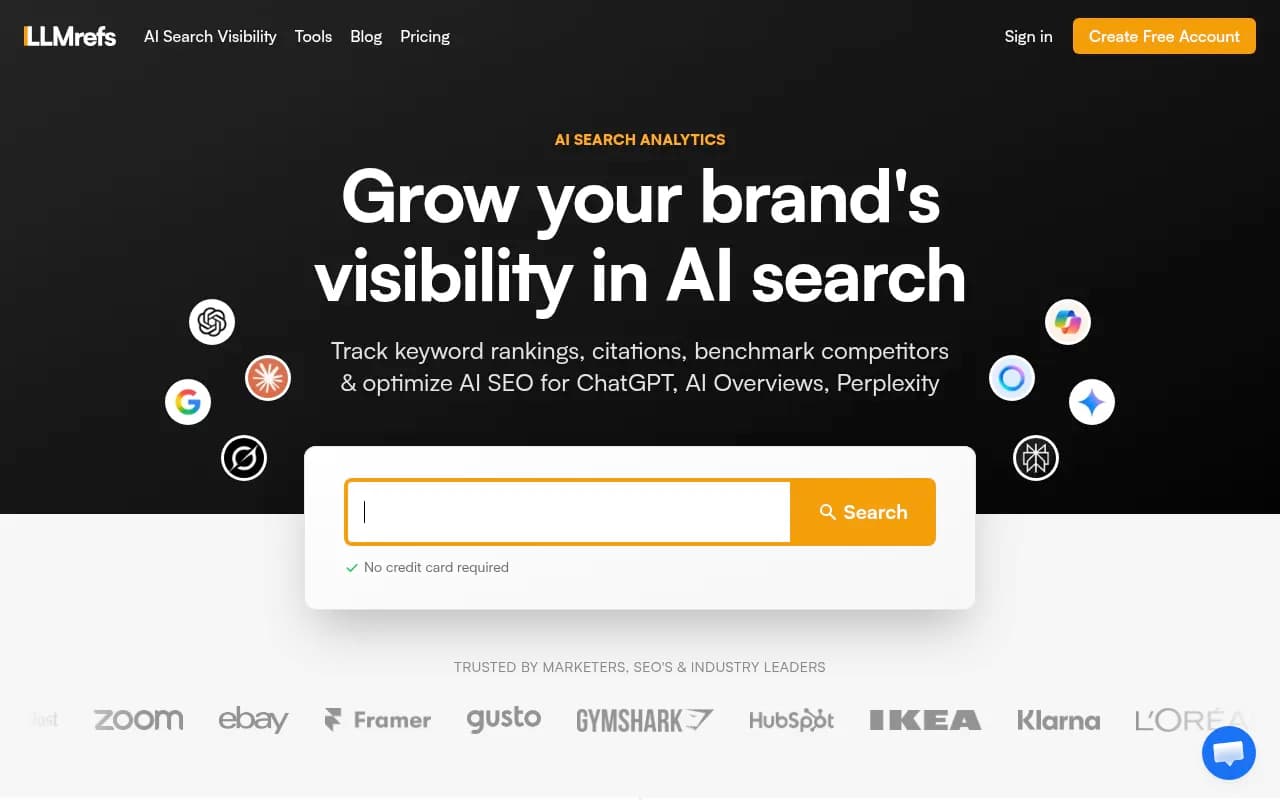
LLMrefs focuses specifically on citation and source tracking -- understanding which URLs and domains AI models are pulling from when they generate responses in your category. This is useful for understanding the citation ecosystem: which third-party sites, Reddit threads, and publications are influencing AI answers, and whether your content is in that mix.
It's more of a research and intelligence tool than a full GEO platform, but the citation data is detailed and genuinely useful for content strategy.
10. Radarkit
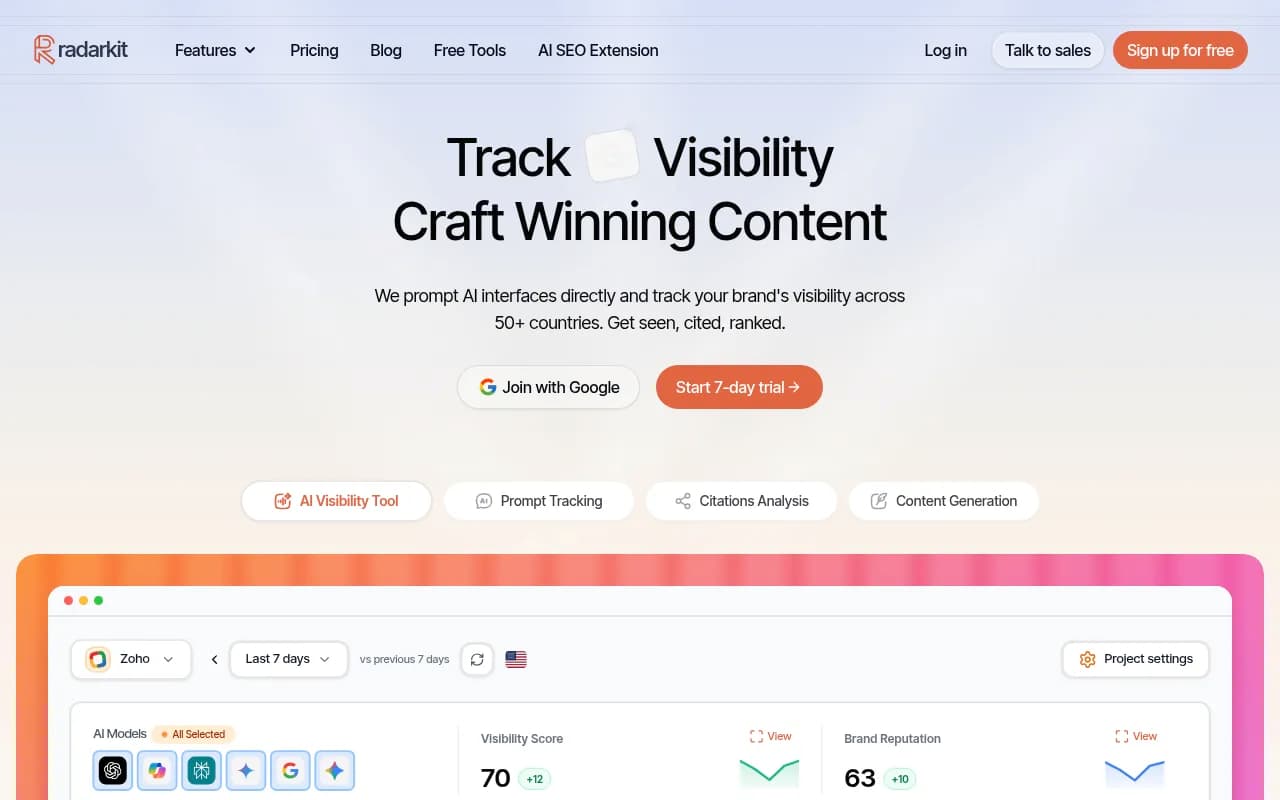
Radarkit uses UI-level scraping to simulate how real users experience AI search results, which gives it a different data perspective than API-based tools. The results tend to reflect what users actually see rather than what the API returns, which can differ in meaningful ways.
It's a solid option for teams that want realistic AI visibility data and competitive benchmarking, though it lacks the content optimization and traffic attribution features that more complete platforms offer.
How these tools compare
Here's a direct comparison across the dimensions that matter most when choosing a Peec AI alternative:
| Tool | Multi-engine coverage | Content generation | Crawler logs | Citation analysis | Traffic attribution | Starting price |
|---|---|---|---|---|---|---|
| Promptwatch | 10 models | Yes (AI writing agent) | Yes | Yes (880M+ citations) | Yes (GSC + server logs) | $99/mo |
| Profound | Google AIO + others | No | No | Yes | No | $99/mo |
| Otterly.AI | 4-5 models | No | No | Basic | No | ~$49/mo |
| Scrunch AI | Multiple | No | No | Brand narrative focus | No | Custom |
| AthenaHQ | 8+ models | No | No | Yes | No | $295/mo |
| SE Visible | Multiple | No | No | Yes | No | $189/mo |
| Writesonic | 5 models | Yes | No | Partial | No | $199/mo |
| Rankscale | Multiple | No | No | Basic | No | ~$20/mo |
| LLMrefs | Multiple | No | No | Yes (deep) | No | Varies |
| Radarkit | Multiple | No | No | Basic | No | Varies |
| Peec AI | 4-5 models | No | No | Basic | No | ~€89/mo |
The pattern is clear. Most tools in this space are monitoring dashboards. They show you data. What you do with that data is your problem.
Promptwatch and Writesonic are the two platforms that connect monitoring to content action, and Promptwatch goes further with crawler logs, traffic attribution, and citation-grounded content generation.
Which alternative is right for your situation?
The honest answer depends on what you're actually trying to accomplish.
If you just want to know whether your brand shows up in AI answers and how that compares to competitors, Otterly.AI or Rankscale will cover the basics without a large budget commitment. They're monitoring tools, nothing more, but they do that job adequately.
If brand narrative and how AI models describe your company is the primary concern, Scrunch AI is the most specialized option for that use case.
If you're running a large content operation and want to understand AI visibility in the context of a broader SEO workflow, SE Visible or AthenaHQ give you solid multi-engine data with good competitive benchmarking.
If you want to actually improve your AI search visibility -- not just track it -- you need a platform that closes the loop from gap identification to content creation to traffic measurement. That's where Promptwatch is in a different category from the rest of the field. The combination of Answer Gap Analysis, citation-grounded content generation, AI crawler logs, and traffic attribution isn't something you can replicate by stitching together multiple monitoring tools.
The GEO space is still young enough that a lot of teams are in "figure out what's happening" mode. But the teams that are winning in AI search in 2026 have moved past monitoring into systematic optimization. The tool you choose should reflect which stage you're actually in.
What to look for when evaluating any GEO platform
A few questions worth asking before committing to any tool:
Does it cover the AI engines your customers actually use? Google AI Overviews and ChatGPT get the most attention, but Perplexity, Gemini, and increasingly Grok and DeepSeek matter for specific audiences. Check the actual engine list, not just the marketing copy.
Does it show you why you're not appearing, or just that you're not? Citation analysis and content gap identification are what separate useful platforms from expensive dashboards.
Can it connect AI visibility to actual traffic and revenue? Visibility scores are nice. Knowing that a specific piece of content is driving measurable traffic from AI referrals is better.
Does it track AI crawlers on your site? Understanding which pages AI models are reading -- and which ones they're ignoring or encountering errors on -- is foundational for optimization. Most tools don't offer this at all.
What's the content workflow? If the platform identifies a gap, what's the next step? If the answer is "export a CSV and figure it out yourself," that's a significant limitation.
The GEO tool market will keep consolidating. Some of the smaller monitoring-only players will either add optimization features or get absorbed. The platforms that are building the full cycle now -- find gaps, create content, measure results -- are the ones worth investing in for the long term.