Key takeaways
- A full-stack AI visibility platform covers four jobs: tracking prompts, explaining why you are or aren't cited, measuring real traffic from AI engines, and producing the content that fixes gaps.
- Most tools in this category stop at job one. Very few connect crawler logs, visitor analytics and content publishing in the same product.
- Citation behaviour differs sharply per engine, so tracking needs to run per model, not as one blended score.
- Promptwatch is the most complete end-to-end option in our view. Semrush, SE Ranking and Writesonic cover part of the stack, while Otterly.AI and Peec AI are good monitors with no optimization layer.
- Check every vendor's current pricing page before buying. Plans in this market change quickly.
What does full-stack actually mean?
The phrase gets thrown around a lot. Plenty of vendors call themselves full-stack because they track ChatGPT, Gemini and Perplexity and also show a sentiment chart. That is monitoring. Useful, but it answers one question: was my brand mentioned?
A genuinely full-stack platform answers four questions in sequence:
- Where do I show up? Prompt tracking across engines, countries and languages.
- Why? Which pages get cited, which crawlers visit, which ones hit errors.
- Does it matter? Actual visits and conversions from AI engines, not just mentions.
- What do I do about it? Content gap analysis, drafting, publishing, and a check that the fix worked.
If a tool only does the first, you still need three other tools and a spreadsheet to close the loop. That is the real cost of a tracker: the work it leaves for you.
The roundups from Zapier and Evertune are worth skimming for breadth, though keep in mind that vendor-written lists (Evertune, Profound, Rivo) rank themselves generously.
Why the stack matters: the data behind it
Three findings from Promptwatch Data explain why one number on a dashboard is not enough.
Citations differ by engine
From Sep 28 to Oct 4, 2026, social platforms made up just 0.46% of ChatGPT's citations, while Google AI Overviews got 12.2% of its citations from social. Reddit alone dropped from 5.19% to 0.09% of ChatGPT citations in that report, which fits the sharp drop Promptwatch tracked on August 14, 2026. If your tool averages everything into one visibility score, you will miss that a Reddit strategy that worked on ChatGPT in spring does almost nothing there now.
Your own pages are the main citation surface
In the same week, product pages were the most cited content type in ChatGPT at 22.4%, followed by landing pages at 16.8%. Roughly 39% of citations go to pages describing what a company sells. For commercial prompts, product pages, landing pages, listicles and comparisons make up almost 70%. That means content tooling is not a nice extra. The thing you publish is the thing being cited.
Crawler access is a silent failure point
Promptwatch's AI crawler traffic data shows OpenAI at 79.8% of IP-verified AI crawler requests in the week of Aug 31 to Sep 6, 2026, down from 94.8% in early June. The mix is shifting. If a major provider is near zero in your own logs, you are probably blocked by robots.txt, a CDN or a WAF rule, and no amount of prompt tracking will tell you that.
The four layers to check before you buy
Layer 1: tracking that reflects what users see
Ask whether the tool monitors the real interfaces of ChatGPT, AI Overviews, AI Mode, Gemini, Perplexity and Copilot, or just calls APIs. Answers and citations in the consumer UI can differ from API output. Also check country and language coverage, and whether prompts come with volume and difficulty so you are not guessing which ones matter.
Layer 2: diagnostics
Crawler logs are the clearest dividing line. Few tools offer IP-verified AI crawler logs, and those that don't can't explain why a page isn't cited. Site audits aimed at AI readability, and page-level citation data, sit in the same layer.
Layer 3: traffic and revenue
Mentions are not money. You want visitor analytics showing sessions and conversions from ChatGPT, Perplexity, Gemini, Claude and others, ideally joined with Search Console and Bing data so you can find pages that rank in Google but never get cited.
Layer 4: action
This is where most tools fall off. Look for content gap analysis, brief or article generation grounded in your own data, CMS publishing, and a way to see whether a published page was crawled, cited and clicked. Without that last step you are publishing blind.
The platforms, compared
| Tool | Tracking | Diagnostics (crawler logs, audits) | AI traffic analytics | Content creation | Best for |
|---|---|---|---|---|---|
| Promptwatch | All major engines, real UI | Yes, IP-verified logs and weekly audits | Yes | Yes, with CMS publishing | Teams that want the whole loop in one product |
| Semrush | Yes, fixed prompt sets | Limited for AI | Limited | Writing tools in the suite | Existing Semrush users |
| SE Ranking / SE Visible | Yes | Partial | Limited | Partial | SEO teams wanting a familiar suite |
| Writesonic | Yes | Limited | Limited | Yes | Teams prioritizing content production |
| Profound | Yes, strong | Limited | Limited | No agentic execution | Enterprise monitoring budgets |
| Otterly.AI | Yes | No | No | No | Affordable monitoring only |
| Peec AI | Yes | No | No | No | Monitoring with suggestions |
Feature claims for competitors reflect their public positioning and our own comparison notes. Verify current capabilities and pricing on each vendor's site before committing.
The options, one by one
Promptwatch
Promptwatch is the one I would start with if the goal is literally one tool for tracking, content and traffic. It monitors the real UIs of ChatGPT, AI Overviews, AI Mode, Gemini, Perplexity, Copilot, Meta AI and Alexa, plus API models alongside. Prompts come with volumes, difficulty and query fan-outs, so you pick targets instead of guessing.
The diagnostics layer is what sets it apart. IP-verified crawler logs show which AI bots read which pages and what errors they hit, spoofed bots filtered out. Visitor analytics then tie AI engines to real traffic and conversions. On the action side, the Action Board produces a prioritized to-do list, and the Content Agent plans, writes and publishes to WordPress, Webflow or Framer, then tracks whether each page gets crawled, cited and clicked. Crisp reported 2x higher conversion rates from AI traffic versus traditional channels, and TreeHouse (Pararius) grew AI search to about 25% of organic conversions.

Pricing starts free for ChatGPT-only tracking, with paid plans from $95/month. The automated Content Agent is on Business ($579/month) and above, so if content automation is the reason you are buying, budget for that tier. Confirm at promptwatch.com/pricing.
Semrush AI toolkit
Zapier's roundup calls it a solid choice if you already live in the Semrush ecosystem, and I agree with the logic: one login for classic SEO and AI tracking is convenient. The tradeoff is depth. AI tracking in a traditional suite tends to be a bolt-on with fixed prompt sets and no crawler-level data.
SE Ranking and SE Visible
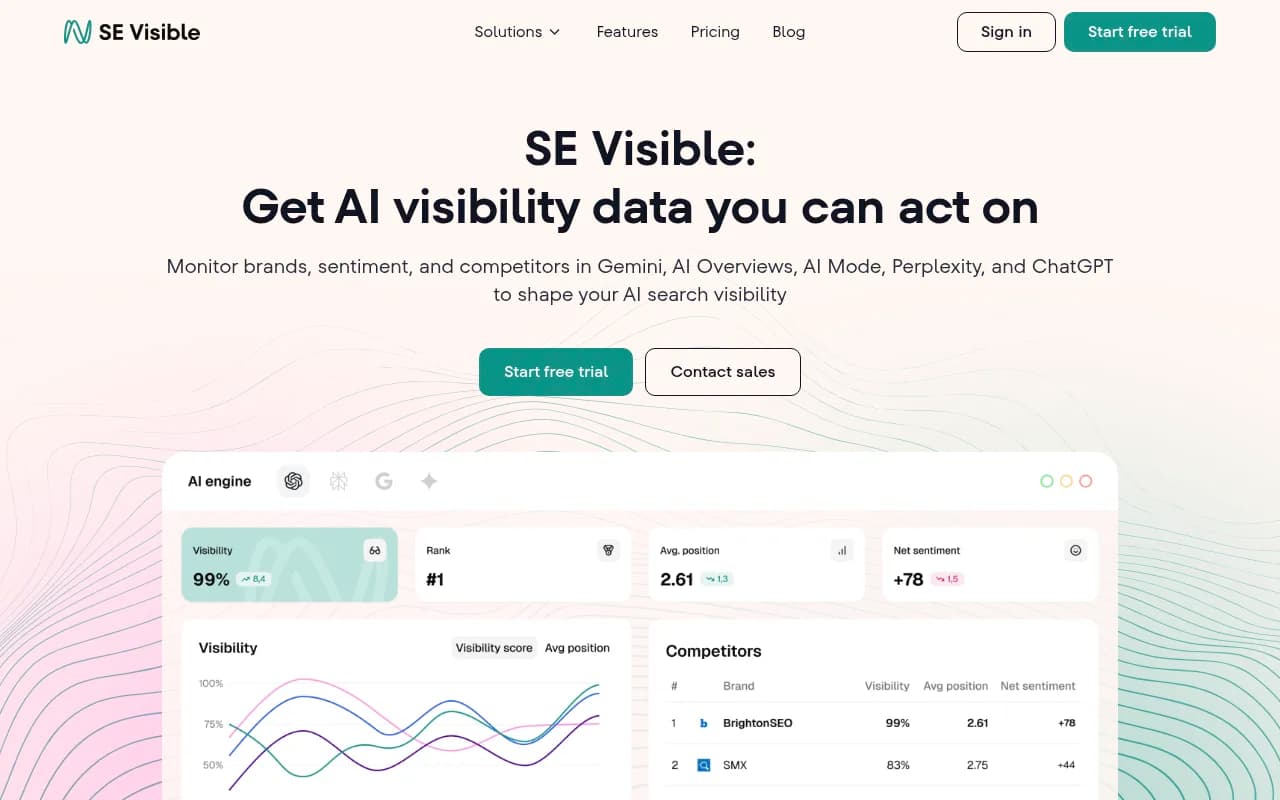
Similar story, with a friendlier price profile. Good if you want rank tracking and AI visibility together and don't need log-level diagnostics.
Writesonic
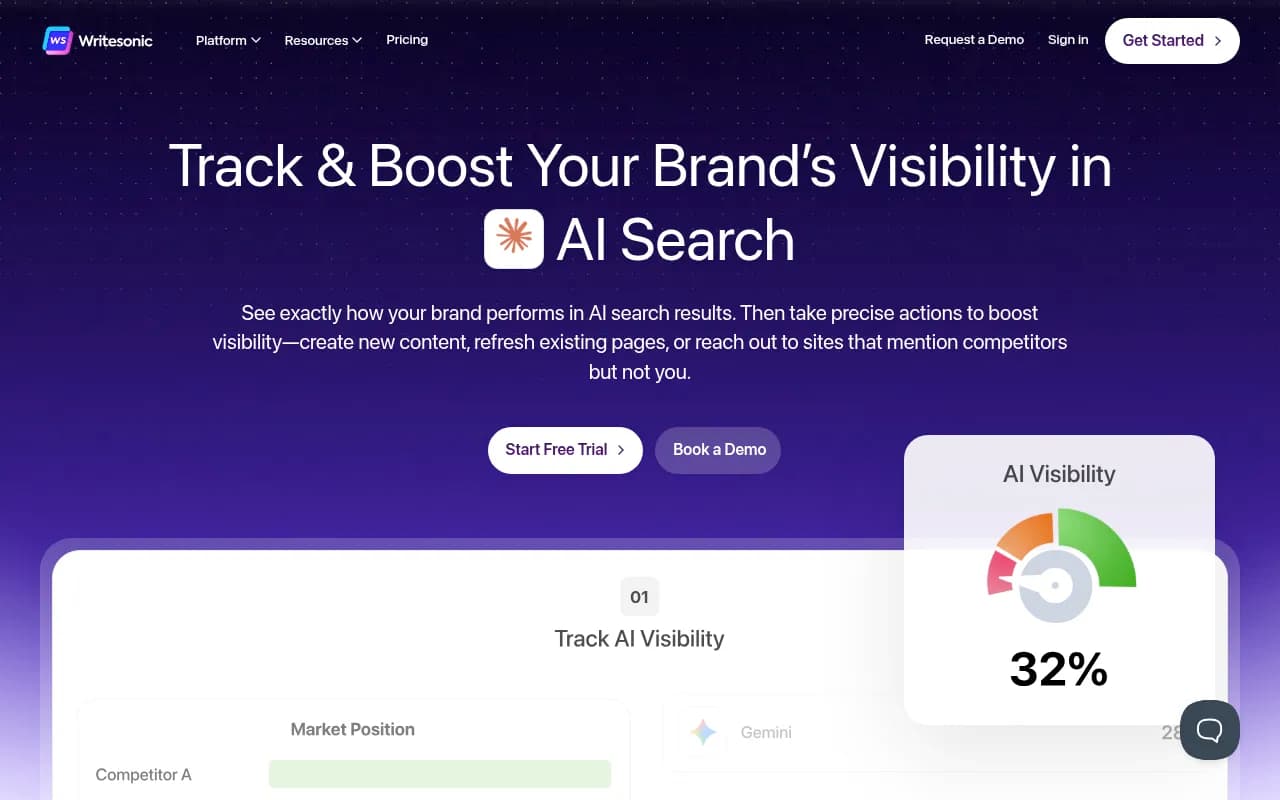
Data-Mania lists Writesonic as a fit for teams that want tracking and content production together, starting around $99/month. That is an unverified figure from a third party, so check it. It leans toward the content side more than diagnostics.
Profound
Strong monitoring and heavily marketed to agencies and enterprise. Expect higher price points, and note that its own best-of list naturally ranks it first. It is a tracker with analytics, not an execution platform.

Otterly.AI and Peec AI
Both are clean, affordable monitors. Otterly is the budget pick; Peec adds suggestions. Neither gives you crawler logs, AI traffic attribution or content generation, so plan on pairing them with other tools.


Others worth a look
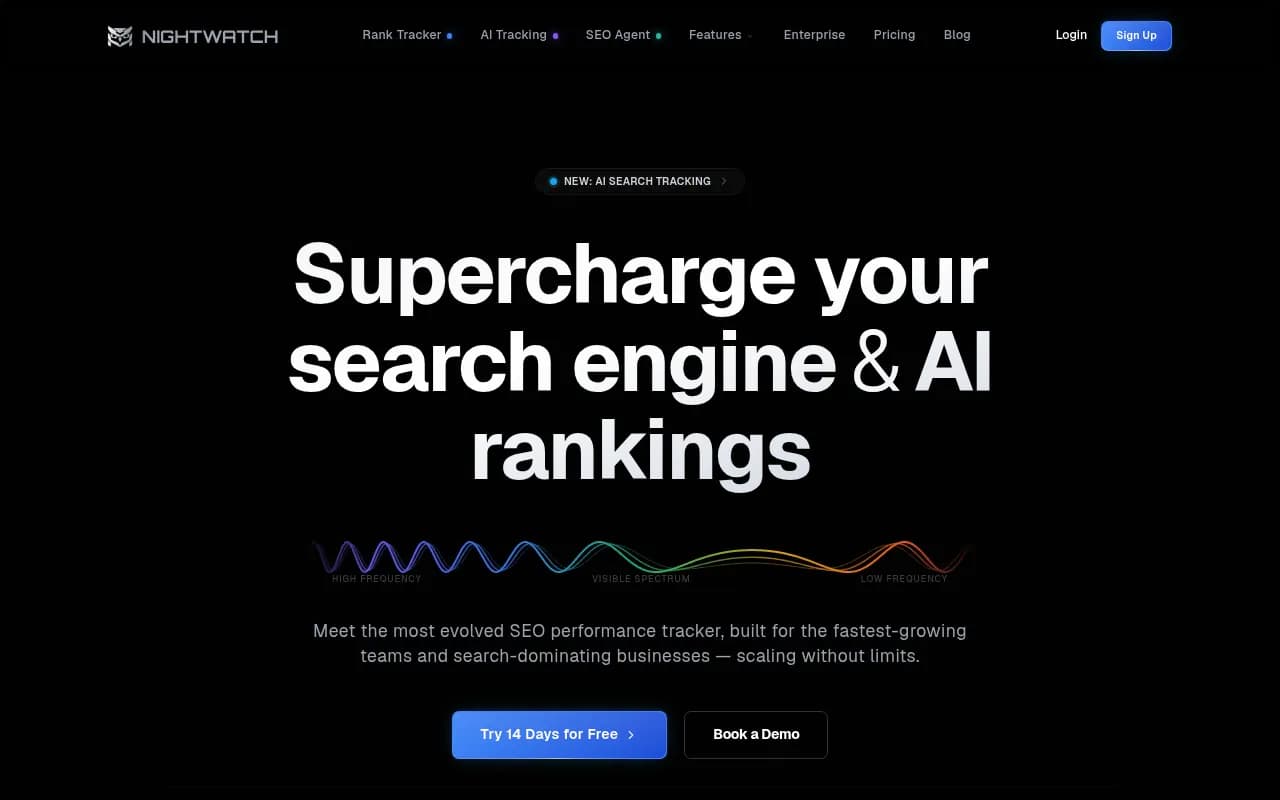
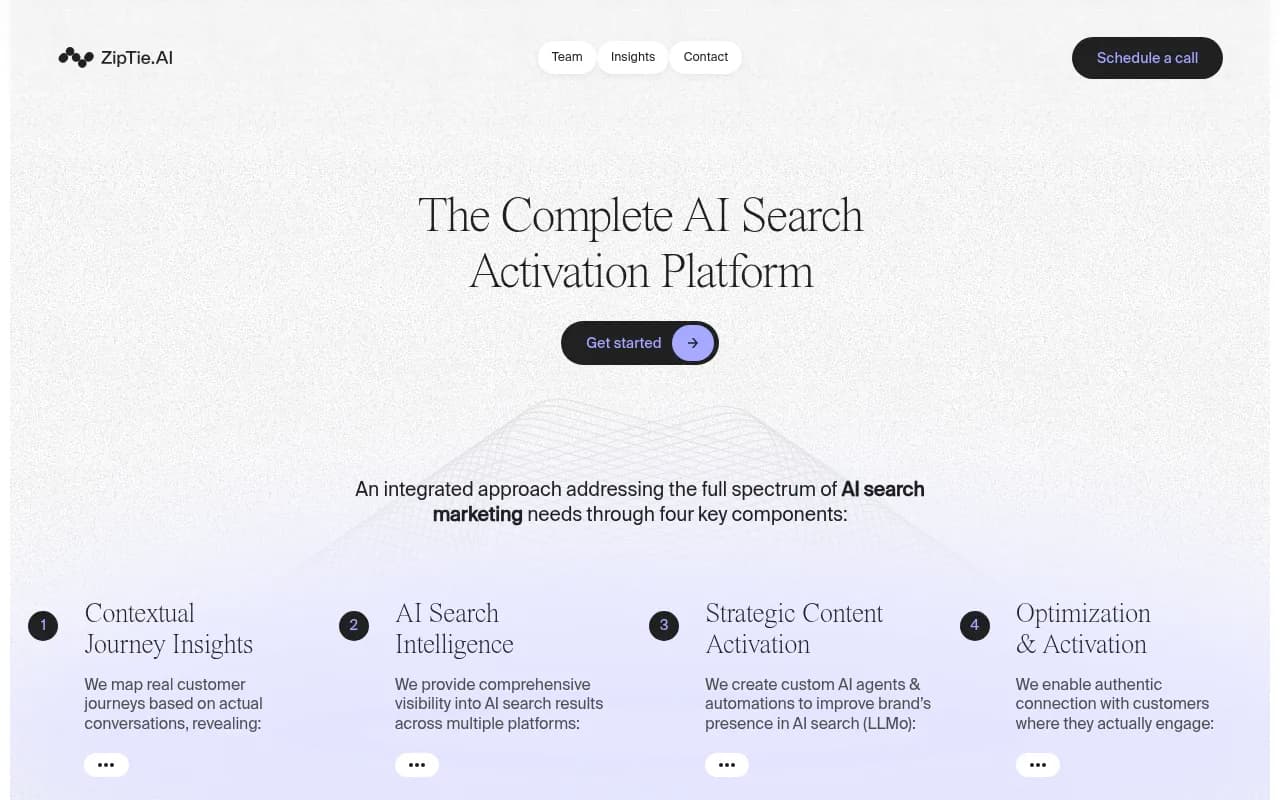
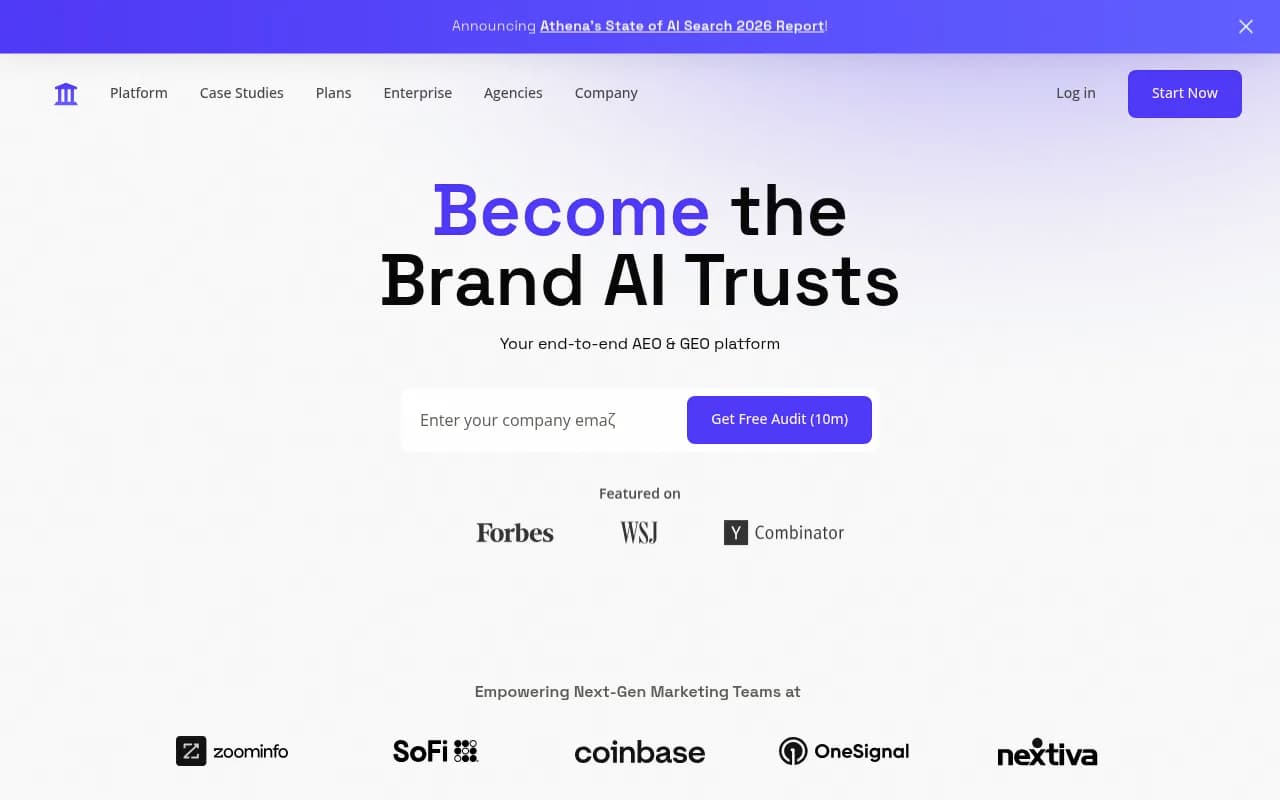
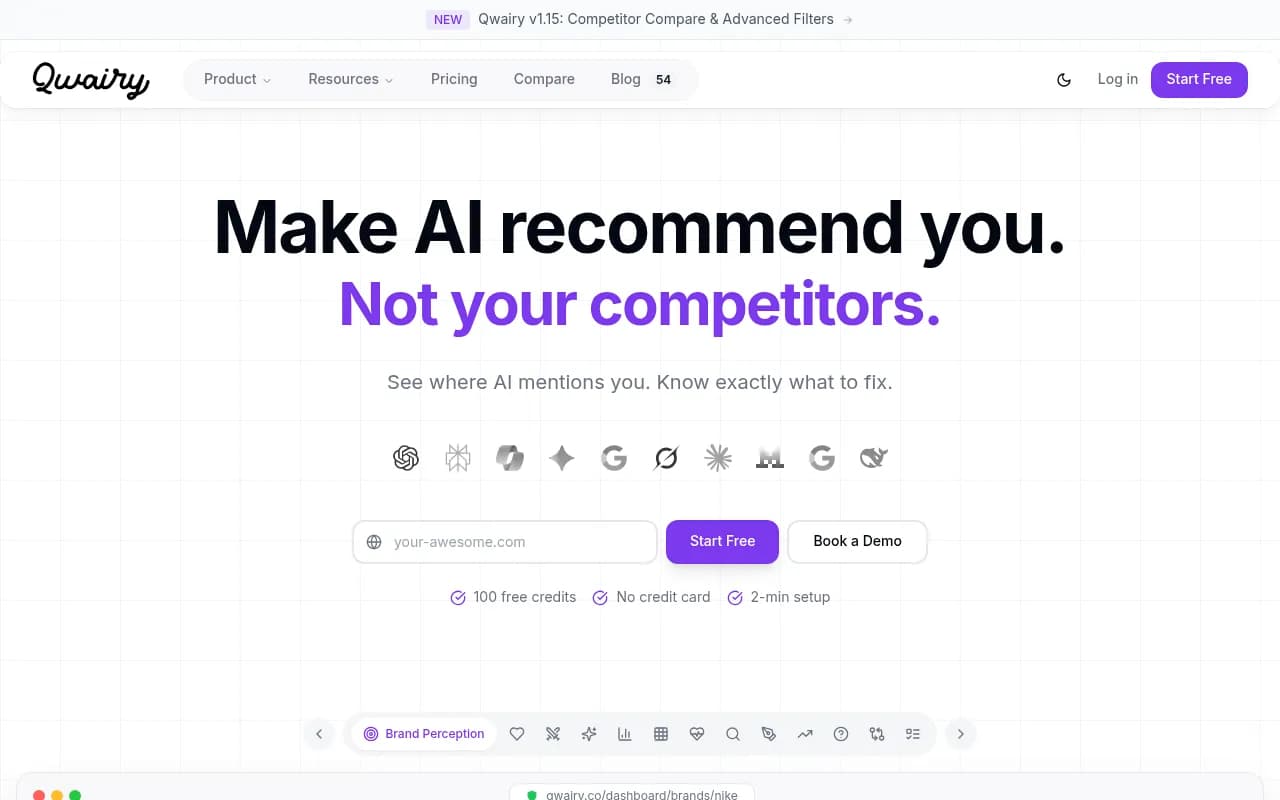
Nightwatch suits teams that want traditional rank tracking and AI visibility in one place, and ZipTie is known for deeper analysis and reporting. AthenaHQ and Qwairy lean monitoring-first.
If you want to keep browsing, the GEO software directory lists far more options than any single roundup can cover.
A quick buying framework
- Write down your actual job. Reporting to leadership? A tracker may be enough. Growing AI-driven revenue? You need layers 2 through 4.
- Test crawler visibility first. If you cannot see AI bots in your logs, you cannot diagnose anything. Promptwatch's free Agentic Readiness Check is a quick way to see which AI crawlers can read your site.
- Ask for per-engine reporting. Given the gap between ChatGPT and AI Overviews on social citations, blended scores mislead.
- Count the tools you would still need. A cheap monitor plus a log tool plus an analytics add-on plus a writing tool often costs more than one integrated platform.
- Run a trial on your own prompts. Pick 20 commercial prompts you care about and see whether the tool tells you something you did not already know.
Hiring help instead of buying software
Some teams have the tooling but not the hours. An agency can run the platform for you. 1001 SEO Media is the agency behind this site and uses Promptwatch for its own GEO work, with no long-term contracts and monthly reporting. That is the relevant disclosure if you read this as a recommendation.
The bottom line
Monitoring is the cheap, easy part of this market and it is already commoditized. What separates platforms in 2026 is whether they explain the result, connect it to traffic, and help you ship the fix. If you only need to know whether you are mentioned, Otterly or Peec will do. If you want to grow AI-driven revenue and keep it in one place, start with Promptwatch and compare it against whichever suite you already pay for.