Key takeaways
- Traditional content optimization tools (Clearscope, Frase, NeuronWriter, Surfer) are built primarily for Google rankings -- they help with semantic coverage and keyword density, but don't directly track or optimize for AI citations.
- Getting cited by ChatGPT, Perplexity, or Claude requires a different strategy: comprehensive topical coverage, clear entity relationships, and authoritative sourcing matter more than keyword frequency.
- NeuronWriter is the most budget-friendly all-in-one option; Clearscope wins on team usability; Frase is best for rapid brief creation; Surfer SEO has the most mature AI search features.
- For brands that want to actually measure and improve their AI search visibility (not just write better content), a dedicated GEO platform sits alongside these tools -- not instead of them.
- The tools in this guide cover the content creation side. Tracking whether that content gets cited is a separate problem.
There's a version of this guide that would just rank these tools by their pricing pages and call it a day. This isn't that.
The honest situation in 2026 is that most content optimization tools were designed for Google's 10-blue-links world. They're good at that. But the question everyone is actually asking now is: "How do I get cited by ChatGPT?" And the answer is more complicated than "use this tool."
So let's do two things here. First, give you a real comparison of the major content optimization platforms -- what they're actually good at, where they fall short, and who should use each one. Second, be straight about what these tools can and can't do for AI search visibility specifically.
What "optimizing for ChatGPT" actually means
Before diving into tools, it's worth being clear about the mechanism. When ChatGPT, Perplexity, or Claude answers a question, they're drawing on training data and (increasingly) live web crawls. Getting cited comes down to a few things:
- Your content comprehensively covers the topic -- not just the main keyword, but related entities, subtopics, and questions
- Your content is structured clearly enough that AI models can extract and attribute specific claims
- Your domain has enough authority that AI crawlers index and trust your pages
- You're covering angles that other authoritative sources don't cover well
Traditional content optimization tools help with the first two points. They're genuinely useful for building semantic depth and topical completeness. But they don't tell you whether ChatGPT is actually citing you, which prompts you're winning or losing, or what your competitors are doing in AI search.
That's a gap worth keeping in mind as we go through each tool.
The tools compared
Here's a quick overview before we dig into each one:
| Tool | Best for | Starting price | AI search features | Content generation | Free plan |
|---|---|---|---|---|---|
| NeuronWriter | Budget-conscious teams, all-in-one | $23/mo | Basic AI Overview tracking | Yes | No (trial) |
| Clearscope | Enterprise teams, semantic SEO | $129/mo | Limited | No | No |
| Frase | Brief creation, research speed | $45/mo | Limited | Yes | No (trial) |
| Surfer SEO | Data-driven on-page optimization | $79/mo | AI Tracker feature | Yes | No |
| MarketMuse | Content strategy, topical authority | $149/mo | Limited | Yes | Free tier |
| Scalenut | AI search visibility workflow | $49/mo | GEO Watchtower | Yes | No |
| Rankability | Integrated optimization + tracking | $124/mo | Rankability Score | Yes | No |
| Dashword | Simplified brief creation | Lower tier | Basic | Limited | No |
NeuronWriter
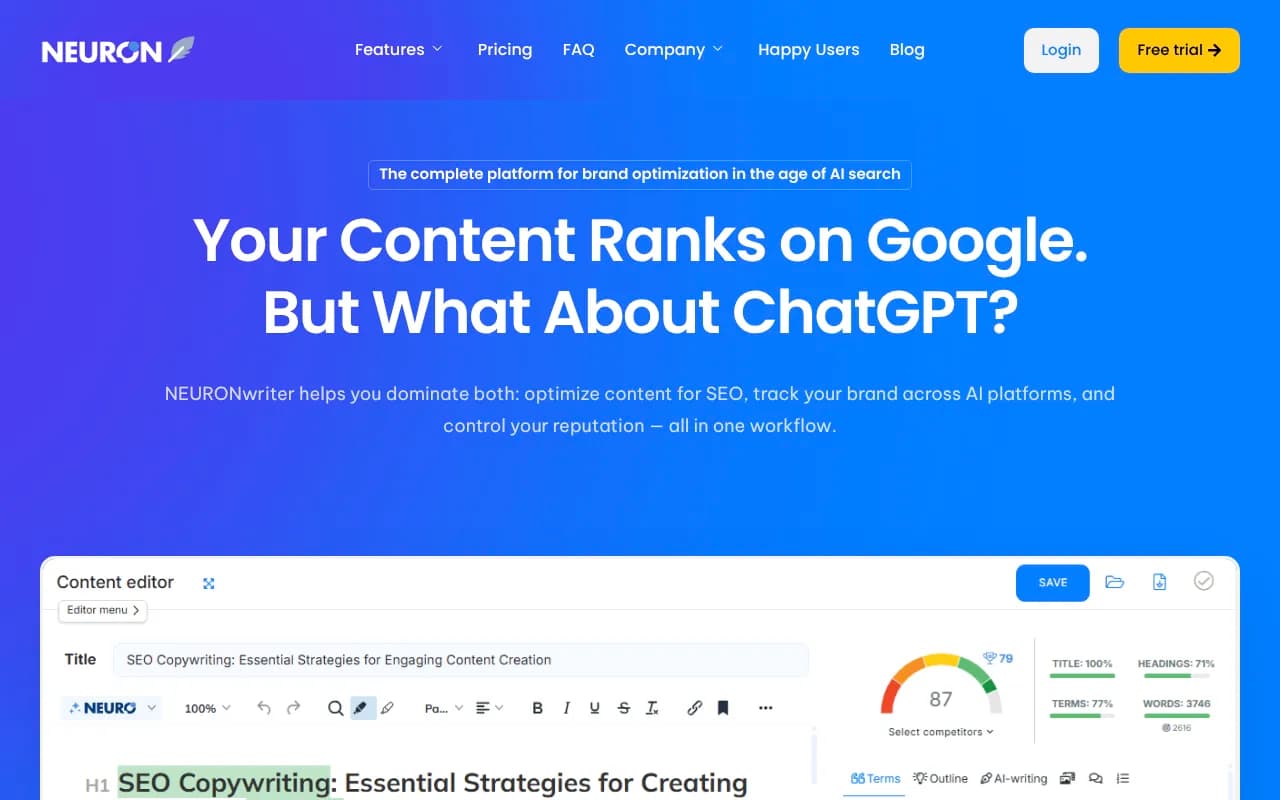
NeuronWriter sits at the budget end of this market and punches above its weight. At $23/month, you get NLP-driven content scoring, a built-in AI writing assistant, competitor analysis, and -- notably -- some tracking for AI Overview appearances. It's not the deepest tool in any single category, but the breadth at that price point is hard to argue with.
The content editor works similarly to Clearscope or Surfer: you enter a target keyword, it analyzes top-ranking pages, and gives you a list of semantically related terms to include. The scoring is solid. Where it gets interesting for AI search is the Content Designer feature, which helps structure content in ways that match how AI models tend to extract information -- clear headers, direct answers, entity-rich paragraphs.
The AI image generation is a nice bonus but not a reason to choose it. The main reason to choose NeuronWriter is cost. If you're a solo operator or small team and can't justify $129/month for Clearscope, NeuronWriter gives you most of what you need.
Promptwatch is worth mentioning here as a complement -- NeuronWriter helps you write content, but if you want to know whether that content is actually getting cited by ChatGPT or Perplexity, you need a separate tracking layer.
Clearscope
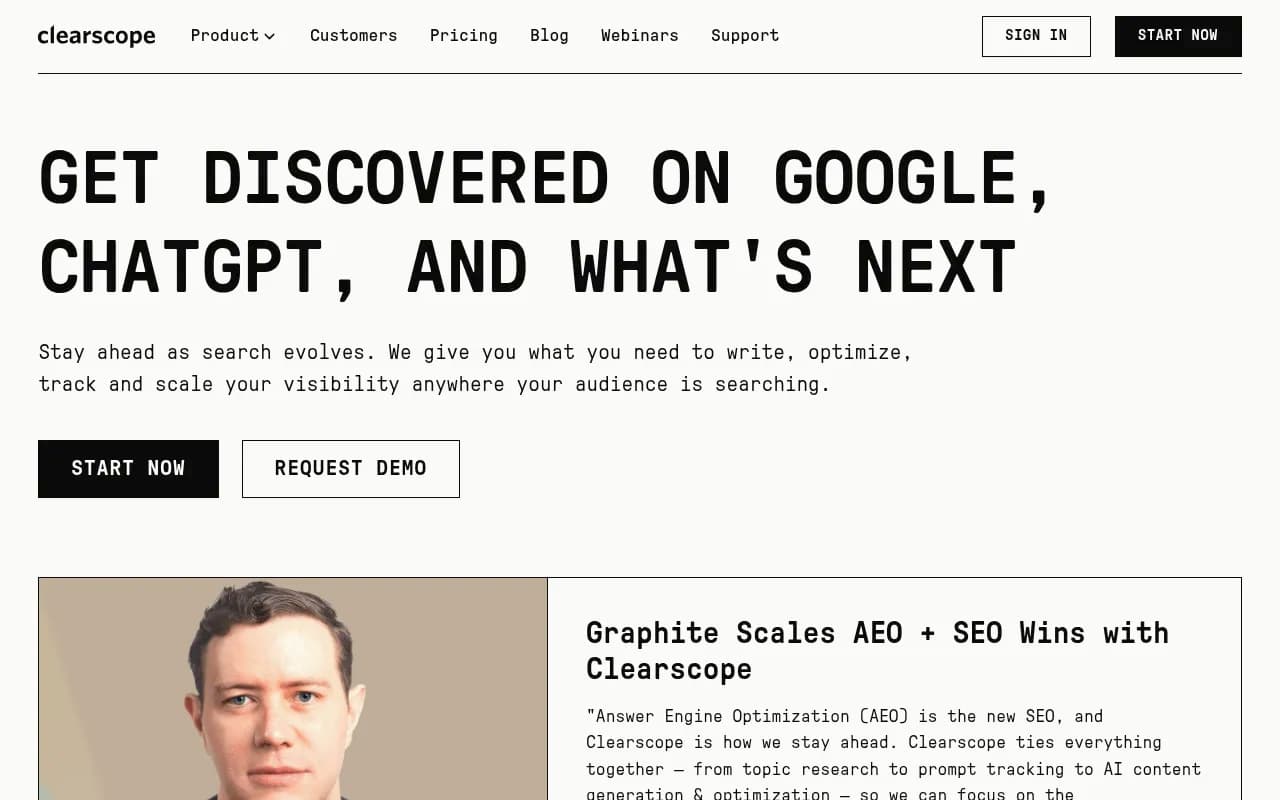
Clearscope is the tool that enterprise content teams tend to land on and stay with. The interface is genuinely clean -- cleaner than most competitors -- and the NLP-driven term suggestions are accurate. You get a content grade that updates in real time as you write, a list of related terms weighted by importance, and competitor content analysis.
What Clearscope does exceptionally well is reduce friction for writers. The suggestions aren't overwhelming, the grading is intuitive, and the Google Docs and WordPress integrations mean writers don't have to leave their existing workflow. For teams managing dozens of writers, that matters a lot.
The downside is price. At $129/month for the base plan, it's expensive for what is essentially a semantic optimization layer. And it doesn't have meaningful AI search tracking -- you're optimizing for Google rankings and hoping that translates to AI citations (it often does, but you can't measure it directly in Clearscope).
If you're running a content team at a mid-size or enterprise company and semantic SEO is your core workflow, Clearscope is probably worth it. If you're a smaller operation or you want more features per dollar, look elsewhere.
Frase
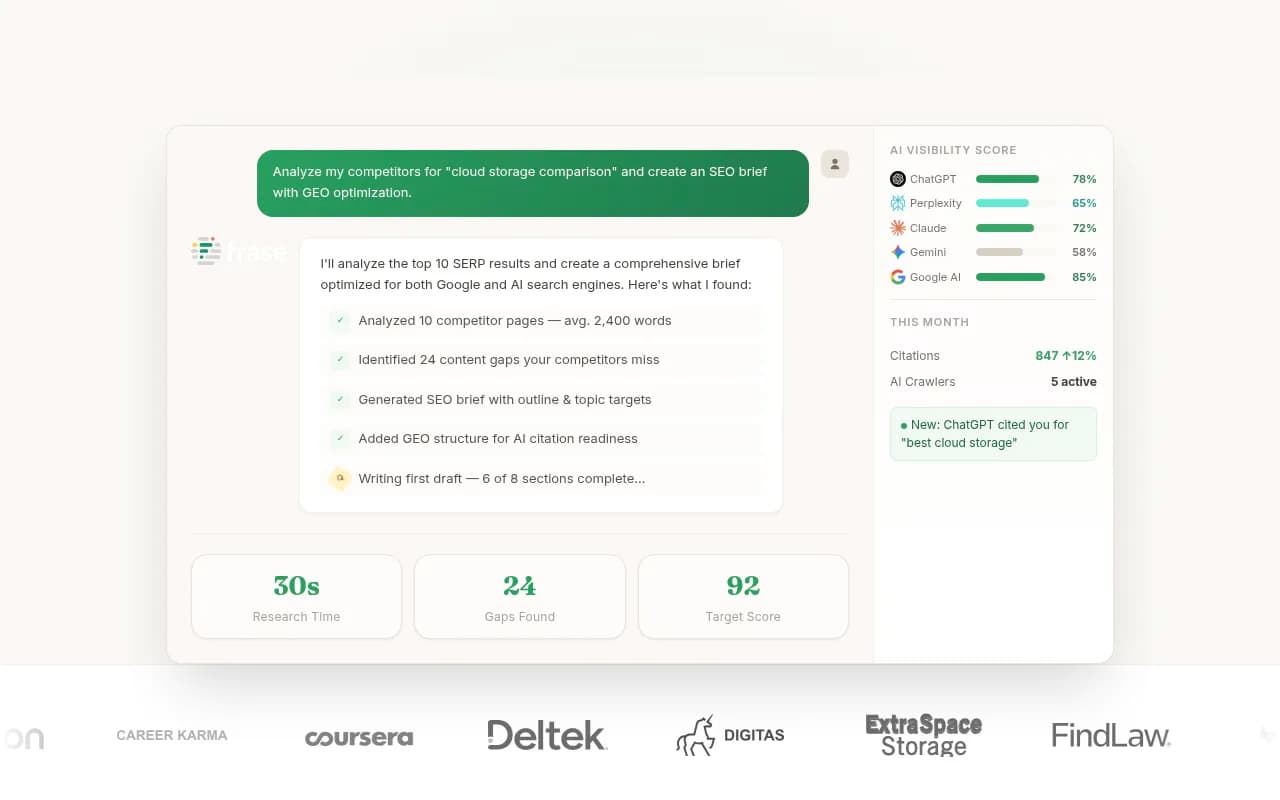
Frase's strongest feature is how fast it gets you from "I need to write about X" to a structured content brief. You enter a topic, it pulls the top-ranking pages, extracts the key questions people are asking, and assembles a research document you can work from directly. For content strategists and writers who spend hours on research, this is genuinely time-saving.
The writing assistant is decent but not the main reason to use Frase. The research and brief creation workflow is. At $45/month, it's reasonably priced for what it does.
For AI search specifically, Frase helps indirectly. Better briefs lead to more comprehensive content, which tends to perform better in AI citations. But like Clearscope, there's no direct AI visibility tracking built in.
Surfer SEO
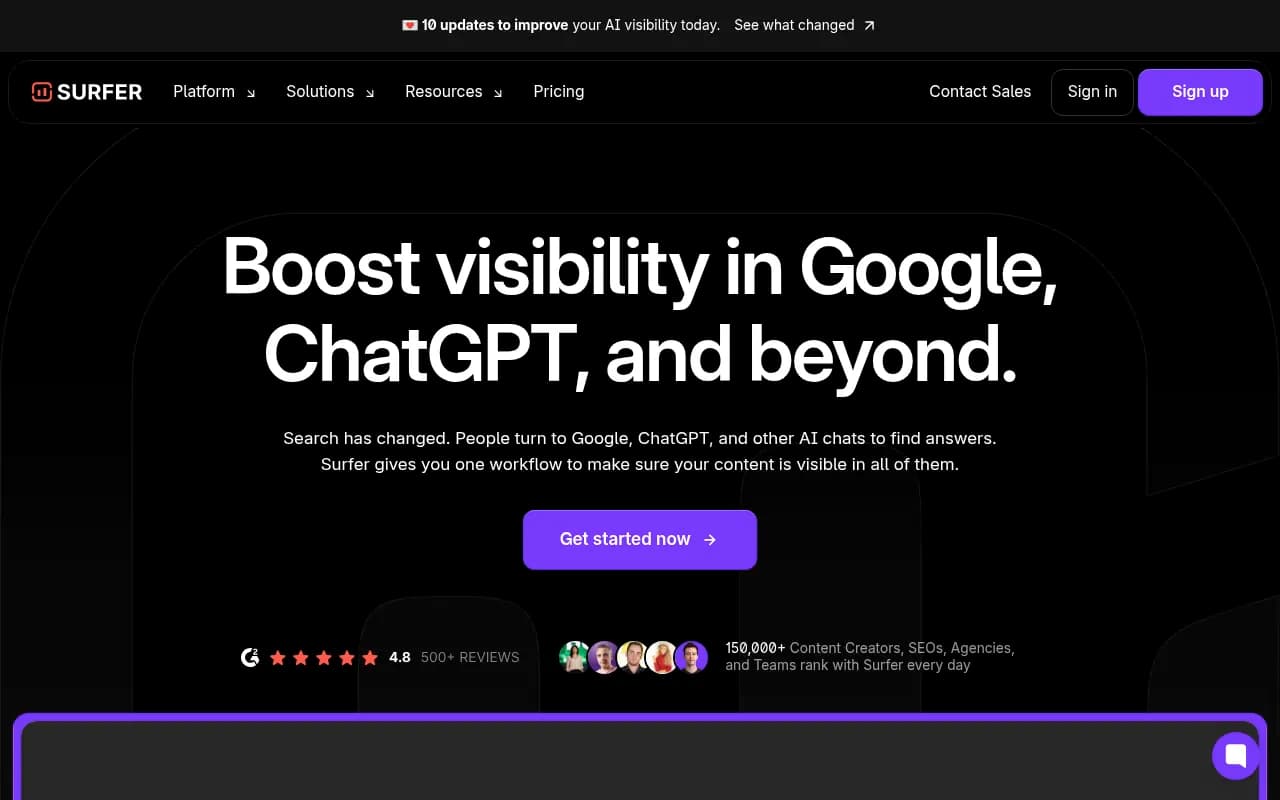
Surfer has been in this market longer than most and has added more AI-specific features than its competitors. The Content Editor is the core product -- real-time scoring against top-ranking pages, keyword density guidance, NLP term suggestions. It's mature and reliable.
What sets Surfer apart in 2026 is the AI Tracker feature and the Topical Map. The AI Tracker monitors when your content appears in AI-generated answers (primarily Google AI Overviews), which gives you at least some signal about AI search performance. The Topical Map helps you plan content clusters that build topical authority -- which is one of the most reliable ways to improve AI citation rates over time.
At $79/month, Surfer sits in a reasonable middle ground. It's not cheap, but it's more feature-complete than Frase and less expensive than Clearscope or MarketMuse.
MarketMuse
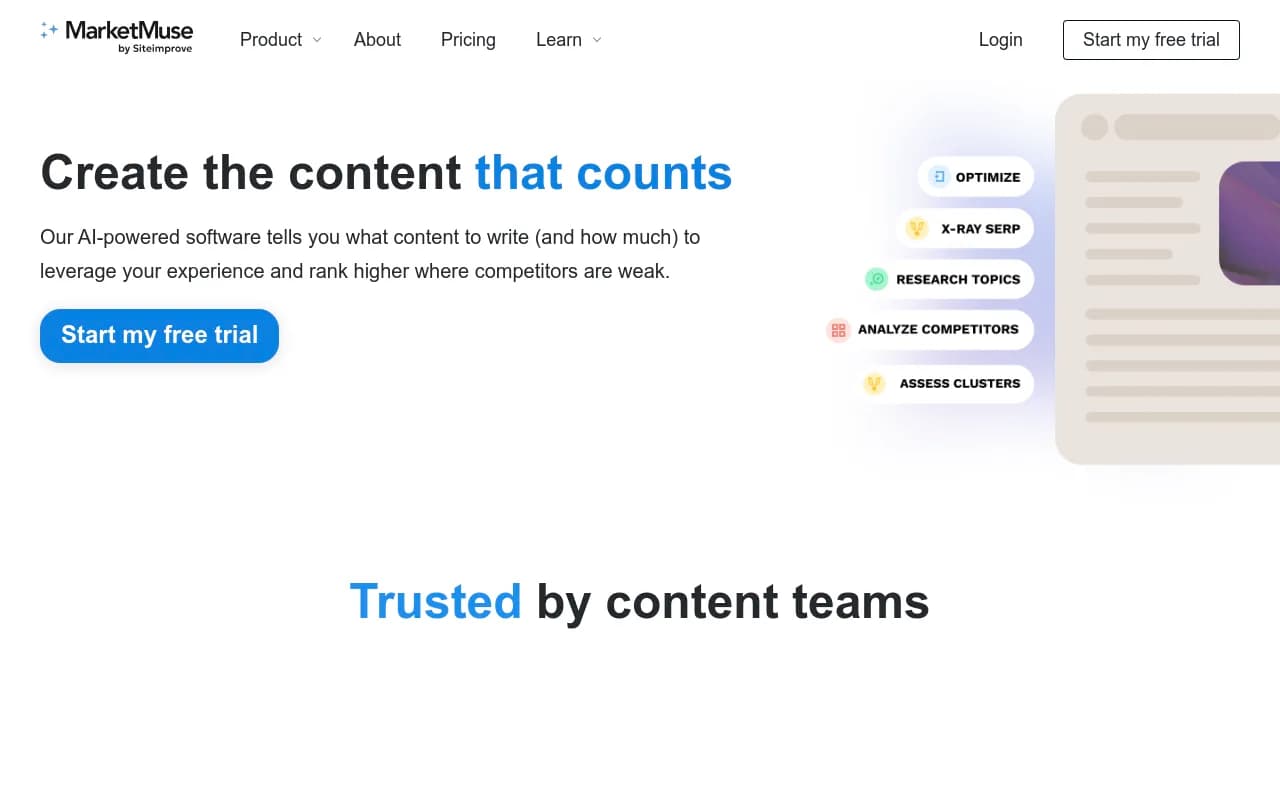
MarketMuse takes a different angle than the other tools here. Instead of optimizing individual pieces of content, it focuses on content strategy at the topical level. It analyzes your entire site, identifies where you have authority gaps, scores the difficulty of competing for specific topics, and tells you which content to create or update to build topical authority.
The "personalized difficulty scores" are genuinely useful -- they're calibrated to your specific site's existing authority, not just generic competition metrics. This means a newer site gets realistic guidance about where it can actually compete.
The downside is price ($149/month base) and complexity. MarketMuse has a steeper learning curve than the other tools here, and the value is harder to demonstrate quickly. It's best suited for content strategists at established companies who are thinking in terms of 6-12 month content roadmaps, not individual article optimization.
Scalenut
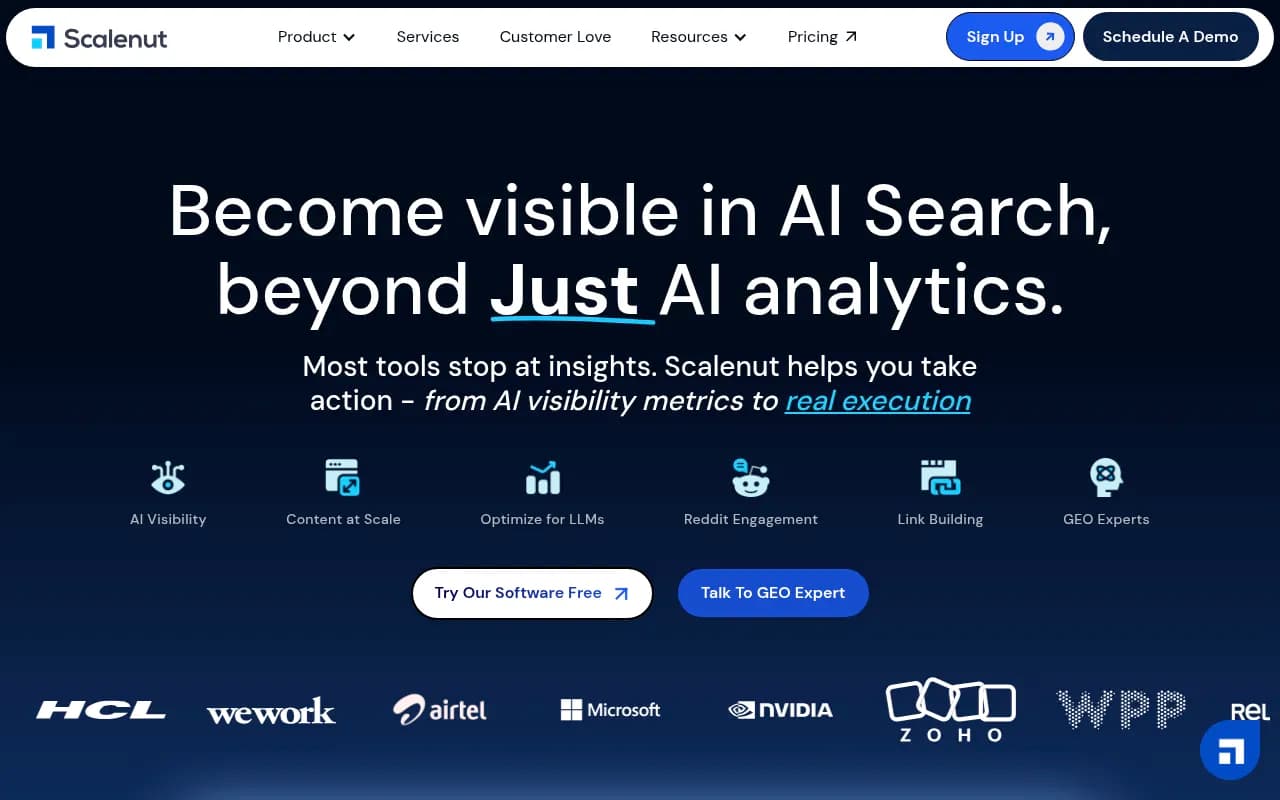
Scalenut is worth mentioning specifically because it has built AI search visibility features more directly into its workflow than most content optimization tools. The GEO Watchtower feature tracks your visibility in AI-generated answers, and the Auto-optimizer can suggest content updates based on that data.
At $49/month, it's competitively priced. The content optimization features are solid if not class-leading. The AI visibility tracking is a genuine differentiator, though it's not as deep as dedicated GEO platforms.
Rankability
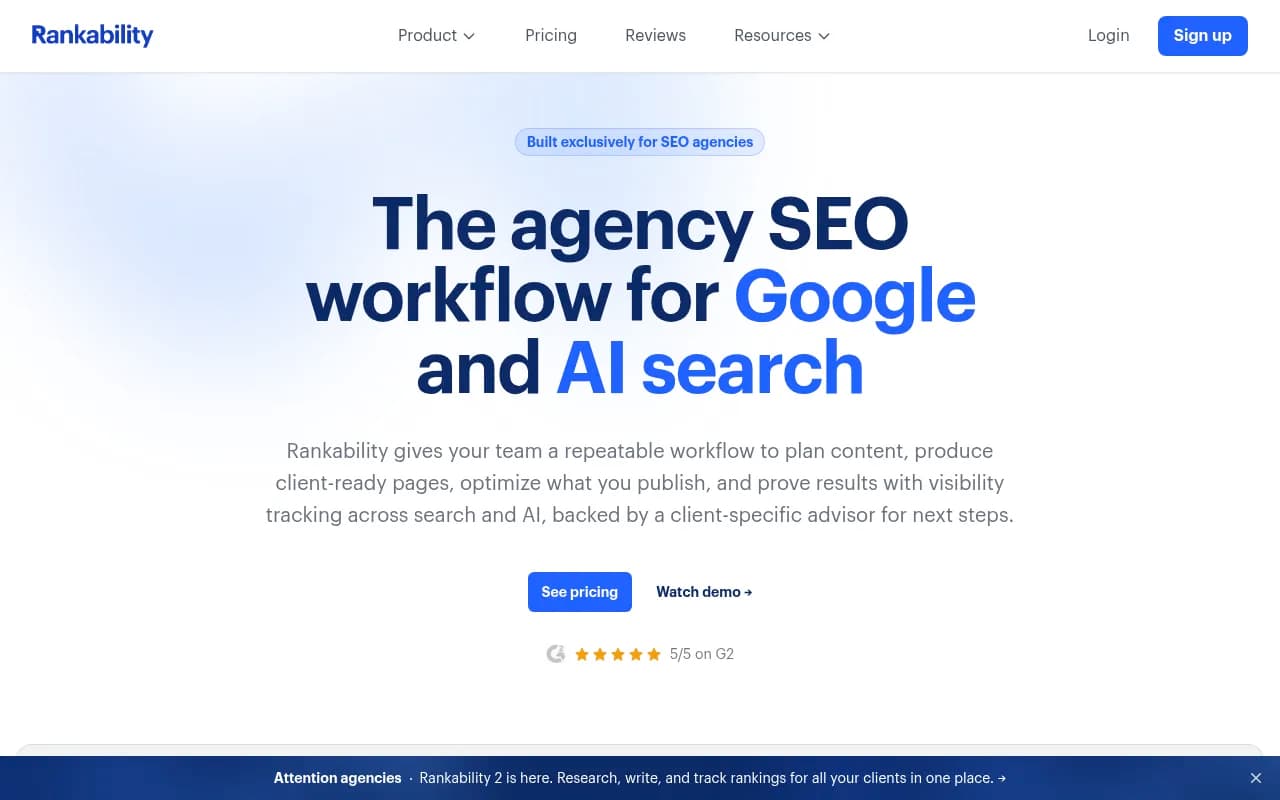
Rankability combines content optimization with competitor analysis and a real-time "Rankability Score" that tries to predict ranking potential before you publish. It's newer than Surfer or Clearscope but has been building a following among SEOs who want more integrated analysis.
At $124/month, it's priced similarly to Clearscope but offers more features around competitor analysis and rank tracking. Worth evaluating if you want optimization and tracking in one place.
Dashword
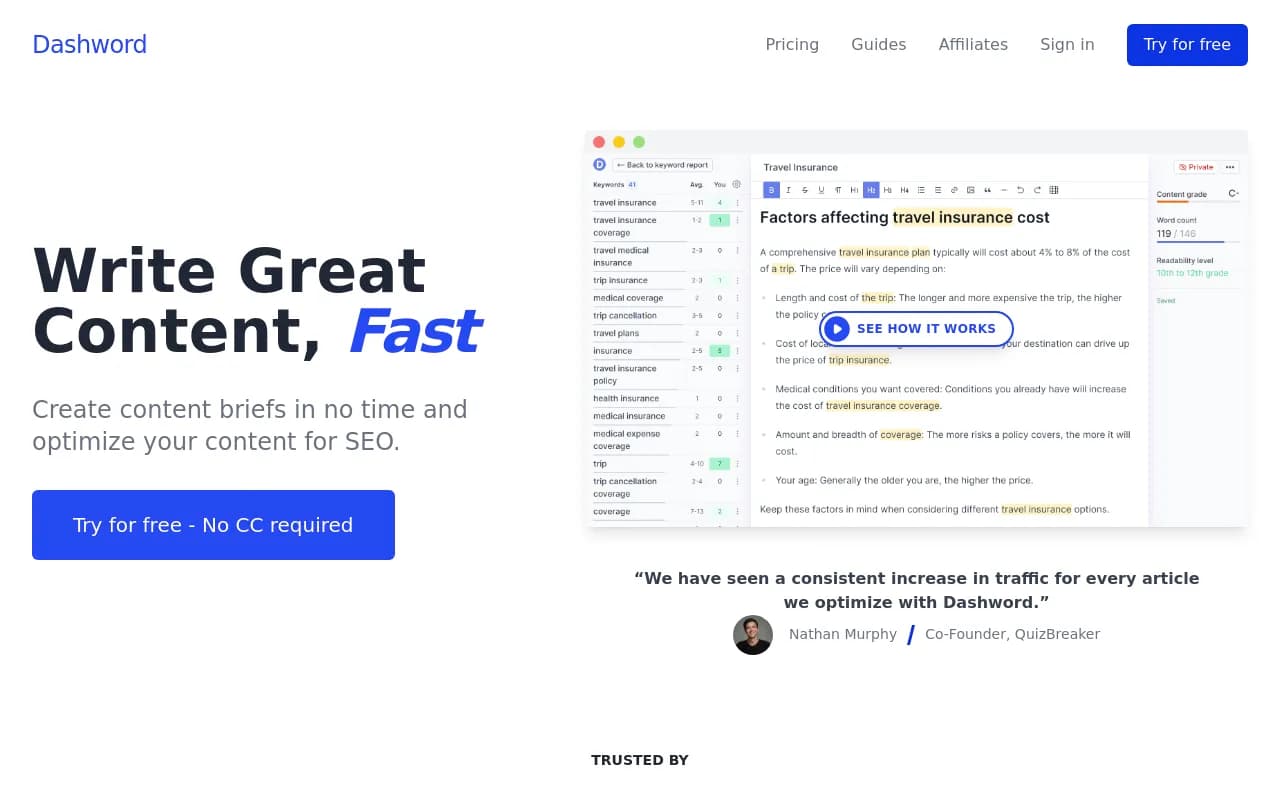
Dashword takes the opposite approach to MarketMuse -- it strips content brief creation down to the essentials. Fast, simple, and cheaper than most alternatives. If your main need is generating content briefs quickly without a lot of complexity, Dashword delivers that well.
The gap these tools don't fill
Here's the honest part of this guide. Every tool above helps you write better content. Some of them have basic AI search tracking. None of them are purpose-built to answer the question: "Which prompts is ChatGPT citing my competitors for that I'm not showing up in? And what content should I create to close that gap?"
That's a different problem, and it requires a different kind of tool. Content optimization platforms tell you how to write. AI visibility platforms tell you what's happening in AI search right now -- which prompts are driving citations, which domains are winning, and what content gaps exist.
Promptwatch is built specifically for that second problem. It tracks your visibility across ChatGPT, Claude, Perplexity, Gemini, and other AI models, identifies the specific prompts where competitors are getting cited but you aren't, and has a built-in content generation layer that creates articles designed to close those gaps. It's a different tool for a different job -- but if AI search visibility is the goal, it's worth knowing about.

How to choose
The right tool depends on what you're actually trying to do:
If you're optimizing existing content for Google and want AI search as a secondary benefit: Surfer SEO or Clearscope are the most mature options. Surfer if you want more features; Clearscope if you want the cleanest team workflow.
If you need fast content briefs: Frase. It's built for that specific job and does it well.
If you're budget-constrained: NeuronWriter gives you the most capability per dollar, especially if you're a solo operator or small team.
If you're thinking about topical authority strategy: MarketMuse is the most sophisticated tool for that, though the price and complexity are real.
If you want to directly track and improve AI search visibility: The content optimization tools above are a starting point, but you'll want a dedicated GEO platform alongside them. That's a different category of tool.
A note on what actually drives AI citations
No content tool guarantees AI citations. What the research consistently shows is that AI models tend to cite content that:
- Covers a topic comprehensively, including related entities and subtopics
- Has clear structure (headers, direct answers, well-organized paragraphs)
- Comes from domains with established authority and backlink profiles
- Is regularly updated and crawled by AI bots
- Addresses specific questions that other authoritative sources don't answer well
The tools in this guide help with the first two points. Domain authority comes from link building and time. Regular crawling comes from technical SEO and site health. The fourth point -- finding the specific questions you should be answering -- is where AI visibility platforms add something the content optimization tools don't.
Use these tools to write better content. Use a GEO platform to figure out what content to write.
Additional tools worth knowing
A few other tools in this space that didn't make the main comparison but are worth being aware of:
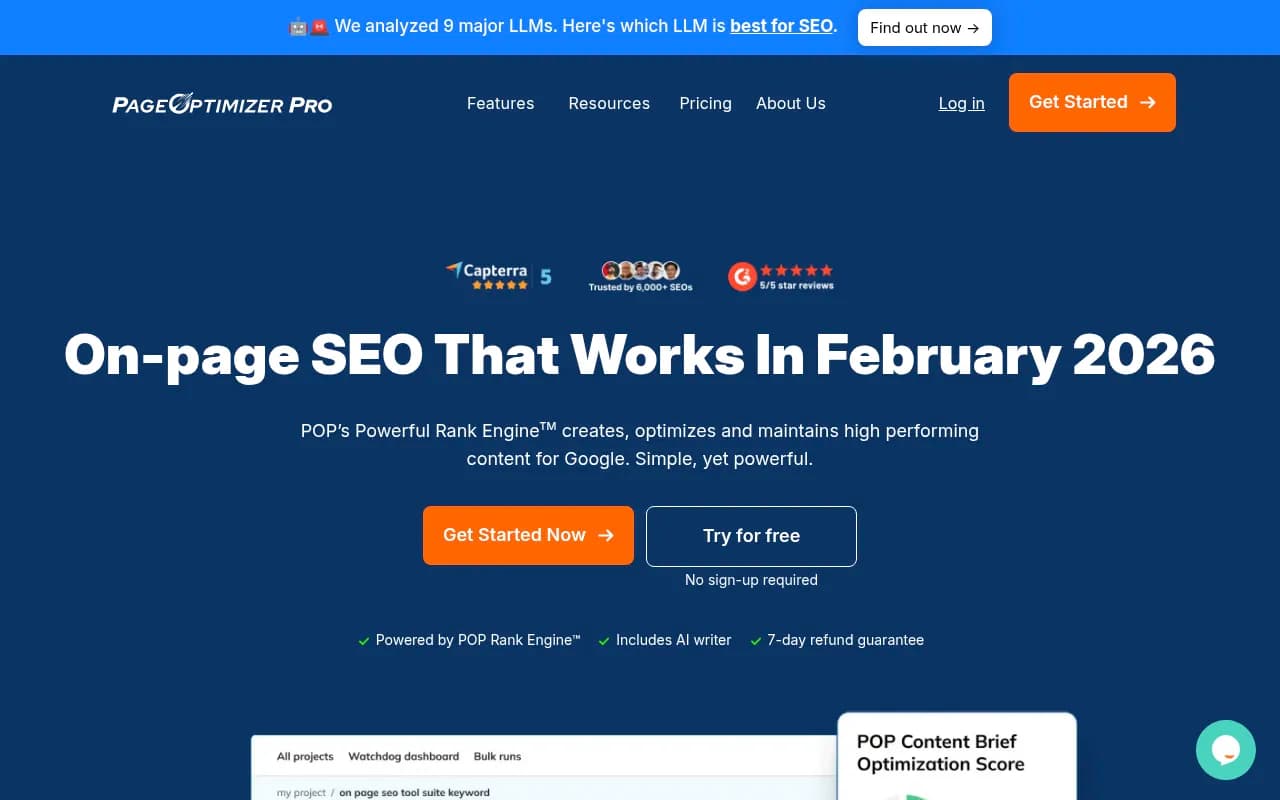
Page Optimizer Pro -- more technical and data-heavy than the tools above, popular with SEOs who want granular on-page guidance.
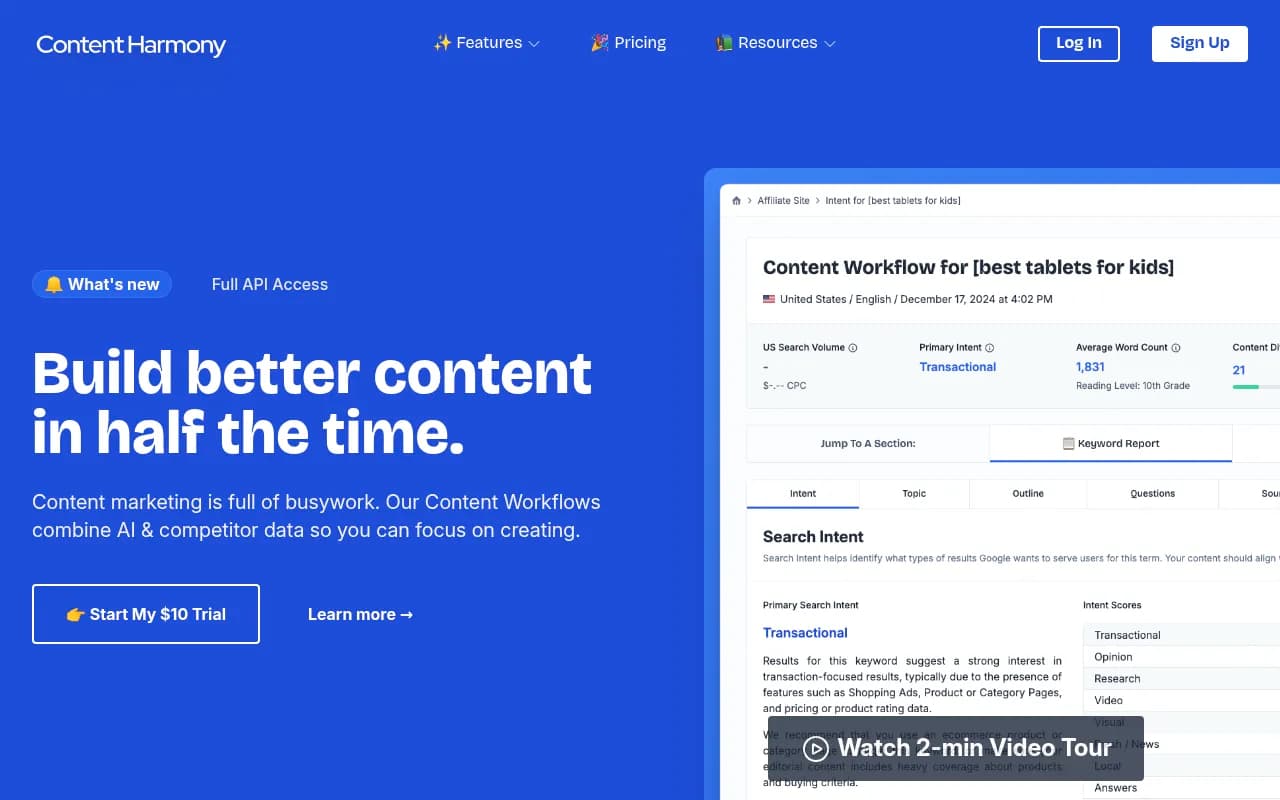
Content Harmony -- strong content brief platform with good workflow integrations, sits between Frase and MarketMuse in terms of depth.
SEMrush Writing Assistant -- useful if you're already in the SEMrush ecosystem, but not a reason to switch if you're not.
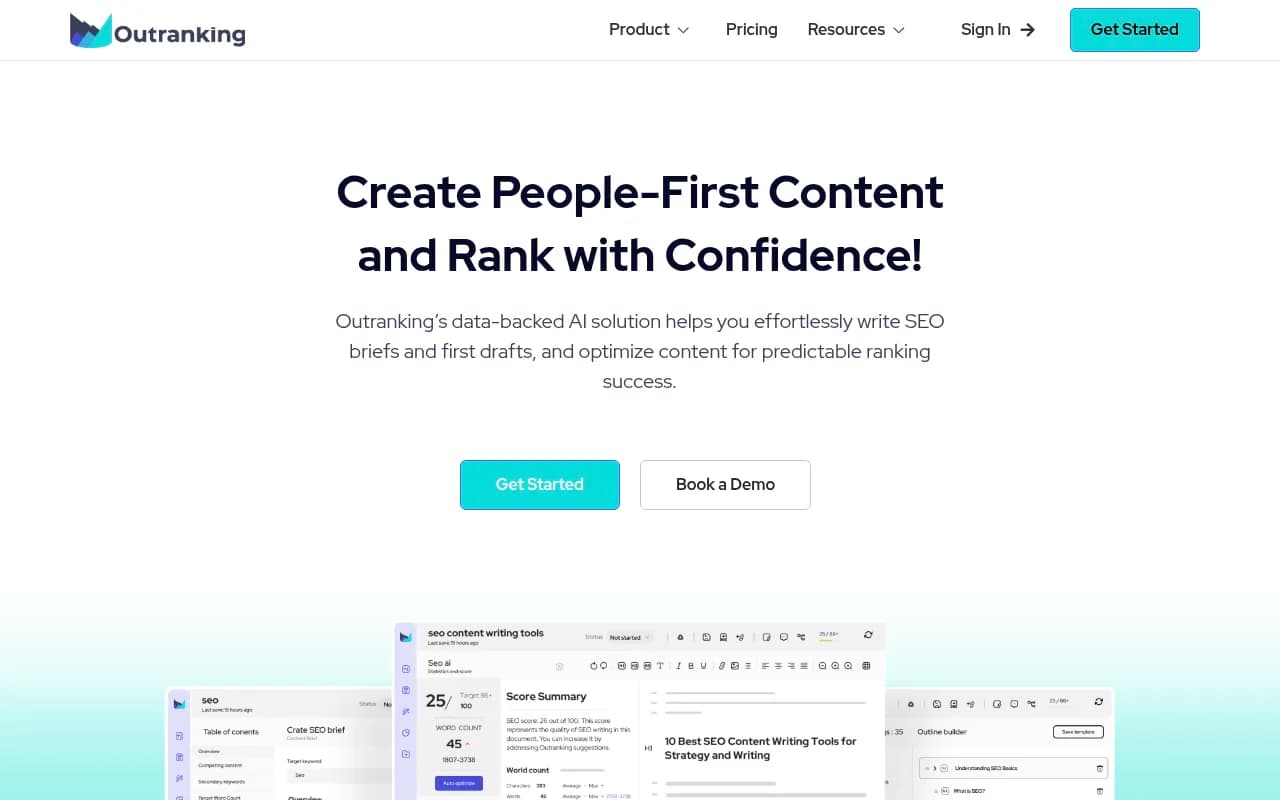
Outranking -- AI-powered content creation with SEO optimization built in, worth evaluating if you want generation and optimization in one tool.
The content optimization tool market is crowded. Most of the tools above do roughly similar things with different interfaces and pricing. The real differentiator in 2026 isn't which tool scores your content -- it's whether you have a clear picture of what AI search engines are actually citing, and a process for closing the gaps.