Key takeaways
- AirOps is a content workflow tool, not a true AI visibility tracker -- it won't tell you if a client's brand is being cited in ChatGPT or Perplexity today
- Agencies need platforms that handle multi-client management, white-label reporting, and actual GEO optimization, not just content production pipelines
- The best alternatives in 2026 fall into two camps: monitoring-first tools and action-oriented platforms that also help you fix visibility gaps
- For agencies that want to go beyond dashboards, Promptwatch is the only platform in this comparison rated as a "Leader" across all GEO categories -- tracking, content generation, and optimization in one place
- Pricing varies widely: from $49/mo budget tools to enterprise contracts -- the right choice depends on how many clients you manage and whether you need content generation alongside tracking
Why agencies are moving away from AirOps
AirOps raised $40 million in Series B funding from Greylock in late 2025, which tells you the market believes in the category. But the funding didn't solve the core problem agencies have with it.
AirOps is built around content operations: you build workflows, connect your CMS, and automate content production. That's genuinely useful. But it has two gaps that matter a lot for agencies in 2026.
First, it doesn't actually track AI visibility. The "Answer Engine" diagnostic tool in AirOps evaluates whether your content is ready for AI search -- it doesn't tell you whether ChatGPT or Perplexity is citing your client's brand right now. That's a meaningful distinction when AI-generated answers are influencing a significant share of all search queries.
Second, it's not built for multi-client agency workflows. There's no white-label reporting, no client-level dashboards, and the learning curve is steep enough that one G2 reviewer reported spending an entire day configuring a three-step workflow. For an agency billing 20 clients, that doesn't scale.
So what does scale? Let's go through the real options.
The agency GEO stack problem
Before getting into specific tools, it's worth naming the actual problem agencies face.
Most GEO tools in 2026 are monitoring dashboards. They show you a visibility score, maybe a list of prompts where a client appears or doesn't appear, and then... stop. You're left figuring out what to do with that data. For an agency managing 10 or 20 clients, "figuring it out" for each one isn't a business model.
What agencies actually need is a loop:
- See where each client is invisible in AI search
- Understand what content would fix it
- Generate or brief that content
- Track whether it worked
Most tools only do step one. A few do steps one and two. Very few close the loop through step four with page-level citation tracking.
Keep that framework in mind as you evaluate the options below.
The best AirOps alternatives for agencies in 2026
Promptwatch -- best overall for agency GEO
Promptwatch is the most complete option for agencies that want to do more than monitor. It covers all 10 major AI models (ChatGPT, Perplexity, Claude, Gemini, Google AI Overviews, Grok, DeepSeek, Copilot, Meta AI, Mistral), and it's the only platform in a 2026 comparison of 12 GEO tools rated as a "Leader" across every category.
What makes it agency-relevant specifically:
The Answer Gap Analysis shows exactly which prompts competitors appear for but your client doesn't -- and it shows the specific content that's missing. That's a brief you can hand to a writer or feed into the Content Agents, which generate articles, listicles, and comparisons grounded in real prompt data and citation patterns. Not generic SEO filler.
The AI Crawler Logs are something most competitors don't offer at all. You can see which pages AI crawlers are hitting for each client, when errors occur, and how long it takes from crawl to citation. For agencies, that's the kind of data that makes a client meeting go from "here's your visibility score" to "here's exactly why your score changed and what we fixed."
Traffic attribution connects AI visibility to actual revenue, which is the number agencies need when justifying retainer fees.
Pricing starts at $99/mo for a single site and goes to $579/mo for five sites with 350 prompts and 30 articles per month. Agency and enterprise pricing is available for larger portfolios.

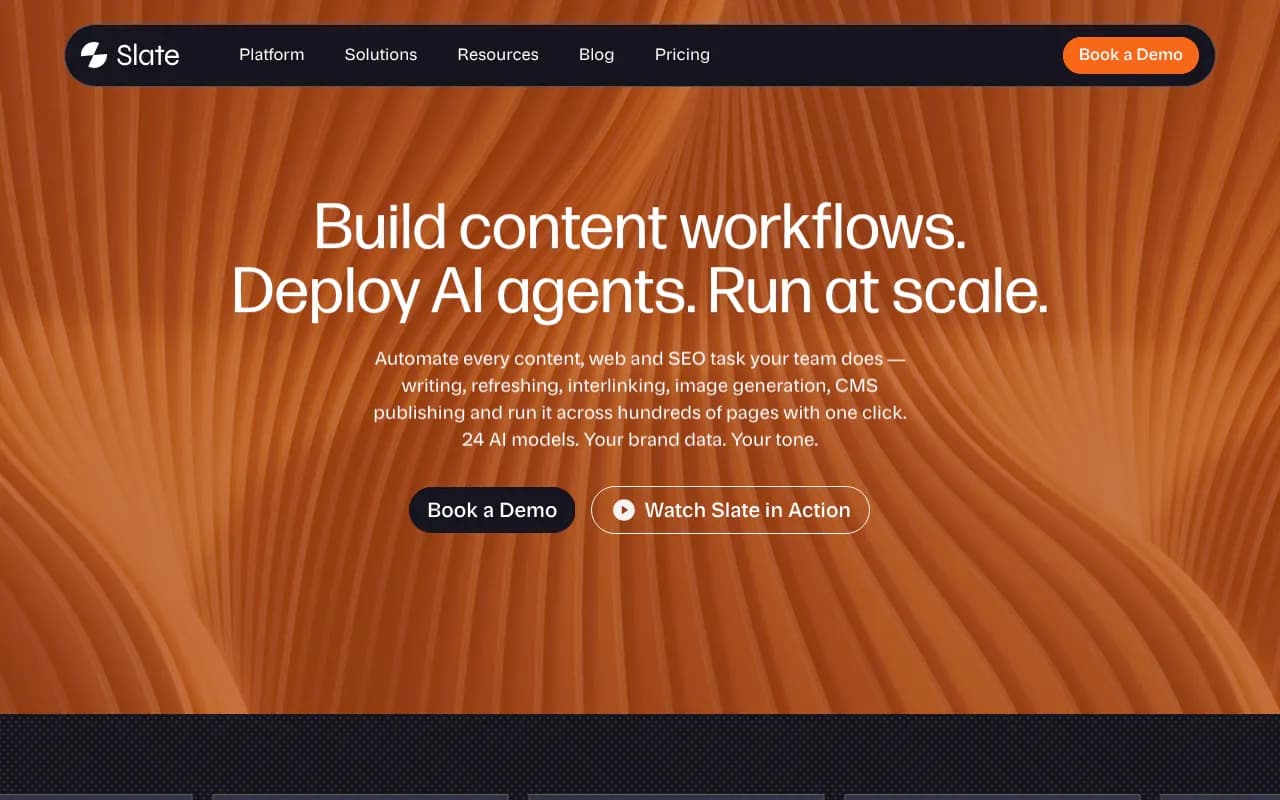
Slate -- built specifically for agency AI visibility
Slate is one of the few tools in this category designed with agencies in mind from the start. It focuses on multi-client AI visibility management, with client-level dashboards and reporting that doesn't require you to manually export data and reformat it for each account.
It covers the major LLMs and offers competitive analysis across clients, which is useful when you're managing brands in the same vertical and want to benchmark them against each other.
The limitation is that Slate is primarily a monitoring tool. It shows you the data but doesn't generate content or provide the kind of optimization guidance that closes the loop.
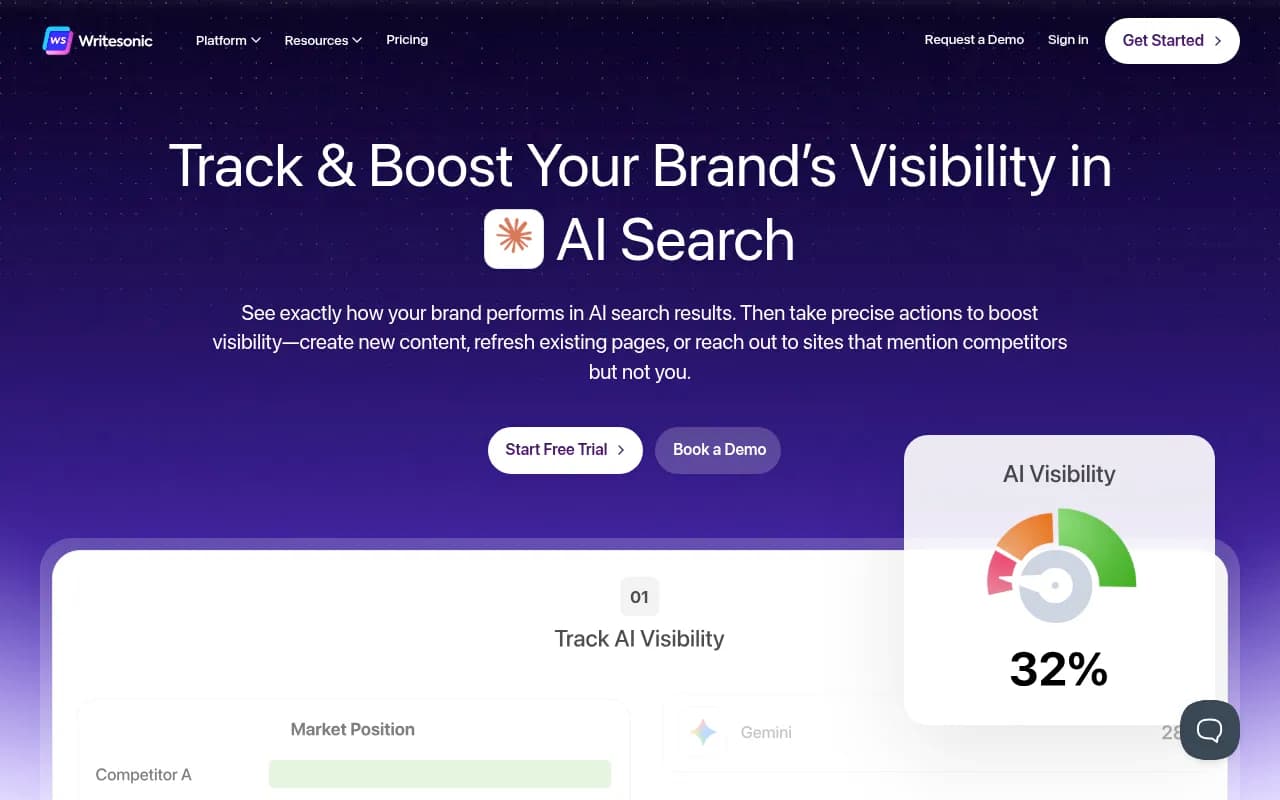
Writesonic -- AI visibility tracking with content generation
Writesonic has evolved significantly beyond its original AI writing roots. In 2026, it's a platform that tracks AI search visibility across major models and also generates content -- which puts it in a different category from pure monitoring tools.
For agencies, the appeal is the combination: you can see where a client is missing from AI answers and then use the same platform to create content that targets those gaps. The content generation is solid, though it's less specialized for GEO than Promptwatch's Content Agents, which are explicitly built around citation data and prompt volumes.
Writesonic's pricing is more accessible than some enterprise options, which makes it worth considering for agencies with smaller clients or tighter margins.
Scrunch AI -- strong monitoring with competitive analysis
Scrunch AI is a capable monitoring platform with good competitive analysis features. It tracks brand visibility across AI models and lets you compare your client's presence against competitors -- useful for the "here's where you stand" part of a client report.
The competitive heatmaps are genuinely useful for agency presentations. You can show a client exactly which competitors are winning for which prompts and why, which tends to land better than abstract visibility scores.
Like most monitoring tools, Scrunch AI stops at the analysis layer. You'll need a separate content workflow to act on what you find.
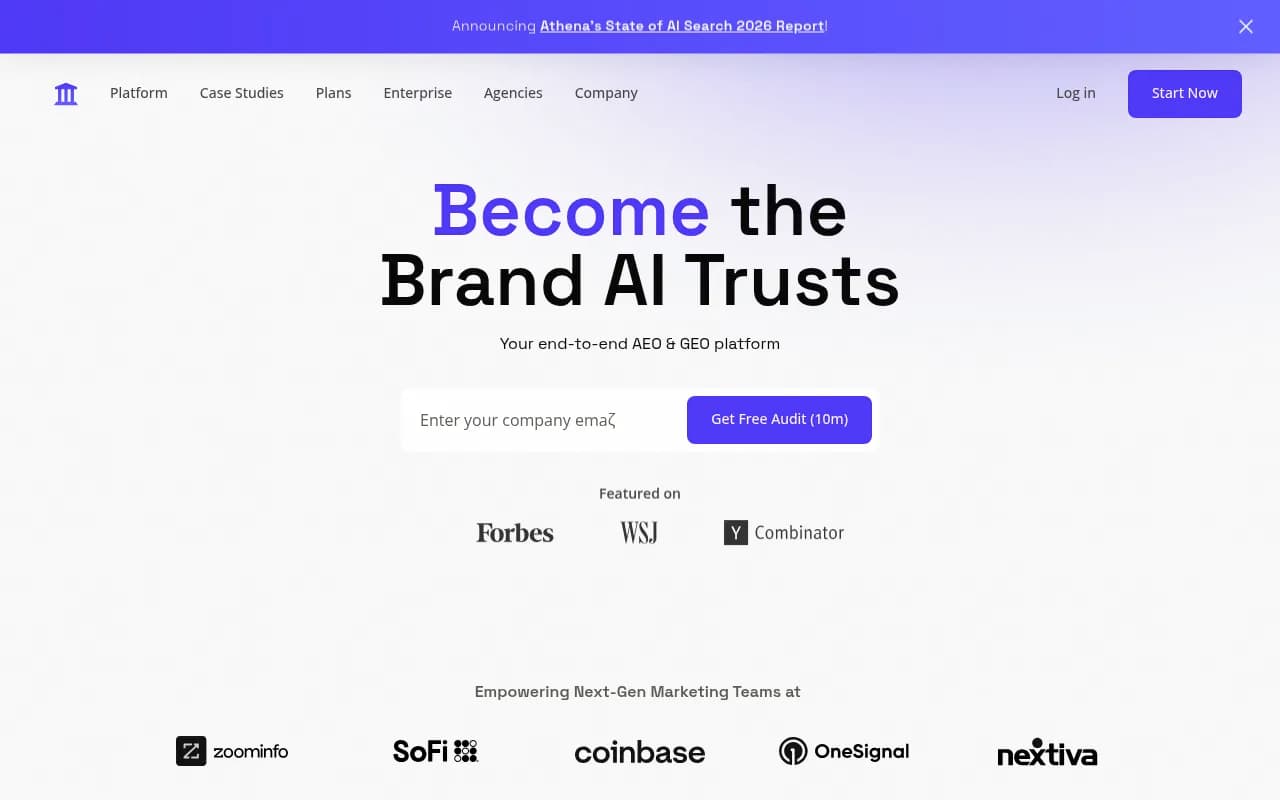
Athena HQ -- solid tracking across 8+ AI search engines
Athena HQ tracks brand visibility across eight or more AI search engines and has a clean interface that's reasonably easy to navigate. For agencies onboarding clients who are new to GEO, the simplicity is an advantage.
The prompt tracking is reliable and the reporting is clear. Where it falls short for agencies is the lack of content optimization tools and the absence of crawler logs -- you can see visibility scores but not the underlying mechanics of why a page is or isn't being cited.
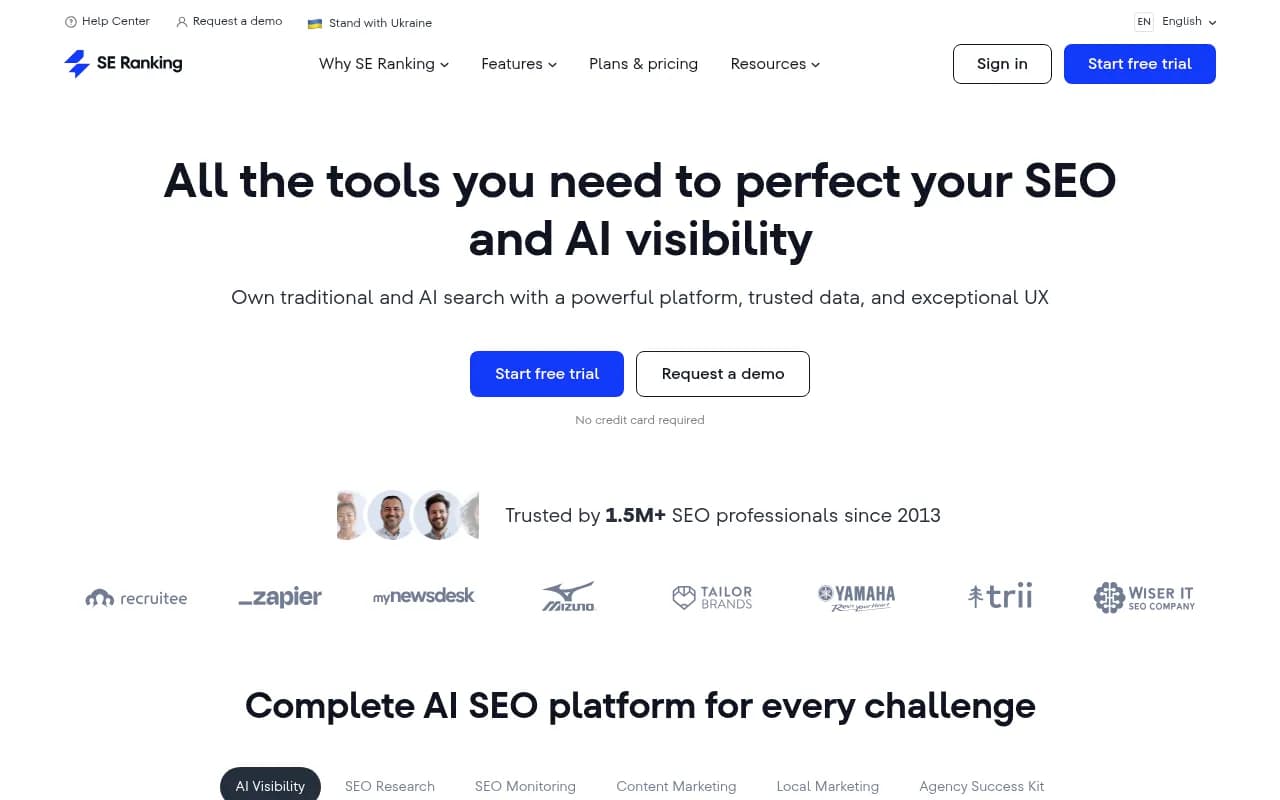
SE Ranking -- AI visibility with traditional SEO context
SE Ranking has added AI visibility tracking to what was already a solid traditional SEO platform. For agencies that are still doing a lot of conventional SEO alongside GEO work, the combination is genuinely useful -- you don't need to maintain two separate tool subscriptions.
The AI visibility module covers the main models and provides a strategic view of where clients stand. It's not as deep as dedicated GEO platforms on the AI-specific features, but the breadth of the overall platform (rank tracking, site audits, backlink analysis) makes it a reasonable choice for agencies that want one tool to cover both worlds.
Cairrot -- affordable multi-client tracking for agencies
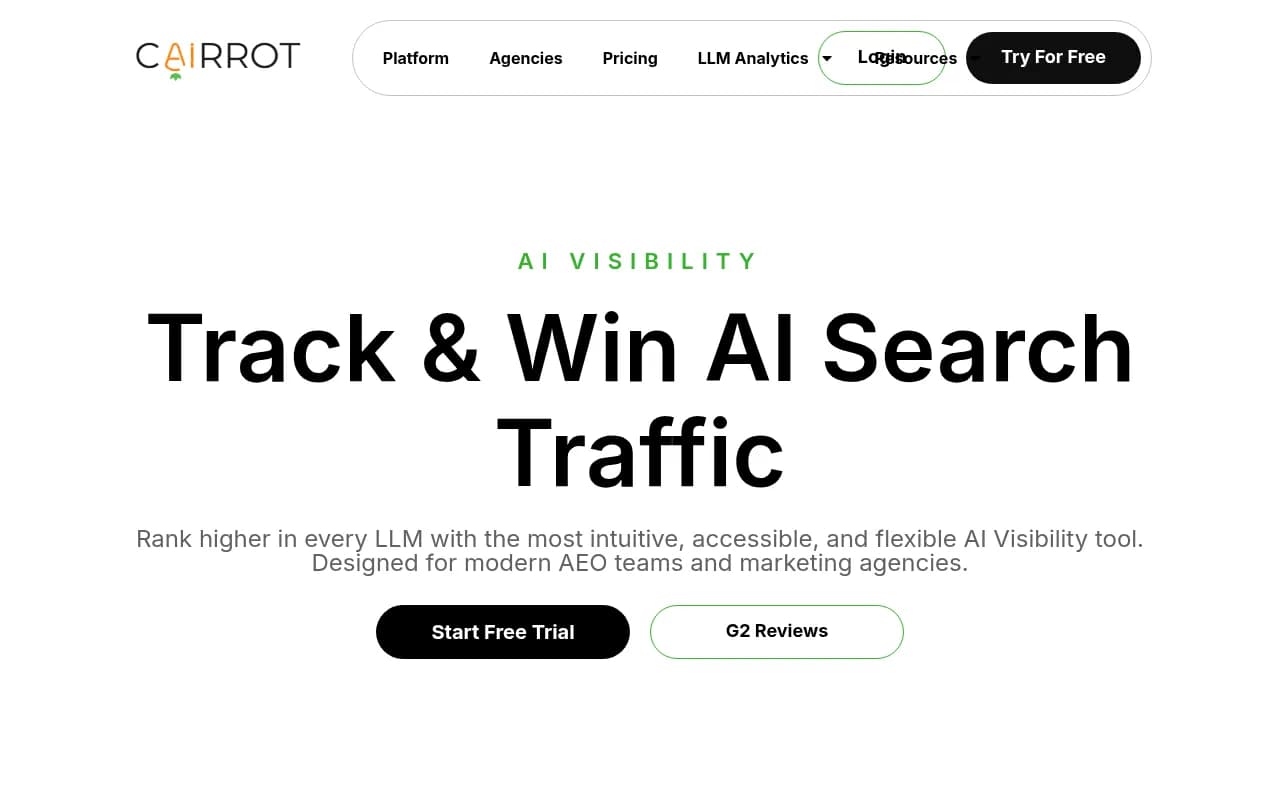
Cairrot is specifically positioned for agencies, with pricing and features designed around multi-client management. It tracks visibility across five or more LLMs and has white-label reporting options, which is a meaningful differentiator for agencies that want to present data under their own brand.
The trade-off is depth. Cairrot covers the basics well but doesn't have the content generation capabilities or the crawler log visibility that more comprehensive platforms offer. For agencies with clients who need straightforward monthly reporting on AI visibility, it's a cost-effective option.
AgencyAnalytics -- white-label reporting infrastructure
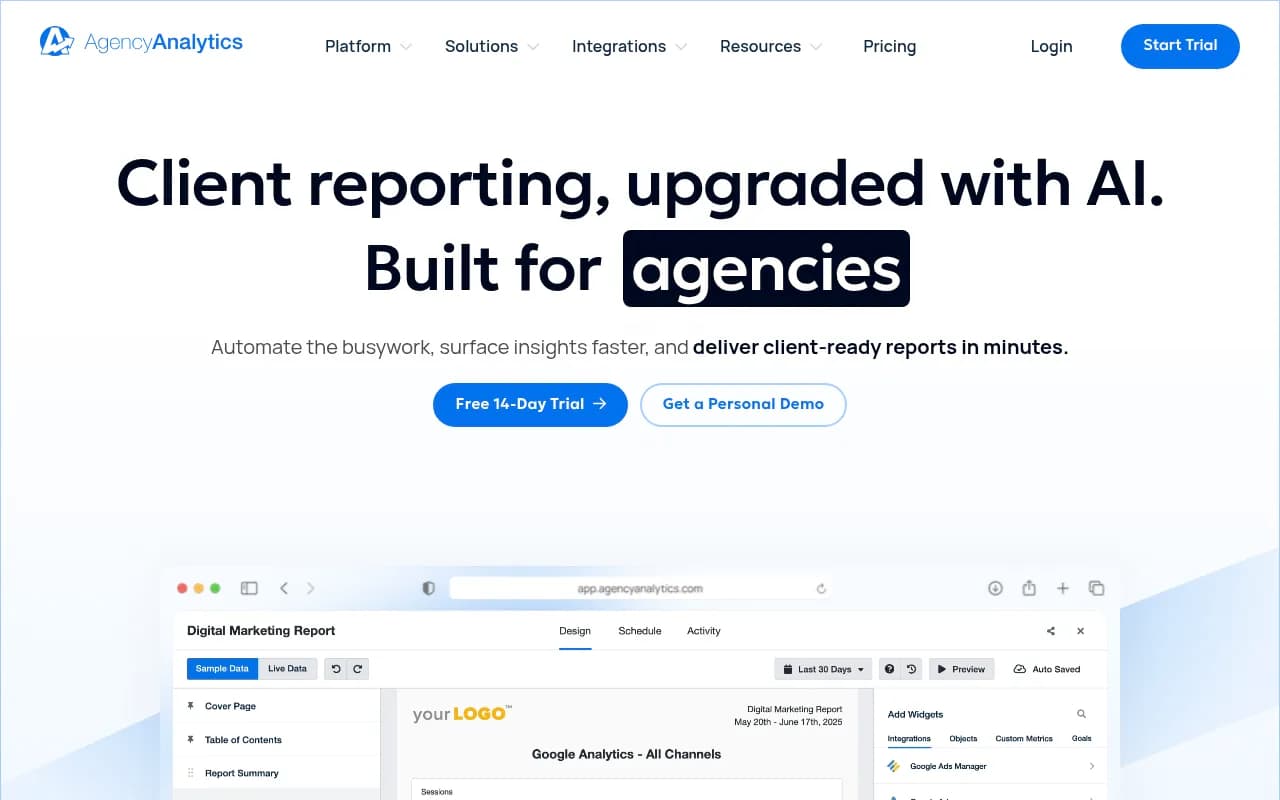
AgencyAnalytics isn't a GEO tool, but it belongs in this list because it solves a real agency problem: white-label client reporting. If you're using a GEO monitoring tool that doesn't have native white-label reporting, AgencyAnalytics can pull in data via integrations and present it under your agency's brand.
It's not a replacement for a GEO platform -- you still need something to generate the AI visibility data. But as a reporting layer on top of other tools, it's well-regarded and widely used by agencies.
Relixir -- all-in-one GEO with content generation
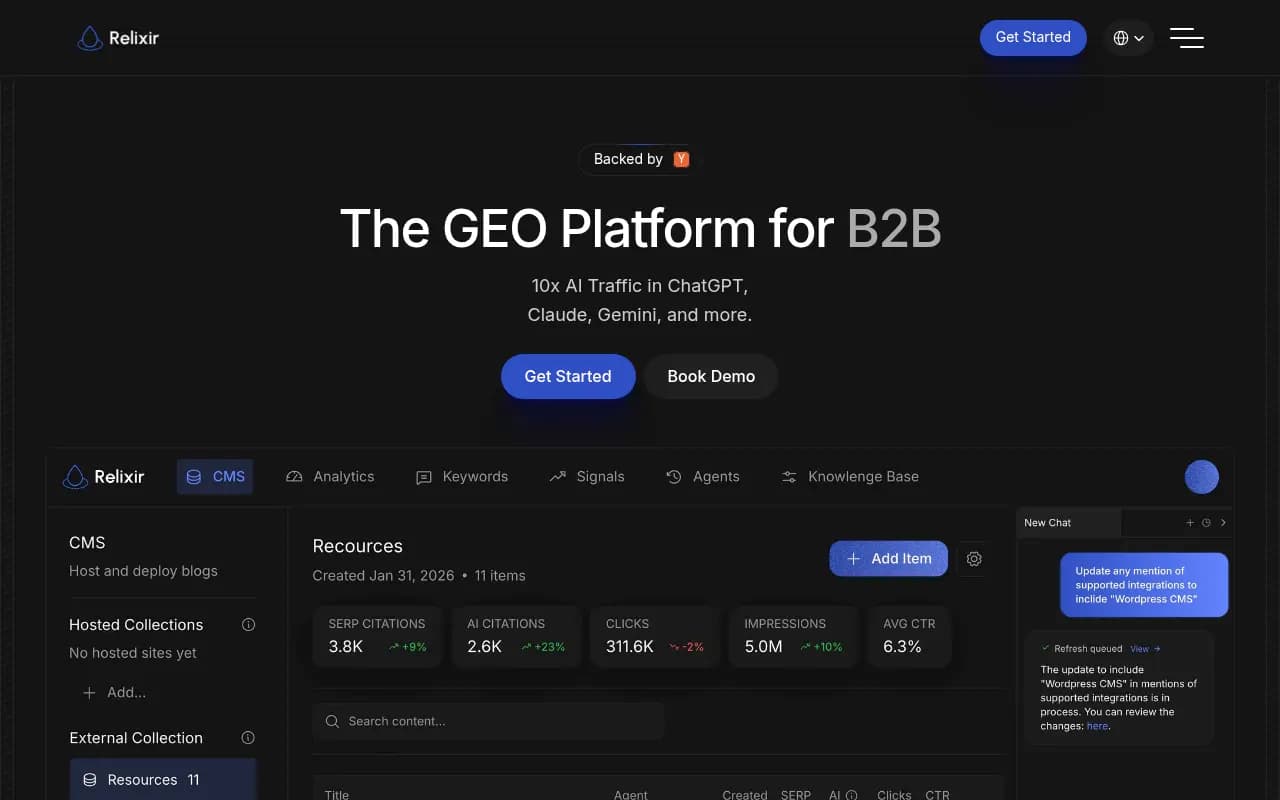
Relixir positions itself as an all-in-one GEO platform with both AI visibility tracking and content generation. It's worth evaluating if you want a single platform that covers monitoring and content creation without needing to stitch together multiple tools.
The content generation side is functional, and the visibility tracking covers the main AI models. For agencies, the question is whether the depth of each capability meets your needs -- Relixir is a generalist in a space where some platforms have gone very deep on specific capabilities.
Goodie AI -- enterprise GEO for larger agency clients
Goodie AI is positioned as an enterprise GEO platform and is worth knowing about if you manage larger brands with significant AI visibility budgets. The feature set is comprehensive, and it's designed for teams that need governance and control over how AI visibility data is managed across an organization.
For most mid-market agencies, the enterprise positioning may mean it's overbuilt and overpriced for the average client. But for agencies with a few large enterprise accounts, it's a serious option.
Feature comparison: AirOps vs. top alternatives
| Tool | AI visibility tracking | Content generation | Multi-client management | White-label reporting | Crawler logs | Pricing starts at |
|---|---|---|---|---|---|---|
| AirOps | No (readiness only) | Yes | Limited | No | No | Custom |
| Promptwatch | Yes (10 models) | Yes (Content Agents) | Yes | Yes | Yes | $99/mo |
| Slate | Yes | No | Yes | Yes | No | Custom |
| Writesonic | Yes | Yes | Limited | No | No | ~$49/mo |
| Scrunch AI | Yes | No | Yes | Limited | No | Custom |
| Athena HQ | Yes (8+ models) | No | Yes | Limited | No | Custom |
| SE Ranking | Yes | Limited | Yes | Yes | No | ~$65/mo |
| Cairrot | Yes (5+ models) | No | Yes | Yes | No | Affordable |
| AgencyAnalytics | No (reporting only) | No | Yes | Yes | No | ~$12/mo |
| Relixir | Yes | Yes | Limited | No | No | Custom |
| Goodie AI | Yes | Limited | Yes | Yes | No | Enterprise |
How to choose the right tool for your agency
The honest answer is that the right tool depends on what you're actually selling to clients.
If your agency's GEO offering is primarily "we'll show you where you stand in AI search and report on it monthly," a monitoring tool like Slate, Cairrot, or Scrunch AI is probably sufficient. They're cheaper, easier to set up, and the reporting is clean.
If you're selling "we'll improve your AI visibility and show you the results," you need a platform that closes the loop -- tracking, content generation, and attribution in one place. That's a much shorter list, and Promptwatch is the most complete option in that category right now.
If you're an agency that still does a lot of traditional SEO alongside GEO, SE Ranking's combination of both disciplines in one platform is worth the trade-off in GEO depth.
A few specific questions to ask before committing to any platform:
- Does it track real user-facing AI responses, or just API outputs? (These can differ significantly -- ChatGPT's shopping recommendations in the actual UI often differ from what the API returns.)
- Can you manage multiple client accounts without paying per-seat for every client?
- Does it have white-label reporting, or will you need a separate tool like AgencyAnalytics on top?
- Does it generate content, or just tell you what content you need?
- Can it show you why a page is or isn't being cited -- crawler logs, indexing errors, crawl frequency?
Most tools answer "no" to at least two of those questions. That's not necessarily a dealbreaker, but it tells you what you'll need to supplement.
The content generation question
One thing worth addressing directly: AirOps is genuinely good at content workflow automation. If your agency has a high-volume content operation and you need a tool to manage briefs, drafts, and CMS publishing at scale, AirOps does that well.
The alternatives above mostly don't replicate that specific capability. Writesonic and Relixir have content generation, but they're not workflow orchestration tools in the same way.
If content workflow automation is the core thing you need, and you're willing to handle AI visibility tracking separately, AirOps might still be the right choice for that specific function. The problem is when teams expect AirOps to also tell them whether their content is actually being cited in AI search -- it won't.
For agencies that want both content generation and real AI visibility tracking in one platform, Promptwatch's Content Agents are the closest equivalent. They generate content specifically designed to close citation gaps, grounded in real prompt data and competitor citation analysis -- which is a different thing from AirOps' general-purpose content workflows.
Bottom line
The GEO tool market in 2026 is crowded, and most tools are monitoring dashboards with slightly different UIs. For agencies, the meaningful differentiators are multi-client management, white-label reporting, content generation that's actually tied to visibility gaps, and the ability to show clients a clear line from work done to results achieved.
AirOps doesn't check those boxes. Most alternatives only check one or two. If you need a platform that covers the full loop -- find gaps, create content, track results -- Promptwatch is the most complete option available, and the one most likely to let you build a GEO retainer that's defensible when a client asks "what did we get for that?"