Key takeaways
- G2 research reported via PR Newswire says 51% of B2B software buyers now start their research in an AI chatbot. If your product is missing from the answer, you are missing from the shortlist.
- ChatGPT citations for software prompts concentrate on docs, vendor sites, GitHub and review sites like G2 and Capterra. A good platform has to show which of those sources name you, and which don't.
- Monitoring-only tools tell you that you are invisible. Platforms that also cover crawler logs, traffic attribution and content execution tell you what to fix and whether the fix worked.
- Budget options like Otterly start around $29/month. Mid-range tools sit at $95 to $300. Enterprise tools like Profound are custom-priced.
- Most of the "best of" lists ranking these tools are written by vendors who put themselves first. Read them with that in mind, including parts of the research behind this one.
Why SaaS buying is different in AI search
Consumer search in ChatGPT is usually one prompt and one decision. SaaS buying is messy. A purchase has three to six stakeholders, a sales cycle that can run 45 to 120 days, and dozens of comparison questions along the way. The IT lead asks whether you are SOC 2 compliant. The end user asks whether your UI is better than the incumbent. The CFO asks about pricing tiers.
Each of those is a separate prompt, and each one is a chance for AI to name you or a competitor. That is why a single "brand mentioned: yes/no" metric is not enough for software companies. You need to see visibility by prompt cluster: category prompts ("best CRM for startups"), comparison prompts ("X vs Y"), integration prompts, and branded prompts.
There is also a sourcing difference. Review sites matter more in software than in most categories. Presenc AI's research claims G2, Capterra, TrustRadius and GetApp together drive 34% of SaaS AI citations. That is a vendor-published number I could not verify, so treat it as directional. Promptwatch's own data points the same way, though, as the next section shows.
What AI actually cites for software prompts
Before comparing tools, it helps to know what you are trying to move. Promptwatch Data's report on software-related ChatGPT prompts (Sep 28 to Oct 4, 2026, organic software prompts) lists the most cited domains:
| Domain | Share of software citations |
|---|---|
| github.com | 1.2% |
| learn.microsoft.com | 0.98% |
| g2.com | 0.73% |
| docs.aws.amazon.com | 0.41% |
| Google Cloud docs | 0.35% |
| gartner.com | 0.34% |
| capterra.com | 0.32% |
| intercom.com | 0.28% |
| zapier.com | 0.24% |
By source type, docs and help centers are the largest group at 2.64%, vendor sites earn 2.01%, and review sites and analysts (G2, Gartner, Capterra, Software Advice) earn 1.57%. Vendor sites and docs together earn about three times what review sites do. In practice: publish crawlable docs and help pages, keep a public GitHub presence if you sell to developers, and keep your G2 and Capterra profiles complete.
The content-type picture agrees. In Promptwatch's ChatGPT citation share by content type (Sep 28 to Oct 4, 2026), product pages made up 22.4% of citations, landing pages 16.8%, listicles 13.6%, how-tos 8.7% and docs 7.5%. For commercial prompts like "best CRM for small businesses", product pages, landing pages, listicles and comparisons add up to almost 70%.
Two things follow for tool selection. First, your own product pages and docs are the main lever, so the platform should report which of your pages get cited. Second, listicles matter, so you also want to see which third-party "best of" roundups AI pulls from. Freshness matters too: the content half-life report shows news pages losing half their citations in about 36 days, while landing pages and docs hold on for months.
What to look for in a platform
I would score every candidate on six things. Not all of them matter equally to every team, but you should know where each tool lands.
- Prompt coverage by intent. Can you track category, comparison, integration and branded prompts separately, and see volumes or difficulty so you are not guessing?
- Real interface data. AI answers in the actual ChatGPT or AI Overviews UI can differ from API output. Tools that scrape the UI give you what buyers actually see.
- Citation and source analysis. Which pages of yours are cited, and which G2, Reddit, YouTube or listicle sources feed the answer?
- Crawler and traffic data. Do AI bots reach your docs and pricing pages? Does any of this turn into visits and signups?
- Action layer. Does the tool tell you what to publish or fix, or does it stop at a dashboard?
- Reporting and integrations. GA4, Search Console, Looker Studio, HubSpot or Salesforce reporting, and an API. Your CRO will ask why the dashboard does not match new logos. Be ready.
Comparison table
Prices below come from vendor pages and vendor-written roundups. I could not verify all of them independently, so confirm on each pricing page.
| Platform | Typical entry price | Strength | Main limitation | Best for |
|---|---|---|---|---|
| Promptwatch | Free tier; $95/mo Essential | Monitoring plus crawler logs, traffic attribution and content execution | More to learn than a simple tracker | SaaS teams that want to fix gaps, not just see them |
| Profound | Custom or ~$99 entry per vendor roundups | Enterprise analytics, 10+ engines, SOC 2 | Price and complexity | Large SaaS with big budgets |
| Peec AI | ~$95 to $100/mo | Clean analytics, UI-based tracking | No content or crawler layer | Analytics-focused marketers |
| Otterly.AI | From ~$29/mo | Cheapest way to start | Lite plan has 15 prompts | Early-stage SaaS testing the water |
| LLM Pulse | From EUR 49/mo | Category prompts, GA4 and Looker Studio, MCP | Monitoring-led | SaaS teams reporting into CRM |
| Scrunch | ~$250 to $300/mo | Content legibility for AI, ChatGPT Shopping tracking | Higher barrier for small teams | Enterprise brands |
| AthenaHQ | ~$295/mo | Action Center recommendations | Pricing less transparent | Mid-market SaaS |
| Writesonic | ~$99/mo | GEO tracking with an AI writer | Broader tool, shallower tracking | Teams wanting writing and GEO together |
| Semrush | Existing subscription | AI tracking inside a familiar SEO suite | Shallower AI data | Teams already on Semrush |
The platforms, one at a time
Promptwatch
Promptwatch is the one I would start with for a SaaS company that wants more than a dashboard. It tracks the real interfaces of ChatGPT, Google AI Overviews, AI Mode, Gemini, Perplexity and Copilot, with prompt volumes, difficulty scores and query fan-outs so you can pick category prompts that are worth winning. The software-specific parts matter here: IP-verified AI crawler logs show whether GPTBot or ClaudeBot can read your docs and pricing pages, and visitor analytics connect AI citations to actual traffic.
The action side is what separates it from trackers. The Action Board turns gaps into a prioritized to-do list, and the Content Agent can plan, write and publish to WordPress, Webflow or Framer, then track whether the pages get crawled and cited. It also reports Reddit, YouTube and LinkedIn citations and tracks coding agents like Codex and Claude Code, which is useful for developer-tool companies. Crisp, a SaaS company, reported 2x higher conversion from AI traffic than traditional channels.
Pricing starts with a free Explore plan (10 prompts, ChatGPT only), then Essential at $95/month with 50 prompts and all models, Professional at $245 and Business at $579. Confirm at promptwatch.com/pricing.

Profound
Profound is the enterprise name most people mention first. It tracks 10+ engines, offers custom dashboards and account management, and carries SOC 2 Type II compliance, which matters if you sell into regulated verticals and your procurement team asks the same of your vendors. The trade-off is cost and, per the vendor roundups I read, a focus on analytics over hands-on content execution. If you have a six-figure budget and need audit-grade reporting, it belongs on your shortlist.

Peec AI
Peec is a clean, analytics-first tracker, around $95 to $100/month, that tracks six engines through UI scraping. It is a decent fit for marketers who want accurate share-of-voice numbers and will handle optimization elsewhere. It has no crawler logs, traffic attribution or content generation, so you will pair it with other tools.

Otterly.AI
Otterly is the budget entry. The $29 Lite plan only covers 15 prompts, but for a seed-stage SaaS company testing a tight set of commercial questions that can be enough. Base plans cover ChatGPT, AI Overviews, Perplexity and Copilot, while AI Mode, Gemini and Claude cost extra. Expect to outgrow it.

LLM Pulse
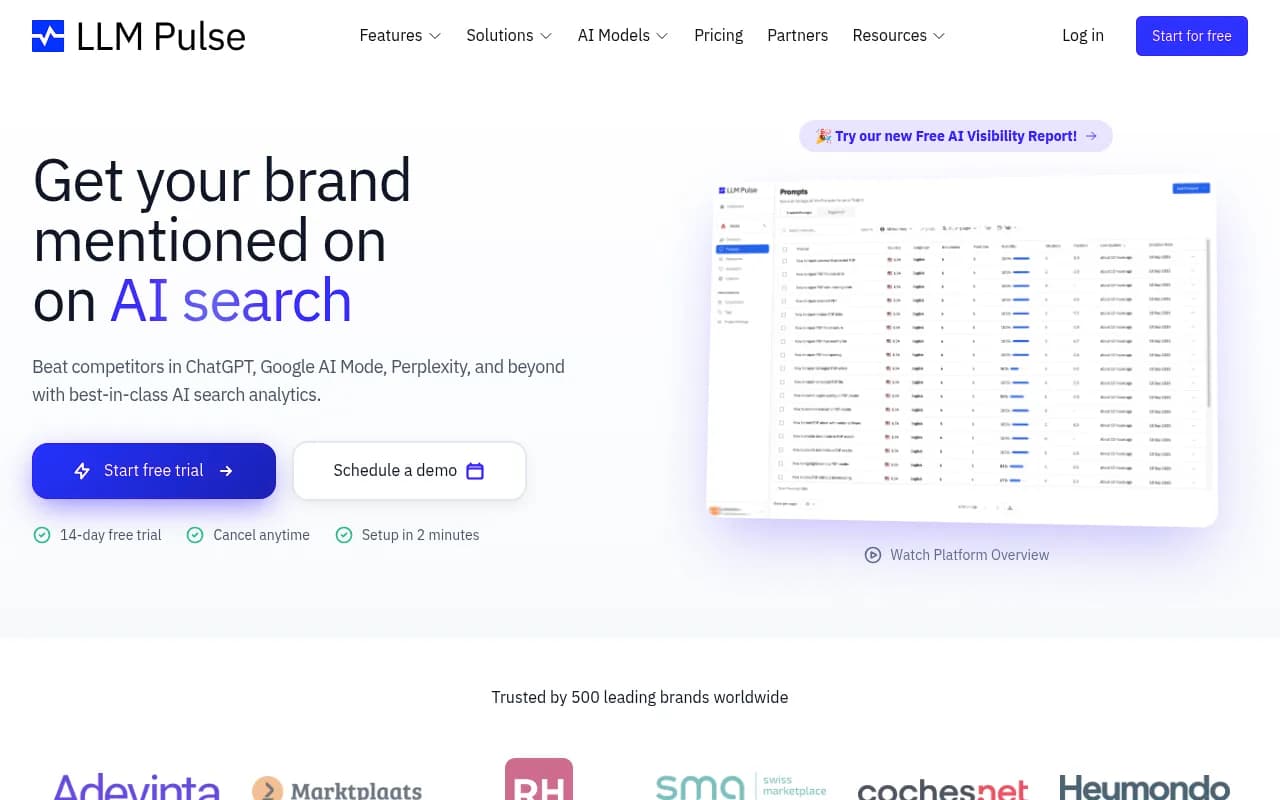
LLM Pulse is built with SaaS in mind: it tracks category and feature prompts rather than just brand prompts, benchmarks competitor share of voice per prompt cluster, and ships GA4, Looker Studio, REST API and MCP integrations. That last group is why it keeps coming up for teams who need to push AI visibility into HubSpot or Salesforce reporting. Note that the guide I read is published by LLM Pulse itself and ranks it first. It starts at EUR 49/month and tracks five standard models, with others as paid add-ons.
Scrunch and AthenaHQ
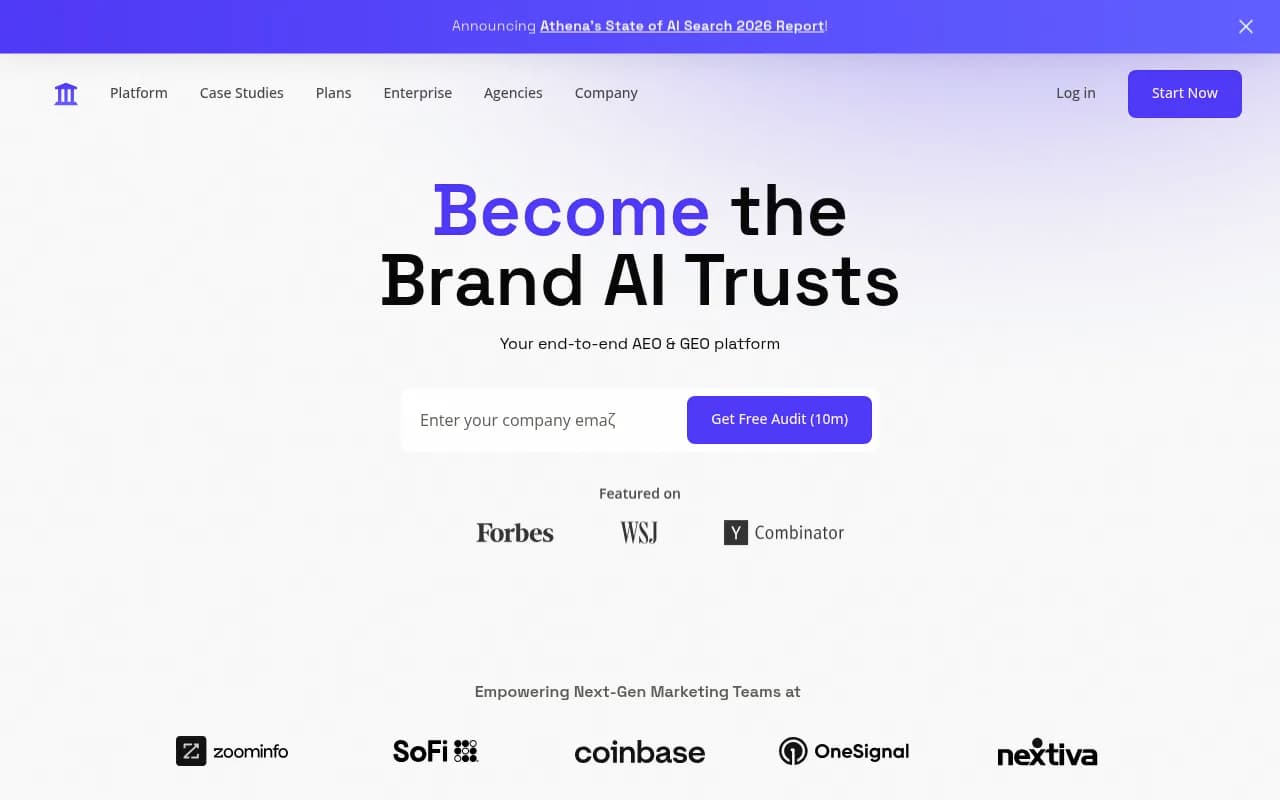
Scrunch focuses on making your content legible to AI systems, not only measuring it, and tracks ChatGPT Shopping surfaces. It starts around $250/month, which puts it out of reach for many small teams. AthenaHQ's Action Center prescribes fixes and is positioned at mid-market SaaS, though pricing is not fully public.

Semrush and other SEO suites
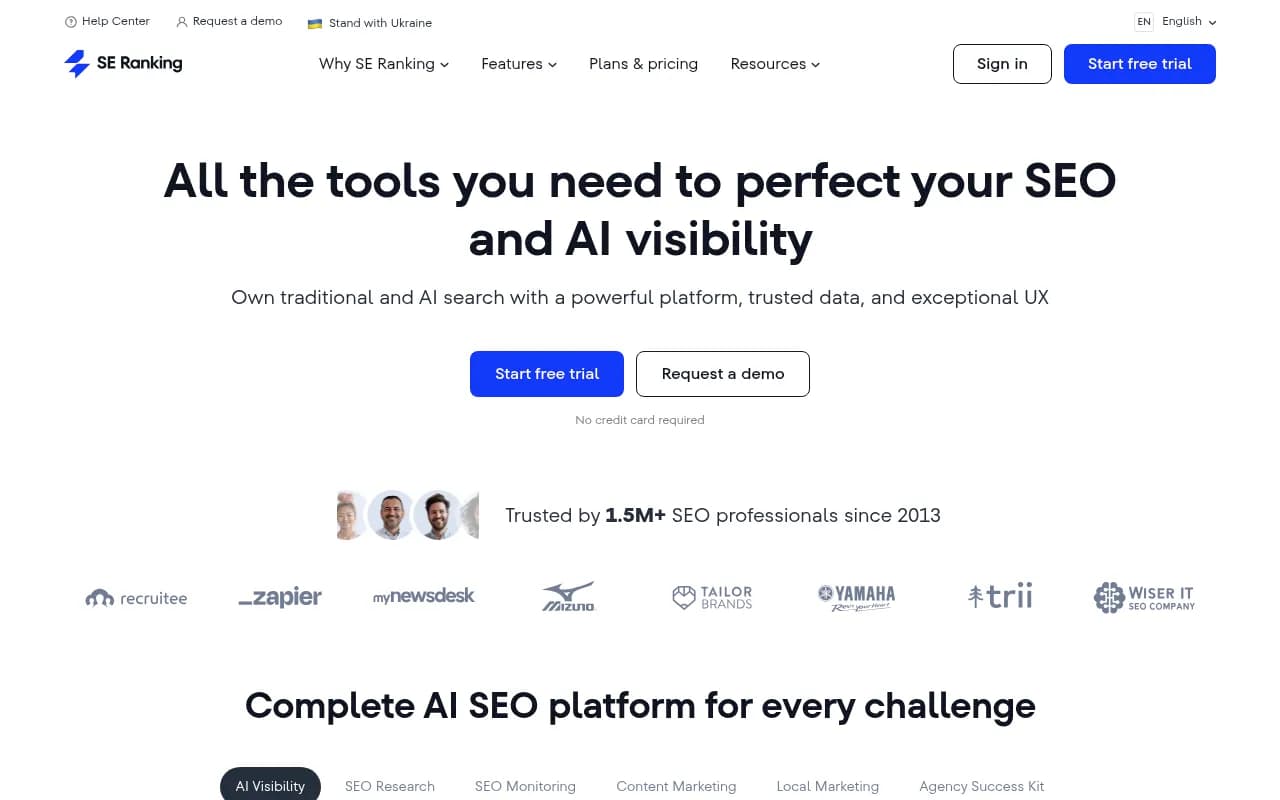
If your team already lives in Semrush, its AI visibility features are the lowest-friction place to start, and Nathan Ojaokomo's roundup calls it the strongest integrated option for SaaS. The depth is shallower than a dedicated platform, though. SE Ranking's add-on has the same caveat. For a view of the budget and niche end, the GEO software directory at bestgeosoftware.com lists far more options than I can cover here.
A word on the vendor-written lists
I read five "best AI visibility tools for SaaS" articles to prepare this. Every one of them ranks its publisher first: GrackerAI, LLM Pulse, SearchEye, Nobori and Presenc AI. Some disclose it, which is to their credit. None of that makes the products bad. It does mean the rankings and the statistics inside them ("73% of B2B buyers research vendors on these platforms", "top-quartile SaaS sites earn 31 citations a month") are vendor claims that I could not check. Run a trial instead of trusting any list, including this one.
How to run a sensible trial
Pick two or three tools, not seven. Give each the same 30 to 50 prompts, split roughly like this:
- 15 category prompts ("best project management tool for agencies")
- 10 comparison prompts ("your product vs the two competitors you lose to")
- 10 integration and use-case prompts
- 5 branded prompts, including pricing and security questions
Then judge each tool on whether it answers questions your team can act on:
- Which of my pages were cited, and for which intent?
- Which G2, Capterra or listicle pages named competitors but not me?
- Can AI crawlers reach my docs without errors?
- Did any of this turn into visits or signups?
Most trackers answer the first question. Fewer answer the last three. Check the dashboards against what you see typing the same prompts into ChatGPT yourself.
Which one should you pick?
- Seed-stage, tiny budget: Otterly or the free Promptwatch plan to get a baseline.
- Growth-stage SaaS that wants to improve, not just watch: Promptwatch Essential or Professional.
- Reporting-heavy team feeding a CRM: LLM Pulse or Promptwatch with its Looker Studio connector and API.
- Enterprise with compliance requirements: Profound, or Promptwatch Business and Enterprise.
- Already on Semrush: try its AI features first, and add a dedicated tool when you hit the depth ceiling.
If you would rather hand the work to people, 1001 SEO Media runs GEO programs for software companies and uses Promptwatch for the measurement side. For more category comparisons, the AI rank tracking directory at ai-rank-tools.com is a good next stop.
Whatever you choose, start with your own docs, product pages and G2 profile. That is where the citations are.