Key takeaways
- AI visibility platforms vary dramatically in depth: most tools stop at monitoring, while a handful go further to help you close content gaps and generate content that gets cited by AI models.
- Enterprise buyers should evaluate platforms on four dimensions: breadth of AI model coverage, content optimization capabilities, traffic attribution, and total cost of ownership.
- Promptwatch is the only platform in this comparison rated as a "Leader" across all evaluation categories in a 2026 review of 12 GEO platforms -- largely because it combines monitoring, content generation, and traffic attribution in one loop.
- Procurement teams should request a free trial or demo before committing. Most platforms offer one, and the differences between them are hard to appreciate from a feature list alone.
- Budget matters: entry-level plans start around $99/month, but enterprise deployments with multi-site, multi-region, and API access typically run $500+ per month.
Why enterprise marketing teams are buying AI visibility platforms right now
The shift is real and it's already happened. Early 2026 data suggests organic click-through rates drop by roughly 70% when an AI Overview appears in search results. Users are getting answers from ChatGPT, Perplexity, Google's AI Mode, and Gemini without ever clicking through to your site. That's not a future risk -- it's the current state of search.
For enterprise marketing teams, this creates a specific problem: your existing SEO stack tells you where you rank in Google's blue links, but it has no idea whether ChatGPT is recommending your brand, mentioning a competitor instead, or ignoring your category entirely.
That's the gap AI visibility platforms are designed to fill. But "AI visibility platform" has become a catch-all term that covers everything from a simple brand mention tracker to a full optimization suite with content generation, crawler logs, and revenue attribution. Buying the wrong one wastes budget and leaves your team with data but no way to act on it.
This guide is written for marketing directors, heads of SEO, and procurement teams who need to evaluate these platforms seriously -- not just read a feature checklist.
What enterprise teams actually need (vs. what most platforms offer)
Before comparing specific tools, it's worth being honest about the gap between what enterprise teams need and what most platforms deliver.
Most AI visibility tools are monitoring dashboards. You set up a list of prompts, the tool queries ChatGPT or Perplexity, and you get a score showing how often your brand appears. That's useful for a weekly report. It's not useful for improving your visibility.
Enterprise teams need the full loop:
- Find where you're invisible -- not just your own score, but which specific prompts your competitors rank for that you don't.
- Understand why -- which pages are being cited, which content gaps exist, what topics the AI models want to answer but can't find on your site.
- Create content that fixes it -- not generic SEO articles, but content engineered around actual citation patterns and prompt volumes.
- Measure the impact -- connect improved AI visibility to actual traffic and revenue, not just a dashboard score.
Very few platforms do all four. Most stop at step one.
The platforms worth evaluating in 2026
Promptwatch
Promptwatch is the platform that comes closest to the full loop described above. It monitors 10 AI models (ChatGPT, Perplexity, Claude, Gemini, Google AI Overviews, Google AI Mode, Grok, DeepSeek, Copilot, and Mistral), but the monitoring is a means to an end rather than the product itself.
The core differentiator is what happens after you see the data. The Answer Gap Analysis shows you exactly which prompts competitors are visible for that you're not -- and the built-in AI writing agent generates articles, listicles, and comparisons grounded in 880M+ real citations analyzed. The content isn't generic; it's built around prompt volumes, competitor analysis, and what AI models actually cite.
On the attribution side, Promptwatch connects AI visibility to traffic through a code snippet, Google Search Console integration, or server log analysis. That's the piece most enterprise procurement teams care about and most competitors skip entirely.
Other capabilities worth noting for enterprise buyers: AI crawler logs (real-time logs of ChatGPT, Claude, and Perplexity crawling your site), ChatGPT Shopping tracking, multi-language and multi-region monitoring, Looker Studio integration, and an API for custom workflows. Pricing runs from $99/month (Essential) to $579/month (Business), with custom enterprise pricing available.

Profound
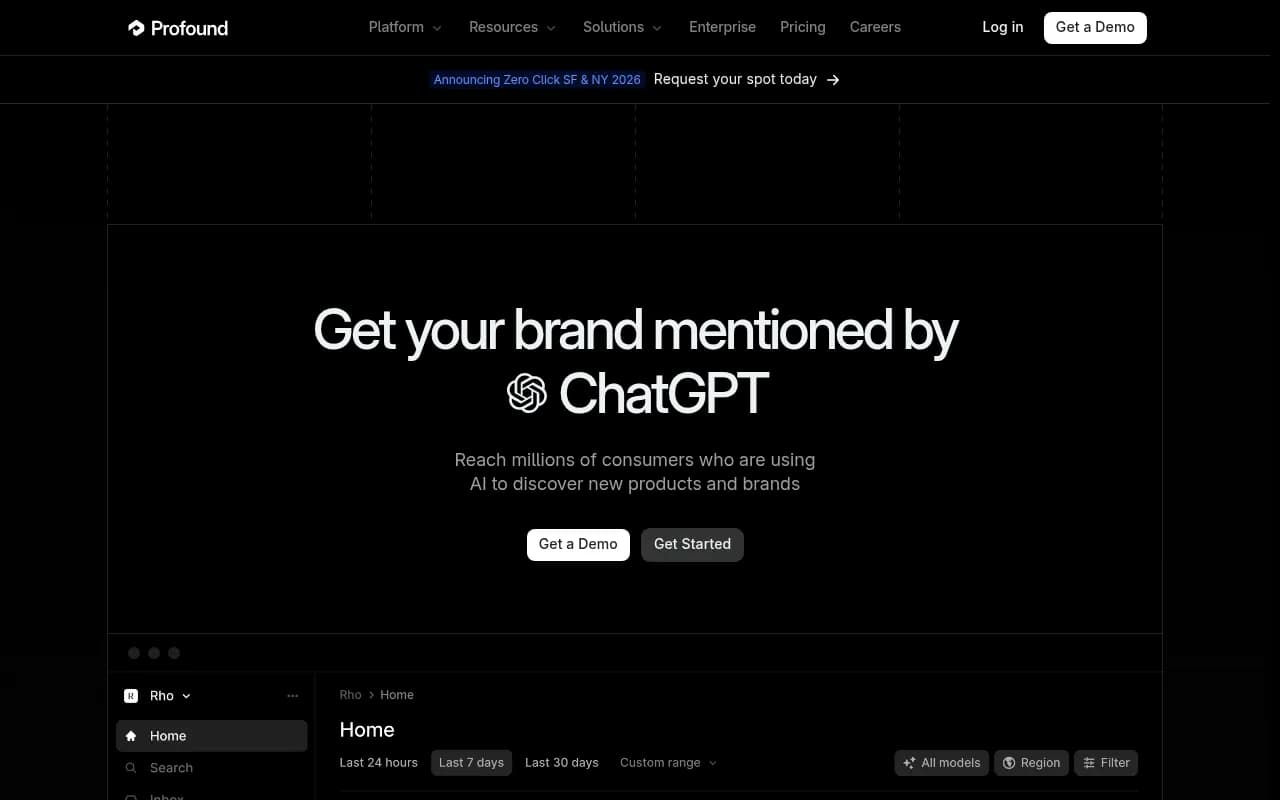
Profound is a strong option for enterprise teams that want deep answer engine analytics and are willing to pay for it. The platform has solid prompt volume data, agent analytics, and a well-regarded agency mode with pitch environments for client management. It's particularly well-suited to PR and brand teams who need to track narrative tone and sentiment alongside visibility scores.
The gap: Profound is primarily a monitoring and analytics platform. Content generation and optimization capabilities are more limited compared to Promptwatch, and the price point is higher for comparable feature sets.
BrightEdge
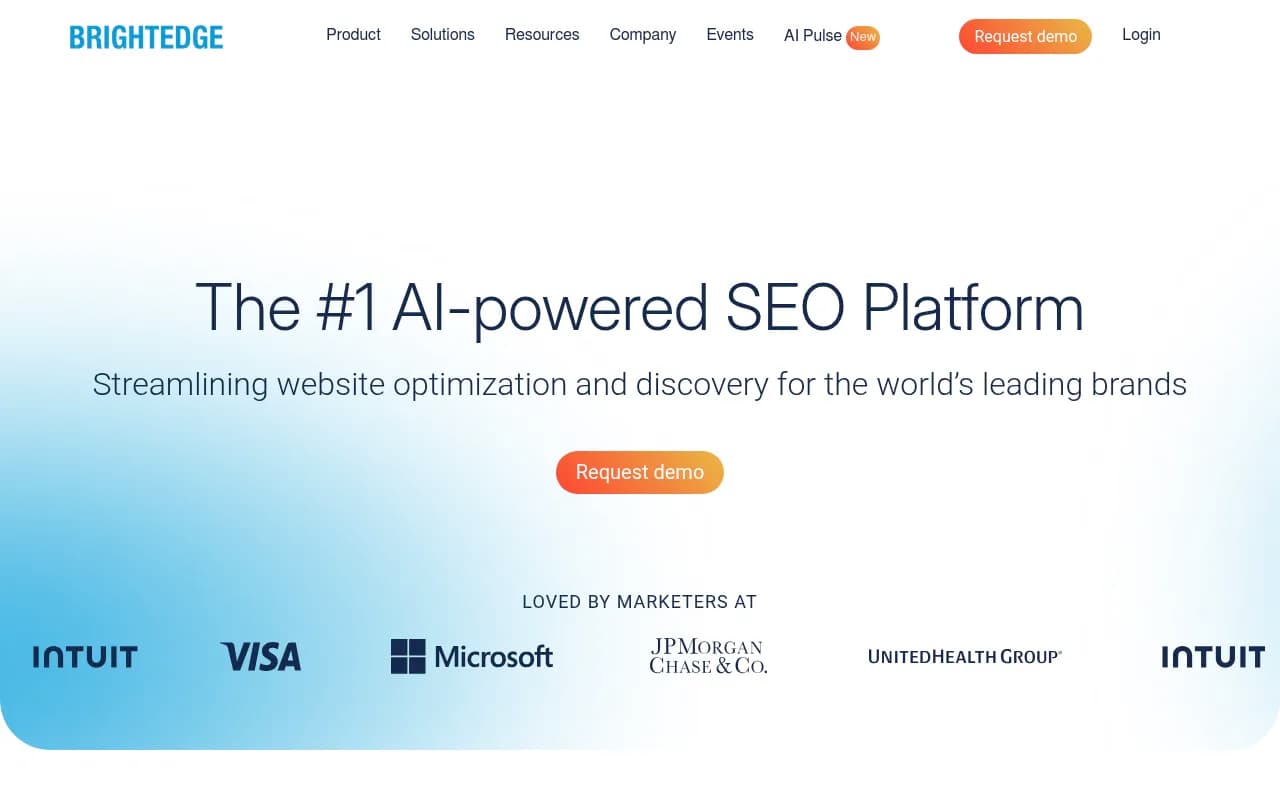
BrightEdge has been an enterprise SEO staple for years, and its Prism product extends that into AI search visibility. For teams already running BrightEdge for traditional SEO, adding AI visibility tracking through the same platform is a reasonable consolidation move.
The limitation is that BrightEdge's AI visibility features feel like an add-on to an SEO platform rather than a purpose-built GEO tool. Prompt coverage is narrower, and the content optimization workflow is less integrated than dedicated GEO platforms.
Conductor
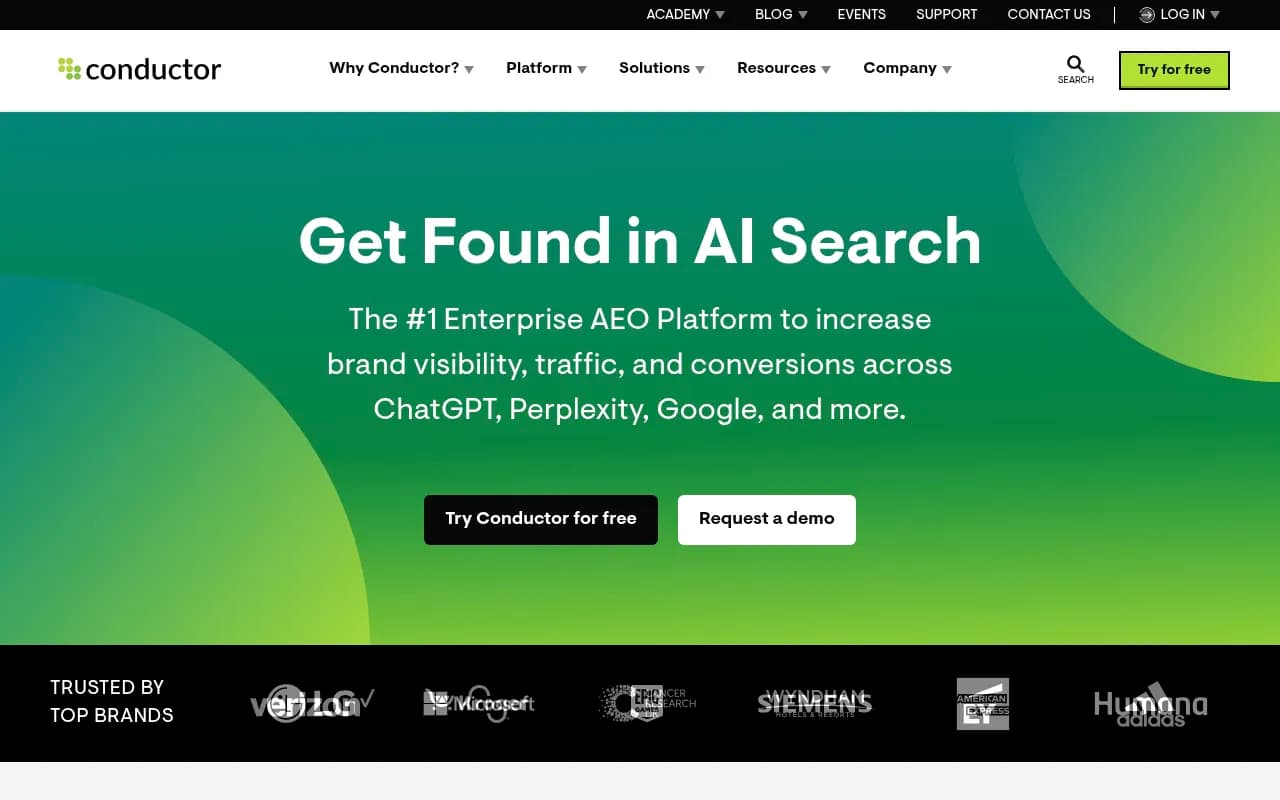
Conductor takes a similar position to BrightEdge -- an enterprise SEO platform that has extended into AEO and AI search visibility. It's a credible option for large teams that want a single vendor for both traditional and AI search, and it has strong workflow and collaboration features for enterprise content teams.
Semrush
Semrush added AI visibility features to its existing platform, and for teams already paying for Semrush, it's worth exploring. The honest assessment: the AI monitoring uses fixed prompts rather than custom ones, which limits how useful it is for tracking your specific competitive landscape. There's no AI traffic attribution. It works as a starting point but not as a primary GEO platform for serious enterprise use.
Bluefish AI
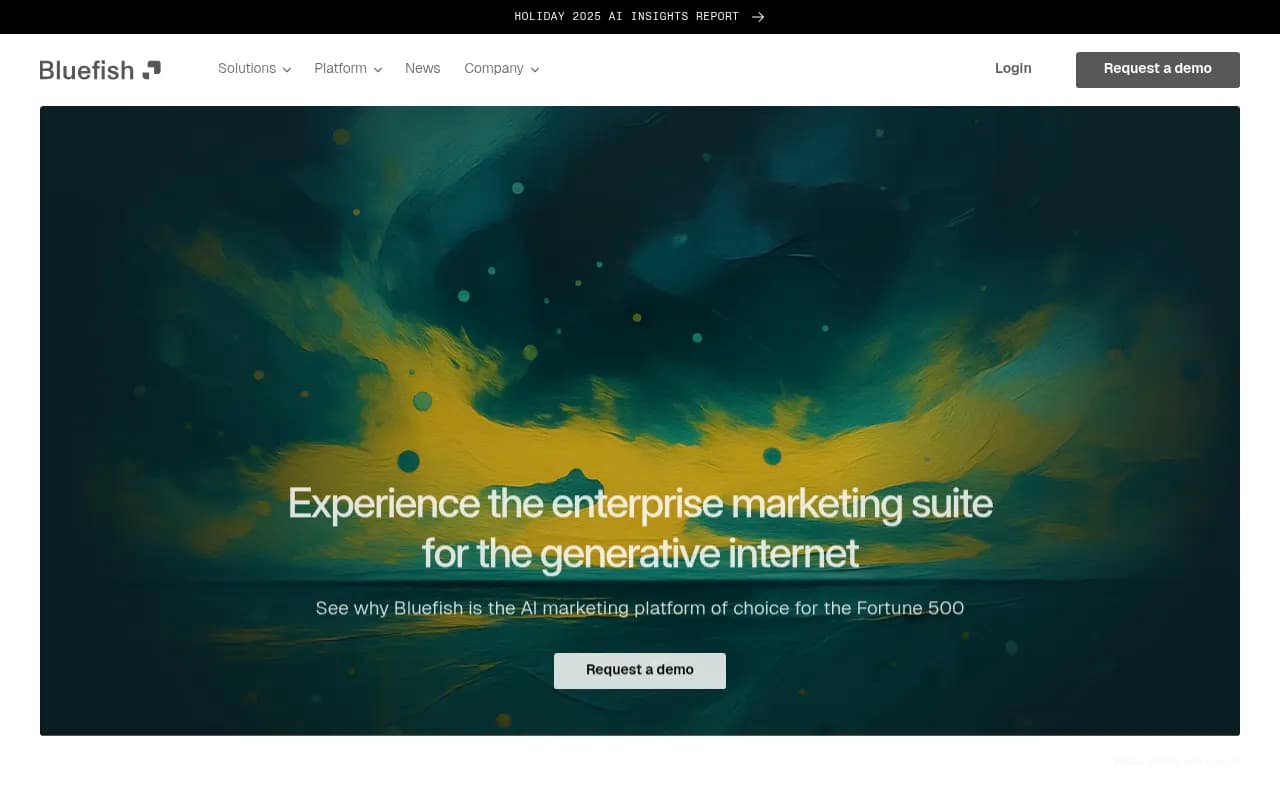
Bluefish positions itself as an enterprise GEO platform and has decent coverage across AI models. It's worth including in an enterprise evaluation, though it lacks some of the content generation and traffic attribution capabilities that distinguish the top tier.
Athena HQ
AthenaHQ covers 8+ AI search engines and has a clean interface for tracking brand visibility and sentiment. It's a monitoring-focused platform -- good for teams that primarily need reporting and don't yet need content optimization capabilities.
Otterly.AI
Otterly is one of the more affordable options in this space and works well for teams that need basic AI mention tracking without a large budget. It doesn't have crawler logs, content generation, or traffic attribution -- but for a team just getting started with AI visibility monitoring, it's a reasonable entry point.

SE Visible
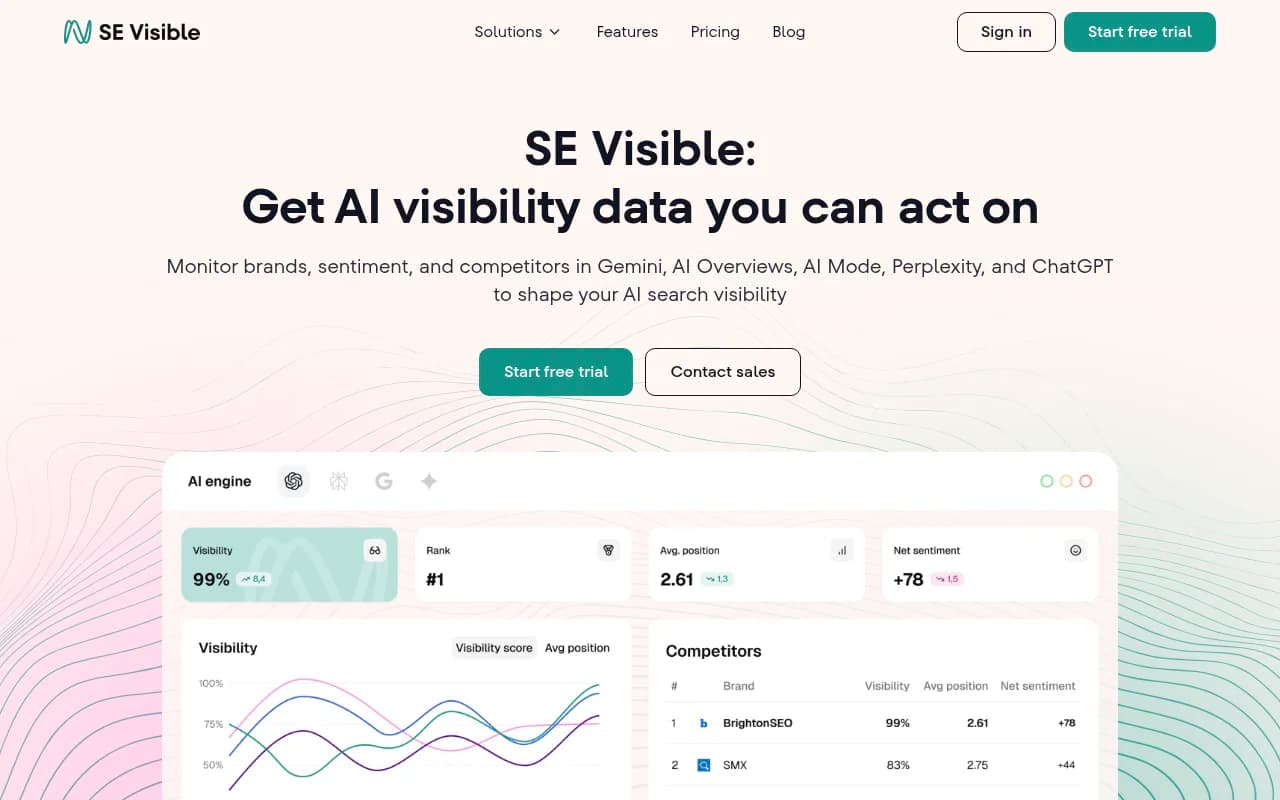
SE Visible (from SE Ranking) covers brand visibility and sentiment across AI search engines and integrates with SE Ranking's broader SEO data. A solid mid-market option for teams that want AI visibility as part of a wider SEO stack.
seoClarity
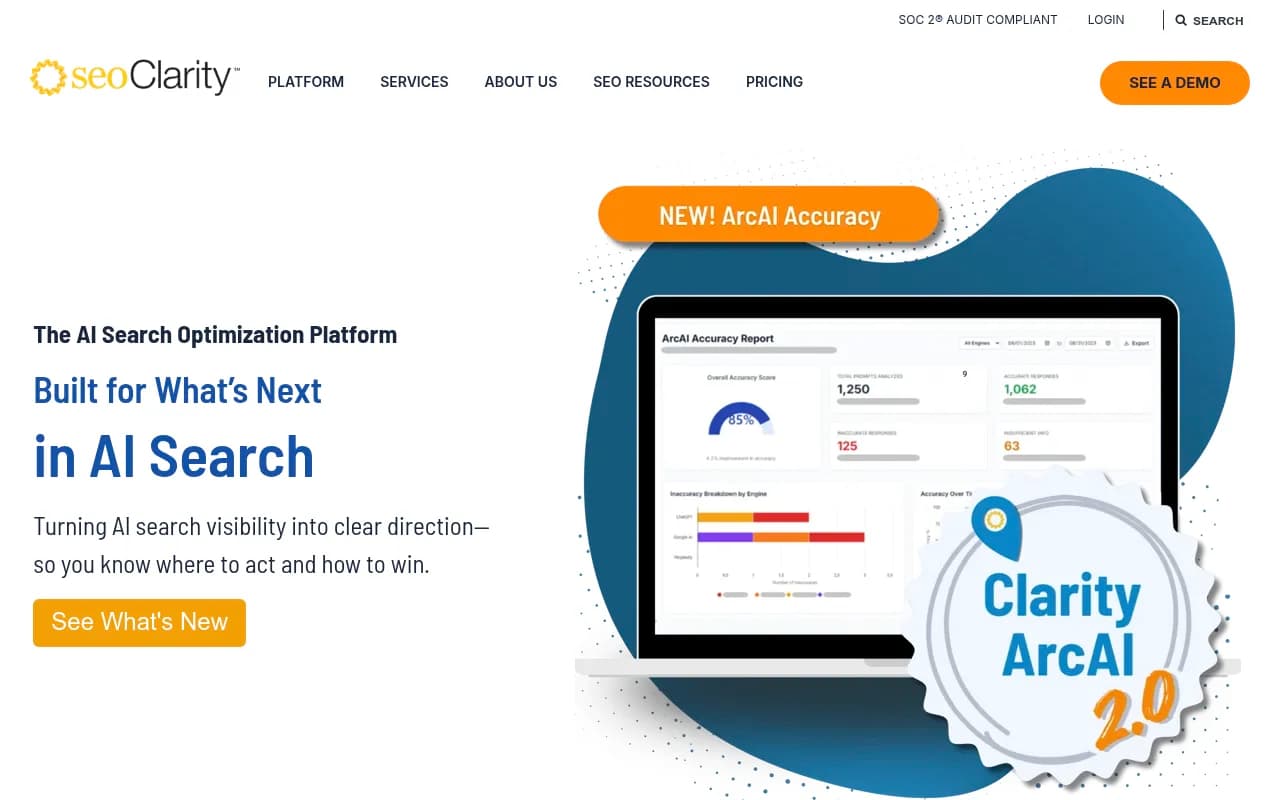
seoClarity is a well-established enterprise SEO platform that has added AI search visibility tracking. Like BrightEdge and Conductor, it's best suited to teams already in the seoClarity ecosystem who want to extend their existing workflow into AI search.
Feature comparison table
This table covers the dimensions that matter most for enterprise procurement decisions.
| Platform | AI models monitored | Content generation | Traffic attribution | Crawler logs | Prompt volumes | Multi-region | Starting price |
|---|---|---|---|---|---|---|---|
| Promptwatch | 10 | Yes (built-in AI writer) | Yes (GSC, snippet, logs) | Yes | Yes | Yes | $99/mo |
| Profound | 6+ | Limited | No | No | Yes | Yes | Custom |
| BrightEdge | 4+ | Limited | Partial | No | Limited | Yes | Custom |
| Conductor | 4+ | Limited | Partial | No | Limited | Yes | Custom |
| Semrush | 3 (fixed prompts) | No | No | No | No | Limited | Add-on |
| Bluefish AI | 5+ | No | No | No | Limited | Limited | Custom |
| AthenaHQ | 8+ | No | No | No | No | Limited | Custom |
| Otterly.AI | 4 | No | No | No | No | No | ~$49/mo |
| SE Visible | 5+ | No | No | No | No | Limited | Bundled |
| seoClarity | 4+ | Limited | Partial | No | Limited | Yes | Custom |
Pricing and feature sets change frequently. Verify with each vendor before procurement.
How to structure your evaluation process
Enterprise procurement for a GEO platform typically takes 4-8 weeks. Here's a practical framework.
Step 1: Define your use case
Are you primarily trying to monitor brand mentions, close content gaps, attribute AI traffic to revenue, or all three? The answer changes which platforms belong on your shortlist. A team that just needs a weekly visibility report has different requirements than one trying to build a content engine around AI citation data.
Step 2: Audit your current stack
Most enterprise teams already have contracts with Semrush, BrightEdge, or a similar SEO platform. Check whether their AI visibility features are sufficient before adding a dedicated GEO tool. In most cases they won't be, but it's worth confirming before adding another vendor.
Step 3: Run parallel trials
Most platforms offer free trials or demos. Run two or three simultaneously on the same set of prompts and compare the data quality, not just the interface. Look specifically at:
- How many prompts can you track at your tier?
- Does the platform show you competitor visibility, not just your own?
- Can you see which specific pages are being cited?
- Is there any content workflow, or does the data just sit in a dashboard?
Step 4: Test the attribution story
Ask each vendor specifically how they connect AI visibility to traffic and revenue. This is where most platforms fall short. If the answer is "we show you your visibility score," that's monitoring. If the answer involves actual traffic data tied to AI referrals, that's attribution.
Step 5: Evaluate total cost of ownership
Published pricing is rarely the full picture for enterprise deployments. Factor in:
- Number of sites and prompts you need (costs scale quickly)
- API access fees if you need custom integrations
- Onboarding and training time
- Whether content generation is included or costs extra
Common procurement mistakes to avoid
Buying on feature count. A platform with 40 features you won't use is worse than one with 8 you will. Focus on whether the platform supports your specific workflow.
Ignoring content capabilities. If your team's goal is to improve AI visibility (not just measure it), a monitoring-only platform will leave you with data and no clear path forward. The gap between knowing you're invisible and knowing what to publish to fix it is significant.
Underestimating prompt volume needs. Entry-level plans often include 50-150 prompts. Enterprise teams tracking multiple product lines, geographies, and competitor sets can easily need 500+. Model out your actual prompt requirements before signing.
Skipping the attribution question. Visibility scores are useful for internal reporting, but executive stakeholders want to know the revenue impact. Platforms that can connect AI citations to actual traffic and conversions are worth paying more for.
Locking into a long-term contract before validating data quality. AI visibility data varies significantly between platforms -- different models queried, different prompt phrasing, different citation detection methods. Run a trial before committing to an annual contract.
The content gap problem: why monitoring alone isn't enough
One thing that becomes clear after using several of these platforms: the most valuable insight isn't your current visibility score. It's the list of prompts where your competitors appear and you don't.
That gap represents lost consideration. When a potential customer asks ChatGPT "what's the best [your category] for [your use case]" and your brand doesn't appear, you've lost that touchpoint entirely -- and you probably don't even know it's happening.
The platforms that surface this gap analysis are more useful than those that just show your overall score. And the platforms that then help you create content to close those gaps -- grounded in actual citation data rather than generic SEO logic -- are in a different category entirely.
That's the practical reason Promptwatch tends to come out ahead in enterprise evaluations. The monitoring is solid, but the Answer Gap Analysis combined with the AI writing agent creates a workflow that actually moves the needle. Most teams that try it find the content generation piece more valuable than the tracking.
Final recommendation
For most enterprise marketing teams evaluating this space in 2026, the shortlist should include Promptwatch as the primary option, with Profound as an alternative if your team's primary need is analytics depth rather than content optimization.
If you're already deep in the BrightEdge or Conductor ecosystem and want to minimize vendor sprawl, their AI visibility features are worth a serious look -- but go in with clear criteria for what "good enough" means, because dedicated GEO platforms will outperform them on prompt coverage and content workflows.
The worst outcome is spending six months with a monitoring-only dashboard, generating weekly reports that show you're invisible in AI search, with no clear path to fixing it. Buy for the action loop, not just the data.