Key takeaways
- AI search now accounts for a meaningful share of brand discovery -- 37% of users start searches in AI systems, and AI-referred traffic converts at 3-9x the rate of traditional organic.
- The market split into two camps: monitoring-only dashboards that show you data, and full-cycle platforms that help you act on it.
- Most tools launched in 2024-2025 are still monitoring-only. The more useful category is platforms that close the loop: find gaps, generate content, track results.
- LLM coverage varies wildly -- some tools track 4 models, others track 10+. This matters more than it sounds.
- Pricing ranges from $29/month for basic monitoring to custom enterprise contracts. The right tier depends on how many sites, prompts, and models you need.
Why this market exists at all
Two years ago, "AI visibility" wasn't a job function. Today it's a line item in marketing budgets at companies like Booking.com, Center Parcs, and hundreds of mid-market brands.
The shift happened fast. ChatGPT alone now handles roughly 20% of global search traffic. When someone asks an AI model which project management tool to use, or which hotel to book in Amsterdam, the model synthesizes an answer from its training data and cited sources -- and either your brand is in that answer or it isn't. You don't get a second-page result. You get mentioned or you don't.
That binary outcome is what created the demand for tracking tools. Marketing teams needed to know: are we being mentioned? By which models? In what context? With what sentiment? And critically -- what do we do about it?
The category that emerged to answer those questions is now called AI visibility tracking, or more broadly, Generative Engine Optimization (GEO).
How the market matured (and where it got messy)
The first wave of tools, mostly 2024 launches, did one thing: they queried AI models on your behalf and reported back whether your brand appeared. Useful, but limited. You'd see a share-of-voice number and not know what to do with it.
By early 2026, the market had fragmented into at least three distinct tiers:
Basic monitors -- tools that track brand mentions across a handful of LLMs and surface sentiment and citation data. Good for awareness, not much else.
Research platforms -- tools with deeper prompt libraries, competitor comparisons, and some analysis of why you're appearing or not. More useful for strategy.
Full-cycle optimization platforms -- tools that close the loop between data and action. They show you where you're invisible, help you create content to fix it, and track whether that content gets cited.
The third category is where the real value is, and it's also where the fewest tools actually live.
What to look for when evaluating a tool
Before getting into specific tools, it's worth being clear about what actually matters in this category.
LLM coverage
The number of AI models a tool monitors is a real differentiator. Some tools cover 4 models (usually ChatGPT, Perplexity, Gemini, Claude). Others cover 10+, including Grok, DeepSeek, Mistral, Meta AI, Copilot, and Google AI Overviews. If your audience uses Perplexity for research and ChatGPT for shopping, you need both -- and they behave differently.
Prompt quality and volume
A tool that tracks 10 generic prompts tells you almost nothing. The better platforms let you define custom prompts that match how your actual customers search, estimate prompt volumes, and score difficulty so you can prioritize winnable opportunities.
Citation and source analysis
Knowing you're not being cited is step one. Knowing why -- which pages, Reddit threads, YouTube videos, or competitor domains are getting cited instead -- is what lets you do something about it.
Content gap analysis and generation
This is the dividing line between monitoring tools and optimization tools. Gap analysis shows you which prompts your competitors rank for that you don't. Content generation takes that data and turns it into articles, briefs, and listicles designed to fill those gaps. Most tools stop at the gap analysis. The best ones generate the content too.
Crawler logs and technical visibility
AI models crawl your site before they cite it. Knowing which pages they're reading, how often, and whether they're hitting errors is genuinely useful -- and most tools don't offer this at all.
Traffic attribution
Can you connect AI visibility to actual revenue? This is still an emerging capability, but it's the one that will matter most to CFOs and growth teams in the next 12 months.
The tools worth knowing about
Full-cycle optimization platforms
Promptwatch is the platform that most clearly fits the full-cycle description. It tracks 10 AI models, runs Answer Gap Analysis to show which prompts competitors are winning that you're not, and uses Content Agents to generate articles and briefs grounded in real prompt data. It also includes AI crawler logs -- real-time data on which pages ChatGPT, Claude, Perplexity, and others are actually reading on your site -- which is a capability most competitors don't have. Used by 1,480+ brands and agencies, with data cited in the Wall Street Journal and Axios.

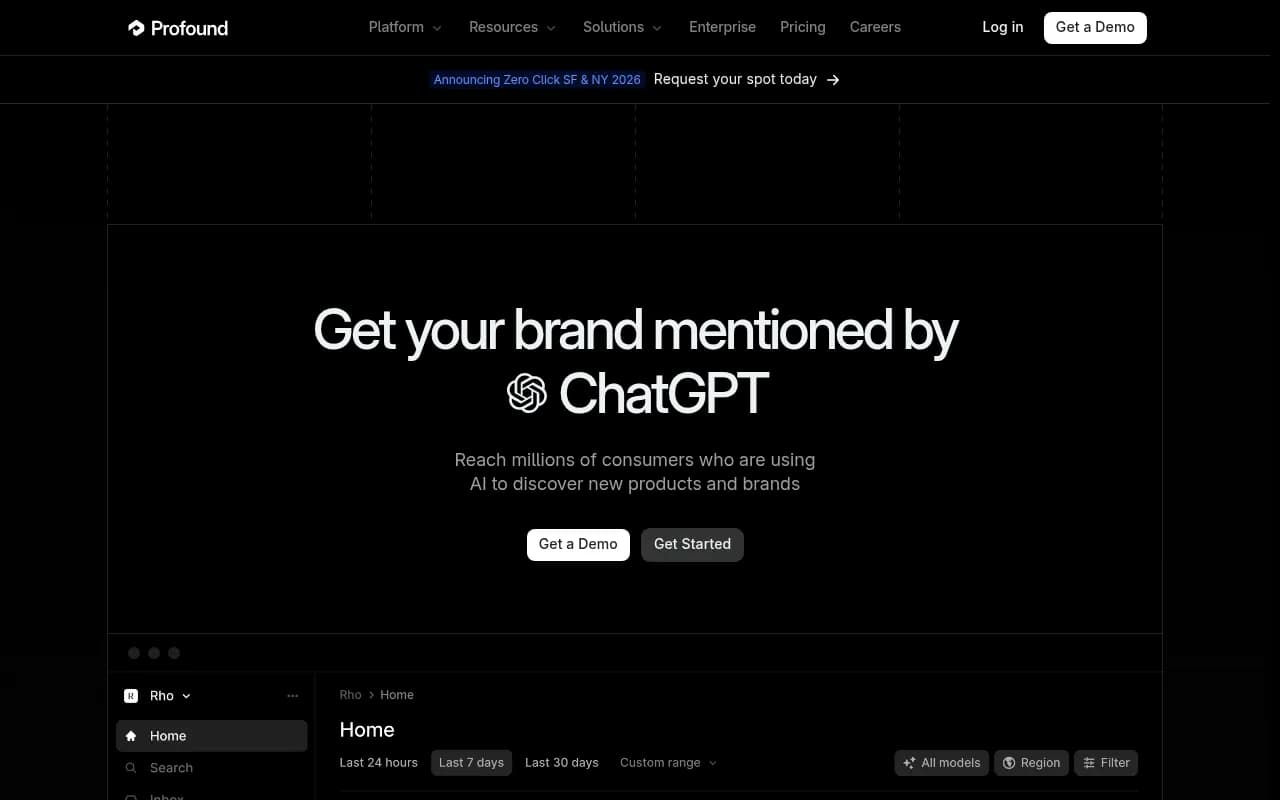
Profound is another serious platform, particularly for enterprise teams doing deep prompt research. Strong on data depth, higher price point, and less focused on content generation.
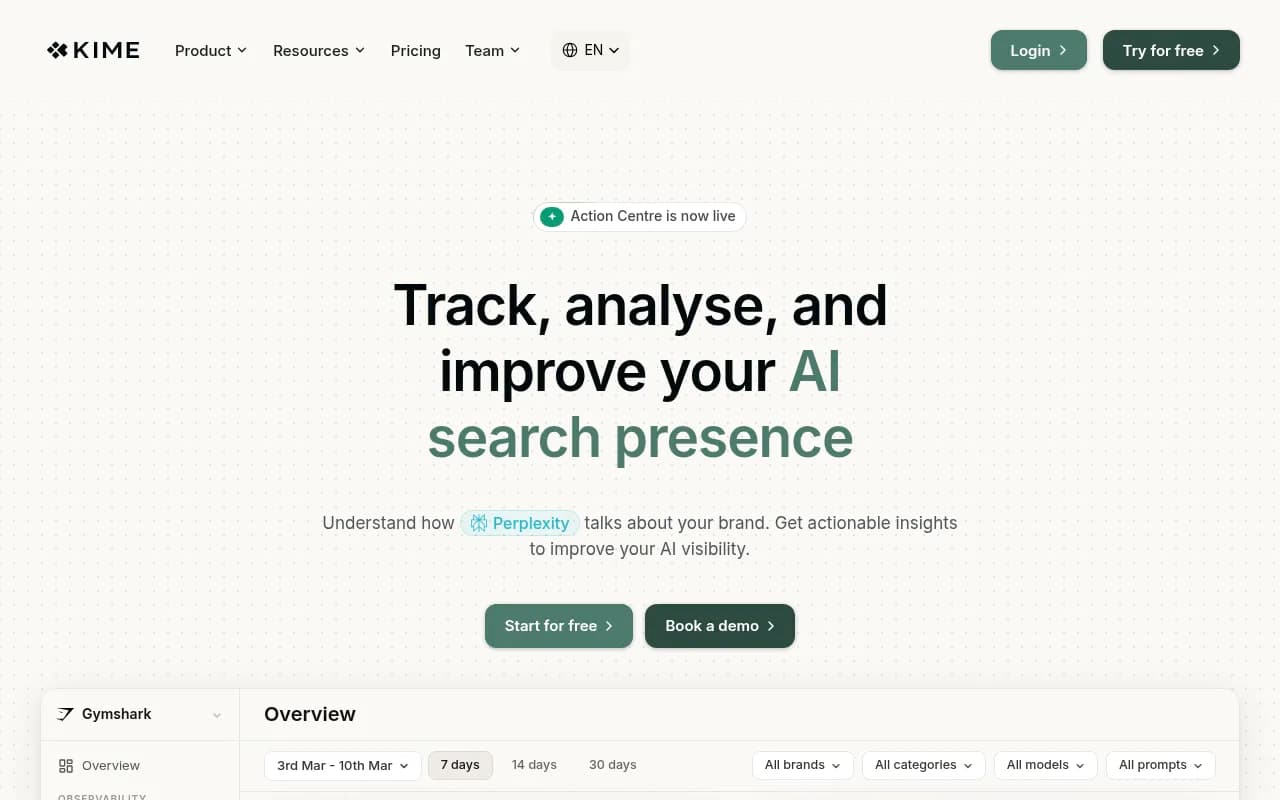
KIME positions itself similarly, with 10 AI models tracked and a dedicated "Action Centre" for optimization. European pricing (starts at €149/month), multi-brand and multi-country support.
Mid-tier monitoring with some optimization
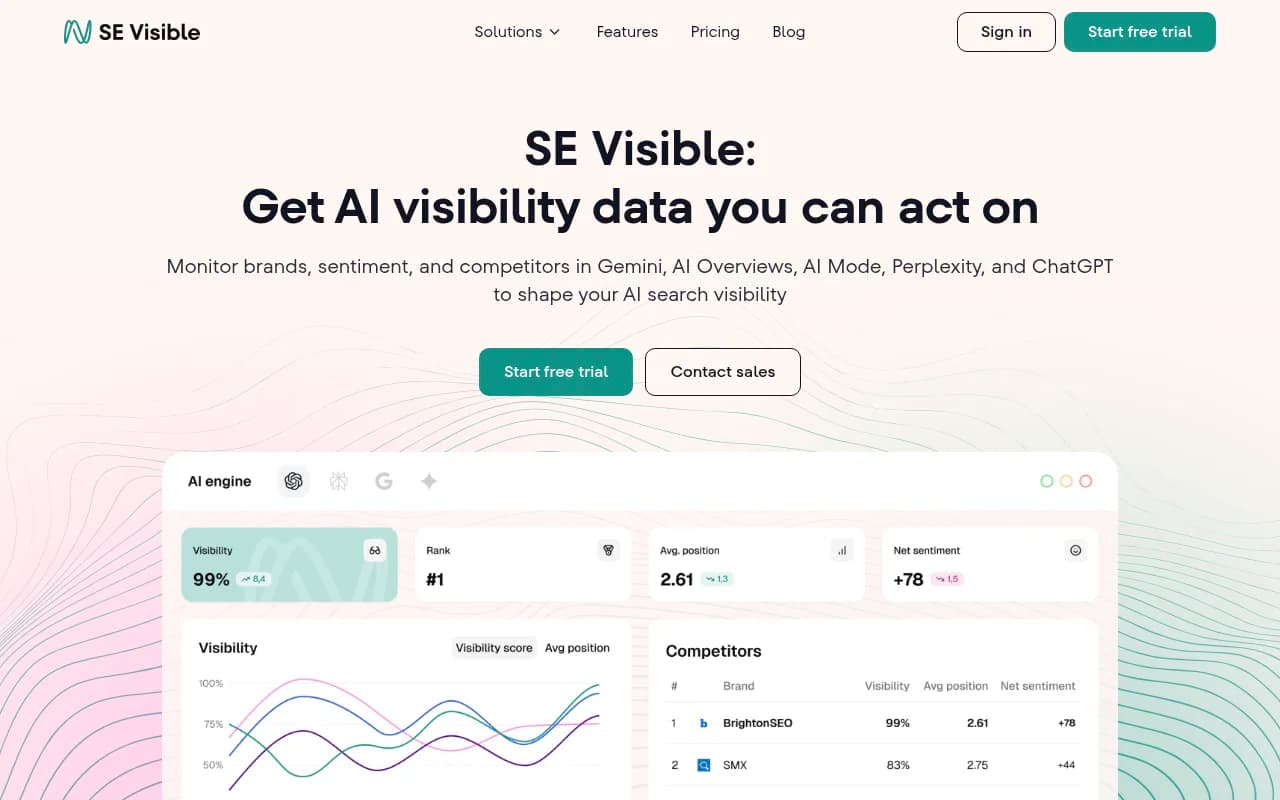
SE Ranking's AI visibility module (SE Visible) covers 5 models and is a reasonable option if you're already in the SE Ranking ecosystem. Good for multi-brand, multi-country tracking.
Scrunch AI covers monitoring and some optimization features. Solid for teams that want a cleaner interface without the full complexity of an enterprise platform.
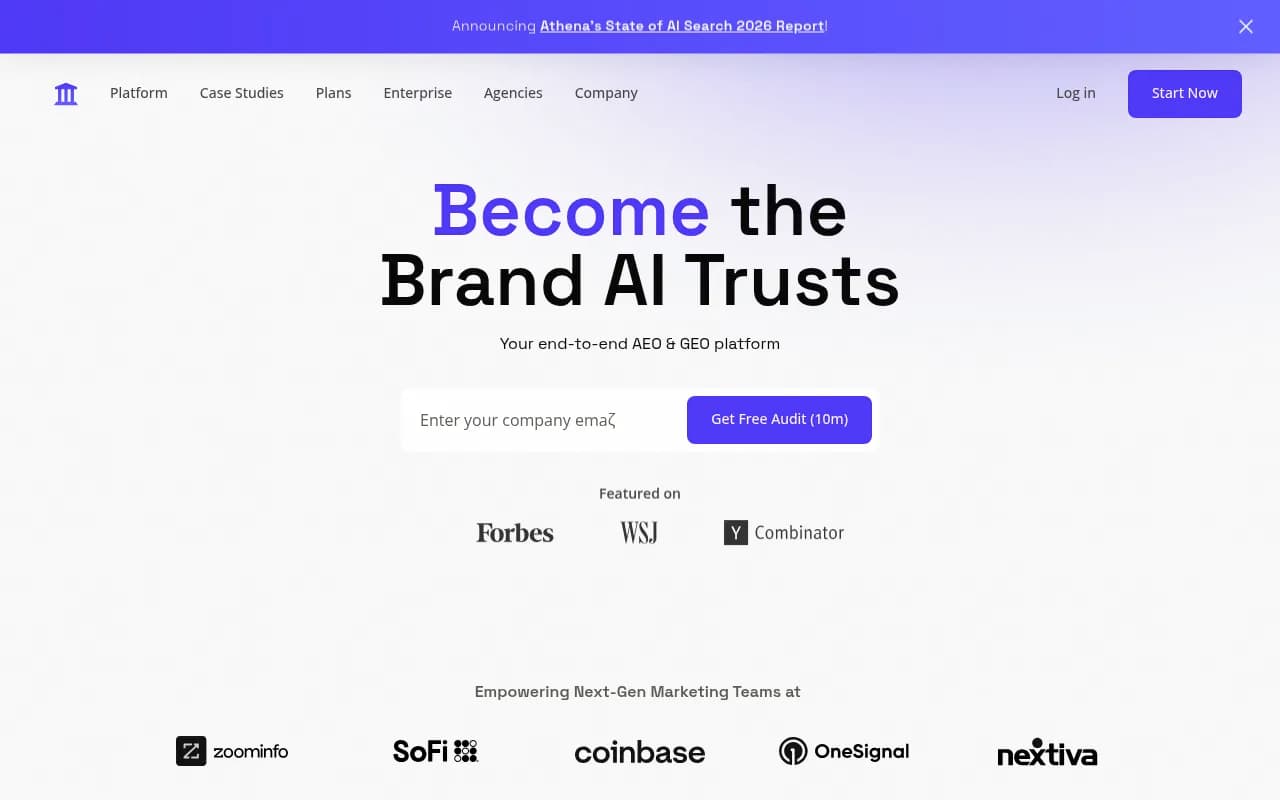
AthenaHQ is monitoring-focused with good coverage across 8+ AI search engines. Less built out on the content generation side.
Entry-level and budget options
Otterly.AI is the lowest-cost entry point in the category at $29/month. Covers 4 models at the base tier. Good for small teams or individuals who want basic monitoring without a large commitment.
Peec AI offers flexible model selection starting at €85/month. More configurable than Otterly at a higher price.
Airefs is one of the more affordable options for teams that just need to know whether they're being mentioned.
Nightwatch combines traditional rank tracking with an AI monitoring add-on ($32/month base + $99 for the AI module). Worth considering if you want SEO and AI visibility in one tool.
Specialized tools worth knowing
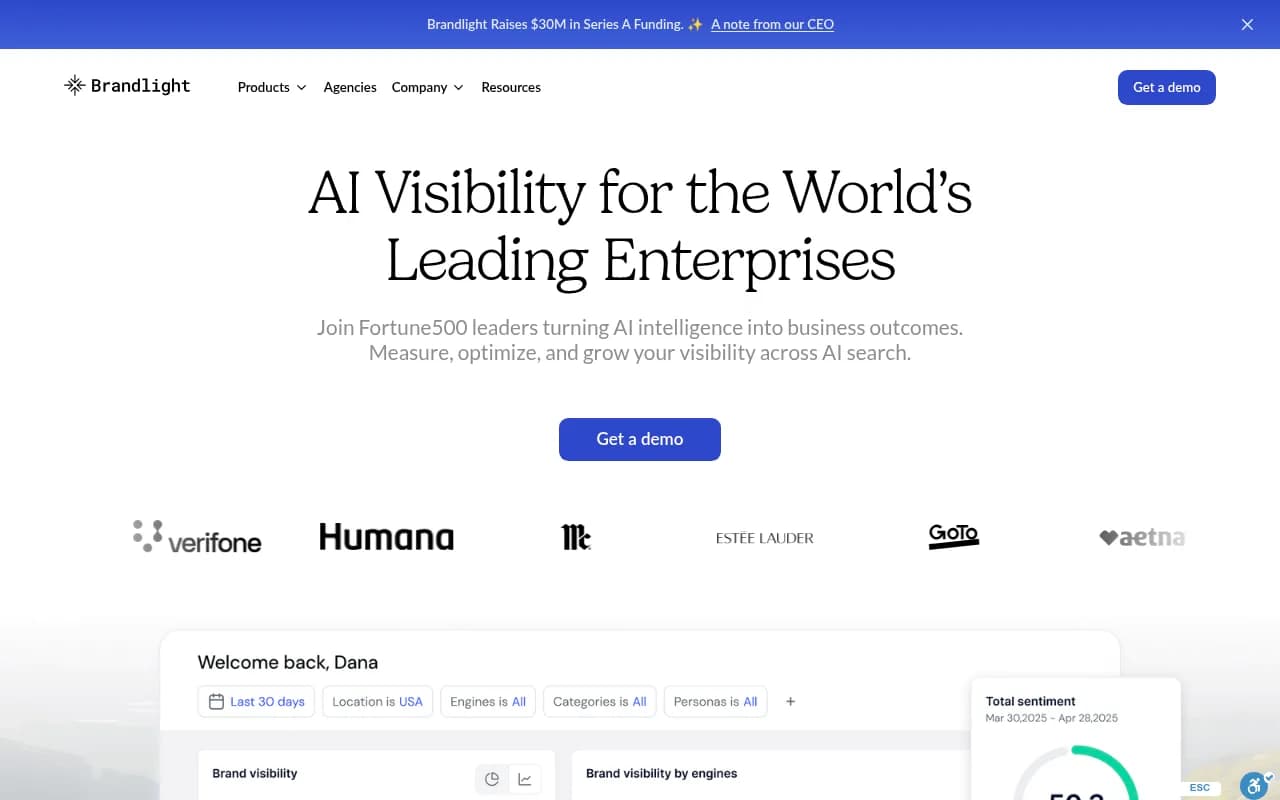
Brandlight.ai focuses on brand monitoring across AI models with a clean reporting interface.
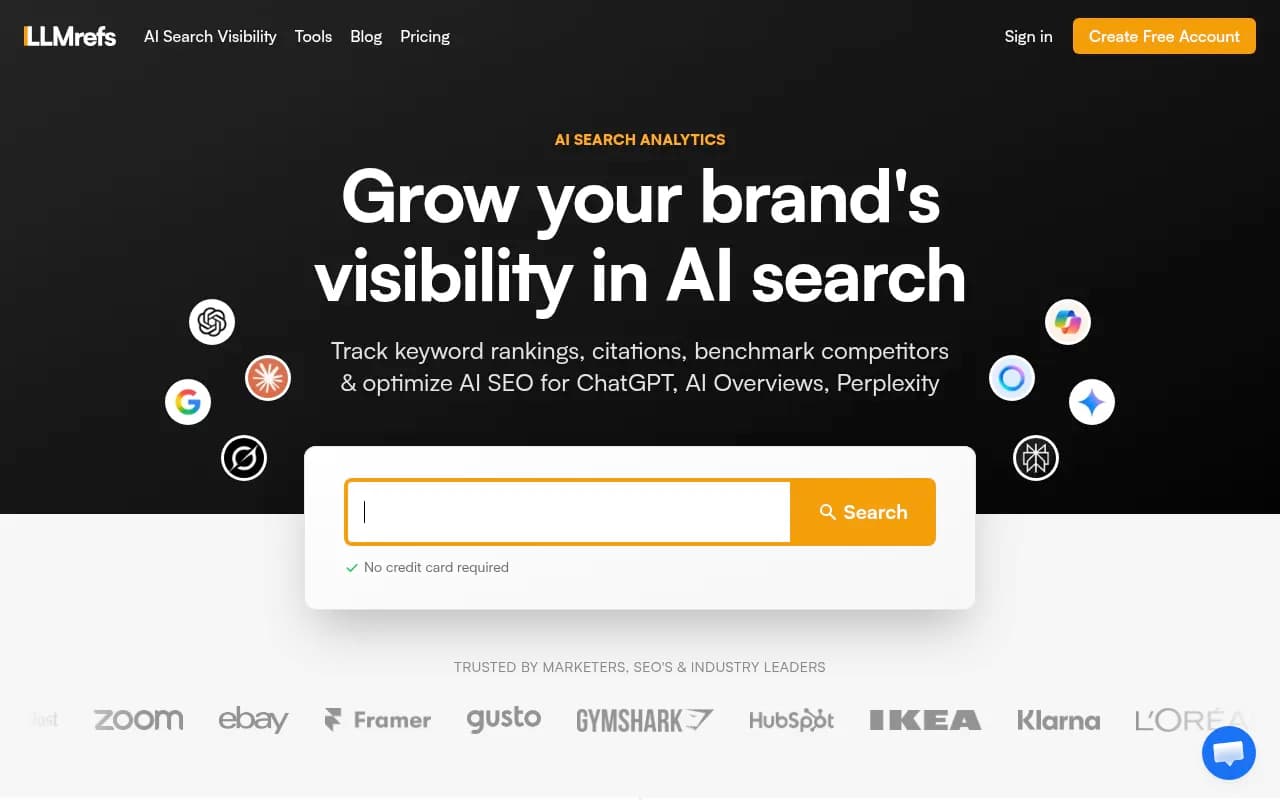
LLMrefs tracks brand visibility and rankings specifically across ChatGPT, Perplexity, and other major models.
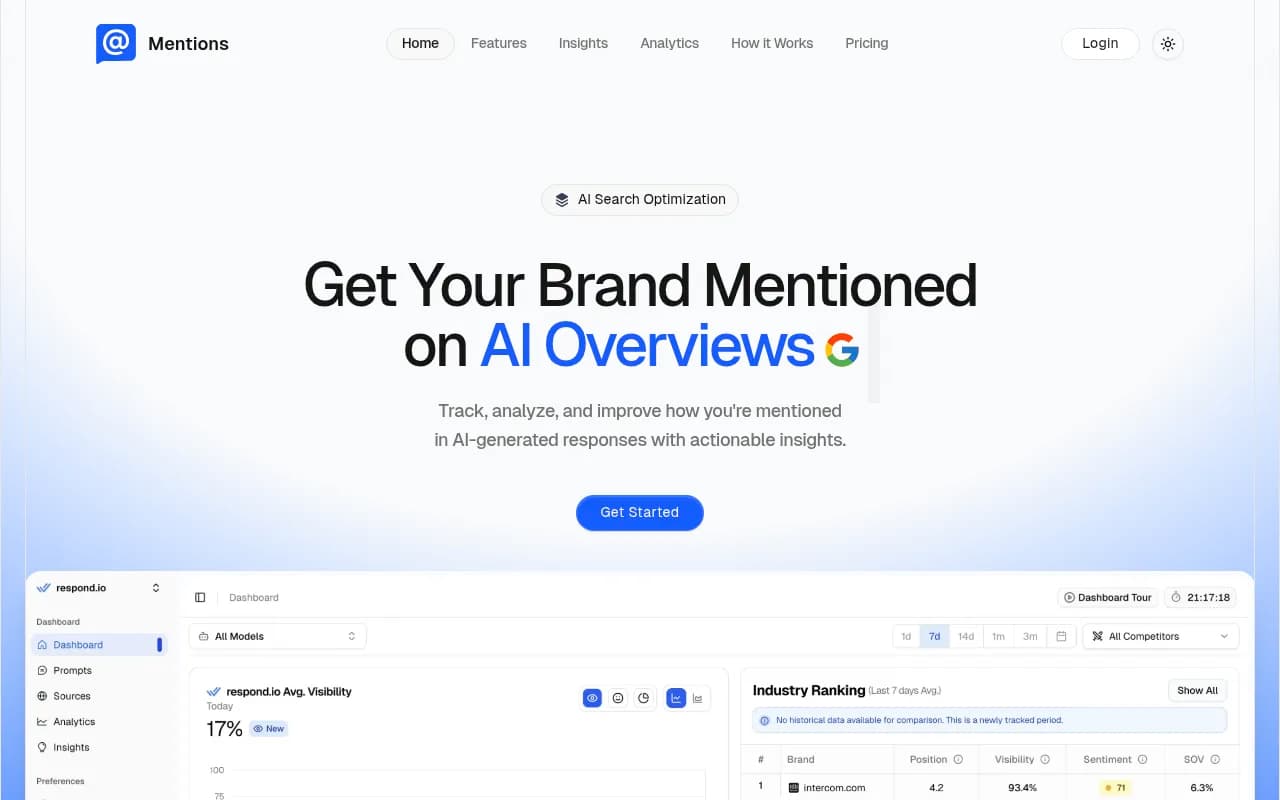
Mentions.so is a lightweight tool focused specifically on brand mention tracking in AI search.
Search Party takes a different angle -- it's more of an AI implementation partner than a pure tracking tool.
Search Party
Market comparison at a glance
| Tool | AI models tracked | Starting price | Content generation | Crawler logs | Best for |
|---|---|---|---|---|---|
| Promptwatch | 10 | $99/mo | Yes | Yes | Full-cycle optimization |
| Profound | Up to 10 | $99/mo | No | No | Enterprise prompt research |
| KIME | 10 | €149/mo | Yes | No | Multi-brand/multi-country |
| SE Visible | 5 | $99/mo | No | No | SE Ranking users |
| AthenaHQ | 8+ | Custom | No | No | Monitoring-focused teams |
| Otterly.AI | 4 | $29/mo | No | No | Budget monitoring |
| Peec AI | Up to 10 | €85/mo | No | No | Flexible model selection |
| Nightwatch | 4 | $32/mo + $99 add-on | No | No | SEO + AI combined |
| Scrunch AI | Varies | Custom | Partial | No | Mid-market monitoring |
| Airefs | Varies | Low | No | No | Affordable entry point |
The monitoring-only problem
Here's the honest issue with most of the market: monitoring tells you there's a problem. It doesn't fix it.
If you learn that your competitor appears in 73% of AI responses for "best CRM for small business" and you appear in 12%, that's useful information. But what do you do with it? Most tools leave you there -- staring at a gap with no clear path forward.
The platforms that are actually moving the needle for brands are the ones that answer the follow-up question: "OK, so what content do I need to create?" That requires knowing which specific prompts are driving competitor visibility, what those AI responses actually contain, what sources the models are citing, and then generating content that addresses those exact gaps.
That's a harder product to build, which is why most tools haven't built it. But it's the capability that separates a dashboard from a growth tool.
What the data says about AI search behavior
A few numbers worth keeping in mind as you evaluate tools:
- 37% of users now start searches in AI systems rather than traditional search engines (Search Engine Journal, 2026).
- AI-referred visits convert at 3-9x the rate of traditional Google organic traffic, according to multiple third-party studies.
- ChatGPT accounts for roughly 20% of global search traffic.
These numbers explain why the category attracted so many new entrants in 2025-2026. They also explain why the stakes for getting AI visibility right are higher than they were even 18 months ago.
Traditional SEO tools entering the space
Semrush and Ahrefs both added AI visibility features in 2025-2026, which is worth noting.
Semrush's AI Toolkit is bundled with existing plans, which makes it convenient for current users. The limitation is that it uses fixed prompts rather than custom ones, which reduces its usefulness for brands with specific positioning or niche audiences.
Ahrefs Brand Radar has similar constraints -- fixed prompts and no AI traffic attribution. Both are reasonable starting points if you're already paying for these platforms, but neither was built from the ground up for AI visibility, and it shows.
How to choose
The right tool depends on what you actually need to do:
If you just want to know whether your brand is being mentioned and roughly how often, Otterly.AI or Airefs will do the job at low cost.
If you need competitive benchmarking and prompt research at scale, Profound or KIME are worth the investment.
If you want to close the loop -- find gaps, create content, track results, and connect visibility to revenue -- Promptwatch is the most complete option in the market right now.
If you're an agency managing multiple clients, look for tools with multi-site support and white-label reporting. Promptwatch, KIME, and SE Visible all have agency tiers.
One thing to avoid: buying a monitoring tool and assuming the work is done. The brands winning in AI search right now are the ones treating visibility as an optimization problem, not a reporting problem. The data is only useful if you do something with it.
What's coming next
The category is still young enough that the feature set is changing fast. A few directions worth watching:
Real-time crawler intelligence is becoming a differentiator. Knowing that Claude crawled your pricing page three times this week but hasn't cited it yet is actionable information -- and most tools don't surface it.
Traffic attribution from AI search is the next frontier. Right now, most brands can see AI visibility scores but can't connect them to actual conversions. The platforms that solve this problem will have a significant advantage.
Shopping and product recommendations in AI are growing. ChatGPT's shopping features, Google AI Mode's product carousels -- these are distinct from informational citations and require different tracking. Only a handful of tools are monitoring this yet.
The market will consolidate. With 50+ tools now competing in a category that didn't exist two years ago, some will disappear and others will get acquired. The platforms with the deepest data and the clearest action loop are the ones most likely to survive.