Key takeaways
- A 7-day GEO briefing, a competitor gap analysis, and a scheduled Slack report are three different jobs. Each needs different data and a different cadence.
- Skills only work as well as the data behind them. A gap-analysis skill with no ranking or citation connector is a prompt wrapper around a spreadsheet you export by hand.
- Compare competitors by content type and prompt intent, not just by domain. Promptwatch Data shows product and landing pages are about 39% of ChatGPT citations.
- Use fixed date windows. Platform changes like the Reddit citation collapse can look like competitor moves.
- Keep Slack reports short and evidence-backed, and send them on a schedule your team already reads on.
What an agent skill actually is
A skill is a saved playbook: a set of instructions, a list of tools the agent may call, and an output format. You run it on demand or on a timer. The agent does the same multi-step work every time, so you stop retyping the same long prompt every Monday.
The skill is only half of it. The other half is the data layer. A skill that can call your citation data, your crawler logs, and your analytics produces something useful. A skill that can only browse the web produces a nicely formatted guess.
I will be concrete about that, because most write-ups on this topic skip it. The three jobs below sound similar and they are not.
The three jobs side by side
| Job | Core question | Data it needs | Cadence | Typical failure |
|---|---|---|---|---|
| 7-day GEO briefing | What changed in how AI talks about us this week? | Visibility, position, sentiment, citations, crawler and traffic data | Weekly | Noise mistaken for signal |
| Competitor gap analysis | Where are rivals cited or covered that we are not? | Citation data per prompt, your page inventory, competitor pages | Monthly or per content sprint | Gaps listed but not prioritized |
| Scheduled Slack report | Does the team see the right numbers without logging in? | A fixed slice of the briefing or gap data | Daily, weekly, or on demand | Too long, so nobody reads it |
They share a foundation. The briefing is the wide view, the gap analysis is the deep dive, and the Slack report is the delivery mechanism for either.
The 7-day GEO briefing
What a good one contains
The best template I found in the research is Octolens's weekly competitor skill. It compares the last 7 full days against the 7 days before, builds a volume table (competitor, mentions, change versus last week, sentiment), reads the top mentions, and writes a digest under 500 words. Every claim needs a linked source behind it. If a competitor had a quiet week, one line is enough.
That structure transfers directly to GEO. A useful weekly briefing answers:
- Did our Visibility Score, Share of Voice, and average position move, and on which prompts?
- Which competitors gained or lost citations?
- Which of our pages were cited, and which AI crawlers actually read them?
- Did AI-referred traffic go up or down?
- What are the top three actions for next week?
Use fixed windows, and know about platform shifts
This is the part people get wrong. A weekly briefing compares two windows, and anything that changed on the platform side shows up in both brands' numbers and looks like a competitor move.
Three examples from Promptwatch Data:
- ChatGPT's share of citations going to reddit.com fell from roughly 4% to 0.5% on August 14, 2026 (report). Any brand that leaned on Reddit threads saw a drop that had nothing to do with its rivals.
- On August 8, 2026, ChatGPT started using the site: operator at scale, jumping from about 0.4% to about 17% of fan-out queries, and searches per response nearly doubled (report).
- Average citations per ChatGPT response dropped around the GPT-5.3 rollout on March 4, 2026 (report).
A briefing skill should flag when a move is market-wide rather than brand-specific. If every tracked brand dropped on the same day, say so before anyone panics.
Where Promptwatch fits
Promptwatch has this built in through Agent Chat, a conversational analyst over your live monitoring data. It ships ready-made Agent Skills including a 7-day GEO briefing, competitor gap analysis, citation research, content sprints, and newsjacking. Because it sits on the same data as the dashboards, the briefing can pull prompts, citations, crawler logs, traffic, and Search Console numbers in one multi-step run, and render charts or a PDF if you ask.

If you want to see what a briefing would say about your own brand before committing to anything, the free AI visibility report is a quick starting point.
Competitor gap analysis
The data problem
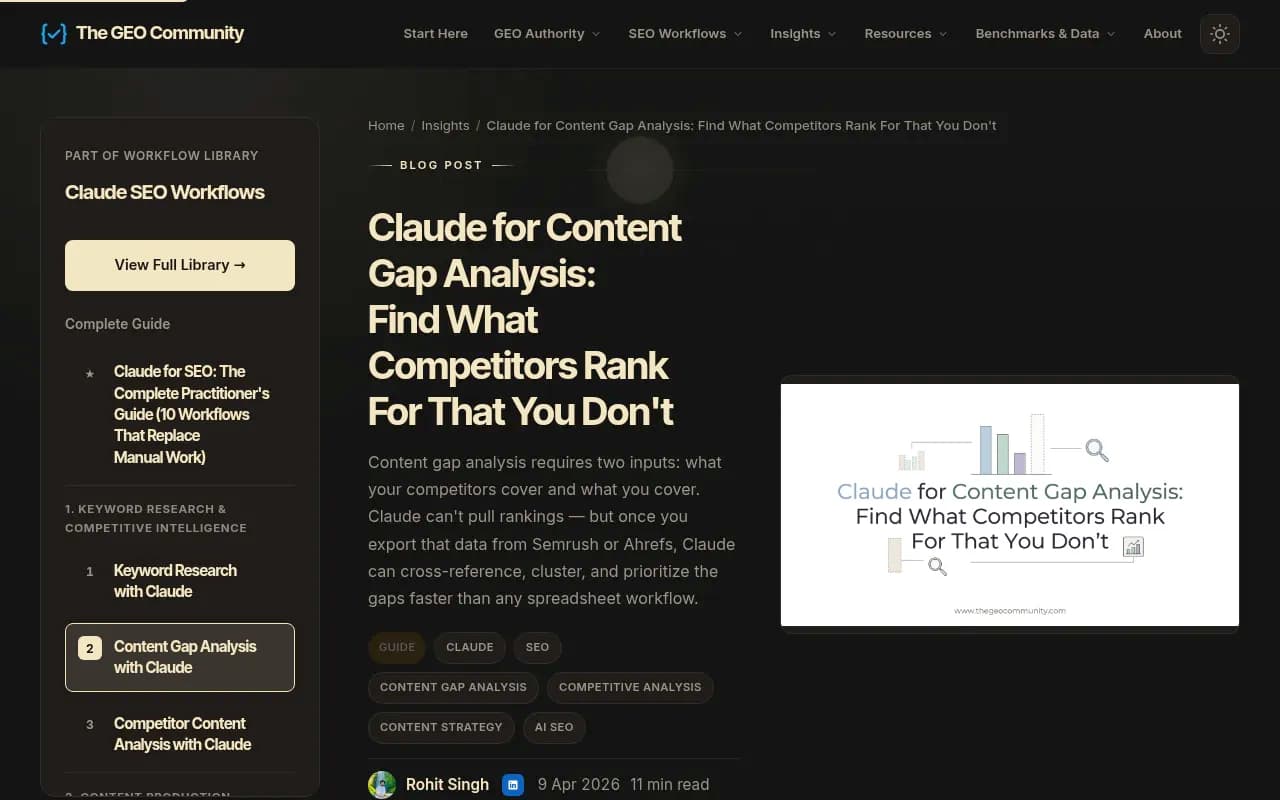
Gap analysis needs two inputs: what competitors cover and what you cover. The GEO Community's guide on using Claude for this is refreshingly direct about the limit. Claude cannot pull rankings. You export data from Semrush or Ahrefs first, then the model cross-references, clusters, and prioritizes the gaps. That is useful, but it is a manual pipeline with a chat window at the end.
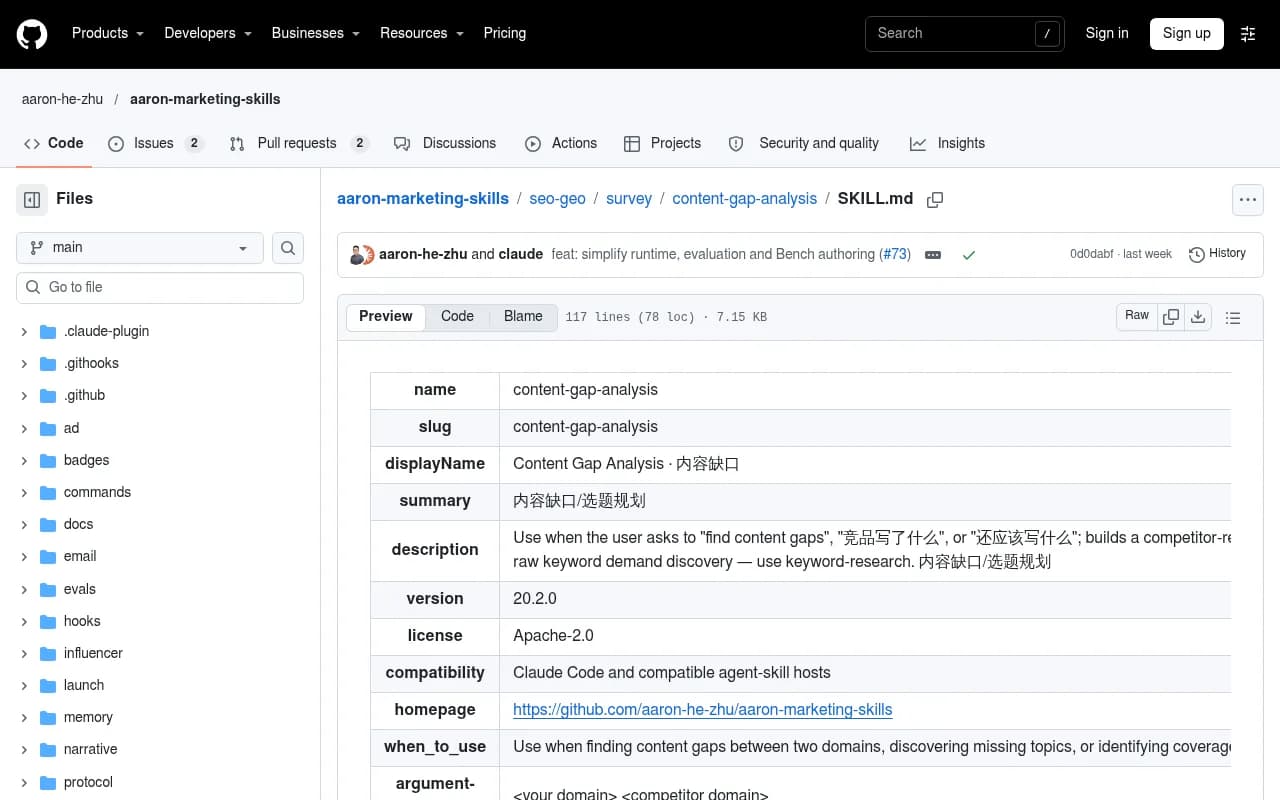
Open-source skills have the same shape. The content-gap-analysis skill in the aaron-marketing-skills repository builds a competitor-relative coverage map of missing topics, keyword gaps, and editorial-calendar opportunities, and scores the gaps worth closing first. It is a good prompt structure. It still depends on whatever data you feed it.
What a GEO gap is different from an SEO gap
In classic SEO a gap is a keyword a rival ranks for and you do not. In GEO it is a prompt where AI cites or recommends a competitor and does not cite you. That changes how you should slice the comparison.
Promptwatch Data on ChatGPT citations from Sep 28 to Oct 4, 2026 (content type report) shows why content type matters:
| Content type | Share of ChatGPT citations |
|---|---|
| Product pages | 22.4% |
| Landing pages | 16.8% |
| Listicles | 13.6% |
| How-tos | 8.7% |
| Documentation | 7.5% |
| Comparisons | 5.9% |
| News | 5.7% |
Intent changes the picture too. For commercial prompts, product pages, landing pages, listicles, and comparisons make up almost 70% of citations. For branded prompts, reviews are 5.6%, more than three times their overall share.
So a useful gap skill does not just say "competitor X is cited more." It says "competitor X owns the comparison pages for these commercial prompts, and you have no comparison page at all." That is something a writer can act on.
Two more findings shape the analysis:
- 47.6% of ChatGPT responses with citations cite 10 or more unique domains (report). You are always sharing the answer with many sites, so track which competitors appear in the same responses as you.
- News pages lose half their citations in about 36 days, while landing pages and docs hold on for months (half-life report). A gap in evergreen formats matters more than a gap in news.
Run it across many prompts
One prompt tells you almost nothing. Citations vary by response, so a gap analysis built on five prompts is an anecdote. Measure across a full monitor of prompts, then rank gaps by prompt volume and difficulty. Promptwatch's content gap analysis maps your pages against the prompts AI answers and gives coverage scores, and the Content Agent can then plan and write against the biggest gaps. Its competitor comparison pages explain how that differs from monitoring-only tools.
DIY options worth knowing
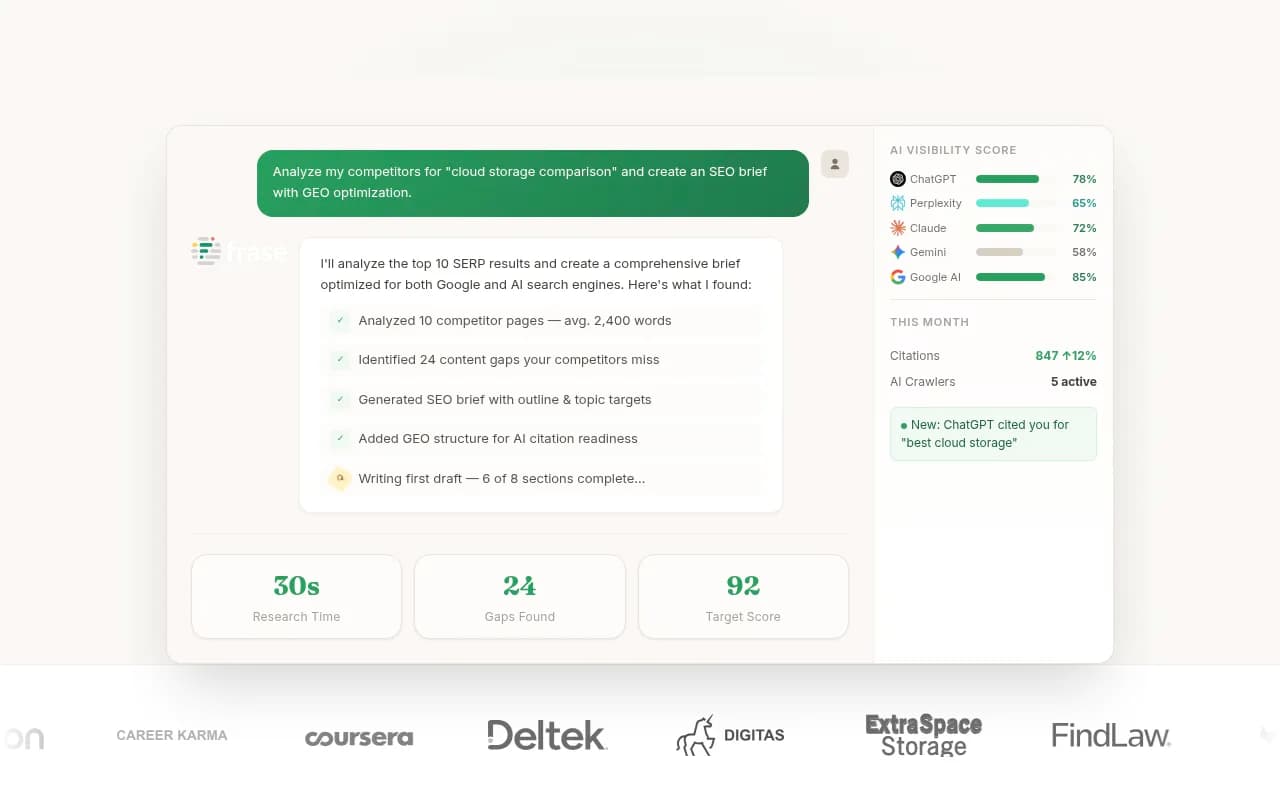
If you are not on a GEO platform, there are lighter routes. Frase pitches scheduled scans that detect content decay and draft fixes for approval, and it positions that against Semrush, which it says does not fix content.
Semrush remains the usual source for the keyword export that feeds a Claude-based gap skill.
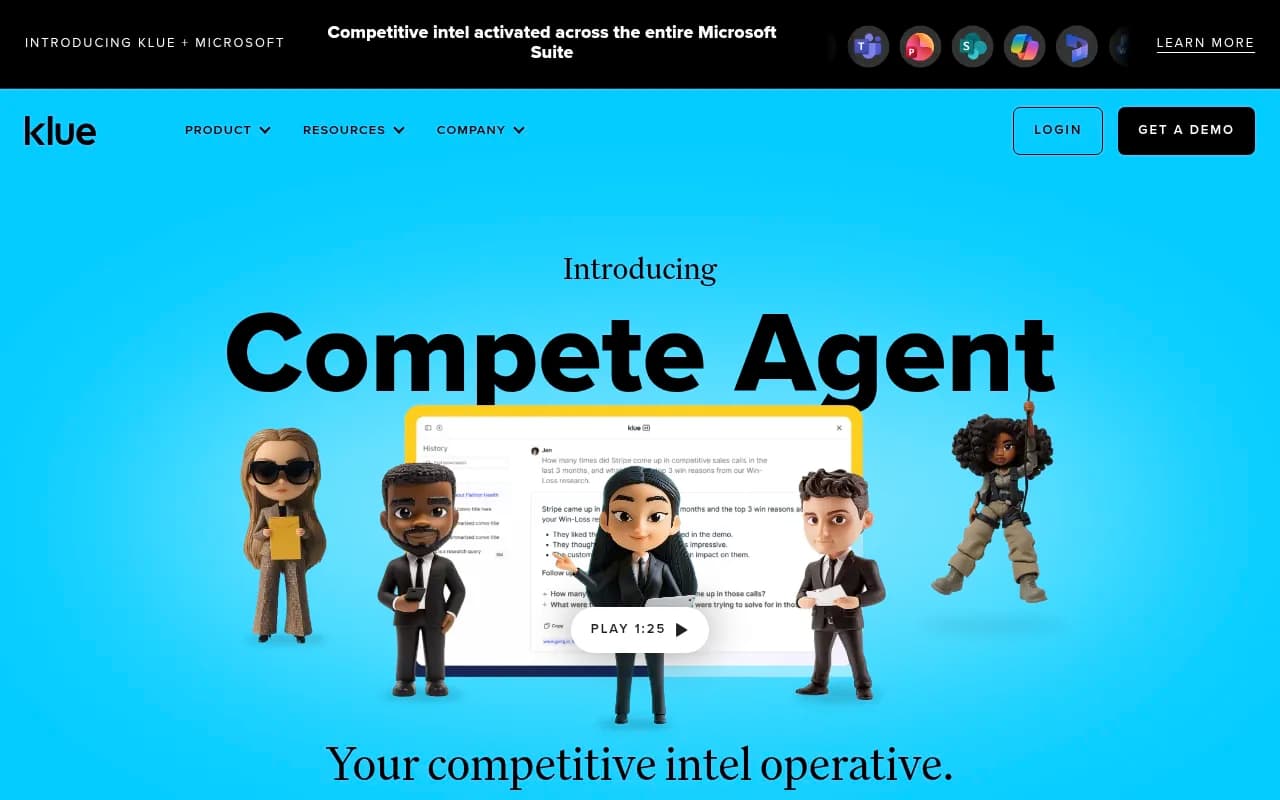
For pure competitive intelligence beyond search, Crayon and Klue cover sales-facing battlecards.
Scheduled Slack reports
Why Slack
A dashboard nobody opens does not change decisions. A message that arrives Monday at 9am in the channel your team already uses does. The Medium piece on Slack agents replacing newsletters makes the same point: you choose the schedule, whether daily, weekly, Monday morning, Friday afternoon, or on demand.
The MindStudio write-up describes the general pattern well. An agent runs on a timer, pulls updates from a defined list of sources, compares them against the previous run, and sends a summary of what changed. The comparison against last run is what makes it a report instead of a data dump.
Rules that make a Slack report get read
- Keep it under 500 words. The Octolens playbook enforces this and I agree with it.
- Lead with one takeaway line. The single most useful thing that happened.
- Put a small table underneath: metric, this week, change.
- Link every claim to its source so people can check it.
- End with next steps and an owner, not a list of observations.
- Send quiet weeks as one line.
There is also a fallback worth copying. The Octolens skill posts in chat if no Slack tool is connected and says so. Silent failure is the worst outcome for a scheduled job. If the report cannot be delivered, you want to know.
Slack options compared
| Option | What it posts | Data source | Notes |
|---|---|---|---|
| Promptwatch Agent Chat | Scheduled chats and briefings in-app or in a Slack channel; chat with your data from Slack | Live GEO data: prompts, citations, crawler logs, traffic, search data | Scheduled chats included on brand plans (10 each) |
| Semji agents | Content opportunities and answers about performance, GEO visibility, and briefs | Semji's own content and performance data | Content-team focused |
| Octolens weekly competitor skill | Weekly competitor digest with mentions, sentiment, and openings | Social and web mention monitoring | Brand mentions, not AI citations |
| DIY (Zapier, n8n, Make) | Whatever you wire up | Whatever APIs you connect | Most flexible, most maintenance |
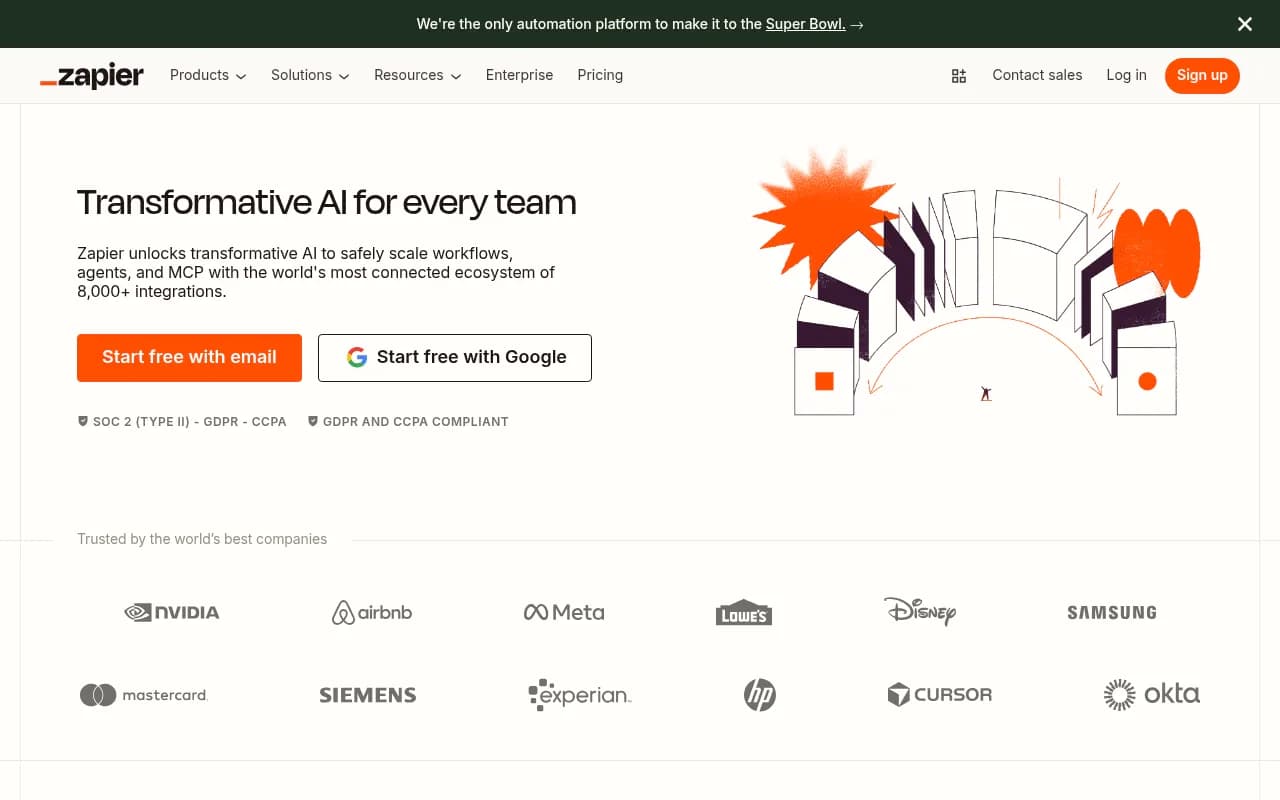
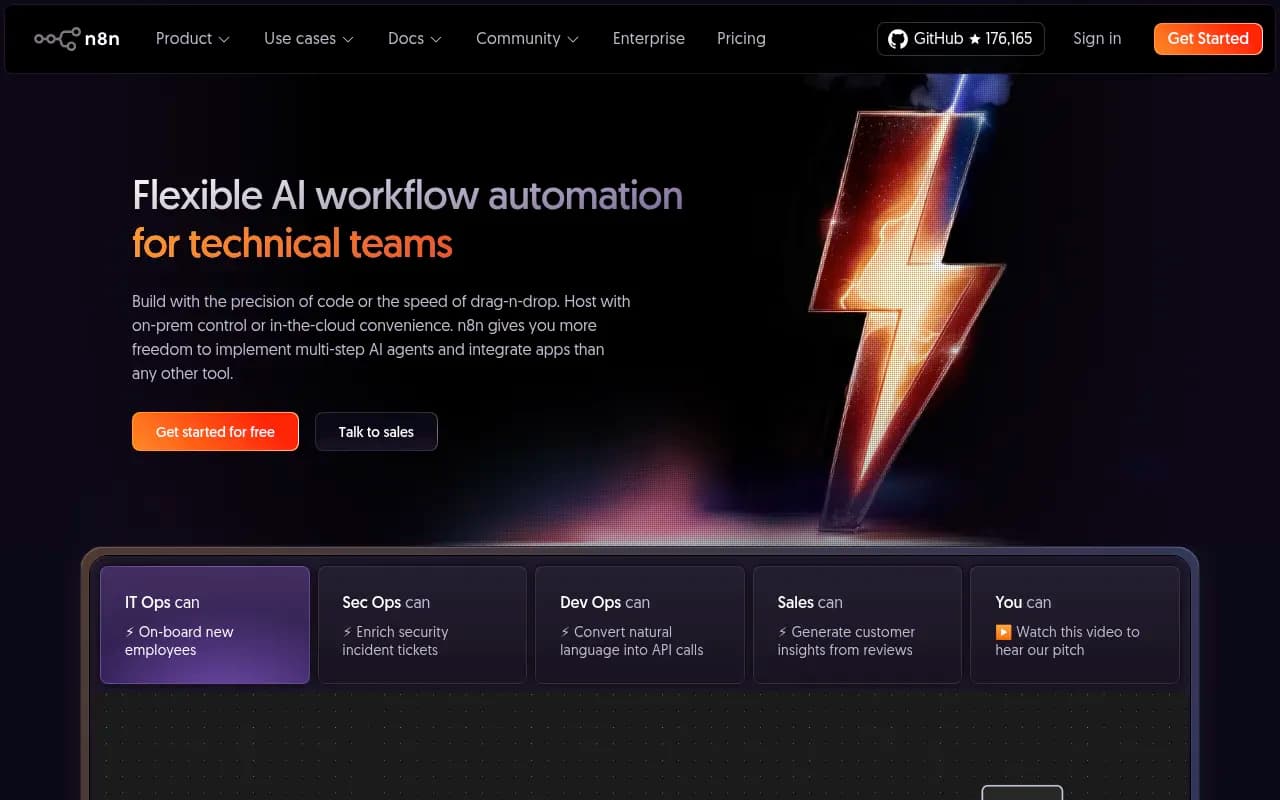
The DIY route is real. If you already run n8n or Zapier, you can pull a REST API export on a schedule and have a model summarize it. You will own the prompt, the formatting, the error handling, and the breakage when an API changes. For one report that is fine. For ten it becomes a job.
With Promptwatch, scheduled chats are built in. You pick the skill, the schedule, and the destination, and the output draws on the same live data as the dashboards. For custom pipelines, the REST API and MCP server expose citation, visibility, and crawler data to tools like Claude, ChatGPT, and Cursor.
Choosing between them
Match the skill to the decision you need to make.
- If your question is "are we up or down," run the 7-day briefing and send it to Slack on Monday.
- If your question is "what should we write next," run the gap analysis before each content sprint, then queue the winners.
- If your question is "who needs to know," fix the delivery first. A mediocre briefing in the right channel beats a great one in a tab.
A workable weekly rhythm looks like this:
- Monday, 9am: 7-day briefing posts to the team channel.
- Monday afternoon: owner reviews the top three actions and assigns them.
- Every second week: gap analysis on the prompts where position slipped.
- Friday: a short competitor note, only if something moved.
Pitfalls to avoid
- Reading too much into one week. Seven days of citation data is noisy. Look at the trend over a month before changing strategy.
- Using skills without a data connector. If the skill cannot reach your citation or crawler data, it is summarizing guesses.
- Chasing tactics that no longer work. Reddit seeding for ChatGPT is a good example. Promptwatch Data from Sep 28 to Oct 4, 2026 puts all social platforms at 0.46% of ChatGPT citations, versus 12.2% for Google AI Overviews (social citations report). Same tactic, very different payoff depending on the engine.
- Skipping the fix. A gap list that never turns into pages is a report about a problem you keep having.
- Mixing markets. Track each country and language in its own monitor so the numbers do not blend.
Which setup I would pick
For a team that already pays for a GEO platform, use its built-in skills first. The data is already connected, and the schedule and Slack delivery take minutes. For a team with no platform and a small budget, a Claude or ChatGPT workflow fed by a Semrush or Ahrefs export is a fair start, as long as you accept the manual export step.
If you are comparing platforms, the GEO software directory lists the main options side by side. The thing to check on each one is whether it only reports, or also helps you fix what it finds. Pricing for Promptwatch starts at $95 per month on Essential, and you can confirm current plans at promptwatch.com/pricing. There is a 7-day free trial on monthly billing if you want to run the 7-day briefing on your own data first.