Key takeaways
- Daily tracking is the industry default and is enough for most brands. Citation status in AI answers moves over weeks, not hours.
- Hourly monitoring pays off in narrow cases: product launches, PR crises, news-driven topics, and checking that a fix or model update actually landed.
- Faster cadence multiplies cost and noise. Credit-based tools burn budget quickly, and AI answers vary run to run, so more samples can mean more false alarms.
- Separate collection frequency from decision frequency. Collect daily, review trends weekly, and act on sustained changes.
- Before paying for hourly, check that the vendor actually offers it. Most published plans in our research are daily only.
The question behind the question
Every few weeks someone senior opens ChatGPT, asks a category question, and finds the brand missing. Slack lights up. People rerun the prompt. Half of them see the brand, half don't. Nobody knows whether visibility collapsed or one answer just came out differently.
That scene is really what tracking frequency is about. You are not buying freshness for its own sake. You are buying the ability to tell a real change from noise, and to catch the real ones soon enough to matter.
So the right cadence depends on two things: how fast the thing you care about changes, and how fast you can act on it. If your team reviews dashboards on Monday mornings, hourly data is mostly decoration.
What the data says about how fast AI visibility moves
I went looking for evidence on this and found less than I expected. No source I could verify documents the benefit of hourly tracking. What exists points the other way, toward daily collection and weekly review.
Citations decay slowly, except for news
Promptwatch Data tracked every page ChatGPT cited on July 6, 2026 for 90 days, through October 4, 2026. The content half-life report shows how slowly most citations fade:
| Content type | Still cited after 30 days | Still cited after 60 days |
|---|---|---|
| Landing pages | 78% | 69% |
| Docs | 76% | 67% |
| Comparisons | 72% | 63% |
| Listicles | n/a | 60% |
| Product pages, reviews, how-tos | n/a | about 55% |
| News | about half gone by day 36 | 41% |
Product pages, reviews and how-tos have half-lives of roughly 74 to 77 days. For most content, citation status shifts across weeks. Checking every hour will give you 24 near-identical readings a day.
News is the exception. About a quarter of news pages are never cited again. If your visibility depends on press coverage or fast-moving topics, a tighter loop makes sense.
Platform behavior changes in steps
The ChatGPT query fanouts report shows a different kind of change. Average fanouts per response fell from about 2.15 in early December to about 1.84 by early March, and average query length dropped from roughly 117 characters to the high 80s. The report ties the drops to "behavior changes" in steps rather than a smooth slide. (The same page says one prompt can trigger 3 to 8 or more searches, but treat that as a ceiling; the averages are much lower.)
A separate Promptwatch Data finding makes the point sharper: on August 8, 2026, ChatGPT started using the site: operator at scale, and site: queries jumped from about 0.4% to about 17% of fanout queries overnight. Reddit's share of ChatGPT citations also fell from about 4% to 0.5% on August 14, 2026.
These are step changes. Daily tracking catches them within a day, which is fast enough to investigate and respond. Hourly tracking would have told you the same story a few hours sooner.
Why daily is the default
A Reddit thread in r/aeo put it plainly: "almost all of the tools available run this on a daily basis." That is anecdotal, but the published plans agree:
| Tool | Published cadence | Starting price (per source) |
|---|---|---|
| Trackerly.ai | Daily (tests each LLM multiple times per day) | $27/month |
| Peec AI | Daily | About $80/month on annual billing, 50 prompts, 3 models |
| GEO Metrics | Daily on every tier | From EUR 80/month, 20 to 300 prompts |
| Unnamed tool in a PR Lab roundup | Daily | From $99/month per domain, 25 prompts |
Prices come from third-party roundups and may be stale, so confirm on each vendor's pricing page. Note that Reboot's Trackerly review dates from around 2025.
There is a statistical reason for the convention too. Brandi, a vendor with its own angle here, argues that daily observations let you separate one-off fluctuations from sustained trends, and recommends rolling averages and threshold-based alerts so teams don't react to routine noise. I agree with the logic even if the source is interested. AI answers are non-deterministic. One sample is an anecdote.
Brandi also makes a point that is easy to miss: AI visibility can move when your site is untouched. Competitors publish, reviews land, media coverage shifts, third-party pages change, models update. A daily series is how you notice those without anyone pasting screenshots in Slack.
Daily tracking, weekly decisions
The pattern I would start with:
- Collect daily. Run every prompt once a day on every model you care about.
- Smooth it. Use a 7-day rolling average for headline metrics like visibility score and share of voice.
- Alert on thresholds. Trigger on sustained drops, say three days below a band, not on a single bad run.
- Review weekly. Look at trends by topic, model and competitor, and decide what to do.
- Hold settings constant. Keep prompts, models, locations and measurement rules stable so the trend line means something.
That last point matters more than frequency. If you edit your prompt set every other week, even hourly data will not give you a clean trend.
When hourly monitoring is worth it
Here are the situations where I think faster cadence earns its cost. Notice that most are temporary.
Launches and campaigns
A product launch, rebrand or big campaign creates a window where answers can change quickly as coverage spreads. Switching a monitor to hourly for two weeks lets you watch how AI engines pick up the news and which sources they cite. Then switch back.
Reputation incidents
If a negative story, recall or false claim is circulating, you want to know within hours whether AI engines are repeating it. This is the strongest case for hourly, because the cost of a slow response is high and the window is short.
News-driven categories
Finance, politics, health news, and anything where pages lose citations in days. The half-life data above says news content turns over fast, so visibility there does too.
Verifying a fix or a model update
After you publish a corrected page, unblock a crawler, or notice a platform change, faster checks tell you sooner whether it worked. This is a short burst, not a standing setting.
Very high-stakes, high-volume prompts
A handful of prompts that drive a large share of revenue can justify tighter monitoring while the long tail stays daily.
When daily is enough
- Evergreen B2B and SaaS categories where landing pages, docs and comparisons stay cited for months.
- Agencies reporting monthly or weekly to clients. Nobody is reading hourly charts.
- Teams without an on-call process. If no one will act at 3 a.m., the 3 a.m. data point has no value.
- Small prompt budgets. Spending your response allowance on repeats of the same 20 prompts means fewer distinct prompts and less coverage.
The cost and noise tradeoff
Frequency is not free. Dageno's pricing math is a useful illustration: a client tracking 20 prompts on 3 models with daily updates needs about 1,800 credits a month, and ten such clients could reach 18,000. Go from daily to hourly on the same setup and a naive multiplication gives you 24 times the runs. Few budgets survive that.
There is also a signal problem. I found no quantified data on run-to-run variance in AI answers, which is the number you would want. But anyone who has asked the same question twice knows it exists. Hourly sampling of a noisy process gives you a noisier chart unless you smooth it, at which point you have rebuilt a daily number with extra steps.
A better lever than raw frequency is breadth: more prompts, more personas, more locations, each sampled daily.
Which tools offer faster cadence
My research did not turn up a verified source on hourly-refresh GEO tools, so I will only state what I can back. Most published plans I found are daily. Always check the vendor's current pricing page, and ask whether faster cadence is a plan feature, an add-on, or a credit multiplier.
Promptwatch is one platform that documents it: prompts run daily on every plan, and on the Business plan ($579/month) and Agency Scale ($799/month) a monitor can run every 12, 6 or 1 hours. Confirm current terms at promptwatch.com/pricing. Because cadence is set per monitor, you can keep most monitors daily and put only a launch or crisis monitor on the fast schedule. Note that a monitor's language and location are fixed once created, so a fast monitor for one market stays separate from your others.

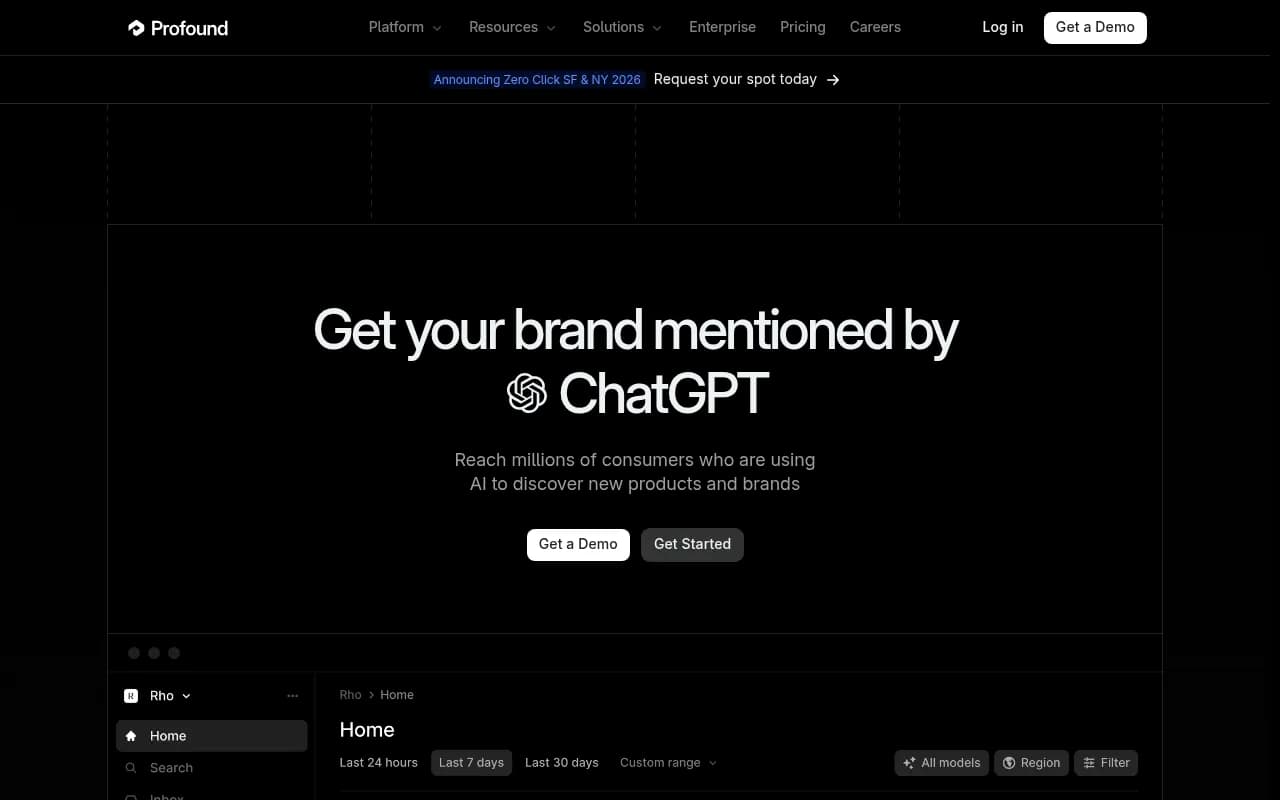
Other trackers worth checking on cadence include Peec AI, Otterly.AI and Profound; I have not verified faster-than-daily options for them.


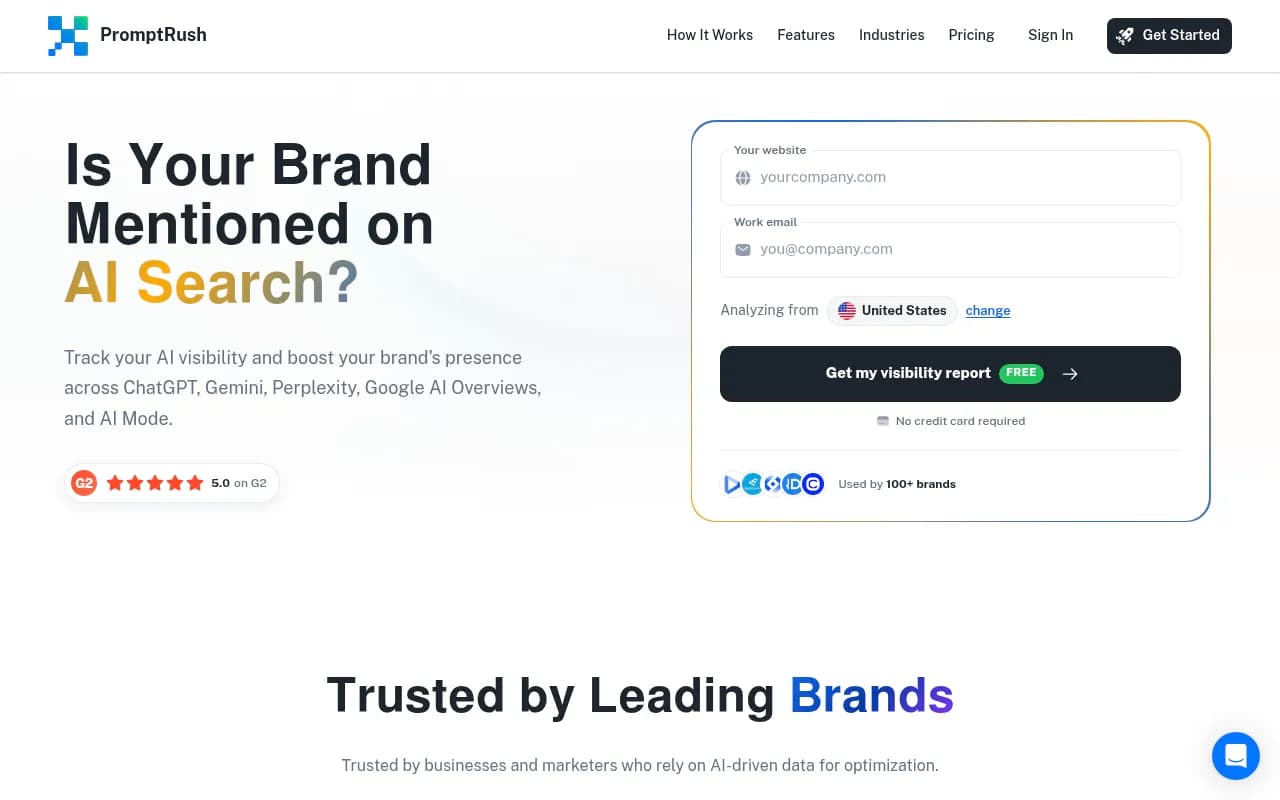
For lower-cost daily tracking, Mentionable advertises credit-free daily tracking and PromptRush lists daily scans from $19/month.

If you are comparing options more broadly, the GEO software directory at bestgeosoftware.com is a good place to browse.
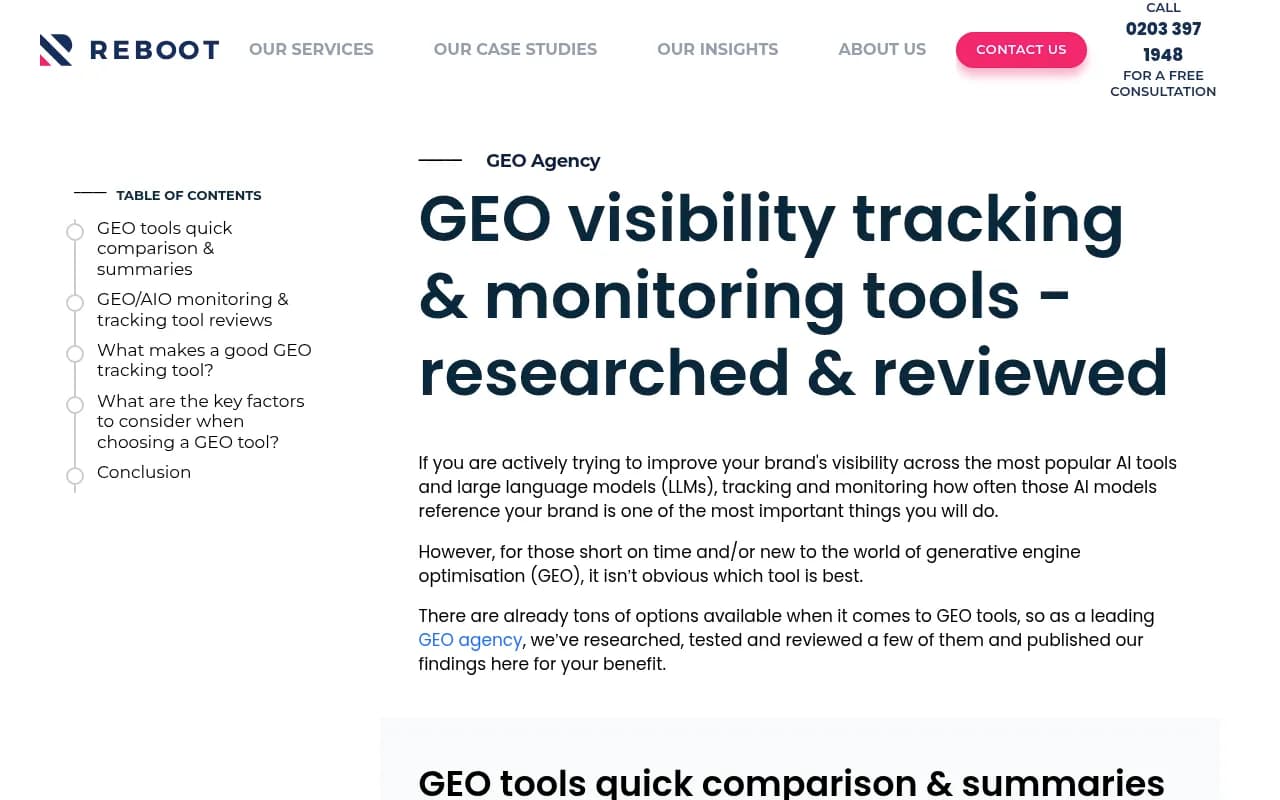
Reboot's roundup lists test frequency as a spec for each tool, which is a handy habit to copy when you build your own shortlist.
A decision framework
| Your situation | Suggested cadence | Review rhythm |
|---|---|---|
| Evergreen brand, steady content | Daily | Weekly |
| Agency with many clients | Daily | Weekly, monthly client report |
| Launch or campaign window | Hourly or every few hours for 1 to 3 weeks | Daily |
| Reputation incident | Hourly until stable | Several times a day |
| News-sensitive category | Daily baseline, faster on key prompts | Daily |
| Verifying a fix or model change | Faster burst for a few days | Daily |
Ask three questions before upgrading:
- Will someone look at the data within the same hour it arrives?
- Is there an action they could take that changes the outcome?
- Does the topic actually move that fast?
If any answer is no, stay daily.
Pair monitoring with the rest of the loop
Frequency only matters if the data leads somewhere. Tracking tells you what AI says. It does not tell you why, or whether your pages are even readable by AI bots. Crawler logs, citation analysis and traffic attribution fill that gap, and tools like Promptwatch combine them with content workflows so a drop in visibility turns into a specific task rather than a bigger chart. If you are weighing agencies for this kind of work, 1001 SEO Media runs GEO programs alongside classic SEO.
Practical setup checklist
- Start every monitor at daily.
- Pick a stable prompt set and do not change it for at least a month.
- Use rolling averages and threshold alerts.
- Tag a small set of revenue-critical prompts.
- Move a separate monitor to a faster cadence only for launches, incidents and verification.
- Re-audit after major model updates, since behavior shifts in steps.
- Revisit the cost every quarter. If the fast monitor did not change a decision, turn it off.
Daily collection with weekly decisions covers most teams. Keep hourly in reserve for the two or three weeks a year when something is actually happening.