Key takeaways
- AEO (Answer Engine Optimization) and GEO (Generative Engine Optimization) started as distinct disciplines but have largely merged in practice -- most tools now cover both.
- The original distinction still matters conceptually: AEO focuses on direct-answer surfaces like featured snippets and voice search; GEO focuses on visibility inside generative AI responses from ChatGPT, Perplexity, Gemini, and similar engines.
- In 2026, the tools that matter most are the ones that go beyond monitoring -- tracking citations is table stakes; the real value is in finding gaps and fixing them.
- If you're choosing a platform, the monitoring-vs-optimization split is more meaningful than the AEO-vs-GEO label.
How we got here: a quick history of two terms
A few years ago, AEO and GEO described genuinely different problems. AEO was the older concept -- it came out of the voice search era, when Google Home and Alexa were the hot topic and everyone was trying to get their content read aloud as a featured snippet. The goal was to structure your content so Google could extract a clean, direct answer. FAQ schema, concise definitions, People Also Ask optimization -- that was AEO.
GEO came later, coined roughly around 2023-2024 as ChatGPT and Perplexity started eating into traditional search traffic. The question shifted from "can Google extract an answer from my page?" to "will an LLM cite my brand when someone asks a relevant question?" Different surface, different mechanism, different optimization logic.
By 2026, though, the two terms have blurred considerably. Google's AI Overviews are generative. Perplexity cites sources. ChatGPT Search pulls from the web. The line between "an AI extracting an answer" and "a generative model synthesizing a response" has basically dissolved. Most practitioners now use AEO and GEO interchangeably, and most tools have stopped trying to separate them.
That said, the underlying concepts still point at slightly different things -- and understanding that difference helps you evaluate tools more clearly.
What AEO and GEO actually mean in 2026
AEO: the answer-extraction mindset
AEO is still most naturally associated with structured, extractable answers. Think:
- Featured snippets and Google AI Overviews
- Voice search responses
- People Also Ask boxes
- Knowledge panels and entity recognition
The optimization approach here leans heavily on content structure: clear definitions, FAQ schema markup, concise answers near the top of a page, strong topical authority signals. The assumption is that a system (Google, Alexa, Siri) is trying to pull a specific answer from your content.
GEO: the citation and synthesis mindset
GEO is more about being cited inside a generated response. When someone asks Perplexity "what's the best project management tool for remote teams?", Perplexity synthesizes an answer from multiple sources and cites a handful of them. Getting cited is the goal -- and that requires different things than getting featured-snippeted.
GEO optimization tends to focus on:
- Brand mentions and citation frequency across AI models
- Prompt-level visibility (which specific questions trigger citations of your content)
- Off-site presence: Reddit threads, YouTube videos, third-party listicles that AI models pull from
- Content that answers the exact questions AI models are already being asked
Where they overlap (which is most places)
In practice, a piece of content that's well-structured for AEO -- clear, authoritative, directly answering a specific question -- also tends to get cited in GEO contexts. The signals overlap. Strong topical authority helps both. Schema markup helps both. Being mentioned on authoritative third-party sites helps both.
The main divergence is in what you measure. AEO metrics are mostly traditional: featured snippet ownership, voice search coverage, structured data health. GEO metrics are newer: citation rates across LLMs, prompt visibility scores, share of AI-generated responses that mention your brand.
The real split in 2026: monitoring tools vs optimization platforms
Here's the more useful distinction in 2026: not AEO vs GEO, but monitoring-only vs full optimization.
A lot of tools launched in 2024-2025 as "GEO platforms" that are essentially dashboards. They show you your citation rate across ChatGPT, Perplexity, and Gemini. They track whether your brand appears in AI responses. That's genuinely useful data -- but it's the starting point, not the solution.
The more capable platforms go further: they tell you why you're not being cited, show you which prompts competitors are winning that you're not, and help you create content specifically designed to close those gaps.
| Capability | Monitoring-only tools | Optimization platforms |
|---|---|---|
| Brand mention tracking | Yes | Yes |
| Citation rate by LLM | Yes | Yes |
| Competitor visibility comparison | Sometimes | Yes |
| Prompt gap analysis | Rarely | Yes |
| Content brief generation | No | Yes |
| AI content creation | No | Yes (some) |
| Crawler/agent log analysis | No | Yes (some) |
| Traffic attribution | No | Yes (some) |
| Reddit/YouTube signal tracking | No | Yes (some) |
Most tools marketed as "AEO tools" or "GEO tools" sit in the left column. A smaller number have built out the right column.
Tools worth knowing about
The market has fragmented into a few distinct categories. Here's an honest look at what's available.
Full optimization platforms
Promptwatch is the clearest example of a platform built around the full loop: find gaps, create content, track results. It covers 10 AI models (ChatGPT, Perplexity, Gemini, Claude, Grok, DeepSeek, Copilot, Meta AI, Mistral, Google AI Overviews), includes AI crawler logs that show exactly which pages AI agents are reading and when they move from crawl to citation, and has content generation built in -- not generic articles, but content grounded in real prompt data and citation analysis. The answer gap analysis is particularly useful: it surfaces the specific prompts where competitors are visible and you're not.

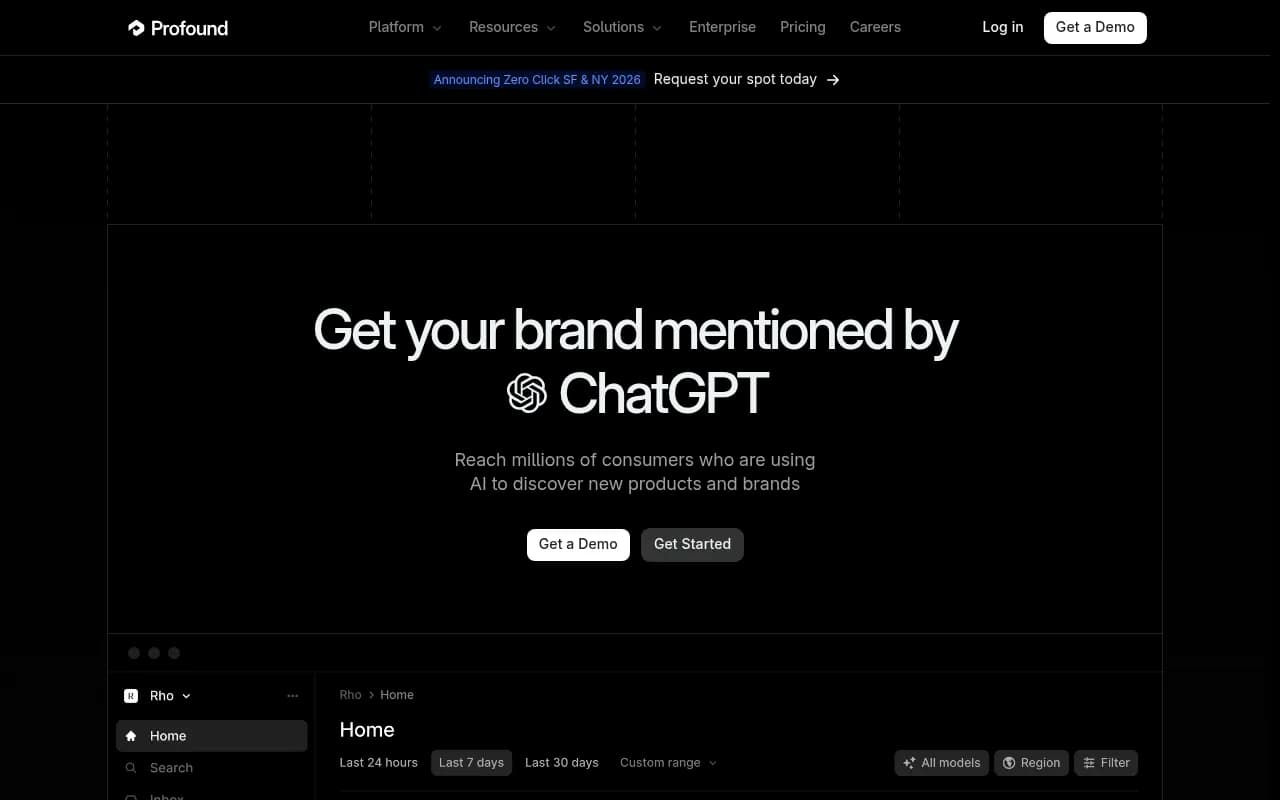
Profound AI is another platform that's made a deliberate choice to treat AEO and GEO as one unified strategy rather than separate workflows. Their positioning is that the distinction is mostly semantic -- the optimization logic is the same. Worth looking at if you're an enterprise team that wants a single framework.
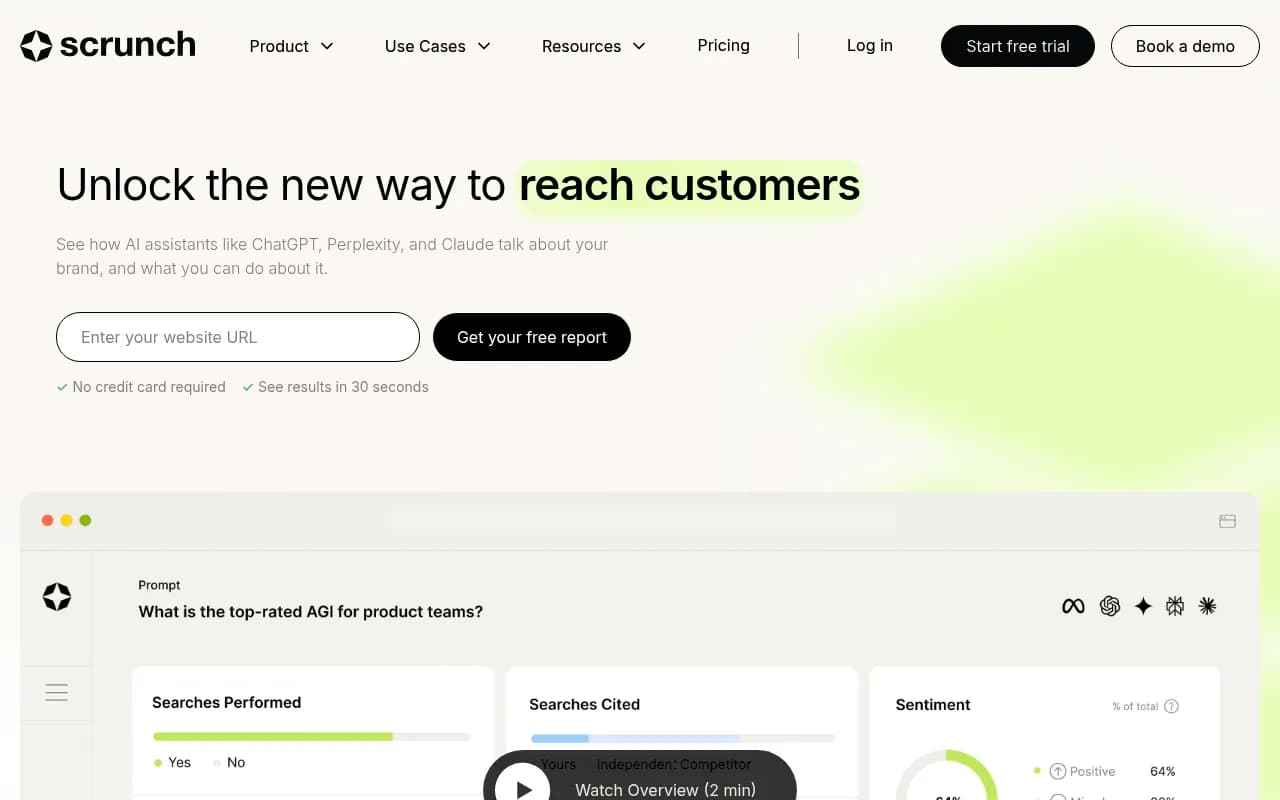
Scrunch has built out a solid monitoring and insights layer, with some optimization features layered on top. Their agent experience platform (AXP) is interesting -- it's focused on how AI agents actually consume your site, not just whether they cite you.
Monitoring-focused tools
For teams that primarily want to track visibility without the full optimization suite, there are several solid options.
Otterly.AI is one of the more accessible entry points -- affordable, straightforward, covers the main LLMs. Good for teams that are just starting to think about AI visibility and want to understand their baseline before committing to a bigger platform.

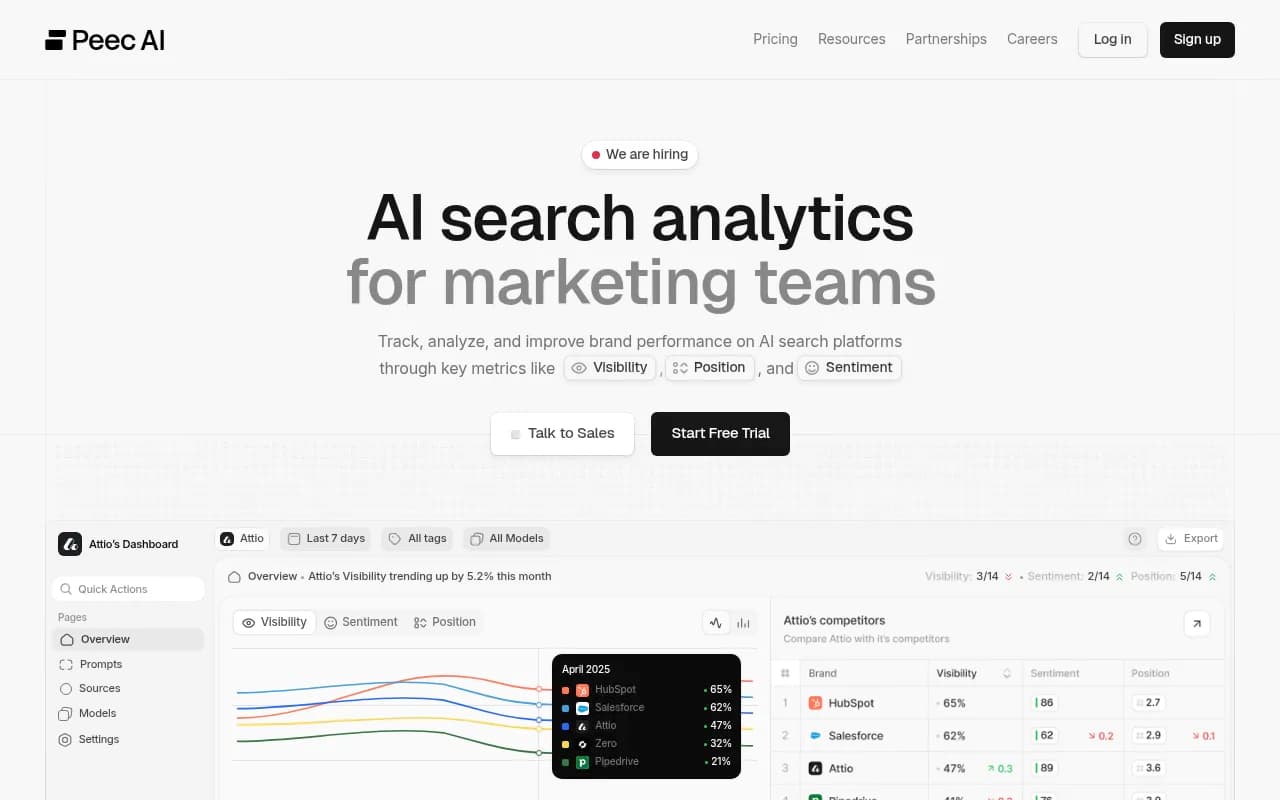
Peec AI is similar in positioning: clean monitoring interface, tracks brand mentions across AI engines, no frills. The limitation is that it stops at the data -- you'll need to figure out what to do with it yourself.
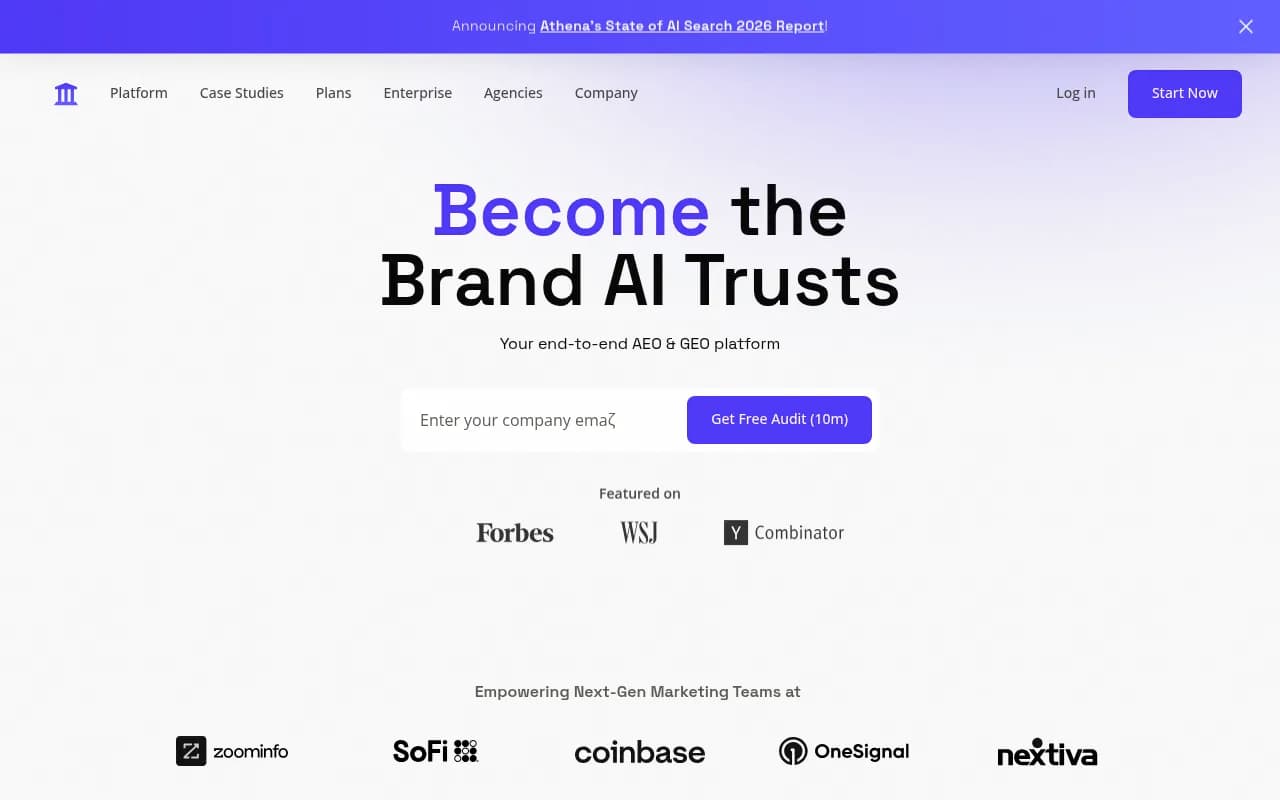
Athena HQ covers 8+ AI search engines and has a reasonably strong monitoring layer. It's more analytics-focused than optimization-focused, which suits some teams.
Traditional SEO tools adding AI visibility
Semrush and Ahrefs have both added AI search monitoring features, which makes sense given their existing customer bases. Semrush's AI tracking uses fixed prompts, which limits flexibility. Ahrefs Brand Radar is similar -- useful for a quick read on brand visibility, but the fixed prompt structure means you can't customize it to your specific competitive landscape or track the prompts that actually matter to your business.
For teams already deep in the Semrush or Ahrefs ecosystem, these additions are worth using as a supplement. As a primary GEO/AEO strategy, they're not enough on their own.
SE Ranking has also added AI visibility features and is worth considering if you want a more integrated traditional-plus-AI approach at a mid-market price point.
Specialized and niche players
A few tools have carved out specific niches worth mentioning.
Bluefish AI positions itself as an enterprise GEO platform with a focus on large-scale brand visibility management.
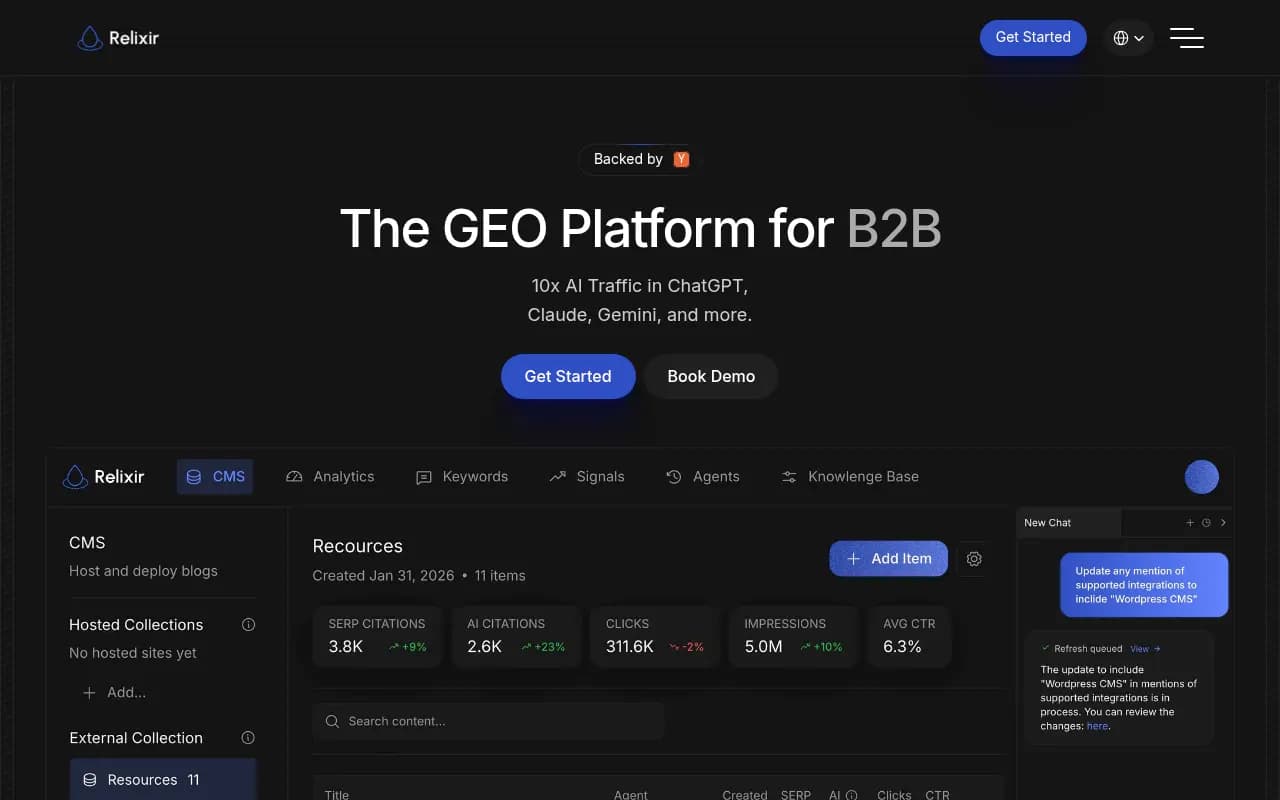
Relixir combines GEO monitoring with AI content generation, similar in concept to Promptwatch but with a different feature emphasis.
Goodie AI targets enterprise GEO specifically, with a focus on Fortune 500-scale deployments.
How to pick the right tool for your situation
The AEO vs GEO label on a tool's homepage tells you almost nothing useful. Here are the questions that actually matter:
What AI models do you need to track? Some tools only cover ChatGPT and Perplexity. If Google AI Overviews matter to your business (and for most B2C brands, they do), confirm that's covered before committing.
Do you need to understand why you're not being cited, or just that you're not? If you want the "why" -- which prompts you're missing, what content would close the gap -- you need a platform with gap analysis, not just a monitoring dashboard.
Do you need content generation, or do you have writers? Some platforms generate content directly from prompt data. If your team has capacity to write, you might not need this. If you're a lean team trying to move fast, built-in content generation changes the math significantly.
What's your budget? Monitoring-only tools tend to be cheaper ($50-150/month range). Full optimization platforms run $99-600+/month depending on scale. Enterprise platforms are custom. The price gap is real, but so is the capability gap.
Are you an agency or a brand? Agency-focused tools (Search Party, some Scrunch tiers) are built around multi-client workflows. Brand-focused tools optimize for depth on a single domain.
The conceptual question: should you care about the AEO/GEO distinction at all?
Honestly, less than you might think. Profound's team wrote a post arguing they're the same thing, and they're mostly right. The optimization inputs overlap heavily. The measurement surfaces are converging. And the tools have largely stopped distinguishing between them.
Where the distinction still has some practical value is in prioritization. If your business is primarily voice-search-dependent (local services, quick-answer queries), AEO thinking -- schema, structured content, featured snippet optimization -- should dominate your roadmap. If you're in a considered-purchase category where buyers are using ChatGPT or Perplexity to research options, GEO thinking -- citation analysis, prompt gap work, off-site presence -- matters more.
Most businesses in 2026 need both. The good news is that most of the better platforms have stopped making you choose.
A practical starting point
If you're new to this space and trying to figure out where to begin:
-
Run a basic audit of your current AI visibility. Search for your brand and your main product/service category in ChatGPT, Perplexity, and Google AI Overviews. Note whether you appear, who does appear, and what sources are being cited.
-
Pick a monitoring tool to formalize that process. Even a basic tool like Otterly.AI or Peec AI will give you a structured baseline.
-
Once you have baseline data, decide whether you need optimization capabilities or just better monitoring. If you're already appearing but want to improve, monitoring is enough. If you're largely invisible and competitors are getting cited, you need gap analysis and content work -- which means moving to a more capable platform.
-
For teams serious about AI search as a channel, the monitoring-to-optimization pipeline matters. Tools like Promptwatch that close the loop from "here's where you're invisible" to "here's the content that will fix it" are worth the higher price point because they compress the time between insight and action.
The AEO vs GEO debate is mostly settled. The monitoring vs optimization debate is where the real decisions live.