Key takeaways
- Nimt.ai is a lightweight AI visibility tracker, but it stops at monitoring — it won't help you fix what it finds
- The best alternatives in 2026 combine tracking with content gap analysis, content generation, and crawler intelligence
- Promptwatch is the most complete option if you want a full optimization loop, not just a dashboard
- Smaller teams on a budget have solid options too — tools like Otterly.AI, Peec AI, and Trakkr.ai cover the basics affordably
- If you're an agency or enterprise, platforms like Profound AI and Goodie AI offer deeper reporting and white-label features
Nimt.ai got some attention after its appearance in an accelerator batch, and for good reason — it does something genuinely useful. It tracks how your brand shows up in AI platforms like ChatGPT and Perplexity, which is a real problem most marketing teams haven't solved yet.
But here's the thing: knowing you're invisible isn't the same as becoming visible. And that's where Nimt.ai, like a lot of early-stage AI visibility tools, runs out of road. It shows you the gap. It doesn't help you close it.
If you've been using Nimt.ai and found yourself exporting data into a spreadsheet, writing content briefs manually, and wondering why your scores aren't moving — you're not alone. That's the limitation of monitoring-only tools.
This guide covers 8 alternatives that go further in 2026, whether you need full optimization capabilities, better prompt intelligence, or just a more complete picture of what AI engines are actually doing with your content.
What to look for in a Nimt.ai alternative
Before jumping into the list, it's worth being clear about what "going further" actually means. There are a few dimensions to consider:
- Does it track more than one or two AI models?
- Does it show you why you're not being cited, not just that you aren't?
- Does it help you create content to fix the gaps, or just flag them?
- Does it have crawler intelligence — so you can see when AI bots actually visit your pages?
- Can it attribute AI visibility to real traffic and revenue?
Most tools in this space check one or two of those boxes. A few check most of them. One checks all of them.
The 8 best Nimt.ai alternatives in 2026
1. Promptwatch — the full optimization loop
If Nimt.ai is a speedometer, Promptwatch is the whole dashboard plus the engine. It's the only platform in this space that closes the loop from "you're invisible" to "here's the content that will fix it" to "here's proof it worked."

The core workflow is built around three steps: find the gaps, create content that fills them, and track the results. The Answer Gap Analysis shows you exactly which prompts your competitors are winning that you're not — not vague topic areas, but specific questions AI models are already answering from competitor pages. Content Agents then generate articles, comparisons, and briefs grounded in that real prompt data. And page-level tracking shows when AI models start citing your new content, with agent analytics that maps the timeline from publish to crawl to citation.
A few things that genuinely set it apart from Nimt.ai and most other tools:
- AI Crawler Logs: real-time logs of when ChatGPT, Claude, Perplexity, and others actually crawl your pages, what errors they hit, and how often they return. Almost no competitor has this.
- Prompt Intelligence: volume estimates and difficulty scores for each prompt, so you can prioritize winnable queries instead of guessing.
- Reddit and YouTube tracking: surfaces discussions that directly influence AI recommendations — a channel most tools ignore entirely.
- ChatGPT Shopping tracking: monitors when your brand appears in product recommendations and shopping carousels.
- Traffic attribution: connects AI visibility to actual sessions and revenue, not just citation counts.
It monitors 10 AI models including ChatGPT, Claude, Gemini, Perplexity, Grok, DeepSeek, Copilot, Meta AI, Mistral, and Google AI Overviews. Pricing starts at $99/month for the Essential plan (1 site, 50 prompts, 5 articles) and goes up to $579/month for Business (5 sites, 350 prompts, 30 articles). There's a free trial.
For teams that are serious about AI search visibility — not just watching it, but improving it — Promptwatch is the most complete option available right now.
2. Profound AI — enterprise-grade depth
Profound AI is one of the more established names in this space, and it's built for organizations that need serious reporting infrastructure. If you're managing AI visibility for a large brand with multiple stakeholders, Profound's structured dashboards and enterprise integrations are genuinely useful.
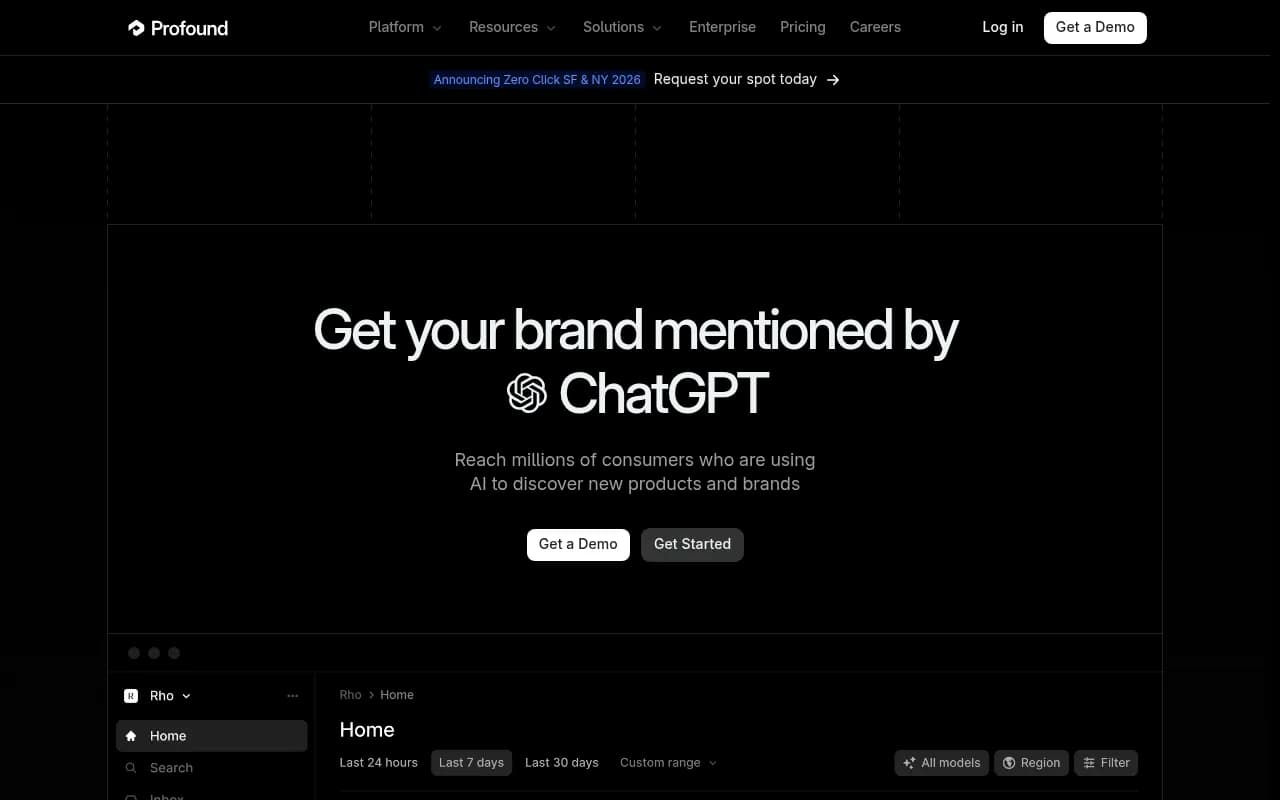
Where it falls short compared to Promptwatch is on the action side. Profound is strong at showing you what's happening but doesn't have the content generation or crawler log capabilities that turn insights into outcomes. It's a monitoring and reporting platform first.
That said, for enterprise teams that already have content teams and just need better data, it's a solid choice.
3. Otterly.AI — affordable and straightforward
Otterly.AI is one of the more accessible tools in this category. It tracks brand mentions across AI search engines, gives you a visibility score, and lets you monitor competitors. The interface is clean and it's easy to get started without a long onboarding process.
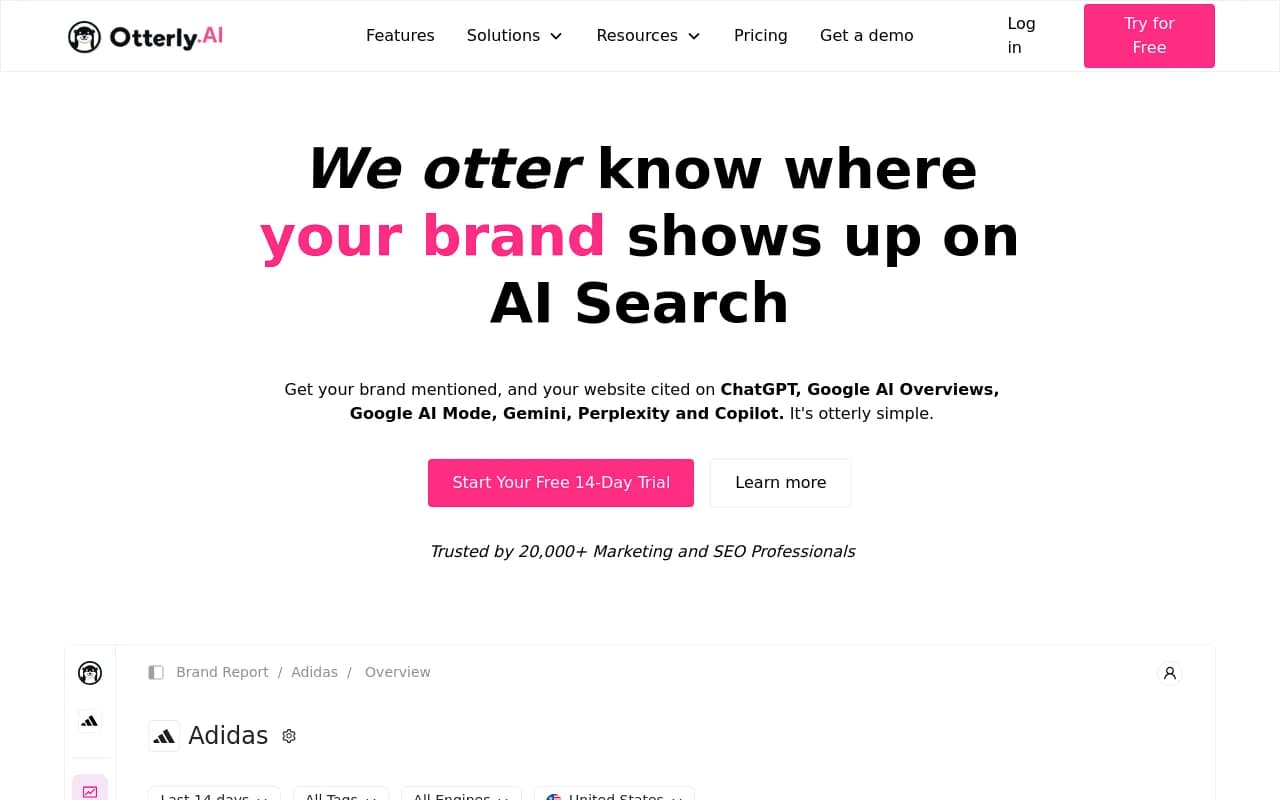
It's genuinely good for small teams or solo marketers who want to understand their AI visibility without committing to a complex platform. The trade-off is that it's monitoring-only — there's no content gap analysis, no crawler logs, and no content generation. You'll still need to figure out what to do with the data yourself.
If you're coming from Nimt.ai and want something similar but slightly more polished, Otterly.AI is a reasonable step. If you want to actually move the needle, you'll eventually outgrow it.
4. Peec AI — clean monitoring for growing teams
Peec AI sits in a similar position to Otterly.AI — it's a focused monitoring tool that does what it says without a lot of extra complexity. It tracks how your brand appears in AI search results, lets you compare against competitors, and gives you trend data over time.
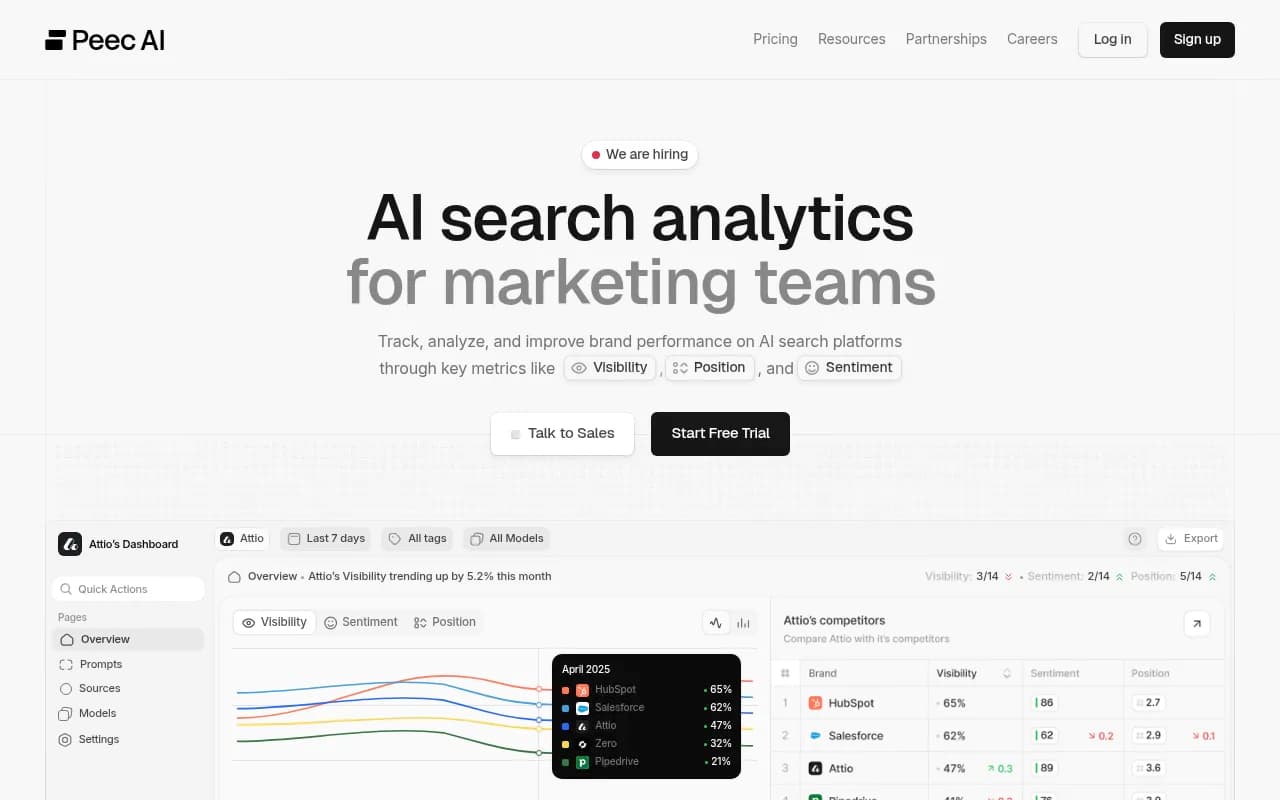
The interface is well-designed and the onboarding is fast, which matters if you're trying to get buy-in from a team that's new to GEO. Like most monitoring-only tools, though, it won't tell you what content to create or help you create it.
5. Scrunch AI — monitoring with some optimization signals
Scrunch AI tracks brand visibility across AI assistants like ChatGPT and Claude, and it goes slightly further than pure monitoring by surfacing some optimization signals — things like which topics you're underrepresented in and where competitors are pulling ahead.
It's a step up from Nimt.ai in terms of the breadth of data it surfaces, and the competitor comparison features are useful. But it still doesn't have content generation or crawler intelligence, so the gap between "here's what's wrong" and "here's how to fix it" remains.
6. Trakkr.ai — lightweight tracking across multiple LLMs
Trakkr.ai is a newer entrant that focuses on tracking brand visibility across ChatGPT, Claude, Perplexity, and a handful of other models. It's lightweight by design — fast to set up, easy to read, and reasonably priced for what it offers.
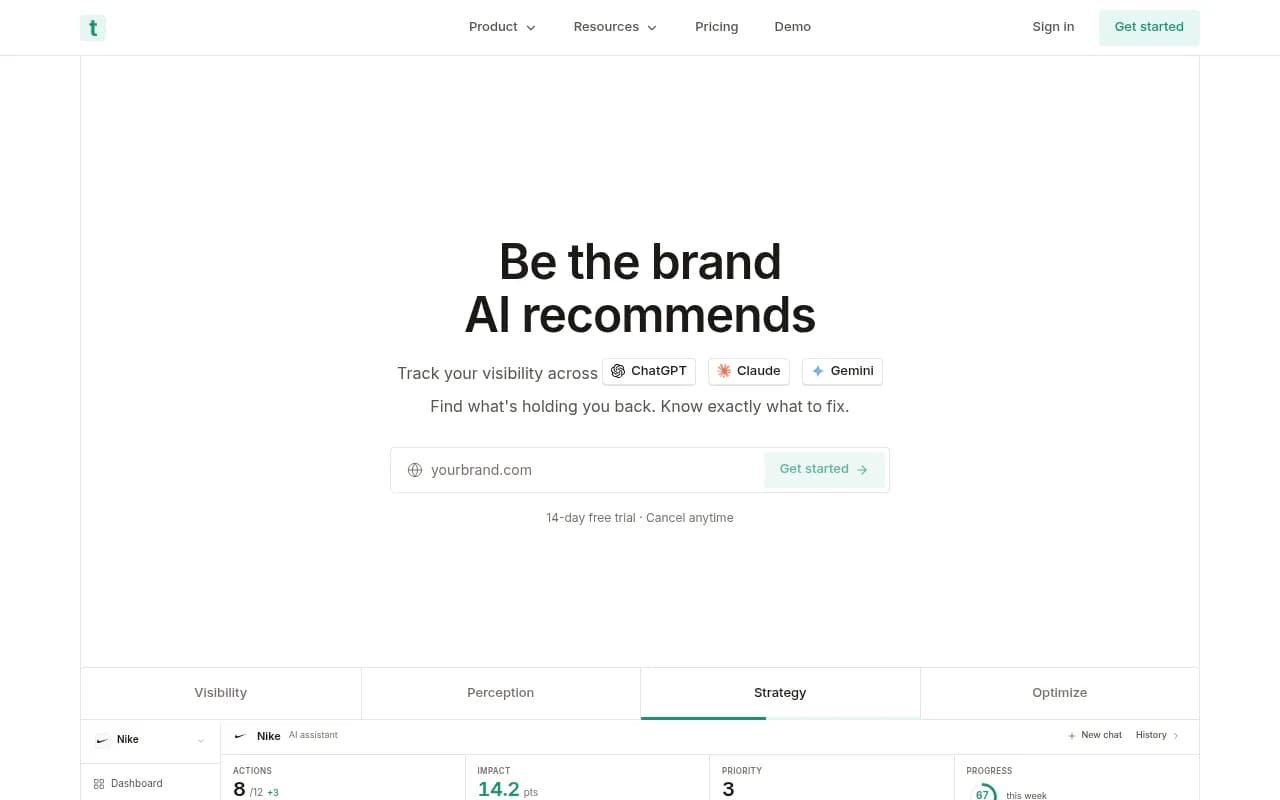
For teams that just want a quick read on how they're doing across the major AI platforms without a lot of configuration, Trakkr.ai is worth a look. It won't replace a full GEO platform, but it's a decent starting point.
7. Goodie AI — enterprise GEO with structured reporting
Goodie AI positions itself at the enterprise end of the market, with structured reporting, multi-brand support, and the kind of governance features that large organizations need. It's used by brands that need to track AI visibility at scale across multiple products or regions.
The platform is more mature than some of the newer entrants and has invested in making the data actionable for enterprise stakeholders. It's not the right fit for a small team or a startup, but for a large brand managing complex AI visibility challenges, it's a serious option.
8. Athena HQ — tracking across 8+ AI search engines
Athena HQ tracks brand visibility and sentiment across more than 8 AI search engines, which gives it broader coverage than many tools in this space. It's particularly useful for brands that need to understand how they're perceived across different AI platforms, not just whether they're cited.
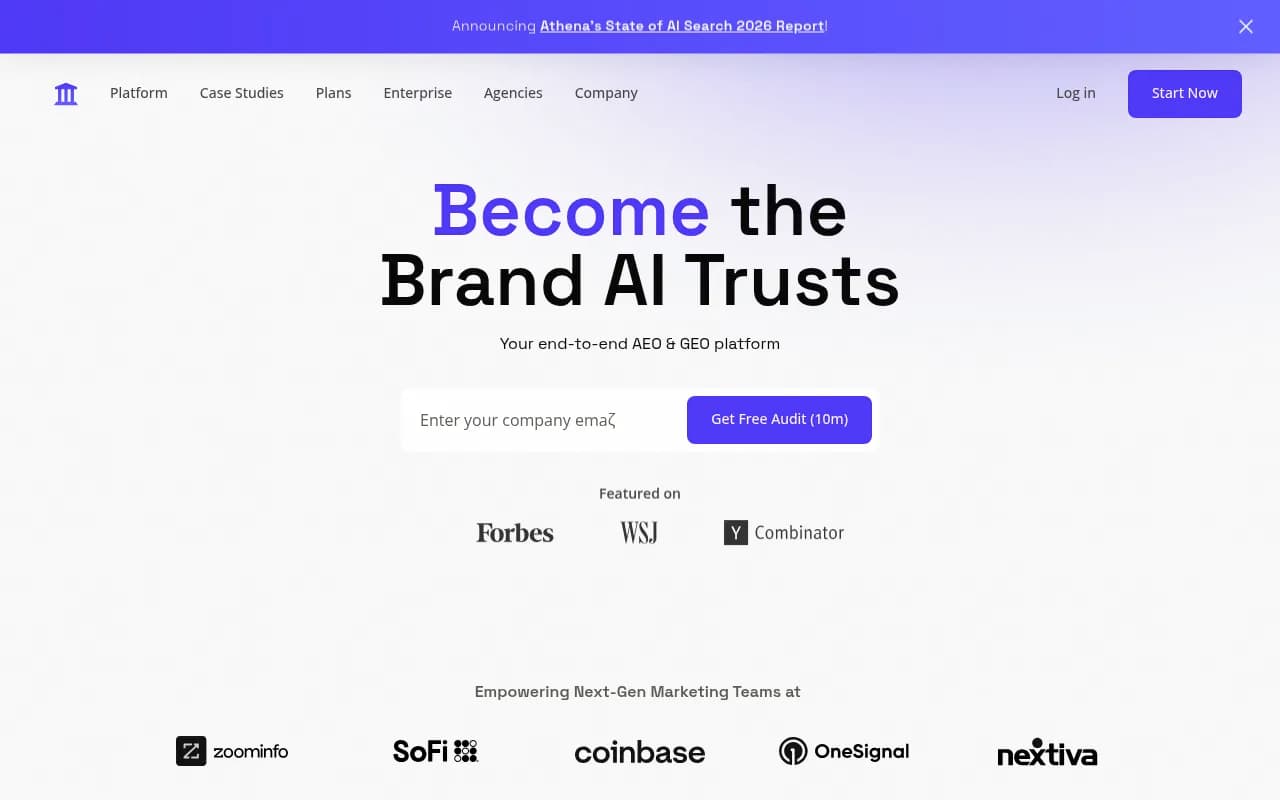
The sentiment tracking is a differentiator — knowing that you're being mentioned but in a negative context is genuinely useful information. Like most tools here, though, it's primarily a monitoring and analysis platform rather than an optimization one.
How these tools compare
Here's a side-by-side look at the key capabilities across all 8 alternatives:
| Tool | AI models tracked | Content generation | Crawler logs | Prompt intelligence | Best for |
|---|---|---|---|---|---|
| Promptwatch | 10 | Yes (Content Agents) | Yes | Yes (volume + difficulty) | Full optimization loop |
| Profound AI | Multiple | No | No | Limited | Enterprise reporting |
| Otterly.AI | Multiple | No | No | No | Small teams, budget |
| Peec AI | Multiple | No | No | No | Growing teams |
| Scrunch AI | Multiple | No | No | Limited | Monitoring + signals |
| Trakkr.ai | Multiple | No | No | No | Lightweight tracking |
| Goodie AI | Multiple | Limited | No | No | Enterprise brands |
| Athena HQ | 8+ | No | No | No | Sentiment tracking |
The pattern is pretty clear. Most tools in this space are monitoring dashboards. They show you data. They don't help you act on it. Promptwatch is the outlier — it's built around the idea that tracking visibility is only useful if you can improve it.
Which alternative is right for you?
It depends on what you actually need.
If you're a small team or a solo marketer who just wants to understand your AI visibility baseline, Otterly.AI or Peec AI will get you there without a lot of overhead. They're affordable, easy to set up, and give you a clear picture of where you stand.
If you're a growing marketing team that's starting to take GEO seriously and wants to move from monitoring to optimization, Promptwatch is the right call. The content generation alone saves hours per week, and the crawler logs give you visibility into how AI engines actually interact with your site — something you genuinely can't get anywhere else at this price point.
If you're an enterprise brand with complex reporting needs and multiple stakeholders, Profound AI or Goodie AI are worth evaluating. They're built for that environment in ways that lighter tools aren't.
And if you need to track sentiment alongside visibility — not just "are we being cited" but "how are we being described" — Athena HQ's multi-model sentiment tracking is worth a look.
The bigger picture
The AI search landscape has moved fast. A year ago, most brands weren't thinking about how ChatGPT or Perplexity described them. Now it's a real channel with real traffic implications, and the tools to manage it have matured significantly.
Nimt.ai was an early mover in this space, and that's worth acknowledging. But "early" and "best" aren't the same thing. The tools that are winning in 2026 are the ones that don't just show you the problem — they help you solve it.
If you're evaluating alternatives, start with what you actually need: pure monitoring, or monitoring plus optimization. That single question will narrow the list considerably.