Key takeaways
- AI Overviews now appear in roughly 58% of informational searches, and around 60% of those searches end without a click -- meaning ranking #1 no longer guarantees traffic
- Most SEO content strategies were built for Google's blue links, not for how ChatGPT, Perplexity, Claude, and Gemini actually surface answers
- The fixes aren't radical -- they're mostly about shifting from keyword-first thinking to question-first, entity-first, and authority-first thinking
- Tracking your AI search visibility separately from traditional rankings is now a non-negotiable step, not a nice-to-have
- Content that gets cited by AI models shares common traits: clear structure, direct answers, demonstrated expertise, and topical depth
Something changed in 2025, and it wasn't subtle. Julian Goldie, who runs the SEO agency Goldie Agency and has built over 300,000 YouTube subscribers covering search, put it plainly in a Forbes interview: "Google is different. The search results you see today are not the same as last year. They're not even the same as six months ago."
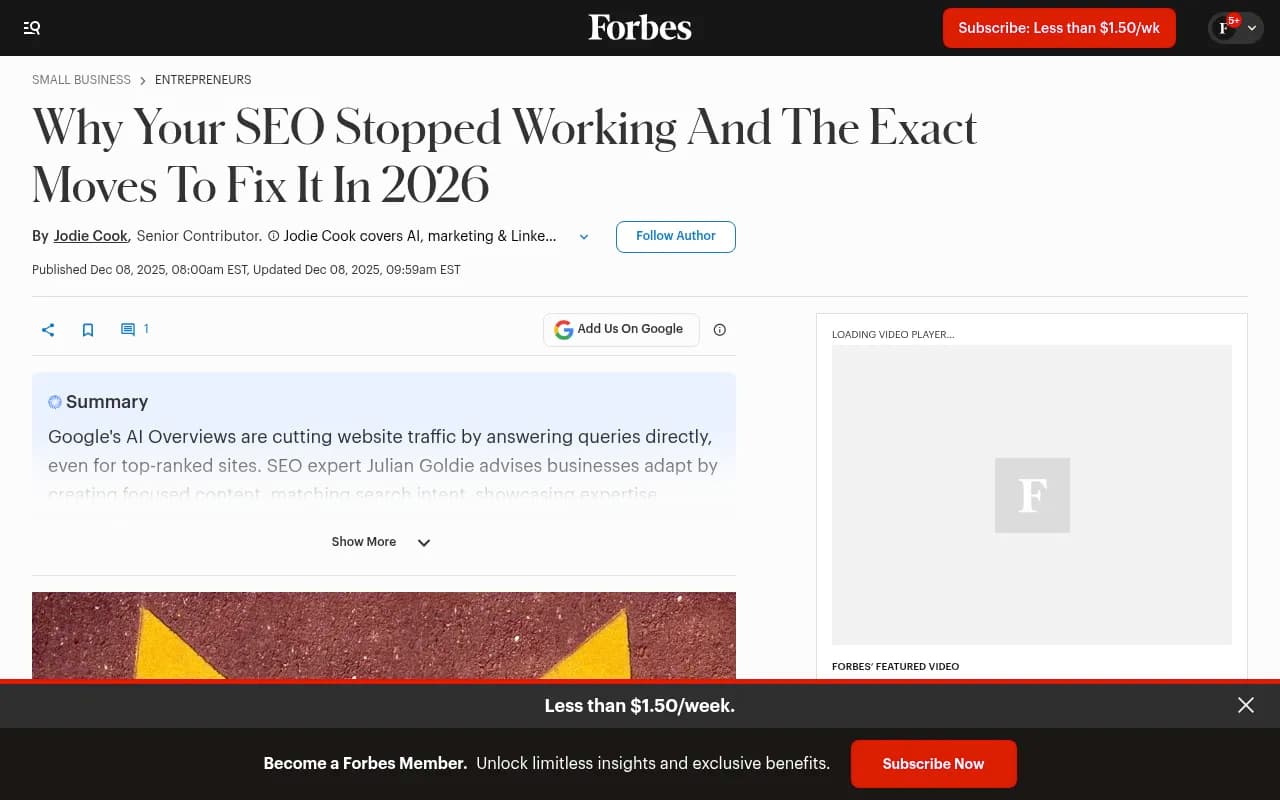
He's right. And the problem isn't just Google. ChatGPT, Perplexity, Claude, Gemini, and Grok are now answering questions that used to send people to your website. If your content isn't built to be the source those models cite, you're invisible in a growing chunk of search.
Here are 10 signs your content strategy hasn't caught up -- and what to actually do about each one.
1. You're still optimizing for keywords instead of questions
Traditional SEO taught us to find a keyword, hit a density target, and rank. AI search doesn't work that way. When someone asks ChatGPT "what's the best project management tool for remote teams," the model isn't scanning for keyword frequency -- it's looking for content that directly and authoritatively answers the question.
If your content is built around "project management software remote" as a keyword phrase rather than the actual question a person would ask, it's not structured for AI retrieval.
The fix: Reframe your content briefs around real questions. Use tools like Promptwatch to surface the specific prompts people are typing into AI engines, then build content that answers those prompts directly. Your H2s and H3s should read like questions. Your opening paragraphs should answer them immediately.

2. Your content has no clear point of view
AI models are trained to synthesize information. When they encounter a page that hedges everything, avoids conclusions, and presents "both sides" without committing to anything, they have nothing useful to cite. Generic content gets skipped.
Content that gets cited tends to say something. It takes a position. It gives a recommendation. It tells the reader what to do, not just what exists.
The fix: Go back through your top pages and ask: does this content actually recommend anything? Does it have a conclusion? If the answer is "it presents options," that's not enough. Add a clear recommendation section. Write a verdict. Give the reader (and the AI) something concrete to pull from.
3. You're not building topical authority -- just individual pages
One of the clearest signals that a content strategy was built for the old web is when a site has a handful of blog posts on a topic but no real depth. A single "what is content marketing" post doesn't make you an authority on content marketing. AI models are increasingly good at recognizing which sites have genuine expertise across a topic cluster versus which sites have surface-level coverage.
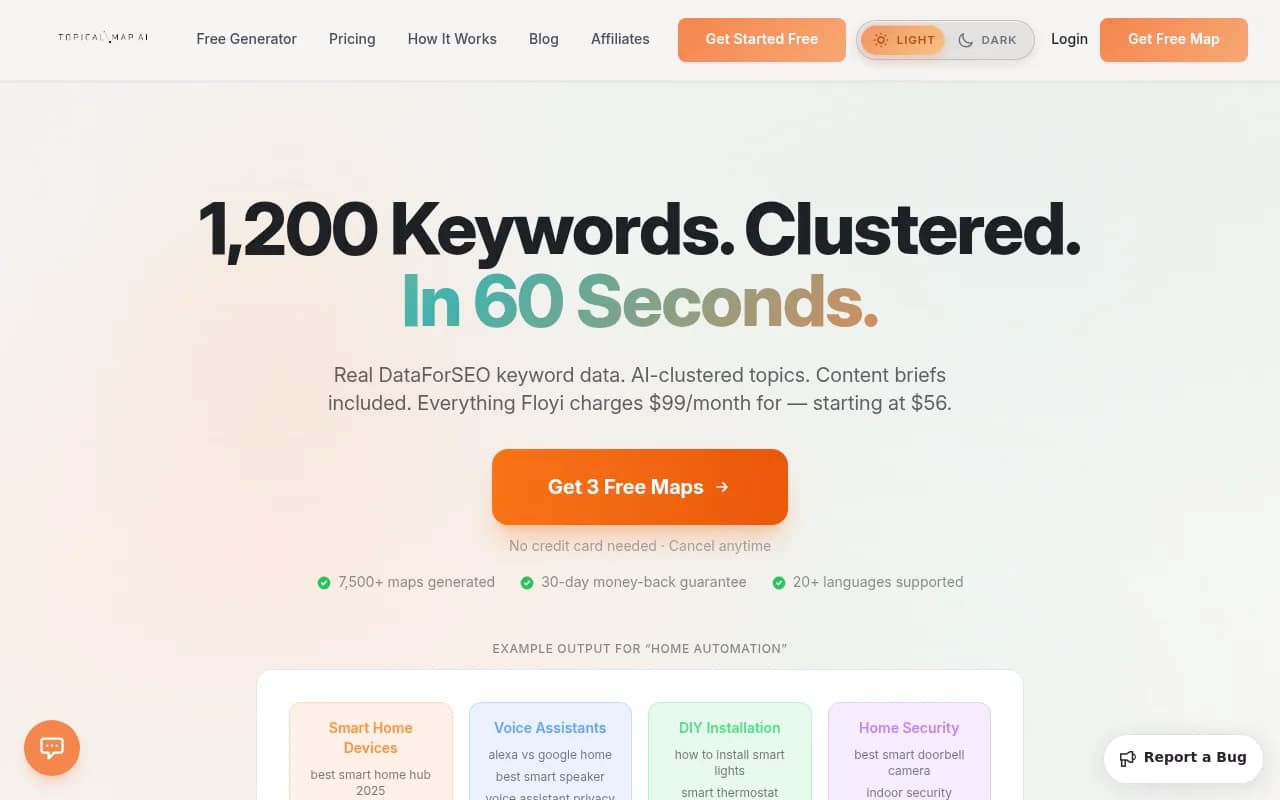
The fix: Build topical maps. If you cover a subject, cover it properly -- the main concept, the subtopics, the comparisons, the how-tos, the edge cases. Tools like Topical Map AI can help you visualize and plan this systematically.
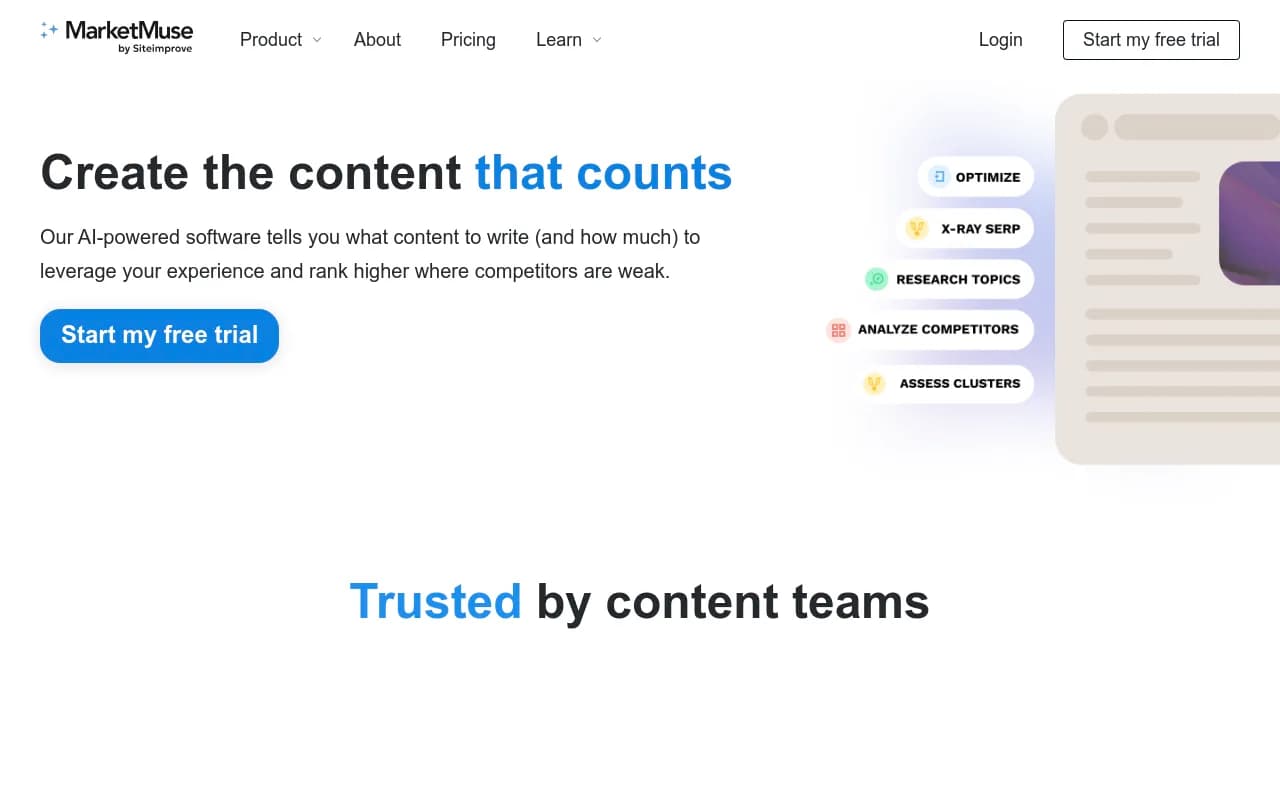
MarketMuse is also worth looking at for identifying topical gaps and prioritizing which content to create next.
4. Your content structure makes it hard for AI to extract answers
AI models parse content differently than humans do. They look for clear structure: headers that signal what a section covers, short paragraphs that contain one idea, lists that enumerate options or steps, and direct answers near the top of each section.
If your pages are long blocks of text with vague headers like "More Information" or "Our Approach," AI crawlers struggle to extract anything useful. The content might be excellent, but it's not retrievable.
The fix: Audit your most important pages for structure. Every section should have a descriptive header. Key answers should appear in the first sentence or two of each section, not buried in paragraph three. Use bullet lists for comparisons and numbered lists for steps. Think of it as writing for someone who's going to skim -- because AI models essentially do.
5. You have no idea which of your pages AI models are actually citing
Most marketing teams track Google rankings, organic traffic, and maybe some social metrics. Almost none of them know which of their pages are being cited by ChatGPT, which are being cited by Perplexity, and which are being completely ignored by all of them.
This isn't a minor gap. If you don't know your current AI citation baseline, you can't improve it. You're optimizing blind.
The fix: Start tracking AI visibility at the page level. Platforms like Promptwatch give you page-level citation data across 10+ AI models, so you can see exactly which content is working and which isn't. This is the baseline you need before any other optimization makes sense.
6. Your content ignores the questions your competitors are getting cited for
Here's an uncomfortable truth: your competitors might be showing up in AI answers for questions that are directly relevant to your business, and you don't even know it. If you're not tracking competitor AI visibility, you're missing a major source of content intelligence.
The fix: Run a competitor gap analysis. The goal is to find prompts where competitors are being cited but you're not -- those are your highest-priority content opportunities. Promptwatch's Answer Gap Analysis does exactly this: it shows you the specific prompts where you're invisible and competitors aren't, so you know what to write next rather than guessing.
7. You're publishing AI-generated content without a differentiation layer
AI content is everywhere now. The problem isn't that it's AI-generated -- it's that most of it is generic. When every competitor is using the same tools to produce the same surface-level articles, the content that gets cited is the content that has something the others don't: original data, a specific expert perspective, real examples, or a unique angle.
Jason Pittock, in his 2026 SEO strategy breakdown, made this point directly: "Bad content is everywhere; disciplined teams win."
The fix: Every piece of content you publish should have at least one element that can't be replicated by a competitor running the same prompt through the same tool. That might be a proprietary data point, a quote from an internal expert, a case study from your own customers, or a genuinely different take on a well-covered topic. Tools like Jasper AI or Content at Scale can help with production speed, but the differentiation layer has to come from you.
8. You're not optimizing for entity recognition
Traditional SEO is about keywords. AI search is increasingly about entities -- the people, companies, products, concepts, and relationships that AI models have built up knowledge about. If your brand, your authors, and your key concepts aren't clearly established as entities that AI models recognize, you're at a structural disadvantage.
This means your "About" page matters more than you think. Author bios with credentials matter. Being mentioned on other authoritative sites matters. Schema markup matters. These signals help AI models understand who you are and what you're an authority on.
The fix: Treat entity building as a content strategy priority. Make sure your brand, key people, and core products are described clearly and consistently across your site. Add structured data (schema markup) to your key pages. Build author pages with real credentials. Get cited or mentioned on external sites that AI models already trust.
9. You're measuring success with vanity metrics
Impressions. Sessions. Bounce rate. These metrics made sense when the goal was to rank and get clicks. In 2026, a significant portion of your potential audience is getting their answer from an AI model without ever visiting your site. If you're only measuring what lands on your website, you're missing a growing share of your actual reach.
The flip side: being cited in AI answers does drive traffic -- it's just a different kind. Direct searches for your brand name, people who saw you mentioned in an AI response and then went looking for you specifically. That traffic looks different in analytics.
The fix: Add AI visibility metrics to your reporting dashboard. Track citation frequency, which models are citing you, sentiment of those citations, and whether AI-driven mentions are correlating with branded search volume. Tools like Promptwatch connect AI visibility to actual traffic attribution, so you can see the full picture rather than just the slice that shows up in Google Search Console.
10. You have no process for turning AI visibility data into new content
This is the biggest gap of all. Some teams have started tracking AI visibility -- they know their citation scores, they can see which models mention them. But they don't have a process for turning that data into action. The data sits in a dashboard and nobody does anything with it.
Monitoring without acting is just expensive awareness. The teams that are pulling ahead in AI search right now are the ones running a tight loop: find the gaps, create content that addresses them, track whether it gets cited, repeat.
The fix: Build the loop into your content calendar. Schedule a monthly review of your AI visibility data. Identify the top 5 prompts where competitors are visible and you're not. Assign those as content briefs. Publish. Track. Adjust. This doesn't require a massive team -- it requires a process.
Platforms like Promptwatch are built specifically for this cycle. The Answer Gap Analysis surfaces the gaps, the built-in AI writing agent helps you create content grounded in real citation data, and the tracking layer shows you whether the new content is getting picked up. It's the difference between a monitoring tool and an optimization platform.
How the signs stack up: a quick self-assessment
| Sign | What it means | Priority |
|---|---|---|
| Keyword-first content briefs | Missing question-intent content | High |
| No clear POV or recommendations | AI has nothing concrete to cite | High |
| Thin topical coverage | Low authority signals for AI models | High |
| Poor content structure | AI can't extract answers efficiently | Medium |
| No AI citation tracking | Optimizing blind | High |
| No competitor gap analysis | Missing content opportunities | High |
| Generic AI-generated content | Invisible in a sea of sameness | Medium |
| No entity optimization | Brand not recognized by AI models | Medium |
| Vanity metric reporting | Missing AI-driven impact | Medium |
| No action loop from data | Monitoring without improving | High |
Where to start if you're behind
If you're looking at this list and feeling like your strategy needs a significant overhaul, don't try to fix everything at once. Start with the two highest-leverage moves:
First, get a baseline on your current AI visibility. You can't fix what you can't see. Run your brand and key topics through a few AI models manually to see what comes up, then move to a proper tracking tool to get systematic data.
Second, do a competitor gap analysis. Find out which questions your competitors are getting cited for that you're not. Those are your content priorities -- not what your keyword tool suggests, but what AI models are actually being asked and what your competitors are already answering.
Everything else follows from those two steps. The content structure improvements, the entity building, the topical authority work -- they all become much clearer once you know where the actual gaps are.
The teams winning in AI search right now aren't doing anything magical. They're just running a tighter loop between data and content than everyone else.