Key takeaways
- ChatGPT and Perplexity have fundamentally different architectures: ChatGPT relies primarily on training data and broad brand authority, while Perplexity retrieves live web sources and cites them directly.
- A brand can rank well in one and be invisible in the other -- these are separate visibility problems requiring different fixes.
- Technical barriers (robots.txt, crawler blocks), thin third-party presence, and poorly structured content are the most common reasons brands get skipped.
- Fixing AI visibility usually means restructuring existing content, not creating entirely new content from scratch.
- Tracking your brand across multiple AI models simultaneously is the only way to know where you actually stand.
If you've ever searched for your brand in ChatGPT and seen it mentioned, then tried the same thing in Perplexity and gotten nothing -- or the reverse -- you're not imagining things. These two platforms work very differently, and the gap between them is real and growing.
Most brands treat "AI visibility" as one monolithic problem. It isn't. Getting cited by ChatGPT requires a different strategy than getting cited by Perplexity, and understanding why is the first step to fixing it.
How ChatGPT and Perplexity actually work (and why it matters)
This is where most guides skip the important part, so let's be direct about the mechanics.
ChatGPT (specifically GPT-4o and the models behind it) is primarily a knowledge-retrieval system trained on a massive corpus of text up to a certain cutoff. When you ask it about a brand, it draws on what it learned during training. It does have a browsing mode that can pull live results, but the default behavior for most brand-related queries leans heavily on training data. This means brand mentions in ChatGPT reflect historical web presence -- what was written about you, how often, and how authoritatively, across the web before the model's training cutoff.
Perplexity is a retrieval-augmented generation (RAG) system. It searches the web in real time, pulls sources, and synthesizes an answer with citations. When Perplexity mentions your brand, it's because it found a live web page that it judged relevant and credible enough to cite. The citation shows up right there in the response.
Perplexity
The practical implication: if you're in ChatGPT but not Perplexity, you probably have decent historical web presence but weak current citation-worthiness. If you're in Perplexity but not ChatGPT, you might have strong recent content but haven't yet built the broad brand authority that gets baked into model weights.
Why you might be in ChatGPT but not Perplexity
Your content isn't getting crawled
Perplexity's crawler (PerplexityBot) needs to be able to access your site. A surprising number of brands have accidentally blocked AI crawlers in their robots.txt file -- sometimes through a blanket "disallow all bots" rule, sometimes through a specific block added when someone was trying to stop scraping.
Check your robots.txt at yourdomain.com/robots.txt. If you see entries blocking PerplexityBot, GPTBot, ClaudeBot, or similar, that's your first fix. Delete those entries and verify the change propagates.
Server-level blocks are trickier. If you're using a WAF (web application firewall) or Cloudflare rules that rate-limit or block unfamiliar user agents, AI crawlers can get caught in those filters. Ask your hosting team to check.
Your pages don't look like citable sources
Perplexity is selective. It wants to cite pages that look like authoritative answers to specific questions. Long walls of text, pages without clear headings, content that buries the key point in paragraph five -- these get skipped in favor of something cleaner.
The fix is structural. Break content into scannable sections with descriptive H2 and H3 headings. Add FAQ sections that directly answer the questions your customers ask. Use numbered lists for processes, bullet points for comparisons. If you have data or statistics, put them somewhere prominent and easy to extract.
You don't have enough third-party validation
Perplexity tends to cite well-known sources: industry publications, review aggregators, comparison sites, news coverage. If your brand only appears on your own website, Perplexity has no third-party signal to work with.
This means getting mentioned in the right places matters enormously. G2, Capterra, Trustpilot, relevant industry blogs, analyst write-ups, even Reddit threads -- these are the kinds of sources Perplexity actually pulls from. A brand that appears in ten independent sources is far more likely to get cited than one that only appears on its own domain.
Why you might be in Perplexity but not ChatGPT
Your brand is too new or too niche
ChatGPT's training data has a cutoff. If your brand launched or grew significantly after that cutoff, it simply might not be in the model's knowledge base in any meaningful way. This is especially common for brands that have scaled quickly in the past year or two.
The fix here is patience combined with consistent content production. As OpenAI updates its training data (which happens, just not in real time), a stronger web presence means more training signal. In the meantime, ChatGPT's browsing mode and the models that do retrieve live data will pick you up faster if you have good content.
You lack broad topical authority
ChatGPT doesn't just know about brands -- it knows about brands in context. If you're a project management tool, ChatGPT needs to associate you with project management broadly: the problems it solves, the categories it belongs to, the comparisons people make. A brand that only talks about itself, without connecting to the broader conversation in its space, doesn't get the associative weight that leads to mentions.
Publishing content that addresses the full topic landscape around your product -- not just your features, but the problems, the alternatives, the use cases -- builds this topical authority over time.
Your structured data is missing or broken
Schema markup (Organization, FAQPage, Article) helps AI systems understand what your content is about and who you are. ChatGPT's training pipeline likely ingests structured data signals. If your schema is absent, incomplete, or throwing errors, you're leaving signal on the table.
Validate your schema at schema.org/validator or Google's Rich Results Test. Fix any errors. At minimum, implement Organization schema on your homepage with your brand name, description, founding date, and social profiles.
The platforms aren't the only variables
Here's something worth knowing: it's not just ChatGPT vs. Perplexity. Claude, Gemini, Grok, and other models each have their own retrieval and training patterns. A brand can be visible in three models and invisible in two others, for completely different reasons.
Research from Passionfruit Labs tracking 11.2 million AI citations across ChatGPT, Claude, Gemini, and Perplexity found that citation patterns vary significantly by platform -- the same brand might be cited consistently in one model and almost never in another. This isn't random. It reflects differences in training data, retrieval logic, and how each model weights different types of sources.
This is why monitoring across multiple models matters. If you're only checking one, you're getting an incomplete picture.
What actually moves the needle
Restructure before you create
Most brands don't need more content -- they need better-structured content. The same information that's buried in a 2,000-word blog post could be repurposed into a clean FAQ page, a comparison table, or a structured guide with clear headings. That restructured version is far more likely to get cited.
Concretely: take your five most important pages and audit them for AI-readability. Can a crawler extract a clear, direct answer to a specific question from each page? If not, restructure them.
Build your third-party footprint
Getting mentioned in external sources is the single most reliable way to improve Perplexity visibility. This means:
- Submitting to relevant directories and review platforms
- Pitching guest posts or data contributions to industry publications
- Making sure your Wikipedia page (if you have one) is accurate and up to date
- Monitoring and participating in Reddit discussions in your niche -- Perplexity cites Reddit threads regularly
Fix the technical foundations
Beyond robots.txt, there are a few technical items worth checking:
- Is your site fast enough for crawlers to index efficiently?
- Do you have an llms.txt file? This is a relatively new convention (similar to robots.txt but designed to give AI systems a structured summary of your content) that some crawlers are starting to use.
- Are your key pages indexed by Google? If Google can't find them, AI systems that rely on web search probably can't either.
Publish content that answers real questions
Both ChatGPT and Perplexity favor content that directly answers the questions people actually ask. This sounds obvious but most brand content is written to persuade, not to inform. Product pages describe features. About pages tell origin stories. Neither of these answers "what is [brand] best for?" or "how does [brand] compare to [competitor]?"
Creating content that directly addresses comparison queries, use-case questions, and "best for" scenarios is one of the most effective things you can do for AI visibility.
Tracking your visibility across models
You can't fix what you can't see. Manually querying ChatGPT, Perplexity, Claude, and Gemini with different prompts to check your brand mentions is time-consuming and inconsistent. The prompts you choose, the persona you're searching as, the time of day -- all of these affect results.
Promptwatch is built specifically for this: it monitors your brand across 10+ AI models simultaneously, shows you which prompts you're visible for and which you're missing, and -- importantly -- helps you create content to close those gaps. Most monitoring tools stop at showing you the data. Promptwatch connects the visibility data to an action loop: find the gap, generate content to fill it, track whether it worked.

For brands that want to understand their visibility across models without the manual work, tools like this are increasingly necessary rather than optional.
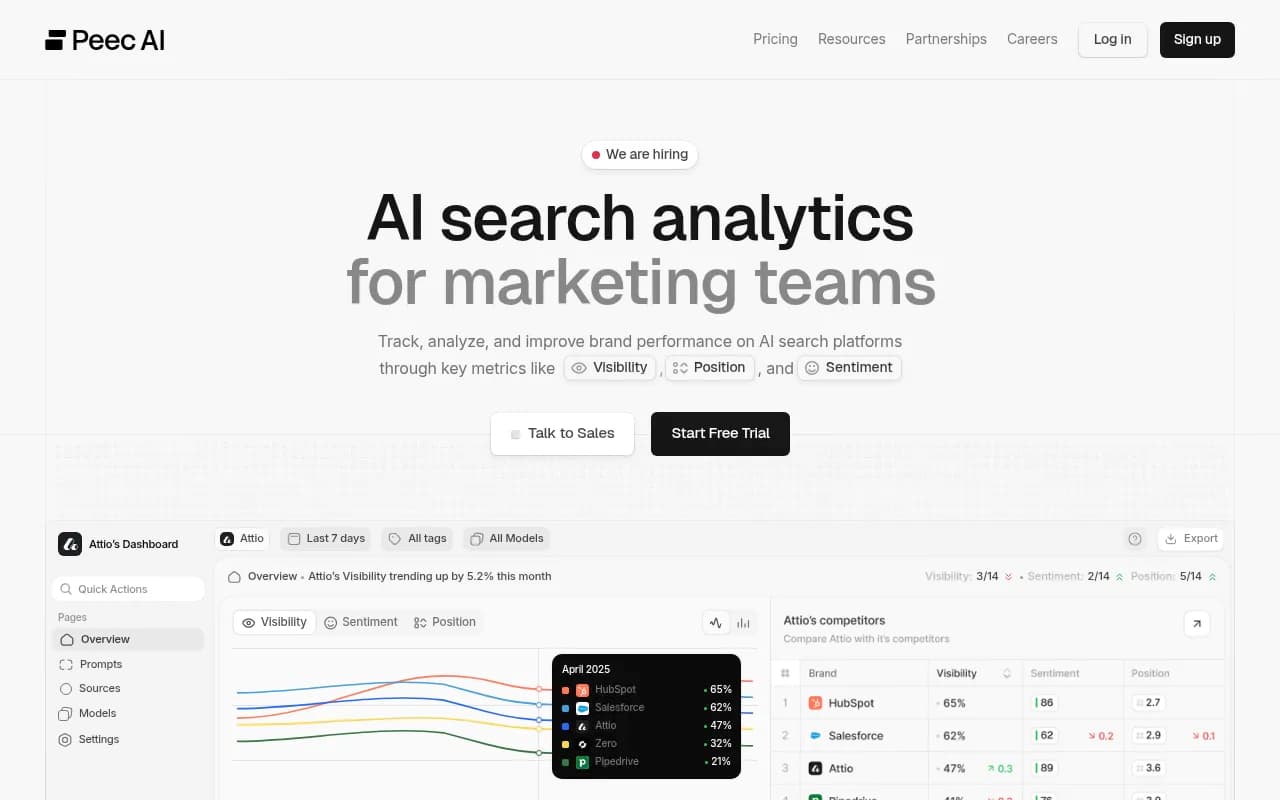
Other tools worth knowing about:

A practical comparison: ChatGPT vs. Perplexity visibility factors
| Factor | ChatGPT | Perplexity |
|---|---|---|
| Primary data source | Training data (+ browsing mode) | Live web retrieval |
| How recent does content need to be? | Less critical (training cutoff applies) | Very important -- live crawl |
| Third-party mentions matter? | Yes, for training signal | Yes, directly cited |
| Structured data (schema) | Helpful for training signal | Helpful for page quality signals |
| robots.txt blocks | Affects browsing mode | Directly blocks crawling |
| FAQ/structured content | Improves extractability | Directly improves citation rate |
| Reddit/forum presence | Contributes to training data | Directly cited as source |
| Brand age/history | Significant factor | Less significant |
| Fix timeline | Weeks to months | Days to weeks |
The fix timeline difference is real. Perplexity responds faster because it's pulling live content. If you publish a well-structured page today, Perplexity could cite it within days once it's crawled. ChatGPT's training-based knowledge updates more slowly, though its browsing mode can pick up new content faster.
The hallucination problem
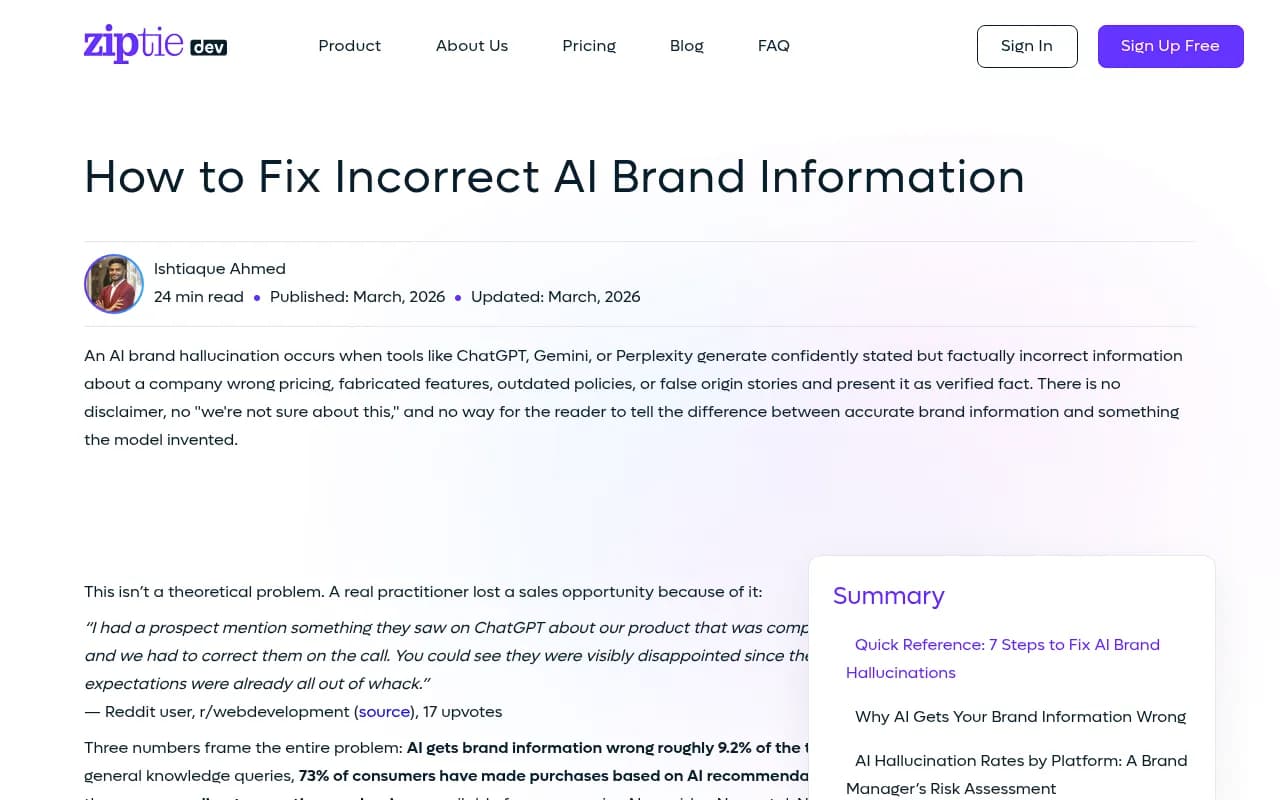
One more thing worth addressing: sometimes brands show up in AI answers but with wrong information. Wrong pricing, fabricated features, outdated descriptions. According to research cited by ZipTie.dev, AI gets brand information wrong roughly 9.2% of the time for general knowledge queries.
There's no direct correction mechanism with any major AI provider. You can't submit a ticket to OpenAI and ask them to fix what ChatGPT says about your brand. What you can do is flood the zone with accurate information: update third-party sources that AI models cite, fix outdated content on your own site, implement schema markup that clearly states your current information, and create content that directly addresses and corrects the misconceptions.
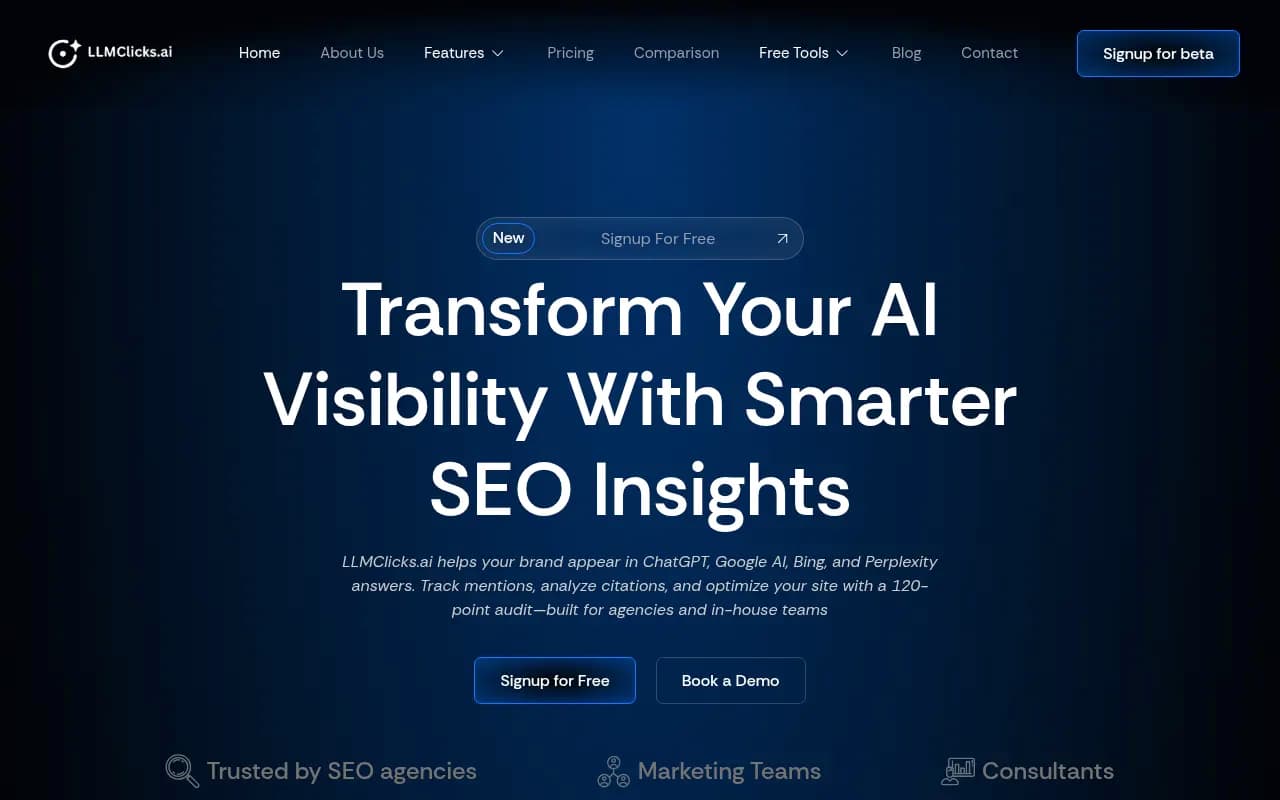
Tools like LLMClicks include hallucination detection specifically for this reason -- it's worth monitoring not just whether you're mentioned, but whether what's being said is accurate.
Where to start
If you're trying to prioritize, here's the order that makes sense for most brands:
- Check robots.txt and remove any AI crawler blocks
- Query ChatGPT, Perplexity, Claude, and Gemini with the five questions your customers most commonly ask about your category
- Document where you appear, where you don't, and what's being said
- Audit your top five pages for AI-readability and restructure them
- Identify three to five external sources (review sites, industry publications, directories) where you should have a presence but don't
- Set up ongoing monitoring so you're not doing this manually every week
The brands winning in AI search right now aren't necessarily the ones with the most content or the biggest budgets. They're the ones who understood early that ChatGPT and Perplexity are different systems with different requirements -- and built their strategy accordingly.