Key takeaways
- Meteoria.ai is a monitoring-focused AI visibility tool -- it shows you where you're invisible but doesn't help you fix it
- The most common complaints from teams switching away involve limited prompt coverage, no content generation, and weak competitor analysis
- In 2026, the bar for AI search visibility tools has risen sharply -- teams want action, not just dashboards
- The best alternatives depend on your use case: some teams need deep GEO optimization, others need simpler tracking or agency-grade reporting
- A handful of tools have emerged as clear destinations for teams leaving Meteoria.ai, each with different strengths
There's a pattern playing out across marketing and SEO teams right now. Someone signs up for an AI visibility tool, gets excited about the dashboards, runs a few reports -- and then six months later realizes they're still invisible in ChatGPT and Perplexity. The tool told them they had a problem. It just never helped them solve it.
Meteoria.ai sits squarely in that category for a lot of teams. It's not a bad product. But in 2026, "not bad" isn't enough when the AI search landscape is moving this fast and the gap between brands that appear in AI responses and those that don't is widening every quarter.
Microsoft's 2026 Work Trend Index found that 58% of knowledge workers are now producing work they couldn't have produced a year ago -- and that number jumps to 80% among power users who've figured out how to actually act on AI tools, not just observe them. That same dynamic is playing out in the GEO space. The teams pulling ahead aren't the ones with the prettiest dashboards. They're the ones who found tools that help them do something.
This guide is about what teams found when they looked more closely at Meteoria.ai, why they left, and where they went.
What Meteoria.ai actually does (and where it stops)
Meteoria.ai is an AI search monitoring tool. It tracks how your brand appears across AI engines like ChatGPT, Perplexity, and Google AI Overviews, gives you visibility scores, and lets you monitor competitor mentions.
For teams just getting started with AI visibility, that's genuinely useful. Knowing you have a problem is step one. But step one isn't a strategy.
The core frustration teams report is that Meteoria.ai is a read-only tool. You get data about where you're missing, but the platform doesn't tell you why you're missing, doesn't show you what content would fix it, and doesn't help you create that content. You're left staring at a gap analysis with no clear path forward.
Specific complaints that come up repeatedly:
- Prompt coverage is limited -- teams working in niche verticals often find their most important queries aren't tracked
- No content generation or optimization features -- you see the gap, then you're on your own
- Competitor analysis is surface-level compared to what teams need to actually understand why a competitor is winning
- No crawler log visibility -- you can't see whether AI engines are even reading your pages
- Reporting is hard to customize for client-facing work, which is a real problem for agencies
None of these are fatal flaws in isolation. Together, they add up to a tool that works fine as a starting point but becomes a ceiling.
The broader shift: monitoring isn't enough anymore
This isn't just a Meteoria.ai problem. The whole first generation of AI visibility tools was built around monitoring. That made sense in 2023 and early 2024 when the question was simply "are AI engines mentioning us at all?"
That question has been answered for most brands. The answer is: not enough, and not in the right contexts. Now the question is: what do we do about it?
The tools that are winning in 2026 are the ones that close that loop -- find the gaps, generate content that fills them, and track whether it worked. That's a fundamentally different product than a monitoring dashboard.
Where teams are going: the main alternatives
Here's an honest breakdown of where Meteoria.ai users are landing, and what's driving each switch.
For teams that want the full optimization loop
The most common destination for teams that outgrew Meteoria.ai is Promptwatch. The reason is straightforward: it's the only platform that handles the entire cycle from gap identification to content creation to traffic attribution.
The Answer Gap Analysis shows exactly which prompts competitors rank for that you don't -- not as a vague "you're missing coverage here" note, but as specific questions and topics with prompt volume estimates and difficulty scores. The built-in AI writing agent then generates content grounded in 880M+ citations analyzed across AI models, so what gets produced is engineered to get cited, not just to fill a word count. And the page-level tracking closes the loop by showing which specific pages are being cited, by which models, and how often.
For teams that have been stuck in "we know we have a problem" mode, that full cycle is a significant change.

Promptwatch also has AI crawler logs -- real-time visibility into which AI engines are crawling your pages, which pages they're reading, and what errors they're hitting. Most competitors, including Meteoria.ai, don't have this at all. It's the kind of feature that sounds technical but turns out to be genuinely important: if Perplexity's crawler keeps hitting a 404 on your best content page, you'd want to know that.
For teams that want simpler tracking without the complexity
Not every team needs the full optimization stack. Some are smaller, earlier-stage, or just want cleaner monitoring before they commit to a bigger platform.
Otterly.AI is a popular landing spot here. It's affordable, straightforward, and covers the core monitoring use case without overwhelming you with features you won't use yet.

Peec AI is another option in this tier -- clean interface, solid tracking across the main AI models, and a price point that works for smaller budgets.
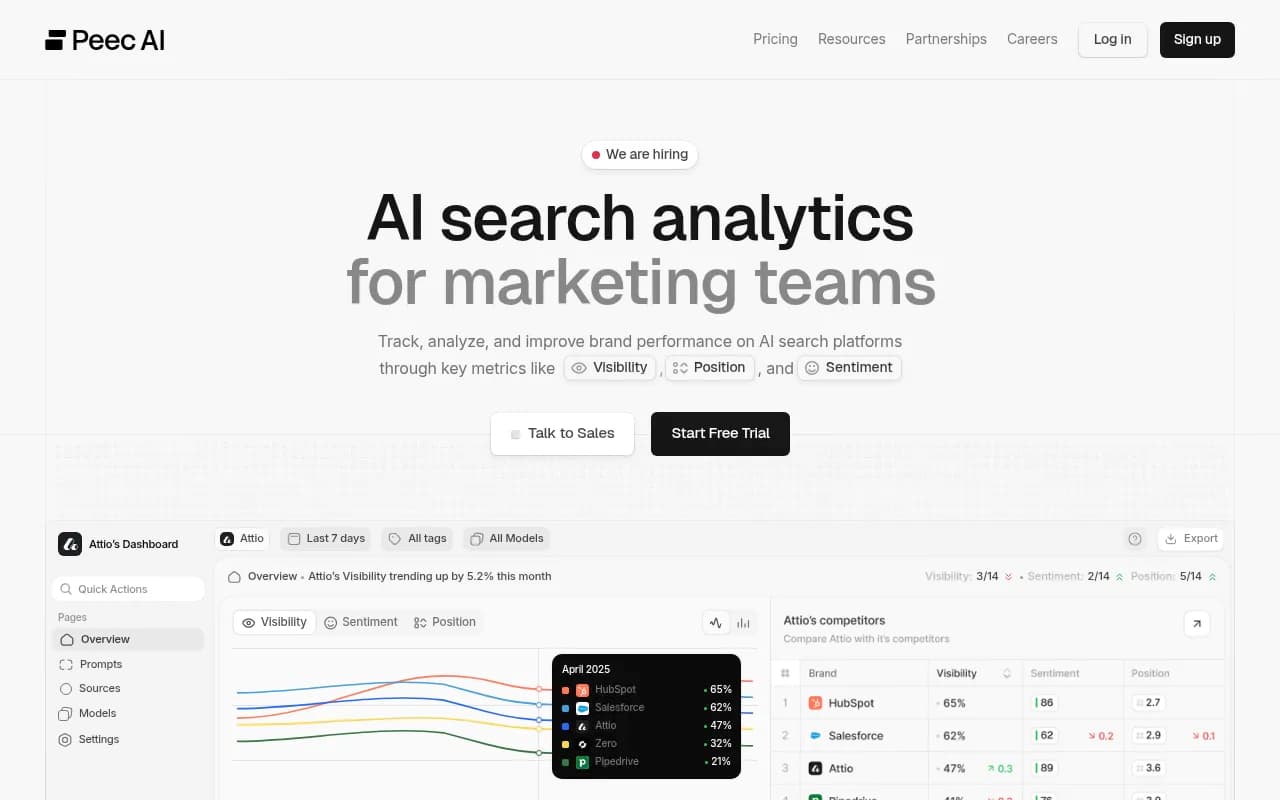
The honest caveat: both of these have the same fundamental limitation as Meteoria.ai. They're monitoring tools. If you're switching because you want to actually improve your AI visibility, not just measure it, you'll hit the same ceiling eventually.
For enterprise teams with serious budgets
Profound is where larger brands tend to land when they want enterprise-grade AI visibility with strong data infrastructure.
It has a more robust feature set than Meteoria.ai and handles multi-brand, multi-region monitoring well. The tradeoff is price -- it's significantly more expensive, and some teams find the interface takes time to get value from.
Scrunch AI is another enterprise-oriented option, with good coverage across AI models and solid competitor analysis.
For agencies managing multiple clients
Search Party has built a strong position with agencies that need to manage AI visibility across many client accounts.
Search Party
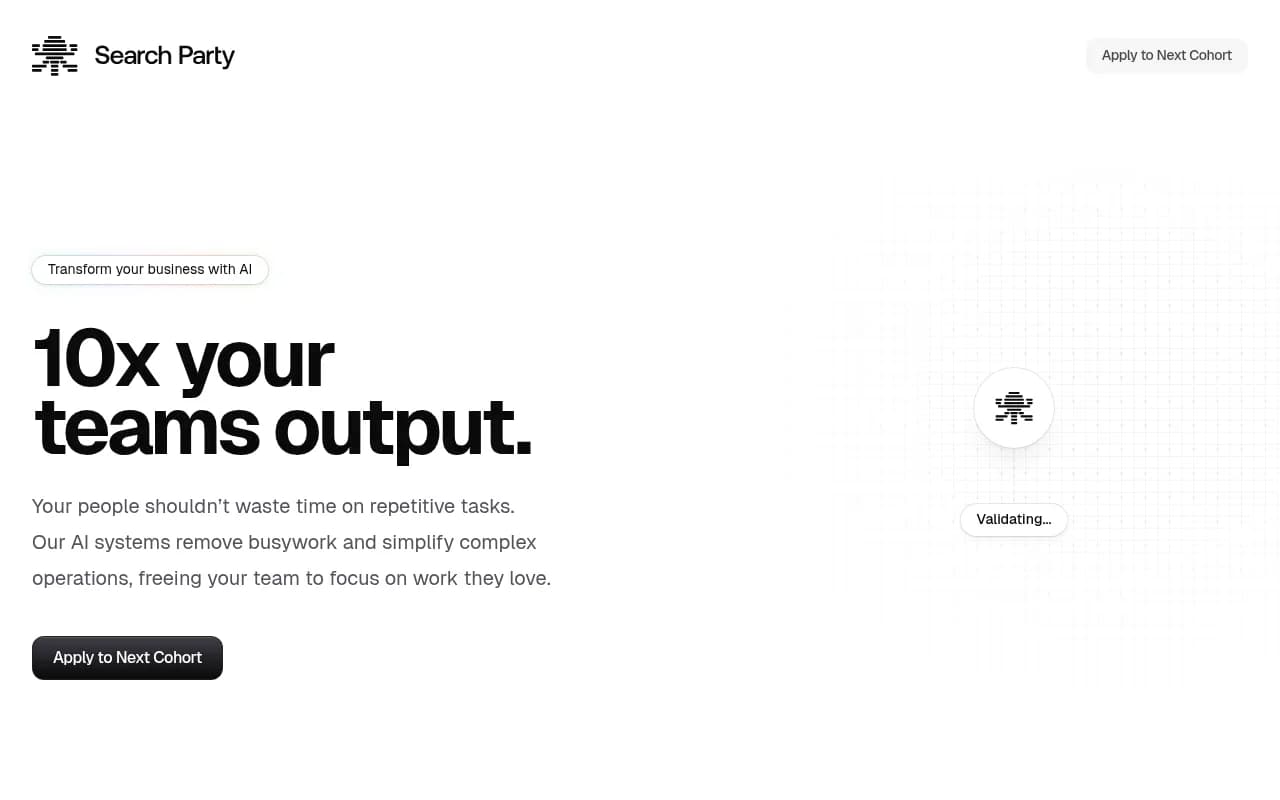
The reporting layer is more client-friendly than most tools in this space, which matters when you're presenting results to people who don't live in dashboards all day.
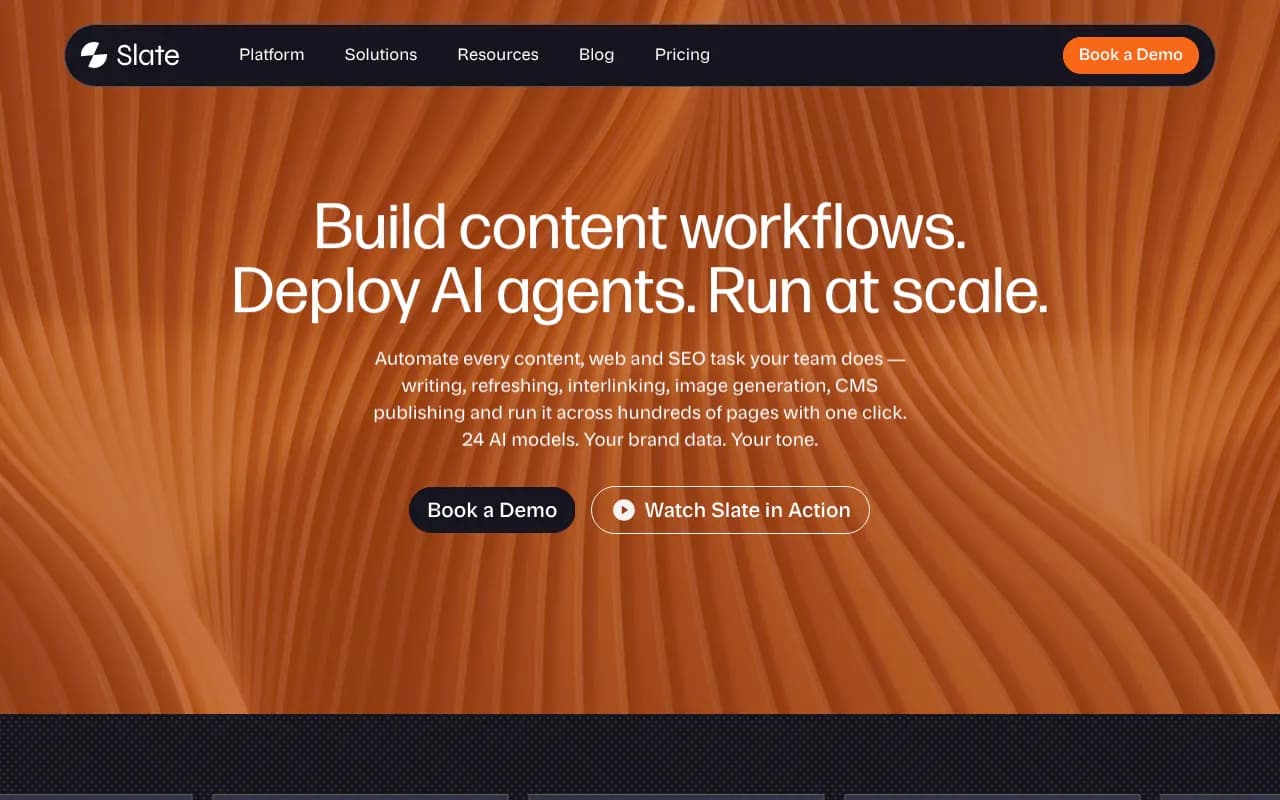
Slate is another agency-focused option worth looking at, particularly for teams that want cleaner white-label reporting.
Feature comparison: Meteoria.ai vs. the main alternatives
| Feature | Meteoria.ai | Promptwatch | Otterly.AI | Profound | Search Party |
|---|---|---|---|---|---|
| AI model coverage | Limited | 10+ models | Core models | 8+ models | Core models |
| Prompt volume data | No | Yes | No | Partial | No |
| Answer gap analysis | Basic | Deep | No | Partial | No |
| Content generation | No | Yes (AI agent) | No | No | No |
| Crawler logs | No | Yes | No | No | No |
| Reddit/YouTube tracking | No | Yes | No | No | No |
| ChatGPT Shopping tracking | No | Yes | No | No | No |
| Traffic attribution | No | Yes | No | Partial | No |
| Agency reporting | Limited | Yes | Basic | Yes | Strong |
| Pricing (entry) | Varies | $99/mo | Lower | Higher | Custom |
The table makes the gap pretty clear. Meteoria.ai is competitive on basic monitoring but falls behind on anything that involves acting on the data.
What the switching process actually looks like
Teams that have moved away from Meteoria.ai generally describe a similar sequence of events.
First, they realize the visibility scores aren't moving despite publishing new content. The tool shows them they're invisible for certain prompts, but there's no guidance on what to write or how to structure it to change that.
Second, they start manually cross-referencing data from multiple tools -- pulling prompt ideas from one place, writing content in another, checking citations in a third. This works for a while but doesn't scale.
Third, someone on the team asks whether there's a tool that just does all of this in one place. That's usually when the evaluation process starts.
The evaluation itself tends to be quick. Most teams run a free trial of one or two alternatives, compare the prompt coverage against what they were seeing in Meteoria.ai, and make a decision within a few weeks.
One thing worth noting: switching costs are low in this space. There's no complex data migration, no long-term contracts to break, and the onboarding for most tools is measured in hours, not weeks. If you're on the fence, running a parallel trial is genuinely low-risk.
Specific use cases and which tool fits
Different teams have different primary needs. Here's a more direct mapping:
You're a marketing team at a mid-size brand that wants to improve AI search visibility and can't afford to hire a dedicated GEO specialist. Promptwatch's content generation tools mean you can identify gaps and produce content to fill them without adding headcount. That's the core value proposition for this profile.
You're an SEO agency with 20+ clients and need to show AI visibility progress in monthly reports. Look at Search Party or Slate for the reporting layer, or Promptwatch if you want to also offer content optimization as a service.
You're a solo founder or small team just starting to pay attention to AI visibility. Otterly.AI or Peec AI will give you the basics without overwhelming you. Graduate to something more powerful when you've got the fundamentals down.
You're at an enterprise brand with multiple product lines and regions. Profound or Promptwatch's Business/Enterprise tier. Both handle multi-site, multi-language monitoring. Promptwatch adds the content and attribution layer that Profound doesn't have.
A few things to check before you switch
Before committing to any alternative, it's worth verifying a few things that vary more than the marketing suggests:
- Which specific AI models are actually monitored (not just listed on the website -- ask for a demo with your actual prompts)
- Whether prompt volume data is estimated or based on real query data
- How content generation works -- is it generic AI output or grounded in citation data?
- Whether traffic attribution is available and how it connects to your existing analytics setup
- What the actual onboarding looks like and whether there's a dedicated contact or just documentation
Most tools in this space will give you a free trial. Use it with your real prompts, not the demo prompts they suggest. That's the fastest way to see whether the coverage is actually there for your category.
The bottom line
Meteoria.ai served a purpose when AI visibility was a new concept and teams just needed to understand whether they had a problem. In 2026, most teams already know they have a problem. What they need is a way to fix it.
The tools that are attracting Meteoria.ai users aren't necessarily flashier or more expensive -- they're just built around a different question. Not "where are you invisible?" but "what are you going to do about it?"
If you're evaluating alternatives, start by being honest about which question you actually need answered. If monitoring is genuinely all you need right now, there are cheaper and simpler options than whatever you're currently paying. If you need to move the needle on AI search visibility, you need a platform with content tools, gap analysis, and attribution -- not just a dashboard that confirms the problem exists.