Key takeaways
- A GPT wrapper is not automatically bad. The problem is a tool that asks a model what it "knows" about your brand and calls that AI search visibility.
- Real AI visibility data comes from live answers: web retrieval, citations, and query fan-outs. A model's memory is not that.
- You can run a useful check in 10 minutes: look at pricing logic, ask four vendor questions, and compare outputs against a real ChatGPT session.
- Third-party claims that a whole category is "just wrappers" are opinion. Verify architecture yourself.
- Wrappers are fine for drafting and brainstorming. They are a poor foundation for measuring visibility.
What people mean by GPT wrapper
A GPT wrapper is a product whose main engine is a call to someone else's model (GPT, Claude, Gemini) with a prompt template and a user interface on top. That is not an insult by itself. Plenty of useful software is exactly that.
The trouble starts when the wrapper makes claims it cannot back up. In SEO, the typical version looks like this: you type your brand and a few keywords, the tool sends a prompt to a model API, and you get a "visibility score" based on what the model says from training data. It looks like monitoring. It is closer to asking a stranger what they remember about you.
I want to be fair here. Some writers have declared whole categories to be wrappers. One post, Best AI SEO Tools in 2026, calls Profound, Otterly, and Ahrefs Brand Radar "wrappers around GPT-5 with a content management UI". That is one author's opinion, it is at odds with how those vendors describe themselves, and nobody outside those companies has verified it. Another widely shared claim, that 73% of "AI-powered" tools are ChatGPT wrappers, comes from a Medium post whose methodology I could not check. Treat both as anecdotes, not evidence.
So the useful question is not "is this a wrapper?" It is "does this tool measure what it says it measures?"
Why the distinction matters for SEO
AI search answers are not just a model reciting memory. When ChatGPT, Perplexity, or Google AI Overviews answer a commercial question, they run web searches, pull pages, and cite a limited number of sources. The answer you see can differ by country, language, and interface.
Two pieces of first-party data show how specific this behavior is:
- According to Promptwatch Data on ChatGPT query fan-outs, a single prompt can trigger 3 to 8+ separate web searches. Average fan-outs per response were 2.15 in early December and about 1.84 by early March 2026. A tool that only records the typed prompt misses the searches that decide which pages get cited.
- Promptwatch's average sources per response data (published September 2025) shows ChatGPT citing about 5 sources per web-search answer, Google AI Overviews about 10, and Perplexity almost exactly 10 every day. Copilot swung from under 2 to nearly 17 within weeks.
Those patterns are hard to fake. A tool that simulates answers with a single API call tends to produce suspiciously uniform output, or numbers that do not match what you see when you run the same prompt yourself.
A disclosure: Promptwatch publishes that data and also sells a competing product, so weigh it accordingly. The numbers are checkable by anyone with a browser, which is the point of this article.

The 10-minute wrapper test
Here is the whole process. Set a timer if you like.
Minutes 0 to 2: read the pricing page like an engineer
Pricing reveals architecture. Ask what the unit of cost is.
- If you pay per prompt or per response and the plan lists how many responses are included, the vendor is probably running real queries and paying for them.
- If the price is flat and generous with unlimited "analyses" of any brand, be curious about what each analysis actually does.
- If the plan counts only "credits" with no explanation, find out what a credit buys.
Note that vendor numbers in public listings often conflict. For example, Peec AI shows up at EUR 85/mo in one roundup and $103/mo in another, with the engine count listed as "9+" in one and "3" in the other. Always check the vendor's own pricing page before you compare. If a roundup disagrees with the pricing page, trust the pricing page.
Minutes 2 to 5: ask four questions
Send these to the vendor, or look for the answers in their docs.
- Where do the answers come from? Real user interfaces, scraped search sessions, or model APIs? API outputs and user-facing answers can differ, particularly for citations and shopping results.
- Do you capture query fan-outs? If the tool only knows the prompt you typed, it cannot show what the AI searched for.
- Can I see the exact response, with sources and their order, for a specific date? A good tool lets you audit a result. A wrapper often shows a score with no underlying text.
- What data do you own that a model does not? Examples worth asking about: prompt volume estimates, crawler logs, a citation database, or traffic attribution. If the answer is "our prompts and our dashboard", that is a thin moat.
Vague answers to all four are the clearest signal you will get in this whole process.
Minutes 5 to 8: run a side-by-side
Pick one prompt your customers really ask. Run it yourself in ChatGPT with web search on, then look at what the tool reports for the same prompt, country, and day.
Check these things:
- Are the cited domains the same, or at least close?
- Does the tool show the same number of sources you saw?
- Does it flag when ChatGPT did not search the web at all?
- Does the brand mention order match?
Small differences are normal, because answers vary between runs. Large, consistent mismatches mean the tool is probably simulating. For a free way to see fan-outs in your own ChatGPT sessions, the GEO Inspector Chrome extension from Promptwatch shows the searches ChatGPT runs and which sources were fetched versus cited.
Minutes 8 to 10: look for an action layer
Monitoring is the easy part to build. Ask what happens after you see a gap. Does the tool tell you which page to fix, show whether AI crawlers can read your site, or track what changed after you published? If the answer is only "here is a chart", you are paying for a dashboard that a spreadsheet and a few API calls could approximate.
Red flags and green flags
| Signal | Likely wrapper | Likely real data collection |
|---|---|---|
| Pricing unit | Flat fee, vague "analyses" | Responses or prompts with stated limits |
| Output | Score with no source text | Full answer, citations, and positions you can audit |
| Fan-outs | Not mentioned | Shows the actual searches behind each answer |
| Engine counts | Same behavior everywhere | Different citation patterns per engine |
| Proprietary data | None named | Prompt volumes, crawler logs, or a citation database |
| Country and language | Single default | Selectable per prompt |
| After-insight workflow | Chart only | Tasks, content tools, or tracking of published pages |
None of these is a verdict on its own. A cheap tool can be honest about being a light API-based tracker, and that is a perfectly reasonable product for a small team.
Where common tool types fall
I have not verified any vendor's internal architecture, so treat this as a framing for your own questions, not a ruling.
| Type | Typical approach to check | What to verify |
|---|---|---|
| Prompt trackers | Run a fixed prompt set on a schedule | UI scraping vs API, fan-out capture |
| Traditional SEO suites adding AI tracking | Add AI panels to an existing data platform | Prompt flexibility, depth of AI-specific data |
| AI content writers | Generate text from a model with SEO overlays | Whether any live visibility data grounds the content |
| Agentic optimization platforms | Monitor, then plan and publish content | Whether results are measured after publishing |
Trackers
The monitoring-only category is crowded. Names in our catalog include Otterly.AI, Peec AI, Profound, Scrunch, and Athena HQ.




In the roundups I read, Otterly describes itself as marketer-built with transparent pricing starting at $29/mo, while Profound highlights Prompt Volumes data. Those are the kinds of differentiators worth testing with the four questions above, since proprietary data is exactly what a plain wrapper lacks.
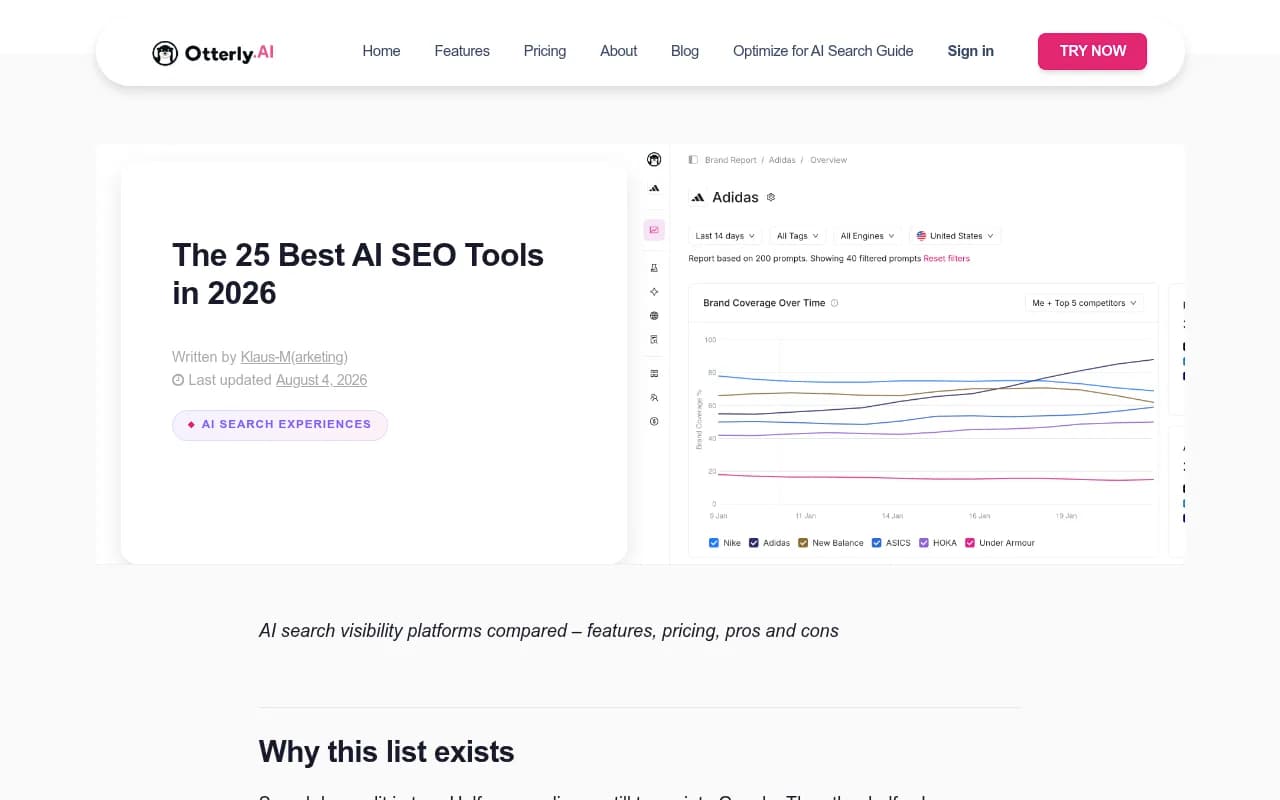
Remember that Otterly publishes this list and ranks itself second. Vendor-published roundups are useful for pricing and feature scans, not for impartial rankings.
Suites with AI features added
Semrush, Ahrefs Brand Radar, and SE Ranking all attach AI tracking to existing data. The question for these is depth, not honesty: how flexible is the prompt set, and does the AI data connect to anything besides a ranking-style report?


Content writers
Tools like Jasper AI, Writesonic, and Copy.ai are the classic wrapper-adjacent category, and that is fine for drafting. The question is whether live citation data informs what they write.
Platforms that go beyond monitoring
If your goal is to find out why you are not cited and then fix it, look for tools that combine real-interface prompt tracking, AI crawler logs, and content publishing. Promptwatch is built this way: it tracks the actual UIs of ChatGPT, AI Overviews, AI Mode, Gemini, Perplexity, and Copilot, shows IP-verified crawler activity, and has a Content Agent that publishes to Webflow, Framer, or WordPress. Crawler logs are a good example of data a wrapper simply cannot invent, because they come from your own servers.
For broader browsing, the GEO software directory lists dozens of options to run through the test.
Free ways to sanity-check any tool
Before paying anyone, try these:
- Run your own prompts in ChatGPT, Perplexity, and Google AI Mode and write down which domains are cited.
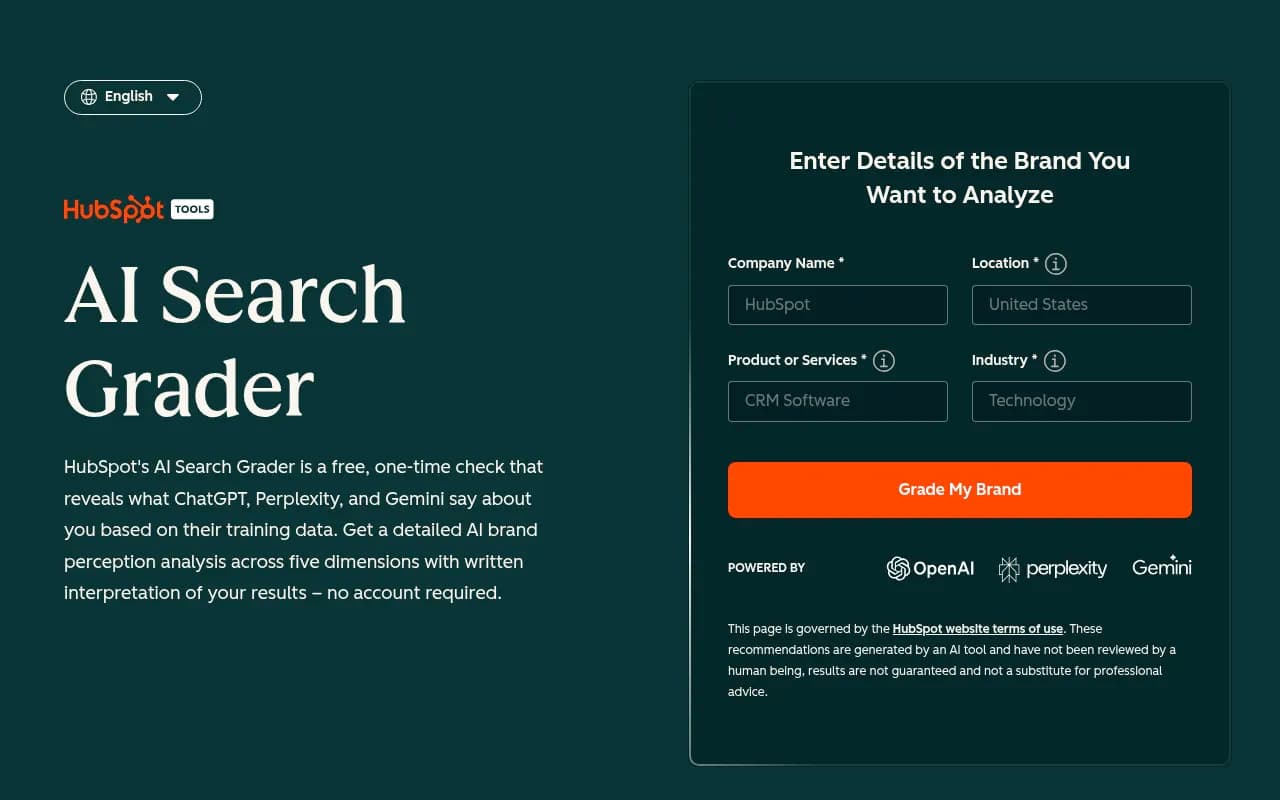
- Use a free scan such as the AI visibility report from Amplitude AI Visibility or HubSpot AI Search Grader as a rough baseline, and see whether results from two tools agree.

- Check your own server logs or Google Search Console to see what is actually happening with your traffic.
If two free tools and your own manual check roughly agree, you have a baseline. If a paid tool wildly disagrees with all of them, ask why.
What about the evaluation criteria in vendor roundups?
Most listicles, including the Otterly and Evertune ones, weigh the same four things: engine coverage, prompt-level depth, actionability, and price. Those are sensible. Evertune frames the question well: most tools offer surface-level monitoring, and the better ones combine depth, breadth, and actionability.
The missing criterion in most of them is provenance. A tool can cover ten engines and still be ten API calls in a trench coat. Add "where does the data come from?" to your checklist and you will filter out a lot of noise.
When a wrapper is fine
I would not tell anyone to avoid wrappers entirely.
- Drafting outlines, meta descriptions, or first-pass copy: a wrapper is perfectly adequate.
- Quick brand-perception checks: asking a model what it "thinks" about you has some value for sentiment, as long as you do not call it visibility.
- Very small budgets: a light $19 to $30 tracker that is upfront about its method can be a reasonable starting point.
What you should not do is make budget decisions, report to executives, or guide content strategy using simulated numbers. If a CMO sees a visibility score, it needs to correspond to what real users see.
A quick checklist to keep
- Does pricing map to real queries run?
- Can I see the full response and sources for a given prompt?
- Does it capture fan-outs?
- Does it track real interfaces, by country?
- Does it own any data a model cannot generate, like logs or prompt volumes?
- Does it help me act and then measure the result?
- Does a side-by-side with ChatGPT roughly match?
Five or more yeses is a tool worth a trial. Two or fewer is a wrapper with a nice interface.
Bottom line
Do not take anyone's word that a category is "just wrappers", including mine. Take 10 minutes, run the side-by-side, and ask where the data comes from. Tools that collect real answers, capture fan-outs, and connect to your actual traffic will pass easily. Tools that cannot explain their method will tell you something with their silence. If you want a human to run this evaluation alongside your SEO program, 1001 SEO Media works with Promptwatch for GEO and AI visibility measurement.