Key takeaways
- A credit is not a unit of value. It is a vendor's way of metering compute, and what it buys varies from a single chat answer to a full multi-step research job.
- Usage pricing is now the norm. Metronome and Greyhouse Capital found about 77% of the largest software companies had some usage-based pricing in 2025, so seat-based budgeting math no longer works.
- Forecasts fail by large margins. HubSpot's example is a platform costing $5,000 in month one and $50,000 in month six once adoption spreads.
- Budget three buckets: monitoring (responses), analysis (agent credits), and production (articles or tasks). Mixing them is how teams overspend.
- Platform behavior changes overnight, so keep a reserve line for re-running analyses.
Why credit pricing confuses everyone
Traditional SaaS was easy to budget. Ten seats times a price per seat, done. Credit-based pricing breaks that. Usage varies, adoption is lumpy, and the unit being sold is often hard to picture.
HubSpot's guide to budgeting for AI credits puts it bluntly: those little AI tasks add up like the tab at a business lunch. It also quotes Gartner's warning that CIOs who don't understand how GenAI costs scale could make budgeting errors of 500% to 1,000%. I think that range sounds absurd until you watch a team of four become a team of fifteen who all discovered the chat sidebar in the same week.
The same HubSpot post says over 90% of CIOs report that managing cost limits their ability to get value from AI. The problem is rarely the price per credit. It is not knowing how many credits a workflow burns.
The four things vendors call a credit
Before you compare plans, work out which kind of meter you are looking at. Most AI search and marketing tools use one of four.
| Meter | What you pay for | Example from the research | Budgeting risk |
|---|---|---|---|
| Flat credit | A prepaid pool spent on any AI action | HubSpot credits at $0.01 each, from 1,000 for $10 | Heavy actions drain the pool faster than light ones |
| Per-task | Each workflow step or run | AirOps overage at $0.025 per task past your allotment | Cost scales with content volume |
| Per-outcome | A completed result | HubSpot Breeze at $1 per lead (Prospecting) and $0.50 per resolved conversation (Customer) | Cheap if it works, but volume can surprise you |
| Response or prompt volume | Each tracked AI answer collected | Monitoring plans measured in monthly responses | Depends on prompts, models, countries, and frequency |
Agent credits in an AI visibility platform sit in the second and third rows in practice. They pay for the thinking: an analyst-style chat digging through your citations, a competitor gap analysis, a dashboard built on request. They do not pay for the raw data collection, which is usually metered separately in responses.
That split matters. Teams routinely compare a plan's credit count with a competitor's response count and conclude one is cheaper. They are buying different things.
What agent credits typically cover
Using Promptwatch as a concrete example, since its plan structure shows the split well: Promptwatch includes Agent Credits from 500 to 6,500 per month on paid plans, separate from its monthly response allowances (6,000 responses on Essential, 42,000 on Business). Credits power Agent Chat, which acts as an analyst over your live data. It runs multi-step workflows, builds dashboards and PDF reports, and works through the Action Board. Responses are what you spend when monitors run daily across models and countries.

So a credit buys analysis labor. A response buys a data point. Content production is a third line again: AEO articles on Professional (5) and Business (10), with the automated Content Agent on Business and Enterprise. Check promptwatch.com/pricing for current numbers, because plan limits change.
In practice you can think about credit consumption in three tiers:
- Light: a quick question in chat, such as which competitor gained share this week. Low credit cost.
- Medium: a competitor gap analysis or a citation research workflow that queries several data sources.
- Heavy: multi-step jobs that delegate to subagents, render charts, and build a report.
I have no verified per-action credit costs to quote, and vendors rarely publish them. Ask for them. If a vendor can't tell you roughly what a 7-day briefing costs in credits, treat the plan as unforecastable.
Know what you are comparing
AI search tools fall into rough groups, and credits mean different things in each.
| Tool type | Examples | What the meter usually counts |
|---|---|---|
| Monitoring-first trackers | Otterly.AI, Peec AI | Prompts and responses |
| Content workflow platforms | AirOps | Tasks and workflow runs |
| Full visibility platforms | Promptwatch | Responses, agent credits, and articles, separately |
| Marketing agent suites | HubSpot Breeze | Outcomes or credits |


According to the Rework roundup of marketing agents, AirOps offers a free Insights tier for AI search visibility tracking, but its pricing jumps roughly 10x from Solo to Pro with no tier between, and task-based credits mean cost scales unpredictably with content volume. That is a fair summary of the whole category: the entry price tells you almost nothing about the price at scale.
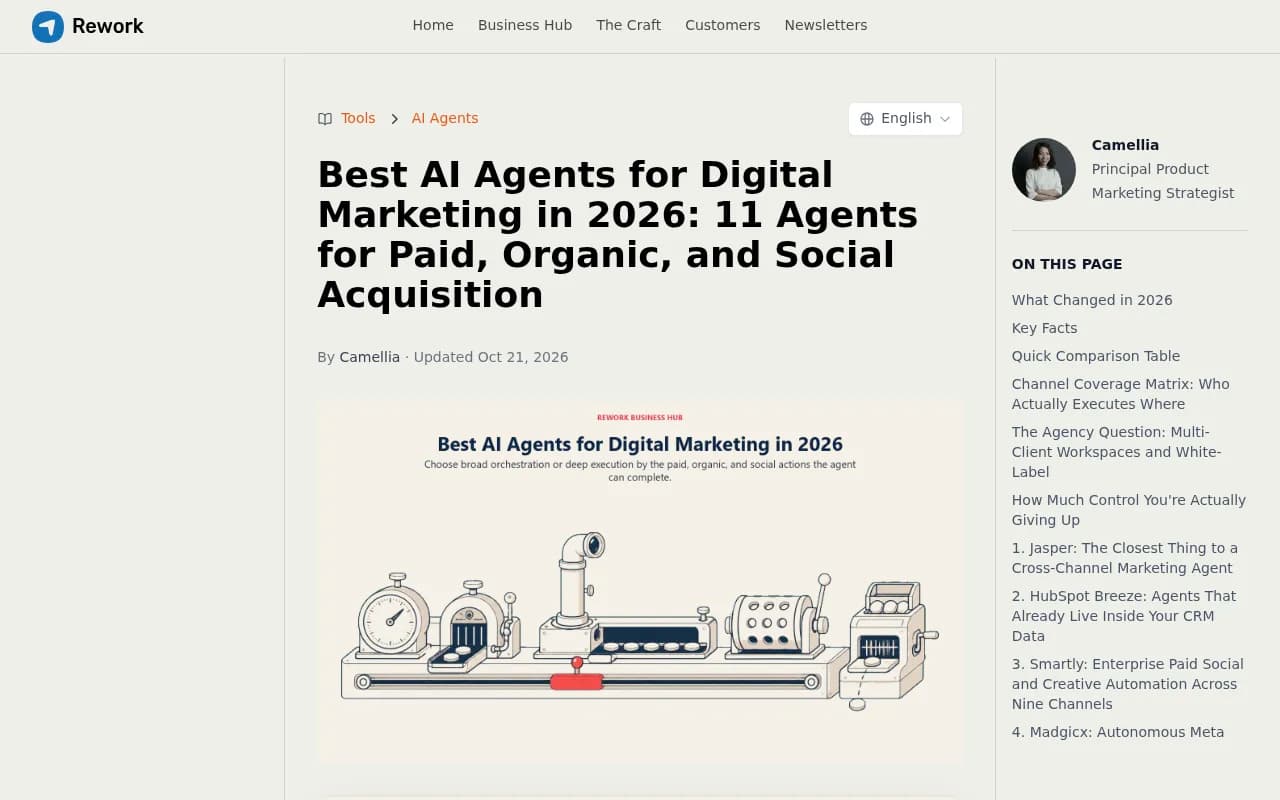
The roundup's autonomy table is worth reading for budgeting too. An agent with standing autonomy spends on a schedule whether or not anyone is watching. A draft-only or approval-gated agent spends only when a human triggers it. Standing autonomy is more expensive to get wrong.
If you want to survey more options before committing, the directory at bestgeosoftware.com lists GEO platforms with their pricing models side by side.
Build a baseline usage forecast
Here is the method I would use for a team of three to ten people.
Step 1: Count the data you need
Start with monitoring, because it is the most predictable line. Responses equal prompts times models times countries times run frequency. Fifty prompts across six models in two countries, run daily, is 50 x 6 x 2 x 30 = 18,000 responses a month. That already exceeds a 6,000-response plan, so the cheapest tier is not always the one that fits.
Trim by choosing fewer models, dropping duplicate prompts, or running low-priority prompts less often.
Step 2: Estimate analysis sessions
Credits are harder. Log a two-week pilot and count how many chat sessions, reports, and workflows each person runs. Multiply by weeks. Then add 50% for the adoption effect, since usage rises after the first month as colleagues see what the tool can do.
Step 3: Price production separately
If the tool also writes content, count articles per month. Crisp, for example, scaled to 5 to 10 articles per day with Promptwatch, which is a volume most teams will not hit, but it shows how fast production costs can climb. Price articles on their own line, never inside the credit pool.
Step 4: Add the hidden costs
The Medium budgeting playbook by Micheal Lanham (single author, not independently verified) claims 56% of companies report data platforms, not model tokens, as their top unexpected cost driver, and puts a RAG vector database at $500 to $2,500 per month. It also suggests reserving 10% to 30% of project cost for change management. That is aimed at custom-built agents, so a team using a hosted platform will see less of it. Still, training and workflow redesign are real, and almost nobody budgets for them.
Plan for platforms that change under you
AI search is not a stable surface, and that affects your budget in ways seat-based software never did.
Promptwatch Data shows that on August 8, 2026, ChatGPT started using the site: operator at scale. The share of fanout queries using it jumped from 0.37% to 16.8% in a day, and average fanouts per response rose from about 1.08 to about 1.83. Any keyword-to-fanout mapping built before that date was stale overnight.
Earlier, Promptwatch's query fanout report measured about 2.15 distinct web searches per prompt in early December 2025, easing to about 1.84 by early March. The report's intro says a prompt can trigger 3 to 8 or more searches, but the measured averages are lower, so use the averages for planning.
Citation volume also differs by engine. According to Promptwatch's average sources per response data (published September 2025, so check for refreshes), ChatGPT cites about 5 sources per web-search answer, while Google AI Overviews and Perplexity cite about 10. A prompt that returns ten citations takes more analysis than one that returns five, which means credit use varies by engine as well as by prompt.
The practical rule: hold 10% to 15% of your analysis budget as a reserve for re-running research after a platform change. You will use it.
Governance: who owns the credit budget
Credit pools get drained quietly. Three habits help.
- Name one owner. Someone should see usage weekly, not at invoice time.
- Start with showback. The Medium post notes only 35% of companies track AI costs granularly enough for chargeback. Report each team's consumption without billing it first, then move to chargeback once tagging is reliable.
- Route work to the cheapest adequate option. Use a light chat question for simple lookups and reserve heavy multi-step workflows for decisions that justify them.
Portal26 makes a related point about agentic spend: it does not show up on a purchase order, so finance teams are often flying blind until the bill arrives. That is the argument for the weekly check.

Portal26 cites Gartner's 2026 Hype Cycle for Agentic AI: only 17% of organizations have deployed AI agents so far, while more than 60% expect to within two years. A lot of teams are about to learn this lesson at once.
Three scenarios, one budget
Do not forecast once. Model three cases and fund the middle one.
| Scenario | Assumptions | What to fund |
|---|---|---|
| Conservative | One or two power users, 30 to 50 prompts, weekly reports | Entry plan, no add-ons |
| Expected | Whole content and SEO team uses chat, daily monitoring, a few articles a month | Mid tier with credit headroom |
| Aggressive | Cross-team adoption, agency or multi-brand work, publishing at volume | Top tier or enterprise, with add-on credits priced in advance |
For the expected case, add the adoption uplift. If HubSpot's $5,000-to-$50,000 example sounds extreme, remember it describes a platform where adoption spread across departments. Your ceiling is how many people will touch the tool, so ask for plan upgrade terms before you sign.
Annual versus monthly
Annual billing at some vendors, Promptwatch included, gives 12 months for the price of 10, which is roughly 17% off. That is worth it only after a pilot has proved your usage. Start monthly, measure for two months, then lock in.
Questions to ask any vendor
- What does one credit buy in the three most common workflows I will run?
- Do credits roll over, and what happens at zero: hard stop, throttle, or overage?
- Are monitoring responses and agent credits separate pools?
- What is the overage price, and is it higher or lower than buying the next tier?
- Can I see usage by user and by workflow?
- How are price changes communicated?
If you also need help setting the strategy behind these purchases, an agency such as 1001 SEO Media can run the GEO program while you hold the tooling budget, but the questions above apply either way.
The practical takeaway
Treat credits as analysis labor, responses as data, and articles as production, and budget each on its own line. Run a two-month monthly pilot, log actual consumption, add an adoption uplift of around 50%, and keep a reserve for the next platform shift. For wider comparison shopping, the AI rank tracking directory is a reasonable starting point. The goal is not the lowest sticker price. It is a bill that in month six looks like the one you forecast.