Key takeaways
- AI-powered search now accounts for over 40% of searches, meaning your startup could be invisible to a huge chunk of potential customers if you're not tracking AI visibility
- Most AI visibility tools are monitoring-only dashboards -- they show you data but don't help you fix anything, which matters a lot when you have limited time and budget
- For startups, the right tool depends on your stage: free/freemium options work for early validation, while paid tools with content generation capabilities pay off faster once you're growing
- Promptwatch stands out as the only platform that closes the full loop -- find gaps, generate content, track results -- starting at $99/month
- Don't pay for enterprise features you won't use; prioritize tools that cover multiple AI models and give you something actionable to do with the data
If you're running a startup in 2026 and you haven't thought about AI search visibility yet, you're probably already behind. ChatGPT, Perplexity, Claude, Google AI Overviews -- these aren't novelties anymore. They're where a growing share of your potential customers are going to find (or not find) you.
The problem is that the AI visibility tool market has exploded, and a lot of what's out there is either too expensive for early-stage teams, too basic to be useful, or both. This guide cuts through that. We'll look at which platforms are genuinely worth it for startups on a tight budget, what you actually need versus what's nice-to-have, and where to start depending on your stage.
What AI visibility actually means for startups
Traditional SEO is about ranking on page one of Google. AI visibility is about whether ChatGPT recommends your product when someone asks "what's the best [your category] tool?" or whether Perplexity cites your blog when someone researches a problem you solve.
These are fundamentally different. A brand can rank #1 on Google and still be completely absent from AI-generated answers. And since AI models synthesize information rather than just listing links, the rules for getting cited are different too -- it's about being a credible, well-documented source that AI models trust and reference.
For startups, this creates both a threat and an opportunity. Established brands have years of backlinks and brand mentions. But AI models also pull from recent, well-structured content -- which means a startup that publishes the right content now can show up alongside (or instead of) incumbents in AI answers.
The catch: you need to know which prompts to target, which AI models matter for your audience, and whether your content is actually getting cited. That's what AI visibility tools are for.

What to look for when you're budget-conscious
Before diving into specific tools, here's the framework I'd use to evaluate any AI visibility platform as a startup:
Multi-model coverage. Your customers use different AI tools. A platform that only tracks ChatGPT misses Perplexity, Claude, Gemini, and Google AI Overviews. Look for at least 5-6 models covered.
Actionability, not just data. This is the big one. Plenty of tools will show you a dashboard of where you're mentioned. Very few will tell you why you're not mentioned and what to do about it. When you're a small team, you can't afford to just stare at data.
Content gap analysis. The most valuable thing a tool can show you is which prompts your competitors appear in that you don't. That's your to-do list.
Reasonable entry pricing. Enterprise tools like Profound and BrightEdge are excellent but priced for teams with dedicated analysts. Startups need something under $300/month that still delivers real value.
Traffic attribution. Knowing you got cited is useful. Knowing that citation drove actual signups is what justifies the spend.
The tools worth considering
Promptwatch: best overall for startups that want to grow, not just monitor
Promptwatch is the platform I'd recommend most confidently to a startup that's serious about AI search. It's not the cheapest option, but it's the one that actually helps you do something with what you find.
The core difference from most competitors: Promptwatch runs a full optimization loop. You find the prompts where competitors appear but you don't (Answer Gap Analysis), you generate content designed to get cited using a built-in AI writing agent trained on 880M+ real citations, and then you track whether that content actually starts getting picked up. Most tools stop at step one.

A few specifics that matter for startups:
- Crawler logs show you exactly which pages ChatGPT, Claude, and Perplexity are reading on your site -- and which ones they're ignoring or hitting errors on. This is genuinely rare among competitors.
- Prompt Intelligence gives you volume estimates and difficulty scores so you can prioritize winnable prompts instead of chasing high-competition queries with no realistic shot.
- Reddit and YouTube tracking surfaces the discussions that actually influence AI recommendations -- a channel most platforms ignore entirely.
- The Essential plan at $99/month covers 1 site, 50 prompts, and 5 articles per month. That's a real starting point for a startup, not a stripped-down demo.
The Professional plan at $249/month adds crawler logs, city/state tracking, and 15 articles -- worth it once you're past early validation and want to scale content production.
Otterly.AI: the most accessible entry point
If $99/month still feels like a stretch, Otterly.AI is the most commonly recommended entry-level option. It's a monitoring tool -- you track brand mentions across AI models, set up alerts, and see how your visibility changes over time.

What it doesn't do: content generation, gap analysis, crawler logs, or traffic attribution. It's a dashboard, not an optimization platform. But for a pre-revenue startup that just wants to know whether AI models are mentioning them at all, it's a reasonable place to start.
Peec AI: solid for multi-language startups
Peec AI is worth mentioning specifically because of its multi-language support. If your startup operates in non-English markets -- or plans to -- this matters more than most tools acknowledge. Most AI visibility platforms are heavily English-first.
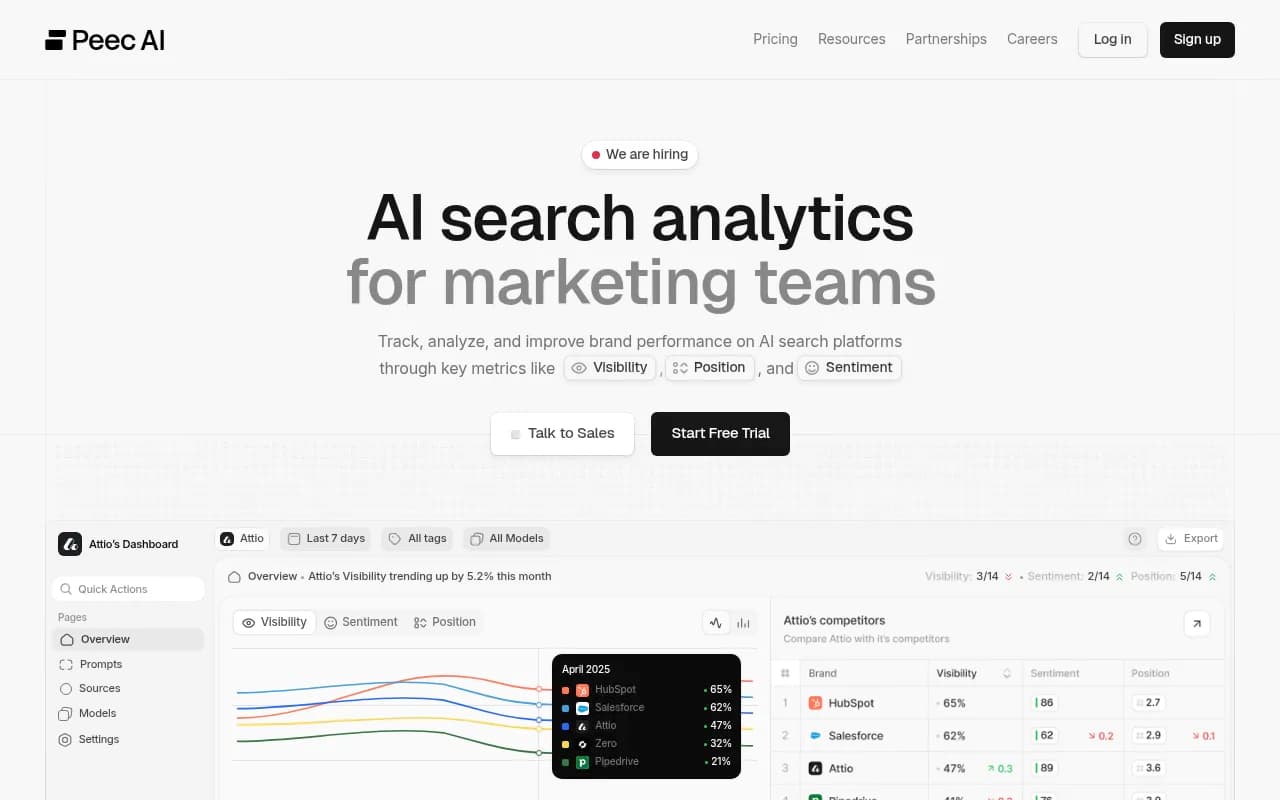
Like Otterly, it's primarily a monitoring tool. Good for tracking, less useful for acting on what you find.
Writesonic: content-first approach
Writesonic has evolved from a pure content generation tool into something that combines AI search gap tracking with content publishing. If your startup's primary bottleneck is content production (rather than analysis), it's worth looking at.
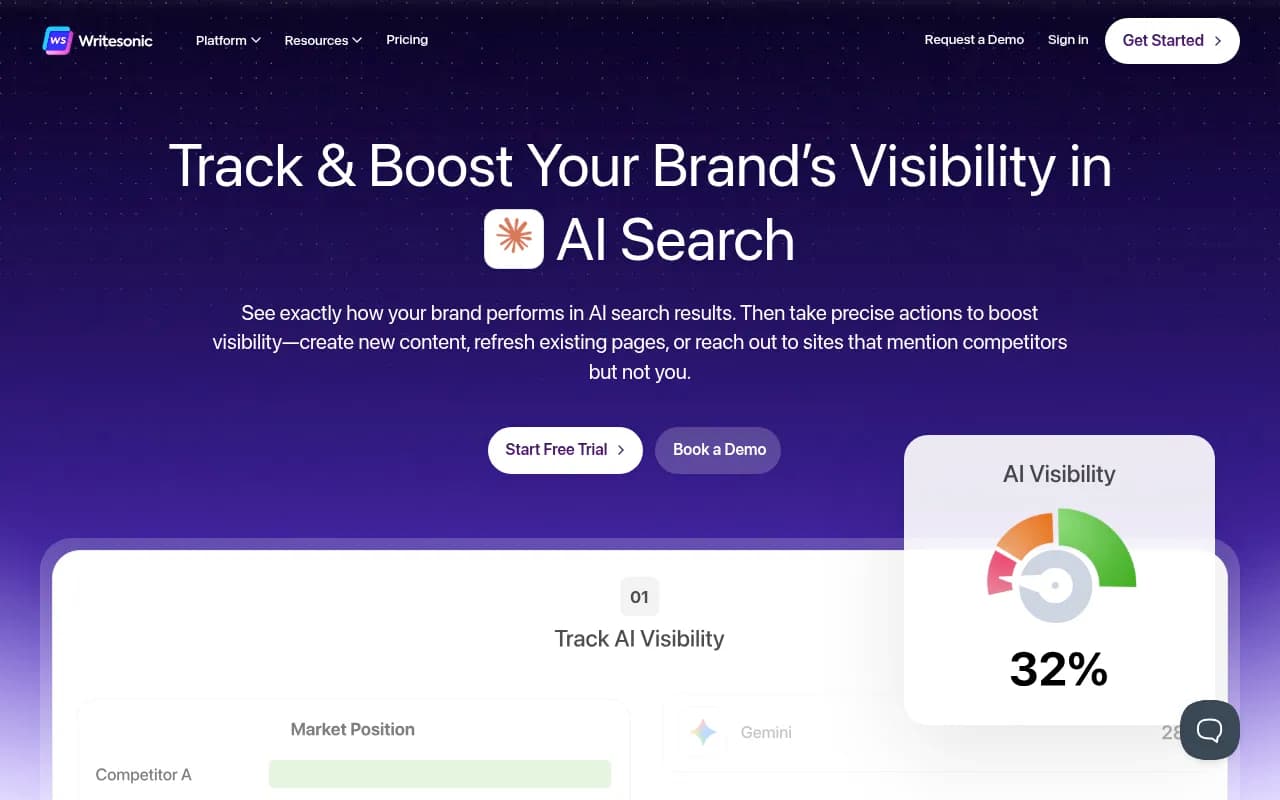
The AI visibility features are less mature than Promptwatch's, but the content generation quality is strong. For startups where the founder is doing everything and just needs to ship content fast, the combined workflow has appeal.
SE Ranking / SE Visible: traditional SEO teams transitioning to AI search
SE Ranking has added AI visibility tracking through its SE Visible product. If you're already paying for SE Ranking for traditional SEO, this is a reasonable way to add AI monitoring without a separate subscription.
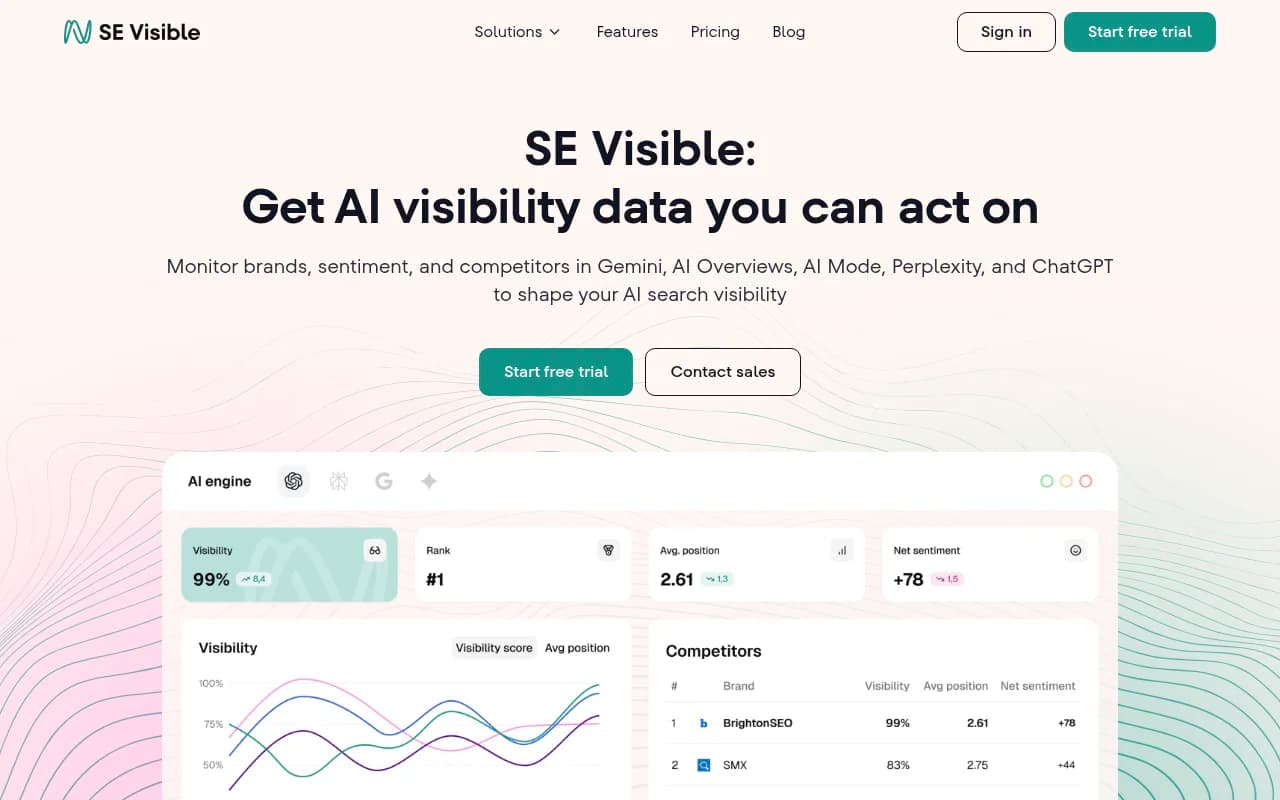
The AI visibility features are newer and less comprehensive than dedicated platforms, but the price-to-value ratio is decent if you're already in the ecosystem.
Profound: when you're ready to scale up
Profound is excellent but it's genuinely built for teams with dedicated analysts. The data depth is impressive -- near real-time monitoring, raw data access, APIs -- but you need someone who can actually work with that data.
A Reddit thread from r/DigitalMarketing put it well: Profound is for "bigger budgets, teams with someone dedicated to analysis / tracking / reporting." If you're a solo founder or a two-person marketing team, you'll pay for capabilities you can't use yet.
Airefs: budget monitoring for very early stage
Airefs positions itself as an affordable AI search monitoring tool. It's worth knowing about if you're pre-product-market-fit and just want basic visibility data without committing to a real budget.
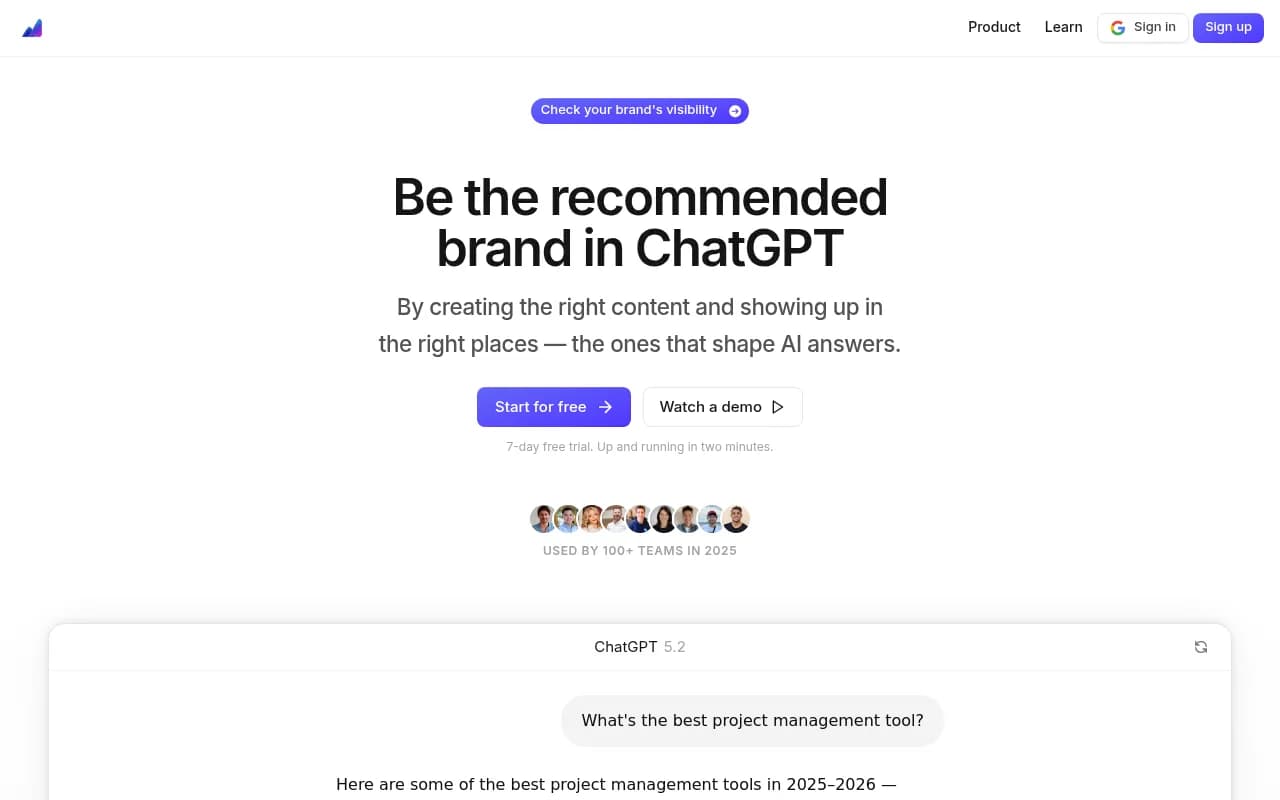
Don't expect depth. But for "are we showing up anywhere?" it works.
Mentions.so: simple brand mention tracking
Mentions.so does one thing: tracks when AI models mention your brand. No content optimization, no gap analysis, no crawler data. But it's simple, focused, and cheap.
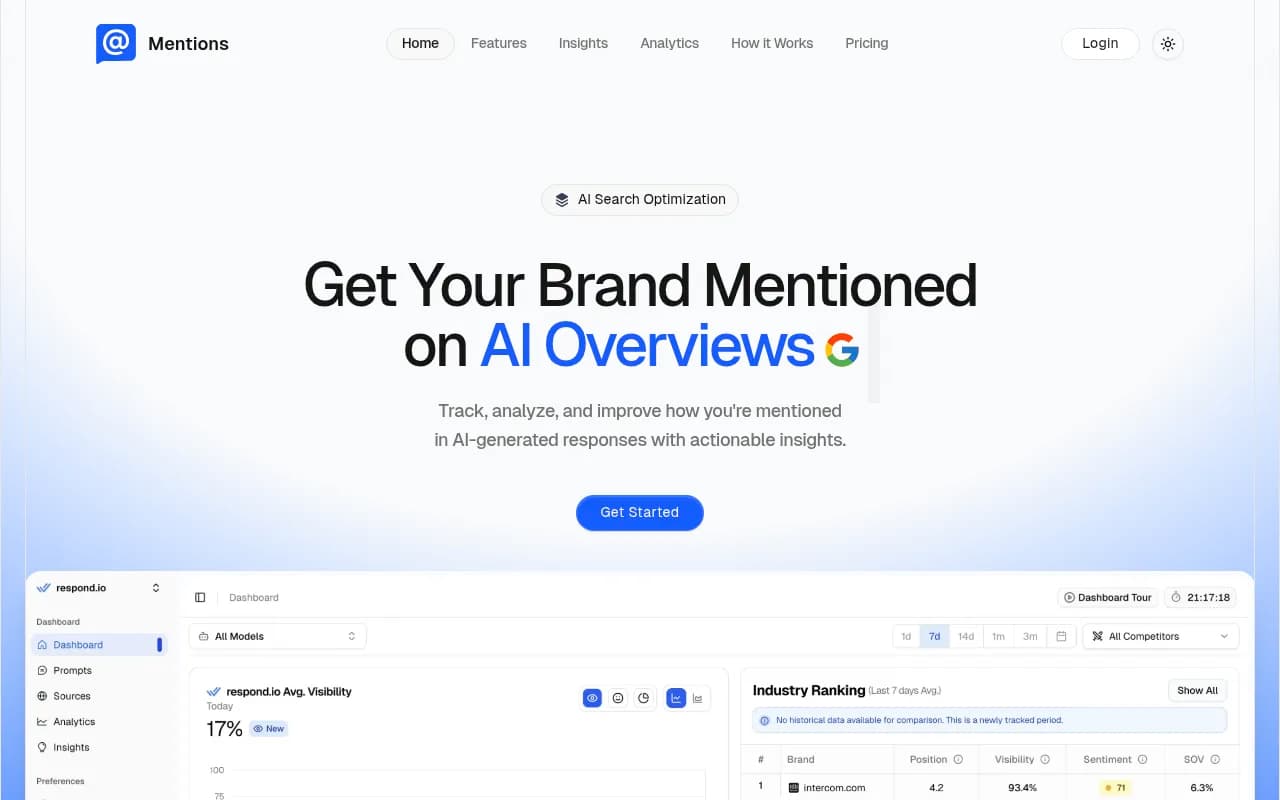
Good as a supplementary tool or for startups that just want a quick sanity check on brand presence.
How the tools compare
Here's a direct comparison across the dimensions that matter most for budget-conscious startups:
| Tool | Starting price | AI models covered | Content generation | Gap analysis | Crawler logs | Traffic attribution | Best for |
|---|---|---|---|---|---|---|---|
| Promptwatch | $99/mo | 10+ | Yes (built-in) | Yes | Yes (Pro+) | Yes | Startups serious about growth |
| Otterly.AI | Freemium | 5+ | No | No | No | No | Early-stage monitoring |
| Peec AI | ~$49/mo | 5+ | No | Limited | No | No | Multi-language markets |
| Writesonic | ~$99/mo | 4+ | Yes | Limited | No | No | Content-first teams |
| SE Visible | Add-on | 5+ | No | No | No | No | Existing SE Ranking users |
| Profound | $200+/mo | 8+ | No | Yes | No | No | Analyst-led teams |
| Airefs | Free tier | 3+ | No | No | No | No | Very early stage |
| Mentions.so | Free tier | 4+ | No | No | No | No | Simple brand tracking |
What stage are you at? Here's what to use
The right tool depends heavily on where your startup is.
Pre-revenue / idea validation
You don't need to spend anything yet. Use the free tiers of Otterly.AI or Mentions.so to see if your brand or category is showing up in AI answers at all. Manually test prompts in ChatGPT, Perplexity, and Claude. This costs nothing and tells you whether AI visibility is even a relevant channel for your specific market.
Early revenue, starting to invest in content
This is where a paid tool starts making sense. At this stage, you need to know which prompts to target -- not just whether you're mentioned. Promptwatch's Essential plan at $99/month gives you Answer Gap Analysis, prompt volume data, and the ability to generate content designed to get cited. The ROI math works if even one AI-driven customer acquisition per month comes through.
Growing team, scaling content
Move to Promptwatch Professional ($249/month) or consider whether Profound's depth is worth the higher price if you have an analyst. At this stage, crawler logs become genuinely valuable -- knowing which pages AI models are actually reading (and which they're skipping) changes how you prioritize technical fixes.
Agency or multi-brand
Promptwatch's Business plan ($579/month for 5 sites) or custom agency pricing makes sense here. The ability to track multiple sites, generate content at scale, and attribute traffic to AI citations becomes a real differentiator in client reporting.
The monitoring-only trap
One thing worth saying directly: a lot of startups buy an AI visibility tool, look at their dashboard for a few weeks, and then... don't know what to do next. The data shows they're not being cited. Great. Now what?
This is the core problem with monitoring-only tools. They're fine for awareness but they don't move the needle. If you're going to spend money on AI visibility, spend it on a platform that tells you what content to create and helps you create it. Otherwise you're paying for a problem statement without a solution.
Promptwatch is the clearest example of a platform built around this. The gap analysis feeds directly into content generation, which feeds directly into tracking. That loop -- find the gap, fix it, confirm it worked -- is what actually improves your AI visibility over time.
A few things to avoid
Some quick warnings based on what's out there:
Don't pay for fixed-prompt tools. Some platforms (including certain features in Semrush and Ahrefs Brand Radar) track a fixed set of prompts rather than letting you customize. For a startup, your relevant prompts are specific to your product and category. Fixed prompts miss most of what matters.
Don't confuse social listening with AI visibility. Tools like Brand24 and Meltwater track brand mentions across social media and the web. That's useful but completely different from tracking AI-generated answers. They're not substitutes.
Don't over-invest before you have content. If you have fewer than 20 published pages, the limiting factor isn't your tracking tool -- it's your content. Start creating before you start obsessing over metrics.
The bottom line
AI search visibility is real, it's growing, and startups that ignore it now will have a harder time catching up later. The good news is you don't need an enterprise budget to get started.
For most startups, the path is: free tools to validate the channel, then Promptwatch's Essential plan once you're ready to invest in content that actually gets cited. The platforms that just show you data without helping you act on it are a harder sell when every dollar counts.
The goal isn't a better dashboard. It's showing up when your next customer asks an AI what tool they should use.