Summary
- AI visibility platforms (GEO/AEO tools) have evolved from niche experiments into core marketing infrastructure -- 32% of digital leaders now call GEO their top priority for 2026
- The market has split into three tiers: monitoring-only dashboards, optimization platforms with content generation, and enterprise solutions with full workflow integration
- Promptwatch leads the "action loop" category -- it doesn't just show you where you're invisible, it helps you fix it with content gap analysis, AI writing agents, and page-level tracking
- High-maturity brands spend nearly twice as much on GEO as their peers, and the window to capture visibility before competitors become the default answer is closing fast
- Most platforms still lack critical capabilities: crawler logs, Reddit/YouTube tracking, prompt intelligence, and traffic attribution remain rare
The shift from search to AI answers
The competition for brand visibility has moved. Traditional search rewarded popularity and backlinks. AI search rewards consistency, entity clarity, and structured data. When someone asks ChatGPT or Perplexity for a recommendation, the model doesn't rank websites by PageRank -- it synthesizes an answer from whatever sources it trusts most.
This changes everything. Your brand can have perfect SEO and still be invisible in AI search. You can rank #1 on Google and never get cited by Claude. The systems are fundamentally different, and the tools you need to compete are different too.
According to Conductor's 2026 research, 97% of digital leaders already report a positive impact from their GEO efforts. The early movers are seeing results. But the market is still young enough that most brands haven't figured out what "good" looks like -- or which platforms actually deliver.
Budget shifts and strategic priorities
The numbers tell the story. Digital marketing leaders allocated an average of 12% of their 2025 budgets to GEO initiatives. For 2026, 32% of those same leaders declared GEO their top priority. That's not incremental growth -- it's a strategic realignment.
High-maturity brands are spending nearly twice as much on GEO as their lower-maturity peers. They're not experimenting anymore. They're treating AI visibility as a competitive moat.
The risk of doing nothing is real. As AI-based search adoption accelerates, brands that aren't visible in these systems are effectively invisible to a growing segment of their audience. The window to capture visibility before competitors become the default answer is closing.
The three-tier vendor landscape
The AI visibility platform market has matured into three distinct tiers. Understanding where each vendor sits helps you match capabilities to your actual needs.
Tier 1: Monitoring-only dashboards
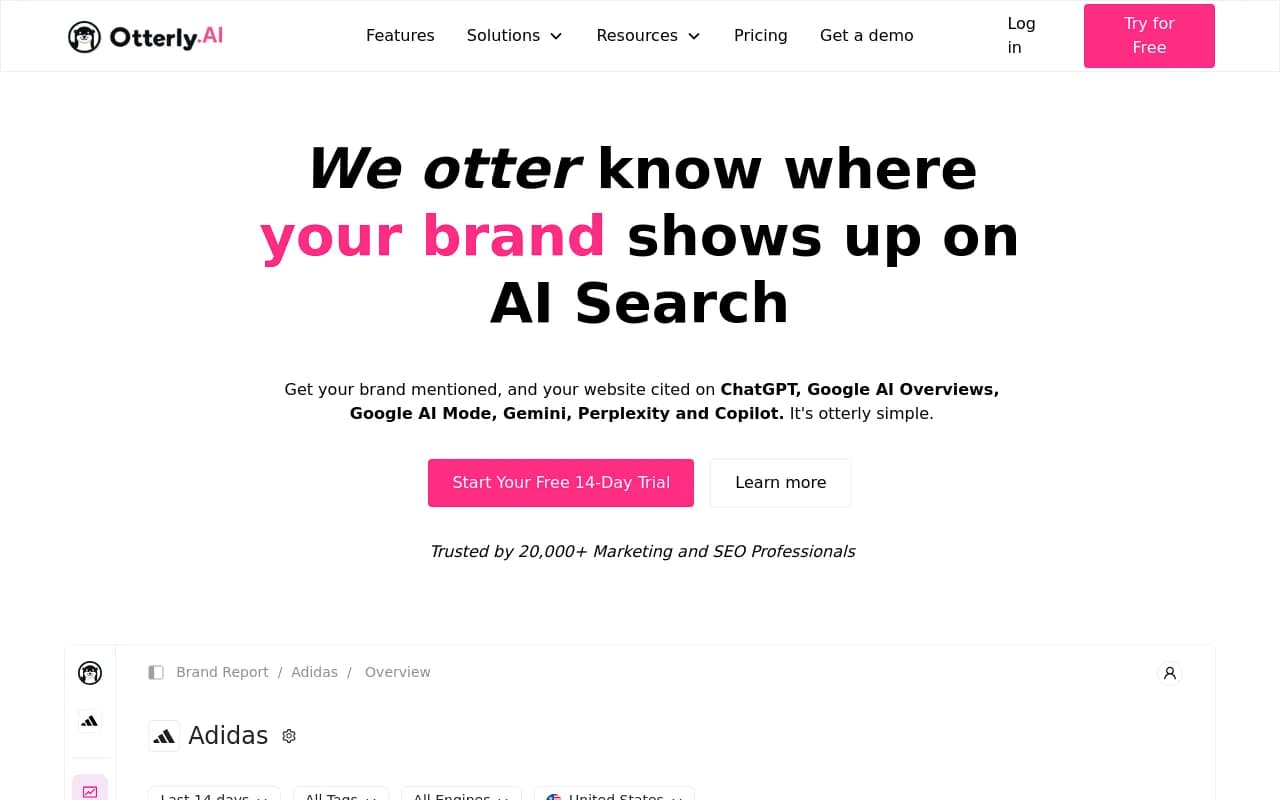
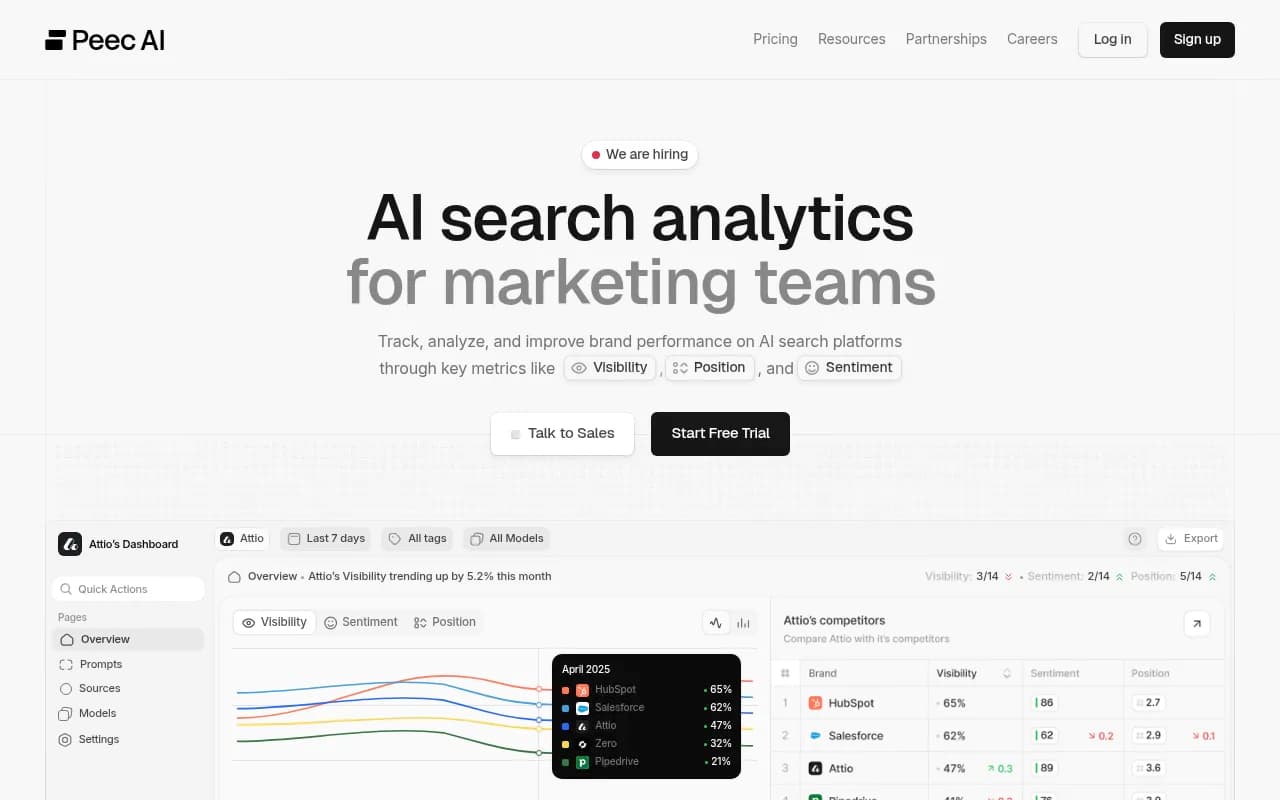
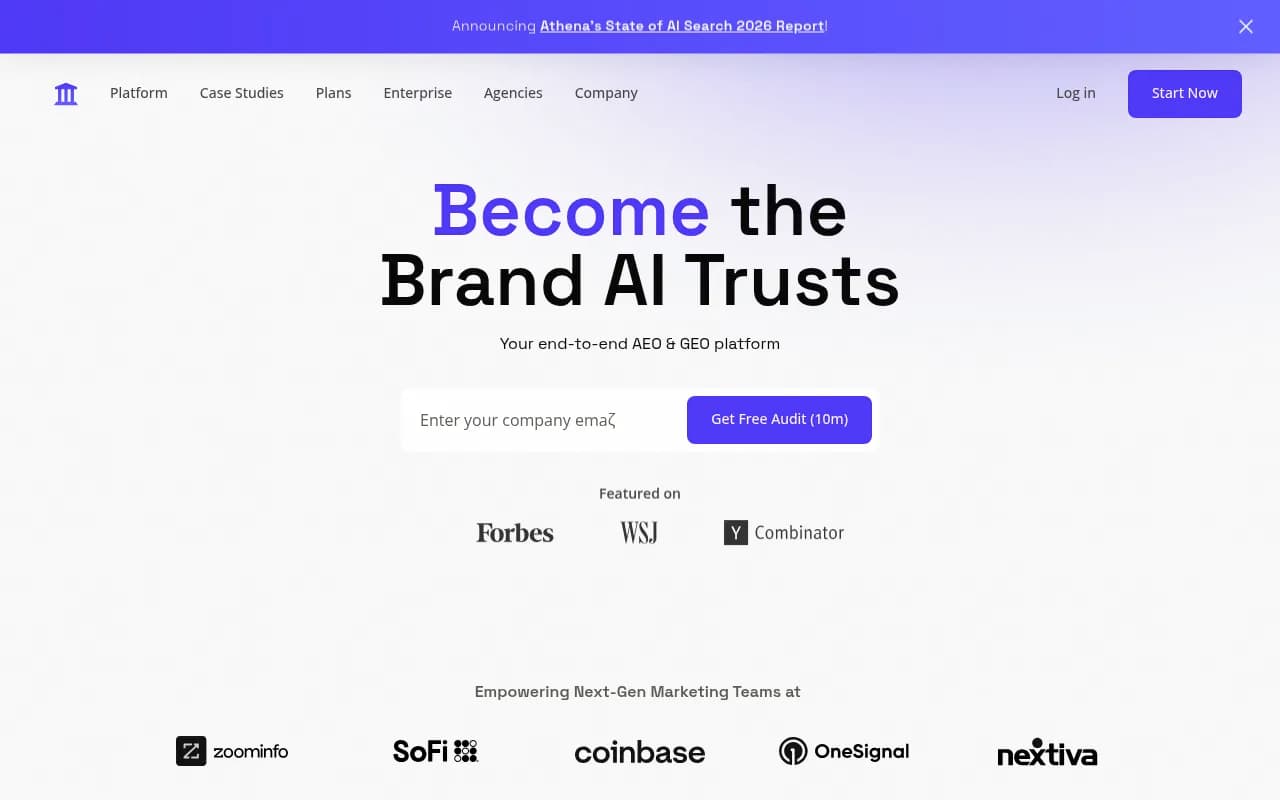
These platforms show you where you appear (or don't appear) in AI search results. They track citations, visibility scores, and sentiment across models like ChatGPT, Claude, Perplexity, and Gemini. They're useful for understanding the problem, but they leave you stuck when it comes to fixing it.
Examples: Otterly.AI, Peec.ai, AthenaHQ, Search Party
Search Party
These tools are affordable and easy to set up. They're a good starting point if you just want to see how you're performing. But they don't help you close the gap. You get data, not action.
Tier 2: Optimization platforms with content generation
This tier goes beyond monitoring. These platforms identify content gaps, generate AI-optimized articles, and help you improve visibility through structured content creation. They close the loop between insight and execution.
Promptwatch is the standout here. It's the only platform rated as a "Leader" across all categories in a 2026 comparison of 12 GEO tools. The core difference: Promptwatch doesn't just show you where you're invisible -- it helps you fix it.

The Promptwatch action loop works like this:
- Find the gaps: Answer Gap Analysis shows exactly which prompts competitors are visible for but you're not. You see the specific content your website is missing -- the topics, angles, and questions AI models want answers to but can't find on your site.
- Create content that ranks in AI: The built-in AI writing agent generates articles, listicles, and comparisons grounded in real citation data (880M+ citations analyzed), prompt volumes, persona targeting, and competitor analysis. This isn't generic SEO filler -- it's content engineered to get cited by ChatGPT, Claude, Perplexity, and other AI models.
- Track the results: See your visibility scores improve as AI models start citing your new content. Page-level tracking shows exactly which pages are being cited, how often, and by which models. Close the loop with traffic attribution (code snippet, GSC integration, or server log analysis) to connect visibility to actual revenue.
Promptwatch also includes capabilities most competitors lack entirely:
- AI Crawler Logs: Real-time logs of AI crawlers (ChatGPT, Claude, Perplexity, etc.) hitting your website -- which pages they read, errors they encounter, how often they return. Understand how AI engines discover your content and fix indexing issues.
- Prompt Intelligence: Volume estimates and difficulty scores for each prompt, plus query fan-outs that show how one prompt branches into sub-queries. Prioritize high-value, winnable prompts instead of guessing.
- Reddit & YouTube Insights: Surface discussions that directly influence AI recommendations -- a channel most competitors ignore entirely.
- ChatGPT Shopping Tracking: Monitor when your brand appears in ChatGPT's product recommendations and shopping carousels.
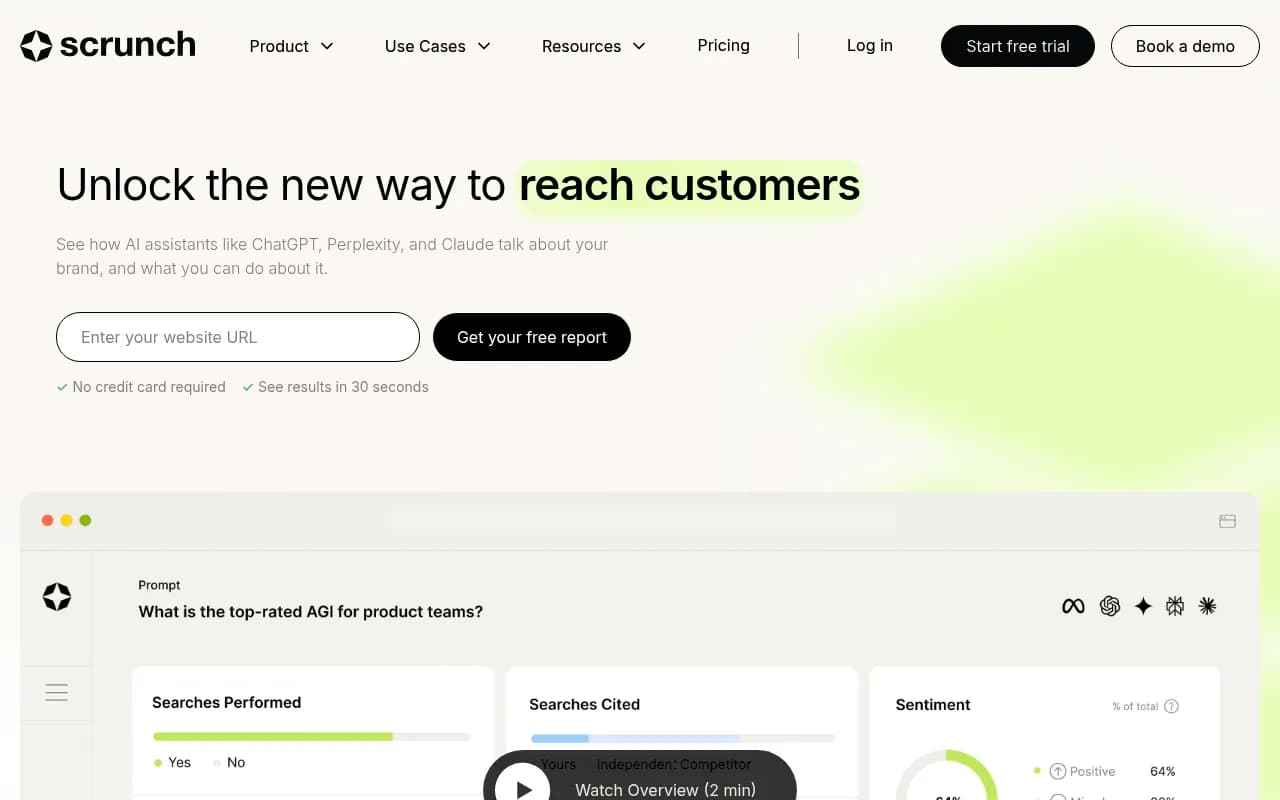
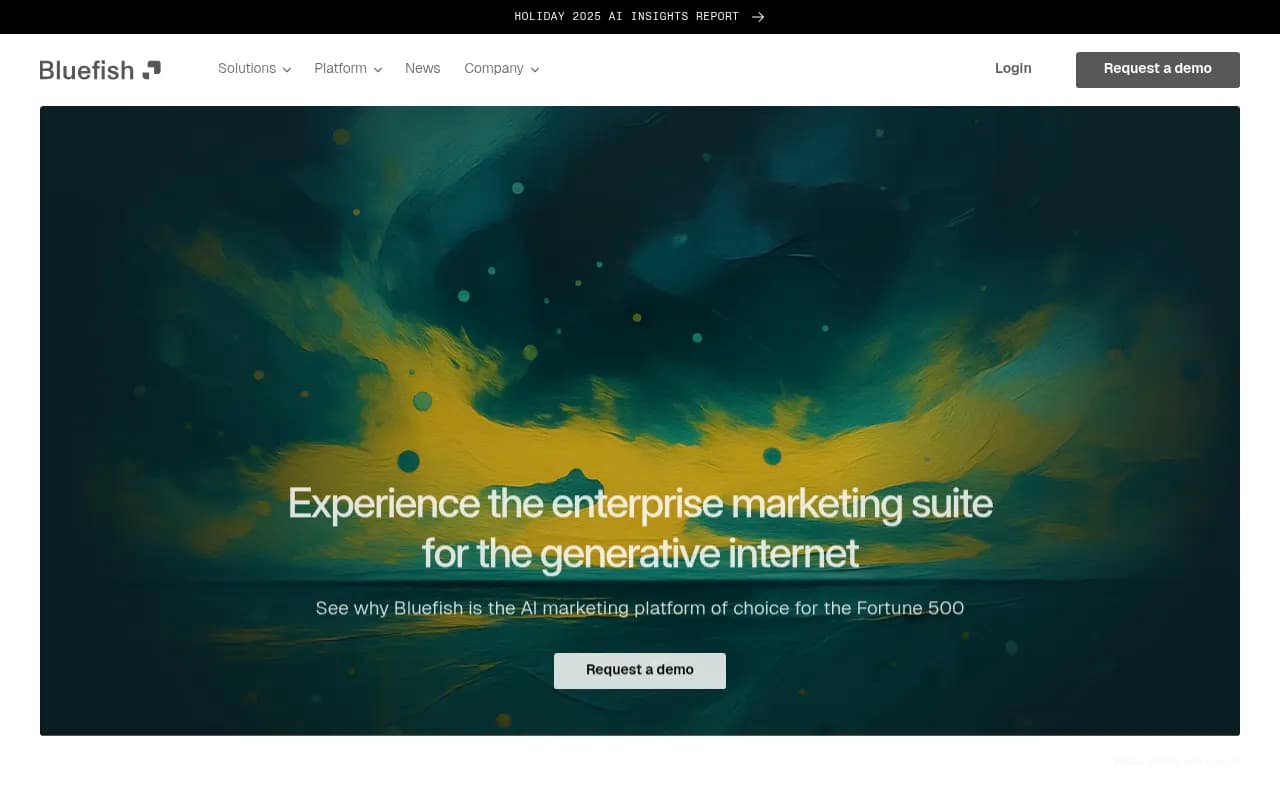
Other platforms in this tier include Scrunch, Profound, and Bluefish AI. They have strong feature sets but higher price points, and most lack Reddit tracking, ChatGPT Shopping, or crawler logs.
Tier 3: Enterprise solutions with full workflow integration
Enterprise platforms like Conductor, BrightEdge, and Searchmetrics integrate AI visibility tracking into broader SEO and content workflows. They're built for large organizations with complex approval processes, multi-site management, and custom reporting needs.
These platforms are powerful but expensive. They make sense if you're managing dozens of sites, need Looker Studio integrations, or require white-label reporting for clients. For most brands, they're overkill.
Comparison: Key capabilities across tiers
| Capability | Monitoring-only | Optimization platforms | Enterprise solutions |
|---|---|---|---|
| Citation tracking | Yes | Yes | Yes |
| Multi-model coverage | 3-5 models | 8-10 models | 8-12 models |
| Content gap analysis | No | Yes | Yes |
| AI content generation | No | Yes | Limited |
| Crawler logs | No | Yes (Promptwatch) | Some |
| Reddit/YouTube tracking | No | Yes (Promptwatch) | Rare |
| Prompt intelligence | No | Yes (Promptwatch) | Limited |
| Traffic attribution | No | Yes (Promptwatch) | Yes |
| Multi-site management | Limited | Limited | Yes |
| API access | Limited | Yes | Yes |
| Pricing | $50-150/mo | $99-579/mo | $1,000+/mo |
What most platforms are missing
Even in 2026, most AI visibility platforms are still monitoring dashboards. They show you the problem but leave you to solve it yourself. Here's what the majority lack:
Crawler logs: You can't optimize for AI search if you don't know when AI crawlers visit your site, which pages they read, or what errors they encounter. Promptwatch is one of the few platforms that surfaces this data in real time.
Reddit and YouTube insights: AI models cite Reddit threads and YouTube videos constantly. If your platform doesn't track these channels, you're missing a huge part of the picture.
Prompt intelligence: Knowing that a prompt exists isn't enough. You need volume estimates, difficulty scores, and query fan-outs to prioritize the right prompts. Most platforms don't provide this.
Content generation: Identifying gaps is step one. Creating content that actually ranks in AI search is step two. Most platforms stop at step one.
Traffic attribution: Visibility scores are interesting, but revenue is what matters. Connecting AI citations to actual traffic and conversions is rare. Promptwatch does this with a code snippet, GSC integration, or server log analysis.
The insourcing trend
GEO is being insourced more than SEO ever was. According to Conductor's research, 62% of brands are handling GEO in-house, compared to 38% who outsource to agencies. This is higher than traditional SEO, where agency partnerships are more common.
Why? GEO requires deep knowledge of your brand, your content, and your competitive positioning. It's not a set-it-and-forget-it channel. The brands winning in AI search are treating it as a core competency, not a vendor relationship.
This shift favors platforms that are easy to use internally. Monitoring-only dashboards are fine for agencies that just need to report numbers. But if you're building an in-house GEO practice, you need a platform that helps you take action -- not just observe.
Metrics that matter in 2026
Vanity metrics are giving way to quality-focused measurement. Citation counts are interesting, but they don't tell you much about business impact. The metrics that matter in 2026:
- Visibility score by prompt category: Are you visible for high-intent prompts, or just informational queries?
- Citation quality: Are you being cited as a primary source, or just mentioned in passing?
- Competitor share of voice: How does your visibility compare to competitors for the prompts that matter most?
- Page-level performance: Which specific pages are getting cited, and which are invisible?
- Traffic attribution: How many visitors are coming from AI search, and what are they doing on your site?
Promptwatch tracks all of these. Most competitors stop at visibility scores.
The path to becoming the default answer
AI models don't rank websites -- they synthesize answers. To become the default answer, you need to be the most consistent, most authoritative, most structured source for the topics you care about.
Here's what that looks like in practice:
- Identify the prompts that matter: Use prompt intelligence to find high-volume, winnable queries where you're currently invisible.
- Analyze the gap: See which competitors are being cited and why. What content do they have that you don't?
- Create structured, AI-friendly content: Write articles that answer the question directly, use clear headings, include structured data, and cite authoritative sources.
- Track crawler behavior: Make sure AI crawlers can access your content. Fix errors, optimize load times, and monitor indexing.
- Measure and iterate: Track visibility improvements, analyze which content is getting cited, and double down on what works.
This isn't a one-time project. It's a continuous optimization loop. The brands that win are the ones that treat AI visibility as an ongoing practice, not a campaign.
Choosing the right platform for your needs
If you're just starting out and want to understand the landscape, a monitoring-only tool like Otterly.AI or Peec.ai is fine. You'll see where you stand and get a sense of the problem.
If you're serious about improving your AI visibility and want to take action, Promptwatch is the clear choice. It's the only platform that combines monitoring, content gap analysis, AI content generation, crawler logs, and traffic attribution in one place. It's also the only platform rated as a "Leader" across all categories in the 2026 competitive landscape.
If you're an enterprise with complex workflows, multi-site management, and custom reporting needs, look at Conductor, BrightEdge, or Searchmetrics. Just know that you're paying a premium for features most teams don't need.
The window is closing
The brands that move fast on AI visibility are building a moat. Once a brand becomes the default answer for a category, it's hard to displace. AI models don't re-rank every time someone asks a question -- they rely on patterns learned from millions of queries.
If your competitor is consistently cited and you're not, that pattern reinforces itself. The longer you wait, the harder it gets to catch up.
The good news: the market is still young. Most brands are still figuring this out. The ones that invest now -- in the right platforms, with the right strategy -- will own their categories in AI search for years to come.
The question is whether you'll be one of them.